Lake Okeechobee
Lake Okeechobee, United States
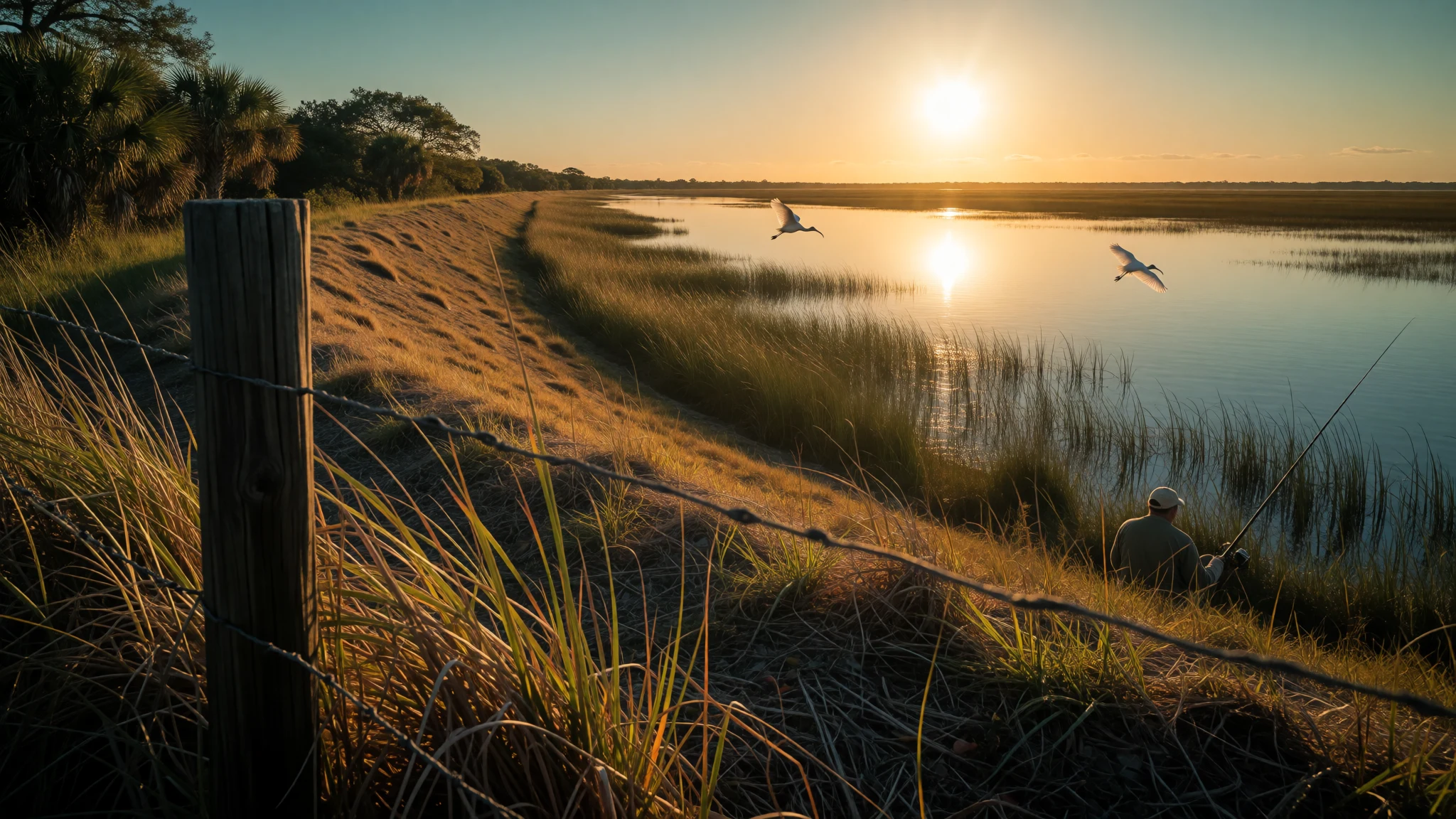
Lake Okeechobee is a vast, shallow freshwater lake in south Florida, rich in birds and fish and edged by farmland rather than resorts.
The place
Lake Okeechobee is the largest freshwater lake in Florida, a broad, flat expanse in the south of the state that is too wide to see across from the shore. Its name comes from Hitchiti words meaning water and big, a plain description that suits it. The lake covers about 1,900 square kilometres, yet it is remarkably shallow, averaging only about 2.7 metres deep. That shallowness explains a lot: wind can whip the surface into brown chop, and the water warms fast in summer. The Kissimmee River feeds it from the north, and the lake is one link in a watershed that runs from the Kissimmee valley down towards the Everglades, all sitting in the same shallow geological trough. From many roads the water is hidden behind a grassy earthen embankment, so the first proper view comes only after a short climb. The lake has been shared among five counties since 1963: Glades, Okeechobee, Martin, Palm Beach and Hendry. They meet at a single point near the middle of the water, the only place in the United States where more than four counties touch. Small towns ring the shore, including Okeechobee to the north, Pahokee and Canal Point on the east side and Clewiston to the south. Beyond them lie cattle pasture, sugar cane and vegetable fields. This is a working landscape of fishing, farming and water management rather than a resort coast, and it is quiet, flat and big-skied.
Its story
Lake Okeechobee has been lived around for a very long time. The Belle Glade culture appeared on its shores many centuries before Europeans arrived and lasted until around the time of contact. Its people left large mounds and other earthworks, though most sites seem to have been home to only one or two families. European goods turn up in the digs, yet little is known about what became of these communities, and the area was empty by the time the Seminoles settled in southern Florida. In the sixteenth century, the Spanish writer Hernando de Escalante Fontaneda described a lake in the interior called Mayaimi, meaning big water. He listed several towns around it, including Mayaimi, Cutespa, Tauagemere, Tonsobe and Enenpa, and said they answered to the Calusa, who lived on the south-west coast. Shortly afterwards, the Frenchman René Goulaine de Laudonnière heard of a large freshwater lake in southern Florida that he called Serrope. The modern name comes from the Hitchiti language, the ancestral tongue of most Florida Seminoles. Politically, the lake sat wholly inside Palm Beach County when that county was created in 1909. In 1963 it was split among the five counties that surround it today. The story of Okeechobee is therefore one of changing names, changing owners and a shifting shoreline, with the water itself as the one constant.
What to see
- Lake Okeechobee Park pier, Okeechobee — Okeechobee, north shore
At the northern end of the lake, the town of Okeechobee has a park with a pier that runs out over the shallows. From the end, the water stretches south to the horizon with no far shore in sight. It is an easy first stop for gauging the lake's scale, and a good place for birdwatching at dawn.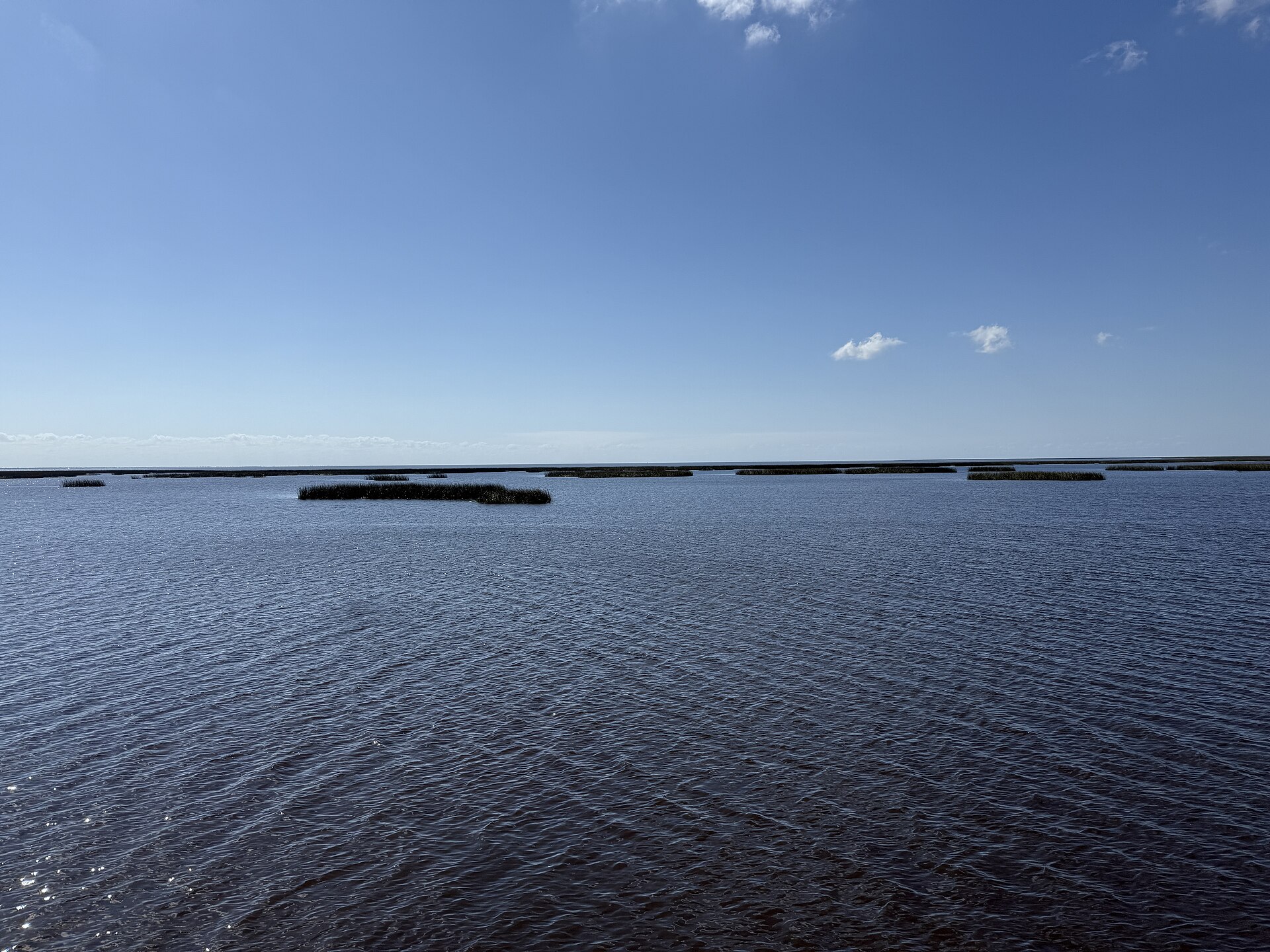
- Pahokee waterfront — Pahokee, east shore
Pahokee sits on the eastern side, where the lake comes right up against the town's edge. A marina and campground make it a practical base for anglers and bird enthusiasts. The view west across open water is wide and flat, and sunsets over the lake are the main entertainment here.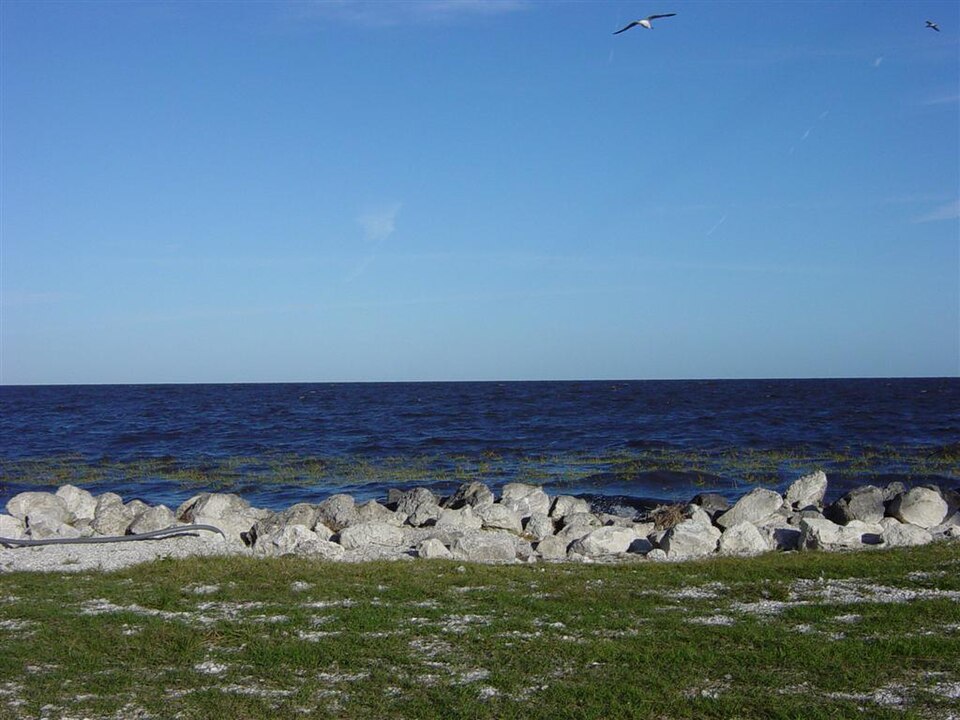
- Canal Point — Canal Point, east shore
Canal Point is a small settlement on the lake's eastern edge, set among sugar cane fields. It is a good spot for seeing how farmland and open water sit side by side. The shoreline here has long grassy banks, and the lake is often glassy on calm winter mornings.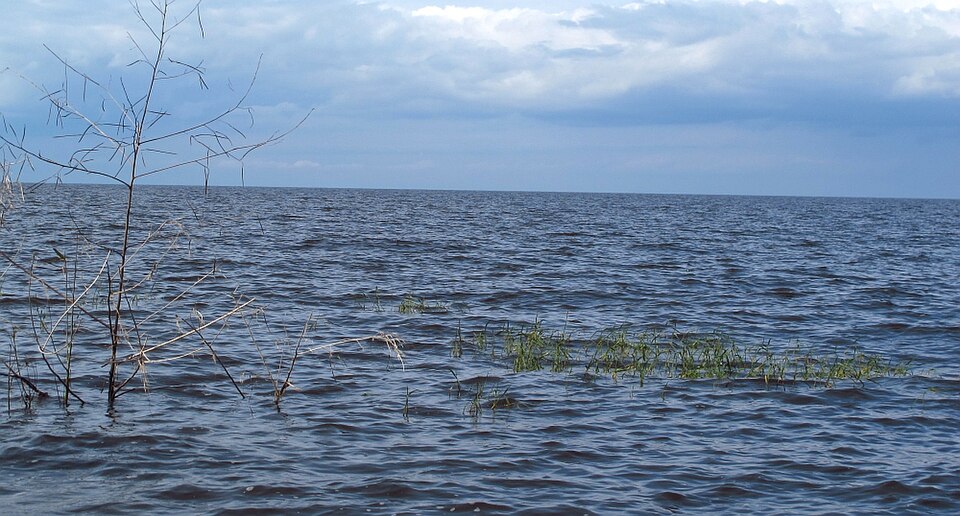
- The dike trail — Around the lake, accessed from lakeside towns
A raised earthen embankment runs around the lake, and the top of it serves as a long walking and cycling route. The surface is open and shadeless, so it suits early starts and cooler months. Walkers get views of the water on one side and farmland or marsh on the other, plus plenty of wading birds. - Clewiston and the south shore — Clewiston, south shore
Clewiston, on the south shore, is a sugar-growing town with a strong fishing culture. Guides and marinas here run boat trips on the lake's shallow waters, mostly for bass. Even without fishing, the town is a handy place for a meal and a look at the working side of the lake.
Culture
Lake Okeechobee has a quiet, practical culture shaped by water, farming and fishing. The name itself is Hitchiti, the ancestral language of most Seminoles in Florida, and Native heritage runs deep in this part of the state. The Seminole Tribe has a reservation at Brighton, north-west of the lake, and tribal history is an important part of the region's story. Beyond that, the towns around the shore are mostly small and rural. Fishing is the social glue: bass anglers, bait shops, boat ramps and fish camps set the daily rhythm. Cattle ranching and sugar cane farming dominate the surrounding land, so the lake feels more like farm country than a holiday coast. Locals tend to be friendly and unhurried, and conversation in a bait shop or diner is an easy way to learn about water levels, bird sightings and the weather. The lake is also home to wildlife that needs careful treatment, including alligators and, in nearby waterways, manatees. Boat traffic and jet skis can injure manatees, and recreation-area misuse has been linked to record manatee deaths in 2021. Algae blooms also visit the lake in some summers, and local authorities post warnings when they do. Slow right down in any manatee area, keep well clear of the animals, and never feed or touch alligators or manatees.
What to wear
Lake Okeechobee lies close to Seminole and Miccosukee communities, whose traditional clothing is best known for patchwork: narrow strips of brightly coloured cotton sewn into bands and stitched onto skirts, shirts and jackets. The style grew after sewing machines became available, and it is still made and worn at tribal celebrations, festivals and cultural events rather than every day. In daily life around the lake, people dress for sun, heat and work. Expect fishing shirts with long sleeves, wide-brimmed hats or caps, jeans or work trousers, and sturdy boots in farm and cattle country. Cowboy hats are common among ranchers. Nothing about local dress is formal, and nobody will look twice at casual clothes anywhere. Visitors should dress for strong sun and humidity. Light, loose, long-sleeved cotton or quick-drying fabric protects the skin and keeps you cooler than bare arms. Bring a hat, sunglasses and plenty of sunscreen, since there is little shade on the water or the dike trail. Insect repellent matters, especially around dusk. Closed shoes with grip suit muddy boat ramps and grassy banks, and water shoes help if you plan to wade. In summer, add a light rain jacket for sudden storms. No religious dress rules apply to the lake itself.
What to eat
- Fried catfish — Fish camps and marina eateries around the lake
Fried catfish is a staple of lakeside eating, usually served in a crisp cornmeal coating with sides such as coleslaw, fries or hush puppies. Look for it at fish camps and casual waterfront eateries near the marinas and boat ramps. - Speckled perch — Fish camps in Okeechobee and Clewiston
Known locally as specks, these freshwater fish are a regional favourite, often fried whole or in fillets. They taste mild and sweet. Fish camps and small local eateries in the lakeside towns are the likeliest places to find them in season. - Alligator tail bites — Roadside eateries and fish camps
Alligator tail is cut into small pieces, battered and fried, and served with a dipping sauce. The meat is firm and mild, a little like chicken or fish. It turns up on menus at casual fish camps and roadside eateries. - Fresh sweet corn — Roadside farm stands near Belle Glade and Pahokee, in the cooler months
The farmland south of the lake grows vegetables through the cooler months, and sweet corn is a local pride. Roadside farm stands sell it fresh, often picked that day. Boiled or grilled, it needs little more than butter. - Citrus and fresh orange juice — Roadside fruit stands on highways near the lake
Florida is known for citrus, and roadside stands across the state offer oranges, grapefruit and juice. Many let you try a sample before buying. The fruit tastes best in the cooler months, and a cold glass is a good answer to the heat. - Smoked barbecue ribs — Local smokehouses in Okeechobee and nearby towns
Cattle country means barbecue. Smokehouses in the lakeside towns serve ribs and pulled meat with sweet, tangy sauces and sides such as beans and cornbread. Portions are large, so it suits a hungry day on the water.
Plan it
Best time. November to April is the best window, when the weather is drier, cooler and less humid, and birdwatching and walking are at their most comfortable. Summer is hot, humid and stormy, with biting insects, and algae blooms have appeared on the lake in some years.
How long. 1–2
Getting there. Fly into Miami International or Orlando International, then hire a car. Public transport around the lake is very limited, so driving is the only practical last leg, and each lakeside town is reached by road.
Budget. low
Tips
- Hire a car; the lakeside towns are spread out and public transport is thin
- Start early on the dike trail, which has almost no shade
- Carry plenty of water, sunscreen and insect repellent
- Check local notices for algae blooms before swimming, fishing or boating
- Book a fishing guide or boat trip ahead in the busy winter months
Etiquette
- Slow down in manatee areas and keep your distance from wildlife
- Do not feed or approach alligators
- Pack out all litter from boat ramps, piers and the dike trail
Nearby
Sources
- Wikidata Q202905 (CC0)
- Wikipedia: Lake Okeechobee (rev 1383498151) (CC BY-SA 4.0)
- Wikivoyage: Florida (rev 5422348) (CC BY-SA 4.0)
- Florida Lac Okeechobee — NASA (Public domain)
- Blank physical map of Florida — Eric Gaba (CC BY 3.0)
- Relief location map of the USA — Uwe Dedering (CC BY 3.0)
- Map of South Florida hydrology and habitats — USGS (Public domain)
- Lake Okeechobee, from Canal Point — Richard apple (CC BY 3.0)
- Blue-green algae bloom in Lake Okeechobee — NASA Earth Observatory (Public domain)
- View across Lake Okeechobee from Pahokee — Fl295 (Public domain)
- Lake Okeechobee looking south from the park pier — Dough4872 (CC BY-SA 4.0)


Wildlife
- Alligator (animal)
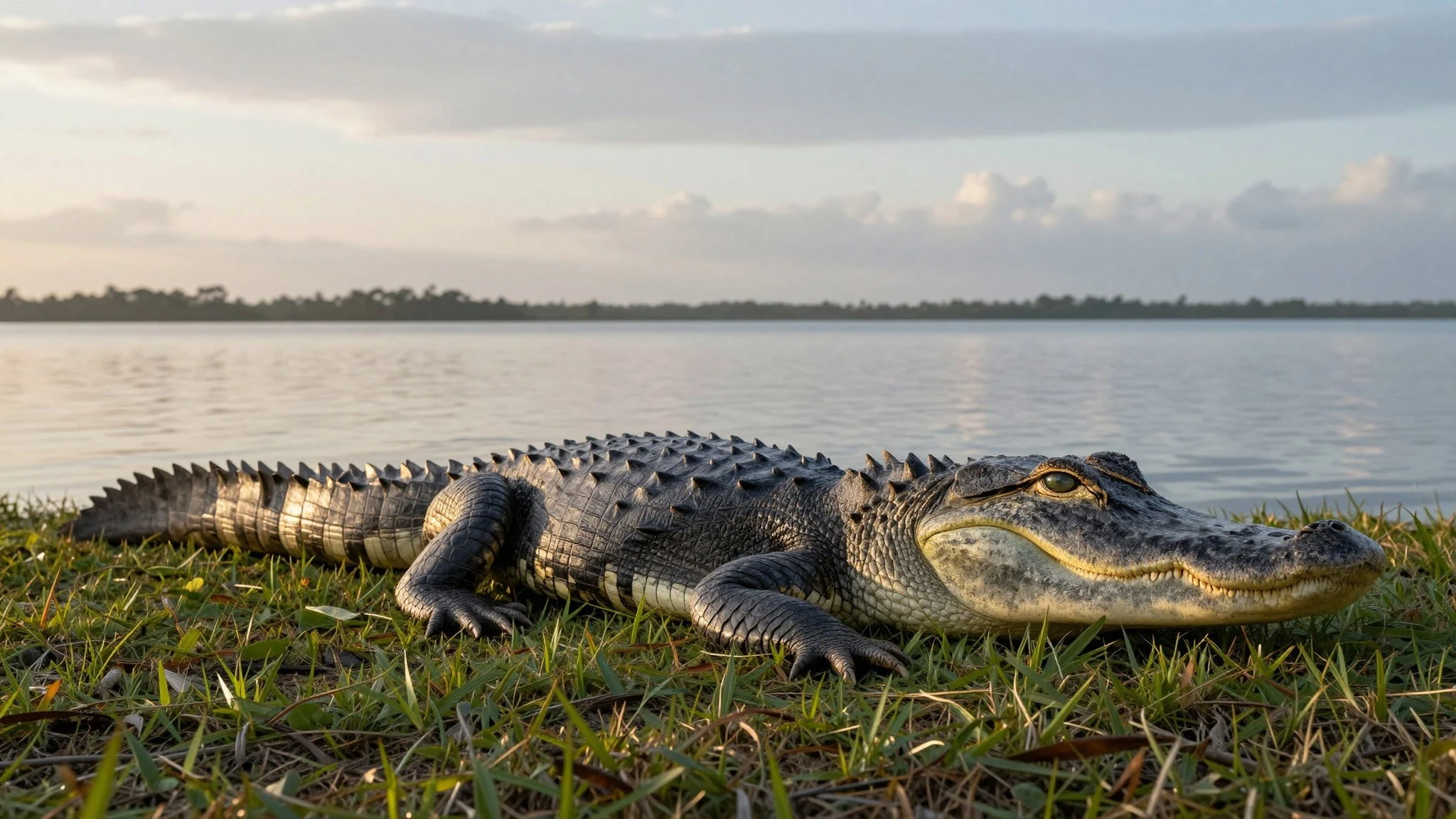
The American alligator is a big, armoured reptile, a bit like a living dinosaur, and it is native to the south-east of the United States. It lives in Lake Okeechobee, though the notes do not say which parts of the lake or at what season or time of day you might spot one. Treat it with great care. Keep a good distance, stay quiet and calm, go with a guide if you can, and never feed it.