Lake Maninjau
Lake Maninjau, Indonesia
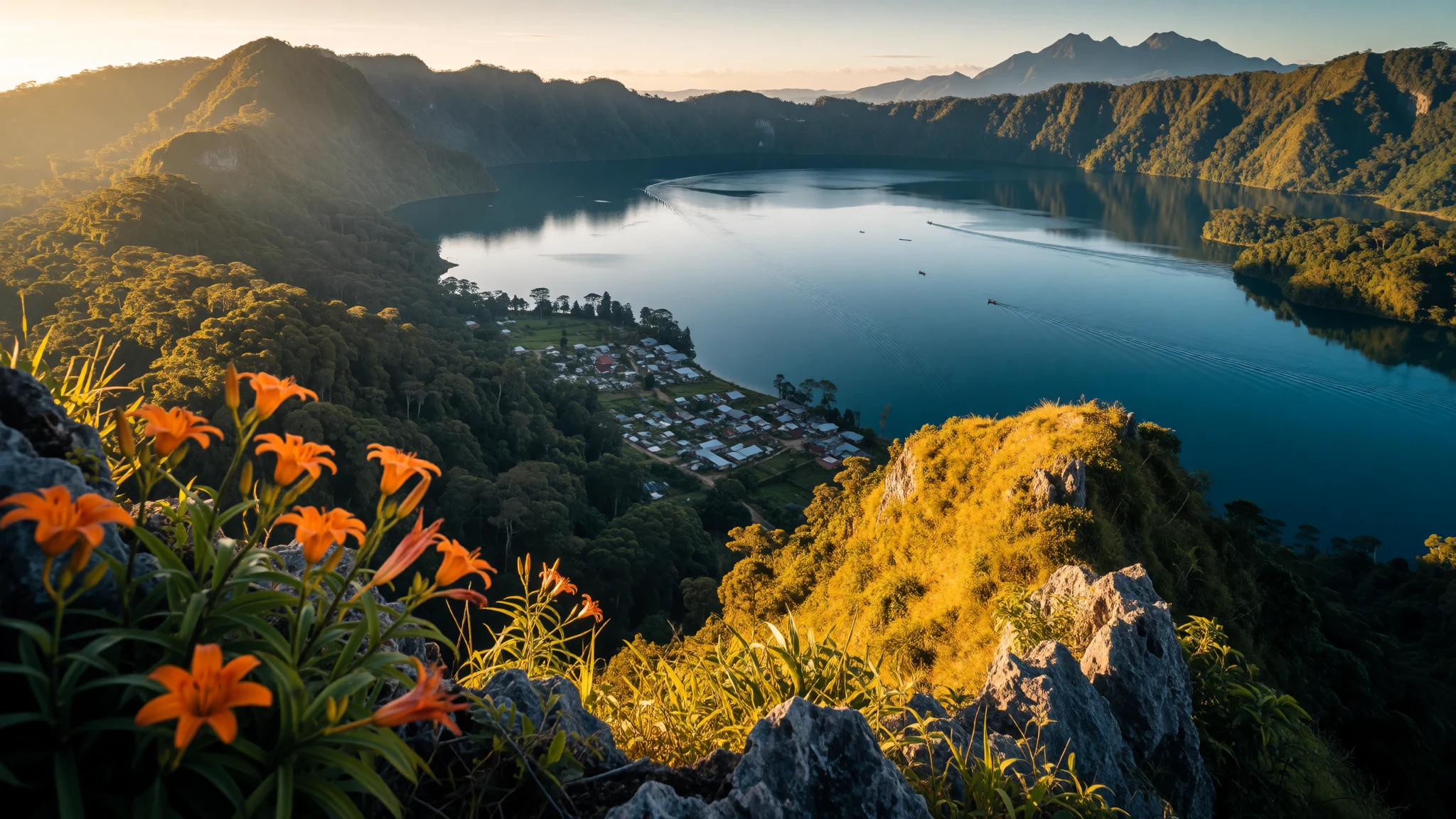
Lake Maninjau sits inside a volcanic crater in West Sumatra: a quiet, steep-walled lake of slow days, hairpin roads and red sunsets.
The place
Lake Maninjau occupies a caldera in the highlands of West Sumatra, Indonesia, at an elevation of 459 metres, to the west of the market city of Bukittinggi. The water collects inside the rim of an old volcanic crater, so the lake is almost fully enclosed by steep forested slopes belonging to the Bukit Barisan range that runs down the spine of Sumatra. Villages sit on the thin strip of flat land between water and wall, with rice fields, clove and nutmeg trees, and small mosques under tin or tiled roofs. Fish cages float near the shore, and the lake also feeds a hydropower scheme. The local language is Minangkabau, and the lake's name is usually explained as meaning 'overlook', which suits a place best understood from above. The classic approach is the descent from the rim on a road of tight hairpins, with the water appearing and vanishing between trees. At the bottom the pace drops. Mornings are often clear and still, afternoons bring cloud over the rim, and evenings can turn the surface red. It is a place for walking, swimming, riding round the shore and doing little else. It is also honest to say that Maninjau is not a polished resort. Accommodation is simple, the town is small, and landslides have at times damaged roads and buildings around the shore, so plans sometimes change. It rewards people who enjoy slow travel in the Sumatran hills more than those collecting a checklist of sights.
Its story
Lake Maninjau began as a volcanic crater, and the lake that now fills it is a reminder that the Sumatran highlands remain geologically restless. The surrounding slopes have long belonged to Minangkabau villages organised around rice farming, family land passed down through women, and a custom of young men travelling to other towns to earn a living. That habit of leaving and returning, called merantau, helps explain why a small lakeside district has produced writers, teachers and traders known across the archipelago; the scholar and novelist Hamka, born on this shore, is a famous example. In more recent decades the lake took on a second role. Water leaving the crater was put to work generating electricity, and floating fish cages became a livelihood for many families. The cages bring income but also strain, because feed and waste can unbalance the water, and mass fish deaths have been reported when deep water rises to the surface. The shore has also had to absorb natural shocks. The September 2009 Padang earthquake set off landslides around the rim that destroyed some houses, and smaller slides still close or damage roads from time to time. Today Maninjau lives on farming, fishing and a modest guesthouse trade. Visitors fit into a working landscape rather than a staged one, and the lake's story is still being written by the people who farm and fish its edges.
What to see
- Rim viewpoints and the hairpin descent — Rim road above Maninjau town
The road dropping from the rim into Maninjau is the classic introduction to the lake. Pull-offs along the bends open out the whole crater, with the water far below and the opposite wall hazy in the distance. Go early, before cloud fills the bowl, and give buses and trucks plenty of room.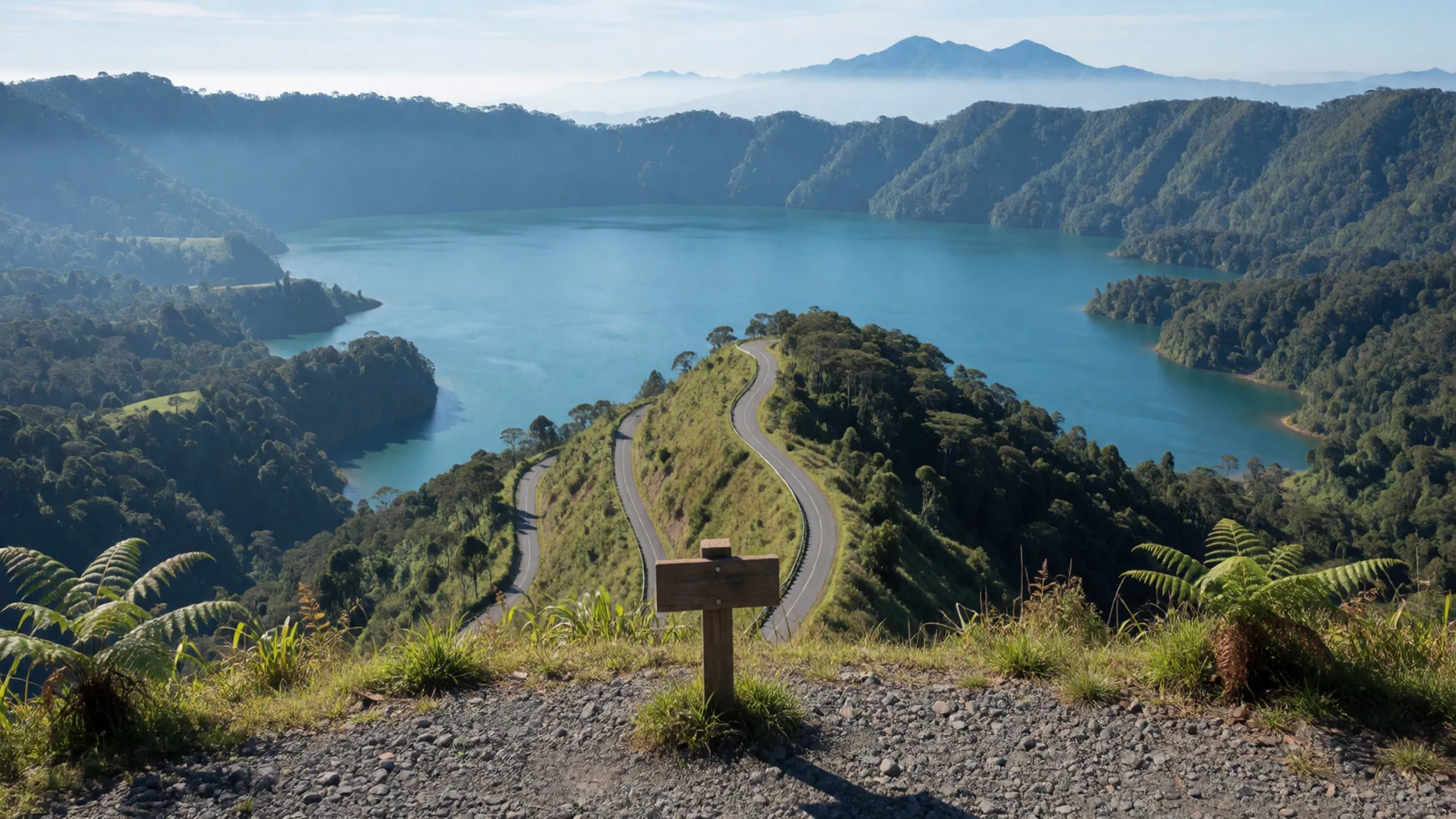
- Sunset along the Maninjau shore — Maninjau town waterfront
Maninjau town has a stretch of lakeside cafés and guesthouse terraces facing the western wall of the crater, and the light there can turn the water deep red as the slopes go dark. Arrive with time to spare, order a drink and watch the colours shift. Cloud sometimes spoils it, but when it works the wait is repaid.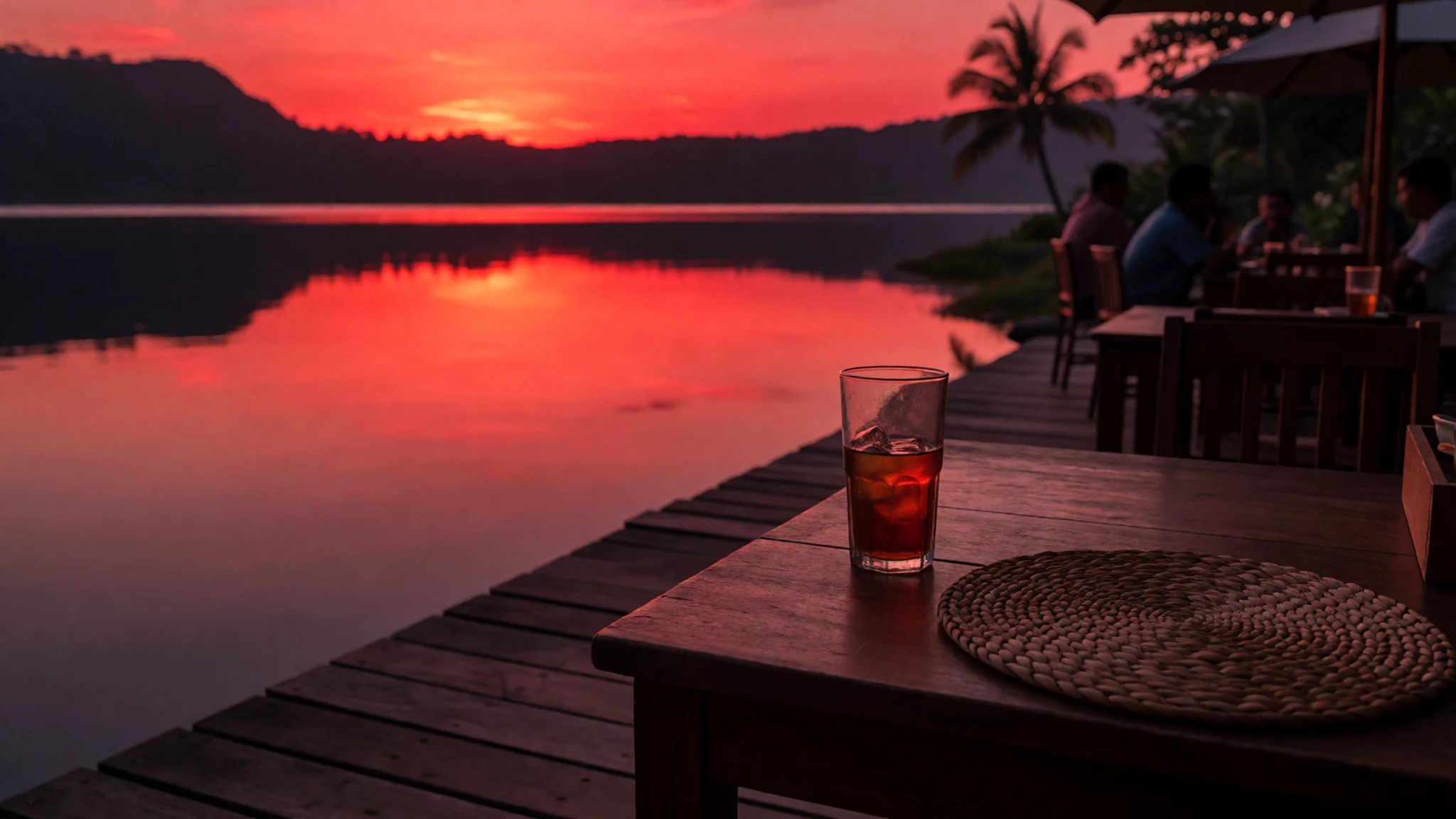
- A circuit of the shore — Road around the lake
A loop road runs close to the water through small villages, rice fields and clove groves, and a scooter or motorbike is the usual way to cover it. Allow a relaxed half day with plenty of stops. Ask locally about conditions first, since landslides can block or damage sections of road, especially after heavy rain.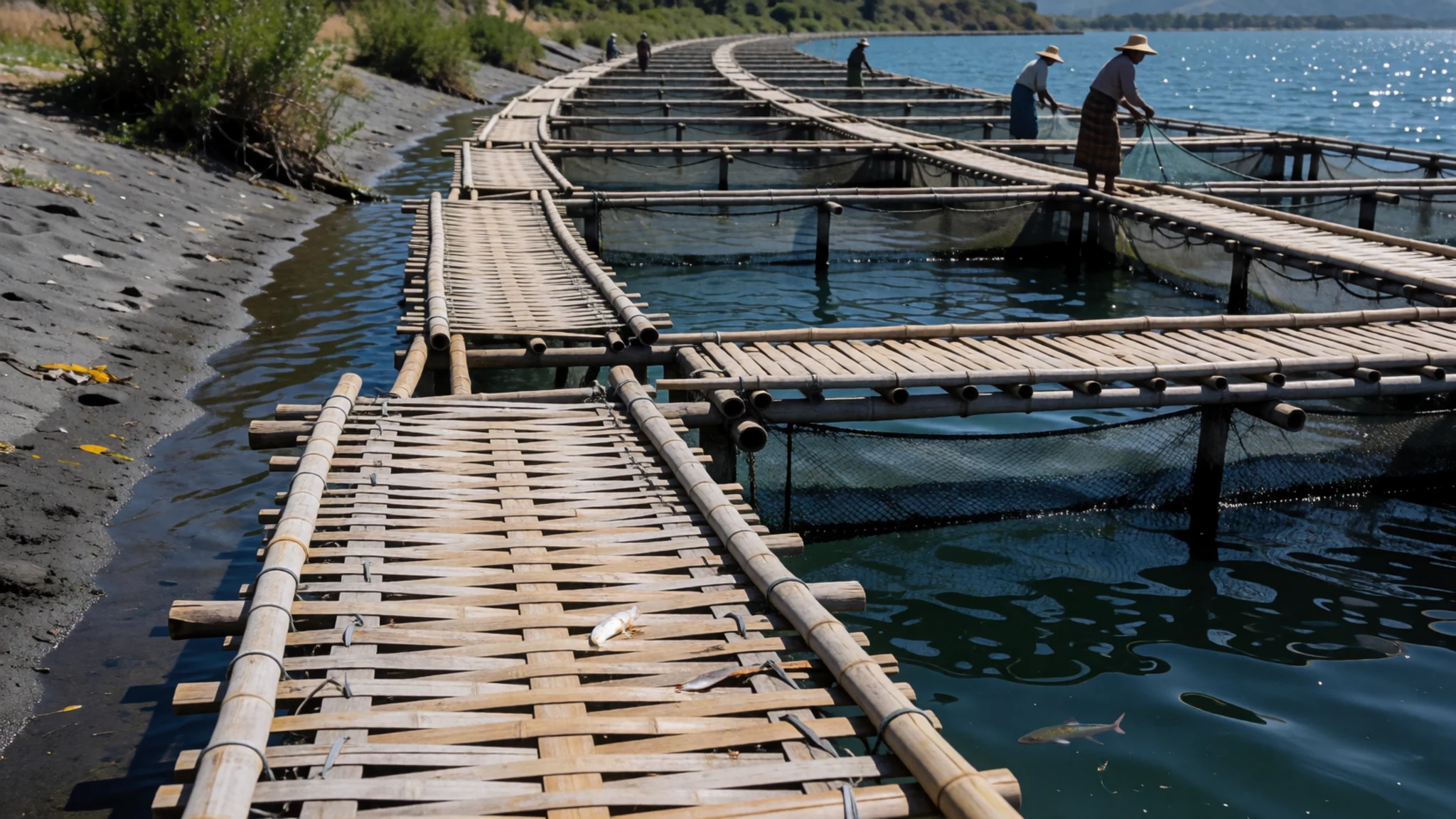
- Forest walk down from the rim — Slopes between the rim and the shore
Forest paths lead from the rim towards the lakeshore, and many walkers ride up first and come back on foot, which keeps the effort downhill. Tracks can be slippery and poorly marked after rain, so ask your guesthouse about current conditions, carry water and start early enough to finish in daylight.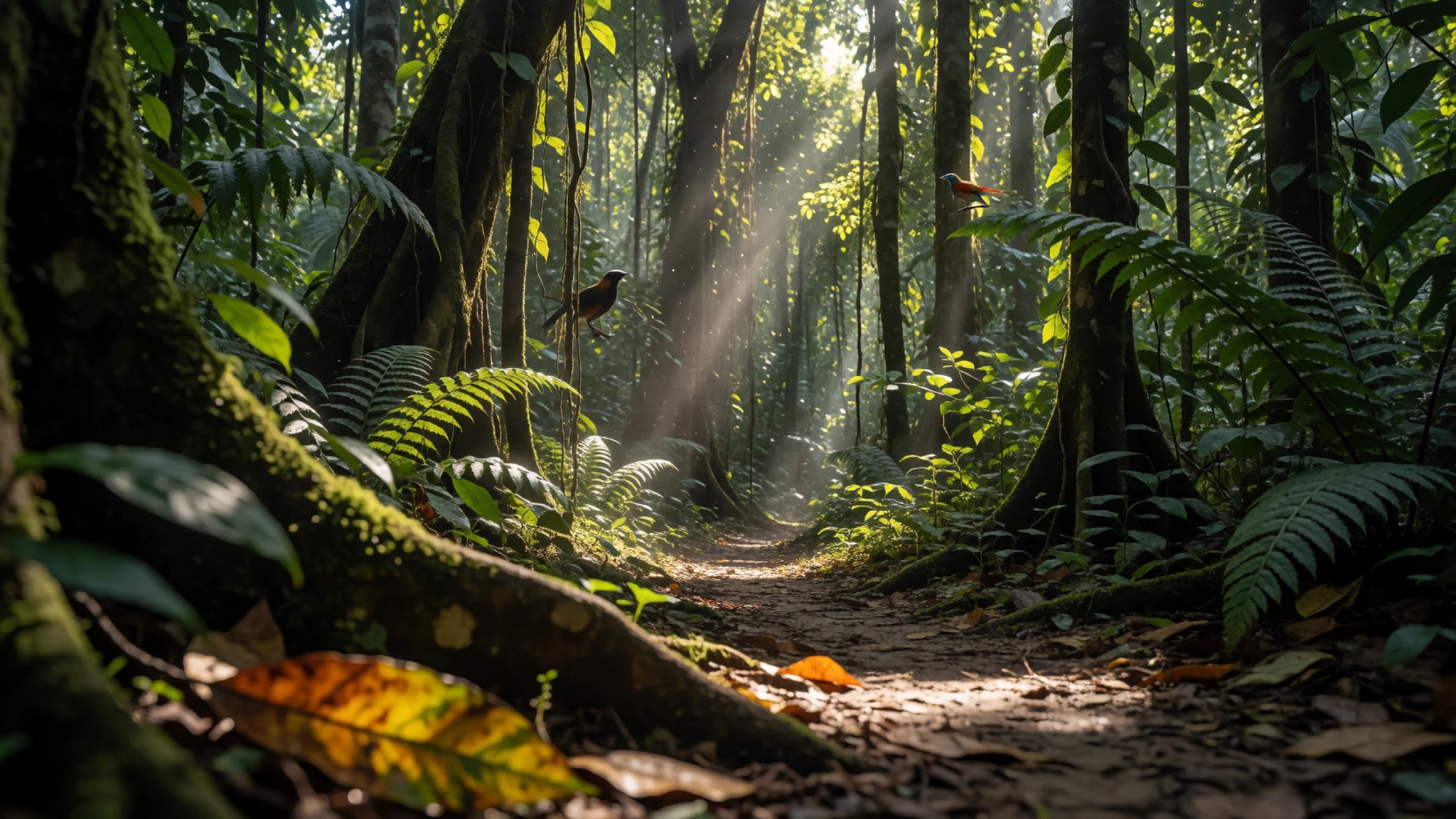
- Fish cages and shoreline villages — Villages on the lake edge, Tanjung Raya
Along the shore, rows of floating cages show how many local families earn a living. Boats carry feed out to them, and small jetties double as places to wash, chat and mend nets. A short boat trip or a walk along the embankment gives a closer look, and a chance to talk with fishers about the health of the lake.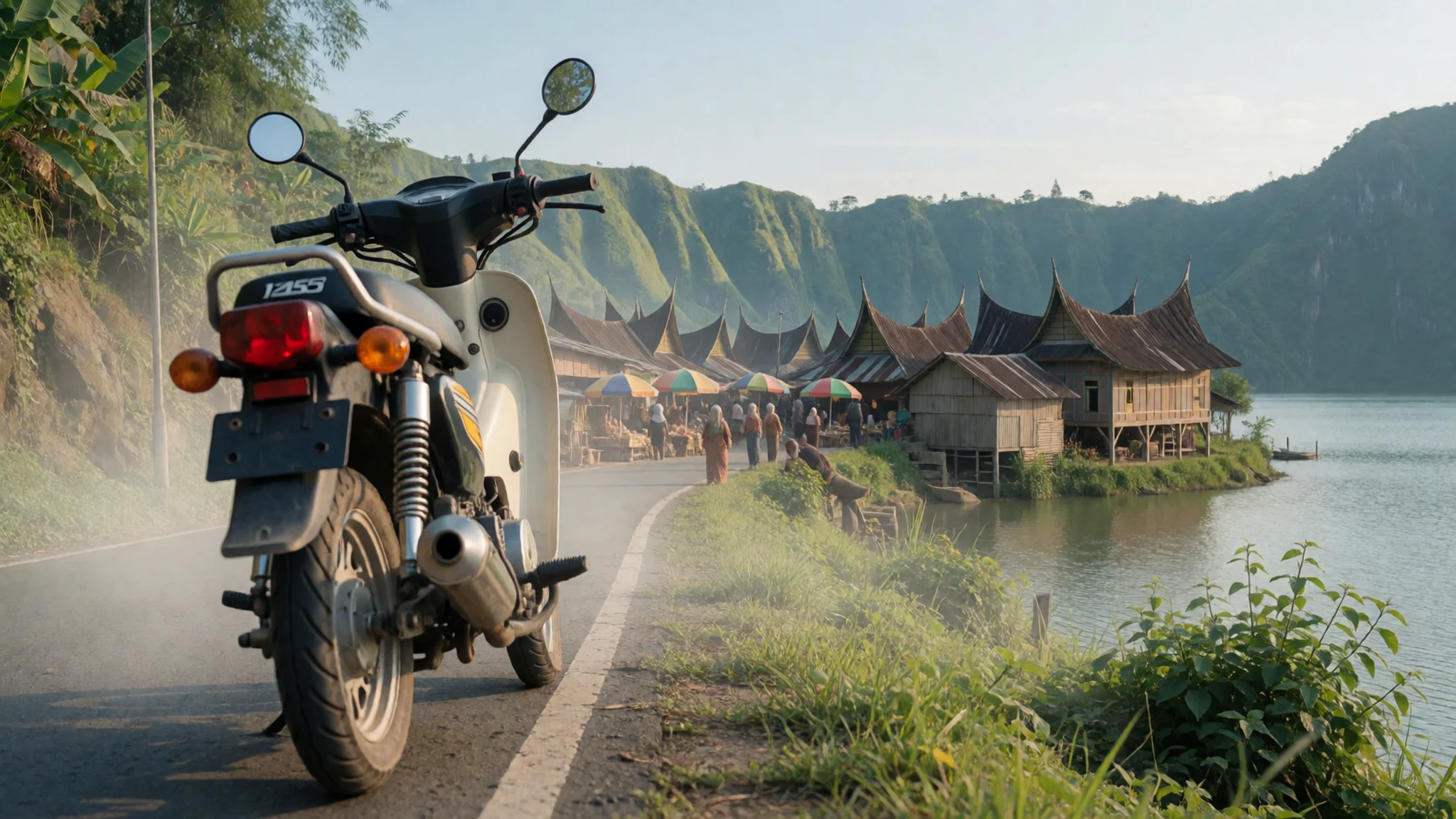
Culture
Lake Maninjau lies in Minangkabau country, where daily life follows adat, a body of customary law, alongside Islam. Descent and inherited land pass through the mother's line, and the family's ancestral house, the rumah gadang, with its sweeping horn-shaped roof, is the visible symbol of that system. A mosque anchors each village, and the call to prayer carries across the water at dawn and again through the day. Social life is gentle and a little formal; greetings, small talk and a shared glass of tea matter more than hurrying to the point. Weddings and harvest gatherings bring out songket cloth, drums and flutes, and performances such as the plate dance and silat, a martial art practised as much for grace as for fighting. Many families have relatives working in distant cities, and the return home for Eid fills the lanes with cars and relatives. Visitors usually find people curious and friendly, often keen to practise a little English, but private about religion and family. Alcohol is uncommon in village life, and pork is not served at Muslim-run eateries. The rhythm of the day starts early, with farmers in the fields and fishers on the water before the heat builds. When walking through villages or near a mosque, dress modestly, cover shoulders and knees, and ask before photographing anyone.
What to wear
Around Lake Maninjau, traditional Minangkabau dress is worn mainly for weddings, ceremonies and festivals. Women wear a long tunic and skirt in rich colours, with a shoulder or head cloth, and songket: silk or cotton woven with gold or silver thread, a craft associated with weaving villages in the hills near Bukittinggi. Men wear a fitted jacket and trousers with a sarong folded at the waist and a cloth or cap on the head. In daily life people dress for farming, fishing and the weather: cotton shirts, long skirts or trousers, sarongs at home, rubber sandals, and rain jackets or plastic ponchos. Many women cover their hair with a headscarf, and men put on a peci cap and sarong for Friday prayers. Visitors should dress for a warm, wet, hill climate and for a conservative Muslim community. Light, quick-drying clothes that cover shoulders and knees are comfortable and respectful in villages, and a thin rain layer is useful at any time of year. Sturdy shoes with grip suit the wet forest paths, while sandals are enough for the shore. For swimming, shorts and a T-shirt or a modest swimsuit draw less attention than beachwear, and a sarong doubles as a cover-up and a towel.
What to eat
- Rendang — Rumah makan padang and lakeside eateries
Beef slow-cooked in coconut milk and spices until the sauce reduces and darkens into a dry, deeply savoury coating. It is a Minangkabau signature and keeps well. Look for it at any rumah makan padang or lakeside eatery, ideally with rice and a green chilli sambal.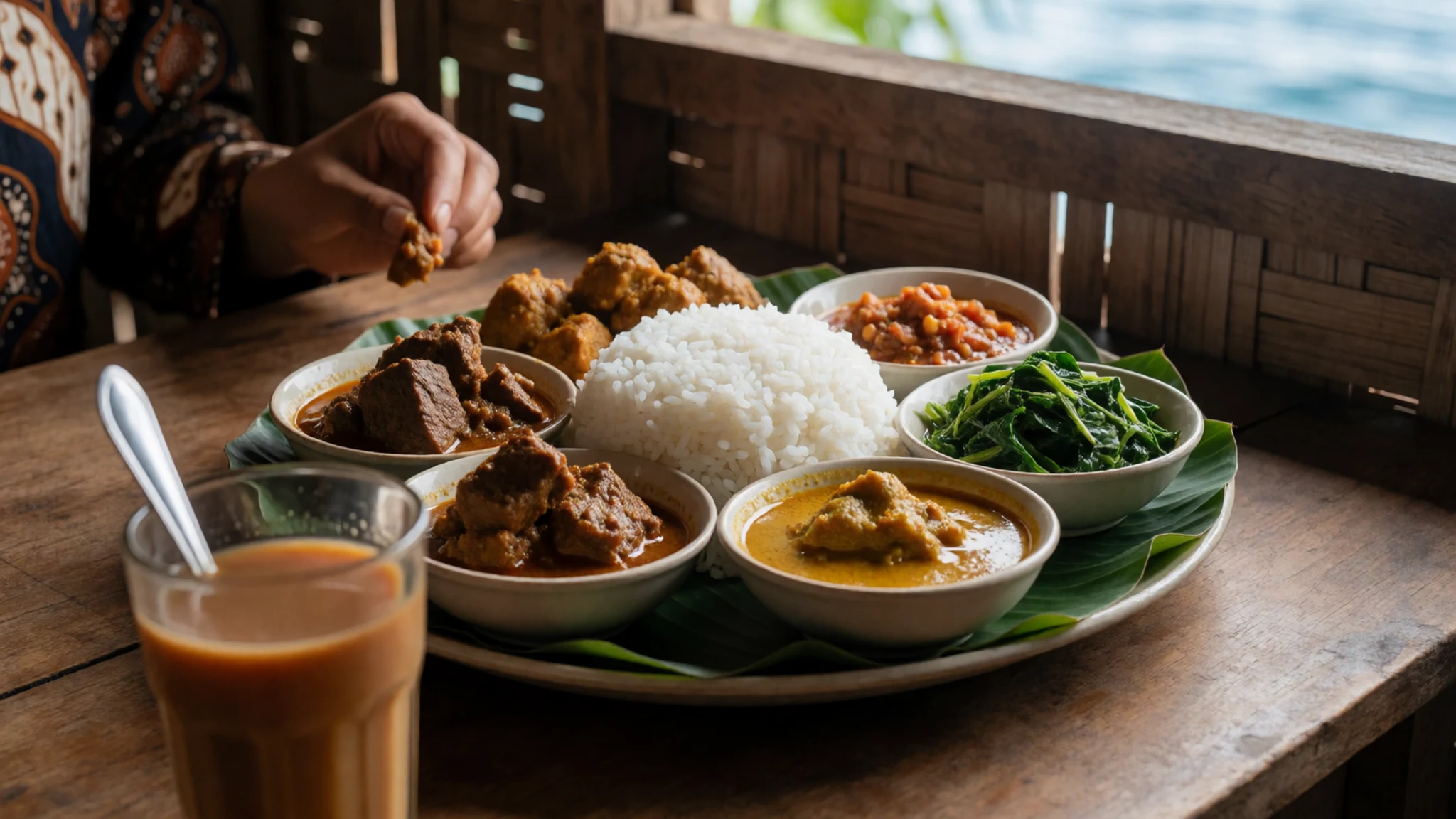
- Palai rinuak — Village eateries and roadside stalls on the lakeshore
Rinuak are tiny silvery fish from the lake, mixed with grated coconut, chilli and spices, wrapped in banana leaf and steamed or grilled. Look for it at small village eateries and roadside stalls along the shore, often served hot with rice.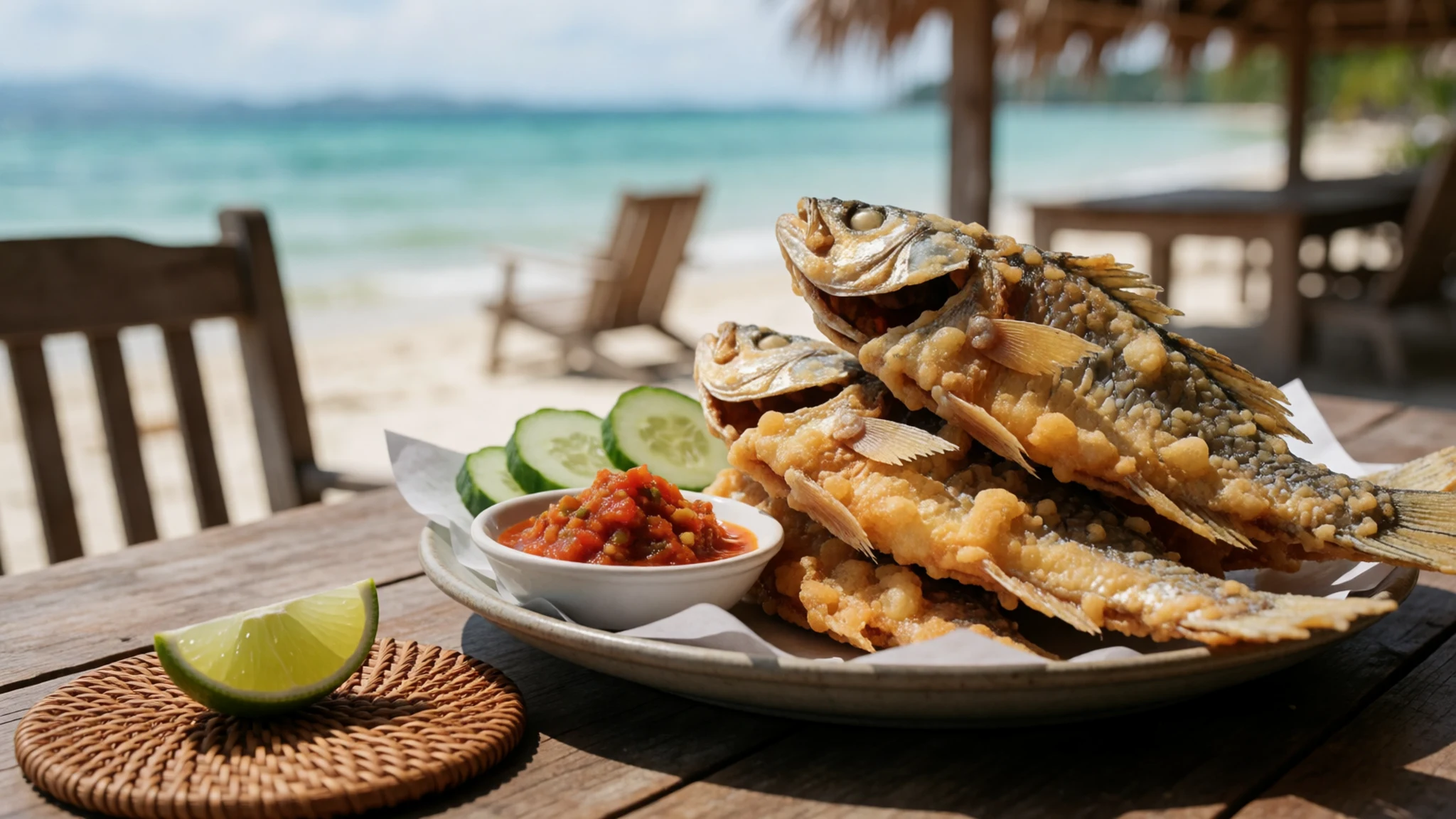
- Nasi padang — Rumah makan padang in Maninjau town and Bukittinggi
Nasi padang is rice served with a spread of Minangkabau dishes: curries, fried fish, greens, eggs and sambal. In many places the plates arrive unasked and you pay for what you eat. Find it at any rumah makan padang in Maninjau town or Bukittinggi. - Sate Padang — Evening street stalls in Bukittinggi and larger towns
Skewered beef offal or meat grilled and served with a thick, spiced rice-flour sauce, yellowish-brown and hot with chilli. It is a Padang-style street food, found at evening stalls in Bukittinggi and the bigger towns on the way to the lake. - Pinyaram — Village shops and market stalls
A small, chewy, round cake of rice flour and palm sugar, fried until the edges crisp. It is a Minangkabau sweet usually sold in village shops and market stalls, and goes well with sweet tea or coffee at the end of a walk.
Plan it
Best time. June to September is usually the drier stretch, with clearer mornings for views and walking. Rain can arrive in any month in the West Sumatran hills, and afternoon cloud over the rim is common, so start days early and carry a rain layer.
How long. 2–3
Getting there. Fly to Minangkabau International Airport near Padang, then take a bus towards the lake via Lubukbasung or Pariaman (about three hours). From Bukittinggi, buses reach the rim and descend the hairpin road to Maninjau in roughly an hour and a half.
Budget. low
Tips
- Start walks and rim viewpoints early, before cloud fills the crater
- Carry cash, as cash machines are scarce and small eateries rarely take cards
- Ask your guesthouse about road and path conditions, since landslides can close sections after heavy rain
- Pack a light rain layer and insect repellent, whatever the month
- Drink bottled or filtered water rather than tap water
Etiquette
- Dress modestly in villages and near mosques, covering shoulders and knees
- Ask before photographing people, especially women and children
- Keep noise down around the call to prayer and on Friday midday
Nearby
Sources
- Wikidata Q177526 (CC0)
- Wikipedia: Lake Maninjau (rev 1366230966) (CC BY-SA 4.0)
- Wikivoyage: Lake Maninjau (rev 5408070) (CC BY-SA 4.0)
- Maninjau-See, Slimguy (CC BY-SA 2.0 de)
- Relief map of Sumatra, RXerself (CC BY-SA 4.0)
- Fish embankment in Lake Maninjau, SpartacksCompatriot (CC BY 3.0)
- Lake Maninjau panorama, MichaelJLowe (CC BY-SA 2.5)
- Around Bukittinggi, Danau Maninjau kids, Arian Zwegers (CC BY 2.5)
- Boat in Maninjau hydropower, D.W. Fisher-Freberg (CC BY 3.0)
- Bukit Barisan ditepi danau Maninjau, Arif Zanielgo (CC BY-SA 4.0)
- Cagar Alam Maninjau, Wahyudi Muharman (CC BY-SA 4.0)


