Laguna Grande
Laguna Grande, United States
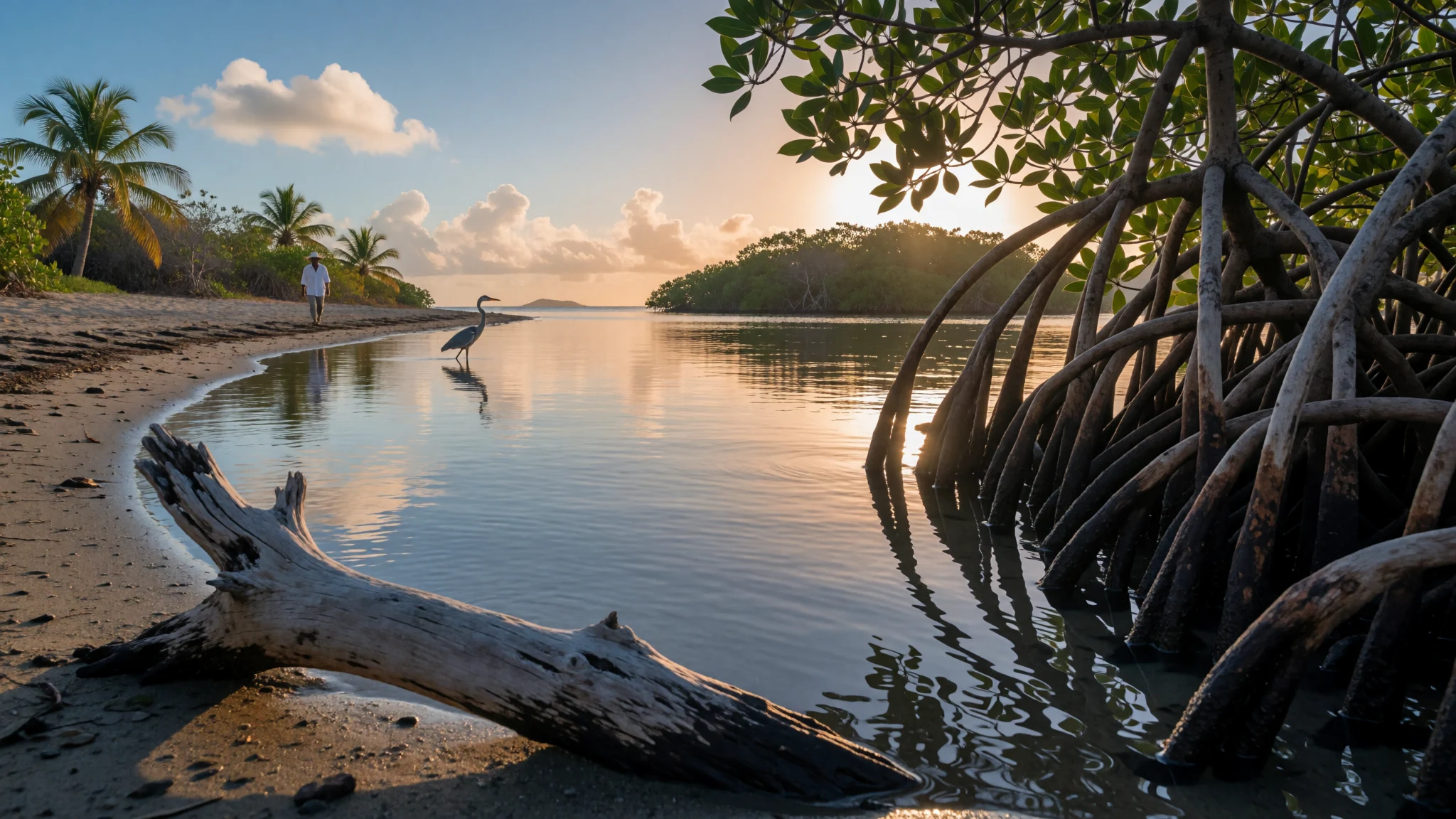
Laguna Grande is a mangrove-ringed lagoon in Puerto Rico where a night paddle turns every stroke of the water a glowing blue.
The place
Laguna Grande is a small coastal lagoon at the north-east tip of Puerto Rico, in the municipality of Fajardo, beside the Las Cabezas de San Juan nature reserve. Mangroves ring its edge, and a narrow channel links it to the open sea. Most people know it by its nickname, the Bioluminescent Bay. After dark, microscopic organisms in the water give off a cold blue light whenever something disturbs them, so a paddle leaves a glowing trail and a hand dipped over the side looks lit from within. The effect needs darkness. Tours cluster around the new moon, and a full moon, thin cloud or glare from the shore all wash the glow out. By day the place is plainer and quieter: mangrove channel, a beach entrance, herons on the margins, and views over the Fajardo coast and offshore islands such as Icaco and Palomino. Fajardo itself is a working port town and the ferry hub for Culebra and Vieques, with marinas, a historic plaza and many seafood eateries. Depending on traffic, it is about a 45-minute drive from San Juan's international airport, so the lagoon works as an evening outing from the capital rather than a big expedition. Expect company on popular nights, since tours run in groups and the best dates fill up. Mosquitoes can be fierce at dusk, rain can cancel a trip, and the glow, though real, is subtle until eyes have adjusted to the dark. Anyone expecting fireworks will be underwhelmed, while those who treat it as a quiet, slightly eerie paddle tend to leave happy.
Its story
The story of Laguna Grande is mostly one of delicate balance. The glow comes from dinoflagellates, plankton that flash briefly when the water around them is disturbed. They build up here because the lagoon is sheltered, fed by nutrients from the surrounding mangroves, and joined to the sea only through a narrow mouth that stops them washing away. Take away any one of those conditions and the light fades, which is why bays with a similar glow elsewhere in the Caribbean are treated as fragile. At Laguna Grande the surrounding land sits inside a protected reserve, and tours are typically paddled, not motored, so the water stays calm and clean. The headland has a longer human history too. Cape San Juan Light stands beside the reserve, a coastal landmark that American forces captured and occupied during their invasion of Puerto Rico, and the nearby town of Fajardo grew up around the sea: fishing, shipping and, now, ferries and pleasure boats. The name is worth a note for anyone searching online. Laguna Grande is simply Spanish for 'big lagoon', a label used in several places, and a lake in California carries the same name originally given by Spanish explorers. To find this one, search for Laguna Grande in Fajardo or the Bioluminescent Bay at Las Cabezas de San Juan. The lagoon rewards visitors who treat it as a living system rather than an attraction: quiet voices, no lights, nothing added to the water.
What to see
- A night paddle on the lagoon — Laguna Grande, Las Cabezas de San Juan
The main reason to come to Laguna Grande is the after-dark kayak tour, run by guided operators from the Fajardo area, including Enchanted Island Eco Tours, which pairs a sunset with the bioluminescent bay and a guide who explains the ecology. Kayaks slip down the mangrove channel into the lagoon, where each stroke lights the water. A moonless night is best.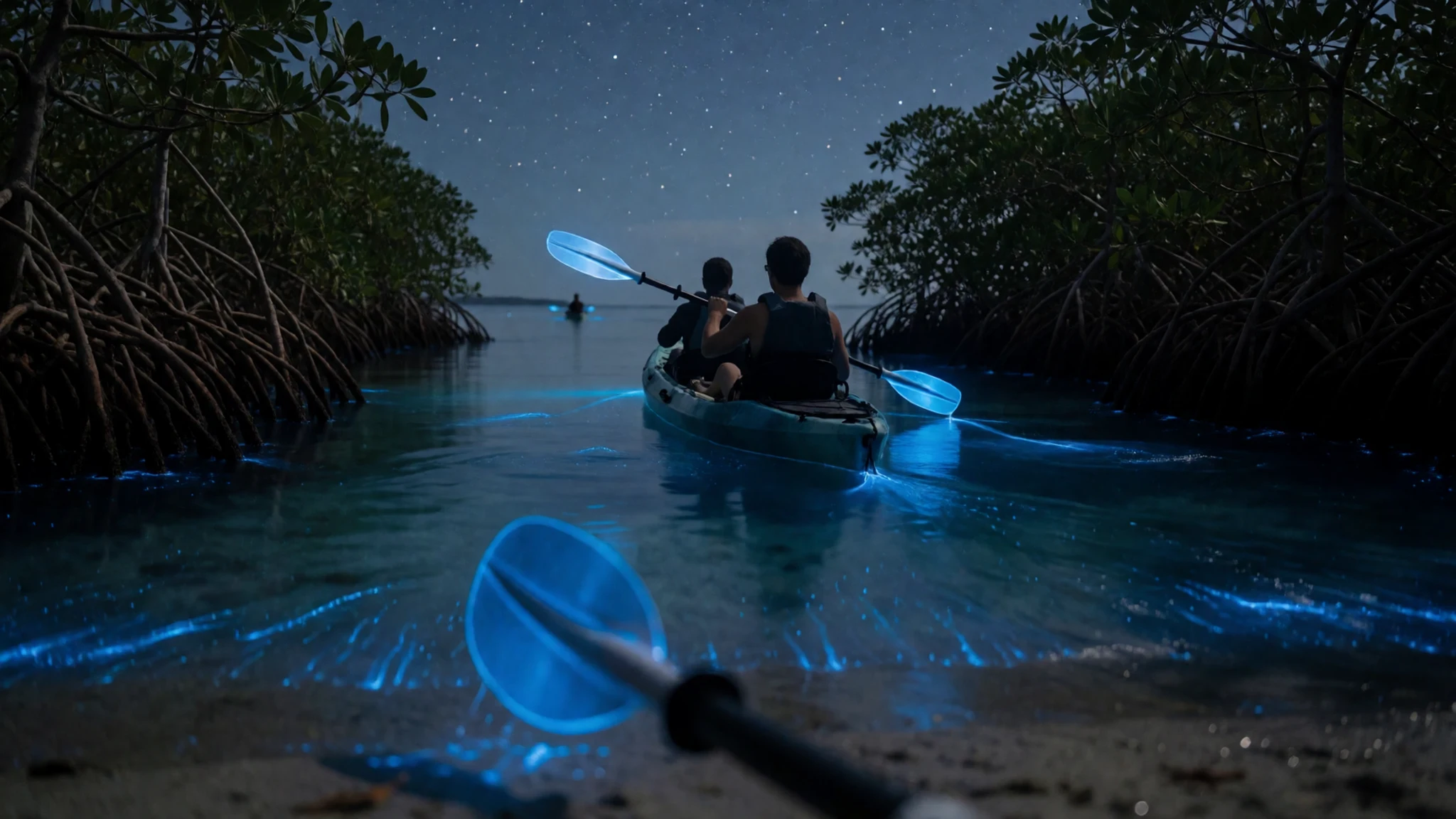
- Night herons at the reserve entrance — Las Cabezas de San Juan reserve entrance
Near the beach entrance to the nature reserve, black-crowned night herons stand in the mangrove margins, hunting at dusk and dawn. A daytime visit suits anyone who finds the night tour too crowded: the same shoreline shows beach, mangrove and lagoon in daylight, and patient visitors are usually rewarded with birds.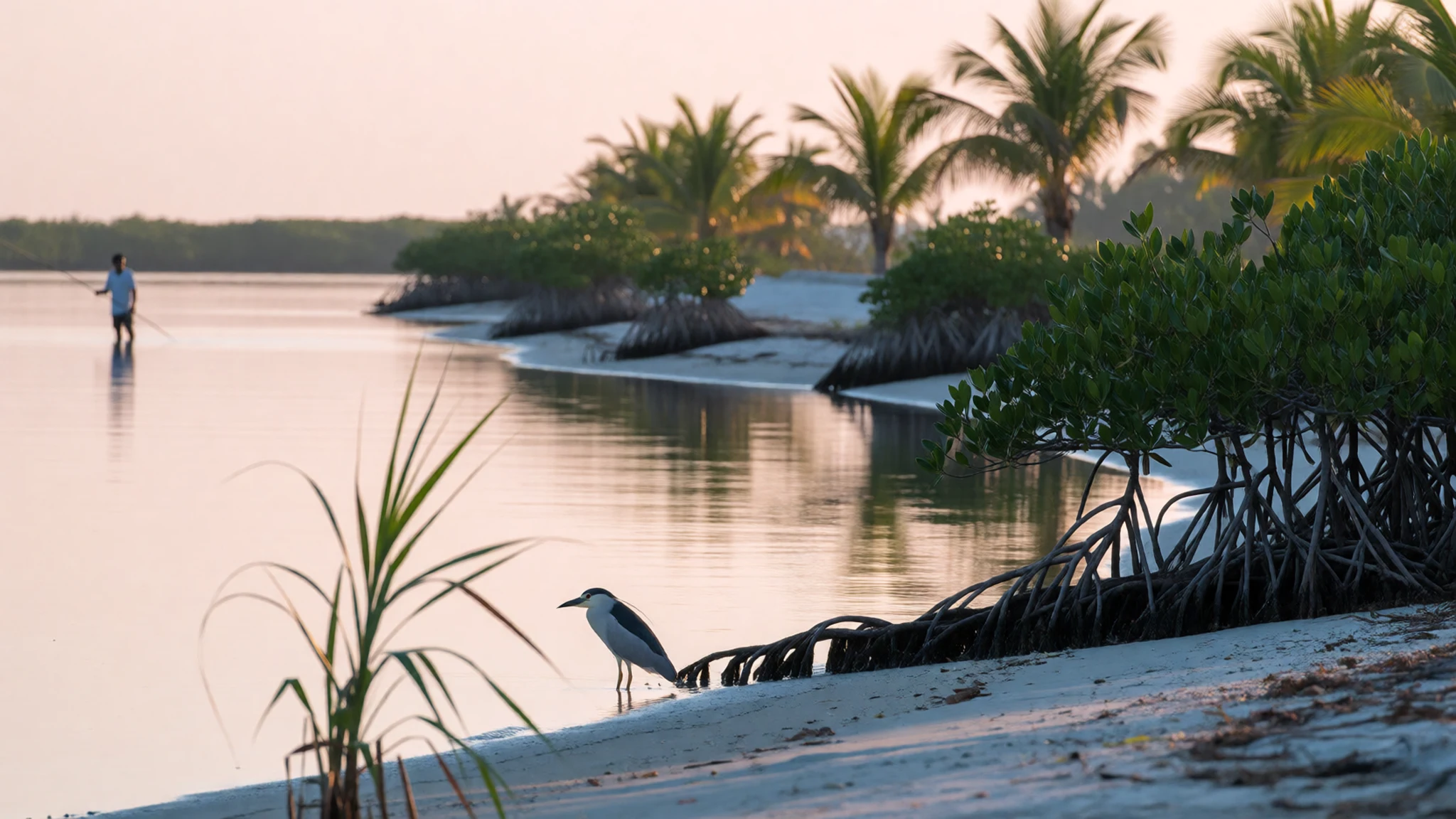
- Cape San Juan Light — Cape San Juan, Fajardo
Cape San Juan Light stands on the headland beside the reserve. American forces captured and occupied this lighthouse during their invasion of Puerto Rico. It looks out over open sea towards the offshore islets, and the exposed point shows how sheltered the lagoon behind it is. Check with the reserve about visiting arrangements before making the trip.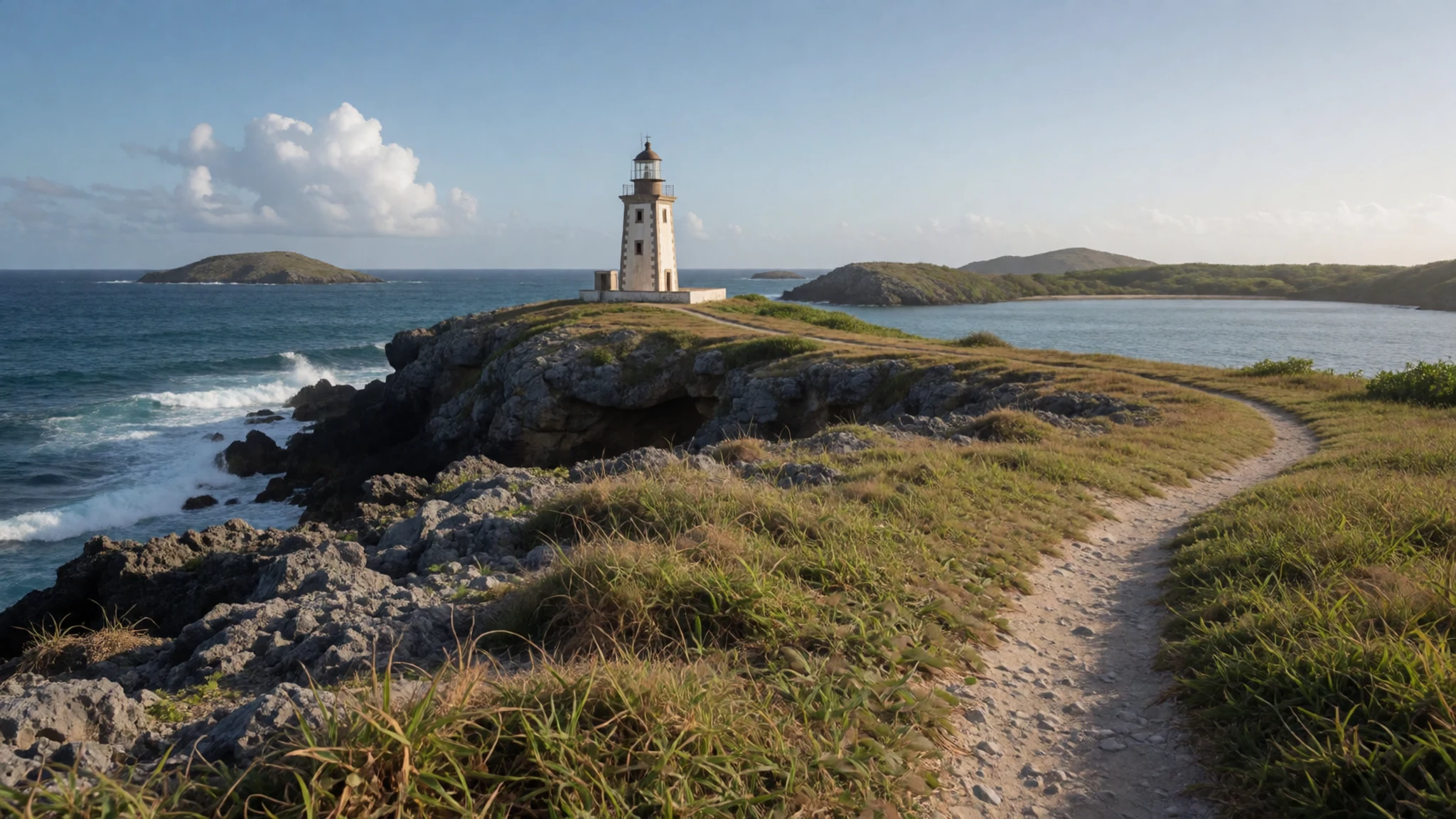
- Fajardo Pueblo — Fajardo town centre
Fajardo's old centre has a historic Roman Catholic church, a Spanish-style plaza and municipal buildings, with shops along the surrounding streets. It makes an easy wander before an evening tour, with shade to sit in and ordinary town life to watch. Mornings are kinder for the heat, and it is the practical place for lunch.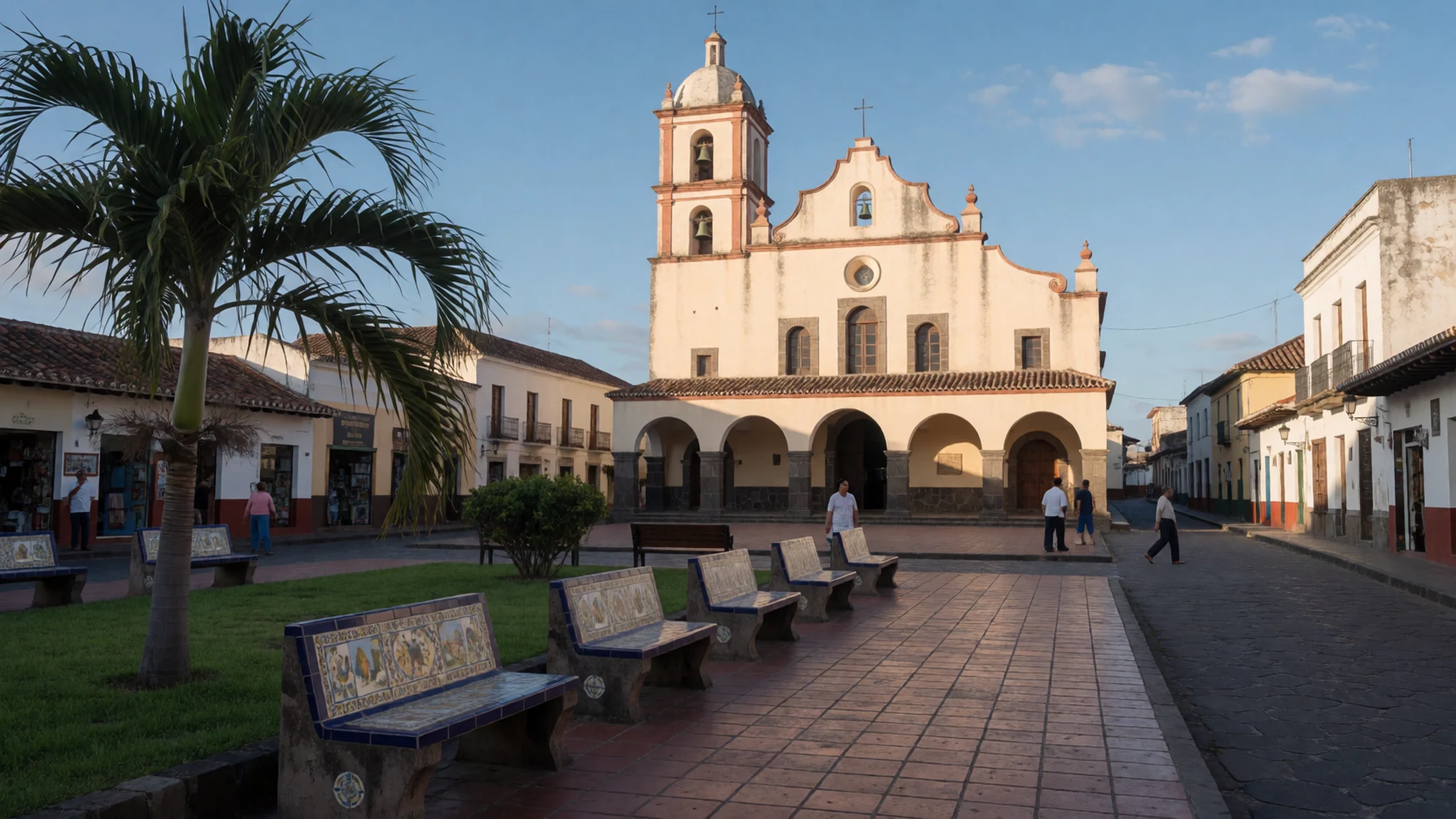
- Culebra by ferry — Culebra, off Puerto Rico's east coast
Culebra is a small island reached by ferry from Fajardo in under an hour, and it is the usual day trip from the lagoon. Flamenco Beach is the stretch of sand most visitors head for, long and often quiet, and rusting military leftovers from the island's days as a US Navy training ground can still be seen. Check ferry times and book ahead.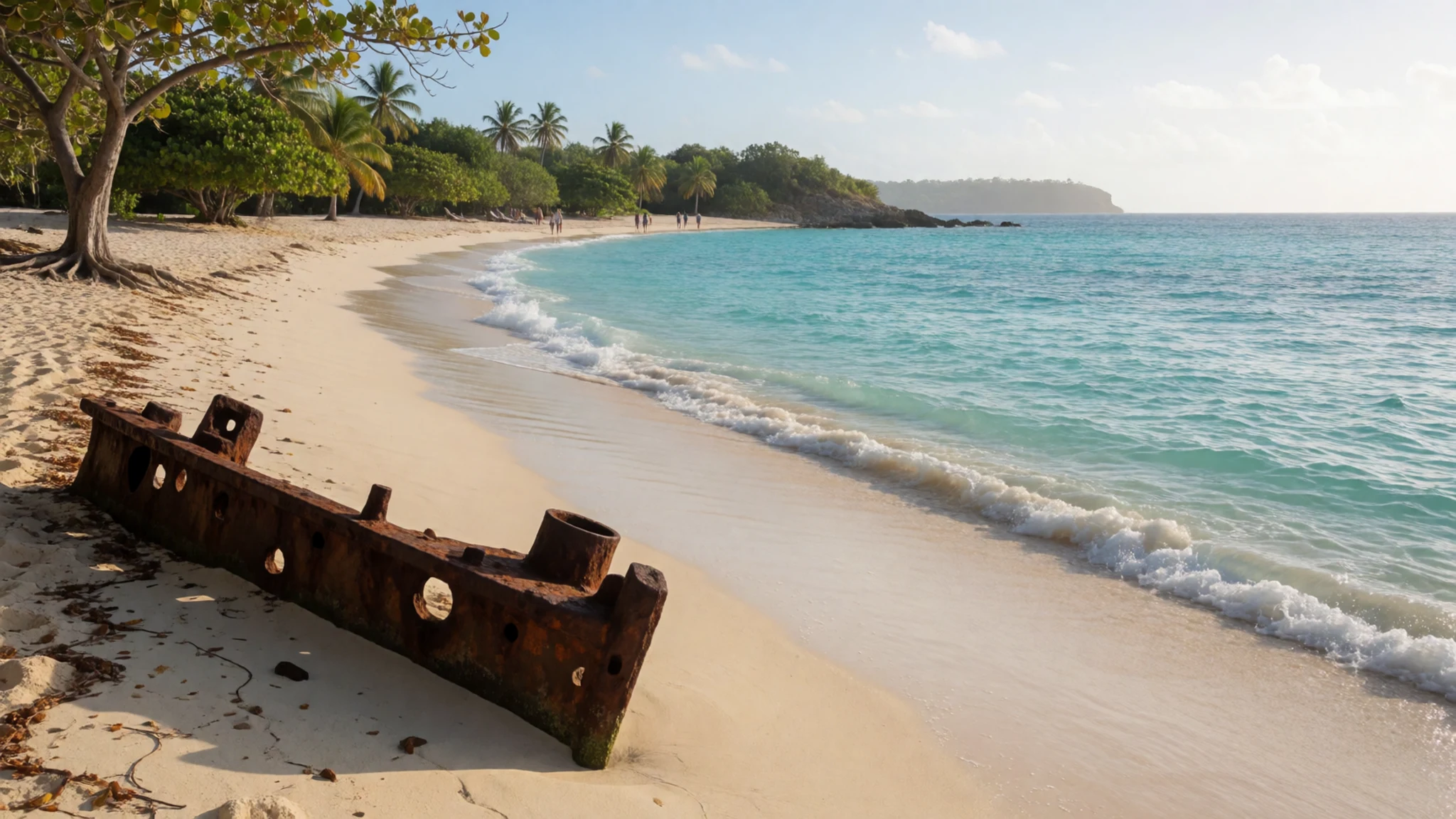
Culture
Laguna Grande sits in a part of Puerto Rico where daily life revolves around the sea, and the culture around it is relaxed, social and outdoorsy. Spanish and English are both widely spoken, though Spanish is the language of the street, and a few words of greeting go a long way. Fajardo's plaza and Catholic church show the Spanish colonial layer, while the marinas and ferry docks show the island's modern identity as a boating base. Weekends bring families to the beaches with coolers, speakers and long lunches, and music is rarely far away: salsa, reggaeton and the older drum-led styles of bomba and plena all feature in island life. Food is central to any outing, and sharing a table with strangers at a seaside eatery is normal. The island is a territory of the United States, so American brands and customs sit alongside Puerto Rican ones, and many residents are proud to separate the two. Conservation matters here too. The lagoon and its reserve are protected partly because local people and conservation groups pushed to keep the water dark and clean, and guides take that seriously. Expect them to explain rules briefly and firmly, and to appreciate visitors who listen. Evening tours are a calm, shared experience rather than a party, so loud behaviour stands out. At the lagoon, keep torches, phone screens and flash photography off, and never put sunscreen, repellent or anything else into the water.
What to wear
Laguna Grande is on an island where traditional dress now appears mostly at festivals and dance performances. The countryside figure of the jíbaro is remembered in a white cotton shirt and trousers with a woven straw hat called a pava, while women's festive dress uses light cotton in full, flounced skirts, sometimes trimmed with lace. Island lacework known as mundillo, a bobbin lace, is a craft often sold as a keepsake. Bomba dancers wear wide, swirling skirts that are part of the performance. In everyday life, people dress for heat and humidity: shorts, T-shirts, sundresses, flip-flops and sandals, with the lightly pleated guayabera shirt appearing at weddings and more formal occasions. Around Fajardo, beachwear is normal by the water but people cover up a little in town and in churches. A visitor going to the lagoon should wear light, quick-drying clothes, preferably dark ones for the night paddle. A long-sleeved top and long trousers help against mosquitoes at dusk, and a spare dry layer is welcome because kayaks splash. Water shoes or sandals with a strap suit the muddy launch point, and a hat and sunglasses help by day. Apply sunscreen and repellent well before reaching the water, and rinse hands before handling anything. For a church visit in Fajardo, a shirt that covers the shoulders is polite, and a light rain jacket is worth packing in any season.
What to eat
- Mofongo — Seafood restaurants around the Fajardo marinas and waterfront
Mofongo is fried green plantain mashed with garlic and oil into a dense mound, often stuffed with seafood, chicken or pork. It is the island dish most visitors try first, and it turns up on almost every menu around Fajardo, especially at seafood eateries by the marinas.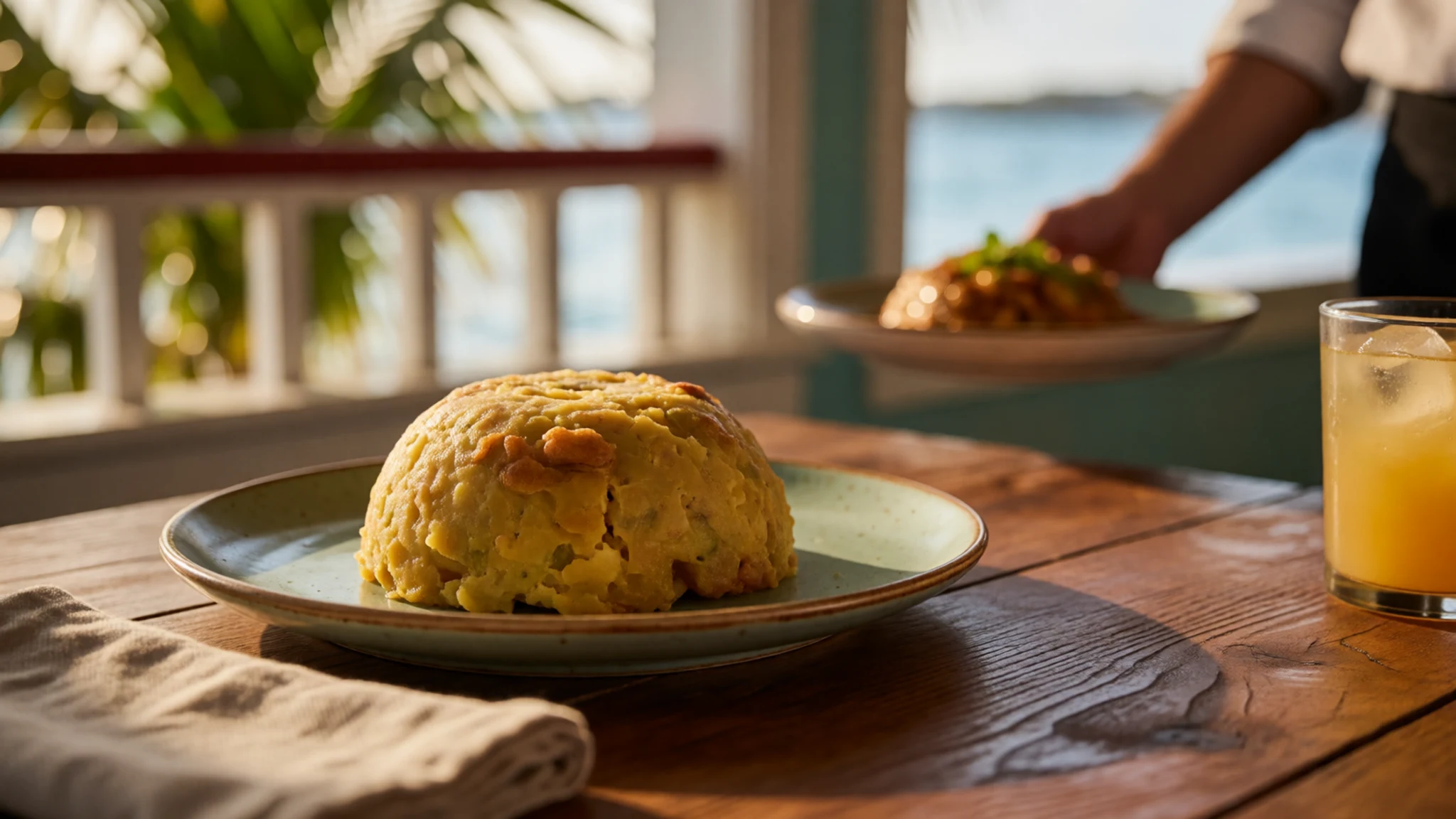
- Pescado frito — Waterfront seafood restaurants near the Fajardo marinas
Whole fried fish, usually a snapper, comes crisp outside and soft within, served with tostones and a wedge of lime. It suits the coastal setting, since many seafood restaurants in the Fajardo area serve it straight from the day's catch.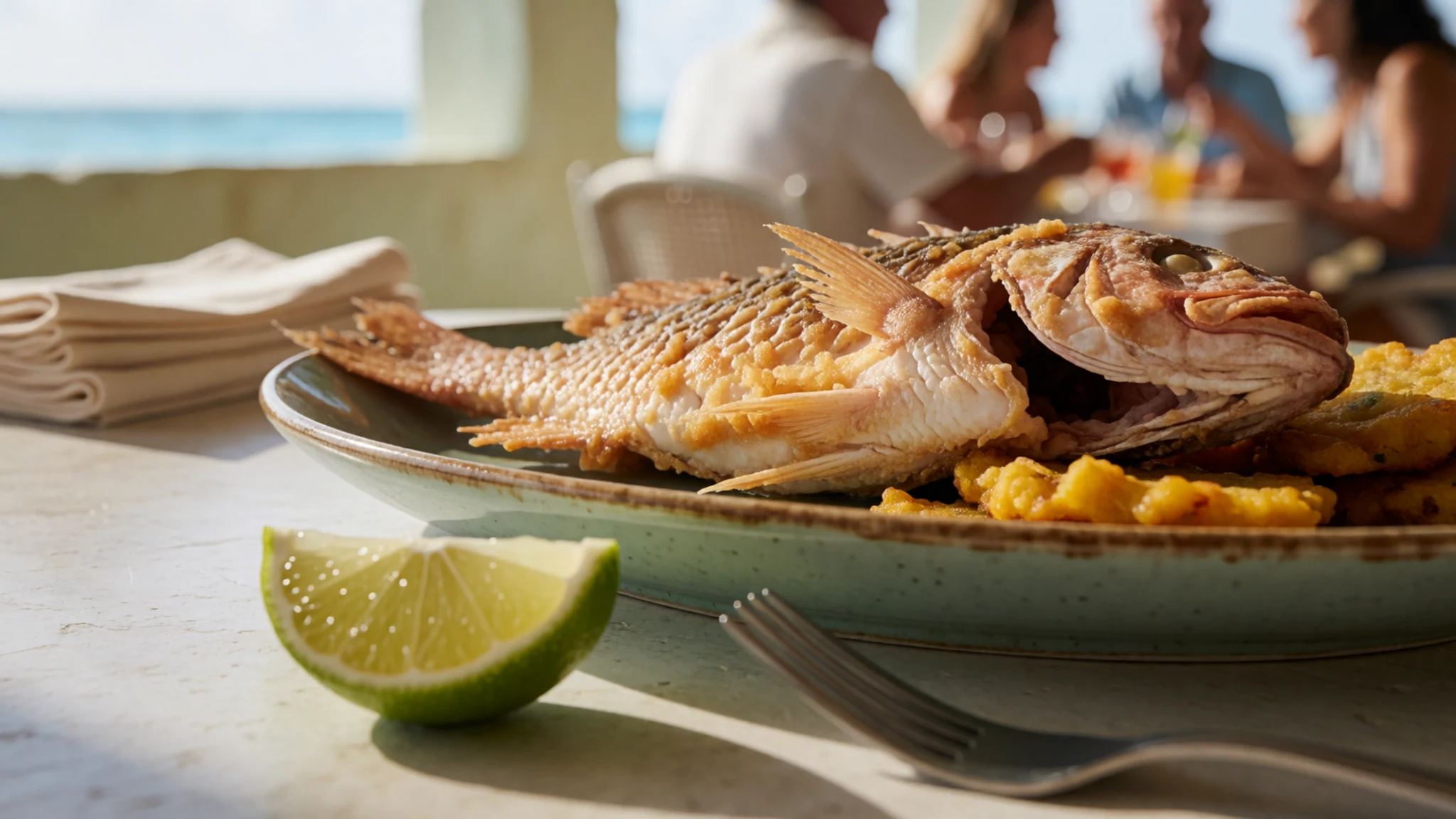
- Alcapurrias — Roadside kiosks and street stalls around Fajardo
Alcapurrias are fritters made from a dough of grated green banana and root vegetables, wrapped around a savoury meat filling and deep-fried. They are cheap, hot and greasy in the best way, and a standard snack to eat between tours or on the way to the ferry. - Tostones — Most local restaurants and bars in Fajardo
Tostones are slices of green plantain fried, pressed flat and fried again until crisp, then salted and served with garlic sauce or ketchup-style dips. They arrive alongside fish and meat dishes, and also work as a shared starter at seafood eateries. - Piragua — Street carts near plazas and beaches around Fajardo
A piragua is a cone of shaved ice flavoured with fruit syrup, sold from small push carts and a welcome relief in humid weather. Common flavours include tamarind, coconut and passion fruit, and it makes a good, simple treat after an evening on the water.
Plan it
Best time. December to April is the drier, calmer part of the year, which suits boats and kayaks, and the nights are comfortable. June to November is hurricane season, with more rain, heat and the chance of cancelled tours. Whatever the month, choose a night near the new moon for the strongest glow.
How long. 1–2
Getting there. Fly to Luis Muñoz Marín International Airport in San Juan, then drive to Fajardo, about 45 minutes depending on traffic. A resort shuttle runs from the airport, so check its current fare and timetable. Fajardo's own airport is closed, and ferries run from Fajardo to Culebra and Vieques. The lagoon lies a short drive beyond the town.
Budget. mid
Tips
- Book a night tour ahead, especially for dates around the new moon, and check the moon phase before choosing a night
- Bring insect repellent for dusk, but put it on well before reaching the water and wash your hands
- Keep phones and torches off on the water so your eyes can adjust and others can see the glow
- Hire a car if you can, since public transport to the lagoon is limited and the last leg is easiest by road
- Check ferry and tour times on the official operator websites, as services change with weather and season
Etiquette
- Follow your guide's instructions in the water and never swim or trail sunscreen or repellent into the lagoon
- Keep voices low and avoid flash photography during the night paddle
- Take all rubbish away and do not pick or disturb mangroves, plants or birds
Nearby
Sources
- Wikidata Q35726232 (CC0)
- Wikipedia (rev 1366208769) (CC BY-SA 4.0)
- Wikivoyage: Fajardo (rev 5401888) (CC BY-SA 4.0)
- Photo: Las Cabezas de San Juan PR Fajardo IMG 2384 Laguna Grande (Bjoertvedt) (CC BY-SA 4.0)
- Photo: Las Cabezas de San Juan PR Fajardo IMG 2385 Laguna Grande (Bjoertvedt) (CC BY-SA 4.0)
- Photo: Las Cabezas de San Juan PR Fajardo IMG 2386 Laguna Grande (Bjoertvedt) (CC BY-SA 4.0)
- Photo: Las Cabezas de San Juan PR Fajardo IMG 2387 Laguna Grande (Bjoertvedt) (CC BY-SA 4.0)
- Photo: Las Cabezas de San Juan PR Fajardo IMG 2388 Laguna Grande (Bjoertvedt) (CC BY-SA 4.0)
- Photo: Nycticorax nycticorax IMG 2427 black-crowned night heron (Bjoertvedt) (CC BY-SA 4.0)
- Photo: Nycticorax nycticorax IMG 2428 black-crowned night heron (Bjoertvedt) (CC BY-SA 4.0)
- Photo: Nycticorax nycticorax IMG 2429 black-crowned night heron (Bjoertvedt) (CC BY-SA 4.0)


Wildlife
- Black-crowned night heron (animal)
Picture a heron that prefers twilight: that is the black-crowned night heron, a medium-sized wader that lives across much of the world. Here, you will find it by the beach entrance to the nature reserve, standing at the mangrove margins and hunting as the light fades and returns at dawn. Watch from a respectful distance, stay quiet and still, and consider going with a guide. Please never offer it food; it hunts perfectly well for itself. - Black-crowned night heron (bird)
Picture a heron that prefers twilight: that is the black-crowned night heron, a medium-sized wader that lives across much of the world. Here, you will find it by the beach entrance to the nature reserve, standing at the mangrove margins and hunting as the light fades and returns at dawn. Watch from a respectful distance, stay quiet and still, and consider going with a guide. Please never offer it food; it hunts perfectly well for itself.