Kyzyl-Oi
Kyzyl-Oi, Kyrgyzstan
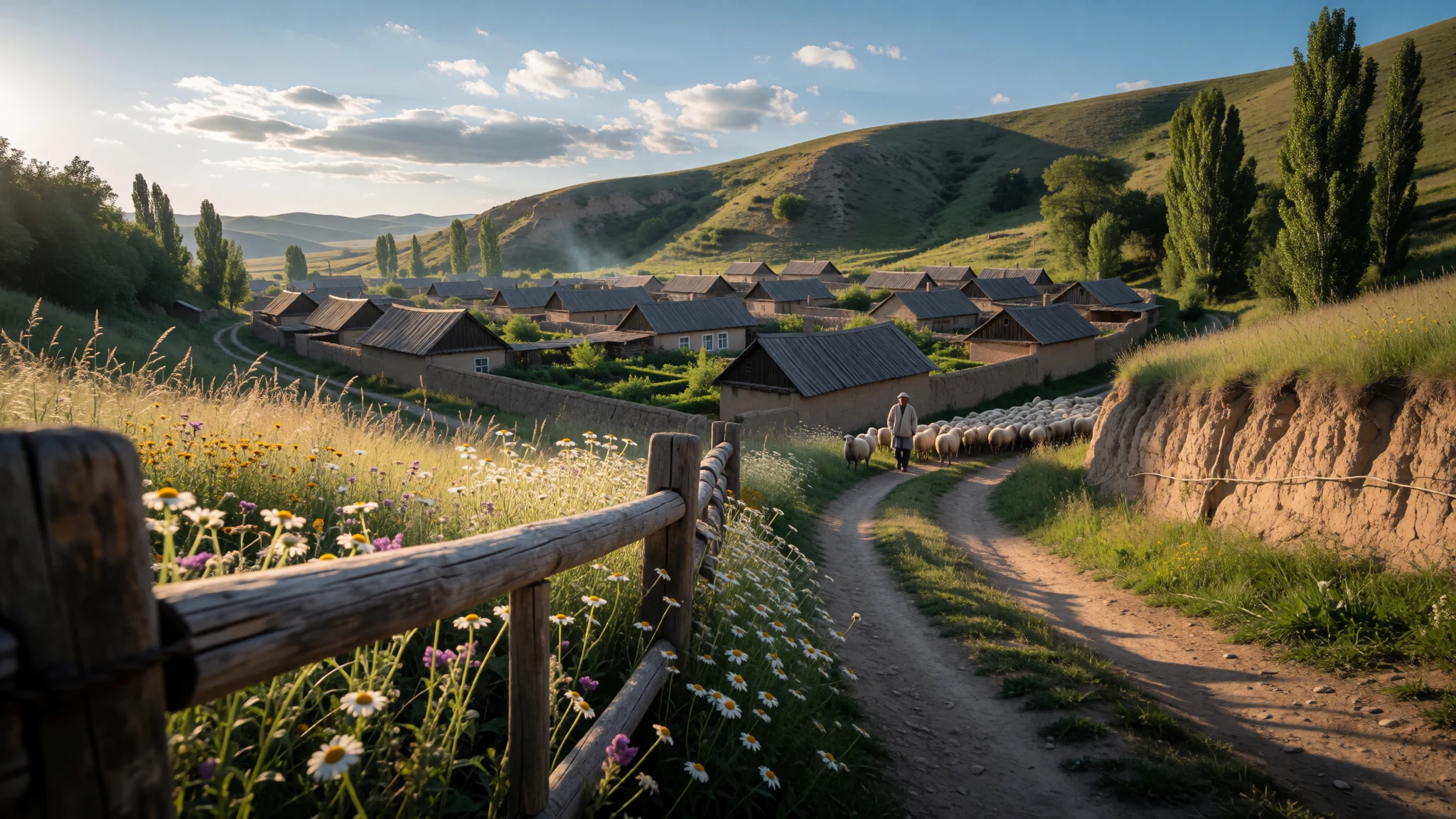
Kyzyl-Oi is a quiet village in Osh Province, set in mountain country of felt yurts, high pastures and long, unhurried tea-table hospitality.
The place
Kyzyl-Oi (also written Kyzyl-Oy) is a village in Osh Province, in the south of Kyrgyzstan. It is not a sight with an entrance gate. It is a small settlement, and its interest lies in the country around it. Kyrgyzstan is a mountain land, and villages like this one sit where a valley widens enough for houses, orchards, a few fields and a road. Herding shaped the region for centuries, and in the warm months families still take animals up to summer pastures and live in felt yurts. A reference photograph titled Kyzyl-Oy to Son-Kul shows the character of the terrain: open grassy slopes, a wide sky, very few trees and even fewer buildings. Southern Kyrgyzstan also has a strong Uzbek presence in its towns and valleys, so food, language and dress shift as the road passes from one community to the next. A realistic visit means simple guesthouses rather than resorts, shared taxis or a hired driver rather than tour coaches, and more time on the road than in the village itself. Osh, the main city of the south, is the practical base for supplies, cash, onward transport and an airport. Summer is the easy season. Spring can be muddy, and winter makes high routes difficult or impassable. Kyzyl-Oi suits travellers who enjoy arriving without a checklist, sitting down to tea when invited, and letting the landscape do most of the work. Anyone wanting fixed opening hours or polished attractions will be happier in Osh or Bishkek.
Its story
Kyzyl-Oi has no recorded history of its own in the sources behind this reading, so its past is best understood through the country around it. The name is usually read as 'red' plus 'valley' or 'hollow', since kyzyl is the Kyrgyz word for red, though a local explanation is always worth asking for. Older peoples, among them the Scythians, lived across the region before the Kyrgyz arrived from Siberia. The Kyrgyz trace their roots to tribes from the Tuva area, who settled here around the 13th century as the Mongol empire expanded. In 1876 the Khanate of Kokand was destroyed and the land was absorbed into the Russian Empire. Russians called the people Kara-Kirghiz, and Slavic settlers began ploughing pastureland, which pushed many herding families aside. Under the Soviet Union the territory went through several reshuffles of status and name, with the republic renamed in 1926 and made a full Soviet republic in 1936. Factories, mines and universities arrived, and everyday life changed sharply. Independence came in 1991. Villages in the south lived through the same sequence of upheavals, from imperial rule to Soviet planning to a difficult transition, and many households today still lean on livestock, orchards and relatives working elsewhere. That layered, resilient history sits quietly behind the hospitality of a village like Kyzyl-Oi.
What to see
- Kyzyl-Oi village and valley — Kyzyl-Oi village, Osh Province
The village itself is the first stop, and the pleasure is modest: a walk past walled gardens and orchards, livestock on the road, and views up to the surrounding slopes. There is no ticket office or marked trail. Ask at a guesthouse about a short route onto the pasture above, and allow time to be invited in for tea.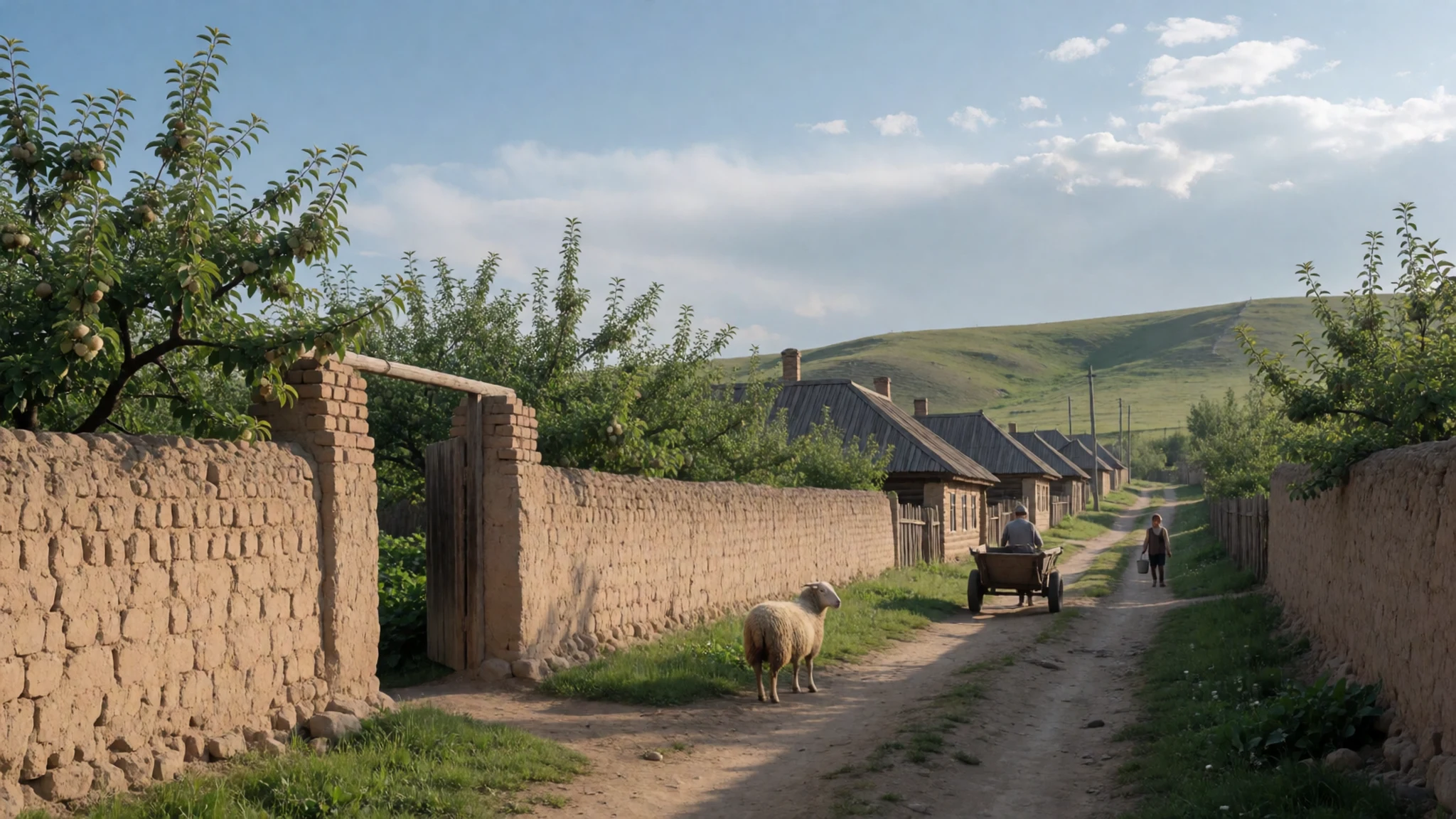
- Osh Bazaar — Osh city centre
Osh is the city the south runs through, and its bazaar is a good place to see how the region eats, trades and dresses. Stalls sell bread, spices, nuts, fabrics and hardware, and the crowd mixes Kyrgyz and Uzbek families. Go in the morning, carry small notes, and keep valuables zipped away against pickpockets.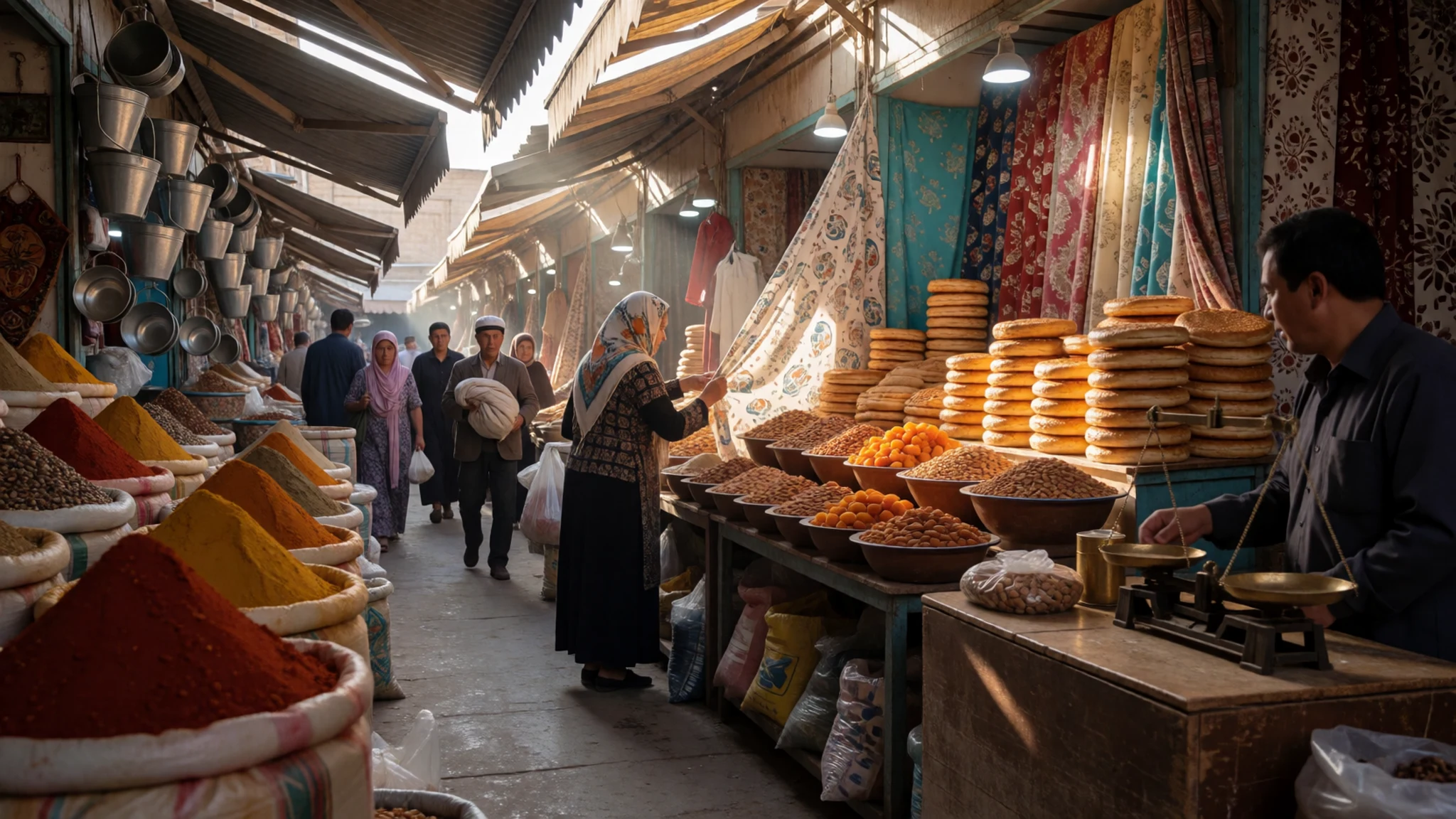
- Sulaiman-Too — Osh city
Sulaiman-Too is a rocky mountain rising straight out of Osh, and the only World Heritage Site in Kyrgyzstan according to the travel guide used here. Paths and steps climb past shrines and caves to viewpoints over the rooftops. Go early or late to avoid midday heat, and wear shoes with good grip, since the stone can be polished and slippery.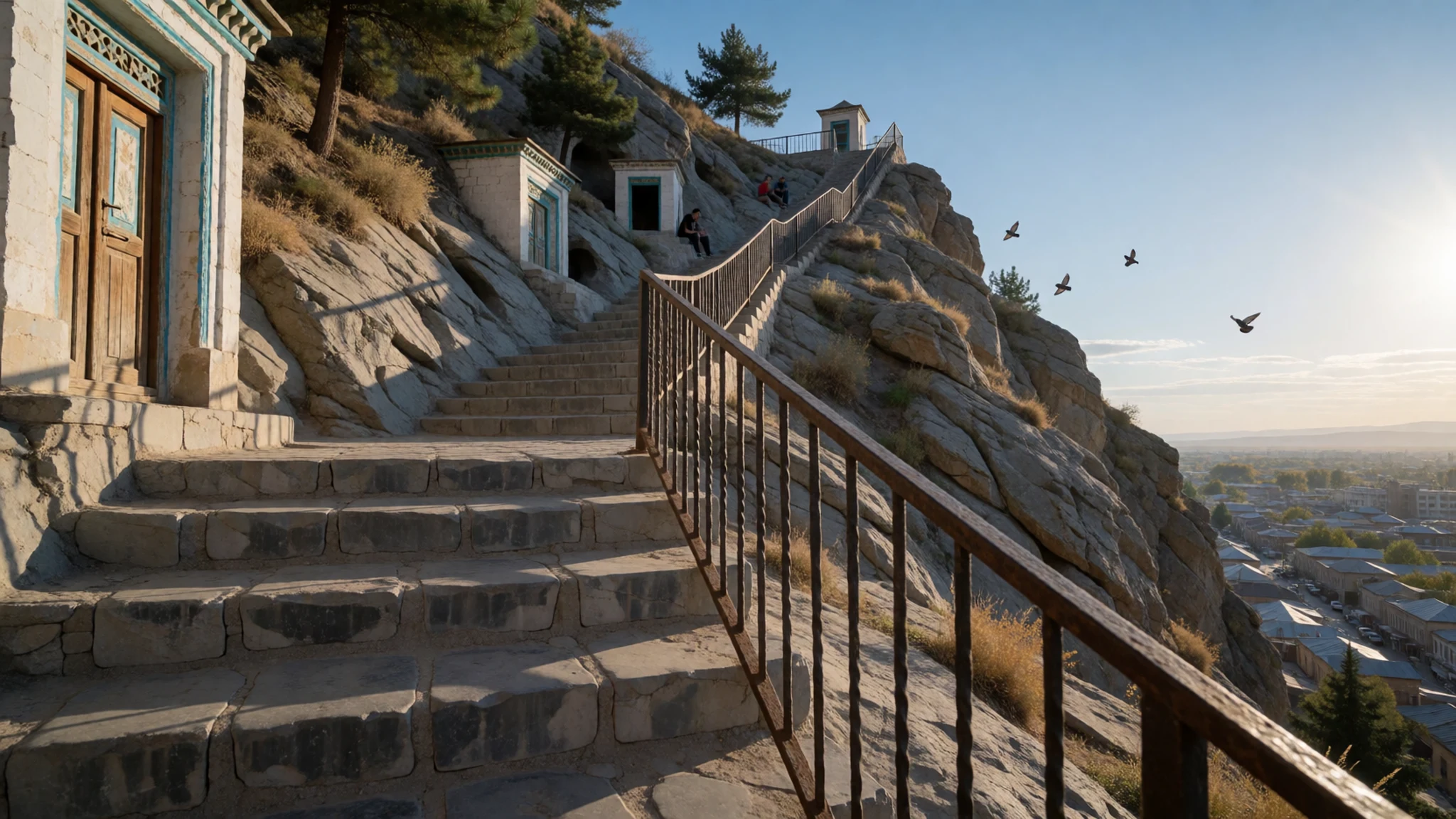
- Arslanbob walnut forest — Arslanbob valley, southern Kyrgyzstan
Arslanbob is a valley village known for its walnut forest, and it draws Kyrgyz and Uzbek families as much as foreign walkers. Trails run through the trees to waterfalls and meadows, and homestays serve meals built around local nuts and fruit. Allow several hours for the journey from Osh, and check road conditions in wet or snowy weather.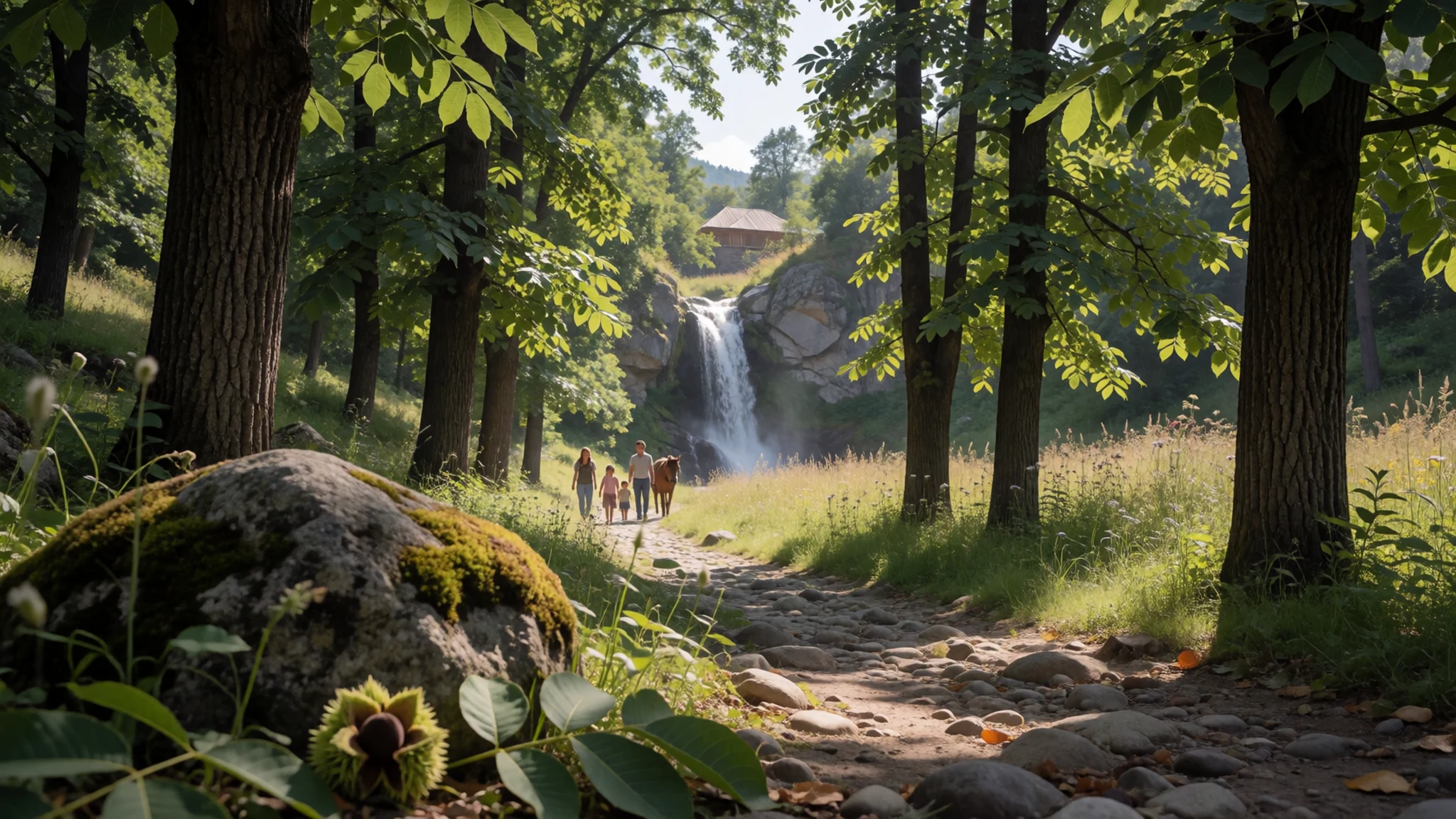
- Song-Kul — Naryn Region highlands
Song-Kul is a high mountain lake in the Naryn region, quieter than Issyk-Kul and known for summer yurt camps. Semi-nomadic families graze their animals on the shores, and visitors can stay in a yurt, ride or walk. Nights are cold even in July, and the season is short, so plan for early summer to early autumn.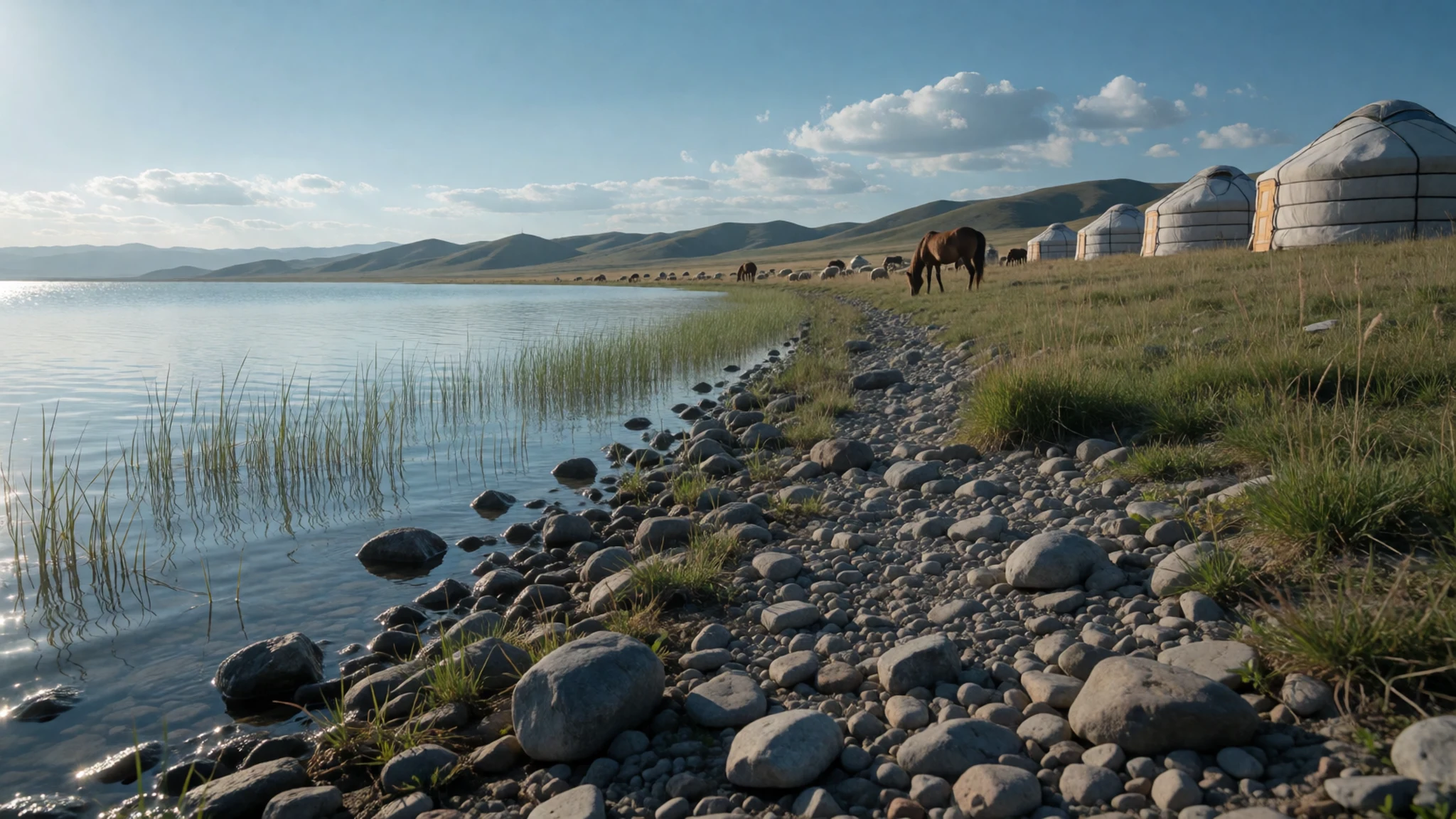
- Tash Rabat — Naryn Region, near the Chinese border road
Tash Rabat is the stone ruin of an old caravanserai in the Naryn region, a reminder that traders once moved through these mountains between Central Asia and China. The building sits in a quiet valley, and yurt stays nearby make it easy to combine with a walk. Check access and track conditions locally, as roads can be rough.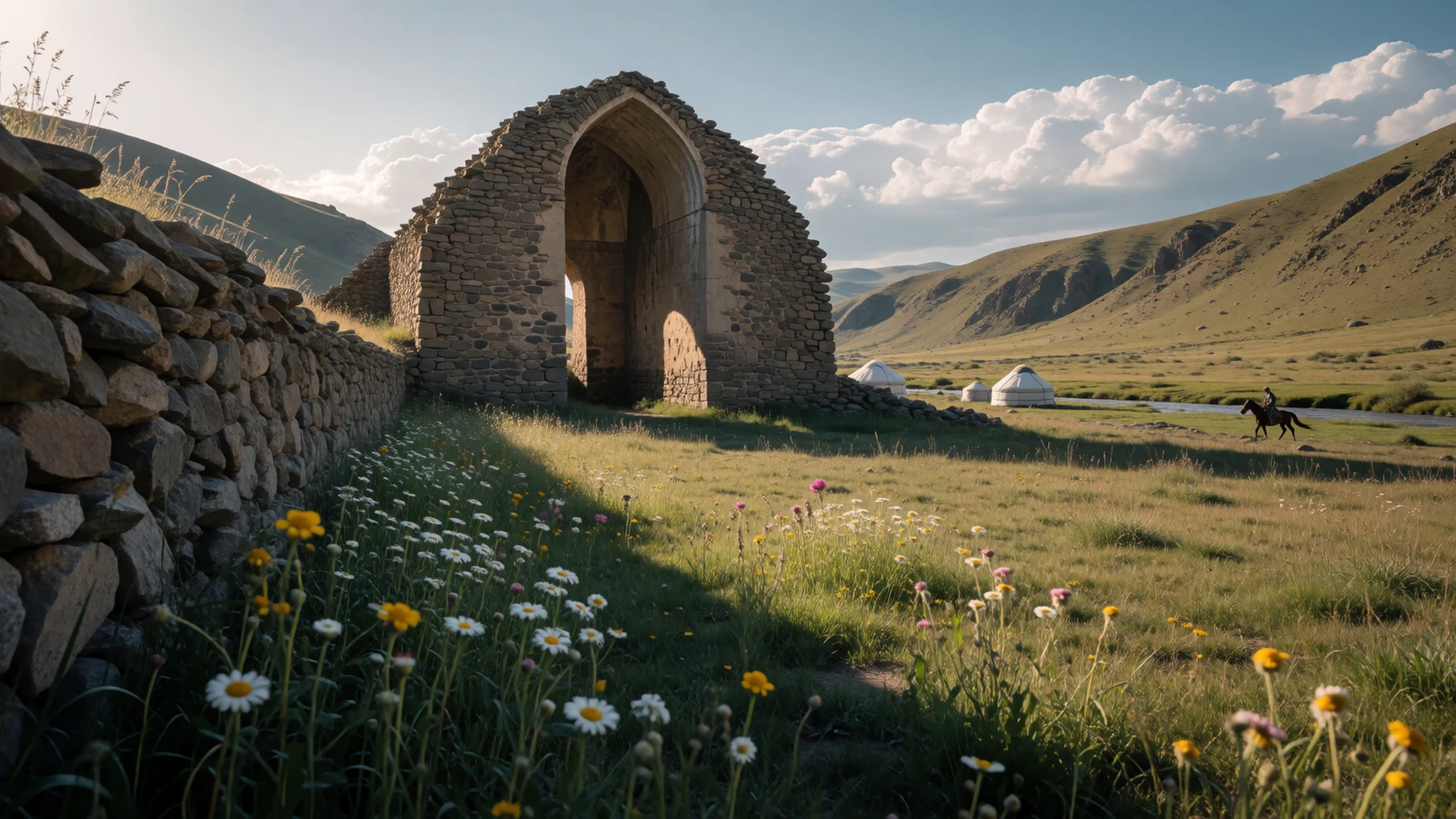
Culture
Kyzyl-Oi belongs to a culture shaped by pastoral nomadism, and that history still explains much of daily life: the felt yurt, the weight given to livestock, and a habit of hospitality that treats any arriving guest as someone to be fed. Kyrgyzstan is nominally Muslim, yet religious practice is relaxed across much of the country and no formal dress code applies. The south, including Osh Province, is more conservative than Bishkek, and village life follows older ideas about modesty and family. Tea sits at the centre of hospitality. A host brews it strong in a small pot, dilutes it with hot water to taste, and fills the cup only part way so that it can be topped up again and again. A half-full cup is a courtesy, not stinginess, and asking for more is polite. An invitation to the table, whether for tea, kymys or something stronger, is a mark of warmth and usually means staying a while. At formal meals the cuts of meat are shared out by age and status, with the head kept for honoured guests. Evenings can bring heavy drinking in some settings, so pacing oneself and declining politely is sensible. Kyrgyz and Uzbek communities live side by side in the south, and both value greetings and small talk before any business. When a family invites you in, take off your shoes at the door, accept at least a little tea or food, and wait to be shown where to sit.
What to wear
Traditional Kyrgyz dress around Kyzyl-Oi draws on felt, wool, leather and quilted cloth, materials suited to a herding life at altitude. The best-known item is the ak-kalpak, a tall white felt hat with dark trim, worn by men at festivals, weddings and national occasions rather than every day. Women's festive dress includes embroidered velvet waistcoats, long dresses and the elechek, a wrapped headdress worn by married women in the past. Felt carpets such as shyrdak, with bold stitched patterns, cover yurt floors and walls, and the same motifs appear on bags and cushions. Day to day, people in the village wear what suits farm and mountain work: practical trousers, jackets, rubber boots, sometimes a felt hat against sun and wind. Younger people dress much as in any Central Asian town, in jeans, trainers and sportswear, while older women often favour headscarves and longer skirts. Visitors should dress for weather first. Even summer days can turn cold and wet at altitude, so layers, a windproof jacket, a sun hat and sunscreen all earn their place. Sturdy, broken-in boots suit stony tracks and muddy pastures. In the south, women should choose knee-length or longer skirts or loose trousers and covered shoulders to avoid unwanted attention. Men are well served by long trousers and a plain shirt. Shorts are best kept for the lakeshore.
What to eat
- Besh barmak — Family celebrations and restaurants serving Kyrgyz food in Osh
Besh barmak, 'five fingers', is the dish of celebration: boiled meat, traditionally sheep or horse, laid over noodles with onion and eaten from a shared platter. Portions are handed out by status, and honoured guests receive the head. A bowl of the rich broth usually comes first.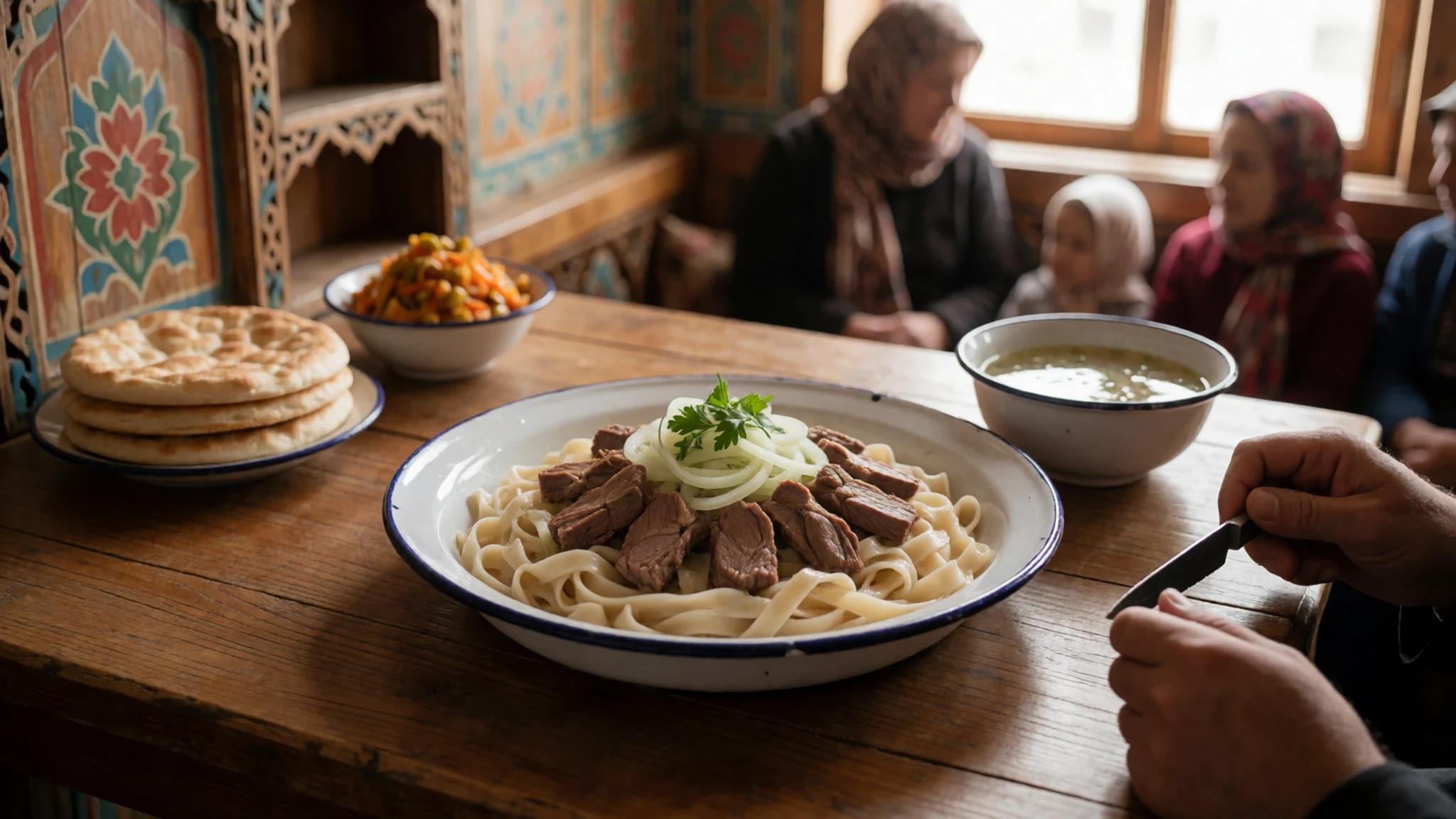
- Chai, light or strong — Any village home, roadside tea house or yurt camp
Tea arrives brewed strong and watered to taste. Ask for jengil chai if you want it light, or kyzyl chai for strong and red. Hosts pour partial cups on purpose so they can keep refilling, and bread, jam or sweets often appear alongside.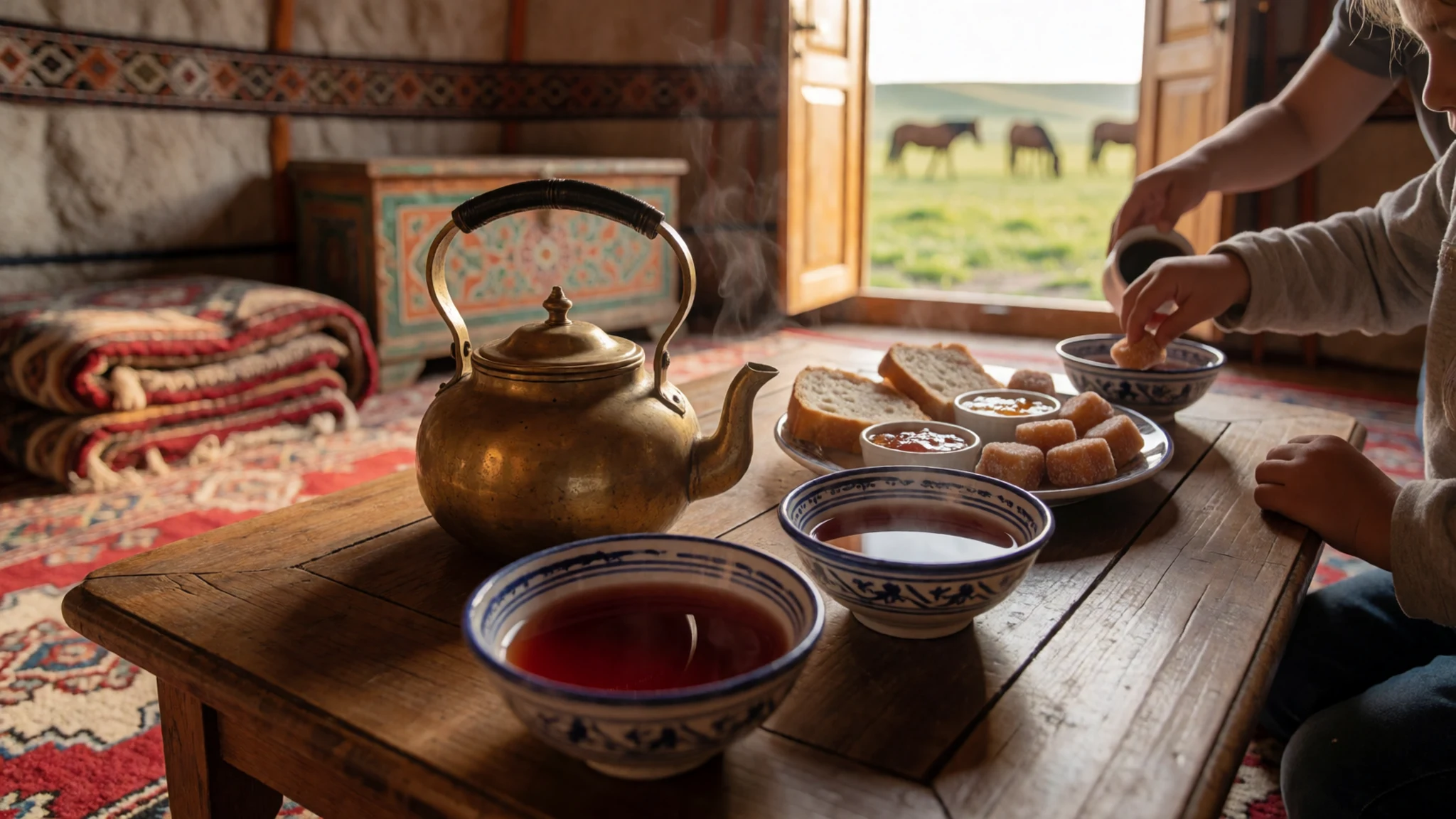
- Kymys — Summer yurt camps and roadside stalls in the pastures
Kymys is fermented mare's milk, slightly sour, lightly fizzy and traditionally drunk in summer. It is an acquired taste, and a sip is welcome even if the bowl is not finished. Visitors with sensitive stomachs may prefer to try only a little. - Fresh bread and market produce — Osh Bazaar and the food stalls of any town market
Kyrgyz markets favour small, flavourful vegetables over large showy ones, alongside round loaves baked fresh each morning. Vegetarians can buy fruit, vegetables and bread here and eat well, but should wash produce before eating it. - Walnuts and dried fruit — Arslanbob village and the nut and dried-fruit rows of Osh Bazaar
Walnuts from the Arslanbob forest are sold across the south, usually alongside dried apricots, raisins and almonds. They make portable fuel for walking days and are a common gift to bring home from a trip.
Plan it
Best time. June to September, when the high pastures are green, tracks are open and yurt stays are possible; July and August are the warmest and busiest months. Spring brings mud, and winter is cold enough to close high routes.
How long. 2–3
Getting there. Fly to Osh Airport (OSS), the nearest airport to this part of the south, or to Manas Airport (BSZ) at Bishkek, both with links to Istanbul and Moscow. Most visitors enter on the Kyrgyz eVisa, so check the official eVisa system before travel. The last leg from Osh is by road, usually a hired driver or shared taxi.
Budget. low
Tips
- Check road and weather conditions locally before heading up to high pastures
- Carry cash in small notes, since village shops and guesthouses may not take cards
- Bring layers and a rain jacket, as mountain weather changes fast even in summer
- Vegetarians should say so early and top up from bazaar bread, fruit and nuts
- Do not leave money or valuables visible in rural guesthouses
Etiquette
- Remove shoes at the door of a home or yurt
- Accept at least a little tea or food when it is offered
- Dress modestly in the south, covering shoulders and knees
Nearby
Sources
- Wikidata Q17617969 (CC0)
- Wikivoyage — Kyrgyzstan (rev 5420229) (CC BY-SA 4.0)
- Wikipedia — Kyrgyzstan (CC BY-SA 4.0)
- Photo: Kyzyl-Oy to Son-Kul, Ninara (CC BY 2.5)
