Kpalimé
Kpalimé, Togo
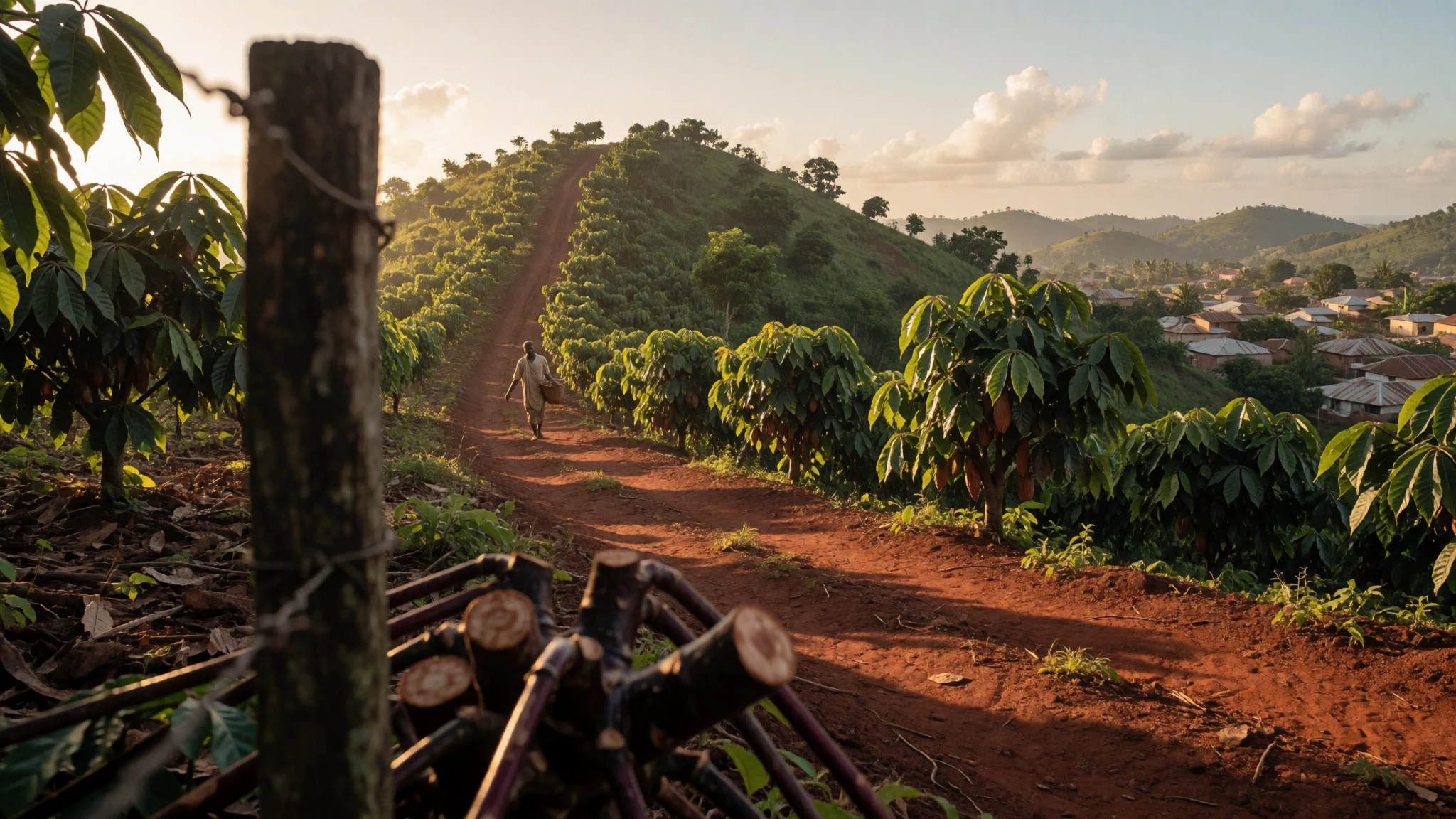
Kpalimé is a highland market town in Togo where forested hills, waterfalls and a busy produce trade sit a short walk apart.
The place
Kpalimé sits in the forested hills of south-western Togo, a market town whose streets climb towards the Ghana border and the higher ground of the Plateaux. The town is the commercial heart of a farming country of cocoa, coffee, fruit and vegetables, and the roads into it pass through villages where produce is sorted and sent on toward Lomé. Mornings belong to the market: mangoes, pineapples, bananas, tomatoes and greens are heaped for sale while trucks and motorbikes wait at the edge. The light is softer than on the coastal plain. The air smells of damp earth after rain and of woodsmoke when the months are dry.
The setting is why people stay after the trading. Ridges and wooded valleys surround the town, and streams drop over rock into pools that families treat as picnic places. Paths leave the paved streets quickly and become red laterite between farms and forest. On a clear day the higher ground stands above the haze; on a humid one the hills close in. The town was the village Agomé-Kpalimé, and the German station, the governor's house and the cemetery are at Misahohé, about 9 km away, but daily life is Ewe-speaking and present-day: schools, churches, small shops and the steady traffic of the market.
Kpalimé is not arranged as a resort. Lodging is modest, evenings grow quiet once the market packs away, and the pleasure is a walk out to a fall, a viewpoint or a village. Visitors share the roads with farmers, traders and schoolchildren. Heat builds by midday. Rain can turn a track to mud in the wet months, and a waterfall that is an easy outing in drier weather may run hard after storms.
Its story
Kpalimé was the village Agomé-Kpalimé, in hills where German administrators, traders and missionaries settled among Ewe communities that already farmed these slopes and traded towards the coast and towards what is now Ghana. The German post office printed Palime on its stamps, and today's spelling, Kpalimé, keeps that name in the form fixed under French rule. German rule ended in 1914, Britain held the town until 1920 and ceded it to France, and it entered the colony that became the Republic of Togo. Independence did not move the market. Cocoa, coffee and food crops still set the calendar, and the road to Lomé is how a harvest becomes cash.
Residents' story is work on the hills: planting under shade trees, fermenting and drying cocoa, carrying fruit in before the heat, and holding family land across generations. Churches grew into social centres as Catholic and Protestant missions spread through the Plateaux, and Sundays still mean music, cloth and long greetings. Older sacred groves and family rites remain; in many households they sit beside church life. The German cemetery is a quiet plot, and painters have added their own marks, including large wall paintings in town.
A visitor meets several layers in one place. Colonial names, French on signs, Ewe in the market and the Ghanaian border a short ride away all belong here. Kpalimé's later years are those of a busy town of the Plateaux, with schools, a hospital and transport yards, known to travellers who want hills and water after the coast. The falls have no founding date. They are the ordinary edge of town, used by families on a free afternoon and by farmers who know the shortcuts.
What to see
- Kpalimé waterfall — the forested hills outside town
A forest cascade near Kpalimé drops through trees into a pool where families spend a cool hour away from the market. The approach leaves paved streets for a morning outing. After rain the water runs harder and the path grows slick; drier weather makes the rocks easier to follow. Motorbike taxis know the turning. The pool is a local picnic place. Visitors should ask before swimming and carry rubbish out.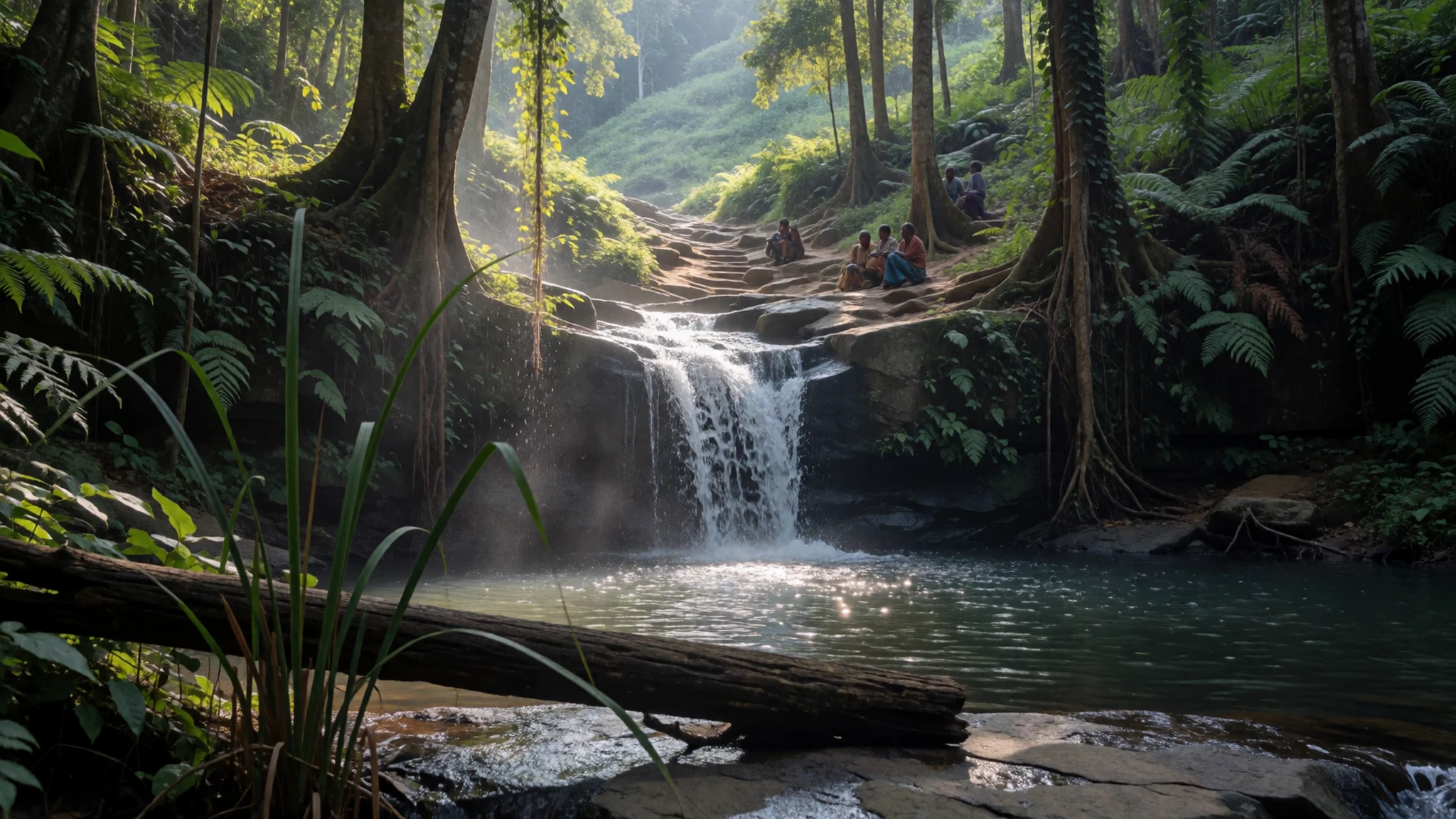
- Hills above town — the ridges above town
The ridges around Kpalimé are farmland, forest and footpath rather than a fenced park. Tracks climb between cocoa plots and villages, and clear weather opens a long view over the town towards the Ghana border. There is no single signed circuit. A path that is easy in the dry months can be mud after storms, so an early start and a local companion help with the heat and the turnings.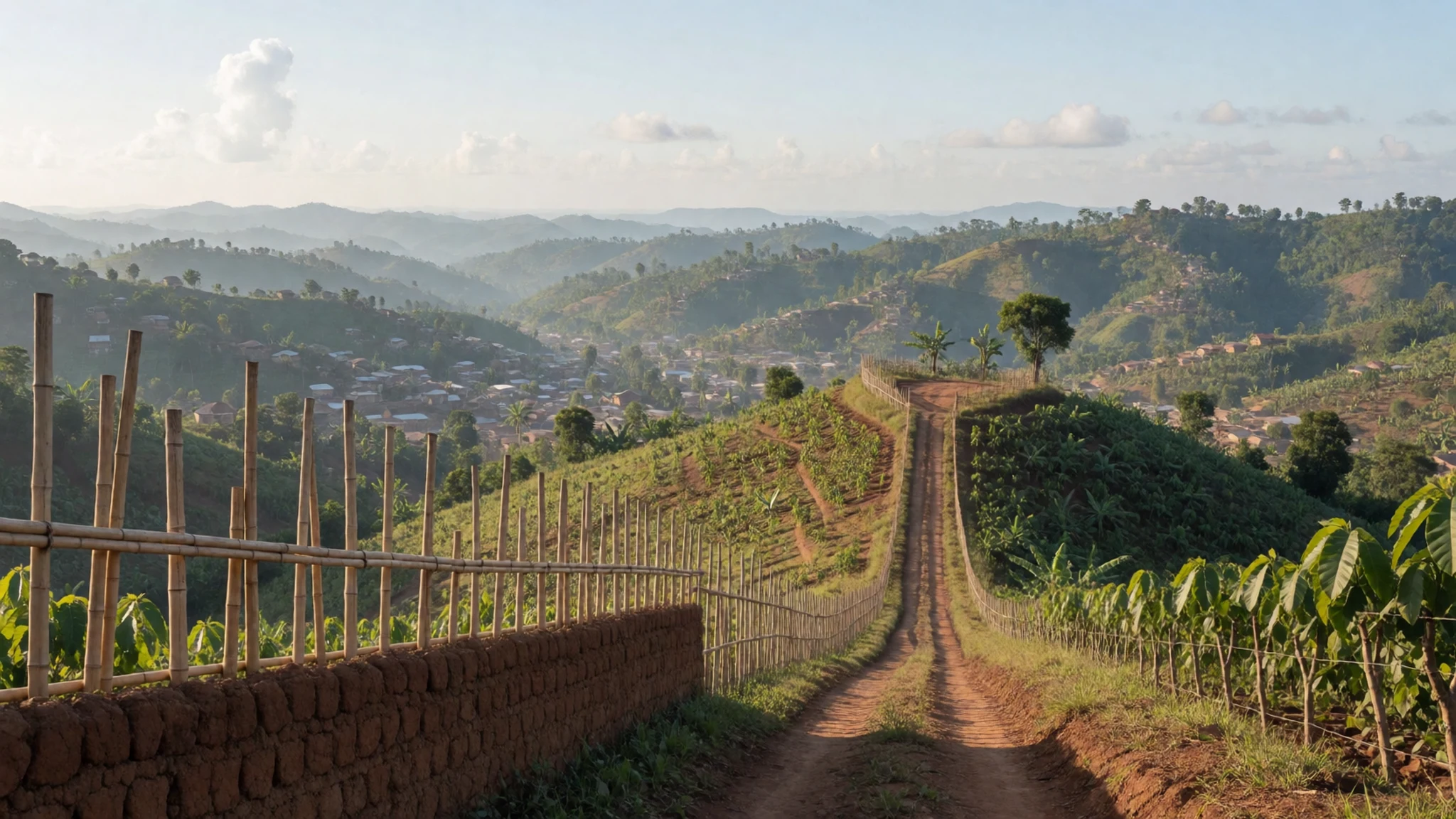
- Central market — the town centre
Kpalimé's market shows what the hills grow. Mangoes, pineapples, bananas, tomatoes, greens and groundnuts are piled for local buyers and for trucks bound for the coast. Roadside fruit vendors belong to the same scene as the sheds. Morning is the busy hour. Bargaining is normal, a greeting comes before a price, and a photograph of a person needs a request first.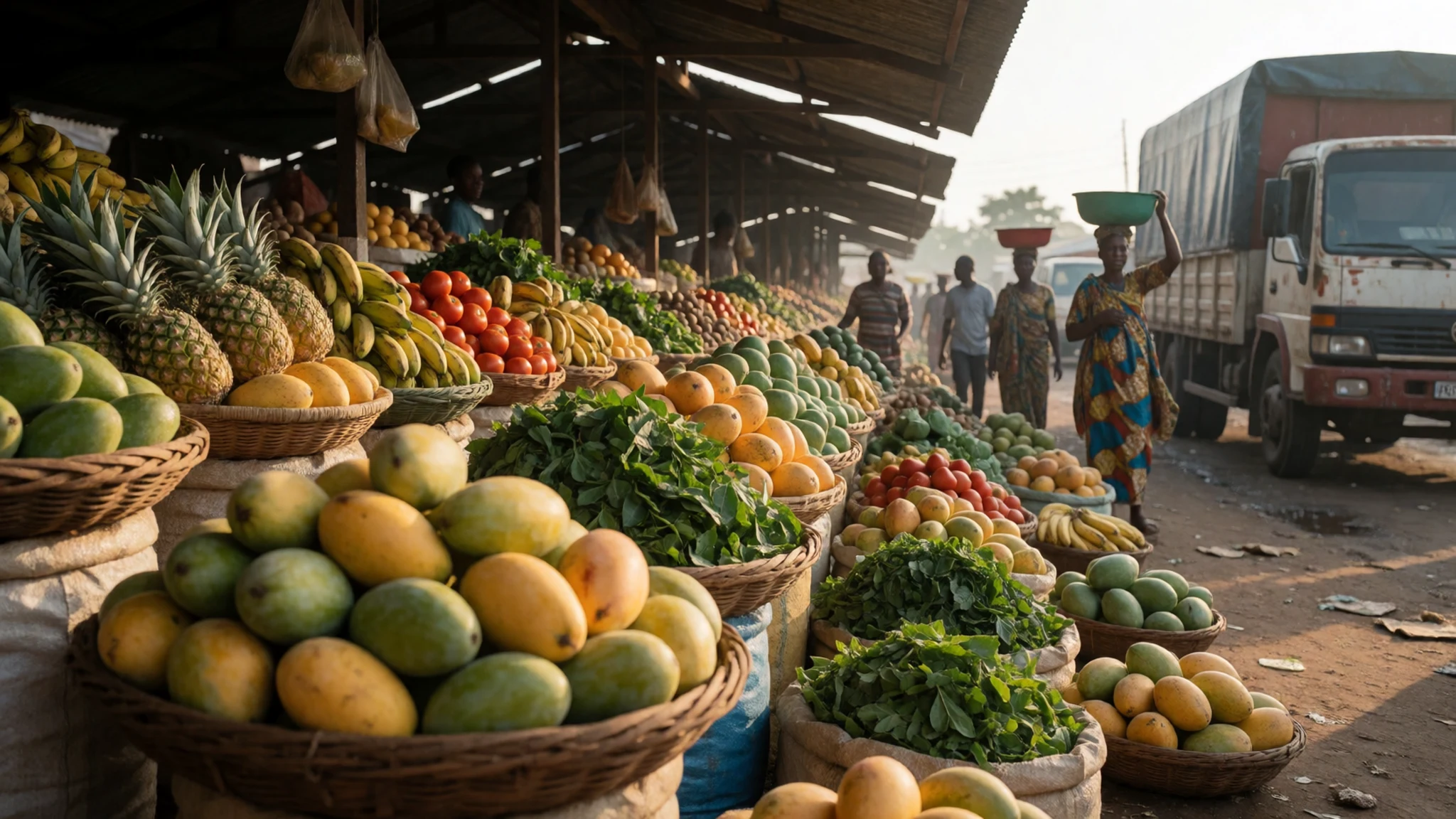
- German cemetery — in town
The German cemetery at Misahohé, about 9 km from Kpalimé, is a small shaded plot from the colonial station there, when that highland post belonged to German Togoland. Gravestones sit apart from the market, a remnant rather than a place of ceremony. Little is explained on site. Visitors should keep voices low, stay on the paths and treat the ground as a burial place.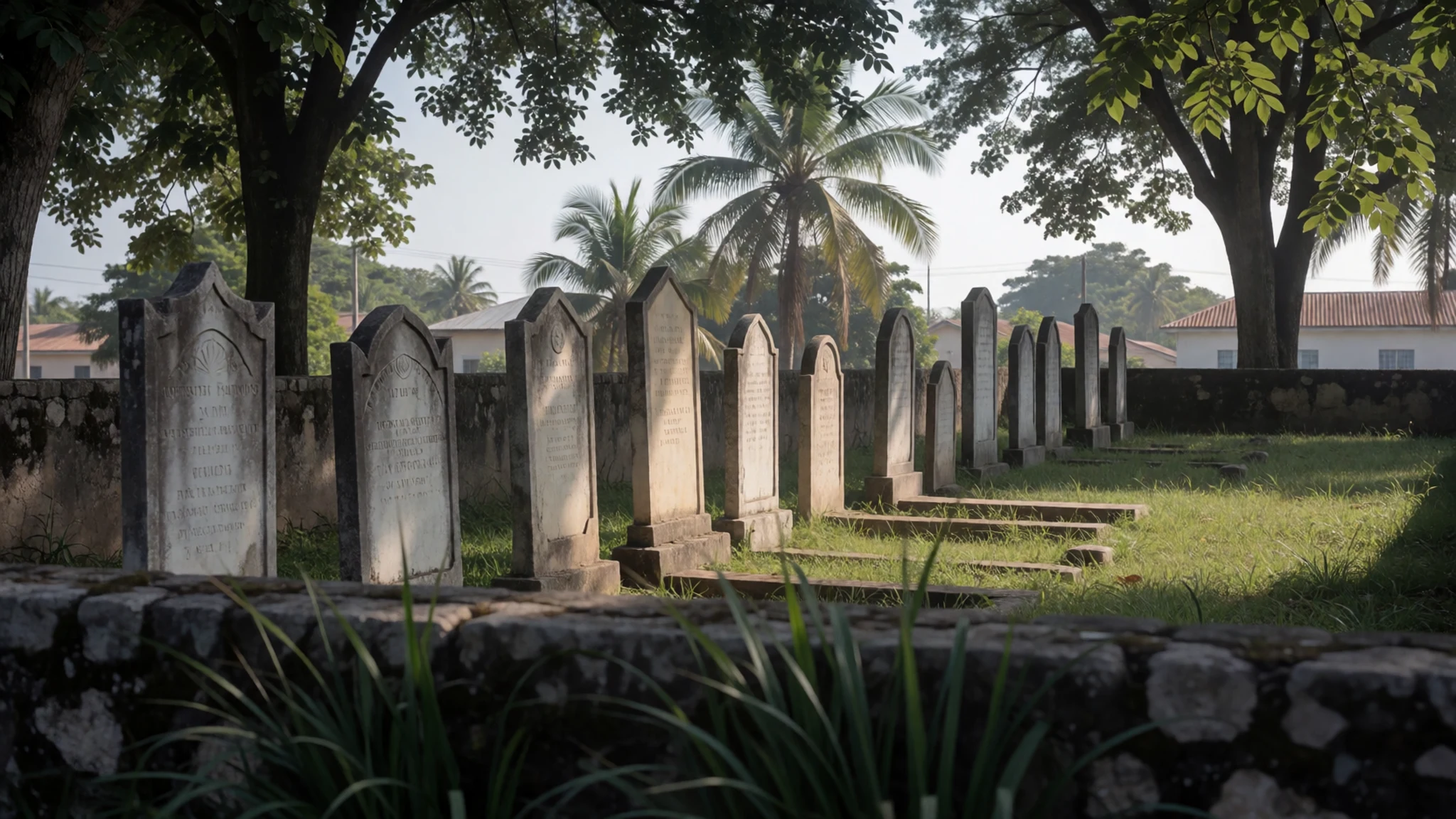
- Wall paintings at la Détente — la Détente, in town
Wall paintings at la Détente in Kpalimé, made by Georges David ADA, turn a long exterior into a sequence of figures and journeys. The cycle takes life as a voyage. This is contemporary art on a working street, seen in ordinary daylight with passers-by in the frame, not a museum. The panels repay a slow look from outside. Anyone wishing to step indoors should ask first.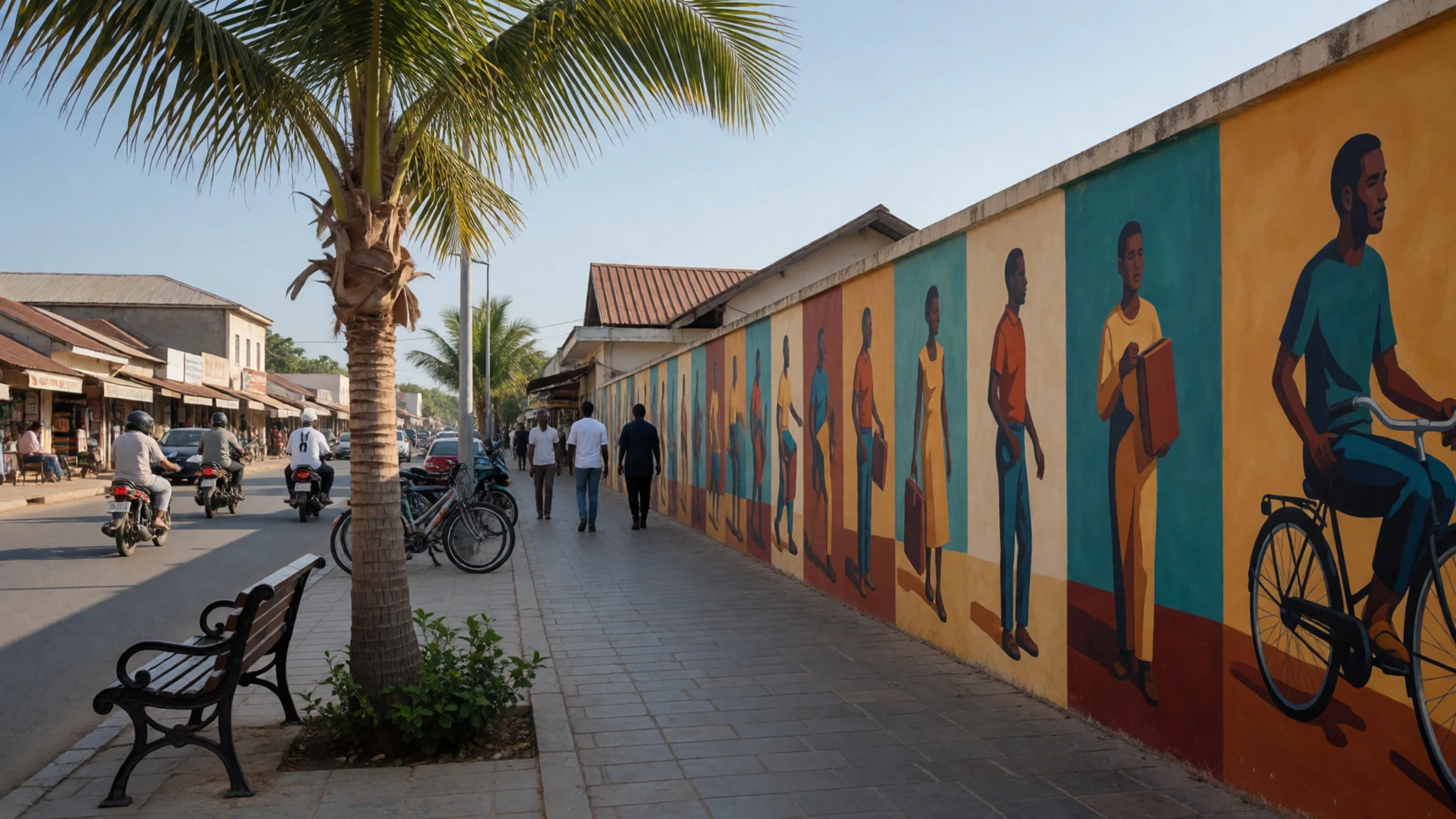
Culture
Kpalimé is an Ewe town, and the language of the market, the compound and the joke in a queue is Ewe, with French as the language of school, signs and official business. Greetings are not a formality to skip. A hello, a how-are-you and a moment of attention come before a question, a purchase or a request for directions, and older people are greeted first. Sundays belong to church: Catholic and evangelical congregations dress carefully, sing at length and treat the service as the social centre of the week. Traditional religious practice has not vanished. Family rites, respect for ancestral land and, in some compounds, older shrine customs continue beside Christianity, usually in private rather than as a show for outsiders.
Cloth, music and the market are the public culture a visitor actually meets. Printed wax cloth and handwoven strips appear at church, at funerals and at the stalls. Drums and choirs carry both hymn tunes and older rhythms. The weekly pulse of the town is commercial as much as ceremonial: harvests of cocoa and coffee, the price of fruit, the arrival of a truck from Lomé. Art turns up on walls as well as in cloth, including the large narrative paintings at la Détente.
In Kpalimé, greet before you bargain or photograph, and ask before you point a camera at a person, a ceremony or the inside of a church.
What to wear
Fashion in Kpalimé runs on cloth that is both everyday and ceremonial. Ewe weavers produce narrow-strip cloth, often called kete, in cotton with geometric blocks of colour; a full wrapper or a chiefly cloth is built by sewing those strips edge to edge. Wax-printed cotton, the pagne, is even more present: sold by the length in the market, cut into wrappers, headties and tailored outfits, and chosen to match a funeral, a church Sunday or a family celebration. Men may wear a wrapper and a simple top, or a flowing embroidered robe for a formal call; women wear wrappers with a blouse and a headtie, or a dress cut from the same print. These clothes come out in strength on Sundays and at festivals. On a market morning many of the same people wear T-shirts, trousers, team shirts and practical sandals, with a pagne tied over them for work.
A visitor does not need traditional dress to be welcome, though a well-chosen pagne bought in the market is a normal souvenir and a useful garment. Day clothes should be light cotton, with shoulders and knees covered for church and for any invitation into a compound. The hills ask for shoes that can take mud and loose stone, not beach sandals, and a light rain layer in the wet months. Bright wax prints fit in; beachwear and very short clothing look out of place away from a private lodging.
What to eat
- Akume and sauce — small eateries around the market
Akume, a firm dough of fermented maize, is the everyday starch in Kpalimé, pinched off to scoop a sauce of okra, leaves or palm nut. Small eateries near the market serve it hot at midday, eaten with the hand or a spoon. It is the house staple, not a special.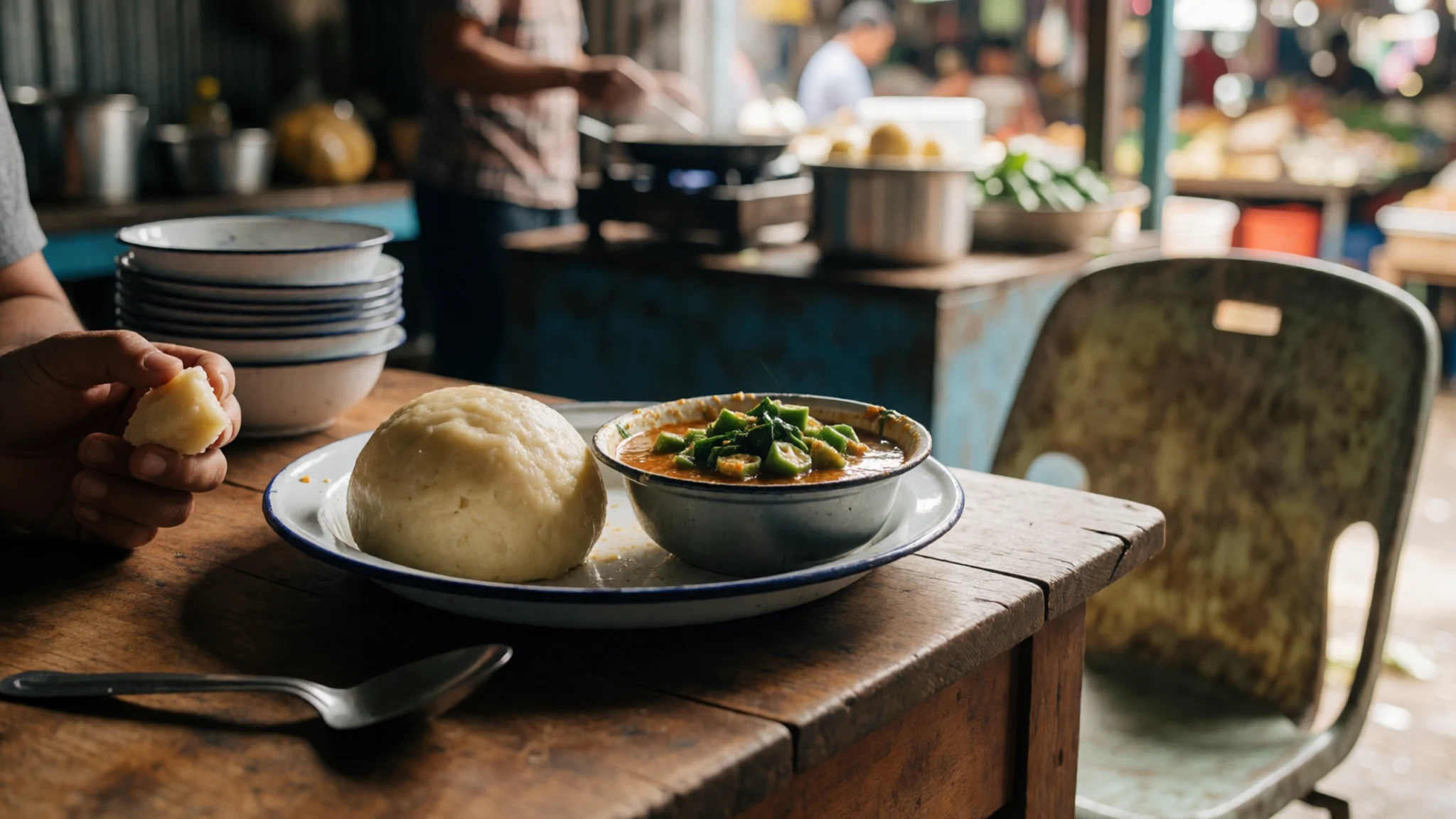
- Fufu with soup — eateries in the town centre
Fufu in Kpalimé is pounded yam, plantain or cassava, heavier than akume, with a pepper soup or a palm-nut sauce and sometimes fish or goat. Eateries around the centre serve it from late morning until the pot runs out. It is a full plate, not a thin first course.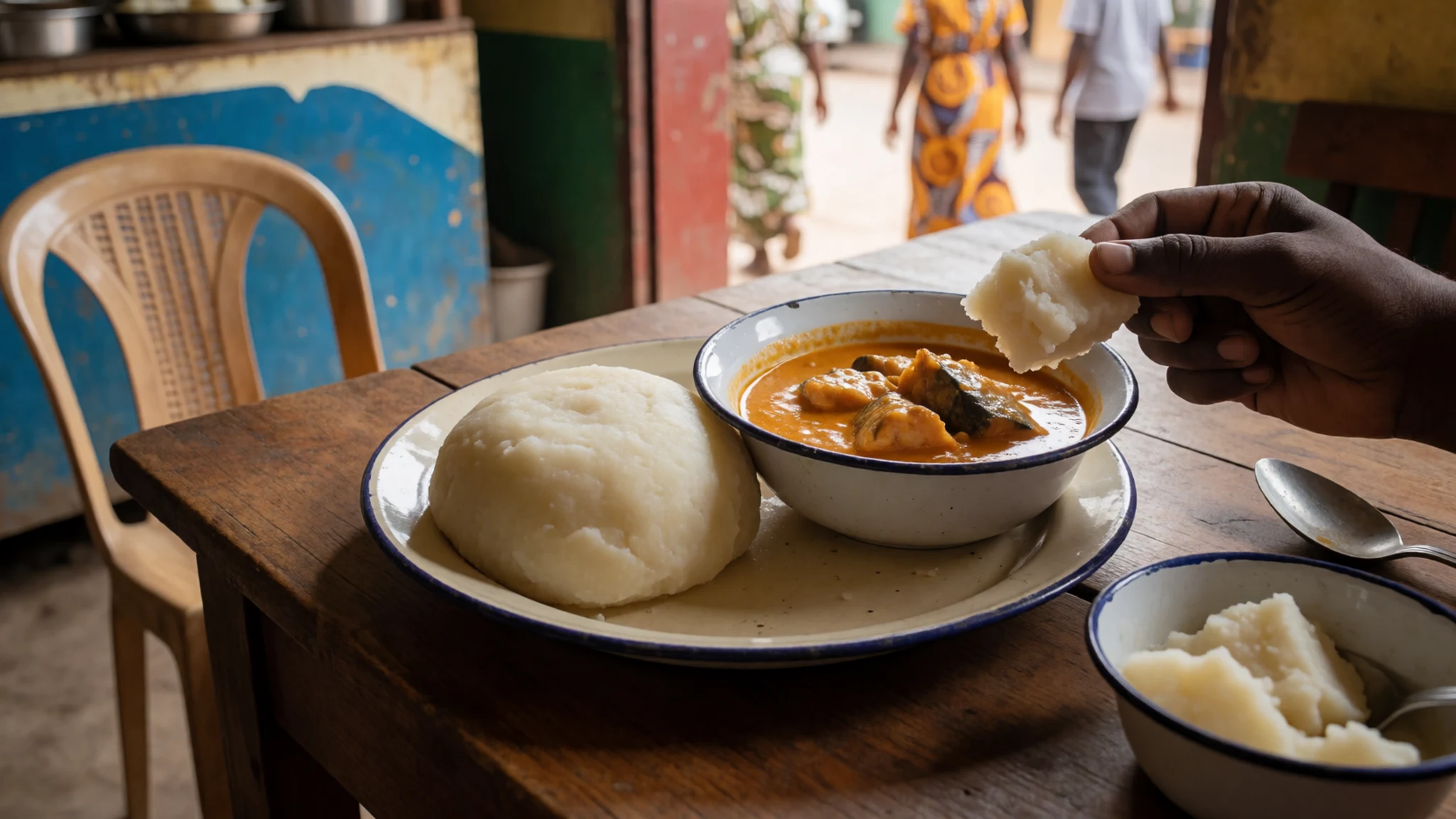
- Ablo — market stalls
Ablo is a steamed maize cake, sweet and spongy, sold in the Kpalimé market from trays and from women walking with covered basins. People eat it plain, with a sauce, or as food to carry on a walk. The trays are fullest in the morning and late in the day. - Roast plantain and groundnuts — roadside stalls and the motor park
Ripe plantain, roasted or fried at the roadside in Kpalimé, is the snack wherever people wait: by the motor park, the market edge and the road towards the falls. Groundnuts, boiled or roasted, come from the same trays. Eaten standing, the two travel well in a bag for a walk. - Market fruit — the central market
The market in Kpalimé is a fruit bowl: pineapple, mango, banana, papaya and avocado, sold ripe and peeled into a bag with lime. Buying fruit and eating it at the stall is normal. Fruit with a skin wants a rinse, and peeled fruit should be taken only when just cut.
Plan it
Best time. February is the hottest month and September the wettest; December is the most comfortable, with firmer tracks and simpler walking to the falls; rains through the middle of the year bring greener hills, afternoon storms and slick laterite, and Harmattan haze can soften distant views in the dry season.
How long. 2–3
Getting there. Kpalimé has no airport of its own. Flights land at Lomé, and from the capital shared taxis and buses run inland to the town's motor park; that road is the last leg. Travellers from Ghana cross the border country to the west and finish by taxi. There is no railway. Confirm current road advice before leaving, since routes and border formalities change.
Budget. low
Tips
- Start walks early, before the midday heat builds
- Ask in town which waterfall path is firm that week
- Carry cash, because market stalls and taxis seldom take cards
- Agree a motorbike-taxi fare before the ride begins
- Take drinking water; the hills do not cancel the heat
- Pack a light raincoat for the wet months
Etiquette
- Greet before a price, a direction or a photograph
- Cover shoulders and knees at church
- Keep voices low in the German cemetery and stay off the graves
- Ask before photographing people in the market
Nearby
Sources
- Wikidata (CC0)
- Wikipedia (CC BY-SA 4.0)
- Wikivoyage (CC BY-SA 4.0)