Fazao-Malfakassa
Fazao-Malfakassa, Togo
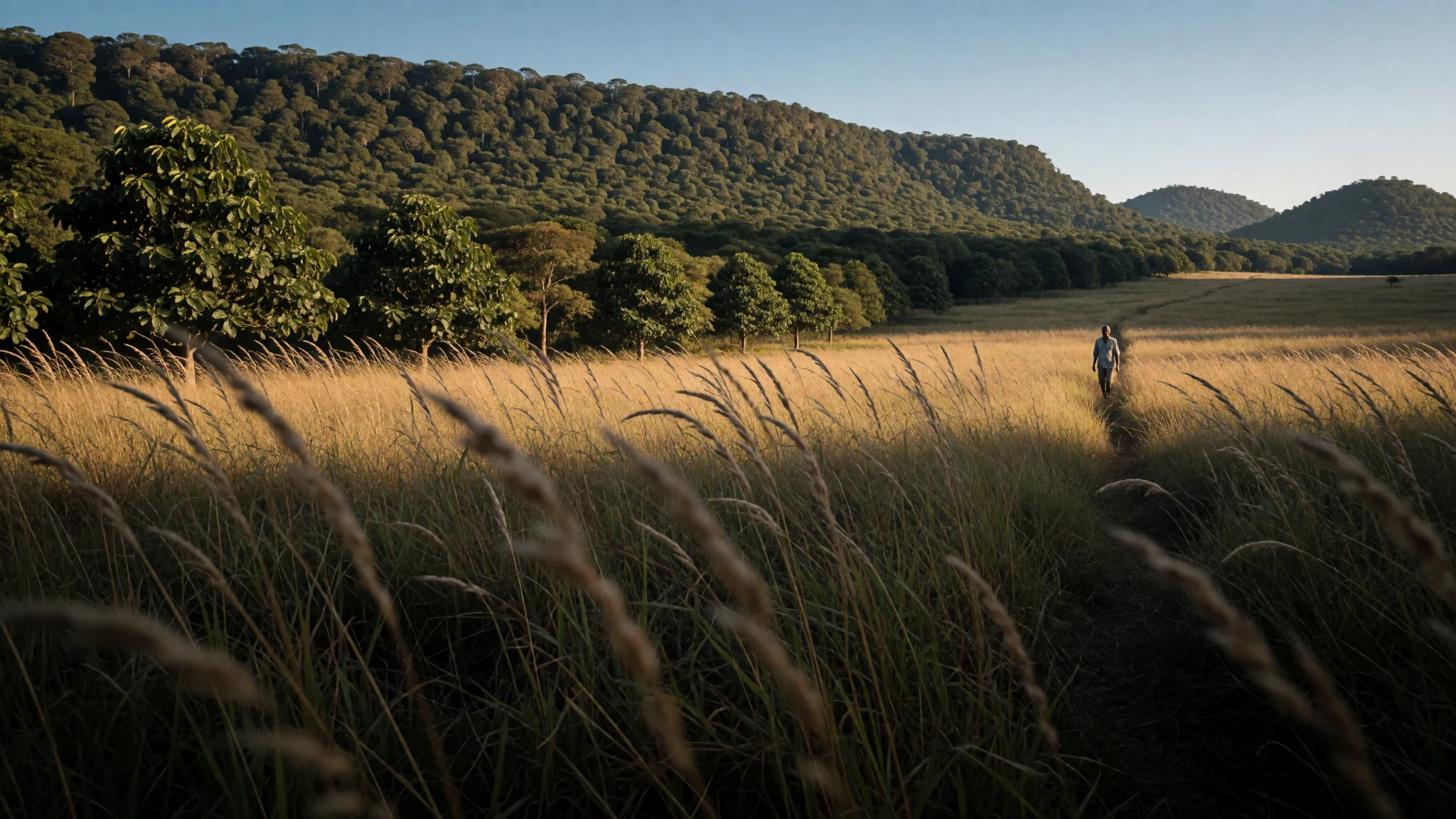
Fazao-Malfakassa is central Togo's mountain park, where forest and savannah meet on a ridge few travellers reach.
The place
Fazao-Malfakassa is a national park in central Togo, spread across the Togo Mountains where wooded slopes give way to savannah. The name joins two older reserves: Fazao, the mountain block, and Malfakassa, the woodland and wildlife reserve at its side. The published map point, latitude 9 and longitude 1, is only a pin in the middle of that ridge, not a gate or a village.
From open ground the Fazao slope reads as a dark, continuous hillside of trees, the view caught in the park photographs: canopy in front, the ridge behind it. Inside the woodland the plants are easier to meet than the animals. Alchornea stands in the Malfakassa reserve, a leafy shrub of the understorey. Biophytum sensitivum grows low, a small plant that folds its leaves when disturbed. Several photographs linger on a sacred garlic tree, a trunk set apart in the forest of Fazao-Malfakassa and Malfakassa alike, treated as something to be left standing.
The park's purpose includes wildlife. Hunting around the boundary has made large animals scarce and shy, so a day here is more often a walk through forest and grass than a parade of herds. Tracks are rough, the air is hot once the sun is up, and the sound is insects and wind in leaves rather than engines.
Beyond the boundary the country is lived-in. Farms, especially yam fields, and small settlements sit along the roads that lead toward Sokodé and the market towns of the centre. Fazao-Malfakassa is the gap in that working landscape: highland held as forest and savannah.
Its story
Fazao-Malfakassa took its double name from a practical decision: two neighbouring reserves, one built around the Fazao massif and one around the Malfakassa woodland, were brought under a single park so the mountain and the forest would be managed as one landscape. The ridge is a watershed and a barrier. Rain that falls on these hills feeds streams running toward the plains, and the same slopes have long been a place people skirted rather than settled densely, which is why forest survived here when much of the surrounding land was opened for farms.
The story of the park is also the story of pressure on that survival. Communities of the centre — among them Tem people around Sokodé and Bassar people nearer the iron-working country to the west — have farmed, hunted and cut wood along this edge for generations. Iron-smelting made the Bassar country known in the region long before the park existed; the hills were never an empty wilderness waiting to be discovered. Protection drew a line through a landscape that was already used. That line is still argued in practice, whenever a field creeps uphill or a hunter crosses it.
A quieter thread runs through the trees themselves. In Fazao-Malfakassa a garlic-scented tree is remembered as sacred, photographed and left in place, which says something about how the forest is read locally: some trunks are timber, and some are not. Plants such as Alchornea in the Malfakassa reserve, and the little sensitive Biophytum on the ground, belong to the same living inventory. Conservation here is less a tale of royal decrees and explorer memoirs than a record of a highland kept standing between farms.
What to see
- Fazao mountain — Fazao ridge
Fazao-Malfakassa's mountain, the Fazao ridge, is the skyline of the park, a wooded slope rising behind the lower trees. Photographs of the hillside show a continuous bank of canopy with no buildings cut into it. Haze collects in the folds early in the day. The approach is a rough track, and the interest is the shift from open grass below to closed forest on the height.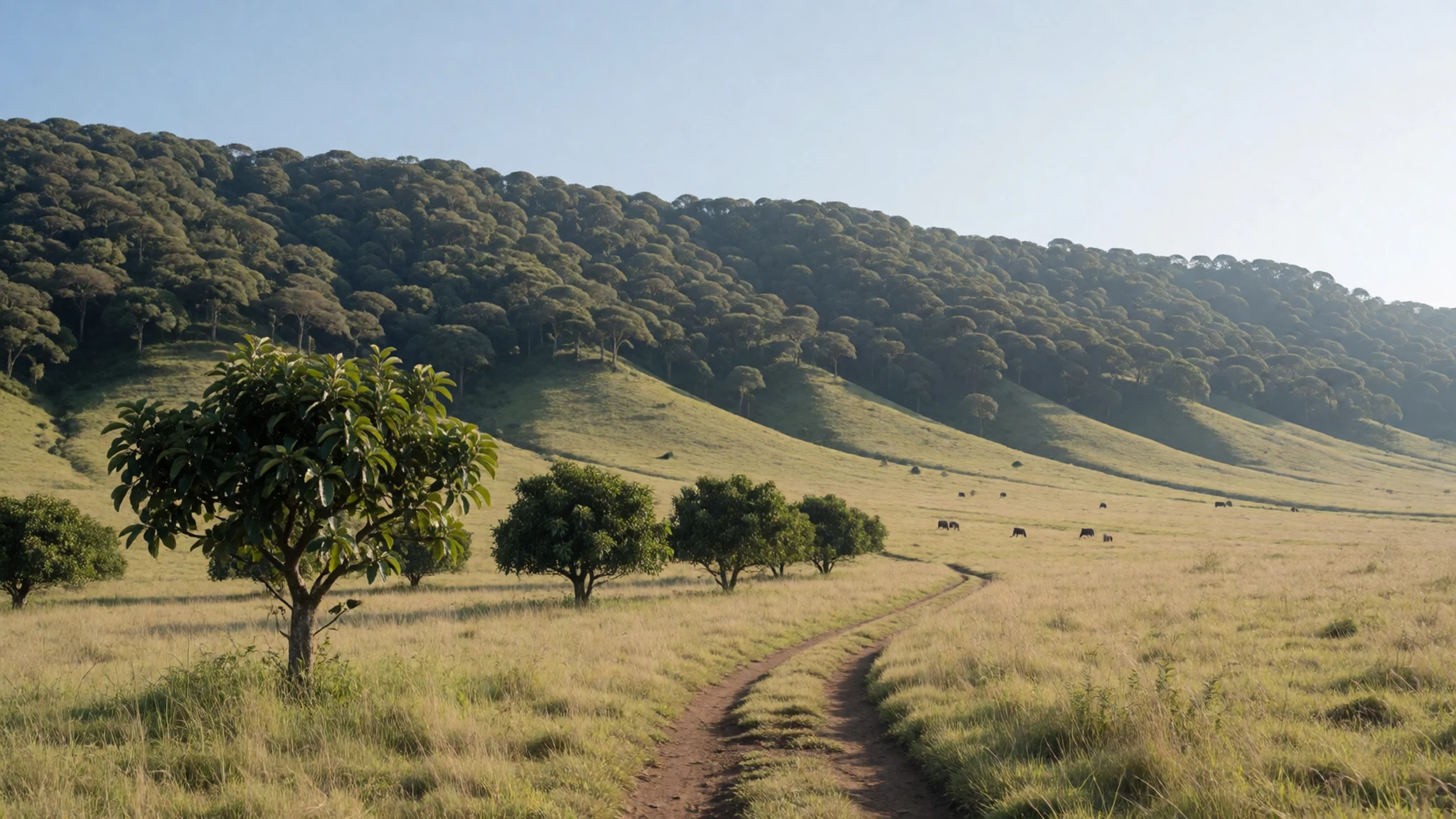
- Malfakassa wildlife reserve — Malfakassa wildlife reserve
The Malfakassa wildlife reserve is the lower, leafier half of Fazao-Malfakassa, and Alchornea is one of the plants the park's own pictures stop for. It is a broad-leaved shrub of the understorey, common enough in this woodland that a walker meets it at eye level rather than as a rarity behind a fence. The reserve is this layered green, with birds in the thicket even when larger mammals stay hidden.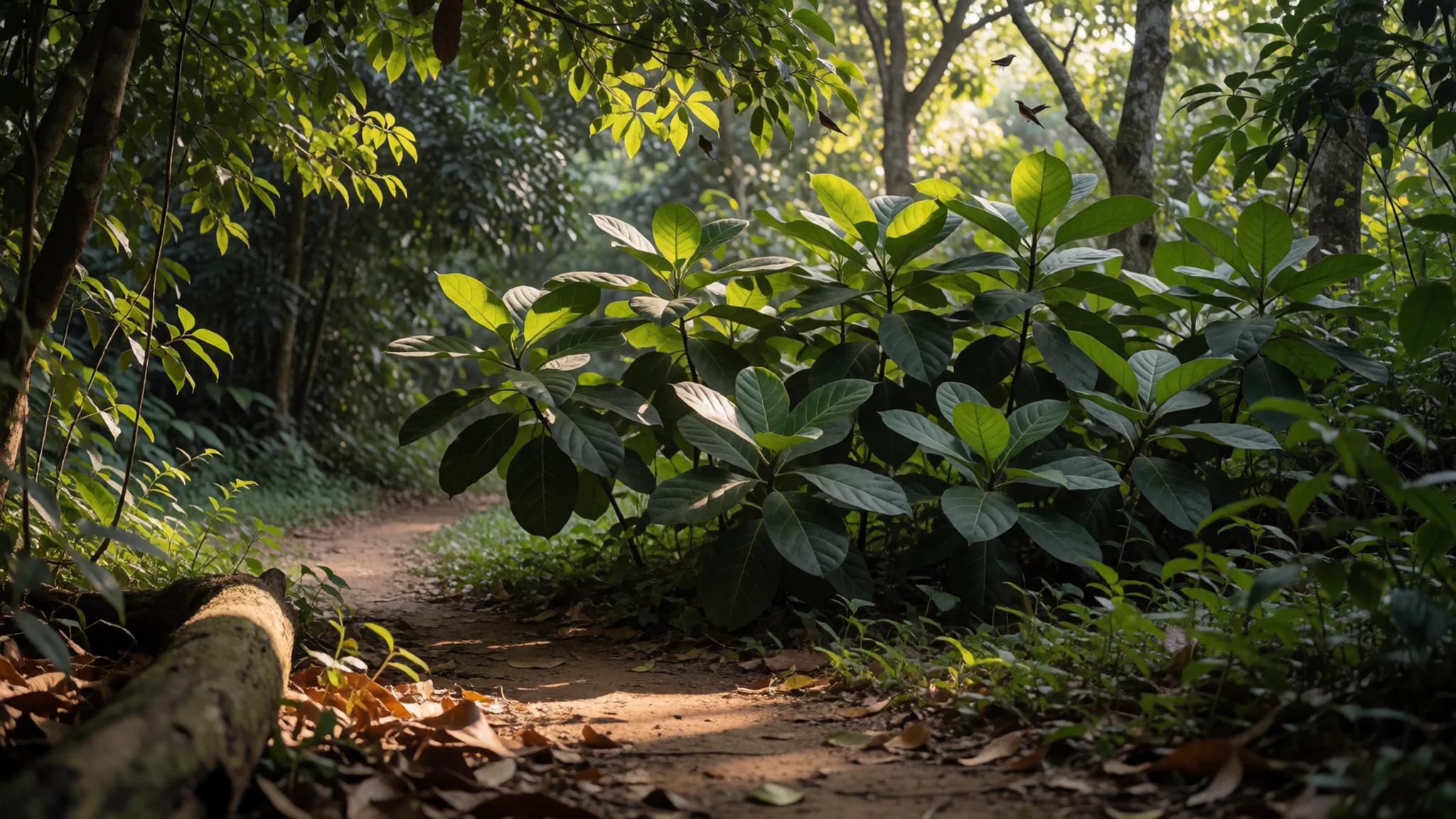
- Sacred garlic tree — park woodland
The sacred garlic tree stands in the woodland of Fazao-Malfakassa, and the park photographs return to it from several angles. The trunk is the subject: left intact, and known for a garlic scent. Local regard treats it as sacred, so the visit is to look and leave it untouched — no carving, no climbing, no bark taken away. Around it the forest is simply forest.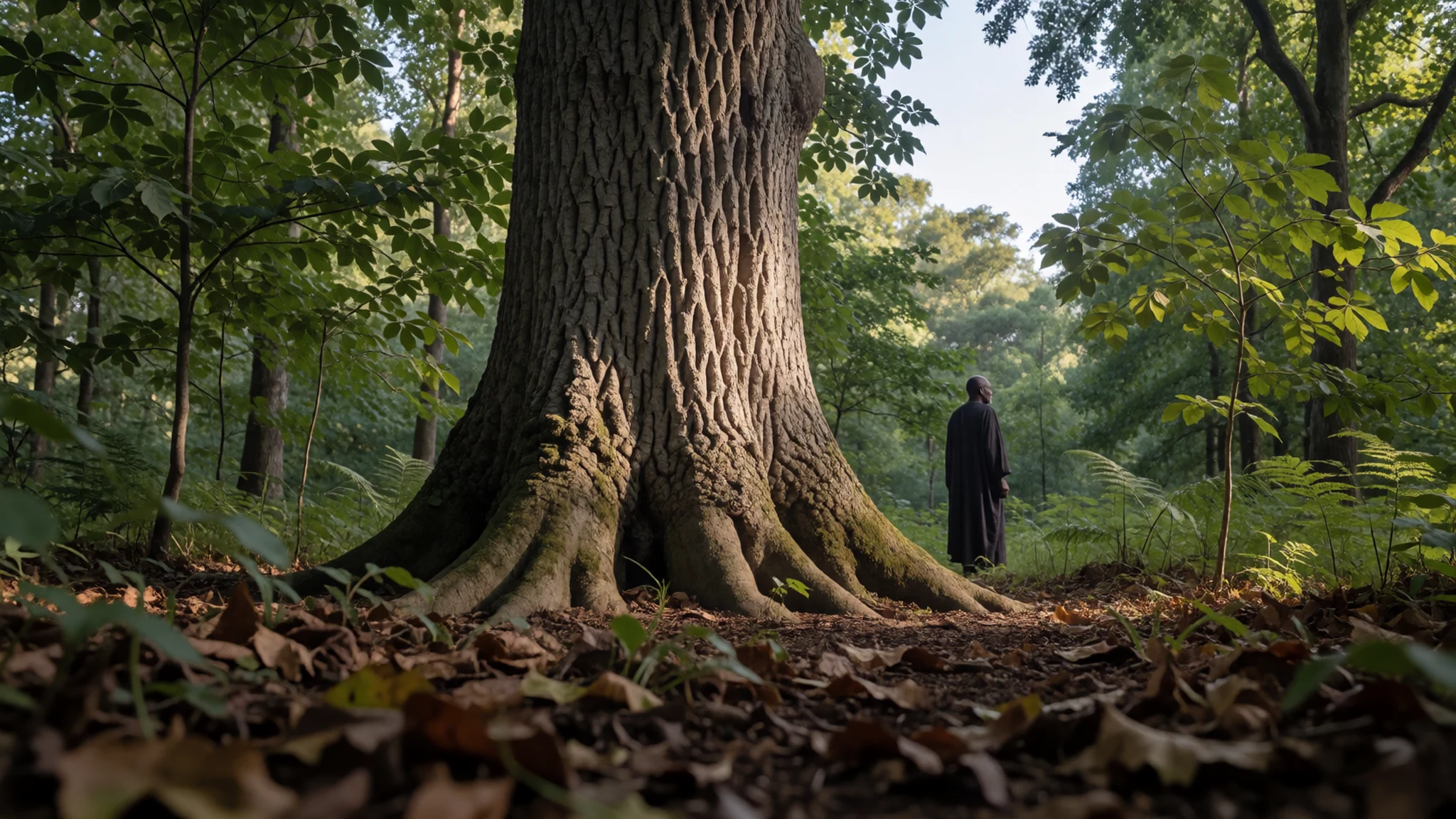
- Biophytum sensitivum — Malfakassa forest floor
Biophytum sensitivum grows on the forest floor in the Malfakassa part of Fazao-Malfakassa, a small plant easy to miss when attention stays on the canopy. The leaves fold when touched, which is the whole reason to seek it out. A park photograph studies that habit at ground level among leaf litter. The plant resets the scale of a visit: Fazao-Malfakassa is not only ridges and mammals.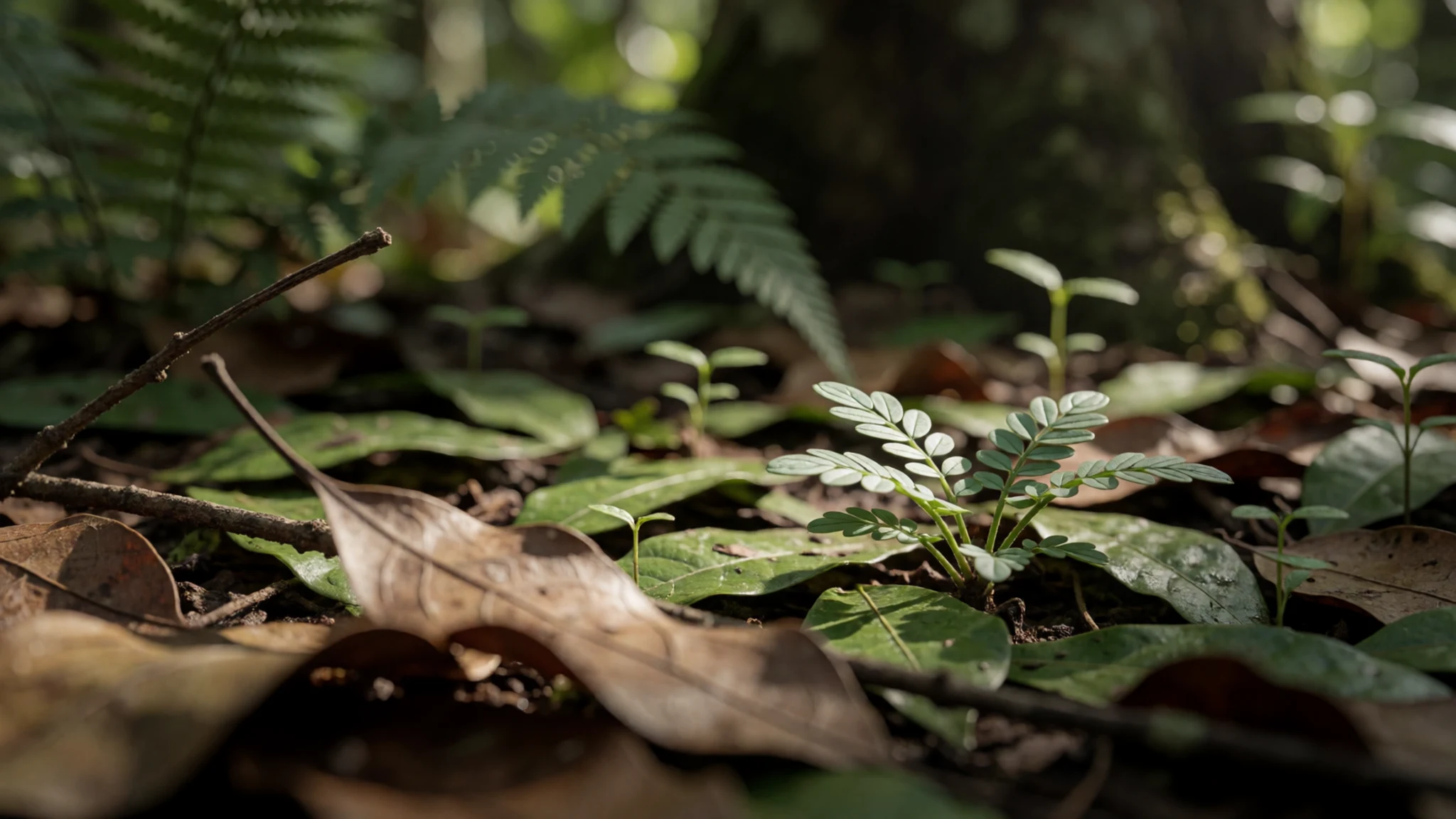
- Forest and savannah edge — slopes between the ridge and the plain
The meeting of forest and savannah on the slopes of Fazao-Malfakassa is the landscape itself, and it is worth taking slowly even when no animals appear. Grass and scattered trees occupy the lower ground; denser woodland takes over as the hill steepens. That gradient is what the two old reserves were protecting together. Tracks follow the easier ground, so the edge is where a walk naturally runs.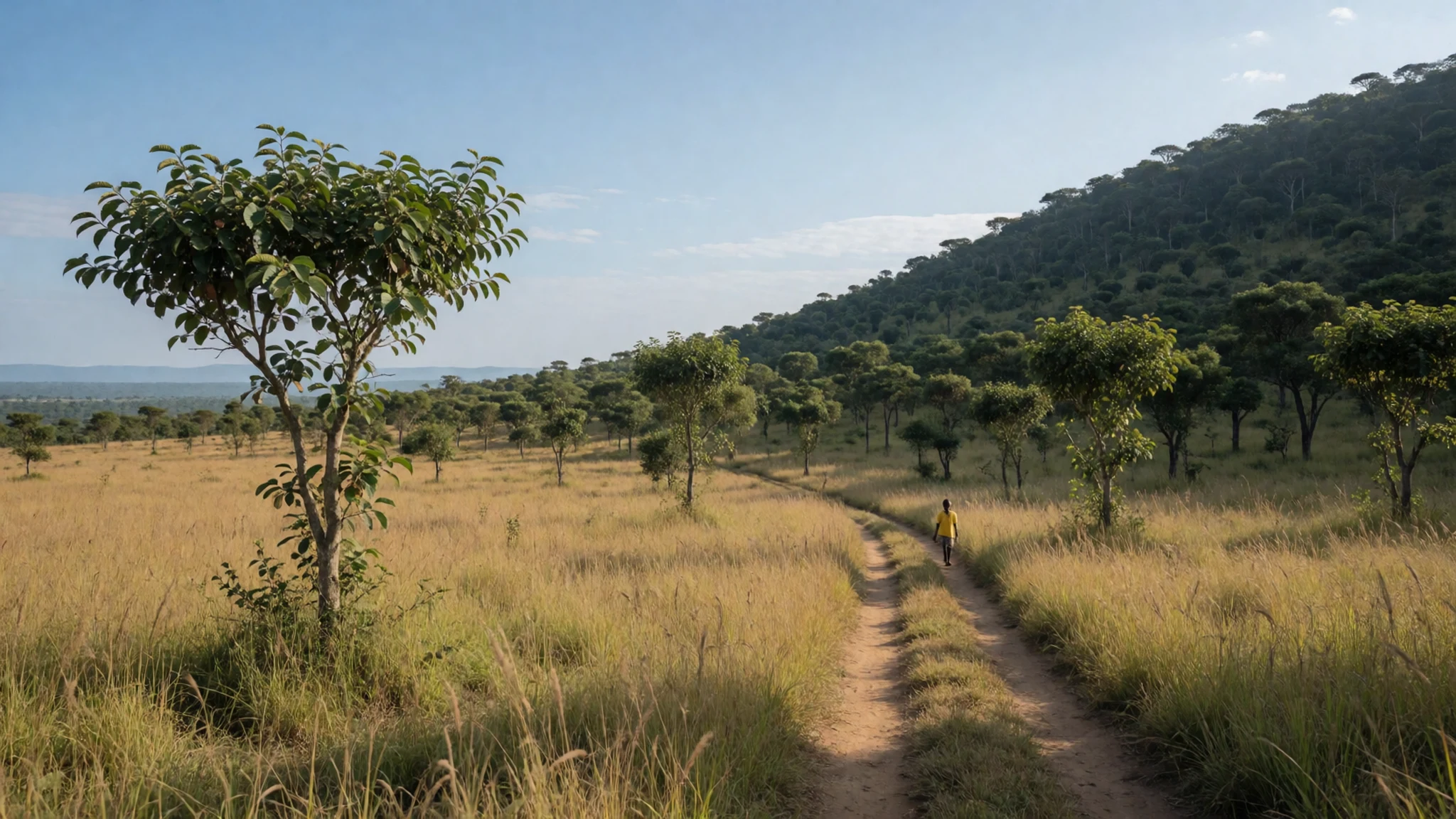
Culture
Fazao-Malfakassa sits in a peopled landscape, and the culture around it belongs to the communities of central Togo rather than to a park museum. Tem (Kotokoli) life centres on Sokodé, with Islam long established beside older customs, while Bassar country to the west is remembered for iron-smelting and for a strong sense of local authority. Chiefs, family compounds and market days still organise the week. A visitor who only walks the forest misses the point of the boundary: the park was drawn across land people already named, farmed and hunted.
Sacred trees make that overlap visible. The garlic tree photographed inside Fazao-Malfakassa is called sacred, which means the forest is not a blank site for recreation. Some places and some trunks carry duties. Asking before stepping into a grove, a compound or a ceremony is ordinary courtesy, and so is accepting a refusal. Market towns nearby run on greeting first: a hello before a question, and patience with a slower pace than a city ticket office.
Dress and cameras both read as conduct. Shoulders and knees covered in villages matter more than they do on an empty trail. Photographing people, masks or ritual objects without a clear yes is a slight. Money offered casually, as if every conversation were a transaction, causes the same awkwardness.
In Fazao-Malfakassa, do not touch, carve or strip the sacred garlic tree, and ask a guide or elder before photographing people or any place described as sacred.
What to wear
Fazao-Malfakassa has no costume of its own; dress in the park's orbit is the dress of central Togo. For ceremonies, men wear long embroidered robes or a flowing boubou in cotton, sometimes over matching trousers, and women wear a pagne — a wax-printed cotton wrapper — with a tailored blouse and a headtie. The cloth is the textile that matters: bright wax print, industrially made and sold in market stalls, plus older handwoven strip-cloth still brought out for festivals and funerals. Colour is chosen, not accidental.
On an ordinary day the same people dress for heat and work. Printed cotton, football shirts, trousers, sandals and a wrapper tied for the market are what the roads actually look like. Synthetic lace and ready-made dresses show up in town. In the fields, clothes are faded and practical. Nobody walks the Fazao tracks in festival cloth.
A visitor should plan for sun, insects and rough ground. Lightweight long sleeves and trousers in neutral colours beat shorts once the grass is high, both for modesty in villages and for ticks and thorns on the ridge. Closed shoes with a grip matter more than style; the paths are stone and dust, not pavement. A cotton scarf or light shawl covers shoulders at a compound or a mosque. In the wet months a light rain jacket is more useful than another shirt, and in the dry months a layer for the early start helps when the highland morning is cool.
What to eat
- Pâte — market eateries in Sokodé
Pâte, a smooth dough of maize or millet, is the everyday starch of central Togo and the natural base for a meal near Fazao-Malfakassa. It is eaten with the hand, pinched off and dipped into a sauce. In Sokodé's market eateries it arrives in a mound beside a bowl.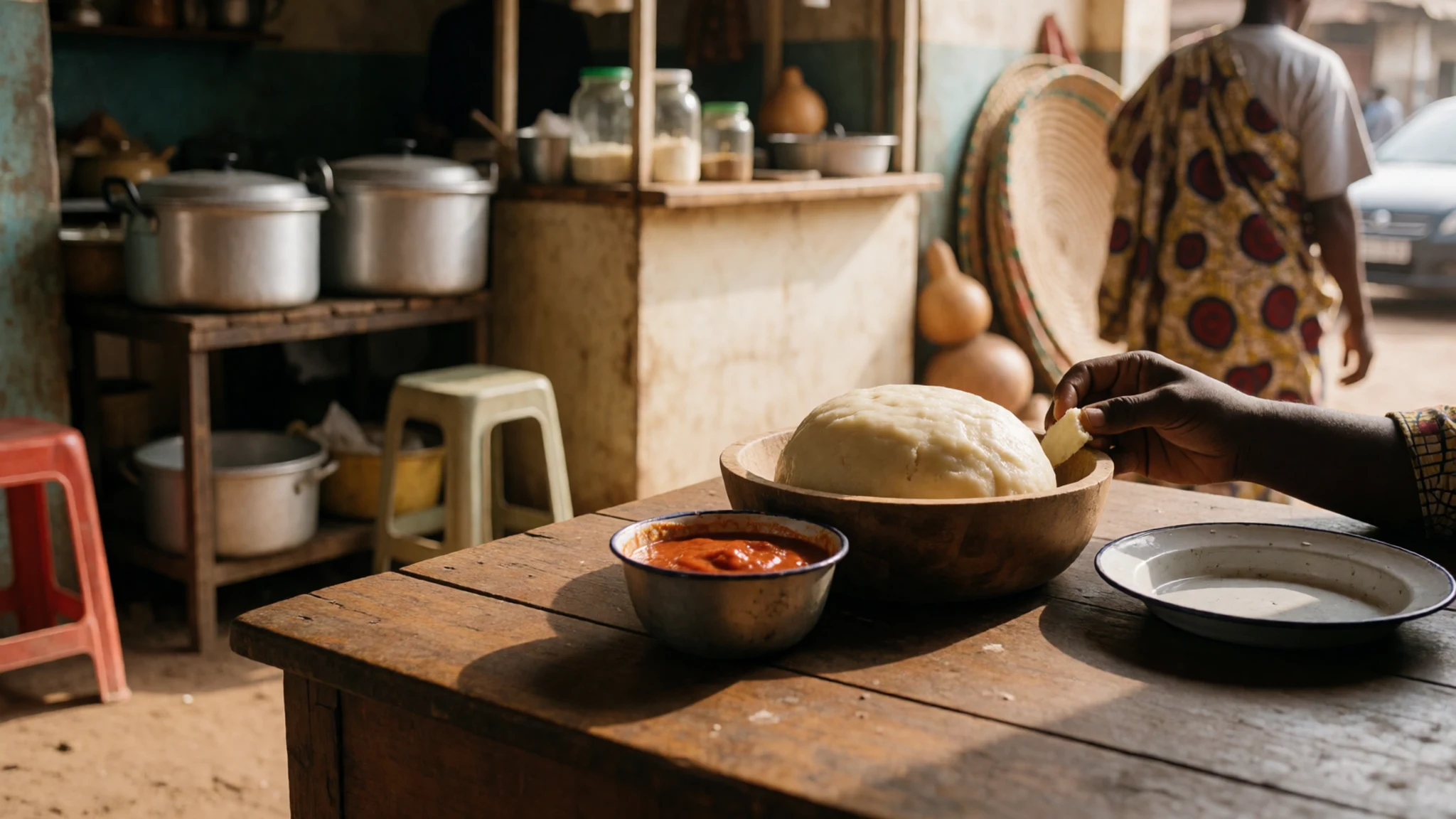
- Sauce d'arachide — roadside kitchens between Sokodé and the hills
Sauce d'arachide, a peanut sauce with tomato and chilli, is what pâte is eaten with near Fazao-Malfakassa. Goat, chicken or smoked fish is the usual addition. Roadside kitchens between Sokodé and the hills sell it by the bowl at midday. Bushmeat, if offered, is worth refusing.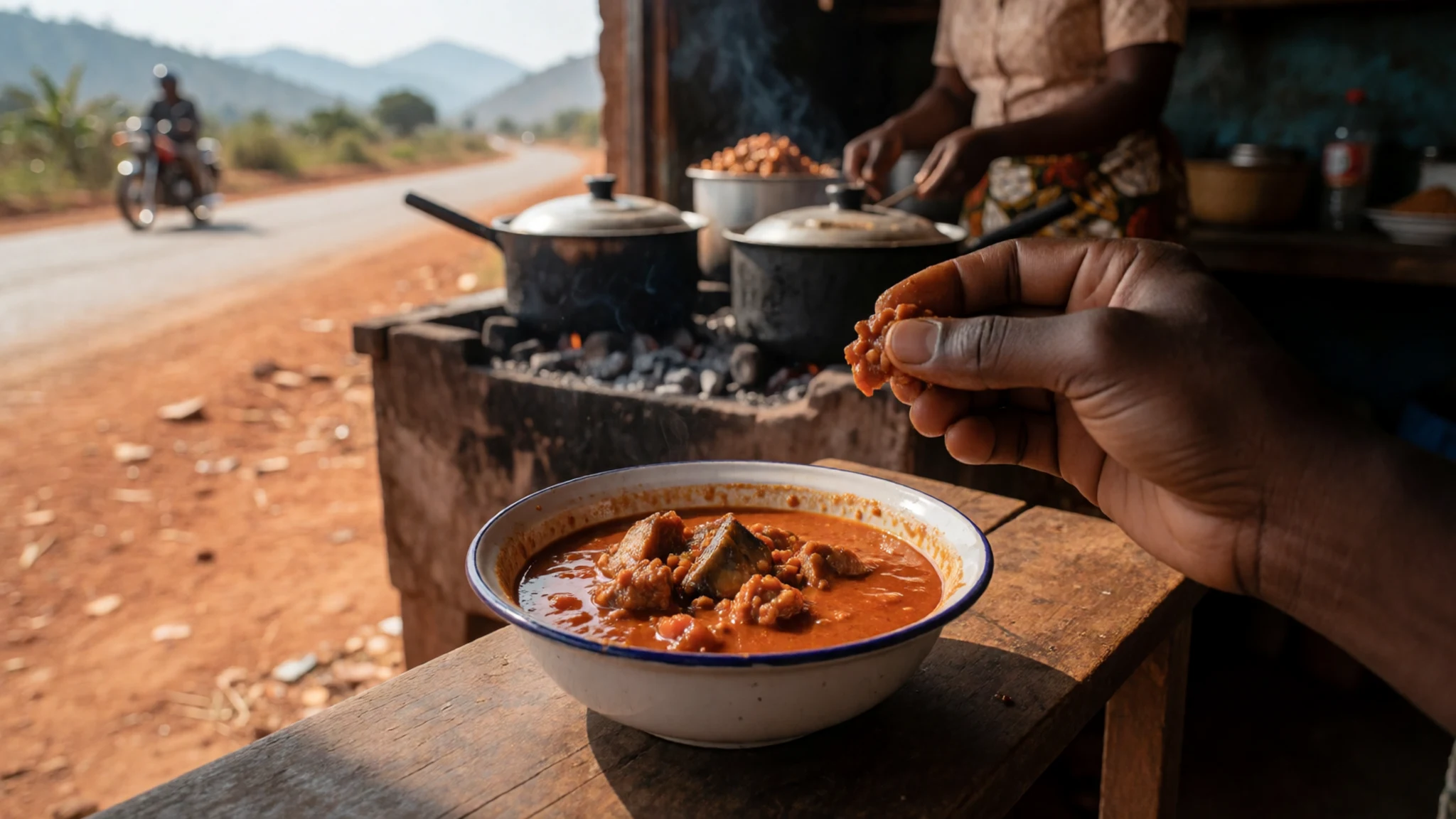
- Pounded yam — markets in Sokodé and around Bassar
Pounded yam is central Togo's other staple, and the country around Fazao-Malfakassa grows the tubers. Boiled and beaten until elastic, it is served as a pale ball with a peppery sauce. Markets in Sokodé and around Bassar sell it ready to eat. - Gboma dessi — home-style eateries in Sokodé
Gboma dessi is a green stew of spinach or eggplant leaf, cooked with tomato and oil, and it is a regular lunch pot in Sokodé for anyone heading toward Fazao-Malfakassa. Served over pâte or yam, it tastes earthy and slightly bitter. - Poulet braisé — night grills on the main streets of Sokodé
Poulet braisé is chicken grilled over charcoal with a chilli rub, and it is a common evening meal after a day around Fazao-Malfakassa. Stalls set up on main streets in Sokodé as the light goes. The bird is sold in pieces with onion and spice. - Grilled fish — stalls in Sokodé market
Grilled fish, often tilapia, is rubbed with spices and cooked over charcoal at stalls in Sokodé's market, a solid alternative to meat when staying near Fazao-Malfakassa. It comes with onion, chilli and a starch on the side. A busy stall means the fish is still moist.
Plan it
Best time. November to February is the easier window at Fazao-Malfakassa, when tracks dry out and ridge mornings are cooler. From about April to October rain can make the last path impassable. Harmattan haze in December and January softens the mountain view.
How long. 2–3
Getting there. Fly into Lomé, then go by road north to Sokodé. A sturdy vehicle and a local guide cover the unpaved last leg into the Fazao-Malfakassa hills. No public timetable serves that track; ask the park authority in Sokodé before setting out.
Budget. mid
Tips
- Hire a guide in Sokodé; tracks are poorly signed.
- Start at first light, before the open slopes heat up.
- Carry water and cash; cards rarely work in the park or small markets.
- Go for forest and ridge; large animals are scarce.
- In the rains, confirm the last track is open before driving it.
Etiquette
- Greet people before asking directions or taking a photograph.
- Leave the sacred garlic tree untouched, and enter groves only with permission.
- Refuse bushmeat, and do not ask anyone to hunt for you.
Nearby
Sources
- Wikidata (CC0)
- Wikipedia (CC BY-SA 4.0)
- Wikivoyage (CC BY-SA 4.0)