Lake Togo
Lake Togo, Togo
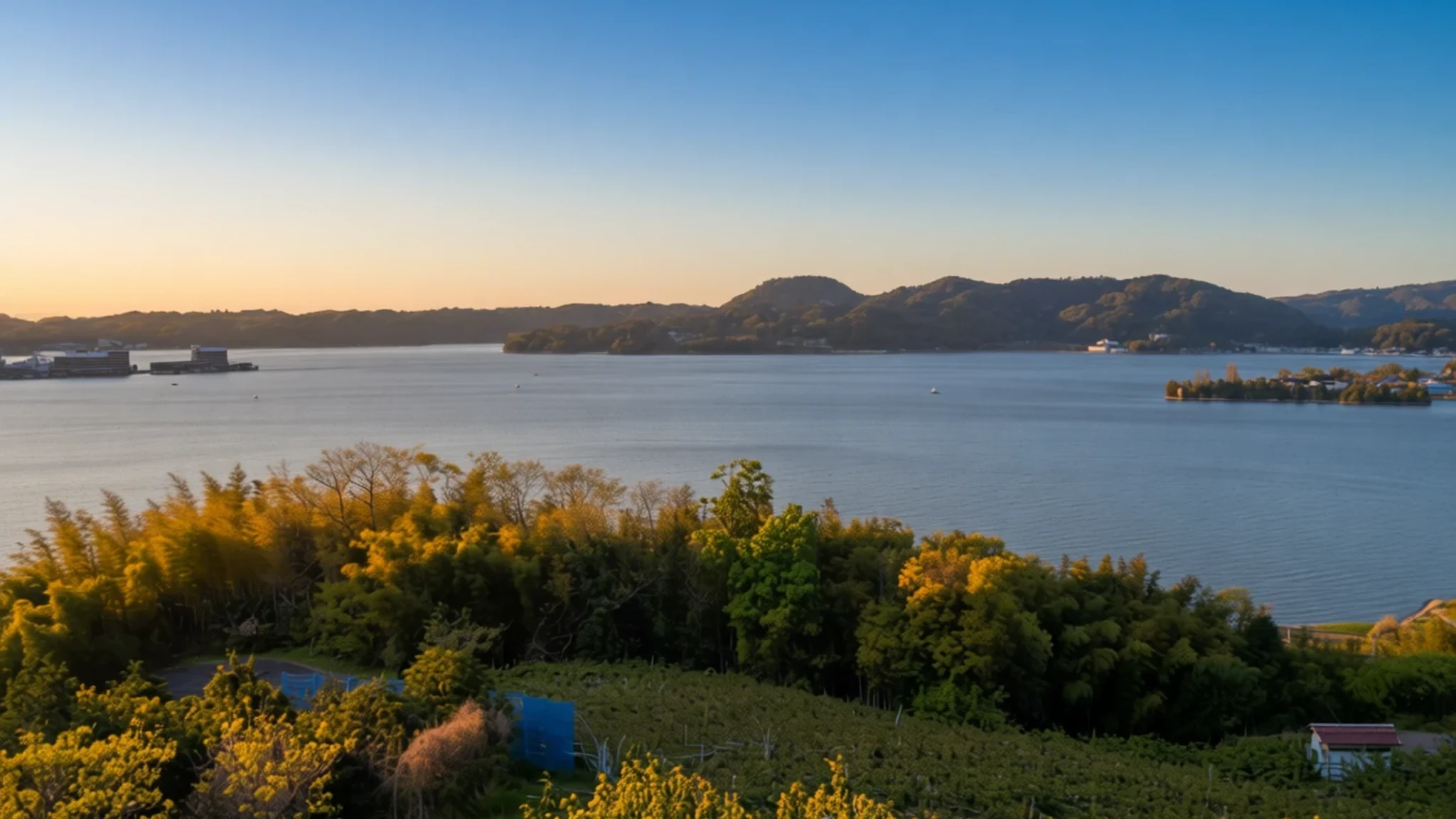
Lake Togo is a quiet coastal lagoon where fishing pirogues, vodun shrines and old trading towns still share one shore.
The place
Lake Togo sits in southern Togo's Maritime region, a coastal lagoon just inland from the Gulf of Guinea, cut off from the Atlantic by a sandbar about a kilometre wide, its water leaving east through a canal-like stretch to Lake Vogan and the coastal lagoons. The water is usually quiet, a dull green under hard light, with low shores of palm, reed and small fields. Across it the far bank stays visible: roofs, a church, the line of a bridge, and dugout canoes working between villages.
This is a lived-on lake. Fishing families launch pirogues, some with a scrap of sail, and work the open water and the weedy edges. The catch moves to stalls on the bank and to markets in the towns around the lagoon. Aného occupies the eastern end, where the water narrows toward the coast and the old trading quarter. Togoville stands on the northern shore, a village in which vodun shrines and a church share the same sandy lanes. Smaller settlements between them often face the water more easily than the road.
The climate is coastal and hot. In the drier months the harmattan can grey the sky and dust boats, leaves and clothes. In the rains the lagoon rises, paths soften and the banks turn a deeper green. There is no resort frontage. The water belongs first to boats and to people who know the shallows. What a visit offers is the crossing, the view back toward the Adido bridge, and a working lagoon whose daily traffic has not been replaced by a promenade.
Its story
The story of Lake Togo is the story of a coast that was already trading when European ships began to call. Mina and Ewe communities, with their neighbours, used the lagoon as a sheltered road: pirogues moved fish, salt, cloth and people between inland paths and the surf. Aného grew into a merchants' town on that water, looking toward the lake villages and toward the beach where ocean-going trade was done. That commerce came to include the Atlantic traffic in enslaved people. The memory has not been tidied away. Houses and oral accounts along this coast still point to it, and Agbodrafo, a town on the lake's shore with Togoville, is a place where guides walk visitors through what the trade did to families here.
German agents later sought a foothold on the same shore. At Togoville, on the north bank, they concluded a protectorate agreement with local authority, and the lake town entered the colonial record as the site of that meeting. German rule gave way, after the wider war in Europe, to a French administration over this part of Togoland, with a British administration further west. Officials, catechists and fishing households all crossed the water, because the lake remained the practical road from one bank to the other.
Independence changed the flag and not the lagoon's usefulness. The coast road and the Adido bridge tied Togoville and Aného to Lomé and to the border, yet a morning on the water still looks like work: nets, a landing, a shrine visited before a boat leaves, and a market at the end of the crossing.
What to see
- Togoville — northern shore of Lake Togo
Togoville stands on the northern shore of Lake Togo, a village of sandy lanes, courtyards and shrines. People remember it as the place where a protectorate agreement brought this coast under German colonial rule, and it remains a centre of vodun as well as a Christian parish. Most arrivals come by pirogue. Visitors should ask a village guide before approaching a shrine.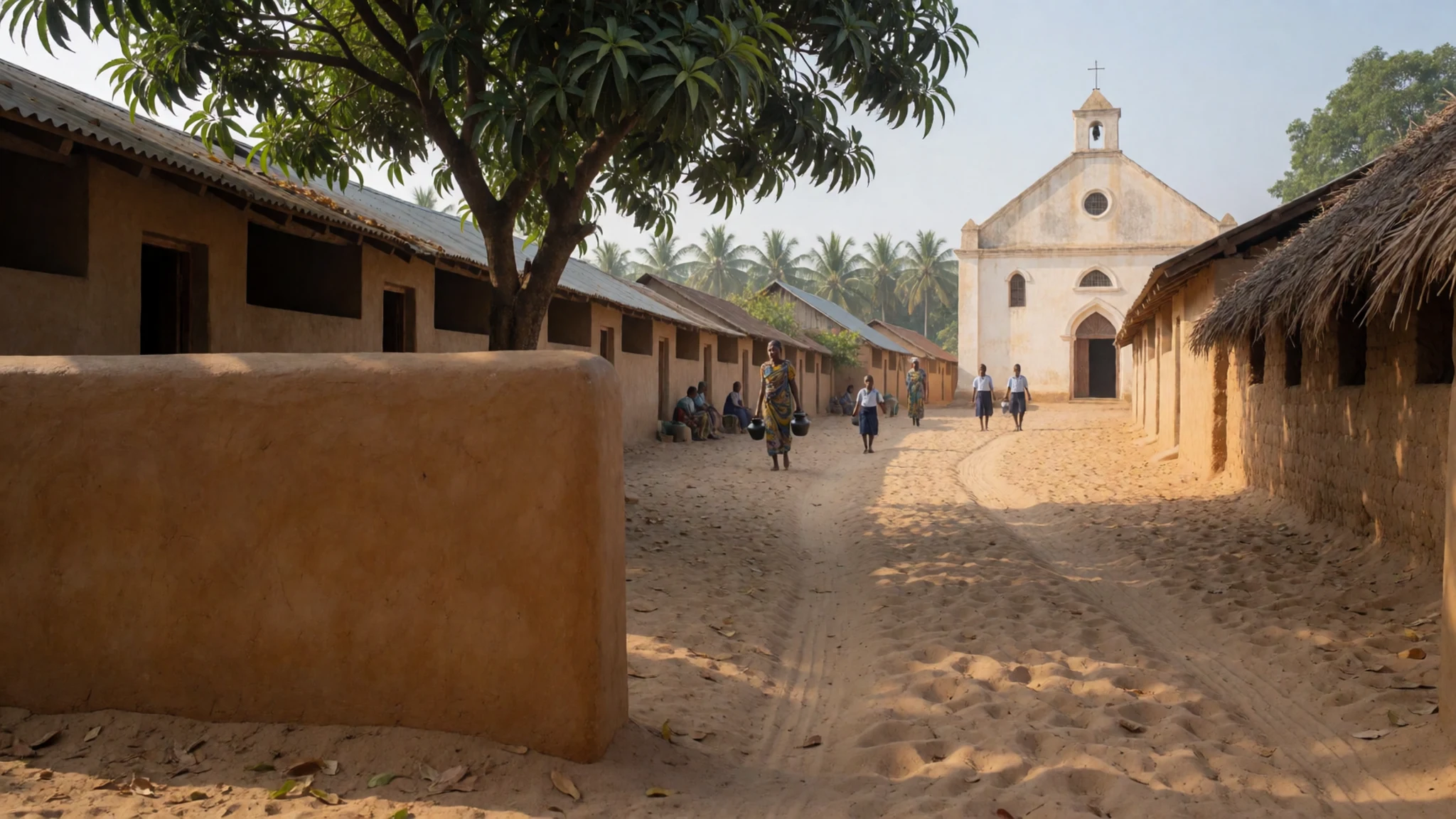
- Aného — eastern end of the lagoon
Aného sits where Lake Togo narrows toward the sea, an old trading town whose lagoon front and colonial-era buildings still face the water. The quarter is small enough to walk. Churches, merchant houses and boats sit close together, and the coast road runs on toward the border. The reason to linger is the layered past, and doorways remain private.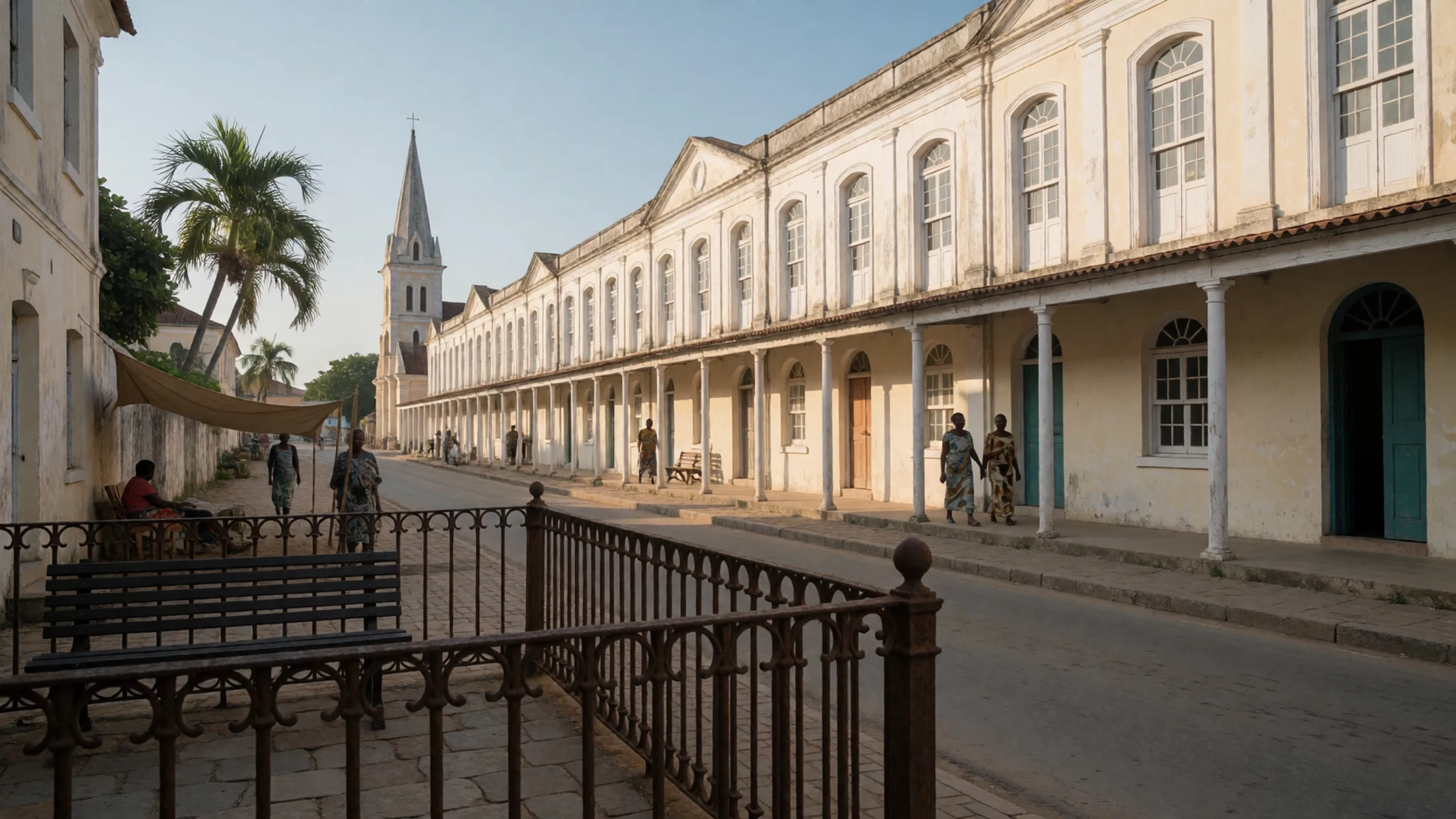
- Adido bridge — lakeside at the Adido bridge
The Adido bridge crosses Lake Togo and gives the lagoon its familiar skyline, a low span linking the shores to the coast road. From the bank, pirogues and fishermen occupy the bright water, the view that photographs of the lake usually record. This is a working edge, so landings should be left clear when a boat is loading.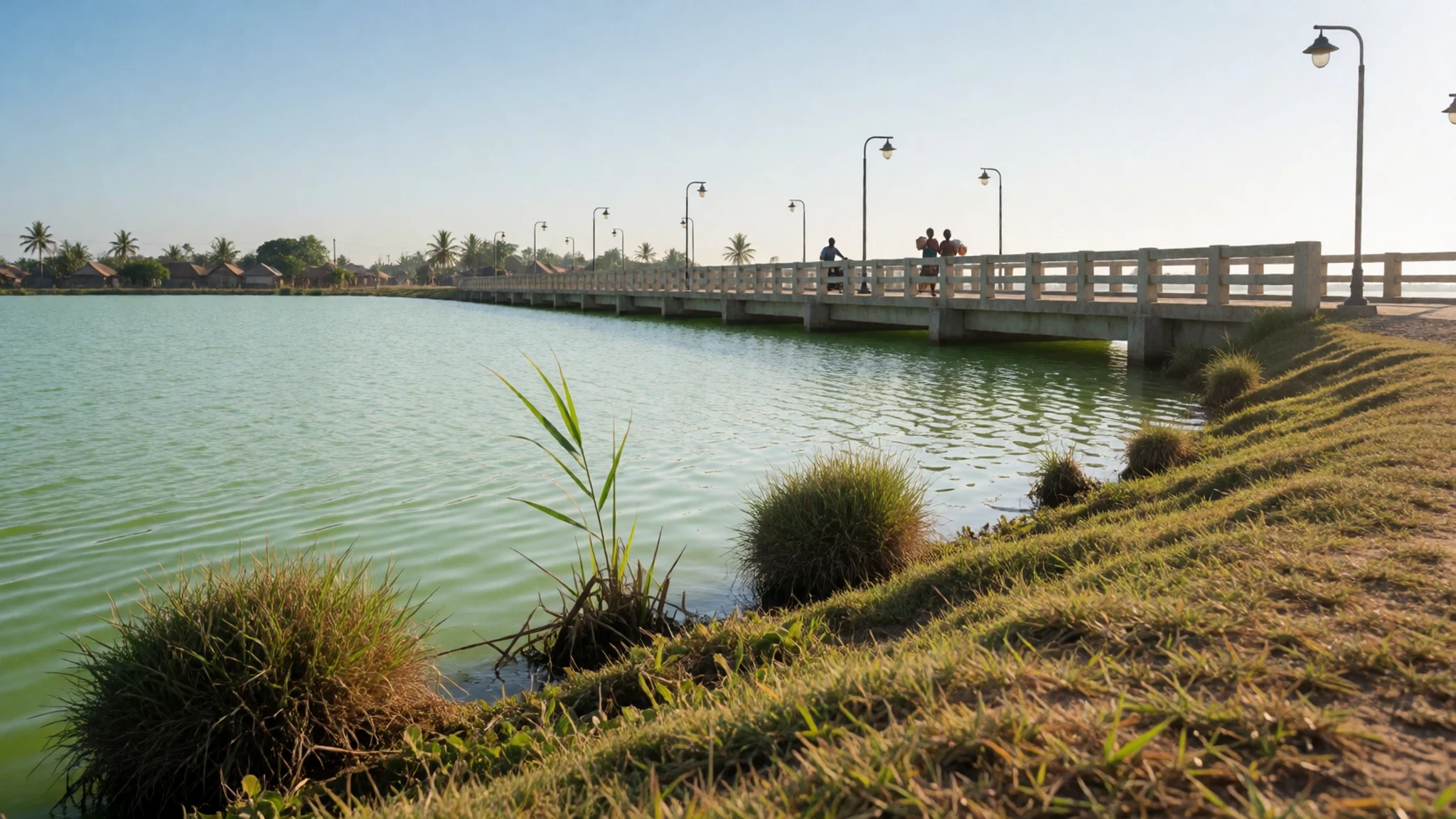
- Pirogue crossing — between the southern bank and Togoville
Crossing Lake Togo by pirogue shows the lagoon's scale more clearly than the coast road does. The boat sits low, the far bank comes up slowly, and the other traffic is canoes, a few outboards and people fishing. Departures are informal: a boatman at the landing, and a fare agreed before casting off. There is no printed timetable.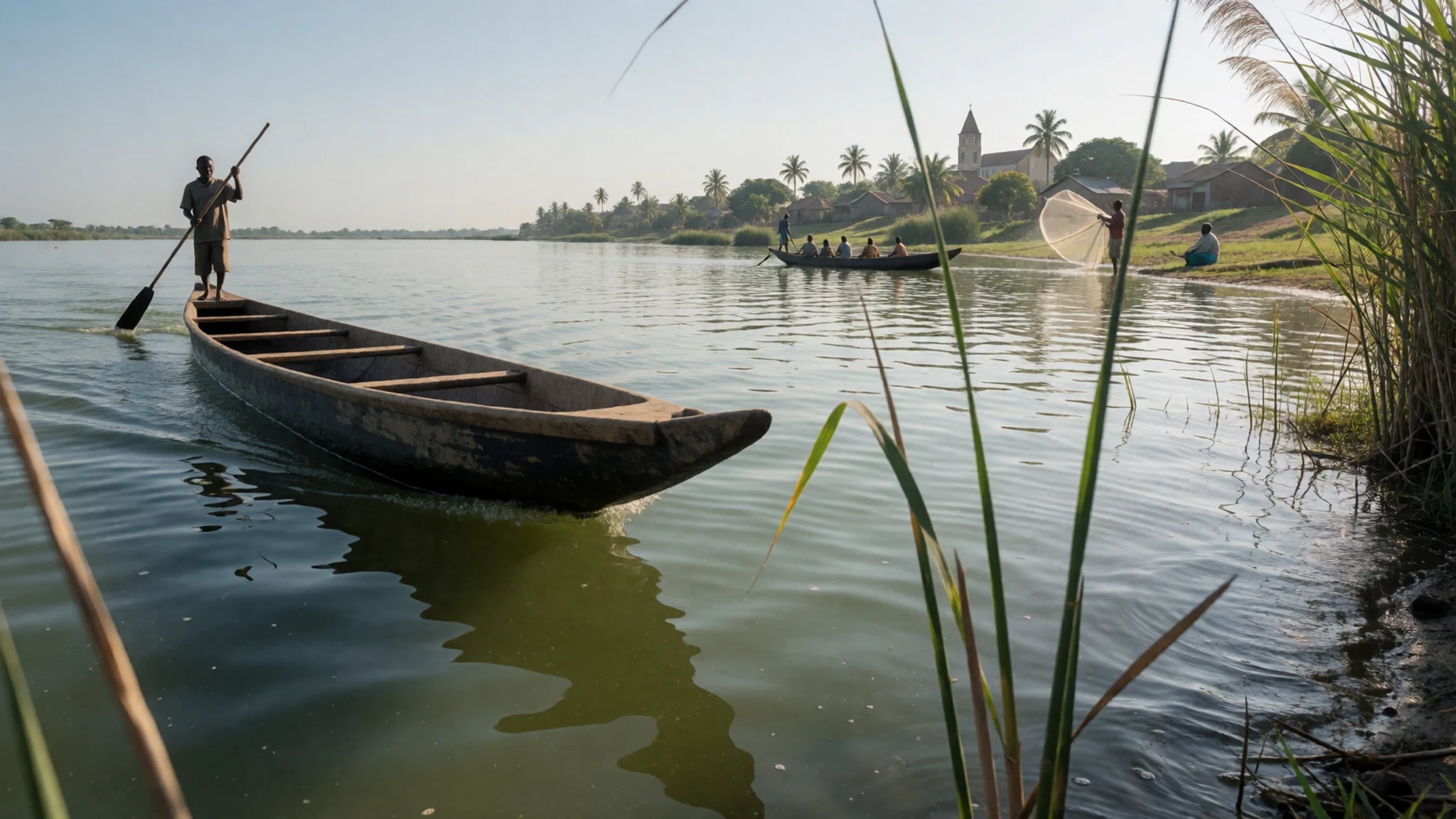
- Agbodrafo — coast just south of the lake
Agbodrafo lies on the lake's shore with Togoville, close enough to combine with Aného. The town is known for houses and a guided account of the slave trade that passed along this shore, a history the lagoon communities shared. It is a sober stop. The fitting manner is to listen, and not to treat the rooms as a backdrop.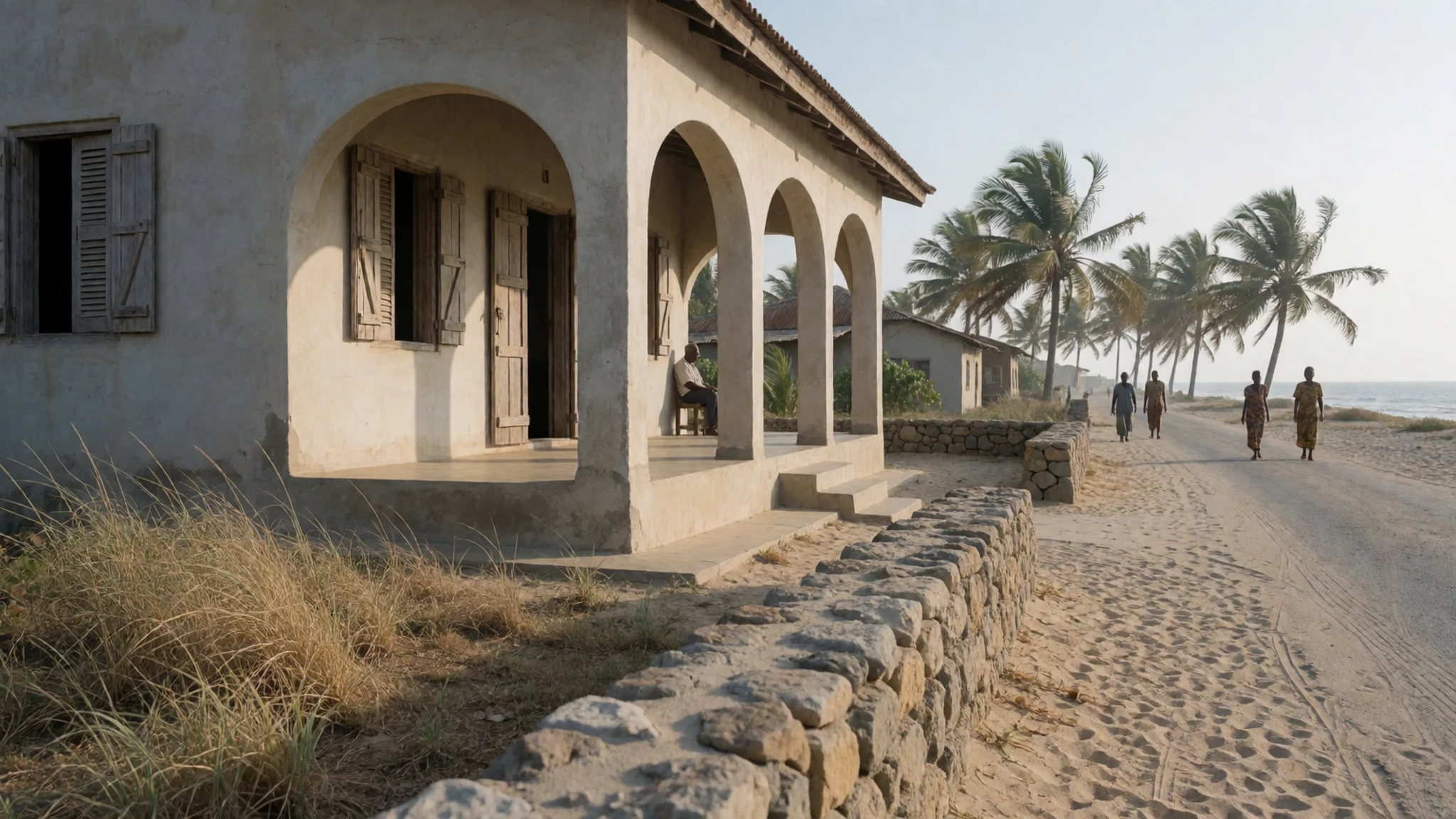
Culture
Culture around Lake Togo joins Mina and Ewe practice, with vodun lived as religion rather than arranged for visitors. Shrines in Togoville and in family compounds are tended, consulted and sometimes closed. Drumming and libation belong to devotees first. Christianity has a long parish life beside them: churches share the villages with the shrines, and many households move between the two. The protectorate meeting gave Togoville a national story, yet residents are also fishers, traders and students for whom the lake is a workplace.
Greetings come before any request, and an older person is greeted first. French is the language of school and office, while Ewe and Gen carry home life, so a greeting in French or Ewe opens more doors than English alone. Bargaining in the market is ordinary. A lens is the sensitive point: photography of people, ceremonies and shrine entrances without a word reads as taking something.
At Lake Togo, ask before photographing people or shrine entrances, and do not step into a sacred space unless someone of the place invites you.
What to wear
Dress around Lake Togo follows the cloth of southern Togo and the Ewe and Mina coast. For ceremonies, women wear a wax-print or woven pagne as a wrapper, with a fitted blouse and a headwrap of the same cloth; the print marks a funeral, a festival or a Sunday service. Men may wear a boubou or a shirt of that print, and Ewe strip-cloth appears at important gatherings. These are clothes for events and for church, not a costume for the boat.
On an ordinary day the mix is wider. Market stalls sell printed cotton as wrappers, dresses and shirts, worn with jeans, football shirts and plain trousers. School uniform is common in Aného and Togoville on a weekday. Dust, sun and sudden rain mean cloth that can be washed and dried in a courtyard.
Visitors do well in light cotton that covers shoulders and knees, which is the respectful choice at churches and essential if a shrine visit is offered. Sandals suit sand and a pirogue better than heavy shoes, and a hat helps against glare off the water. A light waterproof is enough in the rains; in the harmattan, pale cloth shows the dust at once.
What to eat
- Grilled lagoon fish — landings and roadside grills around the lake
Fish from Lake Togo, often tilapia or another lagoon catch, is grilled over wood or charcoal and served with a fresh pepper sauce. It is the shore's everyday dish, eaten at landings and at roadside grills between Lomé and Aného.
- Akoumé — market stalls and small eateries in Aného and Togoville
Around Lake Togo, akoumé, a firm corn dough and the staple starch of southern Togo, is pinched off and eaten with a sauce of greens, okra, palm nut or smoked fish. Market stalls and small eateries cook a single sauce that day.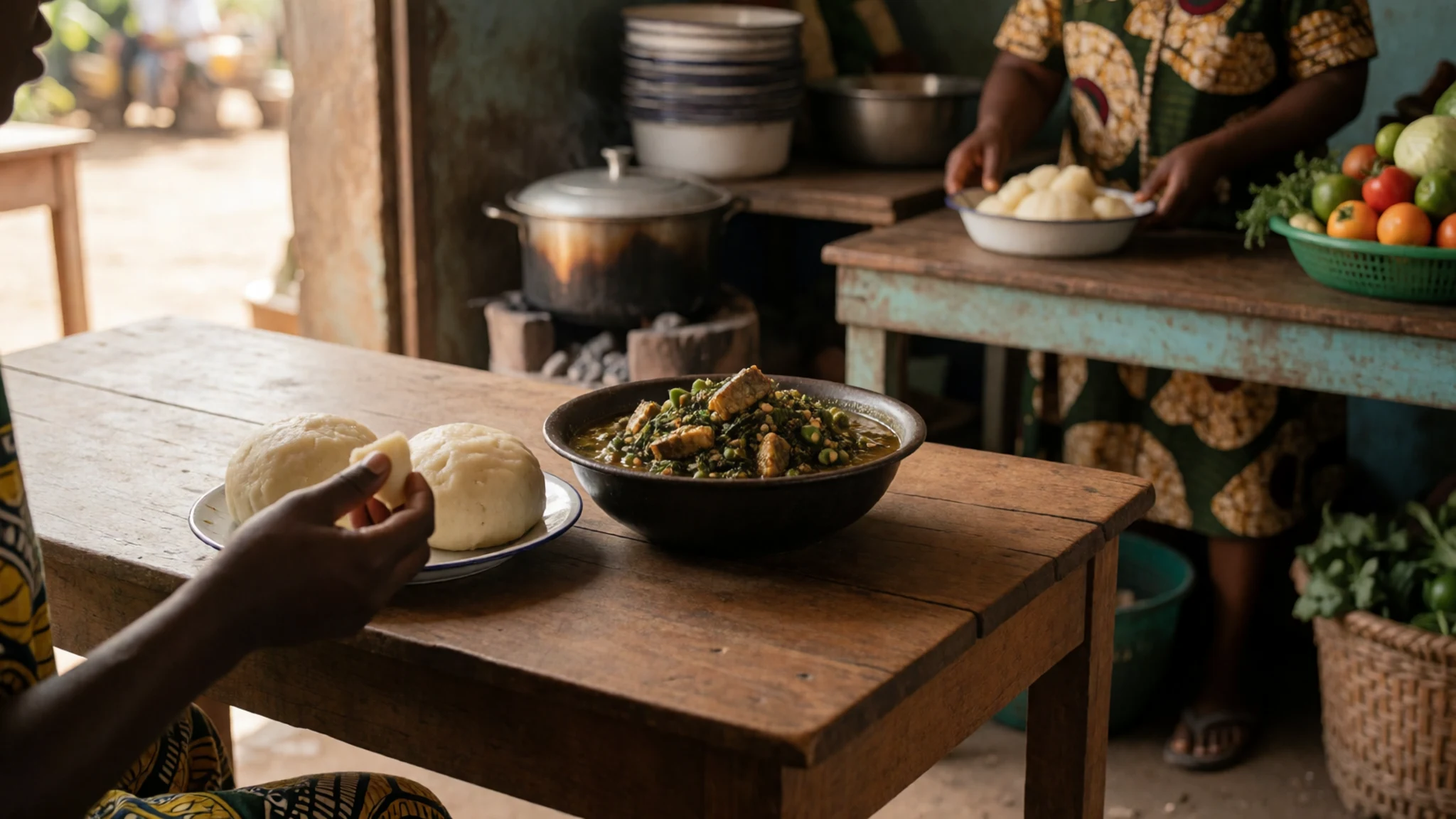
- Ablo — morning stalls in Aného and lakeside villages
Ablo is a steamed corn cake, slightly sour, sold from morning stalls in Aného and the villages along Lake Togo. People eat it plain, with a pepper sauce, or beside grilled fish. A piece from the landing is a common start to a boat crossing. - Gboma dessi — stalls in Vogan and the lake towns
Around Lake Togo, gboma dessi is a sauce of gboma leaves, a local green, cooked with fish or meat and eaten with akoumé. Stalls in Vogan and the lake towns serve it when the leaves are in. The taste is earthy and peppery. - Ayimolou — small eateries in Aného and along the lake road
Ayimolou is rice cooked with beans, a full plate that small eateries in Aného and along the Lake Togo road serve at midday. Pepper sauce or fried fish often comes beside it. It suits the heat better than a heavy pounded staple.
Plan it
Best time. November to March is the easier season on Lake Togo. Tracks are firmer, crossings are simpler, and the harmattan is the main nuisance, with dust and a paler sky. The long rains turn banks to mud and can raise the water. A shorter dry spell later in the year is possible, though the air stays humid.
How long. 2–3
Getting there. Lake Togo's nearest airport is in Lomé. From the city the coast road runs east to Aného and on toward the Benin border; shared taxis and hired cars both use it. Togoville is reached by pirogue from a landing on the southern shore. The Adido bridge is the road's view of the water. Landings are informal, so confirm them on the day.
Budget. low
Tips
- Start early, because heat and glare build quickly on the open water.
- Agree the pirogue fare, and the return, before leaving the landing.
- Carry small notes, because landings and market stalls may not take cards.
- On a Friday, Vogan's market fills the town, so watch belongings and allow time.
- Bring drinking water from Lomé rather than counting on a landing.
Etiquette
- Greet people before asking for a boat, a photograph or a direction.
- Ask before photographing people, ceremonies or shrine entrances.
- Do not enter a shrine or a private courtyard without an invitation.
- Cover shoulders and knees at churches and at shrines.
Nearby
Sources
- Wikidata (CC0)
- Wikipedia (CC BY-SA 4.0)
- Wikivoyage (CC BY-SA 4.0)