Koror
Koror, Palau
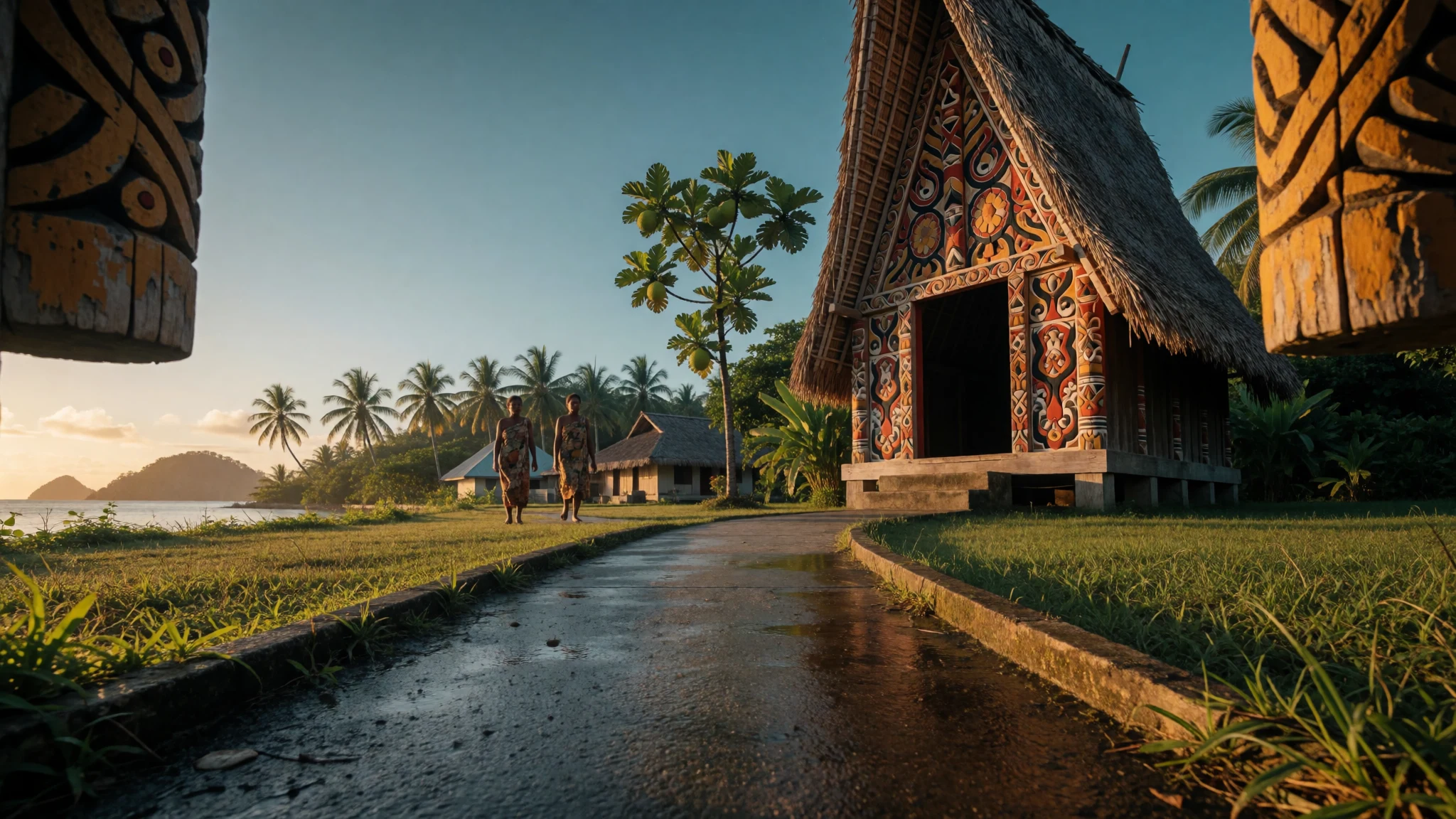
Koror is the practical base for Palau's lagoon, where dive boats, small museums and local food fill the gaps between water days.
The place
Koror is the largest city in Palau and its commercial centre, strung along a low ridge at the western end of Koror Island, which is also called Oreor. The recorded population is 8,744, though the daytime crowd swells when people from other states come in for business, and local estimates put the true figure higher. The island has two halves: the western volcanic part holds the town, while the limestone half is the same kind of uninhabited rock island that fills the lagoon beyond. The town is organised into hamlets, and traditional ties of clan and village still carry weight. Honestly, this is a working Pacific city rather than a sightseeing one. It is practical and low-rise, with supermarkets, shops, a few museums and a waterfront lined with dive shops. Koror is where visitors sleep, eat, rent equipment and board boats; the famous scenery sits in the water around it. A bridge leads north to Babeldaob, the large and mostly undeveloped island, where Melekeok, the national capital, lies. The climate is tropical rainforest: warm to hot all year, with frequent showers. The first months of the year are somewhat drier, and July to October is the wettest stretch. Very hot days have become far more common in recent decades than they were in the mid-twentieth century. Expect sweat, sudden downpours and an unhurried pace.
Its story
Koror stayed a small fishing settlement for a long time after Spain claimed the islands, and the Spanish presence barely changed it. Things shifted when Germany bought the archipelago at the end of the nineteenth century, expanded the harbour and set up a colonial office. The bigger change came under Japan, which ran the region as the South Seas Mandate and made Koror its administrative seat. Within a couple of decades a modest village had become a busy town of officials, traders and labourers, and a Shinto shrine was completed shortly before the Pacific war reached the islands. As the fighting closed in, Palauans were moved out to Aimeliik, which people began calling the Second Koror. Japanese forces later shifted there too after air raids, and most civilians fled to Babeldaob. Koror itself was never invaded, but American bombing wrecked large areas, and after the occupation most of what remained was burnt or pulled down, leaving only a handful of buildings for the occupying forces. That layered past explains why the town looks so modern and plain: very little older than the postwar years survives above ground. Koror grew again as the seat of government and trade, then as the tourist base, with a first tourist hotel that was modest beside those on Guam and Saipan. Tuna export and copra production still feature in the local economy.
What to see
- Palau International Coral Reef Centre — Southern Koror, near the harbour
In Koror, this is a small aquarium and education centre devoted to the reef that Palau depends on. Outdoor habitat pools sit beside one indoor gallery of tanks showing local marine life. It makes a sensible short stop before or after a dive or snorkel, since it explains what lies beneath the boat. Allow about an hour.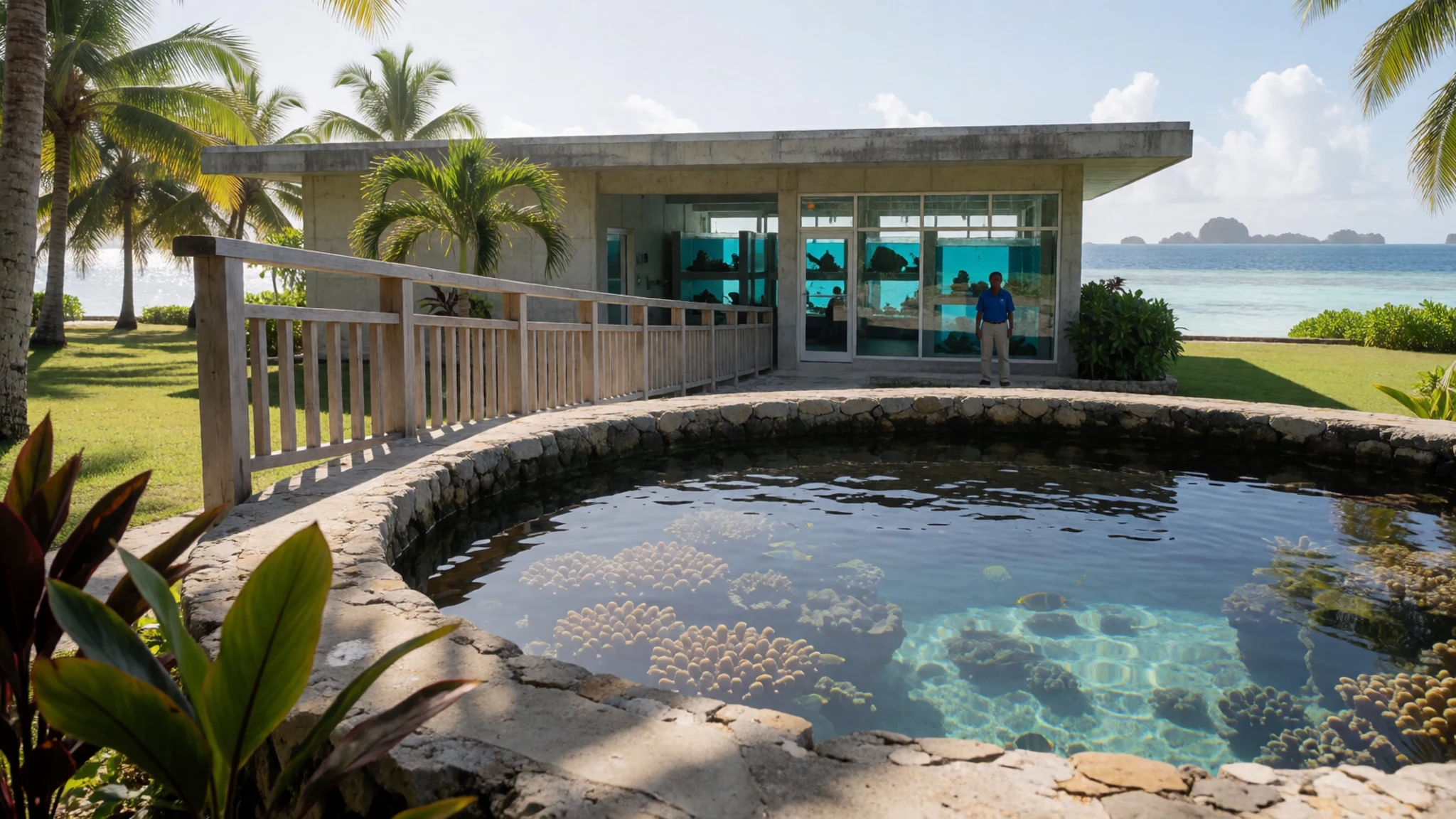
- Belau National Museum — Central Koror
Belau National Museum covers Palauan history, arts and daily traditions, with displays running through the Spanish, German, Japanese and American periods. The grounds include a bai, the painted and carved meeting house that traditionally served as a community gathering place. A good first stop for context before heading out on the water.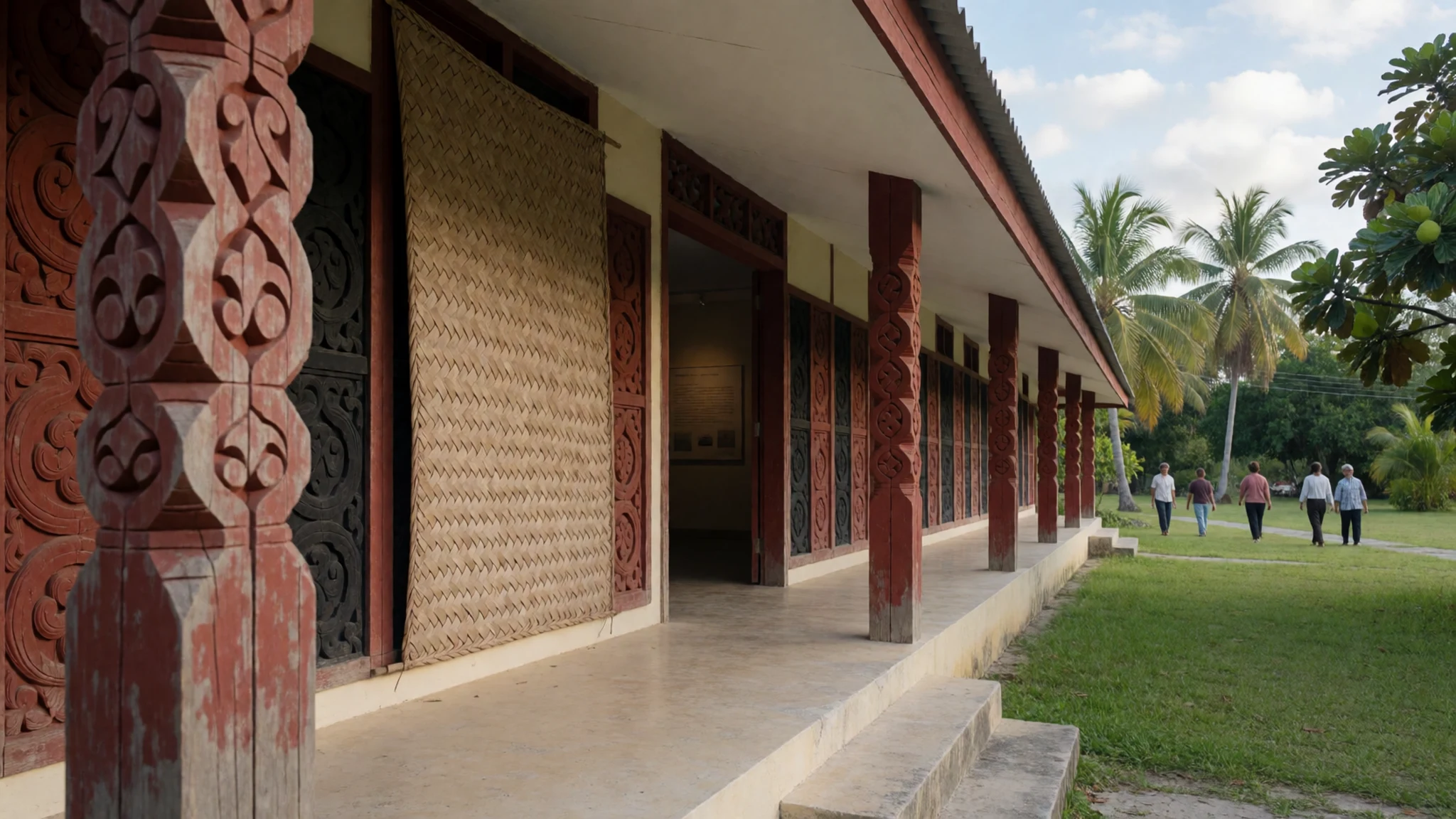
- Etpison Museum — Northern Koror
A second museum on Palauan and wider Micronesian culture, set in a building covered in coloured tiles and carved figures. One carving shows a spider god who, in local legend, taught women important skills. The exterior alone makes a quick stop worthwhile, and the displays add context to the national museum.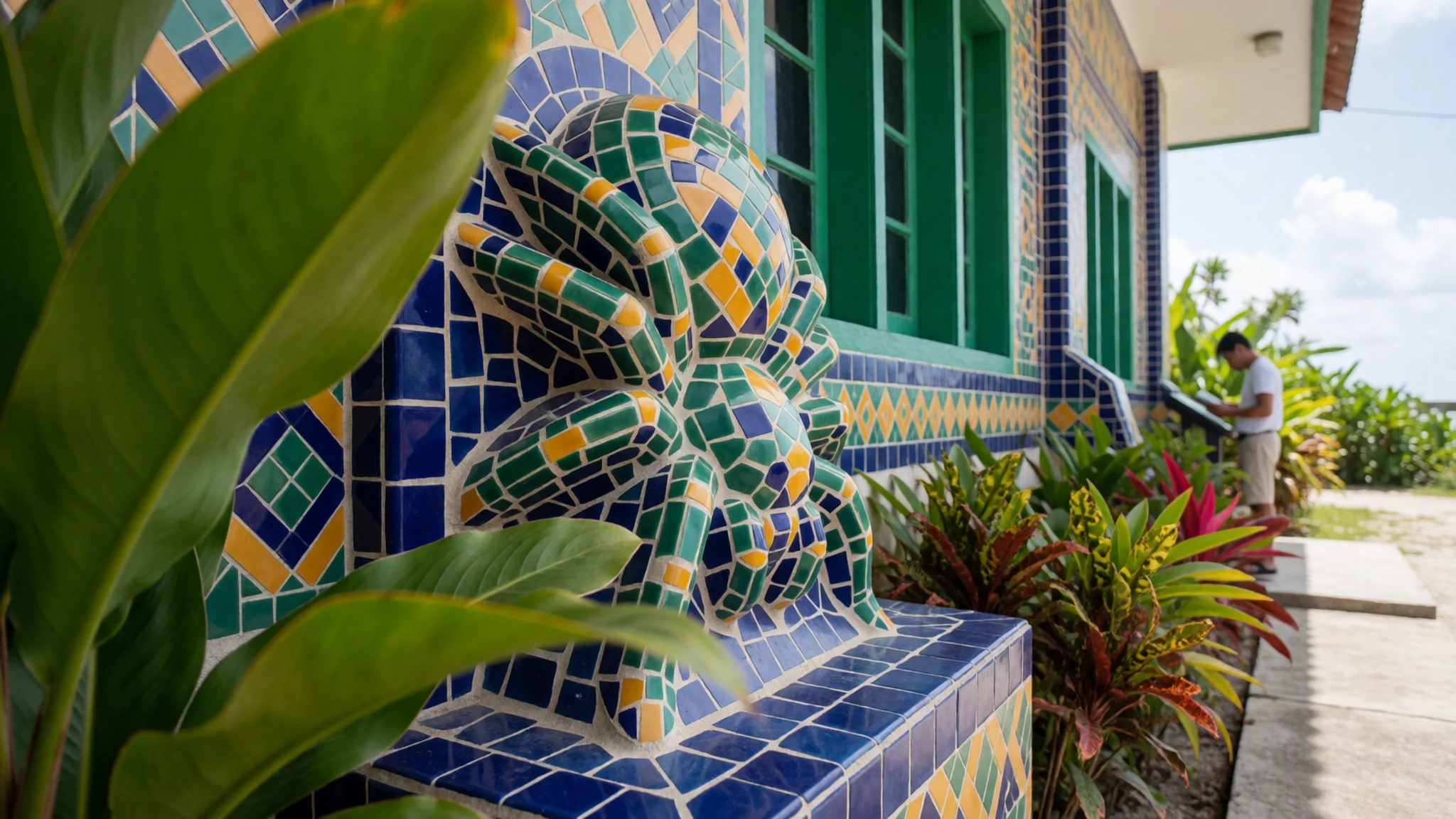
- Sacred Heart Church — Northern Koror
A low white Catholic church with brown trim, completed before the Second World War on the site of an earlier Spanish-era church. A veranda runs along the front and a small bell tower rises above it. It is a quiet, short stop in the middle of town, a reminder of the mission history behind modern Koror.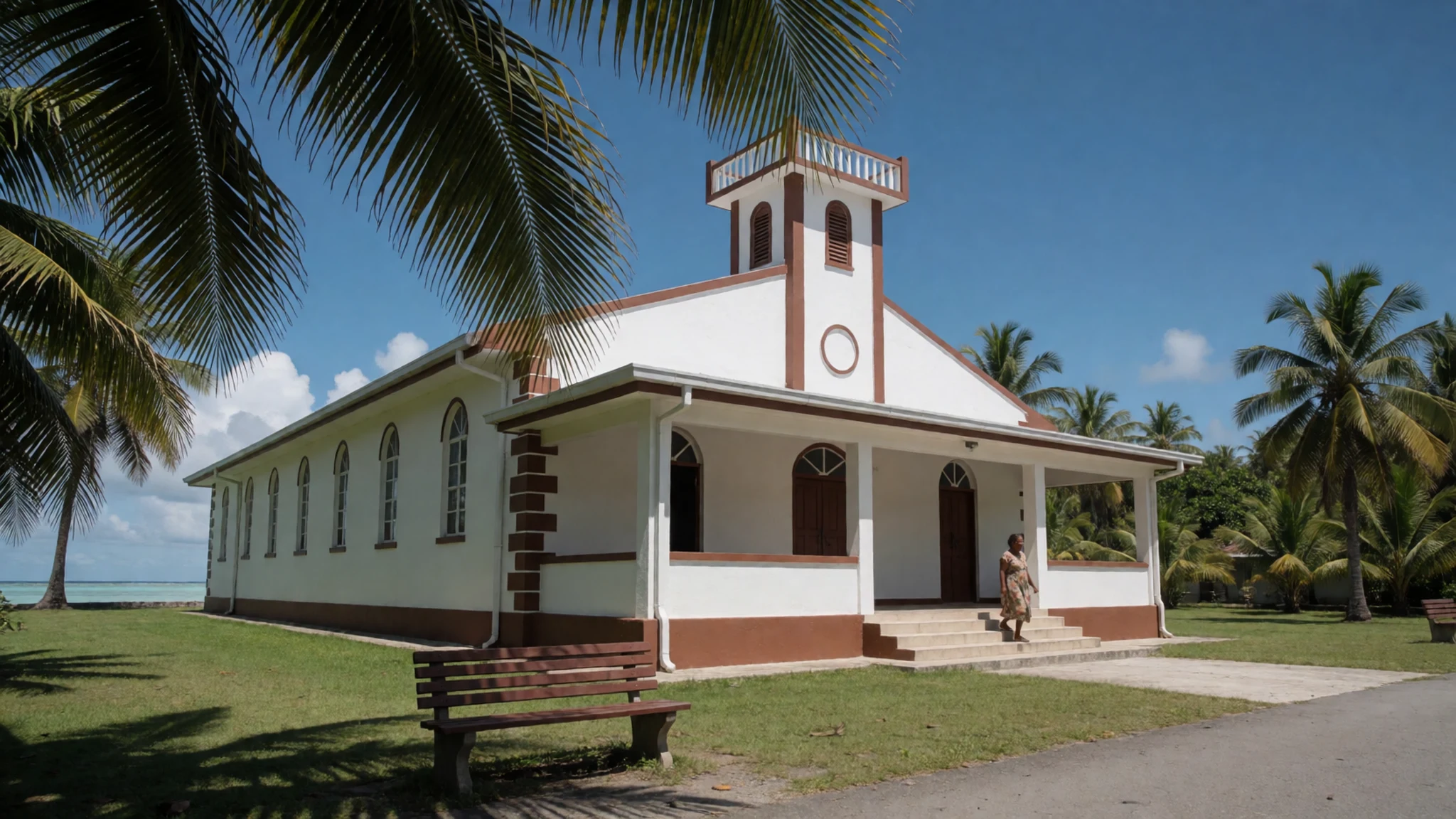
- Harbour dive and boat operators — South-west Koror waterfront
Much of Koror's visitor life happens at the harbour, where locally owned operators such as NECO Marine and Sam's Tours organise diving, snorkelling, kayaking and fishing trips into the lagoon and Rock Islands. Book ahead in busy months, check each operator's own website for current trips and permit arrangements, and expect boats to leave early.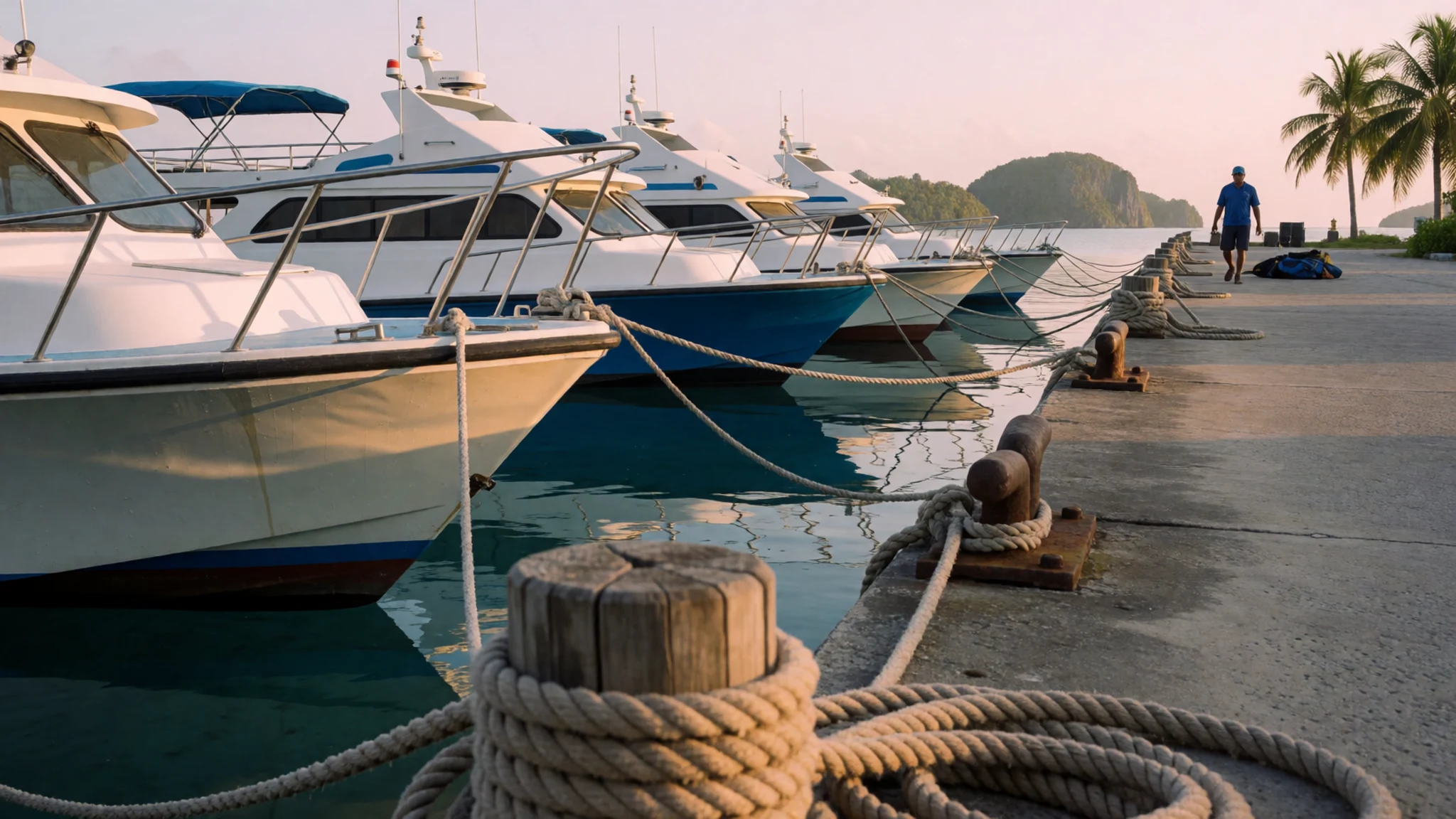
Culture
Koror is Palau's most urban place, yet clan and hamlet ties still shape daily life here. The town is divided into hamlets, and traditional titles and obligations run alongside the modern state government. Funerals, first-child ceremonies and church events draw whole extended families, and a visitor who wanders into one will notice how much weight is placed on showing up and contributing. Traditional meeting houses, called bai, carry painted gables and carved beams that record stories in wood, and the museums in town help decode the images. Christianity arrived with the Spanish and remains central, so Sundays are quiet and churches are full. Japanese influence also lingers: in family names, in words that entered Palauan, and in a local taste for raw fish and noodle dishes. English and Palauan are both used day to day. Reef and fishing customs matter too, since traditional rules about when and where to fish are still part of how people think about the lagoon, and guides often explain them. Ask before photographing people, ceremonies or the inside of a bai, and follow your guide's instructions about where you may swim, touch or fish.
What to wear
Traditional dress in Koror drew on what the islands grew: skirts and loincloths of leaves and plant fibre, mats and baskets woven from pandanus, and ornaments of shell and old glass beads that doubled as valuables. These pieces now appear mainly at festivals, dance performances, weddings and school or national events, where they are worn with pride and preparation rather than as daily clothes. Everyday wear is relaxed island casual: cotton shirts, shorts, printed dresses, flip-flops and sandals, with lighter office clothes for government and bank work and smarter outfits for church on Sundays. Many people carry an umbrella or wear a cap against sun and showers. Visitors should pack for heat, humidity and sudden rain: lightweight cotton or quick-dry tops, swimwear that can go under clothes, a long-sleeved rash vest for sun on the boat, a wide-brimmed hat and a thin waterproof jacket. Reef shoes or sturdy sandals help on rocky landings, and closed shoes are rarely needed. In town, in villages and at churches, shorts below the knee and covered shoulders are courteous. A dry bag for phones and cards is worth packing, as is reef-friendly sunscreen.
What to eat
- Beef steamed in titiml leaves — Neighbourhood markets with hot food counters in central Koror
Beef wrapped and steamed in titiml leaves, a plant often mistaken for basil, comes out tender and herbal. It suits a plain rice plate and is a good first step into Palauan home cooking. Look for it at neighbourhood markets with hot food counters.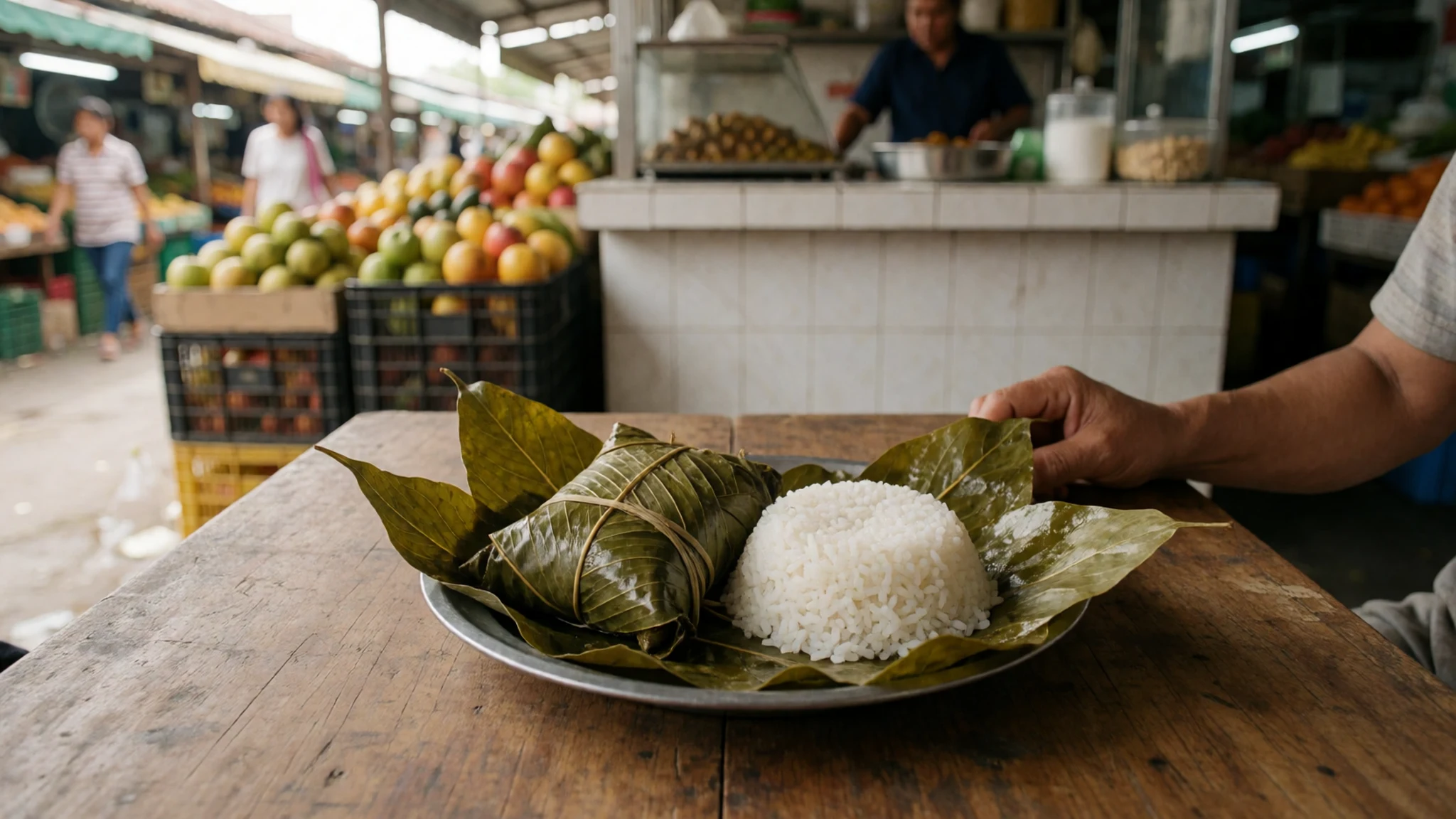
- Clams cooked in coconut — Market food counters and casual local restaurants
Clams simmered in coconut milk are sweet, salty and rich, and a staple of island menus. Order them with rice or boiled taro to soak up the sauce. They turn up at markets with hot counters and at casual local restaurants.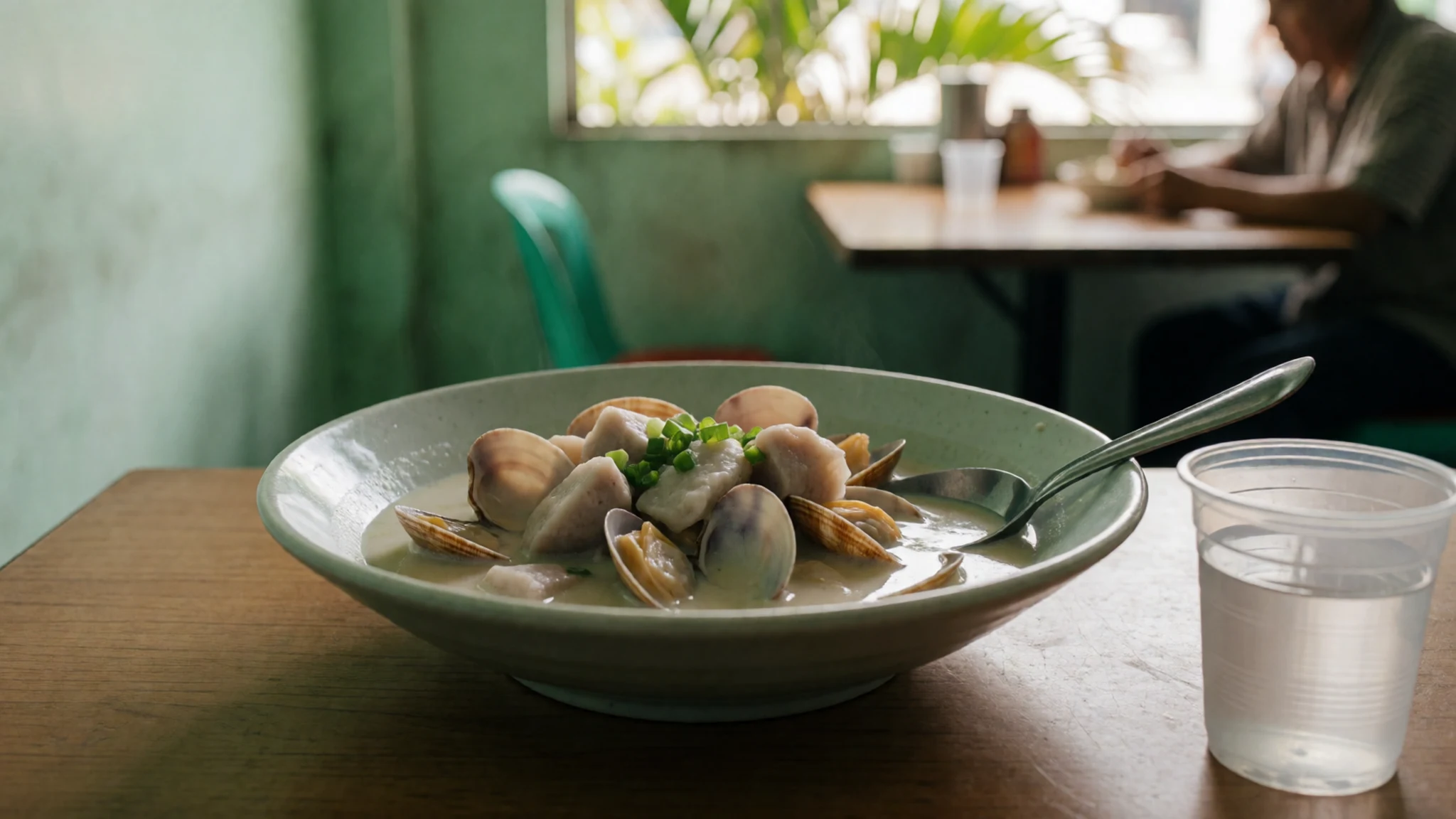
- Taro leaf soup with coconut — Local-style restaurants in central Koror
Creamy soup of taro leaves cooked down with coconut milk, earthy and mild, a comforting dish after a day on the water. Many local-style restaurants serve it alongside fish soup, so ask what is on that day, and expect a generous bowl. - Local fish soup — Local-style eateries in central Koror
A clear, brothy soup built around the day's catch, light on the stomach in the heat. Some local eateries also serve it at breakfast. Ask which fish went in, since the answer changes with the boats. - Fruit bat in coconut — A few local-style restaurants; ask at the table
Fruit bat cooked in coconut broth is a traditional island dish that a few local restaurants offer to the curious. The flavour is gamey and the texture closer to stewed meat than anything fishy. Treat it as an experiment, and share a bowl before ordering your own.
Plan it
Best time. January to April is the drier stretch, and July to October is the wettest. Koror is warm and humid all year, so drier months give the best odds for boat days.
How long. 3–5
Getting there. The international airport is on the larger island of Babeldaob to the north; the last leg is a road transfer across the bridge into Koror, and hotels and tour operators often arrange it, so check with them.
Budget. mid
Tips
- Book dive and Rock Islands boat trips ahead in busy months, and check each operator's official website for current trips and permit arrangements
- Boats leave early, so plan on breakfast before sunrise and a lazy afternoon
- Carry some cash for markets and small eateries, and ask whether cards are accepted elsewhere
- Bring a refillable water bottle, a hat and reef-friendly sunscreen, and keep a light rain jacket in the bag
- Allow a half day in town for the museums, church and waterfront, ideally on a showery day
Etiquette
- Ask before photographing people, ceremonies or the inside of a bai
- Wear a shirt and cover your knees in town, villages and churches
- Do not touch, stand on or take coral, shells or fish from the reef
Nearby
Sources
- Wikidata Q527748 (CC0)
- Wikipedia: Koror (city), rev 1376443151 (CC BY-SA 4.0)
- Wikivoyage: Koror, rev 5430535 (CC BY-SA 4.0)
- Photo: Koror Downtown, ehemalige Hauptstadt Palaus (Peter R. Binter) (Public domain)
- Photo: Main St, Koror, Palau (ito1117) (CC BY 3.0)
- Photo: Koror State Government Building (Abasaa) (Public domain)
- Photo: BNM (Belau National Museum) Bai (Abasaa) (Public domain)
- Photo: WCTC shopping centre (上条ジョー) (CC BY 3.0)
- Photo: Etpison Museum (Abasaa) (Public domain)
- Photo: Map of Koror in the Caroline Islands (Department of Defense, 652d Engineer Battalion) (Public domain)
- Photo: Koror, Palau (Mandrusian) (CC BY-SA 4.0)


