Helen Reef
Helen Reef, Palau
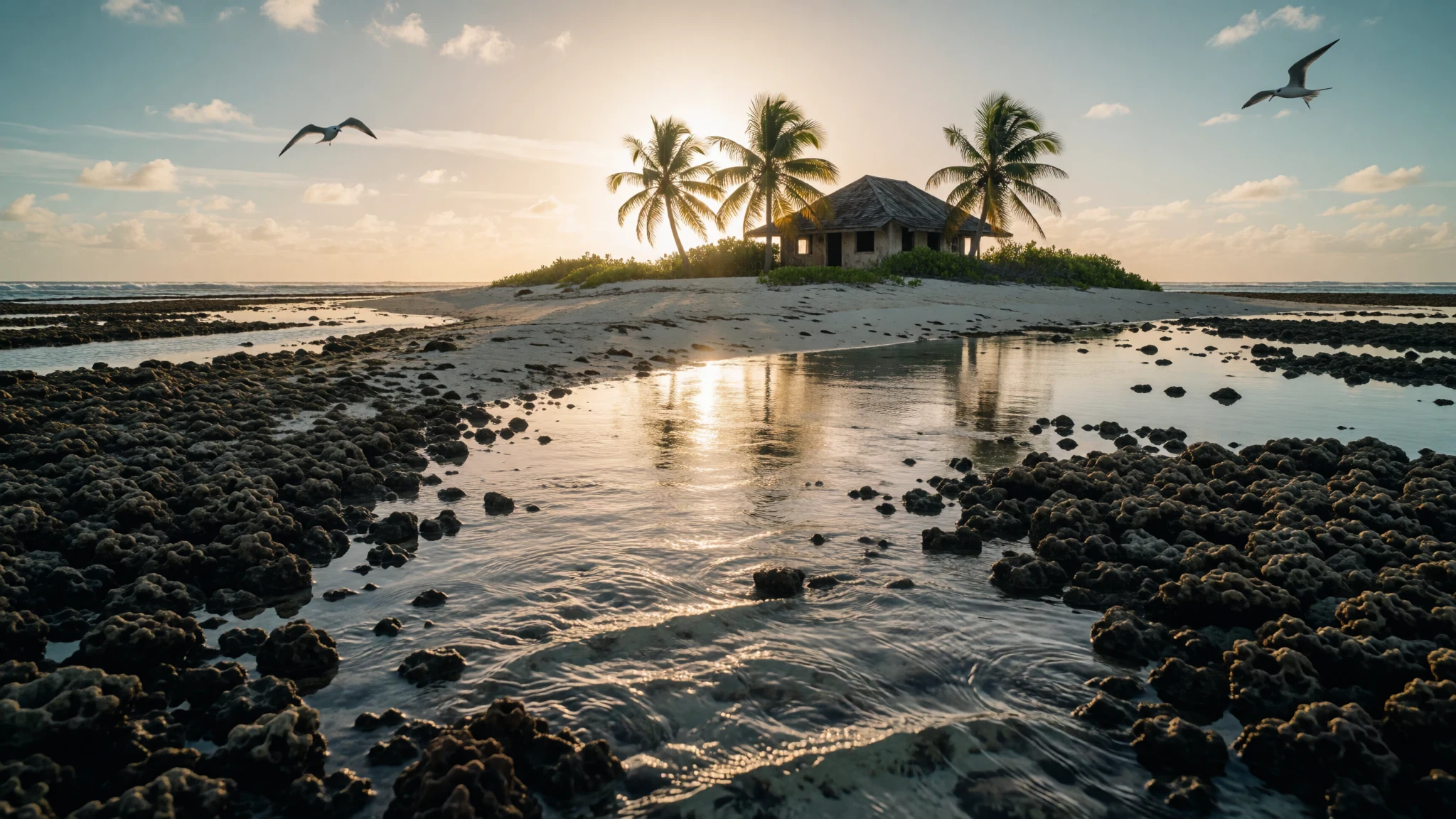
Helen Reef is a remote Palauan atoll where community rangers guard a lagoon, nesting terns and healthy reef, far from any resort.
The place
Helen Reef is an atoll in the far south-west of Palau, part of Hatohobei State, the country's southernmost state. It lies well beyond the Rock Islands that draw most visitors, across a long stretch of open sea. From the air it is a ring of reef enclosing a lagoon, with one small sandy islet, Helen Island, carrying a few palms, low scrub and a ranger station that is staffed continuously. Tobi Island, the state's other land, is a separate voyage away. It is low and flat, with a swampy hollow in the middle and coconut palms along the beaches. The dry ground in the whole state is tiny, while the reef is vast by comparison. Hatohobei and neighbouring Sonsorol together form the Southwest Islands, which differ from the rest of Palau in landscape and in culture. They are raised coral limestone platforms with sandy soil and atoll-type vegetation. Very few people live there now, because most Tobians have settled in Koror and on Ngerekebesang. Helen Reef is not a beach resort. There are no cafés, no shops and no scheduled boats, and reaching it depends on permission and a demanding sea passage. What it offers is clear water, seabirds and a reef looked after by the people whose families come from it. Most travellers will meet this place at a distance, as a protected corner of Palau, rather than as a stop on an itinerary.
Its story
The story of Helen Reef is bound up with the Tobian people of Hatohobei, whose home islands include it. Tobians trace their heritage to the central Caroline Islands, far to the north-east across open ocean, and the migration that brought their ancestors to these south-western specks is counted among the notable episodes of Pacific prehistory. They settled on Tobi, where fish, coconut and a thin sandy soil sustained them, and the reef at Helen served as a nearby source of food. In the period of Japanese administration, phosphate was dug on Tobi, and the hollow left behind is part of the reason the island's interior sags into swamp. Copra, the dried flesh of coconut, became the one commercial product from the palms. Over the decades, schooling, work and health care drew families to Koror and Ngerekebesang, and the home islands emptied. Yet attachment to them did not fade. A traditional high chief, the Heimong, still holds title, and the community keeps a ranger station on Helen Island so that someone is always watching over the reef. That presence, rather than any monument, is what the place teaches: an island people holding on to their home through stewardship, even while most of them live elsewhere. It also explains why access is a matter of invitation and care, not ticketing.
What to see
- Helen Island — Central Helen Reef
A small sandy islet on the reef's rim, with a handful of palms, low scrub and the ranger station. It looks like the classic desert-island picture, but there is little shade at midday, nothing to buy, and everything arrives by boat. Landing is by arrangement with the rangers only.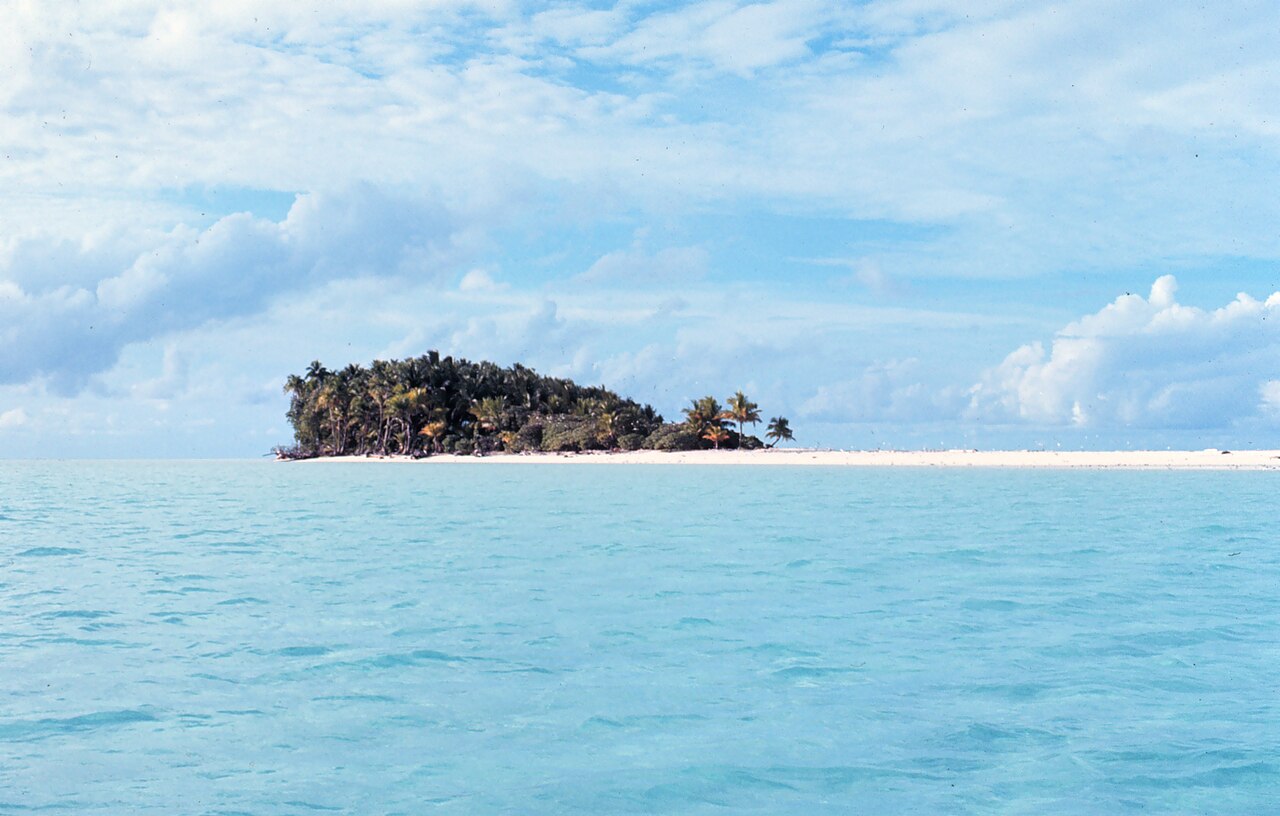
- The tern colony — Helen Island
Greater crested terns nest on Helen Island in a noisy colony, on open ground and easily disturbed. Rangers can show where birds are sitting. The sensible approach is to watch from a distance, move slowly and stay out of nesting areas completely. Binoculars do more here than a long lens.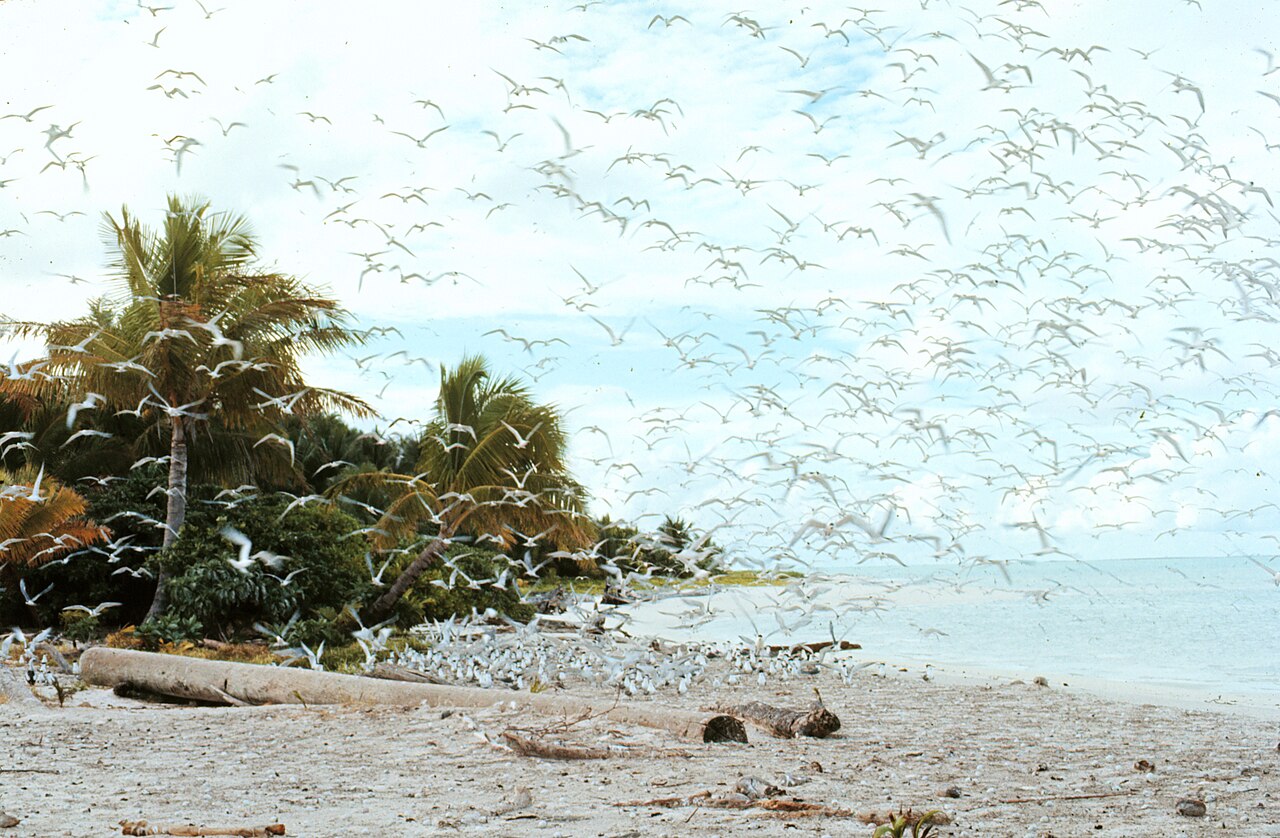
- Lagoon and reef edge — Helen Reef atoll
From the sea, Helen Reef is a ring of pale reef and darker channels around a lagoon. Snorkelling and diving depend on boat access and local permission, and conditions shift with wind and swell. Expect reef-safe sunscreen rules, no single-use plastics, and little margin for error so far from help.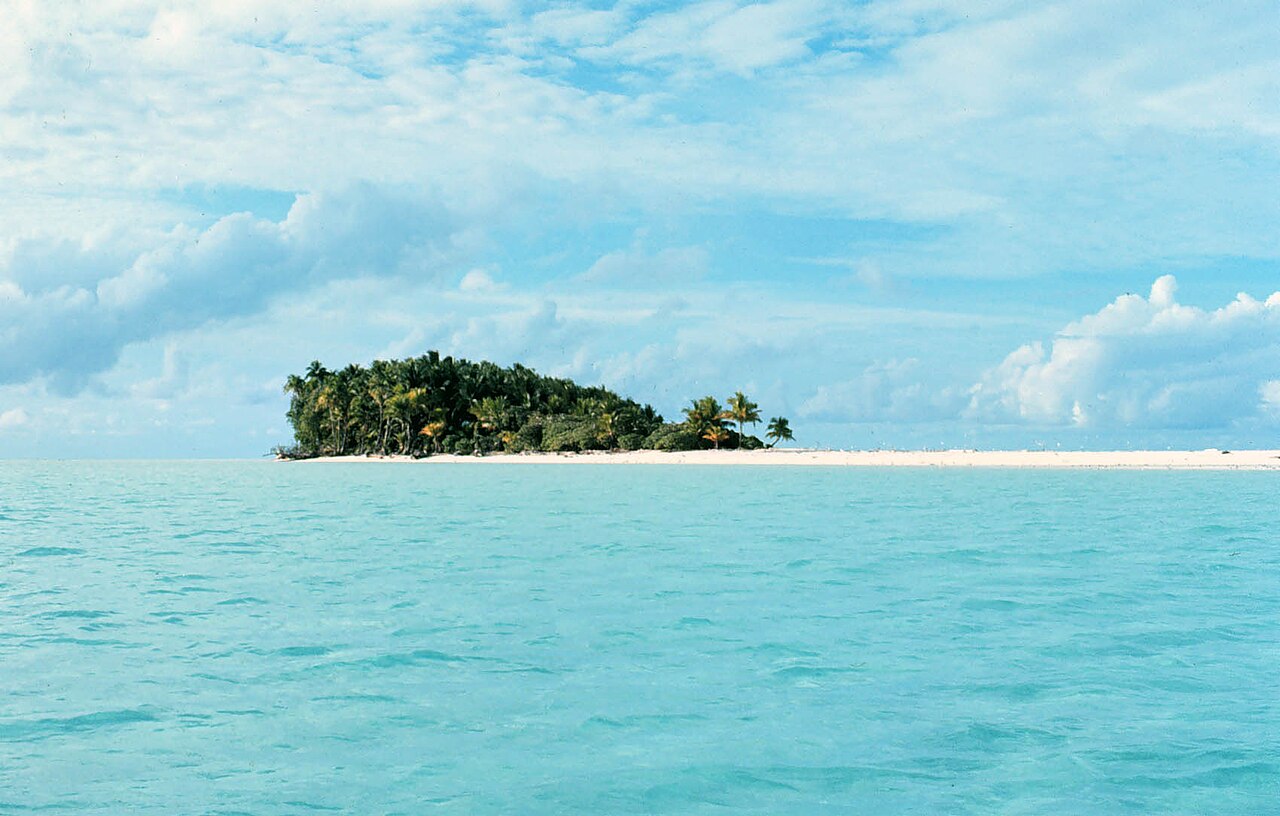
- Cushion stars on the reef flat — Shallow reef flats
On the shallow flats, large cushion stars (Culcita novaeguineae) sit on sand and rubble, thick and rounded rather than spindly-armed. They move slowly and are easy to spot in clear water, which is a good reason to look down before stepping. Photograph them, but never lift them out of the sea.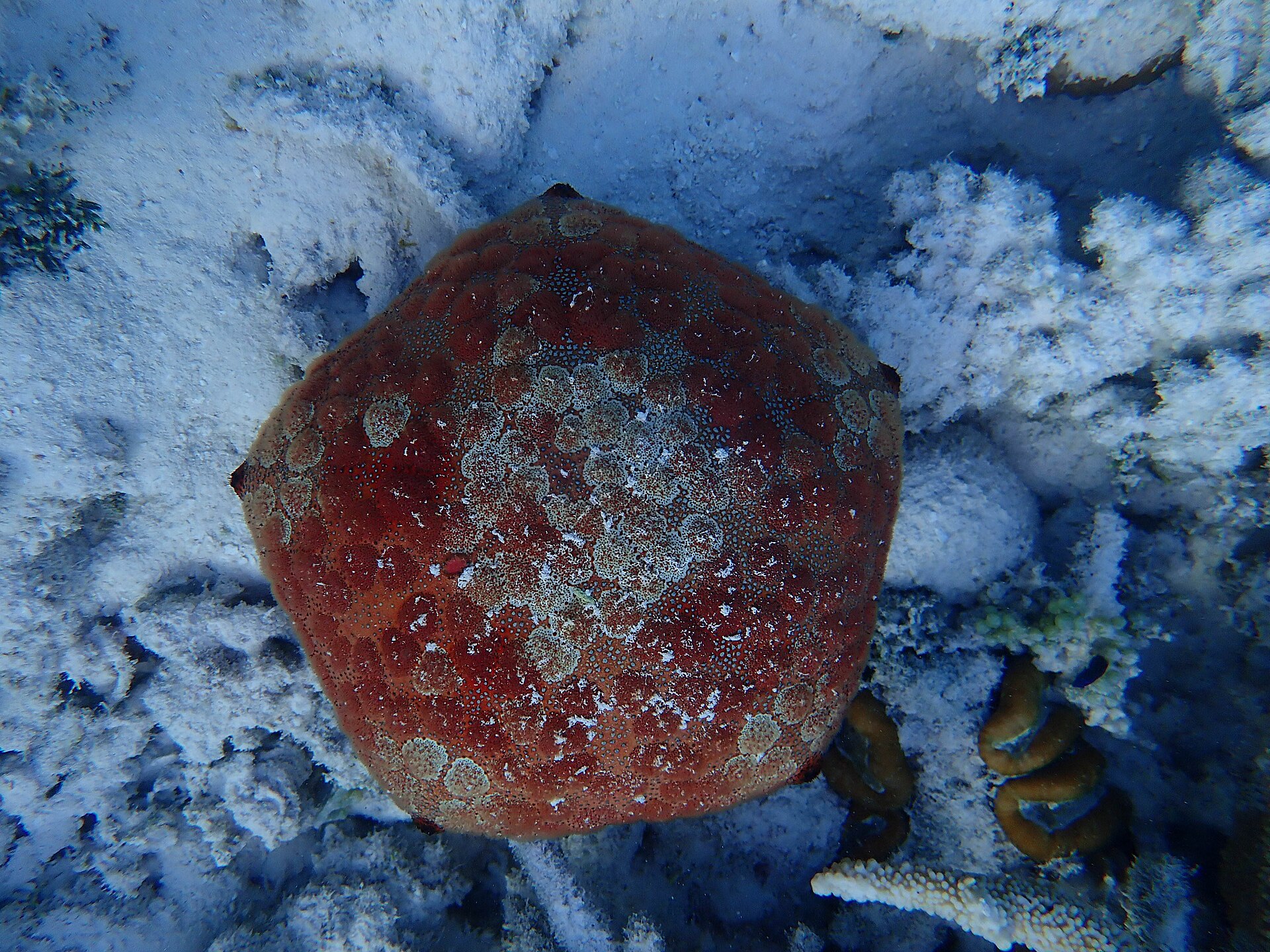
- Tobi Island — Hatohobei State, to the west
Tobi is the old home island of the Tobian community: low, mostly only a few metres above the sea, with a swampy interior left by phosphate digging and coconut palms along the beaches. Visits are for the community's guests and official business, so ask through Hatohobei State rather than simply turning up.
Culture
Helen Reef belongs to the Tobian community of Hatohobei State, and its culture comes from that heritage rather than from the dive tourism Palau is known for. Tobian ties run to the central Caroline Islands across the Pacific, a link that shows in language, voyaging memory and kin networks. Tobian is the everyday tongue, with English used alongside it. Leadership includes a traditional high chief, the Heimong, and decisions about the islands and the reef are made with the community's interests first. Most Tobians now live in Koror or on Ngerekebesang, so the culture travels with them: gatherings in town, shared meals and a firm sense of obligation to the home islands. Palauans in general receive visitors with warmth, and courtesy is returned in kind, though rude remarks about local ways, careless behaviour at historic sites or harm to the ocean are not forgiven lightly. For Helen Reef specifically, the community's clearest message is stewardship: take nothing, leave no litter, and remember that the reef is somebody's home place and not a public beach. Ask Hatohobei State and the rangers before landing anywhere, follow their instructions on where to walk, and never disturb nesting birds or collect shells, coral or eggs.
What to wear
For the Tobian community around Helen Reef, traditional dress follows the central Caroline pattern of wrapped cloth rather than tailored clothes. The classic garments are a wrap skirt for women and a loincloth for men, historically woven on a backstrap loom from banana or hibiscus fibre in patterned bands, while plaited coconut leaf supplied mats, hats and baskets. Details differ from island to island, so ask Tobian families rather than assume. Such dress now appears mostly at ceremonies and community gatherings in Koror, often with garlands of flowers and leaves, and shop-bought cotton wraps often stand in for hand-woven ones. Day to day, people wear what suits a hot, wet climate: T-shirts, shorts, light skirts, rubber sandals and rash vests on the water. Visitors should dress for sun and sea first. Bring a long-sleeved sun shirt, a wide-brimmed hat and a rash vest, and buy reef-safe sunscreen before travelling, since Palau prohibits other kinds. Footwear needs two pairs: reef shoes or sturdy sandals for sharp coral and sand, and closed shoes for boats and town. In villages and community settings, covered shoulders and knees are the polite default, with swimwear kept to the beach. Pack clothes in dry bags, as spray and rain reach everything.
What to eat
- Fresh drinking coconut — Palms on the islands, and fruit stalls around Koror
Coconut is the plant the Tobian economy has long rested on, and a freshly cut green nut is the simplest, safest drink in the heat. Ask permission before taking one from a palm, since each tree belongs to someone. - Reef fish — Local eateries and family tables in Koror
Fish is the staple protein of the Southwest Islands. In Koror it is grilled, fried or served in broth, so ask what came in that morning. On the reef itself, fishing is controlled by the community, and rules apply. - Taro — Koror's local market and home kitchens
Taro, a starchy root, is a mainstay of Palauan cooking, boiled or steamed and eaten alongside fish or vegetables. It is filling, mildly sweet and easy to find in Koror's market, usually sold by growers themselves. - Bento lunch boxes — Shops and take-away counters in Koror
A Japanese-influenced habit that has become everyday Palauan lunch food: rice, fried or grilled fish or meat, and a pickle or two in a box. It is cheap, portable and sensible to buy before any boat trip. - Fresh fruit smoothies — Small smoothie huts in Koror
Koror has little huts blending tropical fruit with ice, a welcome relief after a day on the water. They are casual stops rather than restaurants, so expect a short queue and cash payment.
Plan it
Best time. Roughly October to April, when rainfall is generally lower; wetter months from May to August bring heavier showers. It is hot and humid all year, so plan around sea conditions and ranger advice rather than temperature.
How long. 3–5
Getting there. Fly to Roman Tmetuchl International Airport at Airai on Babeldaob, which has scheduled flights from Guam, Manila, Taipei, Tokyo and Brisbane, plus charters from Hong Kong. Continue to Koror, where Hatohobei State and Tobian community contacts are based. Helen Reef lies far to the south-west across open sea with no scheduled service, so the last leg is an arranged boat trip, and only with permission.
Budget. high
Tips
- Arrange permission and the boat through Hatohobei State and Palau's authorities well ahead; do not expect to turn up and find a ride.
- Take water, food, sun protection, a first-aid kit and spare batteries, since there are no shops on the reef.
- Book your airport-to-Koror transfer in advance, as taxis may not wait at arrivals.
- Carry cash from Koror for small purchases and community arrangements.
- Sign the Palau Pledge on arrival and leave single-use plastics at home.
Etiquette
- Ask the rangers before landing or walking anywhere on Helen Island
- Stay clear of nesting birds and take no shells, coral or eggs
- Use only reef-safe sunscreen and carry all rubbish out
Nearby
Sources
- Wikidata Q165594 (CC0)
- Wikipedia: Helen Reef (CC BY-SA 4.0)
- Wikivoyage: Palau (CC BY-SA 4.0)
- Photo: Helen Island, Helen Reef (Dr. James P. McVey, NOAA Sea Grant Program) (Public domain)
- Photo: Culcita novaeguineae, Helen Reef (Ryan McMinds) (CC BY 2.5)
- Photo: Helen Island (Helen Reef) (Dr James P. McVey, NOAA Sea Grant Program) (CC BY 2.5)
- Photo: Greater Crested Tern colony, Helen Island (Dr. James P. McVey, NOAA Sea Grant Program) (Public domain)
- Map of Helen Reef, Palau (U.S. Minerals Management Service) (Public domain)
- Photo: Helen's Reef, Palau (NOAA) (Public domain)
- Satellite picture of Helen Reef (USGS/NASA Landsat Program; cropped by Szczureq) (Public domain)
- TPC L-12C map (Defense Mapping Agency) (Public domain)


Wildlife
- Greater crested tern (animal)
Think of the greater crested tern as a seaside bird with a smart white brow, a greenish-yellow bill and a back the colour of a warship. Its raucous nesting crowd gathers on Helen Island, out in the open with little cover, so a careless step can frighten the whole colony. Keep a respectful distance, stay hushed, let your guide choose the viewing spot, and never throw it scraps; binoculars will bring the birds close enough.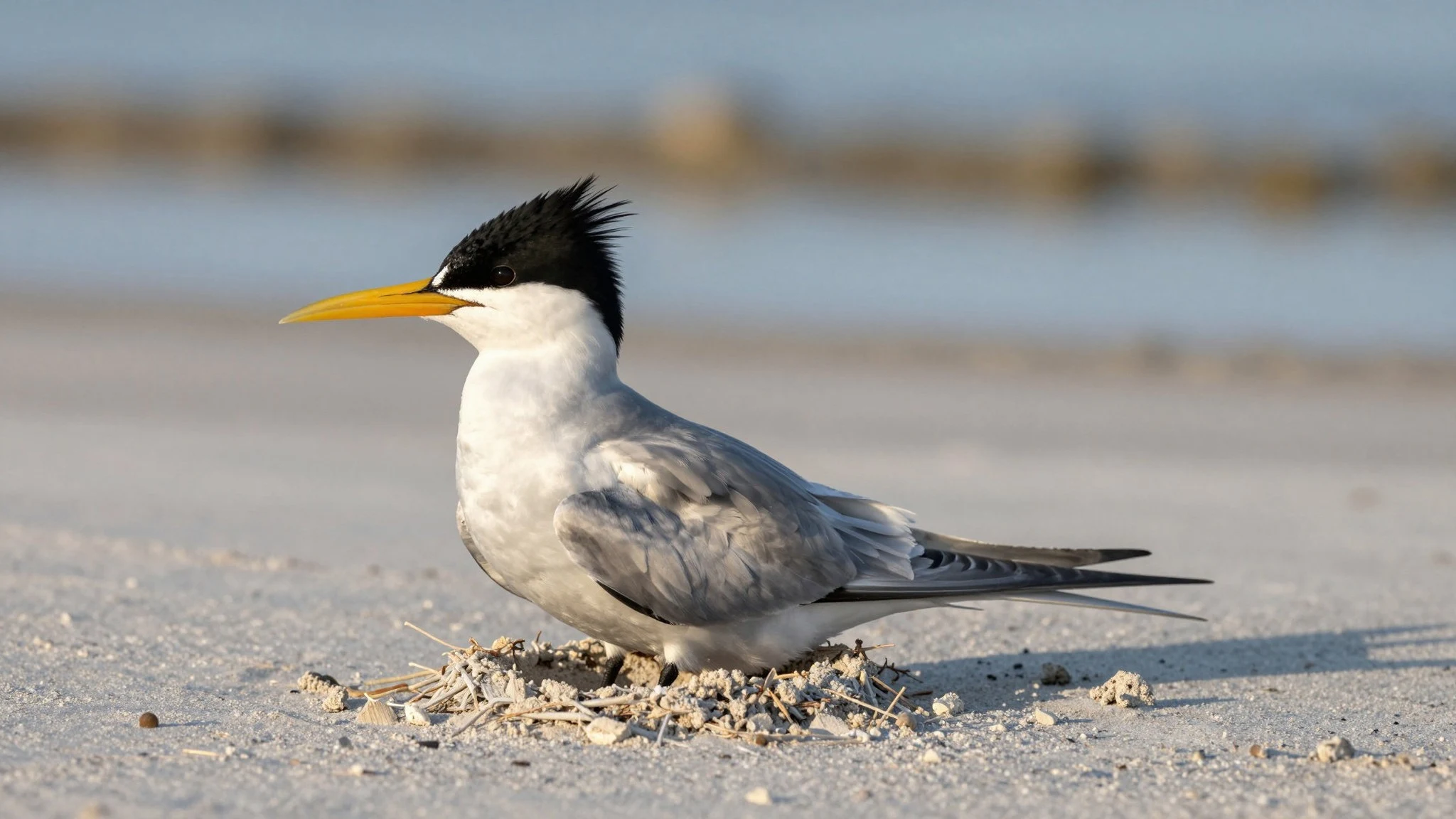
- Greater crested tern (bird)
Think of the greater crested tern as a seaside bird with a smart white brow, a greenish-yellow bill and a back the colour of a warship. Its raucous nesting crowd gathers on Helen Island, out in the open with little cover, so a careless step can frighten the whole colony. Keep a respectful distance, stay hushed, let your guide choose the viewing spot, and never throw it scraps; binoculars will bring the birds close enough. - Cushion star (animal)
The cushion star is a starfish that forgot to grow long arms, so it looks like a fat, lumpy pincushion with five blunt corners. At Helen Reef, look for the big ones resting on sand and rubble across the shallow flats. Its colour varies from one animal to the next. Walk gently, look rather than handle, and ask your guide where it is safe to step so neither you nor the star is harmed.