Palau
Palau, Palau
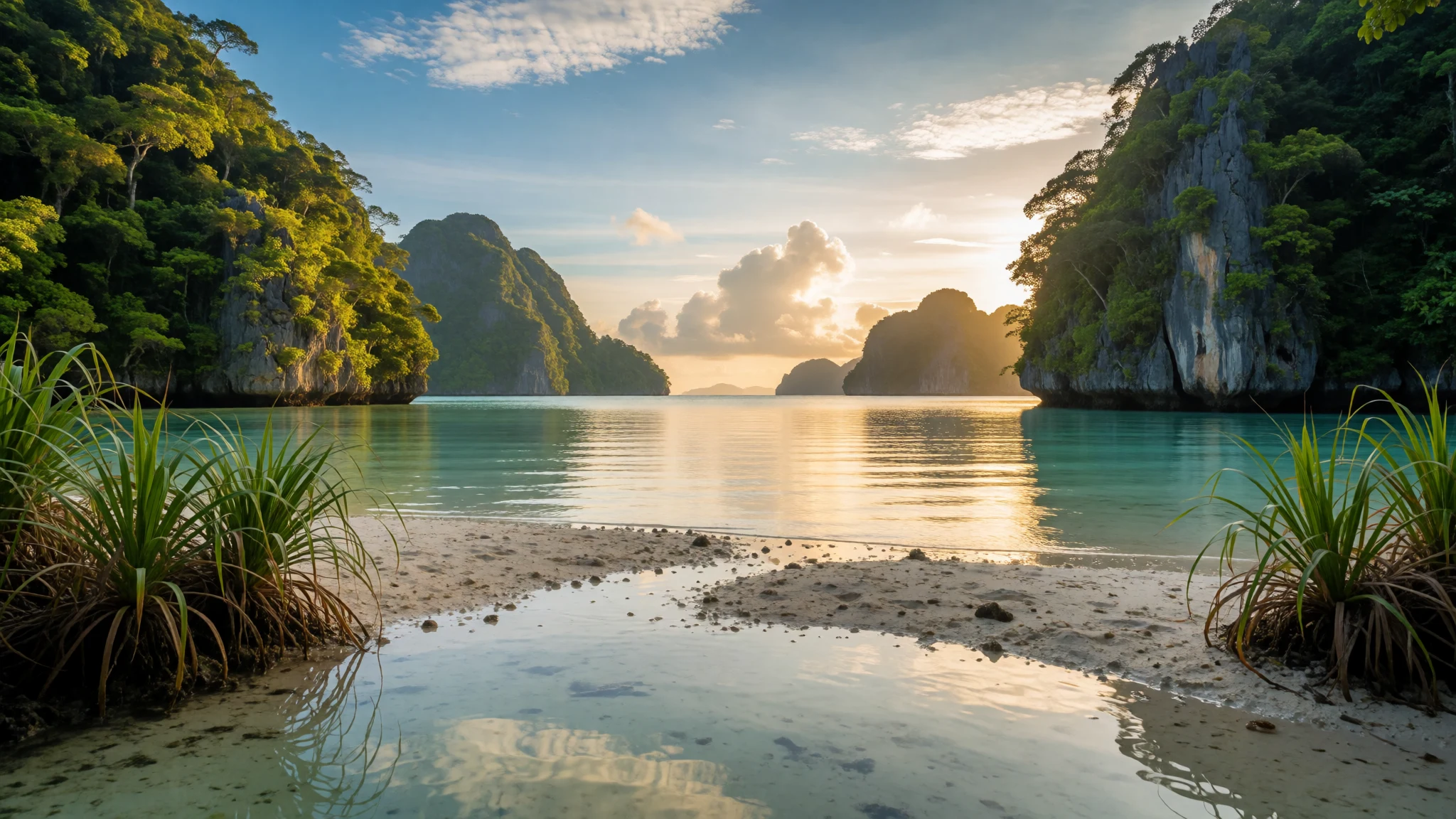
Palau is a scatter of limestone islands where the diving, the matrilineal villages and the quiet lagoons are the whole point.
The place
Palau is a sovereign island state in Oceania, lying in the western Pacific at the western end of the Caroline chain. The rest of that chain lies in the Federated States of Micronesia. Hundreds of islands make up the country. Koror holds most of the people, and the main town carries the same name. Ngerulmud, the capital, stands on Babeldaob in Melekeok State, and Babeldaob is the largest island. Open ocean lies to the north, the Federated States of Micronesia to the east, Indonesia to the south and the Philippines to the northwest.
The rock islands are raised coral, forested to the waterline, with sand only in pockets and mangrove in the sheltered coves. Babeldaob is different: low hills, villages and jungle rather than a maze of islets. Koror is the working centre, with shops, harbours and the offices that keep the republic running. Ngerulmud's government buildings look large beside hamlets of scattered houses, which suits a sovereign state whose population is 21729. Clocks in Palau follow a single zone nine hours ahead of UTC.
Movement is by boat as much as by road. Channels between the islets are the old roads: fish, drinking coconuts and passengers all travel that way. A single paved route runs much of Babeldaob, so the interior feels close to town until the tarmac ends and the forest closes in. Palau has governed itself as a republic since 1981, with a marine police of its own and a lagoon that is both livelihood and the reason people cross an ocean to arrive.
Its story
Palau's story begins with Austronesian settlement from Maritime Southeast Asia, most likely from the islands that are now the Philippines or Indonesia, long before any European chart showed the Carolines. Oral tradition and the old stone terraces still carry that early presence. Sonsorol, in the southwest, was sighted by a Spanish ship of Magellan's circumnavigation, which recorded a pair of small islands and named them San Juan.
A later meeting did more to put Palau on European maps. Sailors from the Caroline Islands were wrecked on Samar, in the Philippines, and described their home to the Bohemian missionary Paul Klein, who drew the islands from their account. Spain then folded the group into the Spanish East Indies. Maps from that era still label the Marianas, Palau and the Carolines as one colonial fringe.
The next centuries were a relay of outside flags. Spain gave way to Germany, which administered the islands as part of German New Guinea. Japan followed, under a South Seas mandate, and built harbours, schools and a wartime garrison. Fighting in the Pacific war reached the lagoon; wrecks from that fighting still lie in the channels. After the war the United States administered Palau within the Trust Territory of the Pacific Islands under the United Nations.
Self-government came in stages. A constitution and a local government took shape while the trust territory was wound down, and the compact of free association with the United States took effect in 1994, the year of independence from the trusteeship. The capital was set at Ngerulmud, on Babeldaob, while Koror remained the town where most people live. What stayed constant under every flag was the matrilineal order of titles, land and kinship, which still organises village life.
What to see
- Rock Islands — Chelbacheb, south of Koror
Palau's Rock Islands, also called Chelbacheb, rise south of Koror as limestone islets with forest on top and shores undercut by the tide. Many have no one living on them. Boats work the channels into sandy pockets and quiet coves, and from the air the lagoon looks like jungle broken by pale water. A local guide knows which passages visitors may enter.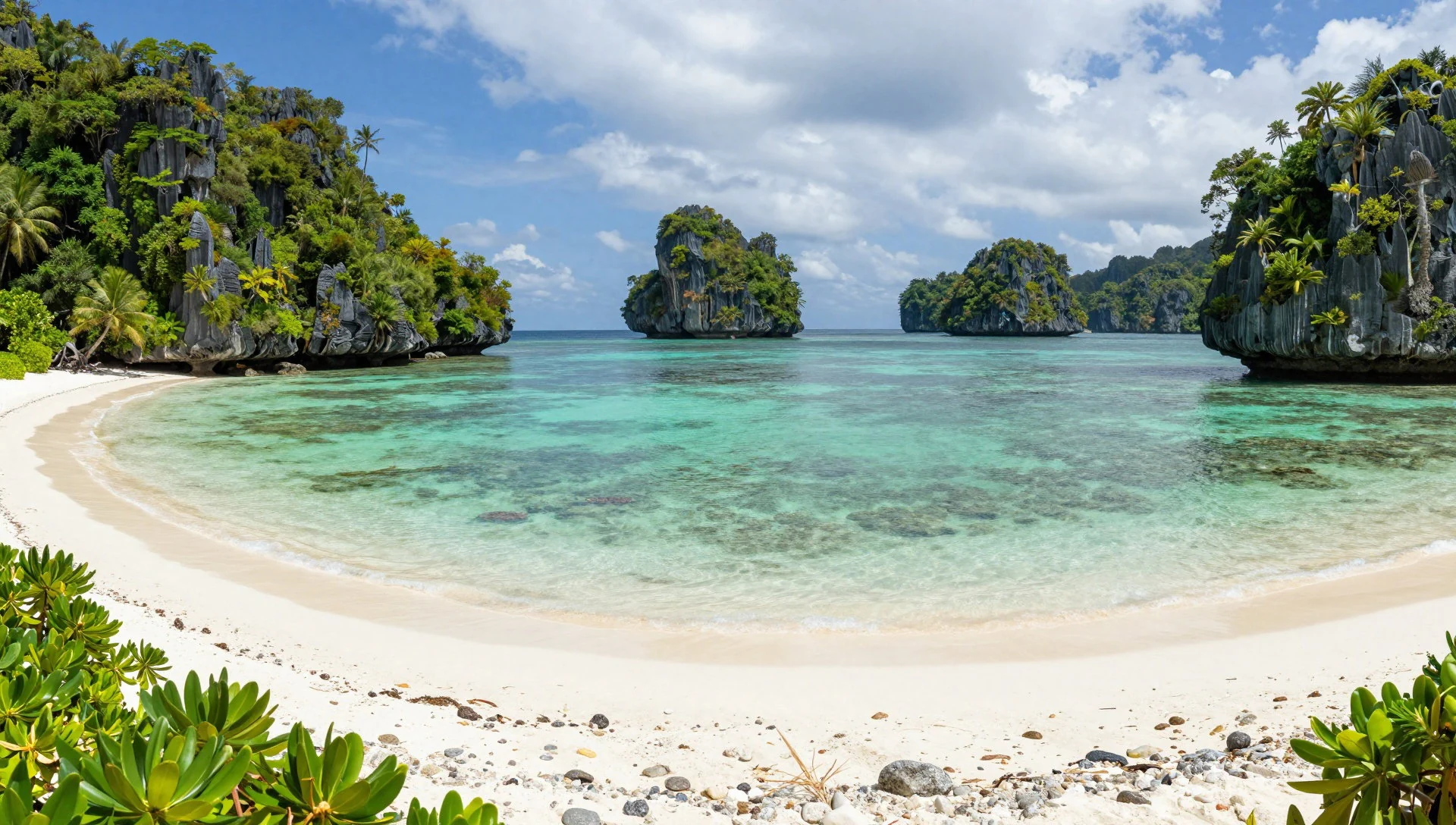
- Ngerukewid — Southern Rock Islands
Ngerukewid, in Palau's southern rock islands, is a tight cluster of raised coral islets reached only by boat. Seen from above they sit packed together, green caps on pale rims, with almost no beach between them. The surrounding water is left quiet, so the visit is a circuit of the channels rather than a walk ashore. Early light shows the shapes before the lagoon turns to glare.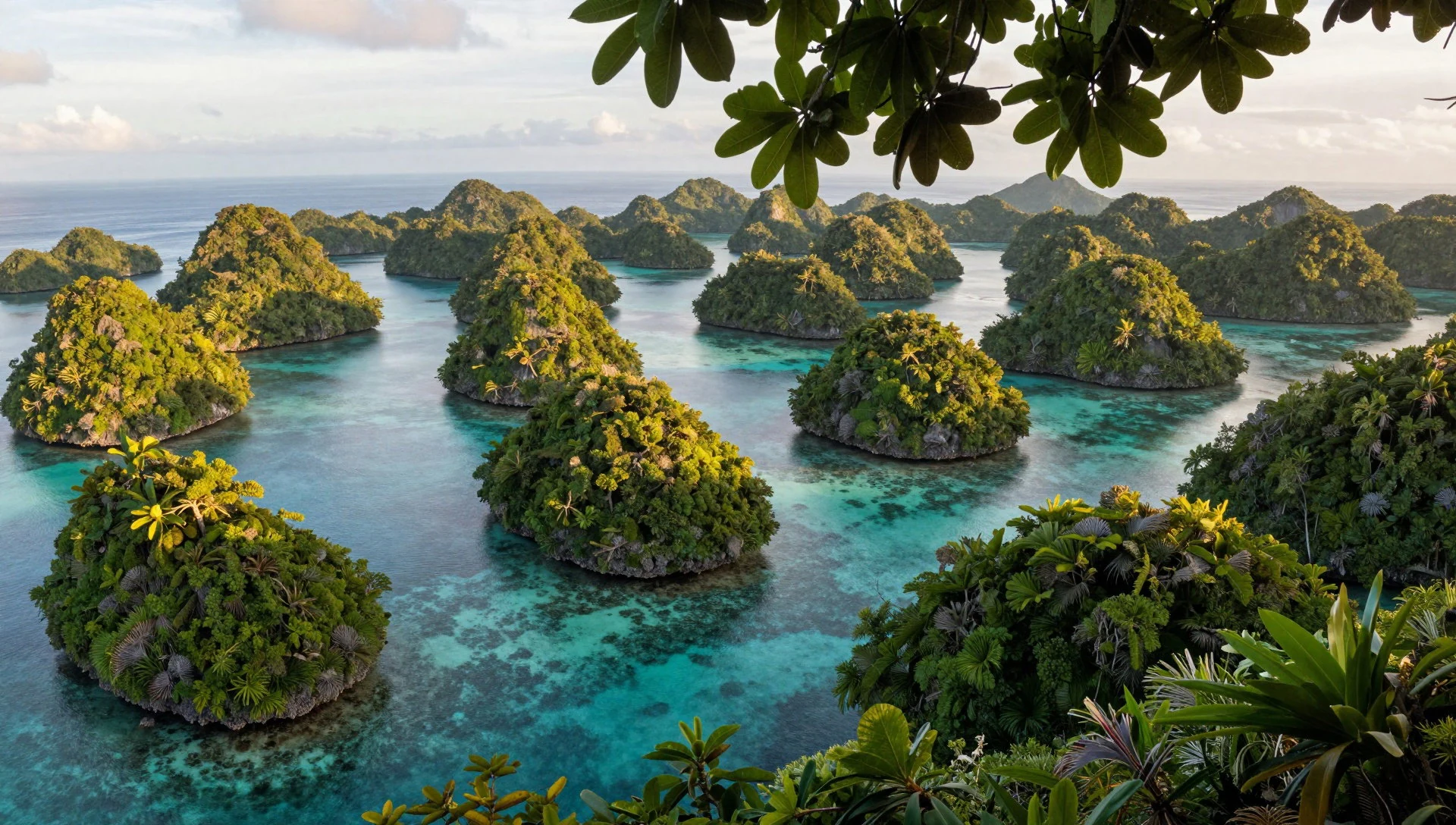
- Blue Corner — Barrier reef west of the Rock Islands
Blue Corner is the dive most people come to Palau for: a reef corner within a short boat ride of the resorts around Koror. Current along the wall brings sharks and other large fish into view, so guides choose the tide with care. The site suits divers already at ease in moving water. Calmer patch reefs nearer the rock islands are the kinder snorkel.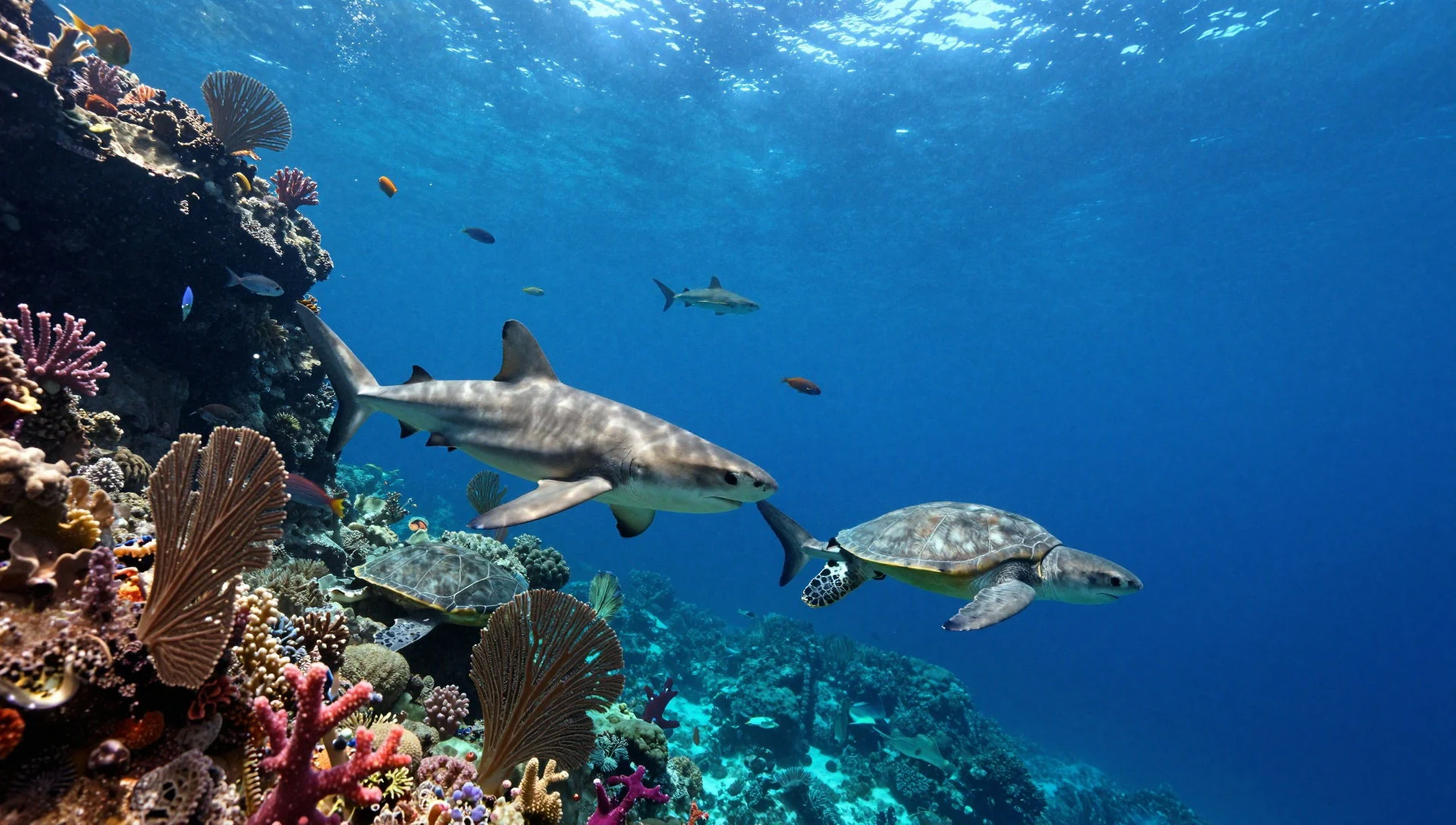
- Stone terraces and monoliths — Ollei and Airai, Babeldaob
Palau's ancient stonework stands inland from the reef. Terraces, monoliths and old stone paths survive in several states, including sites around Ollei and Airai, and a guided walk is how visitors meet them. The legends told on the path matter as much as the stones, which sit low in the grass and are easy to underestimate. Closed shoes help on tracks that are uneven and humid.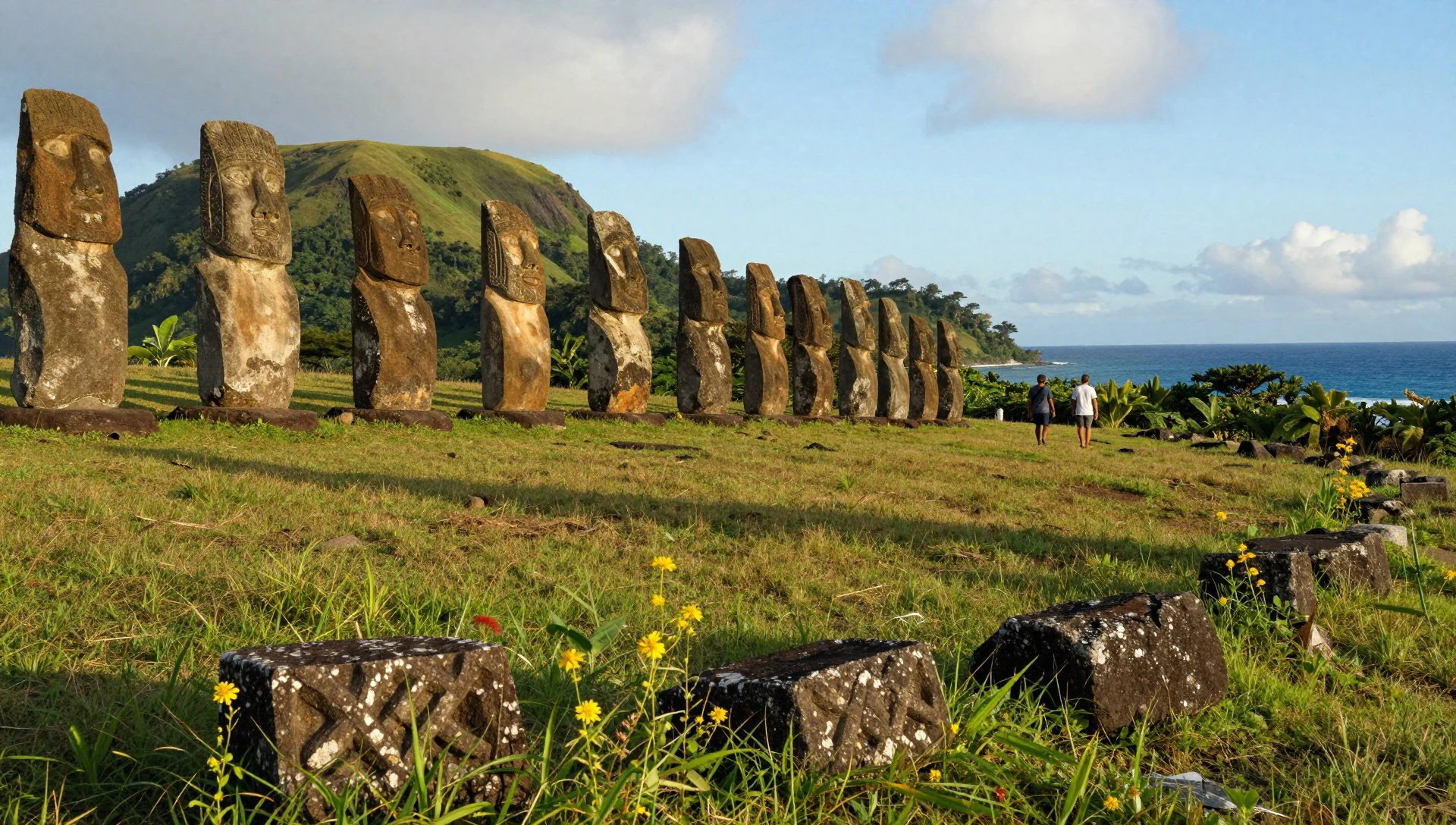
- Koror — Koror
Koror is Palau's main town, small enough that a morning covers the waterfront, the shops and museums of traditional culture and of the war years. With a national population of 21729, even the busiest streets stay on a village scale. The town's real purpose for a visitor is the harbour: dive tenders leave early, and the rock islands begin a short ride to the south.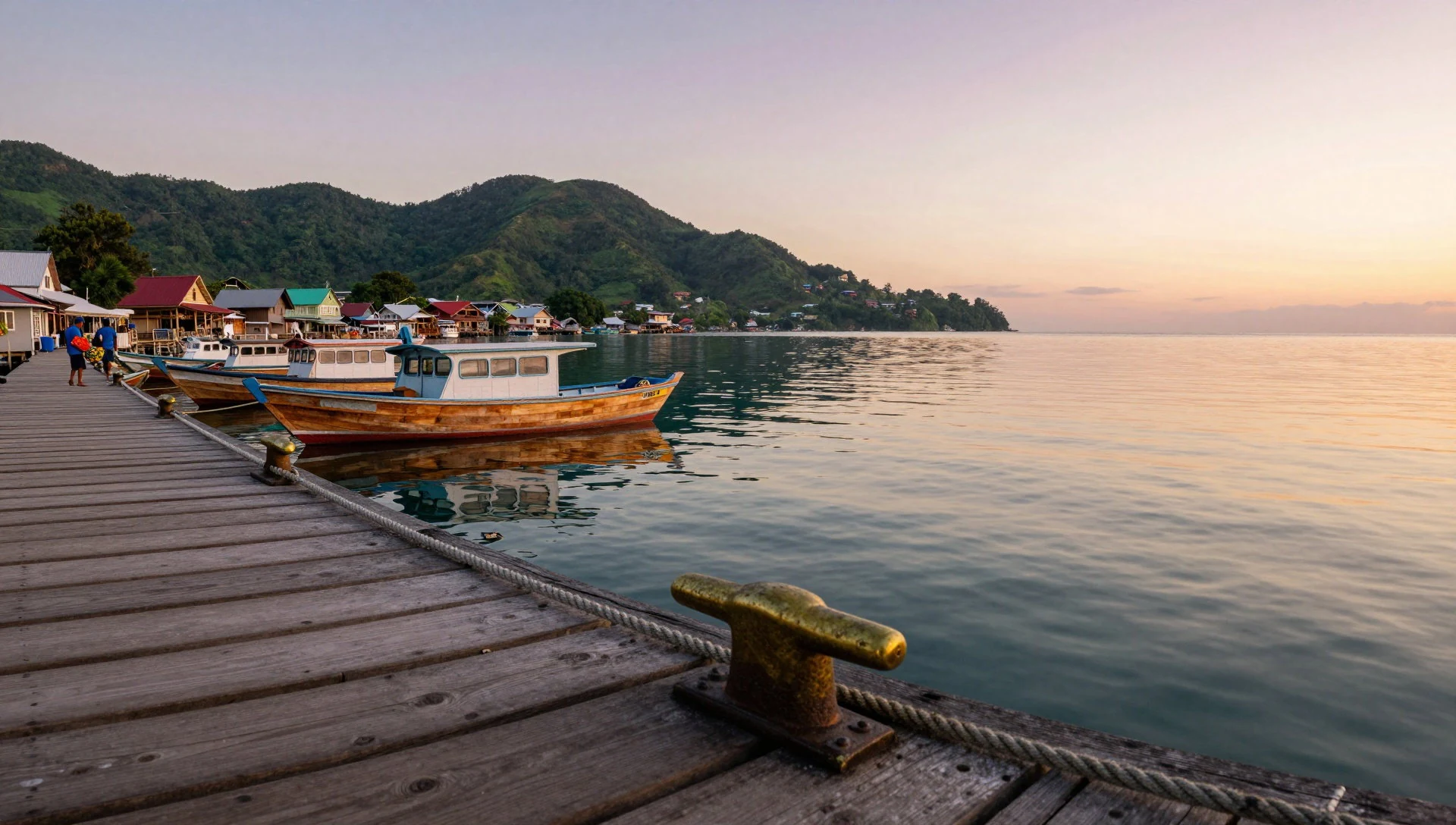
Culture
Palau organises family life through a strict matrilineal system. Land, inheritance, titles and the conduct of marriages and funerals pass through the mother's line, and a traditional title is not a costume but a duty inside the clan. Visitors notice this most at a funeral or a wedding, where who sits where, and who brings what, follows rules that outsiders are not expected to lead.
Stone paths, monoliths and broad terraces in places such as Ollei and Airai are the built record of that older order. They sit in the villages rather than behind a ticket window, so the right approach is a local guide and a quiet manner.
Food, language and humour show the later layers. Cassava, taro, yam, fish and pork remain the local plate, while Japanese, American and Filipino cooking are everyday in Koror because those communities live and work here. Betel nut, offered and chewed in company, is a social habit rather than a souvenir. Kava, prepared from the root, belongs to the same circle of shared drinks.
If you visit, ask before photographing people at a ceremony, do not drink in public, and bring neither single-use plastic nor sunscreen that harms the reef.
What to wear
Palau's traditional dress survives mainly at ceremonies rather than in the working week. Women wear skirts of plant fibre — hibiscus and other local plants prepared into a soft, layered cloth — and men a loincloth or a simple wrap, with garlands and body ornaments for a title event or a dance. The textiles are made for the occasion, not for a shop window, and the right to certain ornaments sits with the clan.
Ordinary days in Koror look like any warm Pacific town. People wear T-shirts, shorts, cotton dresses and sandals, with a lighter layer against sun on the boat and a shirt thrown on for church or a government office. Filipino, Japanese and American residents have added their own everyday clothes to the street, so the market pavement is mixed without being formal.
Visitors should dress for heat, boats and village modesty. Lightweight cotton, a sun shirt for the boat, and sandals or reef shoes are more useful than anything smart. Shoulders and knees covered please in villages and at a funeral or a title gathering; swimwear stays on the boat and the beach. Shoes come off when a household floor is raised.
What to eat
- Fruit bat soup — Family kitchens and traditional eateries in Koror
Fruit bat soup is a Palauan delicacy served as a special dish rather than everyday fare. It appears in family homes and in a handful of traditional eateries around Koror, usually when someone has asked the kitchen ahead. It is eaten at a table, with taro or rice.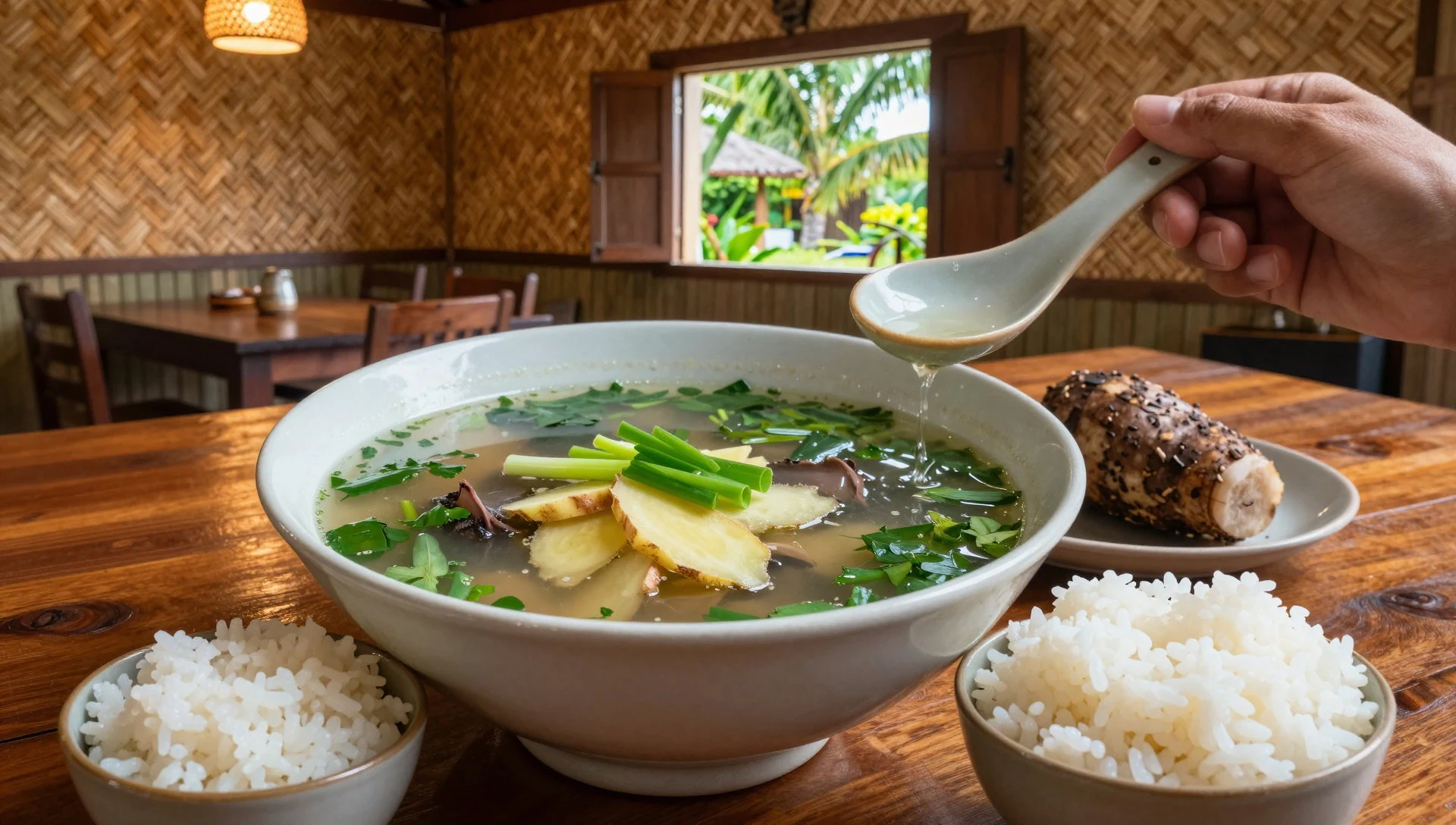
- Taro, cassava and yam — Home kitchens and simple eateries in Koror
Taro, cassava and yam are the starch of a Palauan plate, boiled or cooked beside fish or pork. They turn up in home cooking and in simple eateries around Koror every week. Village gardens on Babeldaob grow the same roots, so the market and the island table stay close.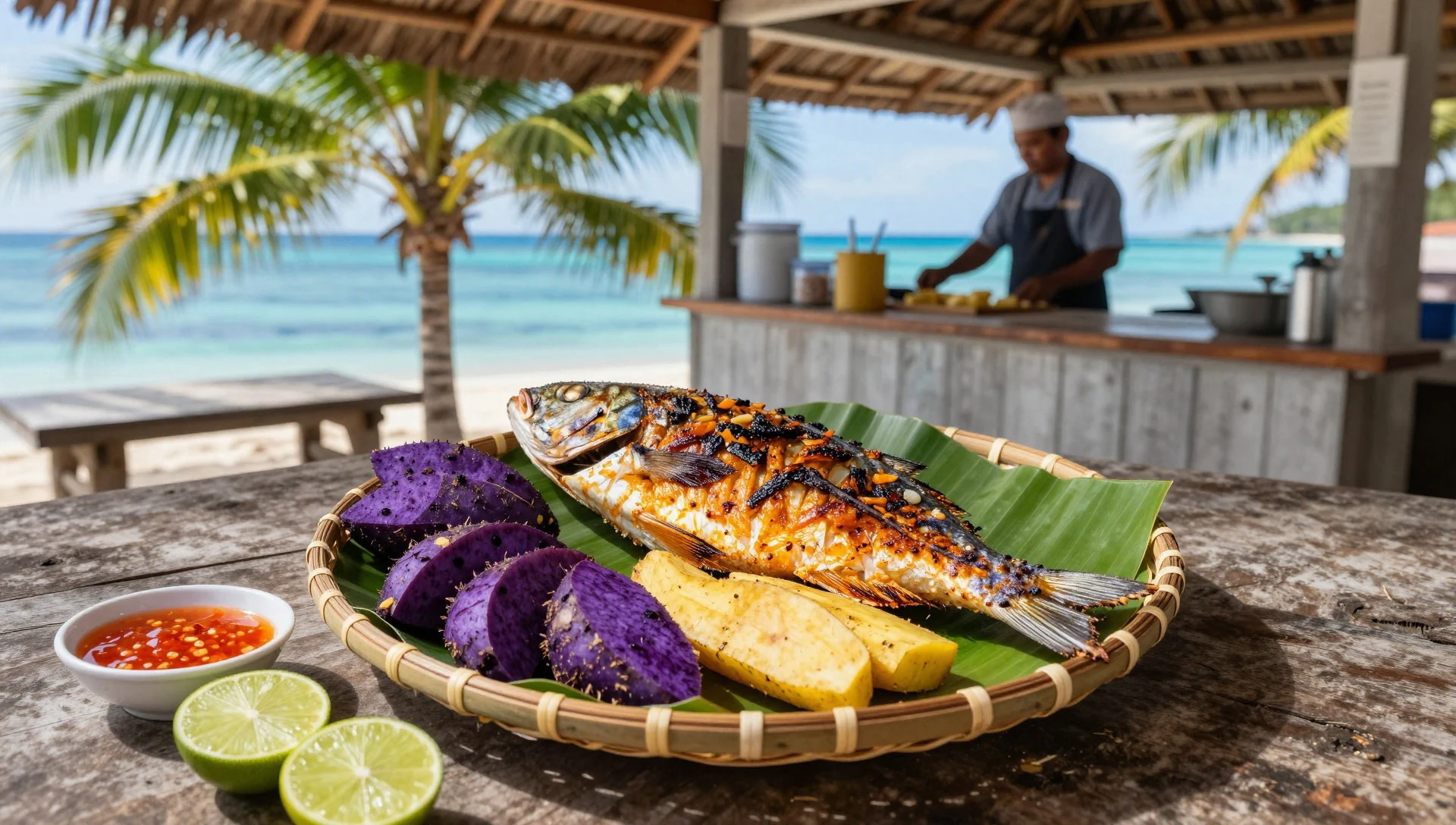
- Reef fish — Lunch counters by Koror harbour
Reef fish, grilled or simmered in coconut, is the everyday protein in Palau. Lunch counters near Koror harbour serve the morning's catch with rice or taro. Divers eat the same fish at simple waterside eateries once the boats are in. - Bento — Shops and lunch counters in Koror
Japanese-style bento boxes are a common Palauan lunch, packed with rice, fish or pork and sold from shops across Koror. They travel well on a boat day. Koror's stores also stock Filipino, Korean, Taiwanese and American groceries for the communities who live in town. - Red Rooster beer — Koror's brewery and indoor bars
Red Rooster is beer from Palau's small brewery in Koror, and it belongs with a casual lunch in town. Shops sell alcohol to take away, and bars range from quiet rooms to Japanese-style karaoke. Public drinking is banned, so the drink stays indoors.
Plan it
Best time. Palau is hot and humid all year. Boat days are generally kinder from November into April, while May to October is wetter and a squall can cancel a channel crossing. Diving continues in every month if you allow a spare day. Read the marine forecast before you commit to the rock islands.
How long. 5–7
Getting there. Fly into Roman Tmetuchl International Airport, also called Airai (ROR), on Babeldaob. Direct scheduled flights come from Guam, Manila, Taipei, Tokyo and Nauru, with a Saturday service from Brisbane and charters from Hong Kong. Arrange a transfer to Koror before you land, because taxis do not meet incoming flights. Check https://www.palaugov.pw/ for official arrival advice. Cruise ships sometimes call; a private boat suits experienced mariners only.
Budget. high
Tips
- Book the transfer from the airport to Koror before you fly.
- Begin dive and rock-island days early, before heat and squalls build.
- Carry cash for small shops and boats; cards are patchy outside Koror.
- Pack only reef-safe sunscreen and leave single-use plastic behind.
- Keep one weather spare in the plan so a squall does not wreck the trip.
Etiquette
- Do not drink alcohol in public.
- Ask before you photograph people at a ceremony.
- Cover shoulders and knees in villages away from the beach.
- Step out of your shoes when a home has a raised floor.
Nearby
Sources
- Wikidata Q695 (CC0)
- Wikipedia (rev 1382887240) (CC BY-SA 4.0)
- Wikivoyage (rev 5325308) (CC BY-SA 4.0)
- Reception of the Manila Galleon by the Chamorro in the Ladrones Islands, ca. 1590 (Public domain)
- Islas Marianas, Palaos y Carolinas (Public domain)
- Palasia Hotel Palau (Public domain)
- States of Palau (Public domain)
- Palau Maritime Police vessel (Public domain)
- Aerial view of Ngerukewid, Luka Peternel (CC BY-SA 4.0)
- Aerial view of Rock Islands, Luka Peternel (CC BY-SA 4.0)
- Rock-Islands, Republik Palau (Public domain)


