Babeldaob
Babeldaob, Palau
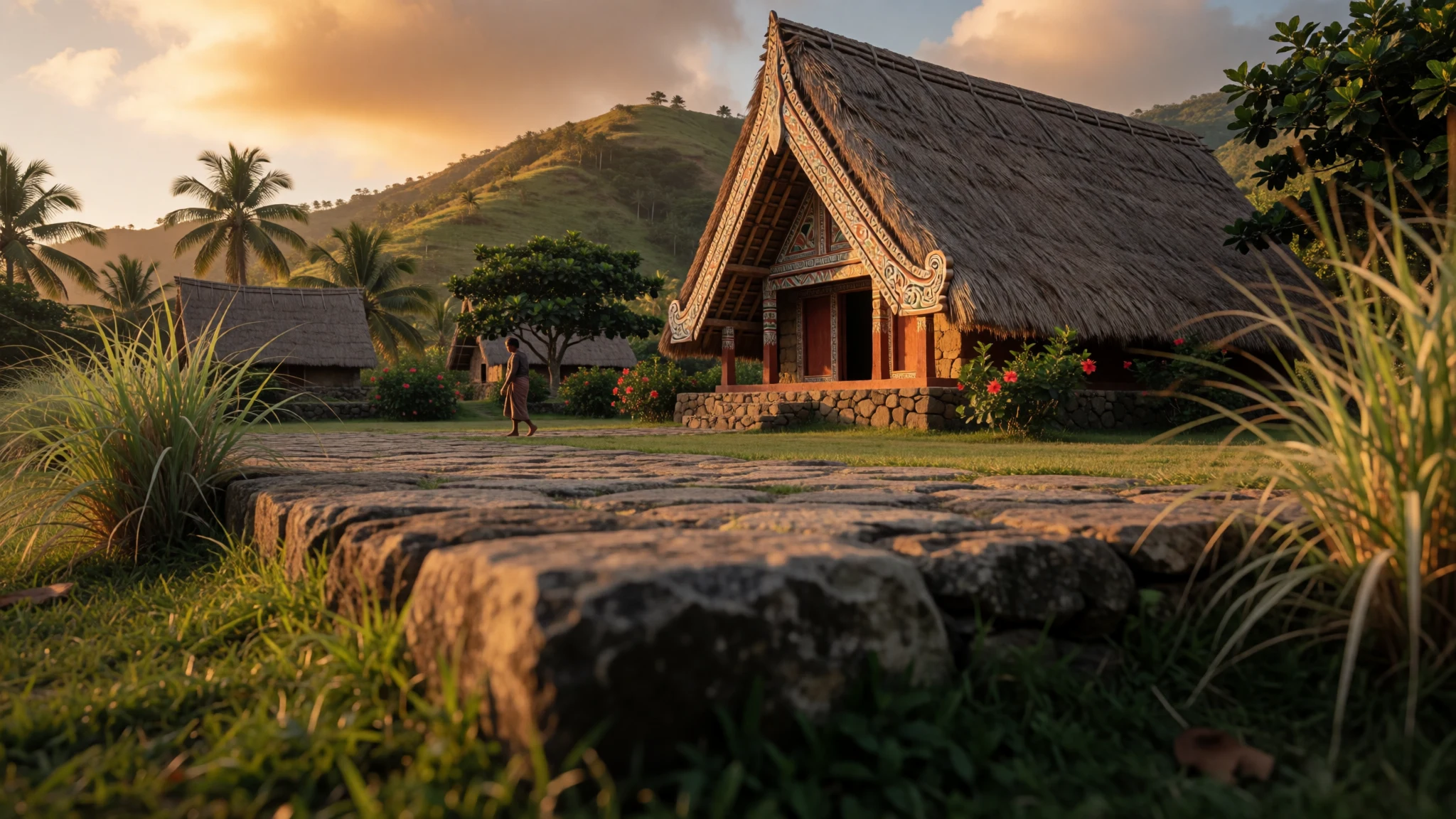
Babeldaob is Palau's largest island, a quiet green interior of ancient stone paths, mangroves and empty beaches beyond the diving crowds of Koror.
The place
Babeldaob is the biggest island in Palau, a country of scattered islands in the western Pacific, and it feels very different from the reef-fringed rock islands that dominate Palau's postcards. Here the land is high, green and hilly, climbing to Mount Ngerchelchuus at 242 m, the highest point in the country. The island has 5,185 residents spread across ten of Palau's states, so most of the land is forest, grassland and mangrove rather than town. The east coast carries long sandy beaches, especially between Melekeok and Ngaraard, while the western shore is lined with mangrove forest. Inland, lakes and streams supply the country's drinking water, and Ngardok Nature Reserve exists to protect that supply. The capital, Ngerulmud, sits in Melekeok State. It is a government complex with almost nothing around it, which surprises visitors who expect a town. Airai, at the southern end, holds the country's main airport, and a bridge joins the island to Koror, where most places to stay, dive operators and restaurants are found. That arrangement shapes a visit: Babeldaob is usually explored on day trips by road from Koror, with a driver or a rented car, rather than used as a base. Roads are quiet, villages are small, and services thin out quickly north of the capital. Heat and humidity are constant, showers can arrive at any hour, and shade on the beaches is scarce. The island rewards unhurried travellers who like empty roads, old stonework and a landscape that has not been built over.
Its story
Babeldaob's written history starts with Spanish sailors in the sixteenth century, who sighted the main islands of Palau and charted them loosely as a hazard of reefs. Missionary and naval parties returned in the early eighteenth century to look more closely, and Spain counted the archipelago within its East Indies territory for a long stretch. None of that changed daily life much. The island's older record lies in stone: village paths, dock walls, platforms and carved faces, all made by Palauans long before outsiders began taking notes. Spain lost interest after its defeat by the United States and sold Palau to Germany at the close of the nineteenth century. Germany governed from New Guinea, and it also used Babeldaob as a place of banishment, sending the Sokehs people of Pohnpei here after their uprising against colonial rule. Japan seized the German islands north of the equator in the first months of the First World War, and later administered Palau under a League of Nations mandate. The Sokehs were returned to Pohnpei in stages during that period. In the Second World War Japan stationed a very large garrison on Babeldaob. Allied forces chose to leave it alone and fight elsewhere, so the island was spared the heavy landings that some of its neighbours suffered. Today Babeldaob belongs to an independent Palau, and a purpose-built capital here has taken over from Koror as the seat of government.
What to see
- East-coast beaches, Melekeok to Ngaraard — Melekeok to Ngaraard
Babeldaob's east coast has its longest runs of pale sand between Melekeok and Ngaraard. These are working village shores, not resort beaches, with little shade, almost no facilities and plenty of space. Currents and reef edges vary from one stretch to the next, so swim cautiously and ask local people before using a beach.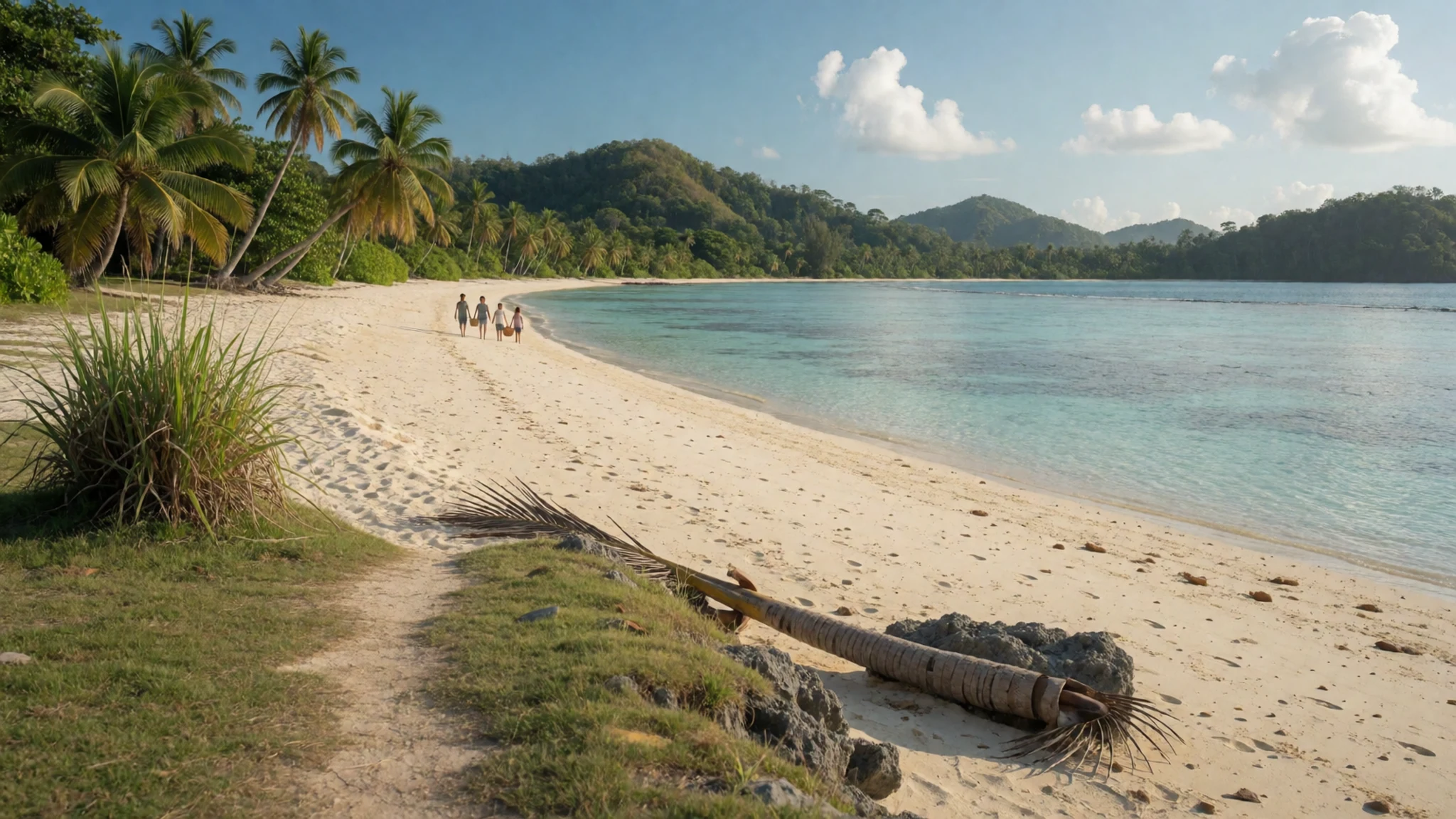
- Ngerulmud capitol complex — Melekeok State
Ngerulmud, in Melekeok State, is Palau's seat of government: a single formal complex of government buildings set on open land instead of among streets. There is no town to wander around it, so treat it as a short stop on a longer drive, and a curiosity about how small this country's capital is.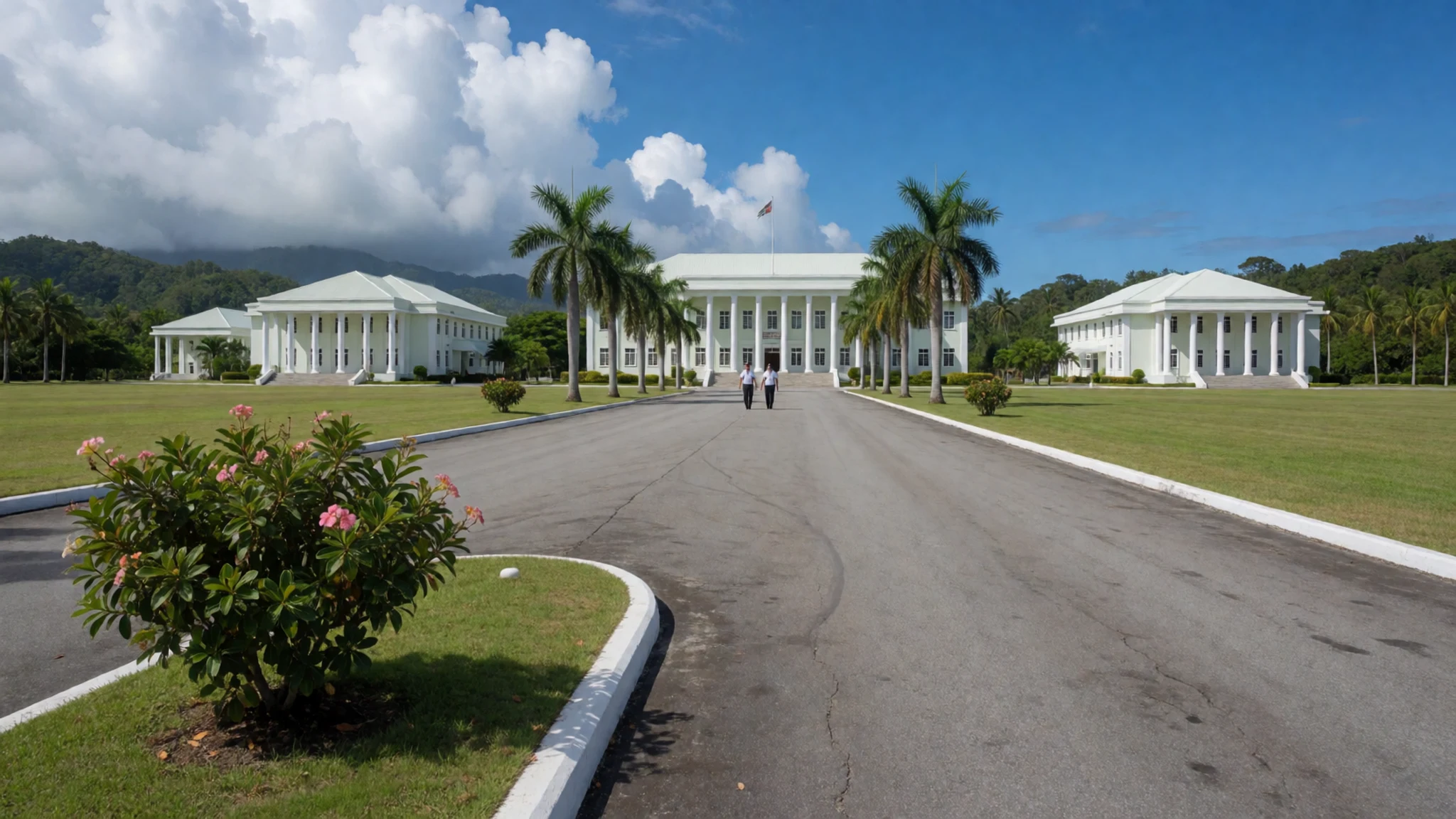
- Bai el Melekeong — Melekeok
In Melekeok, a traditional bai, the meeting house of the village, stands beside an old stone platform. A bai has a steep thatched roof and painted gables, and it belongs to community life rather than to any museum. Ask locally before approaching, and let someone from the village tell you what is acceptable.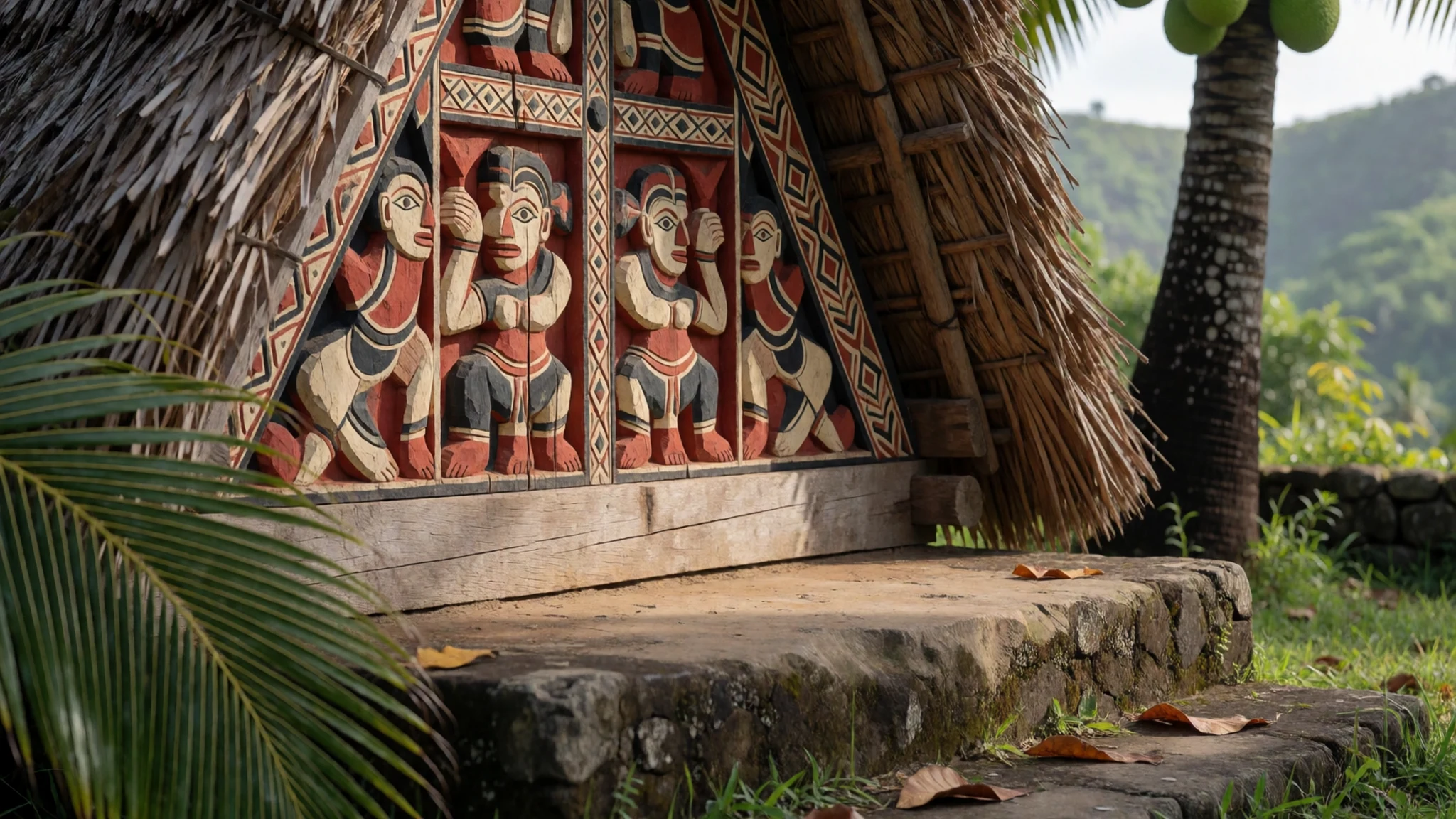
- Odalmelech and the stone faces — Melekeok, with similar faces at Ollei and Aimeliik
Odalmelech, near Melekeok, is known for carved stone figures called the Ngermelech gods. Similar weathered faces stand at Ollei and in Aimeliik, set in grass or at village edges. They are quiet places, best visited with a local guide who knows the stories, since the stones alone explain little.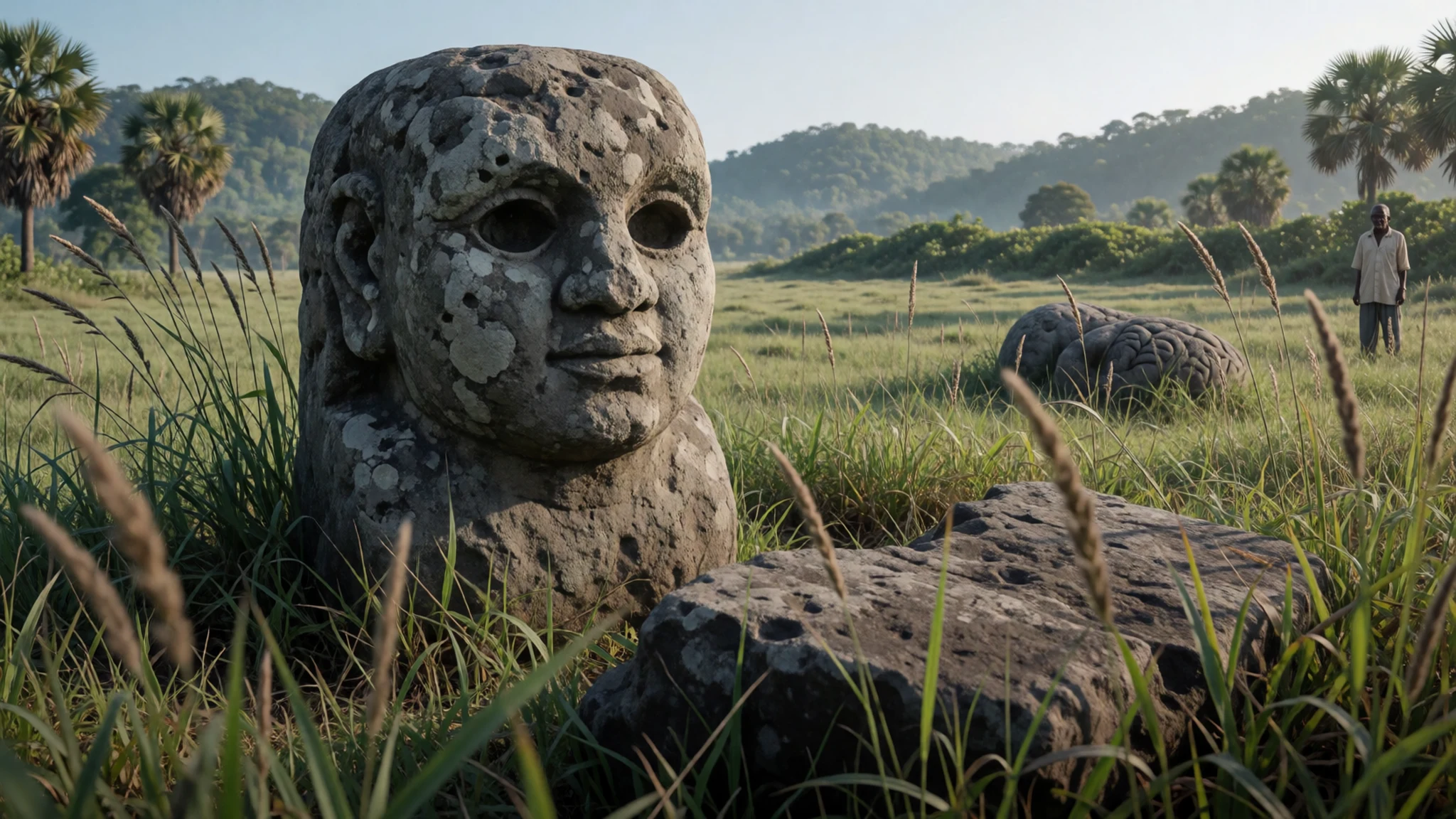
- Badrulchau stone monoliths — Northern Babeldaob
Badrulchau, in northern Babeldaob, is a field of ancient stone monoliths, dozens in number, which Wikivoyage describes as possibly the largest archaeological site in Palau. It is a long drive from Koror and little signposted, so plan a full day, bring water and arrange a guide or local advice beforehand.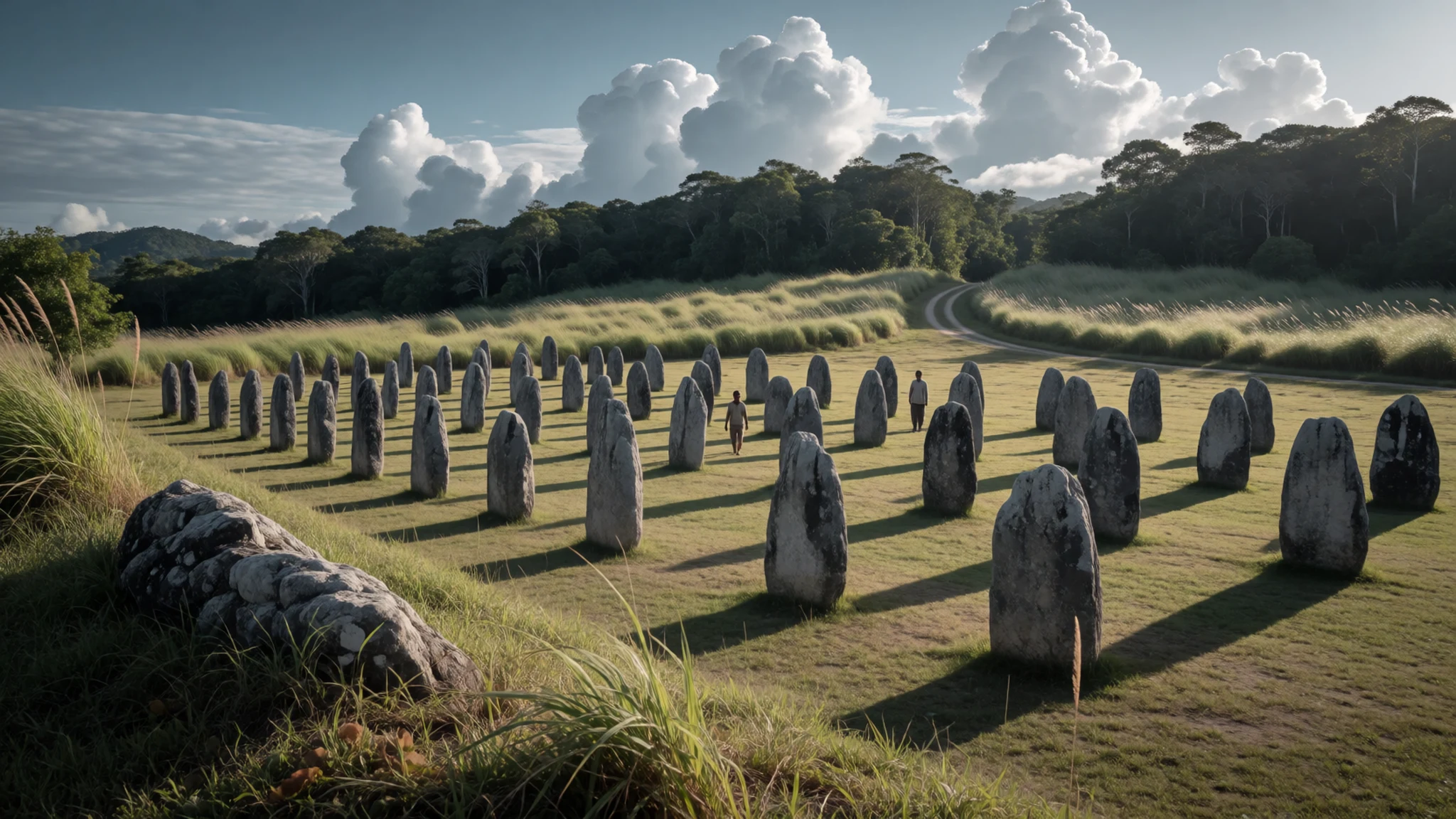
- Mount Ngerchelchuus — Interior Babeldaob
At 242 m, Mount Ngerchelchuus is the highest point in Palau. The height is modest, but the climb is humid, the ground can be muddy and showers are likely. Ask locally about access and trail conditions before setting out, start early, carry plenty of water and take a guide if the route is unclear.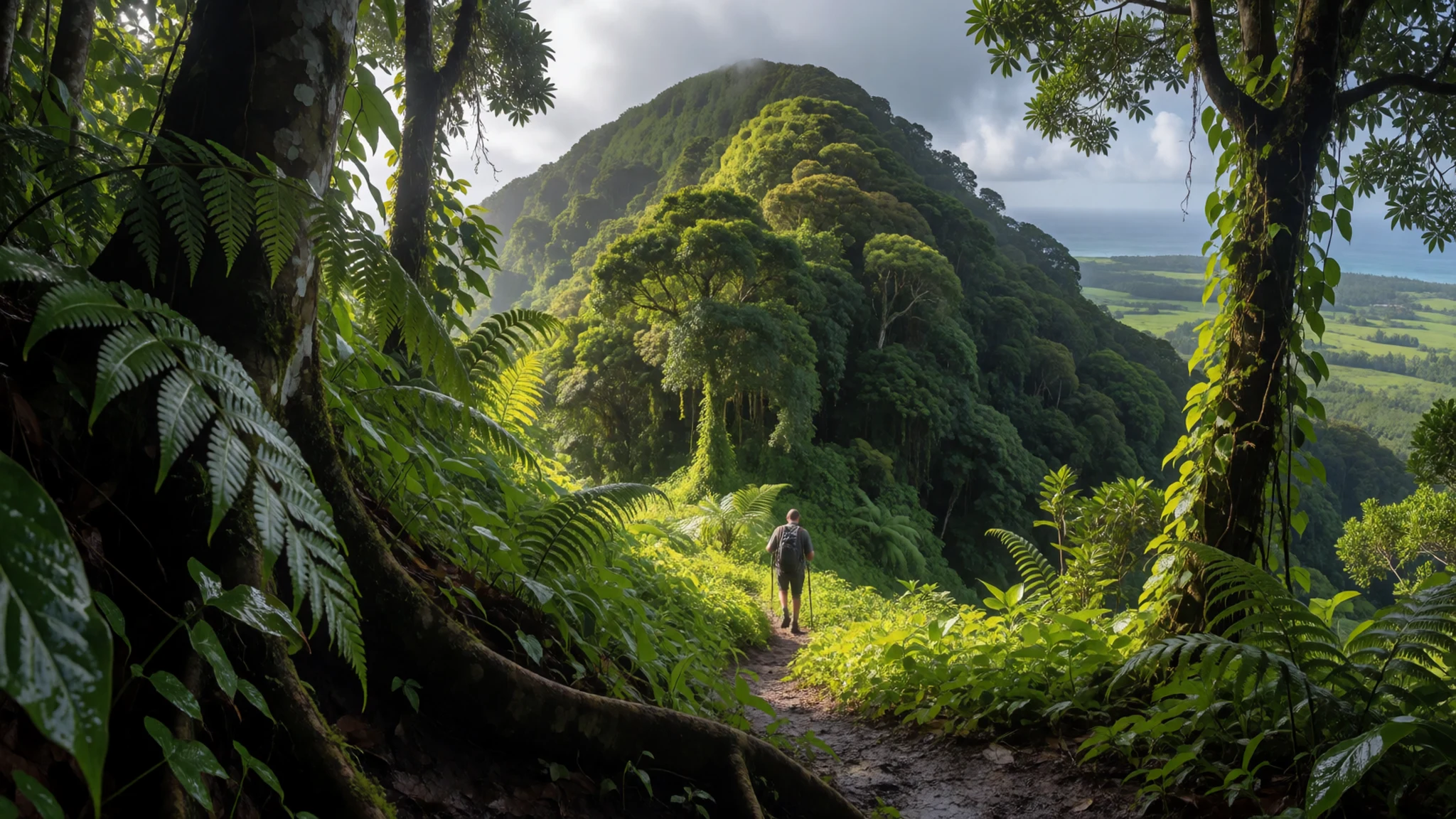
Culture
Babeldaob is where most of Palau's village states are found, and Palauan society here still runs on clan and title. Descent and land pass through the women of a clan, while chiefs, usually men, hold titles tied to each village and carry real weight in local decisions. The bai, a long meeting house with a steep roof and painted gables, is the traditional centre of that life, and the carved and painted storyboards inside record legends and events in pictures. Palauan is the everyday language, English is widely used, and Japanese words survive in food and speech from the decades of Japanese rule. Churches matter too: Sundays are quiet in the villages, and family milestones such as births and funerals bring relatives together around shared food and gifts. The ancient stone faces, monoliths and paths are not simply scenery to many Palauans. They belong to clans, they carry stories of ancestors and gods, and access and photography are often for the village to decide. Visitors who come with patience, who greet people and who accept that some places are closed for good reasons usually find the island welcoming and unhurried. Ask a local guide or a village representative before entering any stone site or private land, keep your voice low there, and never climb on or remove the stones.
What to wear
Traditional Palauan dress on Babeldaob was made from local plants: women's skirts of woven or shredded fibre, simple waist cloths for men, and ornaments of shell, beads and flowers, with turmeric used to colour the skin on ceremonial occasions. Woven pandanus and coconut-leaf mats, baskets and hats belong to the same craft tradition. These outfits now appear mostly at festivals, dance performances and cultural events, not in daily life. What people actually wear is simple island clothing: T-shirts, shorts, light cotton dresses and island-print shirts, with rubber sandals nearly everywhere, and dive-shop or school T-shirts are common. For church and formal occasions people dress neatly, with covered shoulders and knees. For a visitor the climate decides most things. It is hot and humid with sudden showers, so pack light quick-drying layers, a brimmed hat, sun protection and a thin rain jacket. In villages and near churches, cover shoulders and knees and keep swimwear for the beach. Wear closed shoes or sturdy sandals with grip for muddy trails and rocky shores, and water shoes for wading over reef flats or through mangroves. Bring a spare dry set of clothes, because nothing dries quickly in the humidity.
What to eat
- Taro — Village eateries and community feasts
Taro, the starchy root grown in wet village gardens, is a staple of Palauan cooking. It is boiled or steamed and served beside fish and meat, with a mild, slightly sweet taste. Look for it at community feasts and in home-style village eateries.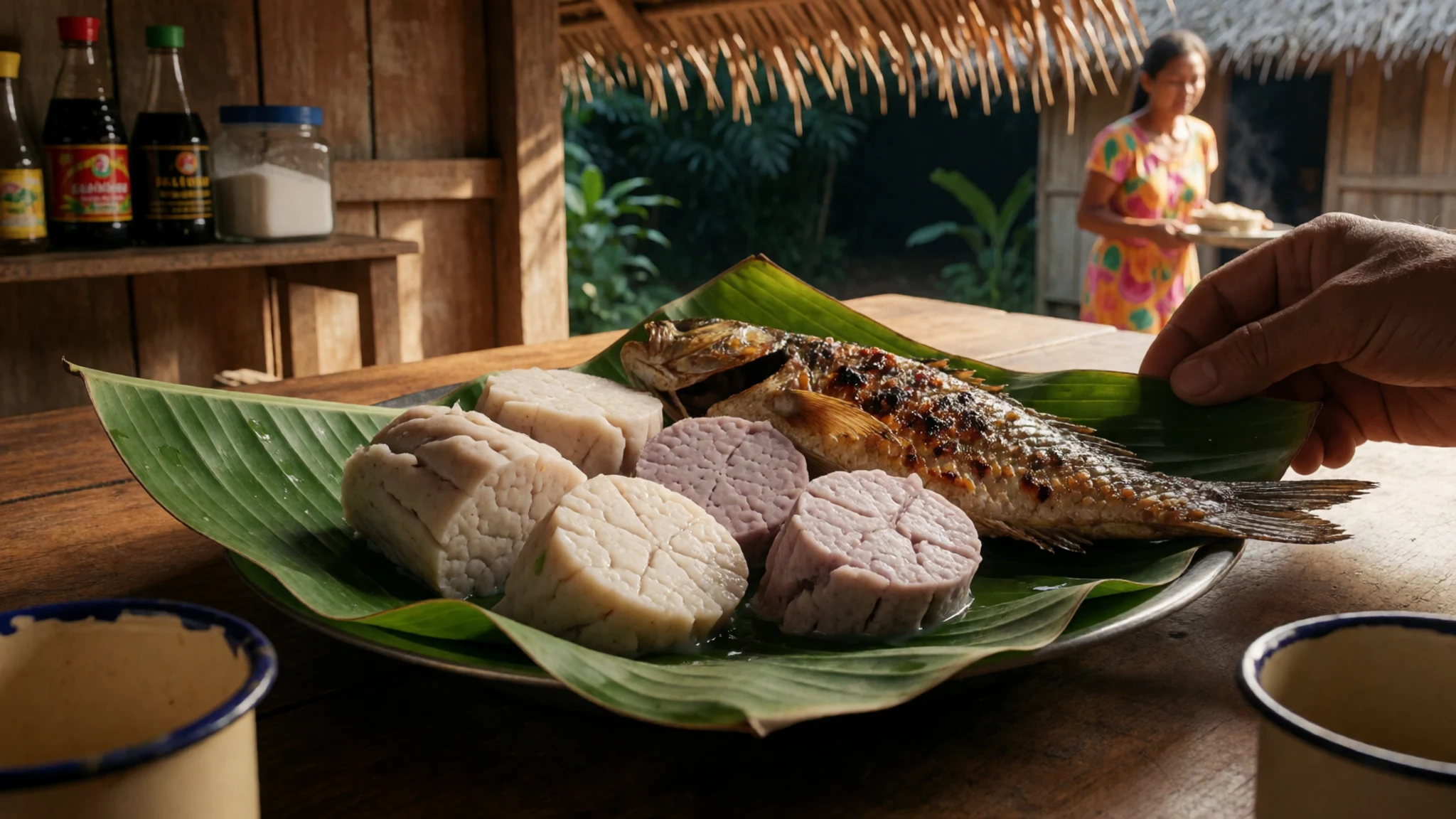
- Cassava — Roadside stalls and family-run eateries
Cassava, often called tapioca locally, is boiled, fried or baked into sweet cakes with coconut. It is filling, inexpensive and common on family tables, which makes it an easy dish to try after a long morning on the road.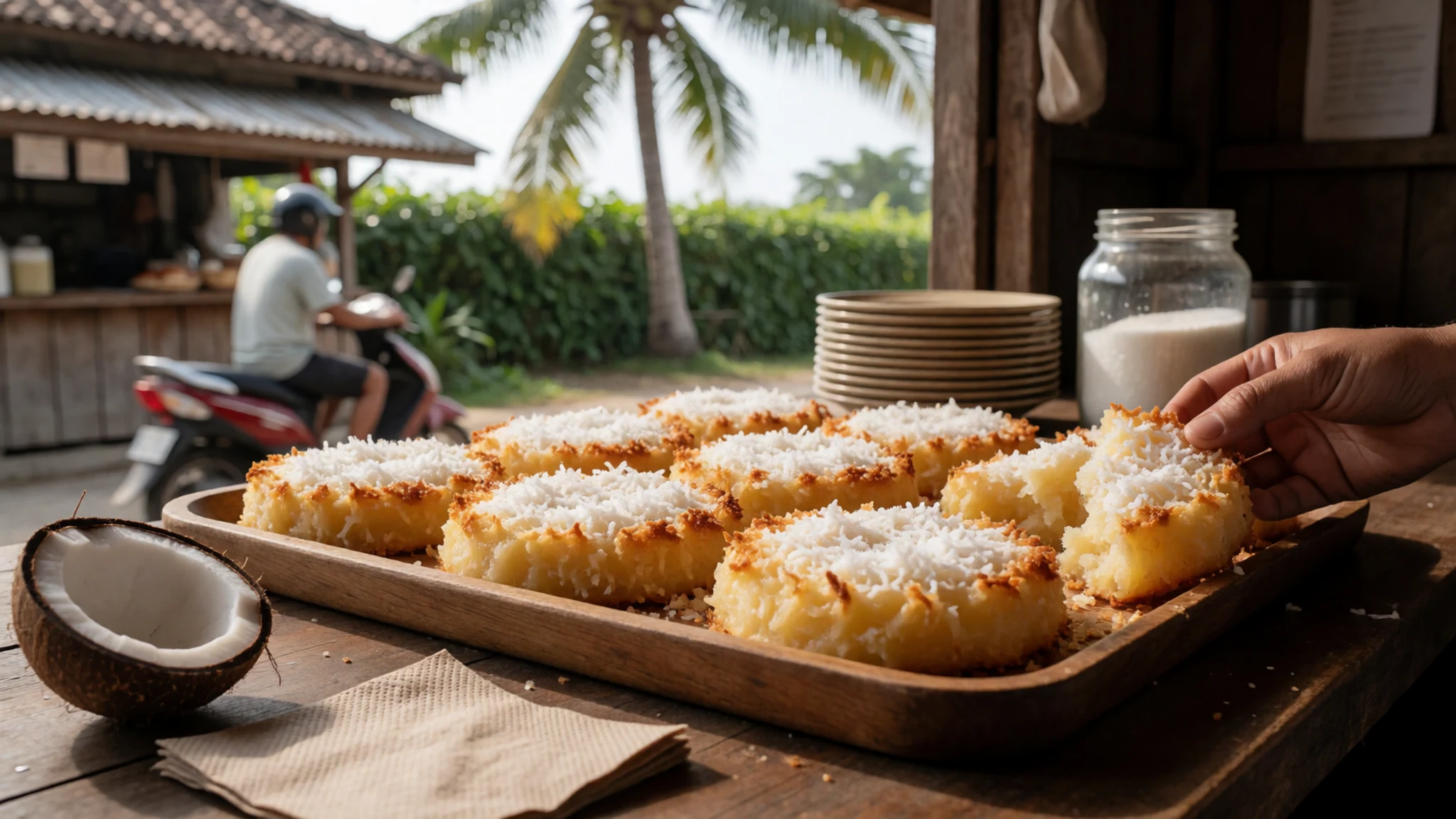
- Grilled reef fish and sashimi — Eateries in Airai and Koror; village gatherings
Fresh reef fish turns up grilled over coals, cooked in coconut milk or sliced raw, a habit that reflects the long Japanese influence on local food. Ask what was caught that day, and avoid fish from closed seasons or protected areas. - Mangrove crab — Local eateries along the west coast
Mangrove crab comes from the muddy western shore and is usually cooked whole in a sauce, often with coconut milk or garlic. It is messy and rewarding to eat, with sweet meat in the claws. Ask for it at local eateries near the coast. - Coconut crab — Village feasts and a few local restaurants
Coconut crab is a prized dish for feasts and special occasions. Harvest is seasonal and regulated, so ask whether it is legal to serve at the time of your visit and choose places that are open about where it comes from.
Plan it
Best time. February to April is usually the drier and calmer stretch; the rest of the year is warm and humid with frequent showers, and heavy rain is more likely in the middle of the year.
How long. 1–2
Getting there. Fly into the airport at Airai, which stands on Babeldaob itself and is the country's main arrival point. Most places to stay are across the bridge in Koror, so day trips run from there by hired car, driver or shuttle. Check current flight routes and road conditions before booking.
Budget. mid
Tips
- Arrange a driver or rent a car for the day; distances are small but sights are scattered
- Start early, since heat builds and afternoon showers are common
- Carry cash, water and snacks, because services thin out north of the capital
- Ask locally or hire a guide before visiting stone sites, as many lie on clan land
- Pack sun protection and a light rain jacket
Etiquette
- Ask permission before entering village land or stone sites
- Do not climb on, move or take away any stones
- Cover shoulders and knees in villages and near churches
Nearby
Sources
- Wikidata Q746861 (CC0)
- Wikipedia: Babeldaob (CC BY-SA 4.0)
- Wikivoyage: Babeldaob (CC BY-SA 4.0)
- Strand bei Melekeok, Peter R. Binter (Public domain)
- Aimeliik Bai, Abasaa (Public domain)
- Mangrove, Palau, Babiesan (CC BY 3.0)
- Mount Ngerchelchuus, Abasaa (Public domain)
- Palau Compact Road under construction, U.S. Army Corps of Engineers, Honolulu District (Public domain)
- Palauan Ked, Abasaa (Public domain)
- Palauan Stone Face at Ollei, Abasaa (Public domain)
- Palauan Stone Face in Aimeliik, Abasaa (Public domain)


