Koh Phangan
Koh Phangan, Thailand
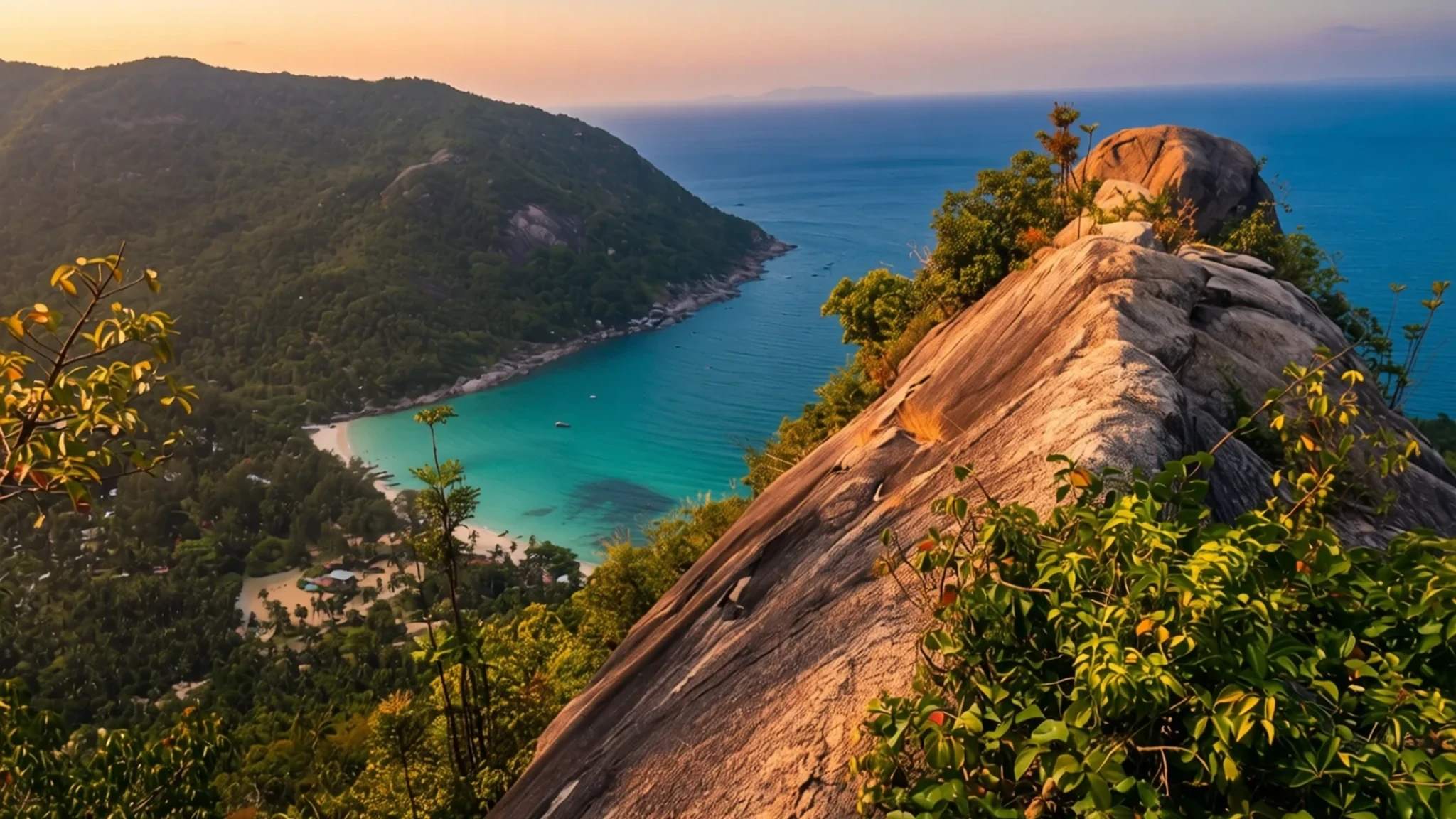
Koh Phangan offers jungle waterfalls, quiet bays and snorkelling alongside its famous full-moon parties, all within a short ferry ride of Koh Samui.
The place
Koh Phangan sits in the Gulf of Thailand, part of Surat Thani Province in the south of the country. It is the middle one of three sister islands: Koh Samui is larger and lies to the south, while little Koh Tao lies to the north. About 13,700 people live here, and the main town and ferry hub is Thong Sala. The island is hilly, with an interior that climbs to about 630 metres and is mostly jungle, waterfalls and viewpoints. Most of the life clings to the coast. Haad Rin in the south is the party village, known for beach bars and the monthly full-moon crowds. Away from it, the island is much calmer: Chalok Lam is a fishing bay, Haad Tien and Bottle Beach are reached by trail or boat, and the northwest holds yoga centres and snorkelling beaches. Roads between bays can be steep and rough, so many visitors rent a scooter, and some regret it. The weather matters. December to March is the high season, with clear water, little rain and pleasant temperatures. July and August form a second busy spell. Outside those months showers are more likely, and the sea can be less inviting. Expect crowds and higher prices around full moon dates, and a much slower pace in the interior at any time of year.
Its story
The name Koh Phangan comes from "ngan", a southern Thai word for sandbar, and the shallows around the island have plenty of them. People have lived in this part of the gulf for a very long time. A bronze drum of the Dongson culture, dated to roughly 500 to 100 BCE, was found on Koh Samui in 1977 and is taken as evidence of settlement across Samui, Phangan and their small neighbouring islands more than 2,000 years ago. Some historians and archaeologists think the first settlers were Austronesian peoples who crossed by boat from the Malay Peninsula. In later centuries the island drew royal attention. King Chulalongkorn, Rama V, came here 14 times during his reign, and the waterfall at Than Sadet, which carries the royal association in its name, was visited by several Thai kings. That royal fondness sits oddly beside the island's modern reputation, yet the two coexist: the same coast that hosts all-night beach parties also holds quiet fishing villages, temples and a national park. For most of its history Phangan was a place of fishing and coconut growing, reached by boat and little visited. The change to a tourist island is recent, and the older rhythm of small communities still shows once you leave the main beaches.
What to see
- Than Sadet–Koh Pha Ngan National Park — East coast
The park is named after the Than Sadet river, whose Thai name means Royal River, and it holds the island's largest waterfall, visited by several kings. Water is thin in the dry season. The road is easy on a motorbike, and the beach below has a few simple fan-only places to stay.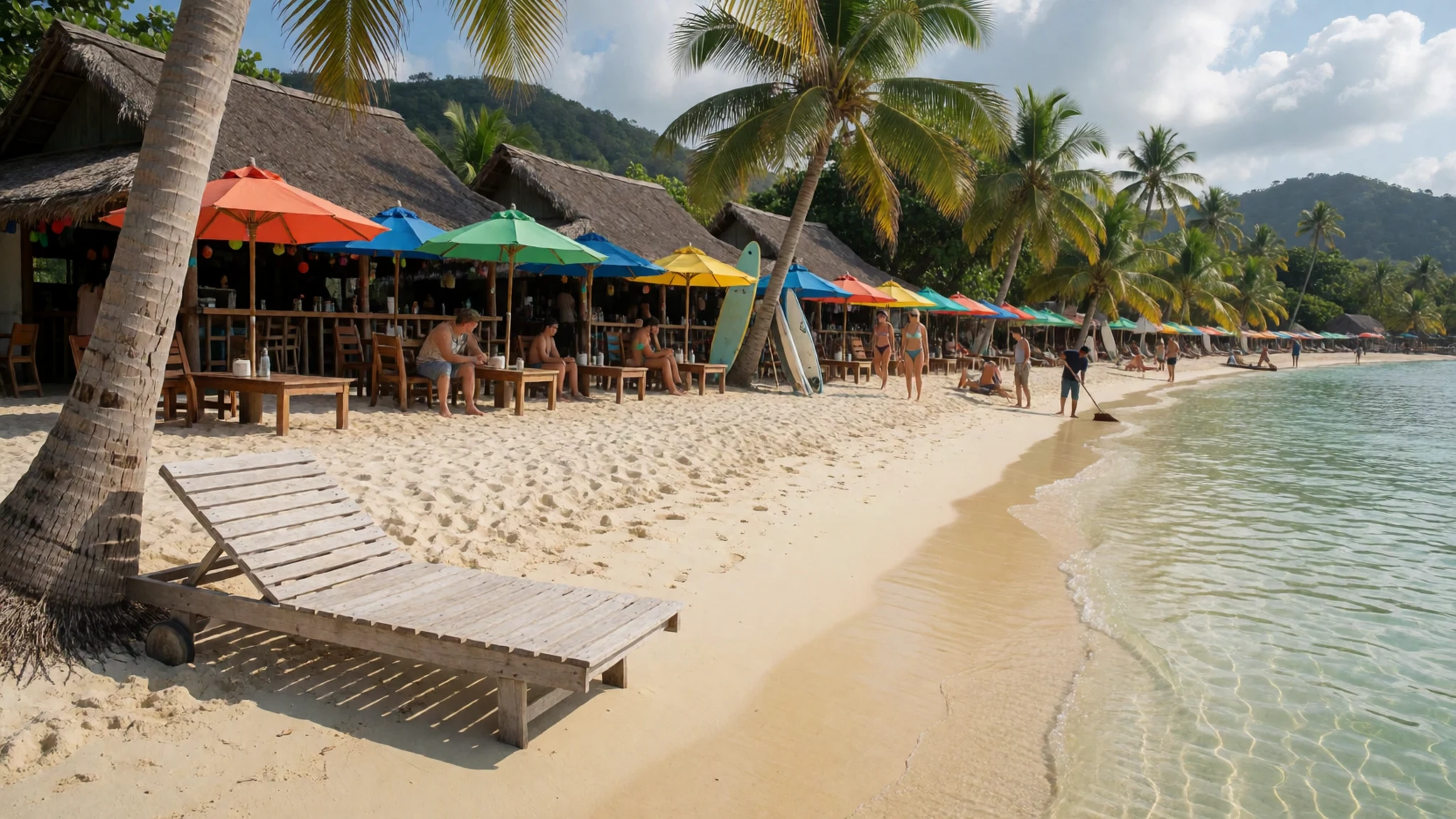
- Phaeng waterfall and Domesila viewpoint — Interior
Phaeng waterfall lies inland in a national park, with an entrance fee at the station. A walk of about fifteen minutes leads to the Domesila viewpoint, and another waterfall lookout is about twenty minutes away on foot. Both give a good sense of the green interior.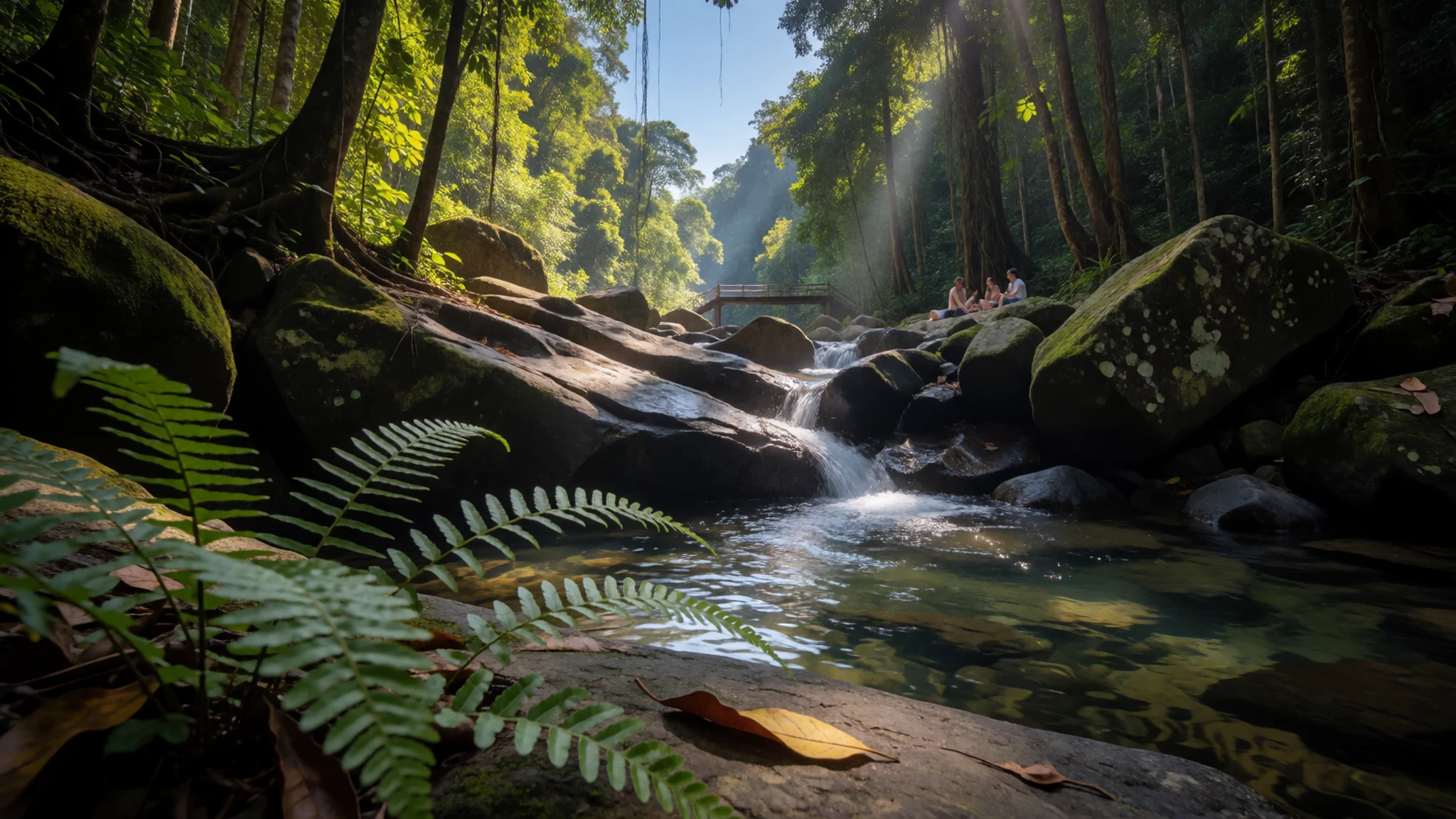
- Ko Maa and snorkelling — Northwest coast
Ko Maa is a small island off the northwest coast and one of the better snorkelling spots around Phangan. Haad Khom and Haad Yao also suit snorkellers, though the water at Haad Khom becomes very shallow at low tide, so take care over the reef.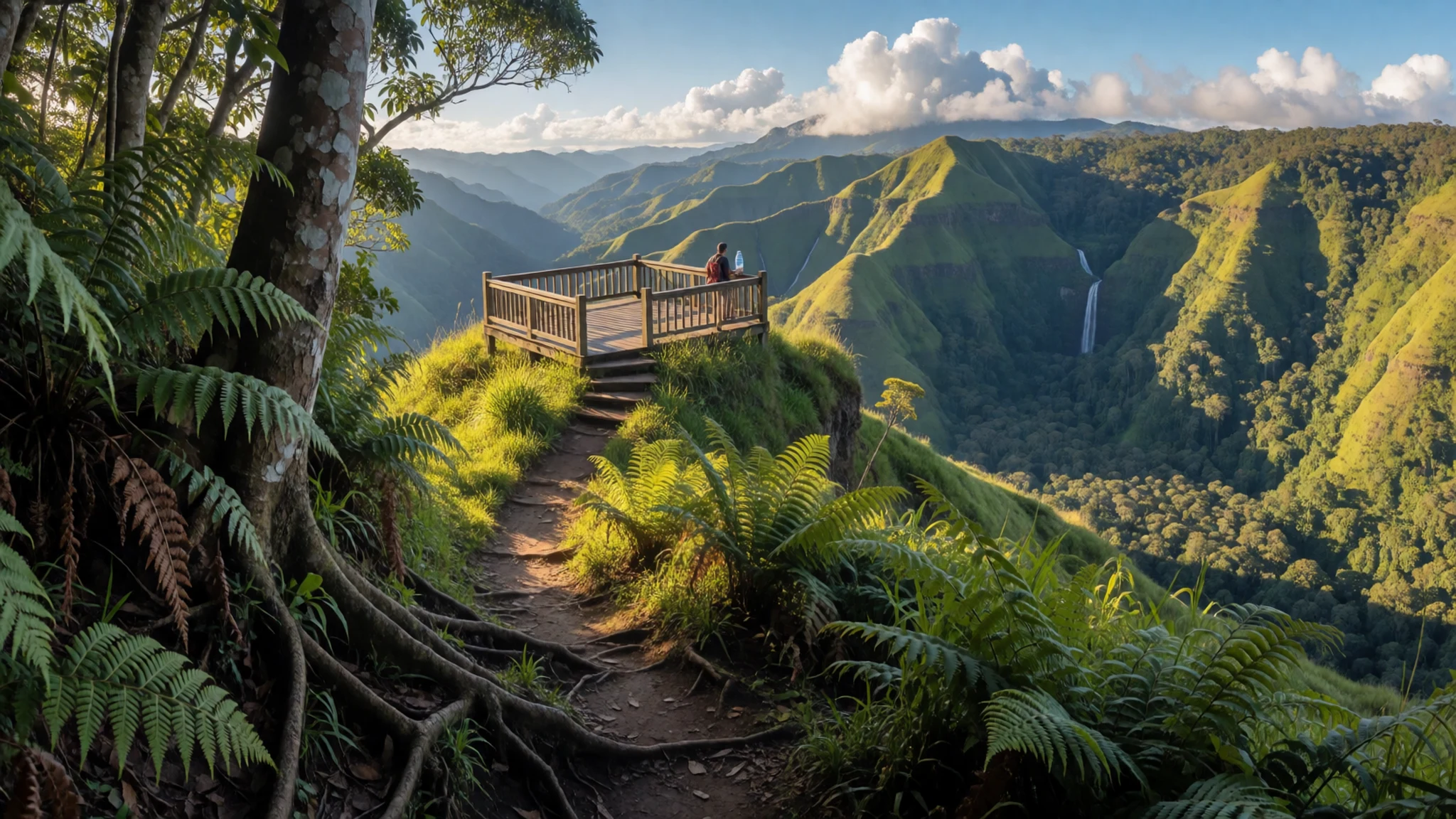
- Bottle Beach viewpoint — North coast
From Bottle Beach, a rocky trail climbs to a viewpoint above a valley, looking over the northeast of the island. The hike takes roughly half an hour to three-quarters of an hour depending on fitness. Bring water and sturdy shoes, since the path is uneven.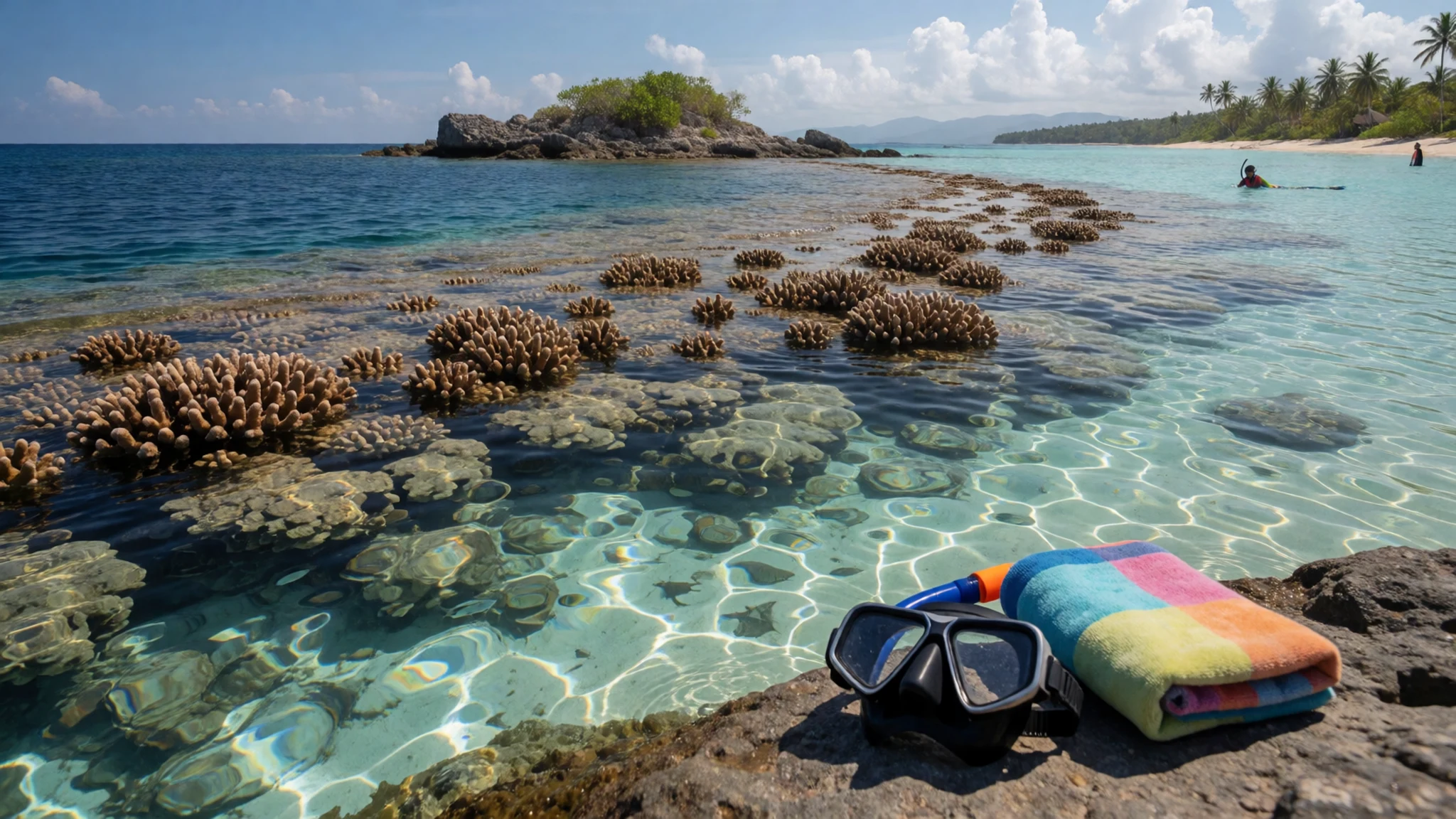
- Wat Khao Tam viewpoint — Between Thong Sala and Haad Rin
Wat Khao Tam stands on the road between Thong Sala and Haad Rin. It is easy to reach by motorbike or taxi, followed by a short walk to the temple terrace. From there the view takes in Koh Samui and the southern coast of Koh Phangan.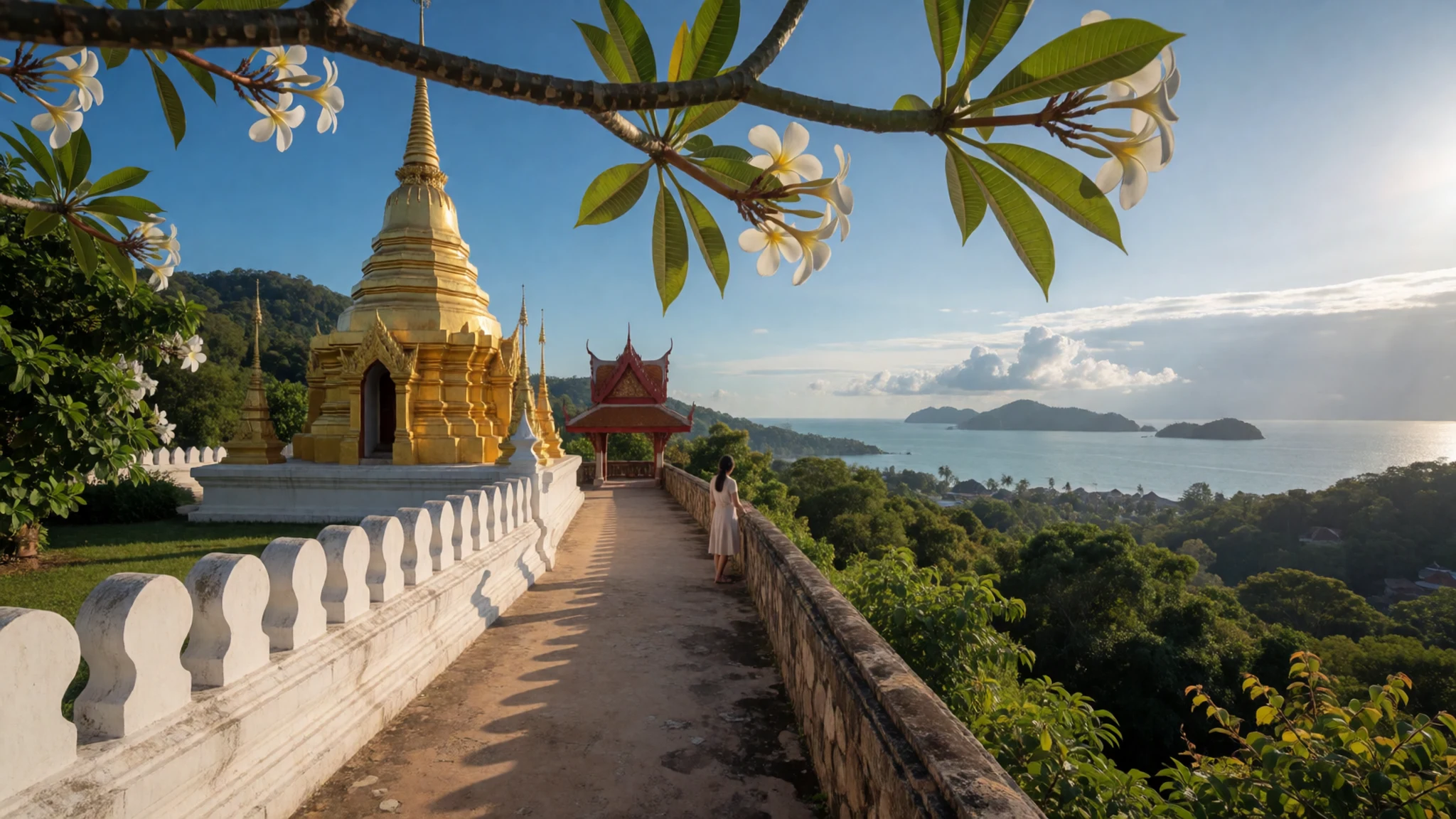
- Herbal sauna at Wat Pho — Near Thong Sala
The herbal sauna at Wat Pho has separate rooms for men and women and is a popular way to recover after late nights. Wear a sarong over swimwear, though men may use shorts. Treat it as a temple facility, and behave quietly and respectfully there.
Culture
Koh Phangan is a Thai Buddhist island first, whatever its party reputation suggests. Temples sit beside the roads, villages hold daily rhythms of fishing and small trade, and the Thai monarchy is treated with real respect, a legacy of the royal visits the island has known. The party scene around Haad Rin is a sharply separate world, run largely for visitors and concentrated on one stretch of coast. Away from it, many Thai residents are quietly wary of loud, drunken or half-dressed behaviour in their towns. Beyond Buddhism, the island has grown a second community of long-stay visitors: yoga teachers, divers, Muay Thai trainers and wellness practitioners, who base themselves in the north and east. Muay Thai gyms and month-long yoga courses are part of daily island life now. Food culture is more Thai in the street carts and night market than in the beachfront cafes. Locals tend to eat early and simply. Respect shows in small ways: speaking calmly, smiling instead of arguing over a price, and not raising your voice. Elephant rides are offered at a couple of camps, though many visitors now prefer to skip them. Cover your shoulders and knees at temples, remove your shoes before stepping inside any temple building, and keep your voice low there.
What to wear
Traditional Thai dress on the island is not something visitors will often see in daily life. It appears at festivals, weddings and temple events, when people wear the chong kraben, a wrap of silk or cotton drawn up between the legs, or a pha sin, a tubular skirt, with a fitted blouse. Fishermen and farmers traditionally wore loose cotton and the pha khao ma, a checked cotton cloth that serves as sarong, towel and head wrap. Today most islanders wear what suits the heat: T-shirts, shorts, light trousers and flip-flops. Haad Rin's party crowd dresses for the night, with neon paint, bikinis and little else, and that is a style of the party, not of the island. Visitors should pack for heat and humidity: light cotton or linen, swimwear, a hat and strong sun protection. Carry a sarong or scarf, which is useful at temples, in the herbal sauna and as a beach cover-up. Walking through towns in just swimwear is frowned on. For hikes to waterfalls and viewpoints, bring shoes with grip, because the trails are steep and slippery after rain. Sandals are fine for beaches, and a light rain jacket helps between June and November.
What to eat
- Pad Thai — Night market, Thong Sala
Noodles stir-fried with egg, tofu, peanuts and lime is a staple of the Thong Sala night market, and it is cheaper there than at beachfront cafes. Watch the cook finish it over high heat.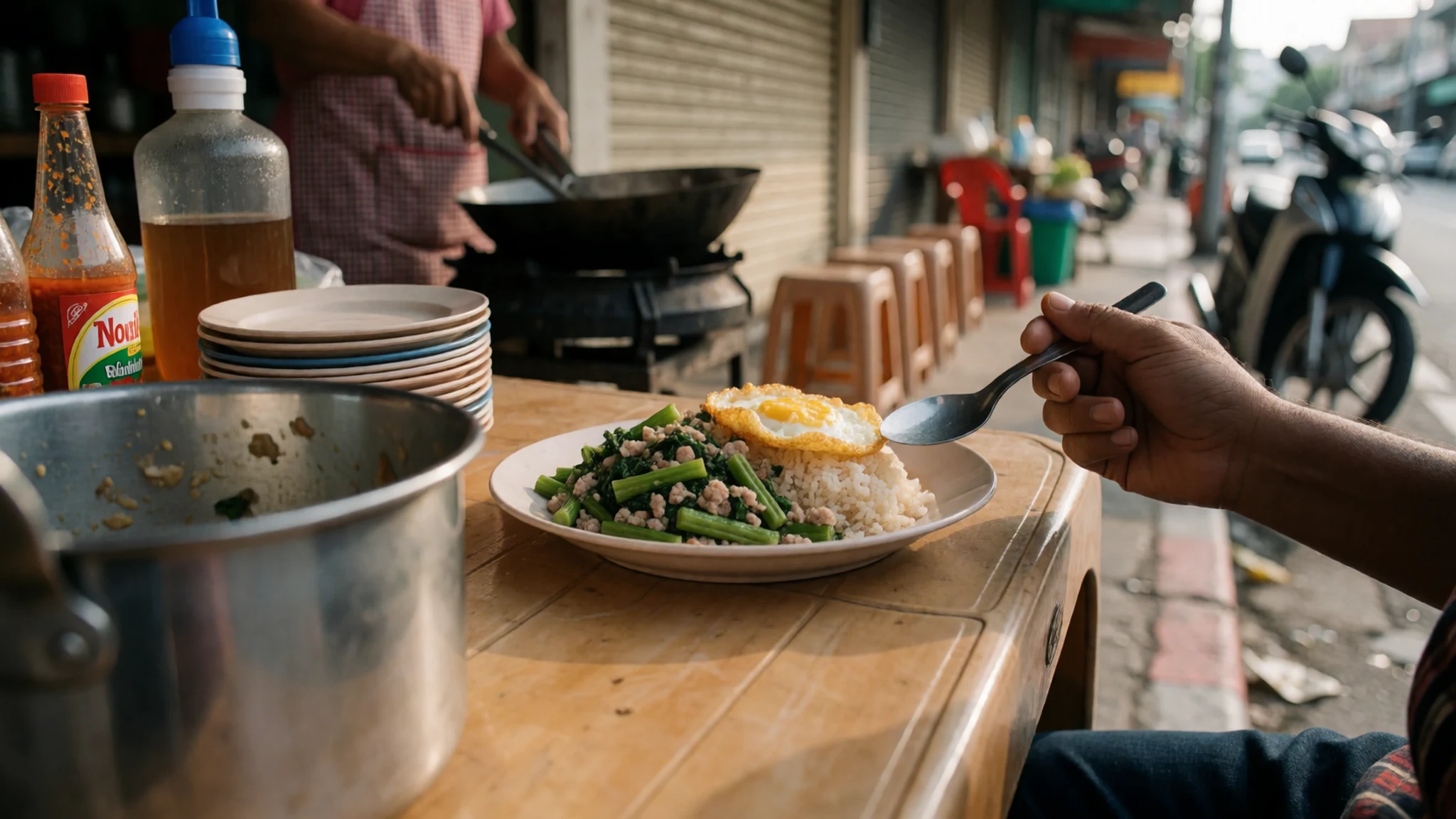
- Curry with rice — Food carts in Thong Sala
Curried meat served over rice is a standard evening meal at the food carts and market stalls. Ask which curries are mild, since southern Thai versions can be fiercely hot and lean on fresh chilli.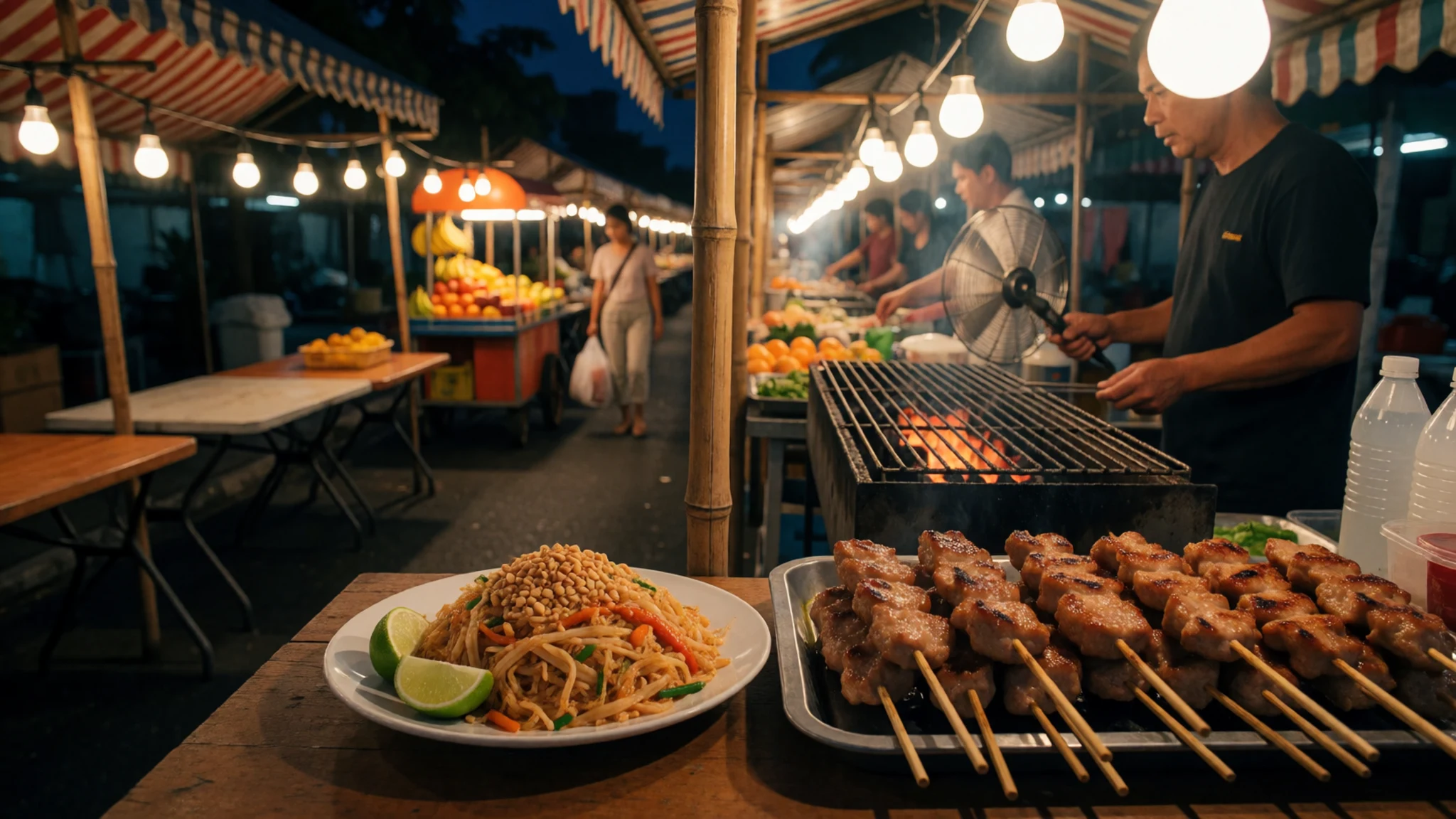
- Sticky rice in banana leaf — Morning stalls near the supermarket junctions
Small parcels of sticky rice with pork, chicken or liver, wrapped in banana leaf, are sold early in the morning as a cheap breakfast. They sell out quickly, so go before mid-morning. - Thai pancakes — Night market and street stalls
Thin, griddled pancakes folded around banana, egg or sweet fillings are made to order by street vendors. They make a cheap sweet snack in the evening and are easy to find around the market and near the beaches. - Meat skewers and meatballs — Street stalls in Thong Sala and Chalok Lam
Grilled or fried meat on sticks is the standard snack at street stalls, with fried meatballs especially cheap. Eat them hot with a sweet chilli sauce and a cold drink from the next cart.
Plan it
Best time. December to March for clear water, little rain and pleasant temperatures; July and August are a second busy spell. Other months can be wetter.
How long. 3–5
Getting there. Fly to Koh Samui airport (USM), then take a transfer to the ferry dock and a ferry to Koh Phangan; ferries run several times daily, with the last around dusk. Surat Thani airport (URT) on the mainland is an alternative, but it needs a bus and boat and takes several hours.
Budget. mid
Tips
- Book ferries well ahead if your dates fall near a full moon, as boats fill with party crowds
- Carry plenty of water on trails, which can be hard to follow
- Take cash for street carts, markets and small beach places
- Check national park entry details before you go
- Be careful renting a scooter on steep, rough roads
Etiquette
- Cover shoulders and knees at temples and remove shoes before entering
- Wear a sarong in the herbal sauna at Wat Pho
- Do not walk through towns in swimwear alone
Nearby
Sources
- Wikidata Q1069922 (CC0)
- Wikipedia: Ko Pha-ngan (rev 1378858043) (CC BY-SA 4.0)
- Wikivoyage: Ko Pha-ngan (rev 5427293) (CC BY-SA 4.0)
- Photo: Koh Phangan01.jpg, Manfred Werner (CC BY 3.0)
- Photo: KoPhaNganMar2025_01.jpg, Hagai Agmon-Snir (CC BY-SA 4.0)
- Photo: KoPhaNganMar2025_04.jpg, Hagai Agmon-Snir (CC BY-SA 4.0)
- Photo: KoPhaNganMar2025_06.jpg, Hagai Agmon-Snir (CC BY-SA 4.0)
- Photo: 130220-M-CO500-334, US Department of Defense (Public domain)
- Photo: Ban Tai, Nick Steemans (CC BY 3.0)
- Photo: Ban Chalok Lam, Davide Dioporto (CC BY 3.0)
- Photo: Book donation, Buddhadharma Public library (CC BY-SA 4.0)


