Koh Lanta
Koh Lanta, Thailand
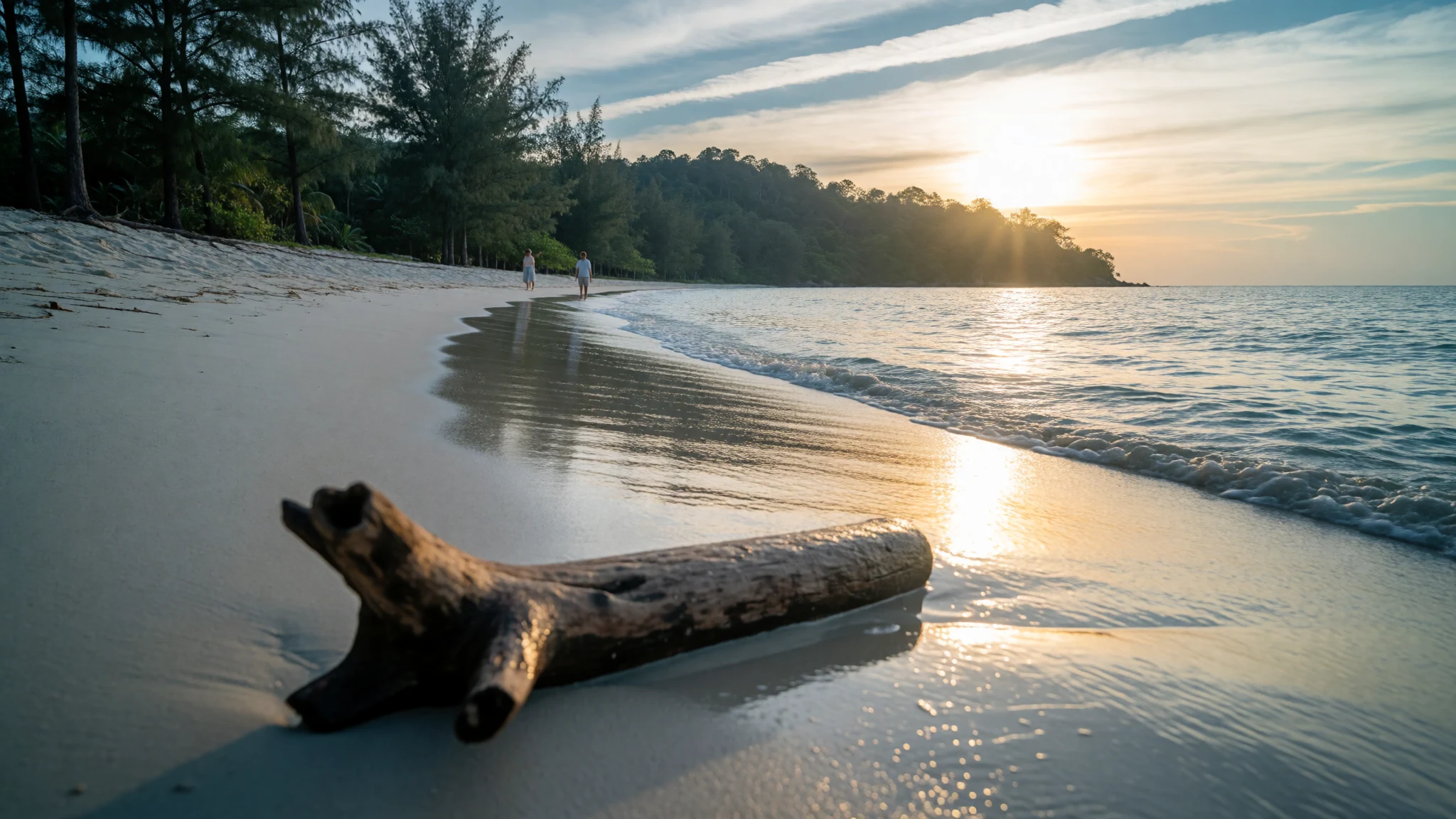
Koh Lanta pairs long west-coast beaches and mangrove creeks with a quiet, mostly Muslim island culture, inside a Thai national park.
The place
Koh Lanta is a district of Krabi province in southern Thailand, and the name covers a small chain of islands rather than one. Koh Lanta Yai, usually shortened to Koh Lanta, is the big one, with the villages, the guesthouses and a run of nine beaches down its entire west coast. Smaller Koh Lanta Noi lies to the north and is joined to it by the Siri Lanta Bridge, which opened in 2016. Ko Klang, nearest the mainland, is separated only by a narrow tidal river and a road bridge, so it is often mistaken for part of the mainland. The district sits about 70 km from Krabi town. Koh Lanta Yai is essentially a long, thin island with a spine of forested hills. The west side faces the Andaman Sea and holds the sand and the sunsets. The east side is mangrove, tidal creek and fishing village, with houses on stilts above the mud. Coral rims much of the shoreline, which is why snorkelling and diving trips are the standard day out. Much of the land and sea belongs to Mu Ko Lanta National Park, set up in 1990. Around 35,000 people live in the district, and the island's recorded elevation is 37 m, so this is a place of gentle hills rather than peaks. The mood is slower than the big resort islands to the north. That comes with seasons: from roughly May to October the sea is rough, rain is frequent, and many beachside businesses close. In the dry months the main road fills with scooters and the beaches are busy.
Its story
Koh Lanta's written history is thin, but the area is believed to have been settled since prehistoric times, making it an old community by Thai standards. Where the name comes from is uncertain. One suggestion links it to a Javanese word, lantas, for a type of grill used for cooking fish, which would suit a fishing coast. The island's name was officially changed to Lanta in 1917. The district itself was established in December 1901 and was organised around four island groups: Mu Ko Lanta, Mu Ko Klang, Mu Ko Rok and Mu Ko Ngai, with smaller clusters such as Mu Ko Haa beyond them. For most of its life the island was a place of fishing, small-scale farming and coastal trade. The people were a mix of Thai Buddhists, Thai-Chinese, Muslims and chao-le, the sea people whose way of life centres on the water. Tourism arrived much later and has stayed fairly low-key compared with Phuket or Phi Phi. Two changes mark recent decades. In 1990 the surrounding islands and sea were protected as Mu Ko Lanta National Park, which limits what can be built on the southern tip and in the offshore islands. In 2016 the Siri Lanta Bridge replaced the link by boat between the two main islands. A French television survival show took its name from the island, and that has made Koh Lanta better known in France than in much of Asia.
What to see
- West-coast beaches — Koh Lanta Yai, west coast
Nine beaches run down the west coast of Koh Lanta Yai, from busier stretches with restaurants and bars in the north to quieter sand toward the south. At low tide some expose rock and coral flats, so swimming depth changes through the day. Sunsets face open sea and the shoreline fills with people each evening.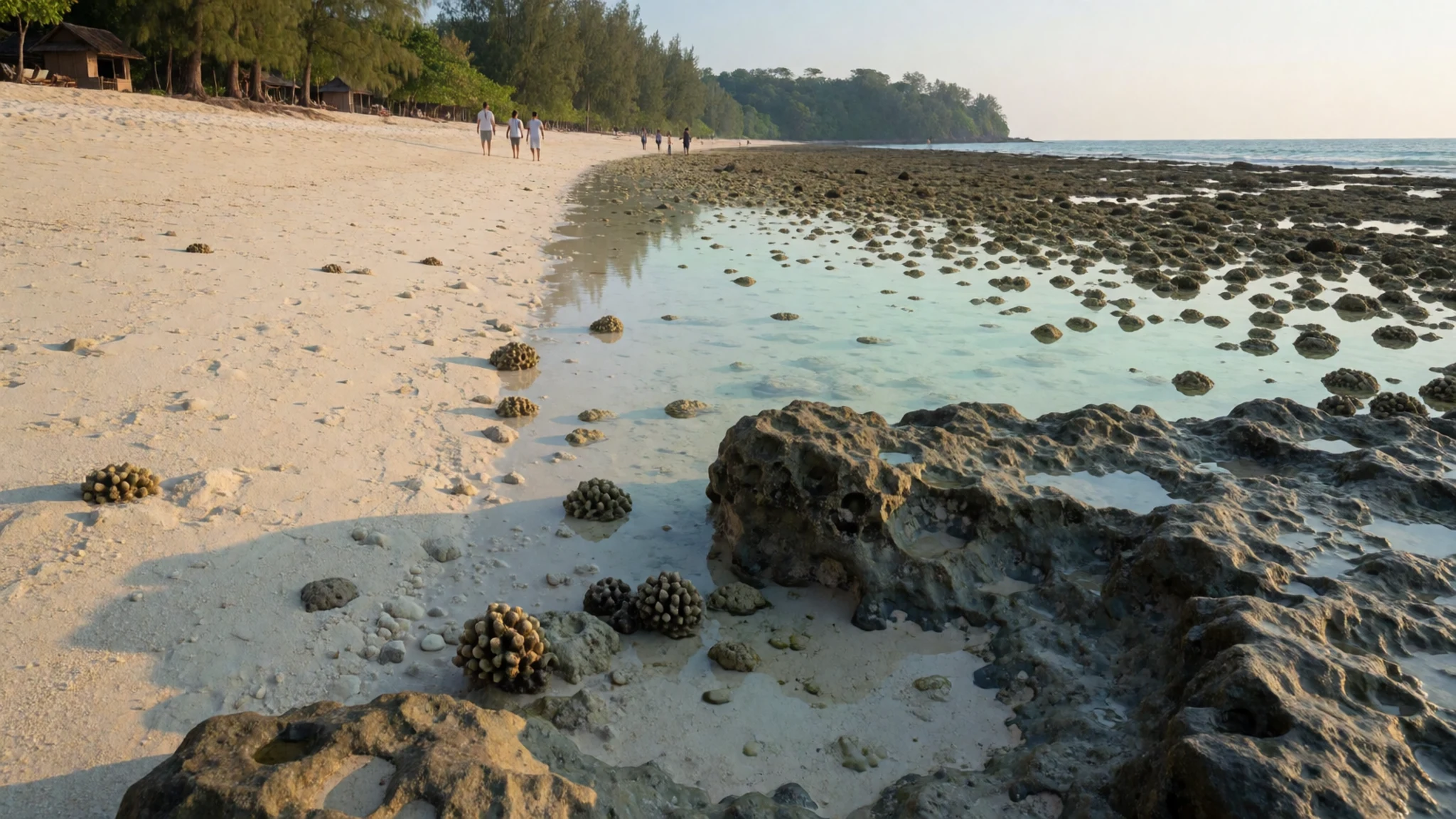
- Mu Ko Lanta National Park — Southern tip of Koh Lanta Yai and offshore islands
The national park covers the southern end of Koh Lanta Yai and many smaller islands, a mix of coral-rimmed shore, tree-covered hills and mangrove. Short forest and headland walks are the usual way in, and the heat builds fast, so mornings are best. Park fees and opening times change; check current notices from the national parks authority.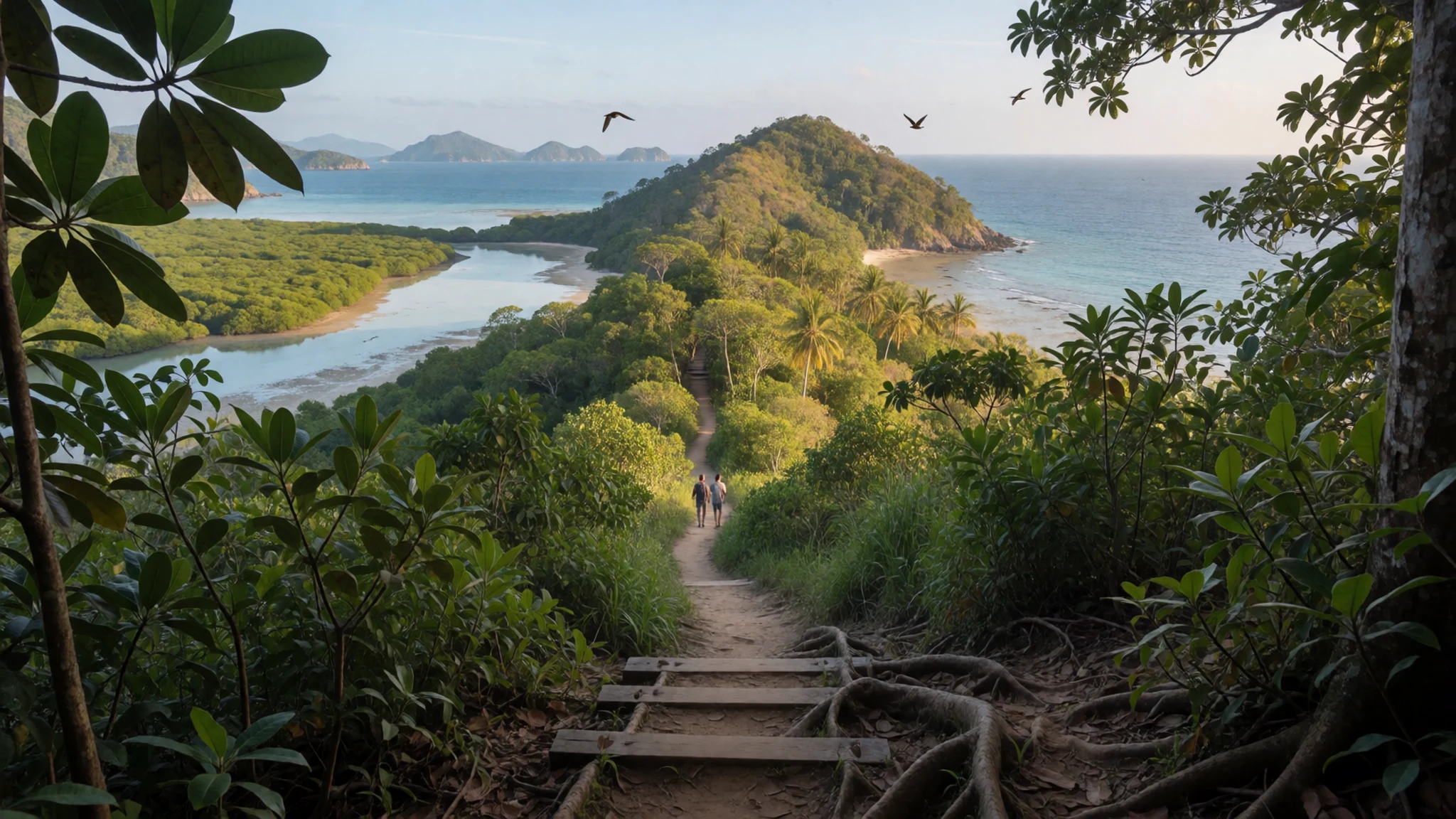
- Siri Lanta Bridge — Between Koh Lanta Yai and Koh Lanta Noi
The Siri Lanta Bridge, opened in 2016, joins Koh Lanta Yai to Koh Lanta Noi. Crossing by scooter or minivan gives a quick view of the narrow channel and the fishing boats moored along it. Koh Lanta Noi is calmer and has far fewer tourist facilities, which suits a half-day drive.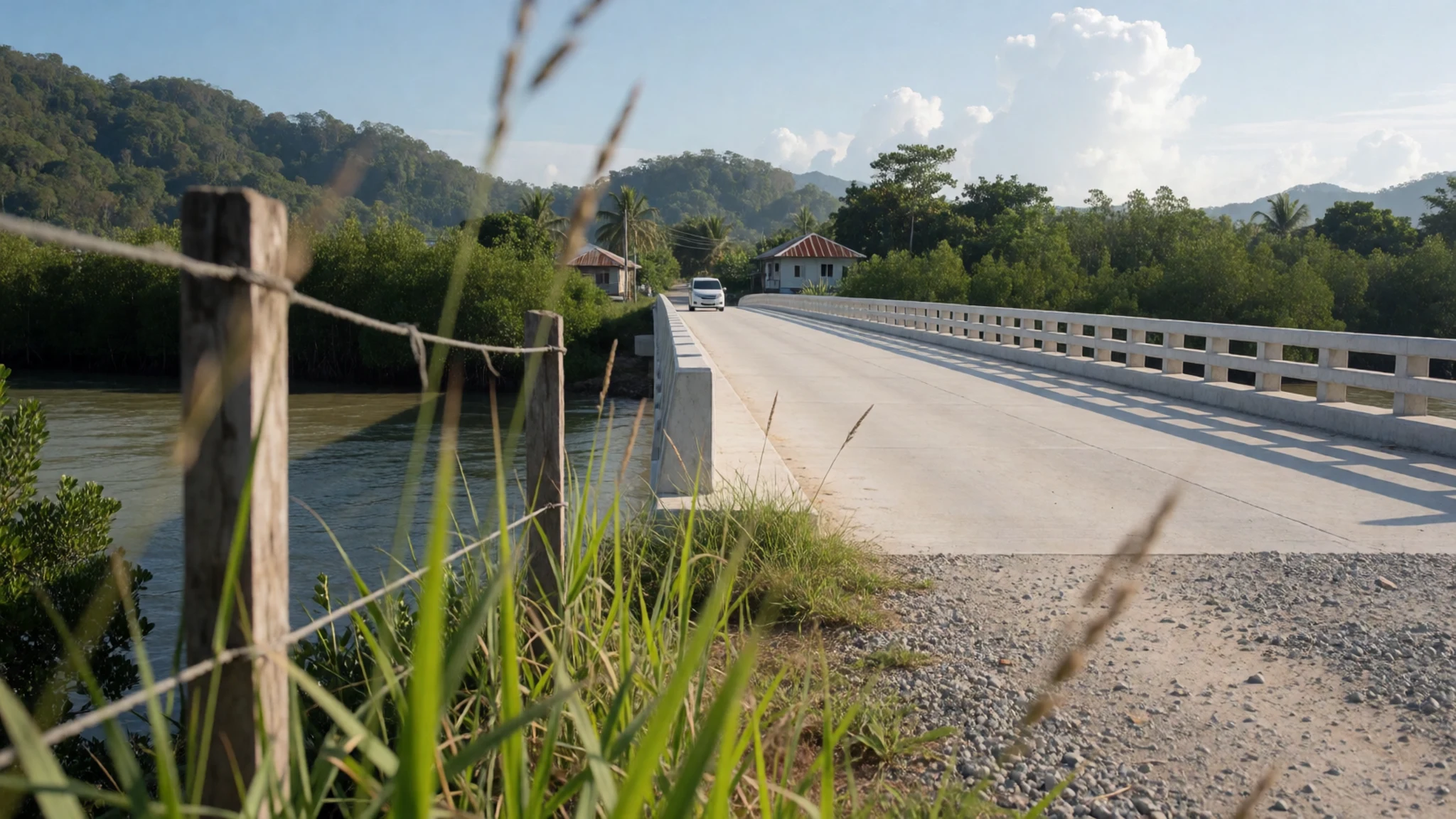
- Old Town and the east-coast mangroves — East coast of Koh Lanta Yai
The sheltered east side shows an older Koh Lanta than the beach strip, with stilt houses over the water, small shops and a working fishing harbour. Mangrove creeks nearby can be explored by kayak or longtail boat with local guides, ideally at high tide. Sea-gypsy and Muslim communities live along this coast.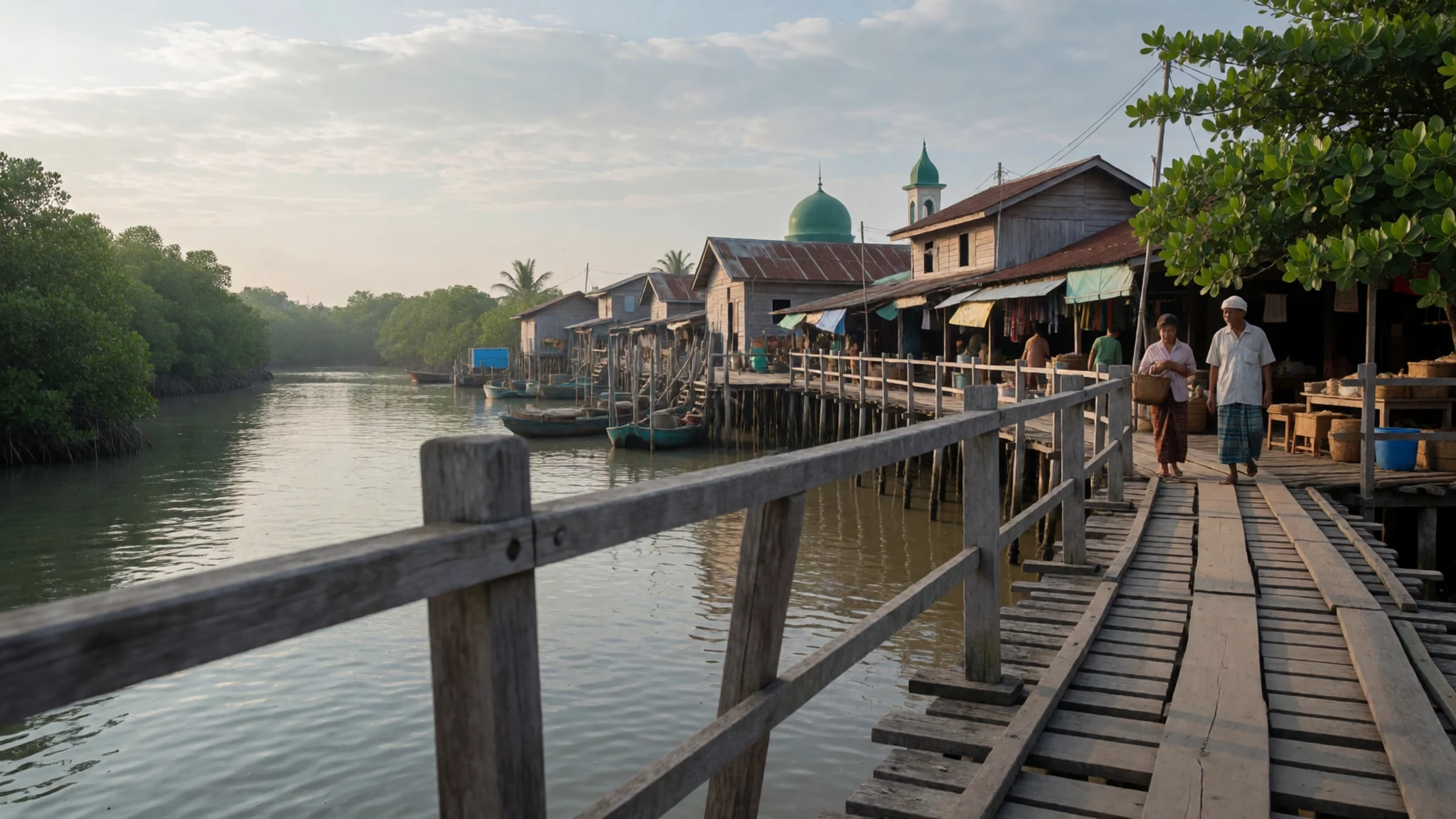
- Ko Phi Phi day trip — Phi Phi islands, by boat from Koh Lanta
Boats run from Koh Lanta to the Phi Phi islands, a day trip that combines snorkelling over coral with steep limestone cliffs dropping into the sea at Ko Phi Phi Lee. Boats are crowded in high season, so a morning departure helps. Ask the guesthouse which operators it trusts.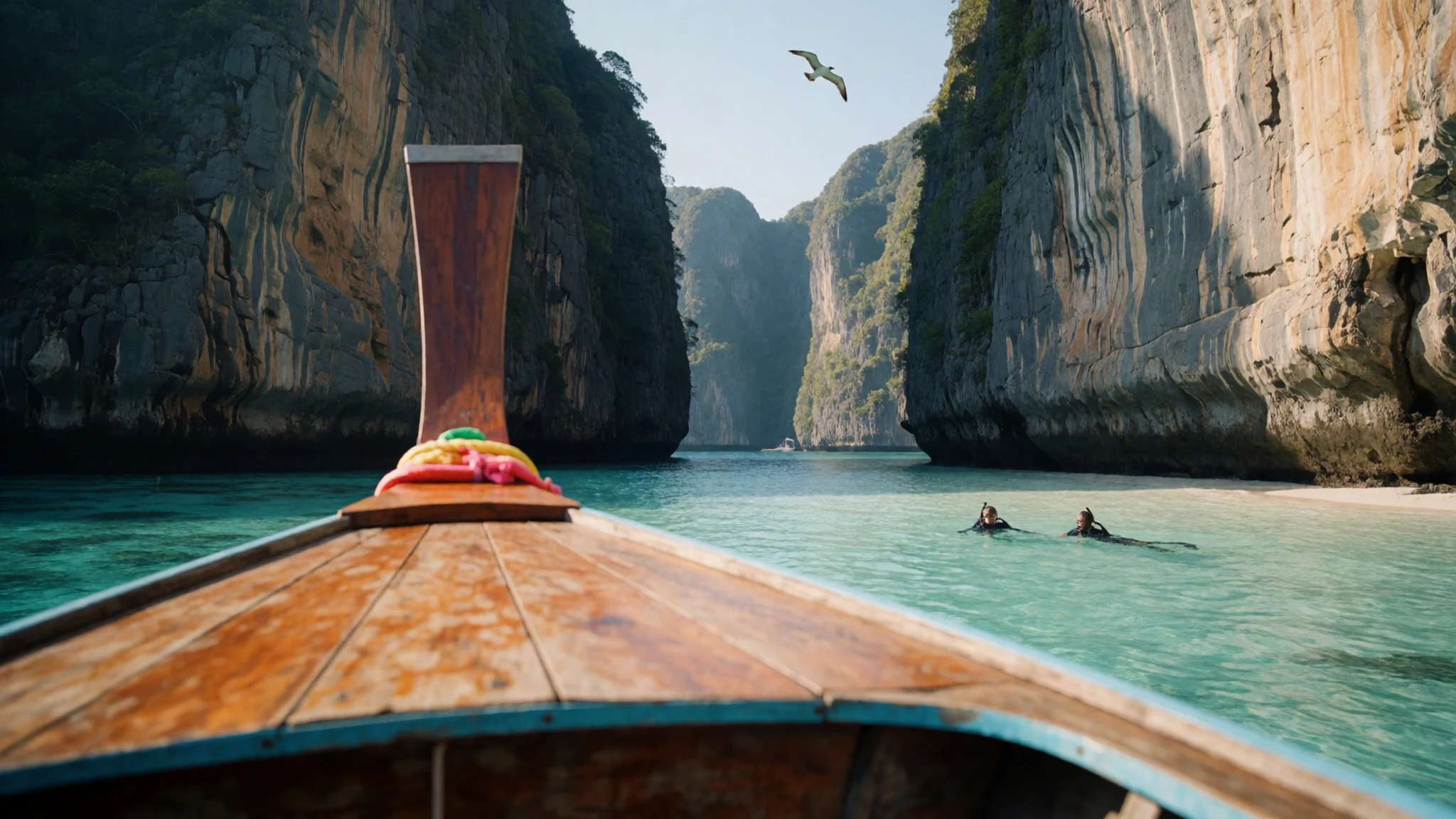
Culture
Koh Lanta is a mix of communities rather than a single culture. Thai Buddhists, Thai-Chinese, Muslims and chao-le, the sea people often called sea gypsies, share the island and the wider Krabi area. In the rural parts the majority is Muslim, and the district has a reputation for getting along without visible religious tension. Villagers speak a thick southern dialect that even other Thais can find hard to follow, so a few words of standard Thai will be understood but not always answered in kind. The calendar is full: with Buddhist, Chinese and Islamic traditions all observed, something is nearly always being celebrated somewhere in the province. Friday is the main prayer day for Muslims, and the call to prayer carries across villages on the east side and in the old port. The chao-le live by fishing and follow a lifestyle that tourism has so far changed relatively little, which is a reason for visitors to be restrained with cameras and curiosity around their houses and boats. Away from the resort strip, everyday life is quiet and modest. Alcohol is easy to find in beach restaurants but far less visible in the villages. Mornings begin early, shops close for prayers, and tidy dress is the norm. Dress modestly away from the beach, cover shoulders and knees in villages and at mosques, and ask before photographing people, especially at prayer or in chao-le communities.
What to wear
Koh Lanta's traditional dress reflects its Muslim majority and its links to Malay culture. Muslim women often wear the baju kurung, a long tunic and skirt in cotton or lightweight blends, with a headscarf, and men wear the sarong, a wrapped cloth woven or printed in checks, with a skullcap for Friday prayers and festivals. Batik prints from the wider Malay world are common on formal occasions. Buddhist and Thai-Chinese families dress more conventionally for festivals, and chao-le fishing families have long favoured practical cotton clothes suited to work on the water. Day to day, most islanders wear what suits the heat: T-shirts, light trousers, long skirts, flip-flops and, on scooters, a helmet. Staff in beach businesses are usually in shorts and casual wear, while villages on the east side look more covered. Visitors can wear swimwear on the beach but should change before walking into villages, shops and restaurants. Light cotton or linen that covers shoulders and knees copes with the heat and the sun, and a hat, sunglasses and reef-friendly sun cream matter more than anything stylish. Sandals and water shoes help on rocky shores and coral flats. Carry a light sarong or scarf to cover up at a mosque or village, and a thin rain jacket in the wet months.
What to eat
- Massaman curry — Any Thai curry shop or village eatery in the south
Massaman is a mild, Indian-influenced Muslim curry made with coconut milk, potatoes and nuts. The south's Malay and Indian roots show in its spices, and it is gentler than many central Thai curries. Chicken or beef are common, and it is usually eaten with rice.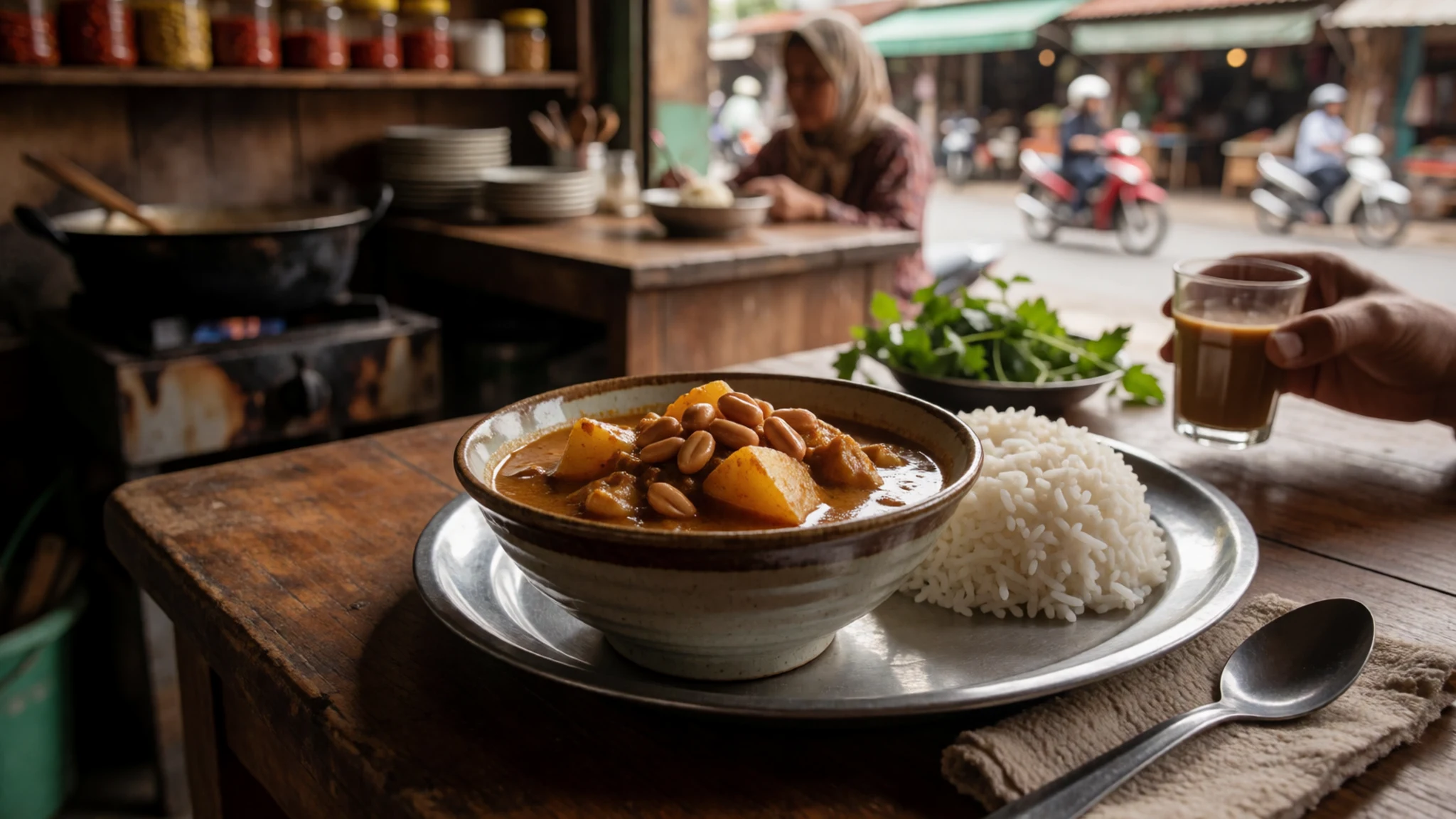
- Khanom chin — Morning markets and simple breakfast stalls
Khanom chin is fermented rice noodles served with a fish curry sauce and a pile of fresh herbs and vegetables to add by hand. It is a southern staple, often eaten at breakfast, and shows how closely local cooking follows the sea.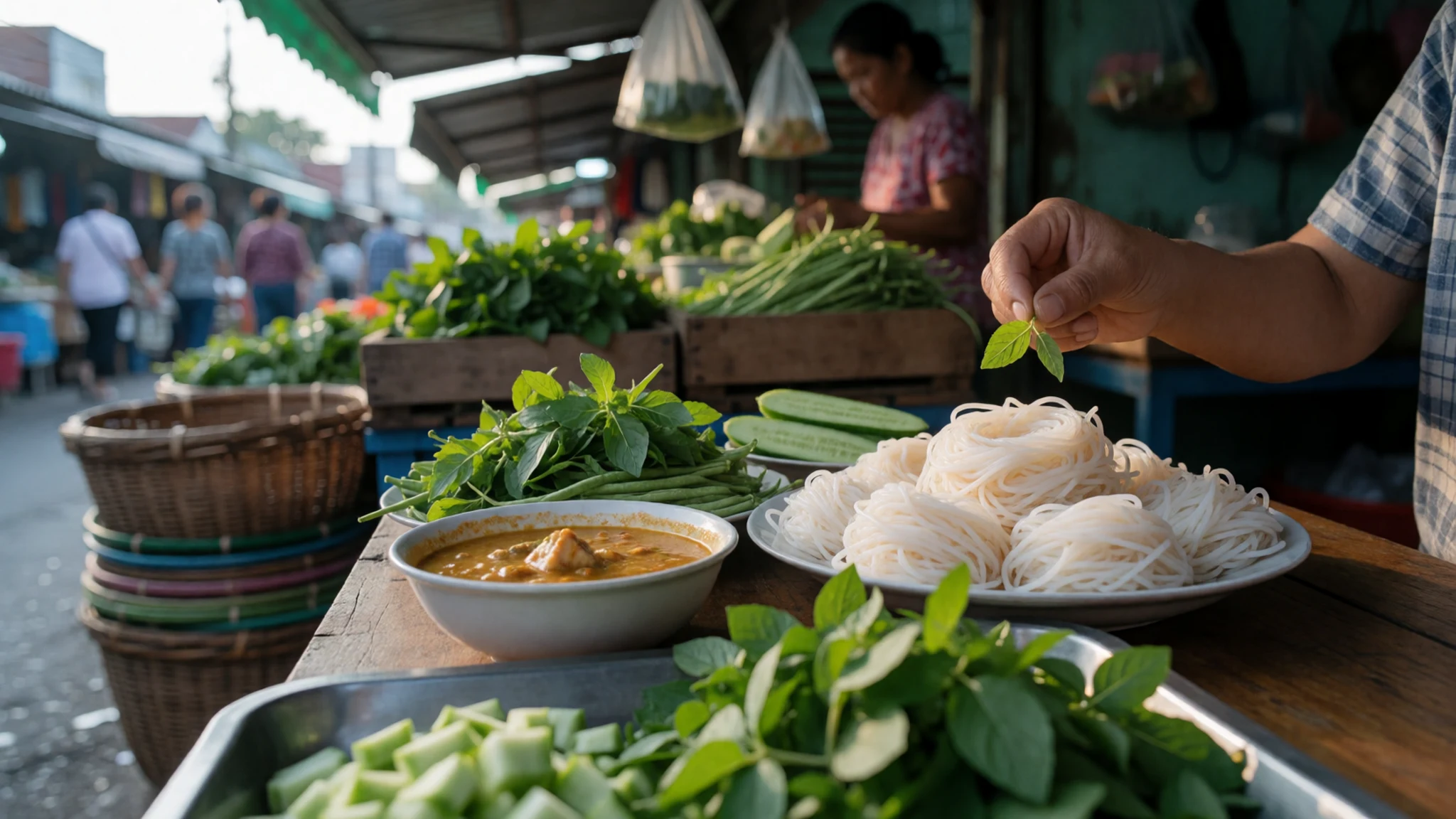
- Khao mok kai — Muslim-run eateries and roadside stalls
Khao mok kai is chicken biryani, rice cooked with spices and marinated chicken. It reflects the Indian and Malay influence on southern Thai cooking and is a filling lunch. It usually comes with a sweet-sour sauce and sometimes a clear soup alongside. - Hoi chak teen (wing shell) — Seafood restaurants along the coast in Krabi province
Wing shell, called hoi chak teen in Thai, is described as Krabi's best-known dish. The shellfish is typically boiled or stir-fried and eaten with a spicy dipping sauce. It has a chewy texture and works best as a shared starter. - Hoi wan, stir-fried spotted Babylon — Seafood restaurants and evening grill places near the beach
Hoi wan is spotted Babylon, a small sea snail, stir-fried with chillies and holy basil. The sauce is hot, salty and fragrant, and the meat is picked out with a toothpick. It is usually ordered as a snack alongside grilled fish and rice.
Plan it
Best time. November to April is the dry season, with calm seas and the most reliable sun. December to February is busiest, and March and April get hotter and more humid. From about May to October the Andaman coast is rainy and the sea is rough, many places close and boat trips are often cancelled.
How long. 3–5
Getting there. Fly to Krabi International Airport (KBV), with direct flights from Bangkok and from Kuala Lumpur. From there it is a road transfer south through Khlong Thom and then across to the island by ferry or by the Siri Lanta Bridge. Minivan and boat services run between Krabi, Phuket and Koh Lanta; check operators for current timetables. A seaplane service has also flown between Phuket and Koh Lanta.
Budget. mid
Tips
- Book beachfront rooms well ahead for December to February, and expect many places to close in the wet season
- Hire a scooter only with a licence, a helmet and some road experience, as the west-coast road is hilly and busy
- Carry some cash for village shops and small eateries, since cards are not accepted everywhere
- Start boat trips and national park walks early to avoid heat and crowds
- Drink bottled or filtered water and use reef-friendly sun cream
Etiquette
- Cover up when leaving the beach for villages, shops and mosques
- Ask before photographing local people, especially at prayer or in chao-le communities
- Do not touch or stand on coral when snorkelling
Nearby
Sources
- Wikidata Q475797 (CC0)
- Wikipedia, Ko Lanta district (rev 1378861837) (CC BY-SA 4.0)
- Wikivoyage, Krabi Province (rev 5297095) (CC BY-SA 4.0)
- Photo 01-thailand-koh-lanta-beach.jpg, Neitram (CC BY-SA 2.5)
- Photo 02-koh-lanta-bridge.jpg, Jmex (CC BY-SA 4.0)
- Photo 03-ko-lanta-national-parc.jpg, Dronepicr (CC BY 3.0)
- Photo 04-ko-lanta-thailand-8.jpg, Dronepicr (CC BY 3.0)
- Photo 05-koh-lanta.jpg (Public domain)
- Photo 06-ko-lanta-thailand-6.jpg, Dronepicr (CC BY 3.0)
- Photo 07-ko-lanta-thailand-7.jpg, Dronepicr (CC BY 3.0)
- Photo 08-ko-lanta-thailand-17.jpg, Dronepicr (CC BY 3.0)


