Kodiak Island
Kodiak Island, United States
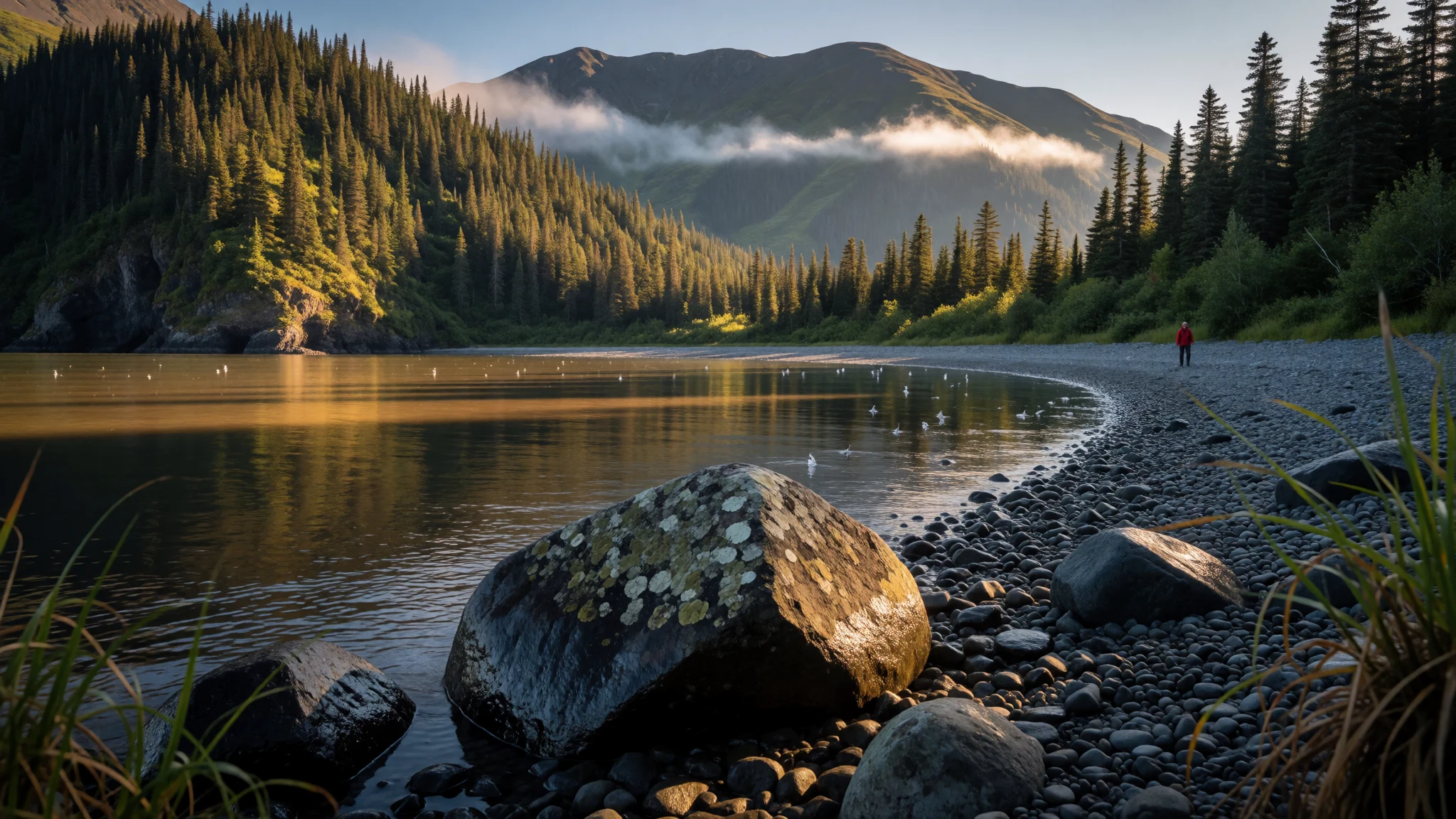
Kodiak Island offers wild Alaskan coast, bear country and Russian-era history, reached only by ferry or plane.
The place
Kodiak Island sits off the south coast of Alaska, divided from the mainland by the Shelikof Strait, and it gives its name to the whole archipelago around it. The Alutiiq name is Qikertaq, and the Russian-era name, Кадьяк (Kadyak), still echoes in the island's history. The island holds very different landscapes. The north and east are mountainous and thickly forested, while the south is mostly open and treeless, with grassy slopes and bare ridges. Deep bays that stay free of ice cut into the coast and have long given boats a safe place to shelter. Much of the southwestern part of the island lies within Kodiak National Wildlife Refuge, so large stretches have no roads, houses or shops. About 13,592 people live on the island. Most are in the city of Kodiak, the main town and the only point of entry, since every commercial flight or ferry arrives there. The rest live in small villages such as Akhiok, Old Harbour, Karluk, Larsen Bay and Port Lions, or in a scattered community near Cape Chiniak. Beyond the town the road network is short, and reaching the remote coasts means a boat or a small plane. Weather decides plans here, and low cloud, wind and rain are normal rather than exceptional.
Its story
Kodiak Island has been the homeland of the Sugpiaq, an Alutiiq people, for a very long time, and their communities lived from the sea, hunting marine mammals, fishing and gathering food along the shore. Outsiders came much later. Stepan Glotov, a Russian fur trader, is usually named as the first European to reach the island. The settlement that followed was the work of another trader, Grigory Shelikhov, who set up a Russian base at Three Saints Bay in 1784. The village now called Old Harbour grew up close to that spot. In 1792 the base was relocated to where the town of Kodiak stands today, and from there it became the hub of the Russian fur trade with Alaska Natives. In 1793 Shelikhov obtained craftsmen and farming families, sent with the backing of the governor-general of Irkutsk, to help build shipyards and workshops and develop the colony. The families were not serfs in the strict sense, though they carried tax obligations. The fur trade rested on Alutiiq hunters and the skins they brought in, and the relationship was far from equal. Painted views from the early nineteenth century, such as Lisiansky's of 1805, show a timber settlement on a sheltered shore. Orthodox churches and Russian place names remain, alongside Alutiiq culture that is still part of island life.
What to see
- Kodiak town and harbour — Kodiak town, north-east coast
Kodiak town, with its working fishing harbour, is the base for almost every trip on the island. Allow time to watch boats unload and to visit the local museum and the Orthodox church, which tie the Russian and Alutiiq past to the present day. Check official sites for opening times.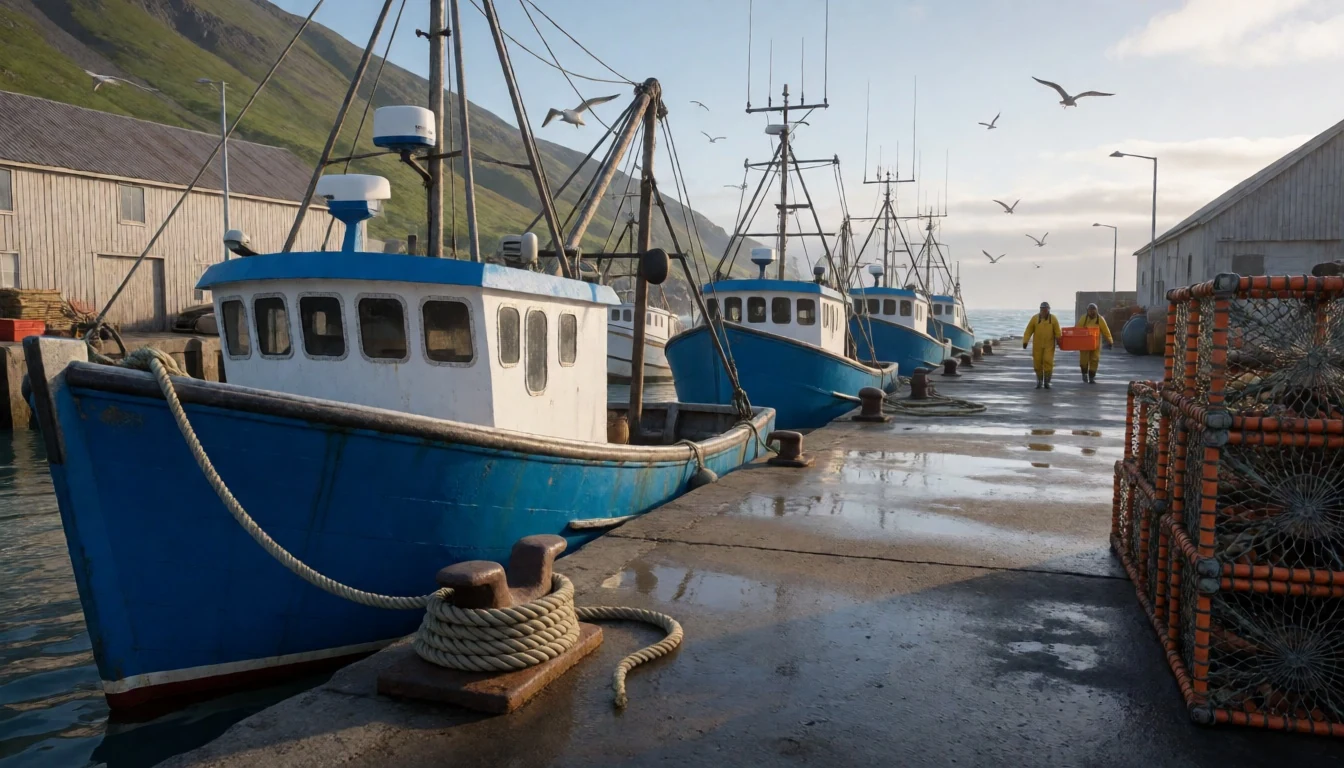
- Kodiak National Wildlife Refuge — Southwestern Kodiak Island
The refuge covers the southwestern part of the island and is known for its brown bears. Access is usually by floatplane or boat, often with a guide or operator, and weather can delay flights by days. Leave slack in the itinerary and check the refuge's official site before booking.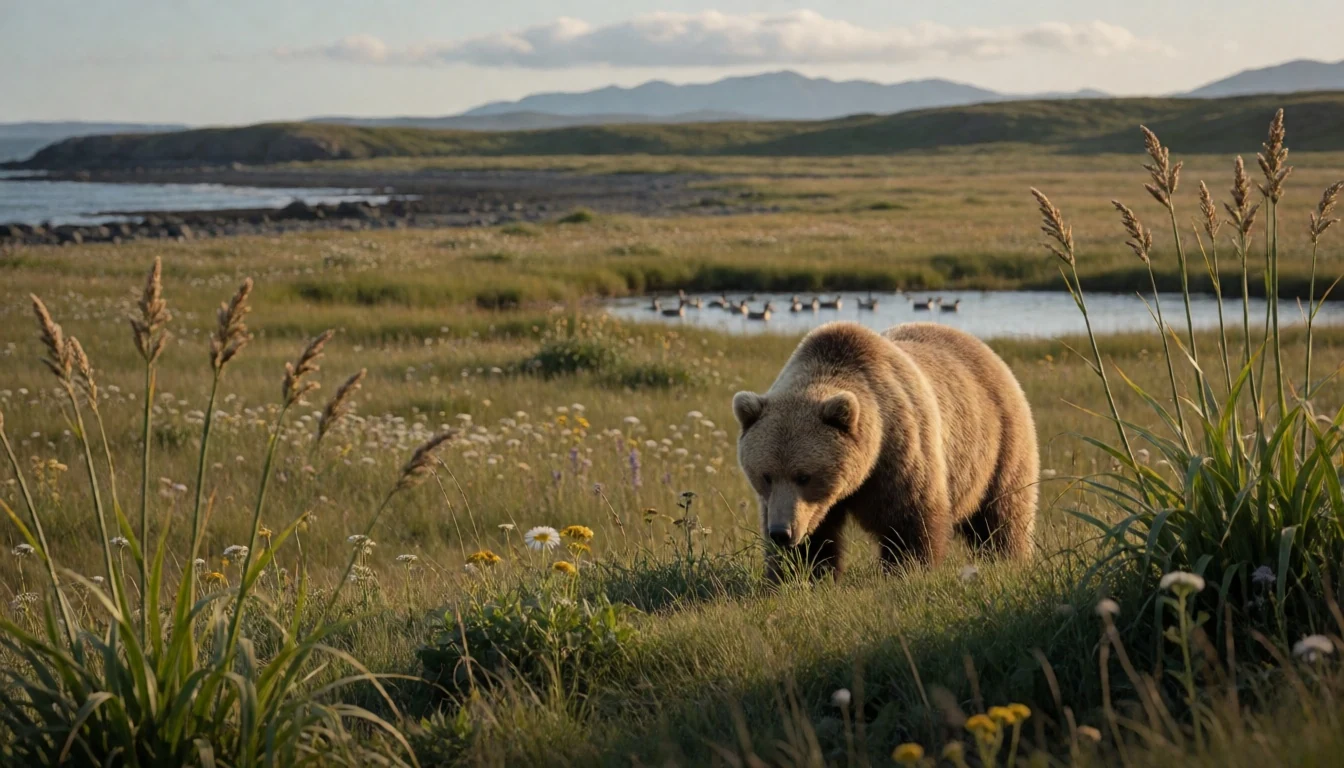
- Old Harbour — South-east coast
Old Harbour is a small fishing village near the site of the first Russian settlement at Three Saints Bay. It is reached by small plane or boat, and services are limited, so lodging and supplies need arranging ahead. Come for quiet shoreline, local history and a sense of island village life.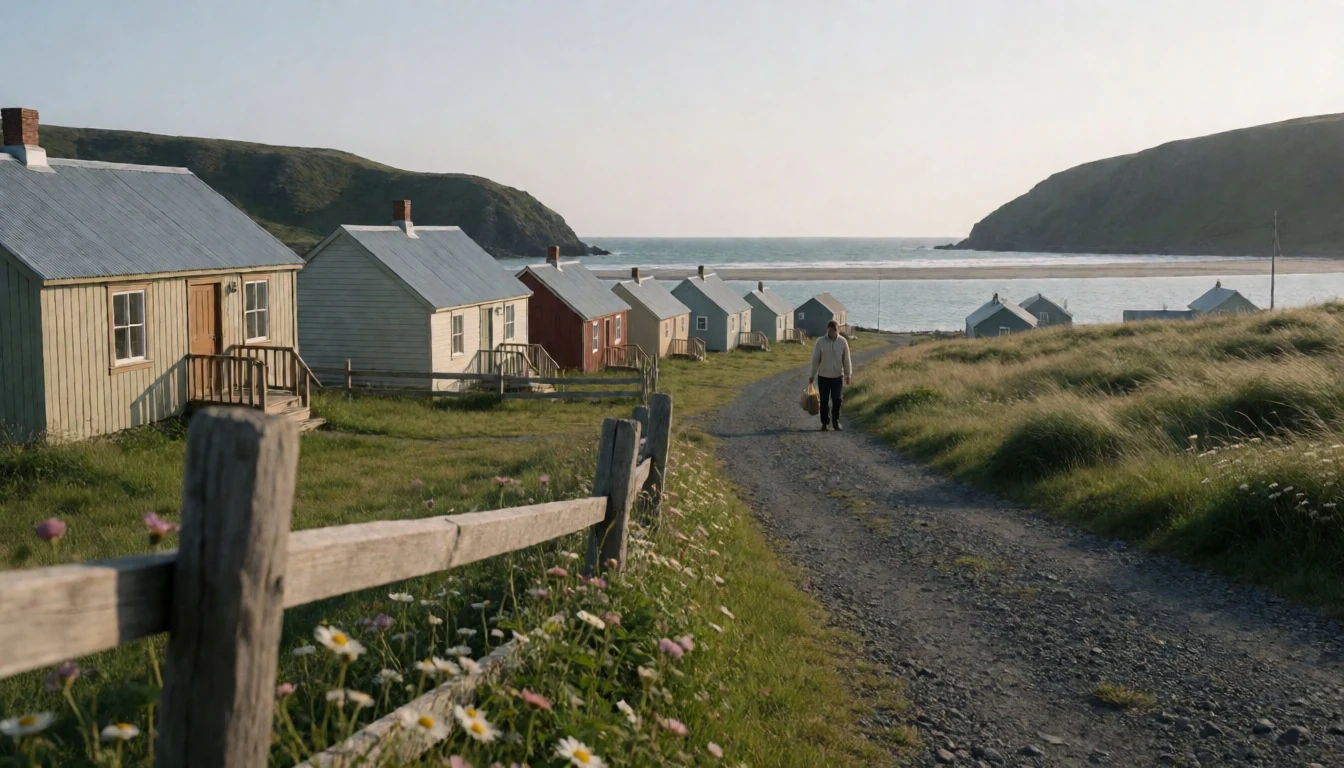
- Pasagshak — South-east of Kodiak town
Pasagshak lies along a road running south-east from Kodiak town to an open coast of grassland, with lupines in summer and horses grazing near the shore. It can be reached by car, though the road may be rough and the coast is exposed. Bring layers, because the wind rarely drops.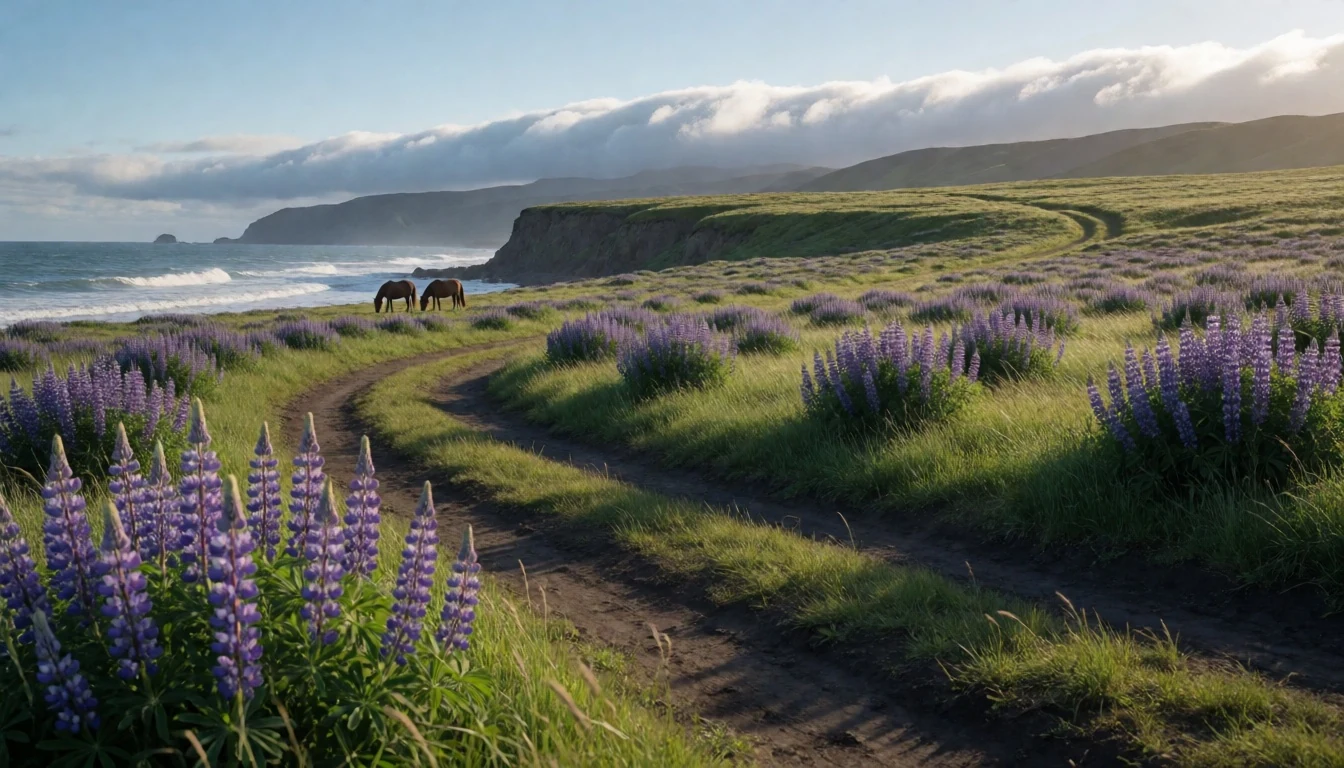
- Centre Mountain — Above Kodiak town
Centre Mountain rises behind Kodiak town and gives hiking on ridges where snow patches and meltwater linger well into summer. Views stretch over bays and forested slopes. Go in settled weather, tell someone your route, carry waterproofs, and make noise on the trail, since bears live across the island.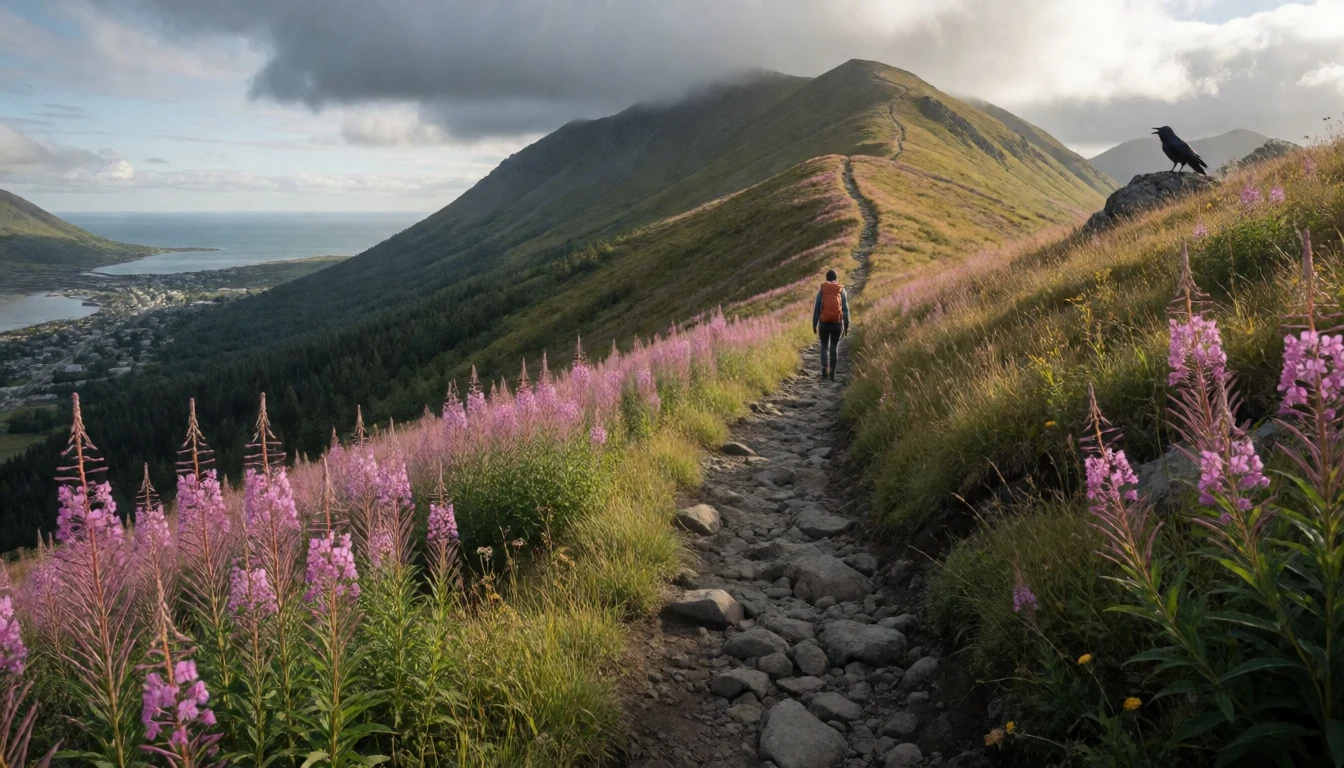
Culture
Kodiak Island's culture is a layering of Alutiiq heritage, Russian-era history and a modern fishing economy. The Sugpiaq are the original inhabitants, and their stories, art and language remain part of island life. Russian influence shows in the Orthodox churches, family names and place names. Daily life follows the sea: salmon runs, crab and halibut seasons, boat repairs and weather talk shape the calendar more than any holiday. Visitors will find people friendly but practical, used to flights being cancelled and plans changing, so patience goes down well. Respect for the land matters, because much of the island is protected habitat and wildlife refuge. Flowers, shells and other natural objects are meant to stay where they are, and rubbish has to be carried out of wild areas. Camp fire rings are for wood, not for burning cans, bottles or plastic, which gives off toxic fumes and leaves a mess for the next person. Bears are part of the landscape rather than an attraction, and locals expect visitors to give them room and to store food carefully. Take all your rubbish with you, leave flowers and natural objects alone, and keep food sealed and well away from where bears could smell it.
What to wear
Traditional dress on Kodiak Island comes from the Sugpiaq, who made waterproof parkas from the gut of sea mammals, warm ones from bird skins and fur, and carved wooden hats for hunting. These were practical clothes for cold, wet days in open boats, and today they appear mainly in museums, dance performances and cultural events, sometimes remade in modern materials. Everyday dress on the island is built for weather: rain jackets, fleece, wool hats, work trousers or jeans, and tall rubber boots, worn by fishermen on deck and by townspeople going to the shop. Style comes second, and clean, sturdy clothes are acceptable anywhere from a diner to a church. A visitor should pack in layers: a proper waterproof jacket and trousers, a warm mid-layer, a hat and gloves even in summer, and quick-drying socks. Waterproof boots with good grip suit wet trails and slippery shores, and rubber boots help for boat landings. For a visit to an Orthodox church, cover shoulders and knees. Sunglasses and a sun hat are worth having for the few clear days, and a dry bag protects cameras from spray.
What to eat
- Fresh salmon — Seafood eateries near the harbour in Kodiak town
Salmon is the island's everyday fish, served grilled, smoked or in chowder, and it tastes best when it came off a boat that day. Ask what is local this week rather than ordering blindly from the menu.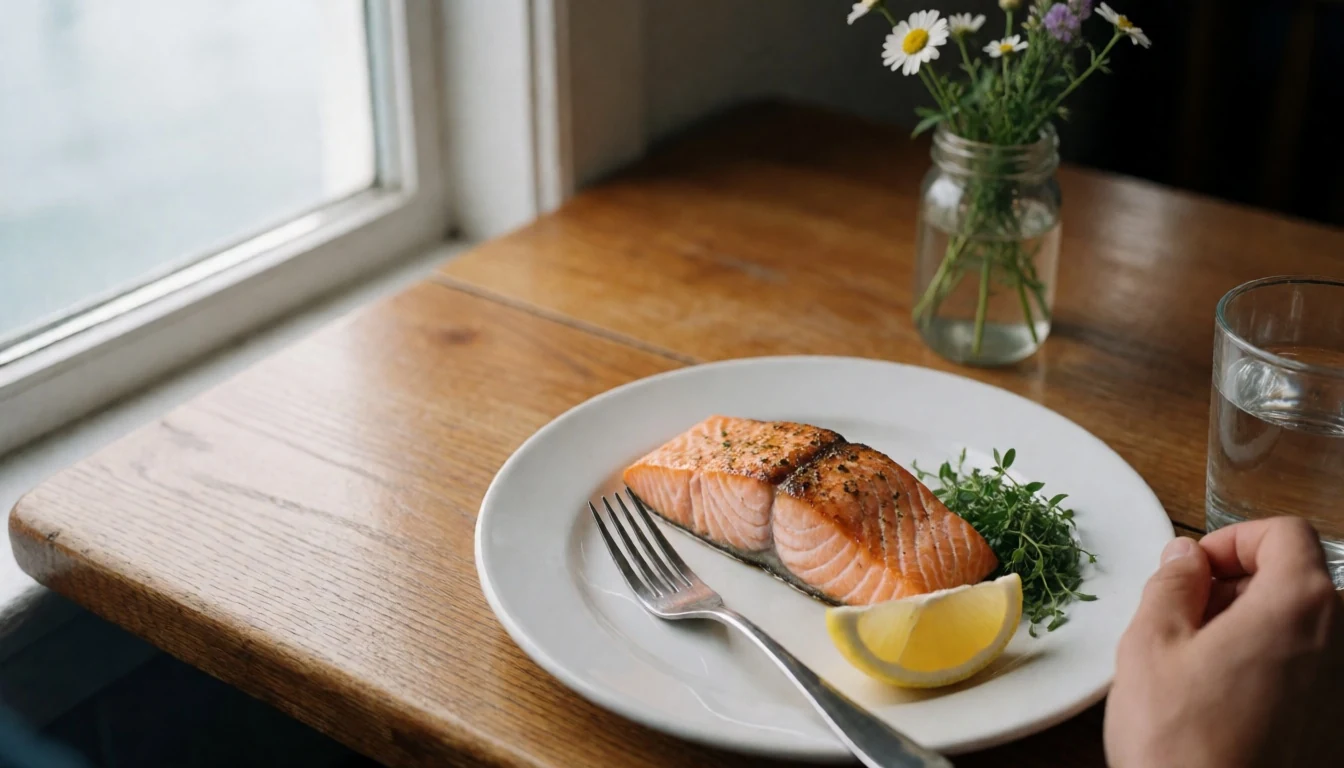
- Halibut — Waterfront eateries and fish-and-chips counters near the boats
Halibut is a firm white fish, usually fried in batter or grilled, and fresh fillets turn up in many seafood places close to the shore. Ask whether it was caught locally, because the answer is often yes.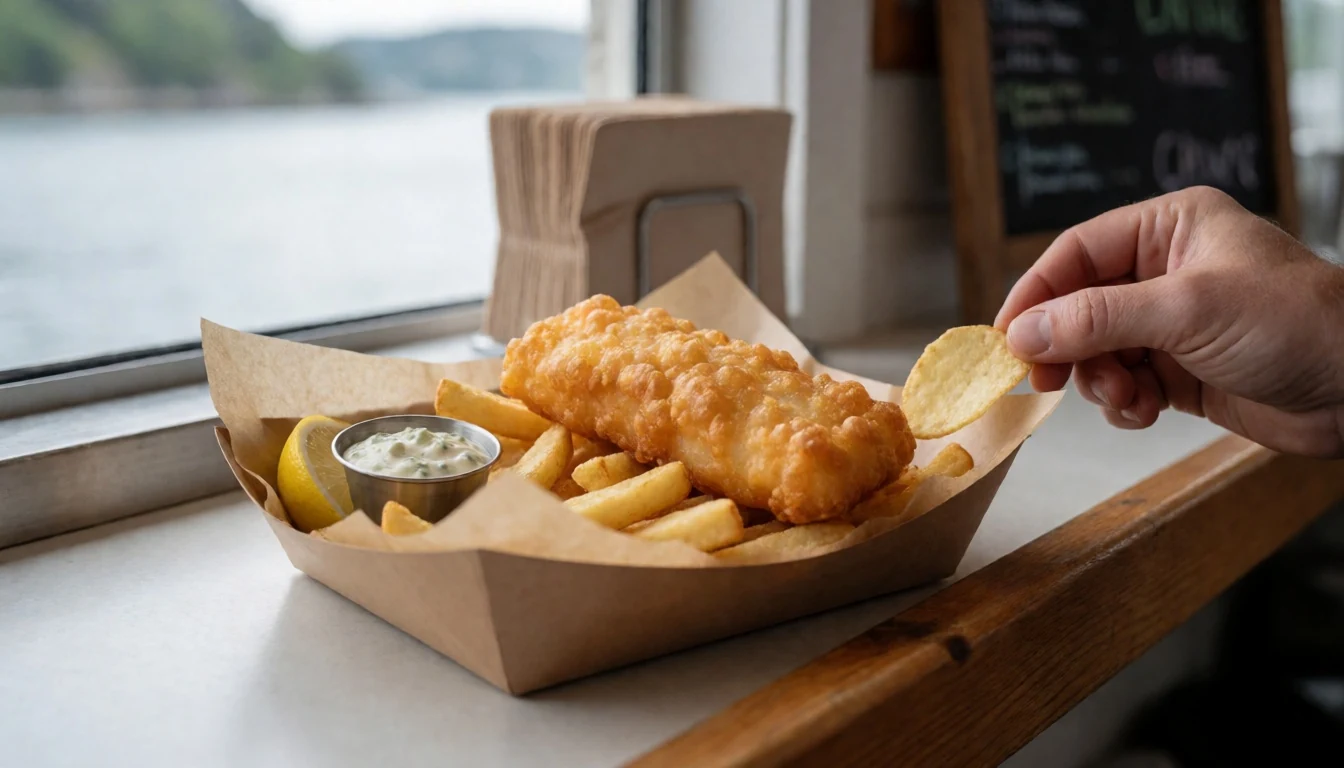
- King and snow crab — Seafood restaurants close to the harbour
Crab from Alaskan waters is sold around the world, and on the island the legs are served simply steamed, with melted butter and a lot of napkins. It is messy and filling, so share a platter if you can. - Reindeer sausage with eggs — A local diner in Kodiak town
A hearty breakfast of reindeer sausage, eggs and hash browns, served with plenty of hot coffee, is the standard way to start a day of fishing or hiking. Portions are large, so order less than you think. - Fireweed honey and spruce tip syrup — Small shops and craft fairs in Kodiak town
Fireweed honey is pale and floral, and spruce tip syrup has a fresh, resinous taste that works on pancakes or in drinks. Both make good small gifts. Ask whether they were made locally.
Plan it
Best time. June to August is the summer season and the easiest time for hiking, boat trips and flights; December to March is the cold season, with more disruption to travel. Weather is changeable in every month, so build in spare days.
How long. 4–5
Getting there. Fly to Anchorage, which is served year round by Alaska Airlines and Delta from Seattle and other cities, then take a connecting flight or the ferry to Kodiak town. Check the airline and the Alaska Marine Highway ferry sites for current schedules. Beyond the town, villages and the wildlife refuge are reached by small plane or boat.
Budget. high
Tips
- Book flights, lodging and refuge trips well ahead for summer, and leave spare days in case bad weather delays a flight or boat
- Ask your tour operator about bear safety before any hike, and make noise on trails
- Bring warm, waterproof layers and boots, because rain and wind can arrive on any day
- Stock up on supplies in Kodiak town before heading to a village, as shops there are small
- Treat stream water before drinking it
Etiquette
- Pack out all rubbish and never burn it in a camp fire ring
- Keep a safe distance from bears and never feed wildlife
- Leave flowers, shells and other natural objects where they are
Nearby
Sources
- Wikidata Q204387 (CC0)
- Wikipedia: Kodiak Island (rev 1379642586) (CC BY-SA 4.0)
- Wikivoyage: Alaska (rev 5434329) (CC BY-SA 4.0)
- NASA Goddard Space Flight Center, Alaska (cropped to Kodiak Island) (CC BY 2.5)
- Karl Musser, Kodiak Island map in Alaska (CC BY-SA 2.5)
- Lisiansky, Kodiak, 1805 (Public domain)
- Defense Mapping Agency Aerospace Center, Operational Navigation Chart D-11, 5th edition (Public domain)
- Unknown author, Shelikhov settlement (Public domain)
- NickLongrich, Snows on Center Mountain (CC BY-SA 4.0)
- Steve Hillebrand/USFWS, Brown bear AK (Public domain)
- James Brooks, Horses in Pasagshak (CC BY 2.5)


Wildlife
- Brown bear (animal)
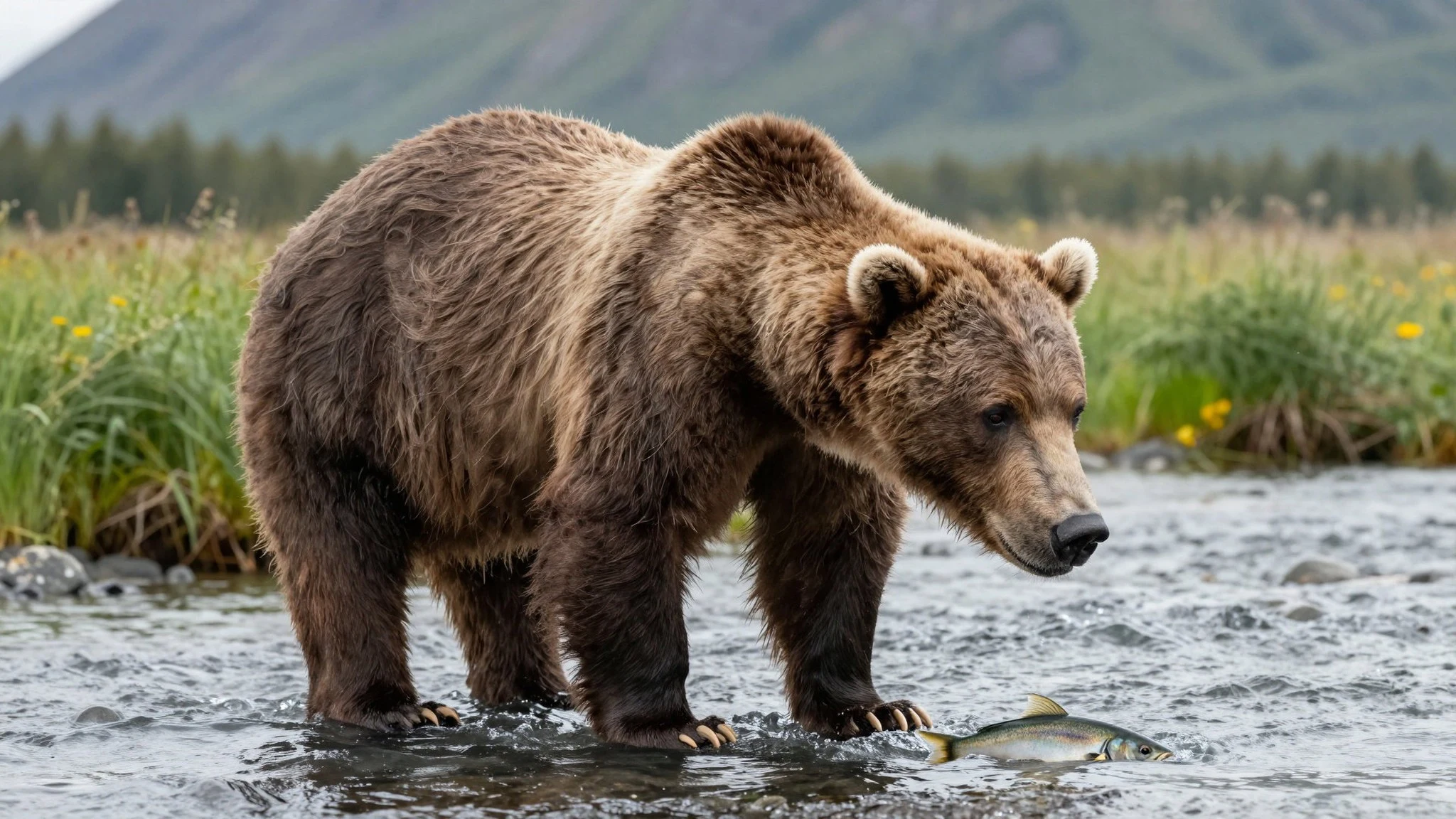
The brown bear is a big bear with a muscly hump on its shoulders and wide paws made for digging, and its fur can be anything from creamy to reddish to deep brown. On Kodiak Island, look to the refuge in the southwest, which is famous for these bears. Ask locally about the best season and hour, as timing is not something I can promise. Watch from a long way off, keep quiet, go with a guide, and never feed them.