Kochkor
Kochkor, Kyrgyzstan
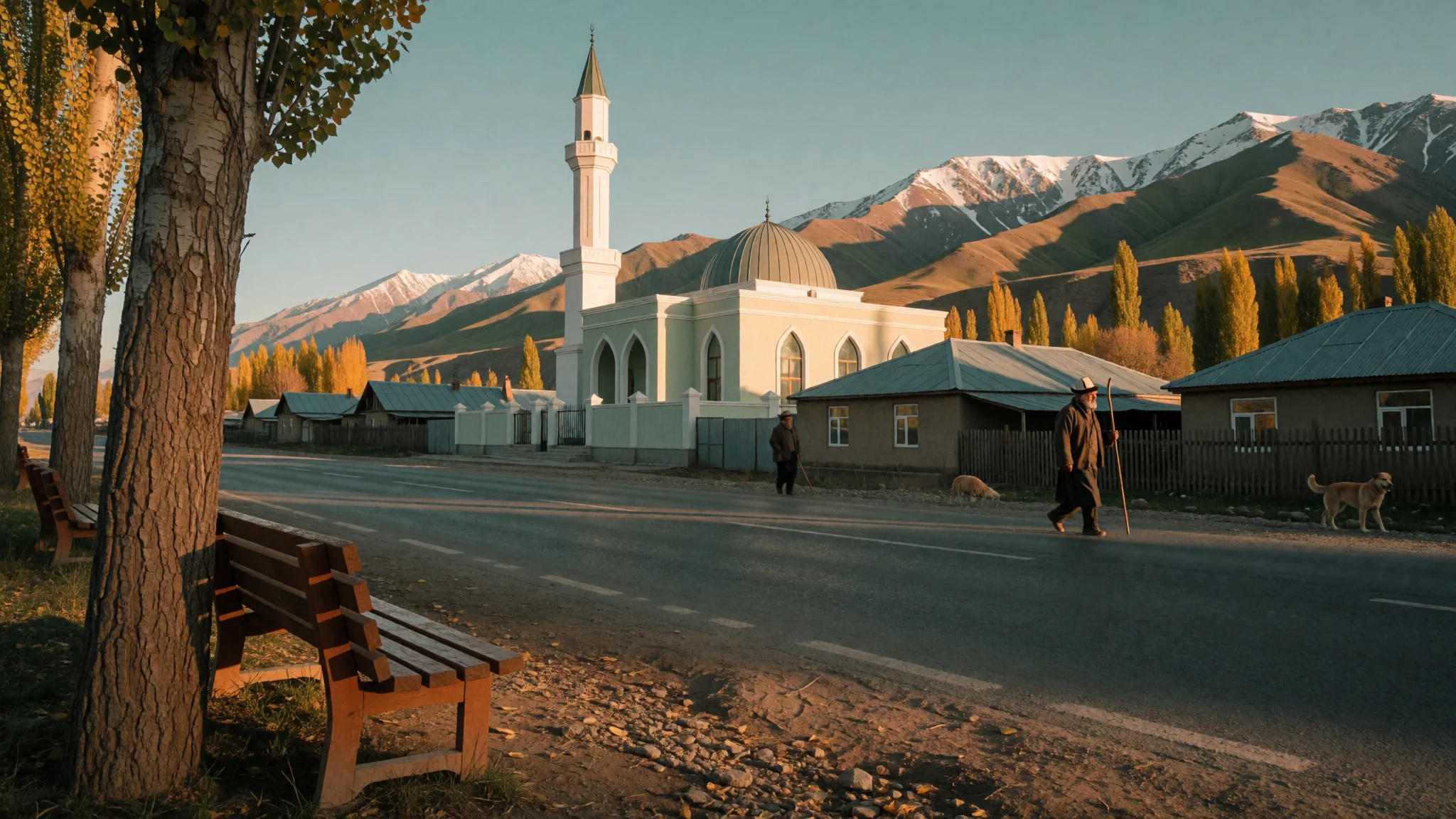
Kochkor is a working Kyrgyz town at 1,767 metres, and the easy, friendly base for summer horse trips to the Song Kul pastures.
The place
Kochkor is a large village in northern Naryn Region, Kyrgyzstan, with about 14,000 people and an elevation of 1,767 metres. It is the administrative centre of Kochkor District, so alongside the farming and herding there are the offices, schools and regional museum that come with that role. The village sits on the main highway that runs from the Torugart Pass on the Chinese border north towards Bishkek. A branch road leaves that highway a few kilometres to the west and heads for the Ferghana Valley side of the country, while Lake Issyk-Kul lies to the north-east, with the lakeside town of Balykchy the nearest point on its shore. Few travellers come for the village itself. Kochkor works as a gateway: the community tourism offices here arrange homestays, guides, horses and transport for trips into the surrounding high country, above all to Song Kul. The centre is small and easy to cover. A park with Soviet-era structures, a livestock bazaar on the edge of town, a food market, a taxi stand and a new bus station are all close together. Locals are used to visitors and tend to be chatty and curious, so a day here is as much about conversation as sightseeing. Summer is the working season for tourism. Outside it the town is much quieter, and weather closes the high trips.
Its story
Kochkor began in 1909 as Stolypino, a settlement named under the Russian Empire, and took the name Kochkor in 1917. Russian speakers still use the form Kochkorka, and both names turn up in conversation and on older signs. That double naming sums up the town's layers. The Russian-era founding, the decades of Soviet administration and the Kyrgyz herding culture of the surrounding valleys have each left something behind. Some Soviet-era structures survive in the central park, a few still used and others left to fade, and the tidy layout of the centre shows planned-town habits grafted onto a pastoral district. The position explains much of what followed. Kochkor lies on the road between Bishkek and the Chinese border, so traffic, trade and the animal bazaar have made it a natural stopping place. In more recent years the town found a new role in tourism. Community-based organisations built networks of homestays in local houses and nearby villages, and they arranged trips to the jailoos, the summer pastures where herding families move their animals and set up yurts. Three competing organisations now work from the town, which keeps arrangements flexible and prices open to negotiation. A new mosque financed from Turkey has joined the skyline too, a reminder that the town's story is still being added to. Today the local economy mixes livestock, farming, administration and visitors.
What to see
- Animal Bazaar — Western edge of Kochkor
The animal bazaar on the western edge of Kochkor is where farmers from the district buy and sell livestock, and visitors can simply watch the haggling from the side. It is a working market rather than a show, so ask at a homestay when it is busiest. Basic supplies are sold here too. - Kochkor park — Central Kochkor, south of the taxi stand
Kochkor park is a patch of green just south of the taxi stand, handy for an hour between buses. Scattered through it are Soviet-era structures, some still in use and some left to decay. It is a quiet place to sit, watch town life and see how the centre was planned. - CBT Kochkor office — Central Kochkor, near the bus station
The CBT Kochkor office is one of the community tourism organisations that arrange homestays, guides, horses and transport for trips into the hills. Calling in person lets visitors compare it with the other offices nearby and ask about current conditions. Staff can explain what a trip involves before any money changes hands. - Jailoo — Central Kochkor
The Jailoo point marked in central Kochkor is a reminder of what the town is for. A jailoo is a summer pasture, where herding families take animals and set up yurts, and the best of them lie far above the village. Tours from town head out to these pastures, mainly between mid-May and mid-September.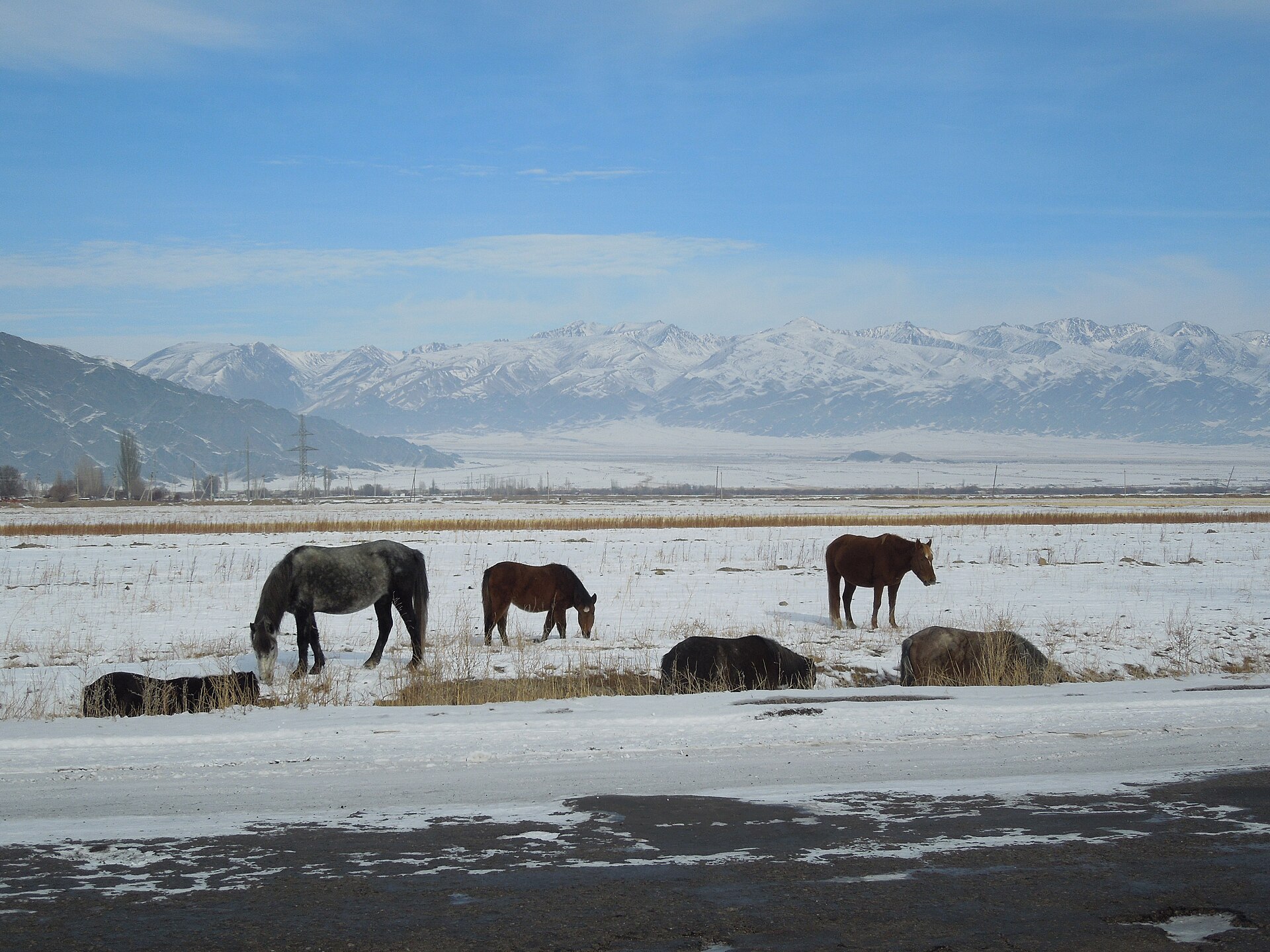
- New mosque — Central Kochkor
The new mosque in Kochkor, financed from Turkey, is a clean modern building and a useful marker of how the town is changing. Admire it from the street. For going inside, ask locally about covering up, removing shoes and prayer times, and be ready to be turned away if a service is under way.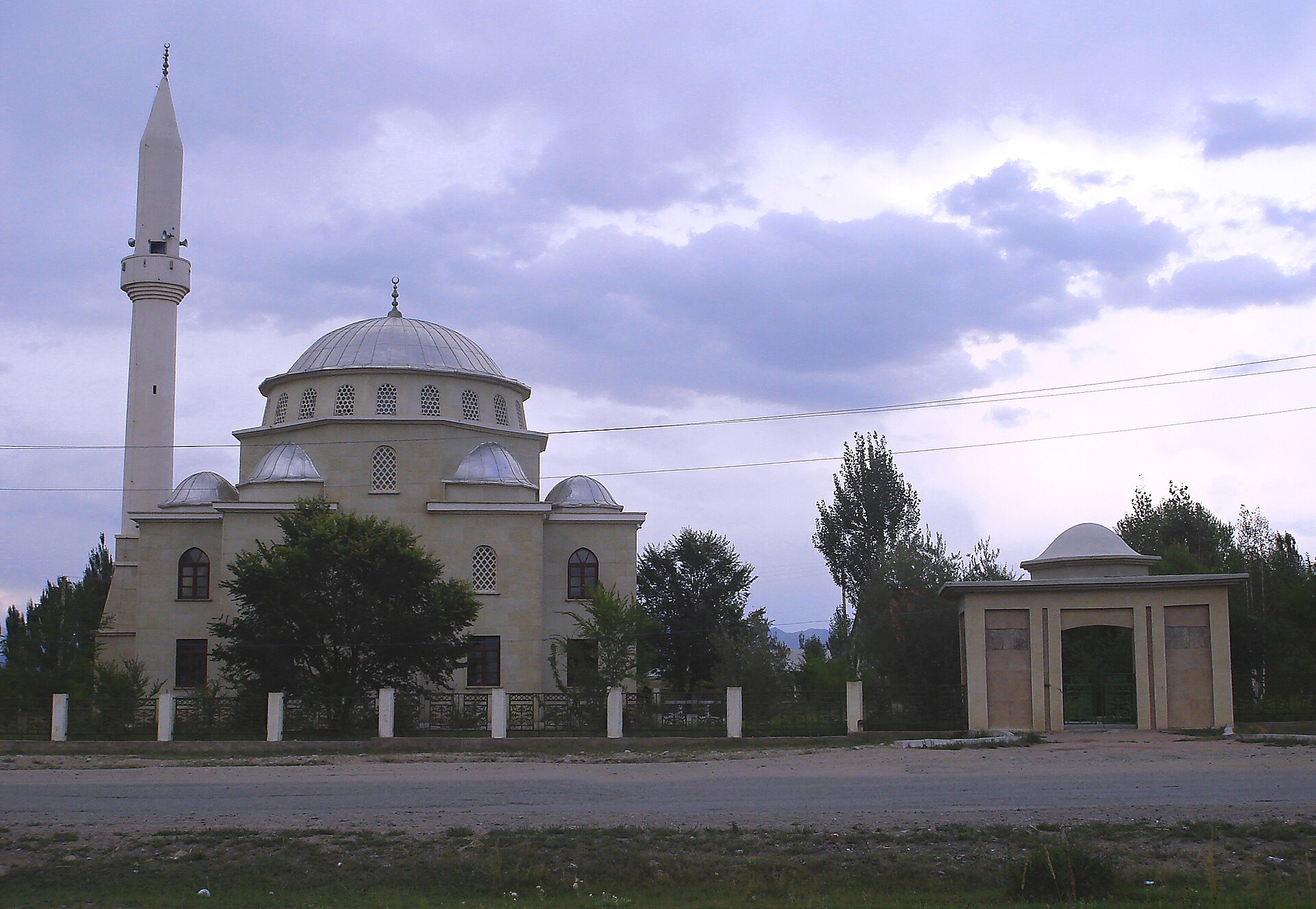
- Regional museum — Kochkor
Kochkor has a regional museum, a modest stop for background on the district before heading up to the pastures. Opening arrangements are not fixed in the sources used here, so ask at a homestay or tourism office on the day. It pairs well with a walk through the park and a visit to the bazaar.
Culture
Kochkor sits where Kyrgyz herding culture, Russian-era influence and Islam overlap. Many families in the district still live by the seasons, taking animals up to the summer pastures and spending the cold months lower down. The yurt, a felt-covered round tent, remains part of that rhythm and of the visitor experience. Russian is heard alongside Kyrgyz, a legacy of the Soviet period, and the town also has a few Dungan families, a Muslim community of Chinese origin whose cooking appears in the local food. Hospitality is central. Guests in a home are seated, fed and offered tea and bread before anything else is discussed, and homestays run by the community organisations are the easiest way to meet that tradition. A night in one tells more about the district than a day of sightseeing. Strangers will start conversations in the bazaar or on a bus, and a few words of Russian or Kyrgyz go a long way. Religion is practised quietly, and the new mosque is a place of worship rather than an attraction. Alcohol and loud behaviour draw more attention in a small town like this than in Bishkek. When invited into a home or yurt, take your shoes off at the door and accept the tea or bread offered, even if only a little.
What to wear
Traditional Kyrgyz dress in the Kochkor area centres on felt and quilting, suited to a herding life at altitude. Men wear the ak kalpak, a tall white felt hat with dark trim, mostly at festivals and by some older men, along with the chapan, a padded long coat. Married women traditionally wore the elechek, a large white headdress, and velvet dresses with embroidery; these now appear mainly on special occasions. Felt is also made into the patterned carpets seen in yurts and homestays. Day to day, people in town dress plainly: jeans, jackets, tracksuits and sturdy shoes, with some older men in dark suit jackets and some women in headscarves. Herders on the pastures wear heavy coats and boots whatever the date. A visitor should dress for altitude and changeable weather. Kochkor stands at 1,767 metres, so mornings and evenings are cool even in summer, and nights in a yurt on the high pastures can be cold. Pack layers, a warm hat, a sun hat and sunscreen. Long trousers are best for riding, with boots that grip. In town and at the mosque, covered shoulders and knees are respectful, and women should carry a light scarf for covering the head.
What to eat
- Ash Liyam Fu — A small Dungan-run eatery in the centre
A cold, spicy noodle dish from the Dungan community, served with a sharp, vinegary sauce. It is refreshing on a warm summer day and quite different from the usual Russian-Kyrgyz cafe menu. Dungan families in Kochkor are few, so look for a small family-run eatery in the centre. - Laghman — Cafes along the main road through the centre
Noodles served in a meaty, vegetable-rich sauce, a staple across Central Asia and an easy, filling meal after a day on the road. Portions are generous. Expect it on most cafe menus in town, often with bread on the side. - Beshbarmak — Homestay dinners; ask the host in advance
Boiled meat served over broad noodles with an onion broth, the traditional dish for guests and celebrations. Homestays often cook it for visitors if asked in advance, and it is eaten communally, with the host serving the best portions first. - Samsa — Stalls and bakeries around the centre
A baked pastry, usually filled with seasoned meat and onion, eaten hot and cheap as a snack between buses or before a morning trip. Fillings vary, so ask what is inside before buying if you avoid certain meats. - Bazaar bread, cheese and summer fruit — The food bazaar in the centre
The food bazaar sells fresh bread, cheese and, in summer, fruit and vegetables, which make an easy picnic for a pasture day. Wash everything in purified water before eating. Confections are also sold around the centre, and are a cheap treat for the road.
Plan it
Best time. June to September, when the high pastures are open; trips to Song Kul are generally practical from mid-May to mid-September, depending on the weather each day. Outside those months it is cold and the high trips are often not possible.
How long. 2–3
Getting there. Bishkek is the usual starting point, and Kochkor lies on the main road between Bishkek and At Bashi. There is no rail; buses, marshrutkas and shared taxis run along the route, with Balykchy on Lake Issyk-Kul another common starting point. The last leg is a shared taxi or marshrutka to the new bus station, close to the homestay offices.
Budget. low
Tips
- Compare the three community tourism organisations before booking a Song Kul trip; prices are open to negotiation, so ask what is included in writing.
- Keep a spare day in the plan, because weather decides whether the high trips run.
- Horse riding is a strain on the body, so consider a shorter ride or other transport if unused to it.
- Carry cash for the bazaar, homestays and small cafes, and wash fresh fruit in purified water.
- Bring warm layers: the town is at 1,767 metres and nights on the pastures are cold.
Etiquette
- Take off your shoes at the door of homes and yurts
- Accept tea or bread when offered as a sign of respect
- Cover shoulders and knees in town and ask before entering the mosque
Nearby
Sources
- Wikidata Q2349614 (CC0)
- Wikipedia: Kochkor (rev 1376424440) (CC BY-SA 4.0)
- Wikivoyage: Kochkor (rev 5407474) (CC BY-SA 4.0)
- Photo: Turkish-financed new mosque in Kochkor, Ondřej Žváček (CC BY 3.0)
- Photo: centro di Kočkor, Betta27 (CC BY-SA 2.5)
- Photo: A common sight in Kochkor, Peretz Partensky (CC BY-SA 2.0)
- Photo: CBT Homestay at Kochkor, Raki_Man (CC BY 3.0)
- Photo: Horses on winter pasture near Cholpon, Cosal (CC BY-SA 4.0)
- Photo: Kochkor and mountains 7:1, Thilver (CC BY-SA 4.0)
- Photo: Kochkor District, Kyrgyzstan (1), Talant Artelow (CC BY 3.0)
- Photo: Kochkor District, Kyrgyzstan (2), Talant Artelow (CC BY 3.0)


