Ketchikan
Ketchikan, United States
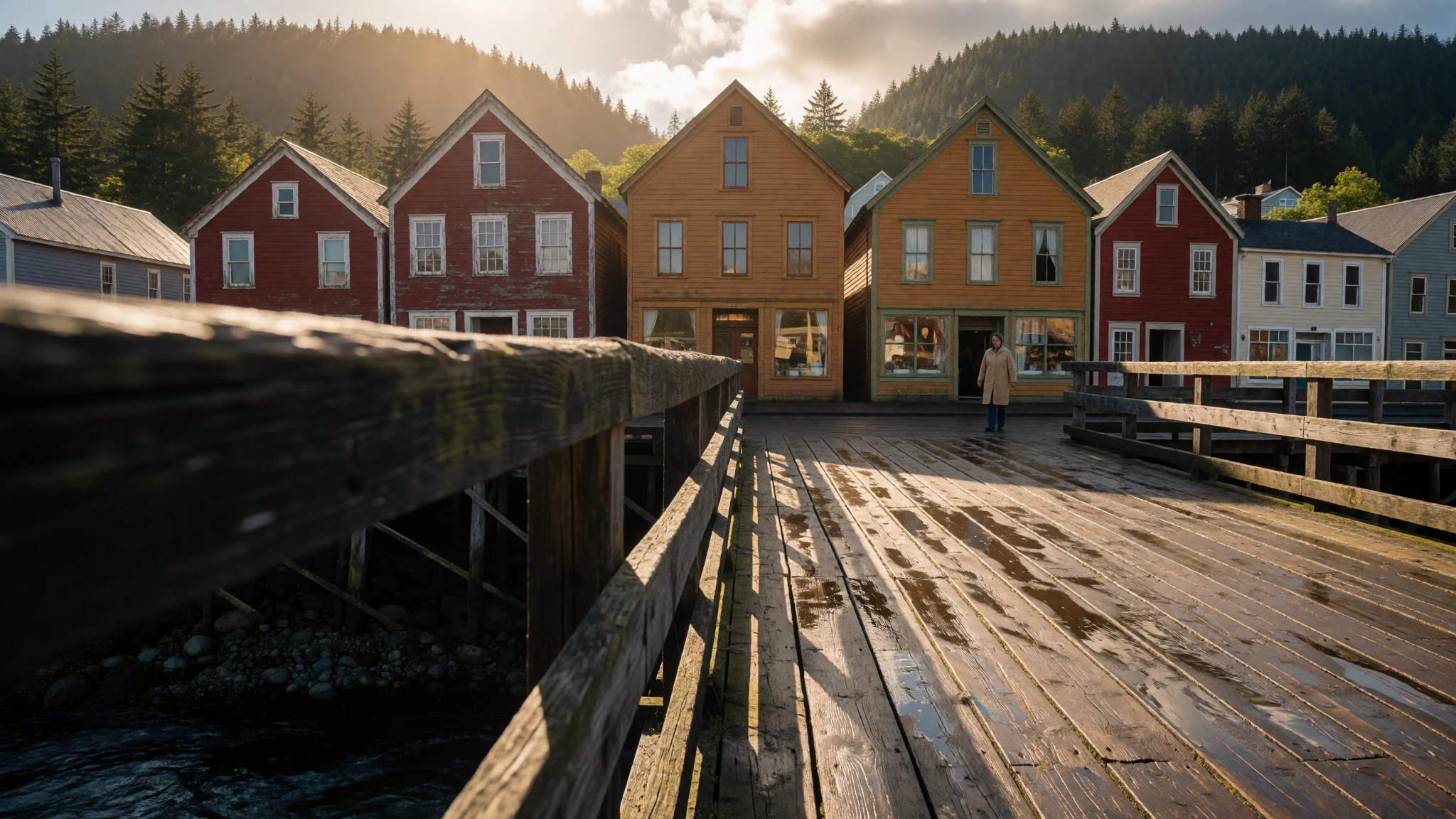
Ketchikan is a rain-soaked Alaskan waterfront town where Tlingit, Haida and Tsimshian totem poles, salmon and wild forest sit within a short walk or boat ride.
The place
Ketchikan sits on Revillagigedo Island in the far south-east of Alaska, the state's southeasternmost major settlement, with the Tongass Narrows running along its waterfront and forested hills rising almost straight from the shore. The city had 8,192 residents at the 2020 census. The borough around it is larger, with suburbs strung along the Tongass Highway and small communities that can mostly be reached only by water. Downtown is a National Historic Landmark District, and Ketchikan Creek runs through it before meeting the narrows. The creek gave the town its name, taken from a Tlingit word whose exact meaning is unclear. The town also stands where three Alaska Native cultures meet, Tlingit, Haida and Tsimshian, and their carving and dance traditions show up across town, most visibly in totem poles. Weather is the thing to plan around. The climate is maritime and mild, with heavy cloud, high humidity and rain in every month, which earns Ketchikan its nickname as the Rain Capital of Alaska. Winters are chilly rather than bitter and summers are cool. Clear, freezing spells come only when very cold air spills over the coastal mountains from the Yukon. On days when cruise ships are berthed, the streets near the docks fill with day visitors, and the town is calmer early in the morning and in the evening. Beyond the waterfront lie steep rainforest, deep channels, sheltered bays and hundreds of small islands, where whales, porpoises, eagles and bears are all seen from boats or along the shore. The town works best as a base for water and forest as much as for its own streets.
Its story
Ketchikan began as a place to catch fish. Long before any town existed, Tlingit families used the mouth of Ketchikan Creek as a summer fish camp. In 1885 an Oregon canning company sent Mike Martin north to judge whether the area was worth investing in. He stayed, opening a salting works and a general store in partnership with George Clark, a Nova Scotian who had worked at a cannery before fire destroyed it. The settlement was incorporated on 25 August 1900. Wikipedia describes it as the earliest surviving incorporated city in Alaska, since elsewhere in the state communities later merged or dissolved their city governments. Its position at the southern end of the Inside Passage, the sea route linking the Gulf of Alaska with Puget Sound, earned it the label "Alaska's first city", because northbound vessels reached it first. The island it stands on was named Revillagigedo in 1793 by Captain George Vancouver. A mission house built in 1905 became the Yates Memorial Hospital in 1909. By 2020, the former hospital was named one of America's most endangered historic places by the National Trust for Historic Preservation, a testament to the difficult efforts required to keep old structures standing. Even the town's name has more than one telling. Some accounts read the creek's Tlingit name as "the river belonging to Kitschk", while others give "Thundering Wings of an Eagle".
What to see
- Downtown historic district — Downtown waterfront
Ketchikan's compact downtown is a National Historic Landmark District, and it is easiest to understand on foot. Buildings climb the slope above the waterfront, and Ketchikan Creek cuts through the middle. Walk it early or late, when the cruise-day crowds are thinner and the light on the narrows is softer.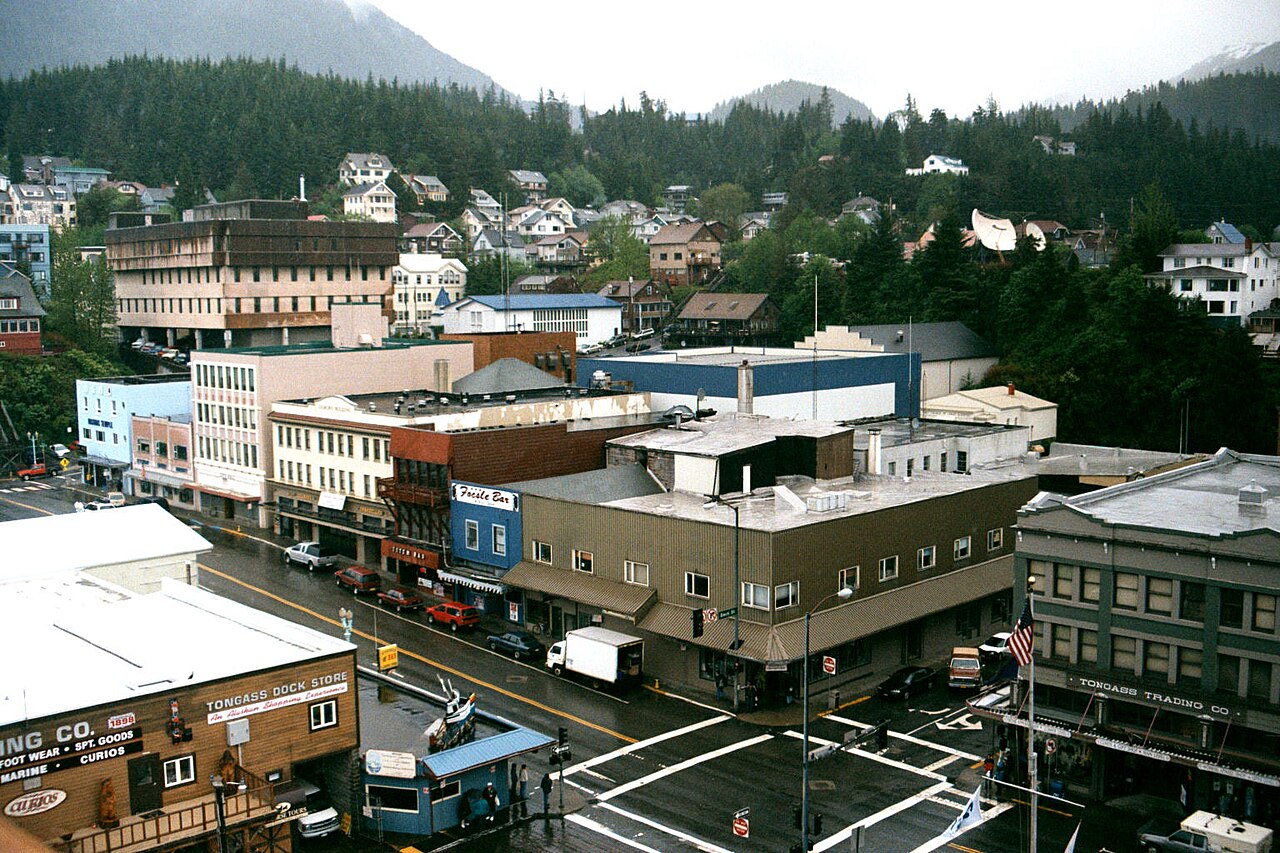
- Tongass Historical Museum — Downtown, near the creek
The town's historical museum is a sensible first stop for the fishing, canning and settlement story behind Ketchikan. It sits close to the creek and the Totem Heritage Centre, so the two pair easily into a slow, rain-proof morning. Check the official site for opening times before going. - Totem Heritage Centre — Close to Ketchikan Creek
This centre holds a collection of old totem poles in a protected setting, which suits a town where wet weather is the norm. It gives context on carving and the people behind it, and works well before seeing poles outdoors. Opening hours vary, so confirm with the city's website. - Southeast Alaska Discovery Centre — Downtown
Interpretive exhibits here explain the temperate rainforest that surrounds the town, along with the region's wildlife and Native cultures. It is a useful rainy-day stop and a good way to read the landscape before heading onto the water or into the trees. - Saxman Totem Park — Saxman, south of town
South of the centre, Saxman has a concentrated collection of totem poles in a village setting. It is worth going with a guide or at a cultural programme, since the poles carry family histories that a quick photograph will not explain. Treat it as a living community, not a backdrop. - Totem Bight State Historical Park — North of town, off the Tongass Highway
Set in forest north of town beside the water, this state park pairs carved poles with a clan house. It is a calmer, greener setting than the downtown, and a good reason to hire a car or join a tour for the drive along the Tongass Highway.
Culture
Ketchikan's culture rests on two things: Alaska Native heritage and a working-waterfront past. The town stands where the Tlingit, Haida and Tsimshian peoples meet, and the Tlingit name for the place is Kichx̱áan. Artistic and dance traditions from all three are visible across town, and totem poles are the clearest sign. Poles record lineage, stories and honours, so they are not simply decoration, and museums, cultural centres and Native-led programmes supply the context that a passing look cannot. The other thread is the working past: salmon fishing and canning, timber, and a waterfront that once had a lively red-light district, now remembered in the names and décor of a few eateries. The Great Alaskan Lumberjack Show turns the logging tradition into a performance, aimed squarely at visitors. Everyday life is practical and informal. People dress for rain, and talk readily about weather, fish and ferries. Residents are used to the summer rush from cruise ships, and conversation tends to go best away from the busiest stretch of waterfront and when nobody is in a hurry. Treat totem poles as cultural property: do not climb on or touch carved surfaces, and ask before photographing people, especially at dance or ceremonial events.
What to wear
Traditional dress in Ketchikan belongs to the Tlingit, Haida and Tsimshian peoples, and it is regalia rather than everyday clothing. Button blankets are wool robes decorated with clan crests in appliqué and mother-of-pearl buttons. Chilkat and ravenstail robes are woven from mountain goat wool and cedar bark, and woven hats are made from spruce root or cedar bark. These pieces are worn at ceremonies, dance gatherings and community celebrations, and many carry the crests of a family or clan. Day to day, Ketchikan dresses for rain. Waterproof jackets, fleeces, wool layers, jeans and sturdy boots are normal, and nobody pays much attention to style when the weather is wet. Working boats and fish processing keep rubber boots a common sight near the water. A visitor should plan around the climate: August averages about 15 °C, and rain falls in every month. Pack a proper waterproof shell and trousers, warm layers that dry quickly, a hat, and waterproof shoes with good grip, since boardwalks and steep streets get slippery. There is no strict modesty code, and no religious dress rules for ordinary sightseeing. At cultural events or in Native communities, neat, respectful clothing is a sensible choice.
What to eat
- Wild Alaskan salmon — Waterfront seafood restaurants near the docks
Salmon is the local staple and the reason the town exists. Look for it grilled, smoked or in chowder. Seafood eateries around the waterfront and cruise-dock area serve it fresh, and the quality depends on the season and the catch. - Halibut — Fish houses and casual eateries along the waterfront
Many fishermen prefer halibut for its lighter flavour. It usually arrives battered and fried with chips, or simply pan-seared. It makes a good counterpoint to salmon, and any waterfront fish house that serves it will tell you where it came from. - Fresh seafood plates — Eateries a few minutes' walk from the cruise docks
Beyond the two big fish, menus change with what boats land that week, so ask what came in recently. Chowder, crab and prawns turn up often. A short walk from the cruise docks, a plain seafood lunch beats most tourist fare. - Mexican and Italian dishes — Family-run restaurants in the downtown streets
A wide menu of mostly Mexican and Italian food is a local habit, and family-run Mexican places are well liked for chips, salsa and friendly service. It is a relief on a wet day when fish has begun to repeat. - Local take-out burgers — Take-out counters along the waterfront road
Fast food with a local twist is sold at small take-out counters opposite the water, just past the downtown tunnel. It is an easy cheap lunch between museums and totem parks, usually eaten out of the rain.
Plan it
Best time. May to August, when summers are mild and daylight is long, with August averaging about 15 °C. Expect rain in any month, since the town gets nearly 3,798 mm a year, falling more heavily in autumn and winter. January averages about 2 °C, and a rare freeze can arrive from the Yukon.
How long. 2–3
Getting there. Ketchikan is reached by sea or air. Alaska Marine Highway System ferries serve the town, and flights land at the airport on a neighbouring island, followed by a short ferry crossing to town. Cruise ships dock right at the waterfront.
Budget. mid
Tips
- Pack a proper waterproof shell and waterproof shoes, whatever the forecast says
- On cruise-ship days the waterfront is crowded, so go to museums and totem parks early or late
- Book boat trips, wildlife tours and ferry seats ahead for summer, and check the official site (https://www.ketchikan.gov/) for local information
- Allow extra time for the Tongass Highway sights, since Totem Bight and Saxman lie outside the downtown
Etiquette
- Keep your distance from bears, eagles and marine wildlife, and follow your guide's instructions
- Do not touch or climb totem poles, and ask before photographing people
Nearby
Sources
- Wikidata Q43981 (CC0)
- Wikipedia: Ketchikan, Alaska (rev 1383214468) (CC BY-SA 4.0)
- Wikivoyage: Ketchikan (rev 5407026) (CC BY-SA 4.0)
- Downtown Ketchikan Alaska.jpg, Unknown author (CC BY-SA 2.0)
- Ketchikan, Alaska, United States, Diego Delso (CC BY-SA 4.0)
- Downtown Ketchikan, Thomson M (CC BY 3.0)
- Downtown Ketchikan (1), Thomson M (CC BY 3.0)
- The Burkhart-Dibrell House, Nv8200pa (CC BY 4.0)
- Ketchikan City Hall, Jay Galvin (CC BY 2.5)
- Ketchikan sign, Notyourbroom (CC BY 3.0)
- City of Ketchikan in Ketchikan Gateway Borough, Fireop (CC BY 4.0)


Wildlife
- Bald eagle (animal)
Picture a big bird of prey that fishes by the sea and builds its nest in an ancient tree: that is the bald eagle. In Ketchikan, eagles are seen from boats or along the shore, among the rainforest, deep channels, bays and islands. Watch quietly from far enough away that the bird carries on as normal, ideally with a guide who knows the best places. Never offer food, since eagles find plenty for themselves.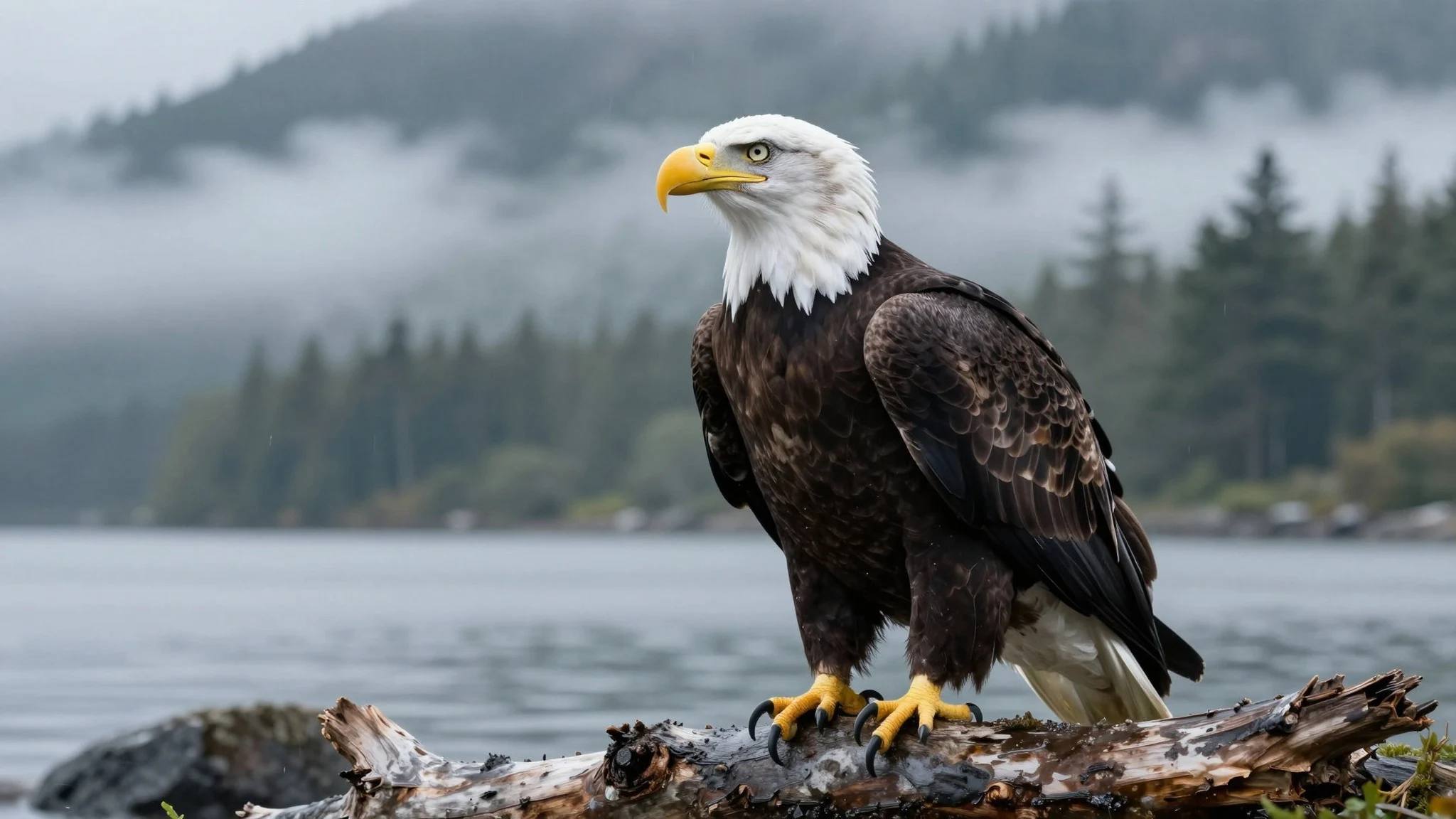
- Brown bear (animal)
The brown bear is a huge bear with a muscly shoulder hump and wide paws made for digging, and its coat can be creamy, reddish or dark brown. Around Ketchikan, bears may be seen from boats or along the shore, where steep rainforest drops to sheltered bays and channels. Watch from a safe distance, speak softly and go with a knowledgeable guide. Never feed a bear, because wild bears must stay wild and wary of people.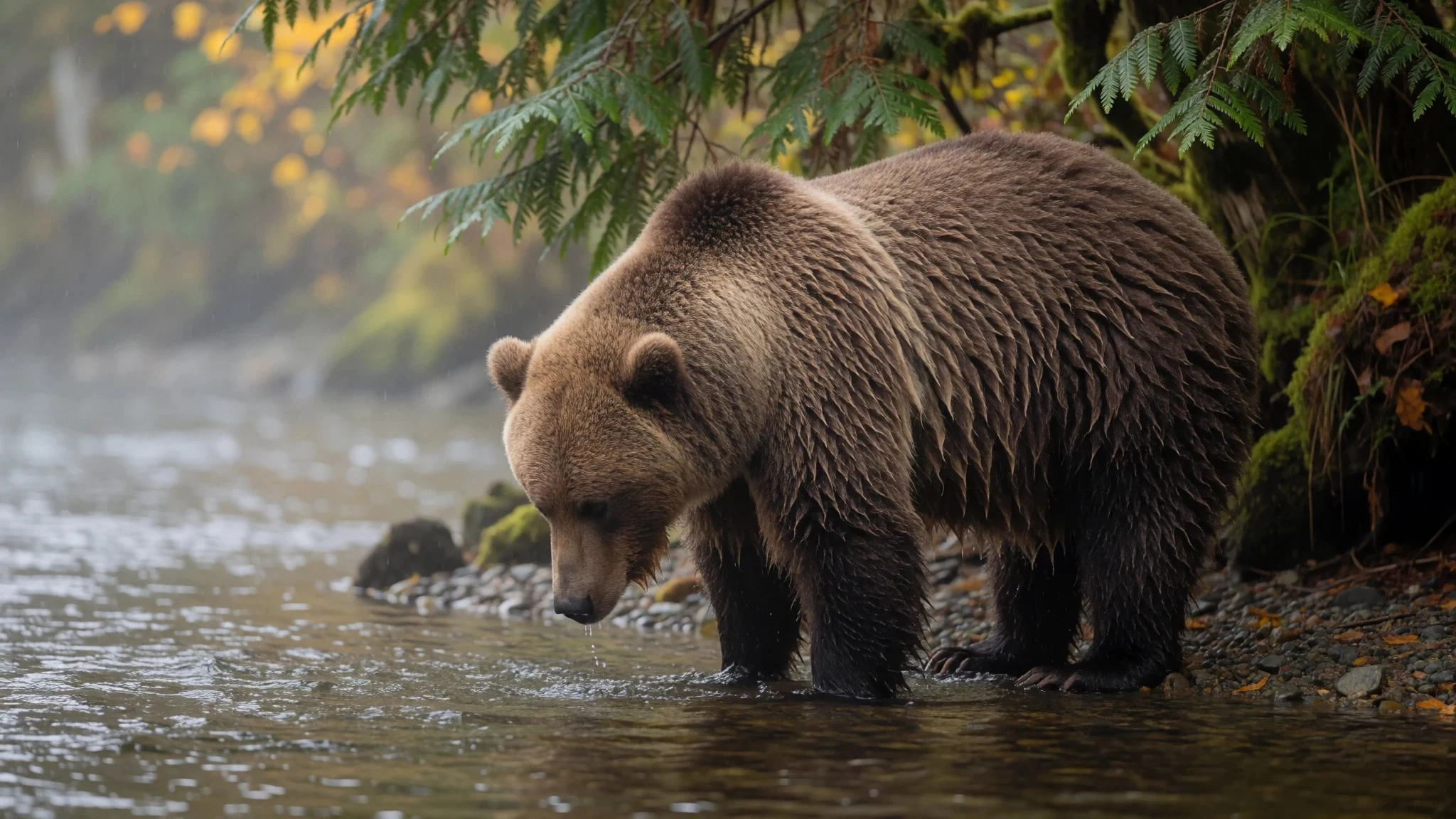
- Bald eagle (bird)
Picture a big bird of prey that fishes by the sea and builds its nest in an ancient tree: that is the bald eagle. In Ketchikan, eagles are seen from boats or along the shore, among the rainforest, deep channels, bays and islands. Watch quietly from far enough away that the bird carries on as normal, ideally with a guide who knows the best places. Never offer food, since eagles find plenty for themselves.