Kealakekua Bay
Kealakekua Bay, United States
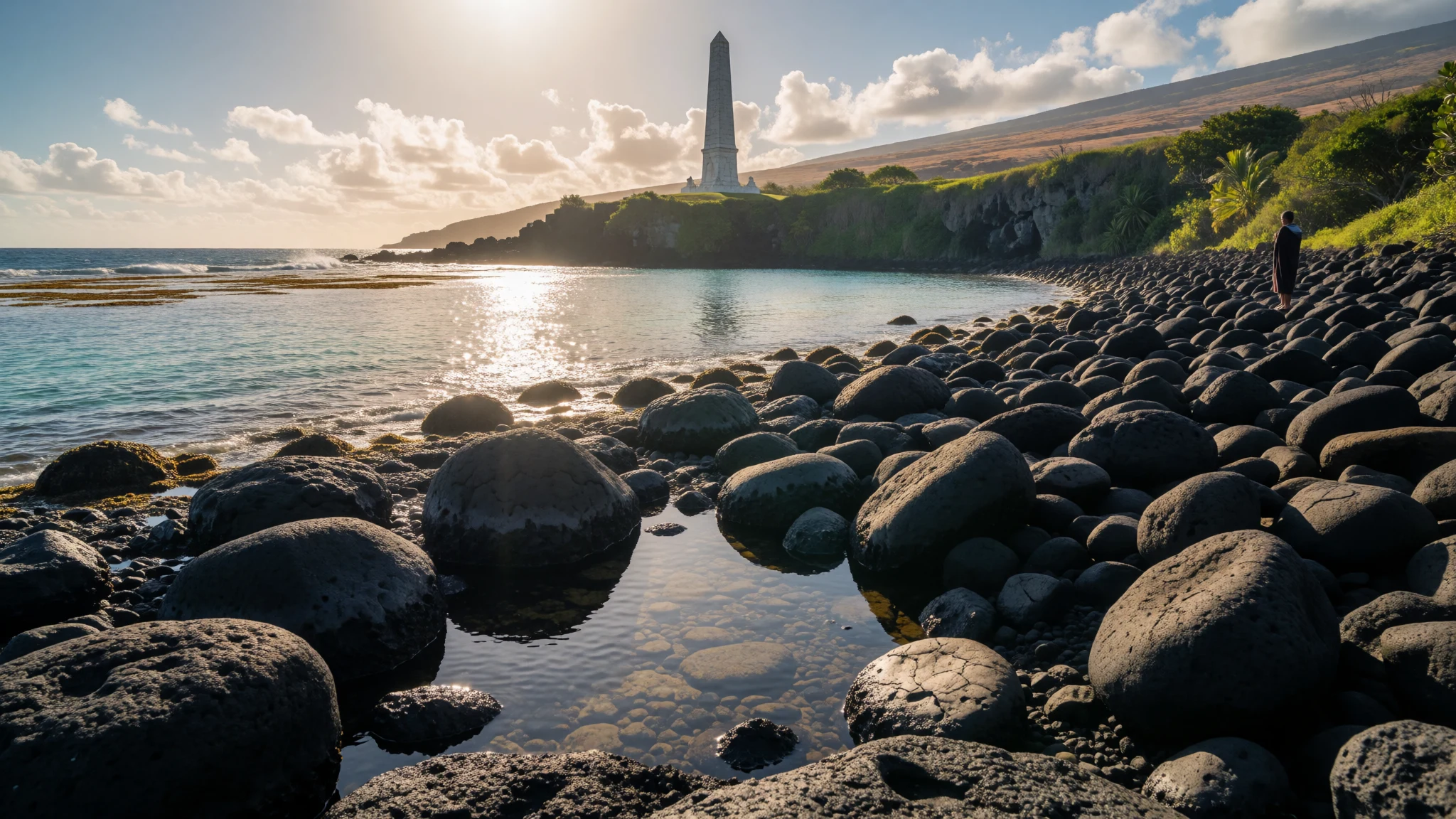
Kealakekua Bay is a calm Kona-coast inlet where clear water, sacred cliffs and the spot of Captain Cook's death share one shoreline.
The place
Kealakekua Bay sits on the Kona coast of the island of Hawaiʻi, a short drive south of Kailua-Kona, where lava slopes fall away to a dark shoreline. The bay is a sheltered curve of water backed by steep cliffs, and the calm conditions and reef close to the shore have made it a favourite for snorkelling, kayaking and diving. It is also a marine life conservation district, so the rules on touching, feeding or taking anything from the water are stricter than at an ordinary beach. People lived around the bay for centuries before outsiders arrived, and the shoreline is crowded with the remains of that life: temple platforms, house terraces, old trails and burial cliffs. In 1973 the whole area was entered on the National Register of Historic Places as a historical district. The north side holds the old village site of Kaʻawaloa and a white monument to Captain Cook. The south side has Hikiau Heiau and a small landing. There is no resort town here. The settlements are small, the road down to the water is narrow, and the bay fills up by mid-morning when tour boats and kayakers arrive together. Early starts matter, because the water is stillest and clearest before the wind and the crowds build. Shade on the north shore is thin, the sun is strong, and the nearest shops are back up the hill, so the bay rewards a little planning more than most beaches on the island.
Its story
Kealakekua Bay has been a place of settlement and ceremony for well over a thousand years. Its Hawaiian name is usually explained as 'the god's pathway', and the shoreline bears that out. At the southern end stands Hikiau Heiau, a luakini, the kind of temple where major state rituals were held; Captain Cook noted its huge stone platform when he saw it. Above the water rises a sheer cliff, Ka-pali-poko-a-Manuahi, where Hawaiian royalty were laid to rest with their attendants and funerary goods. Its north-western stretch is named for Keōua Nui, remembered as a 'father of kings' because so many later rulers descended from him. The cliff is hard to climb, and that difficulty kept the exact burial places secret, which is why it is looked at from a distance and never explored. On the north shore the village of Kaʻawaloa held royal residences and the Puhina O Lono Heiau. Its name points to kava, a plant used medicinally and in ritual. The British navigator James Cook brought his ships into the bay in 1779 and was killed on the north shore during a confrontation with Hawaiians. A white monument now marks the area. Missionaries and artists sketched the bay through the following century, so its appearance is unusually well recorded, and old engravings of the temple and village can still be compared with what survives.
What to see
- The bay itself, by kayak or snorkel — Kealakekua Bay Marine Life Conservation District
The water of Kealakekua Bay is the main attraction, and it is best met early. Snorkellers drift over coral and reef fish near the north shore, while kayakers cross from the south landing. Calm mornings give the clearest view. Use a permitted operator or check current state rules before launching your own kayak.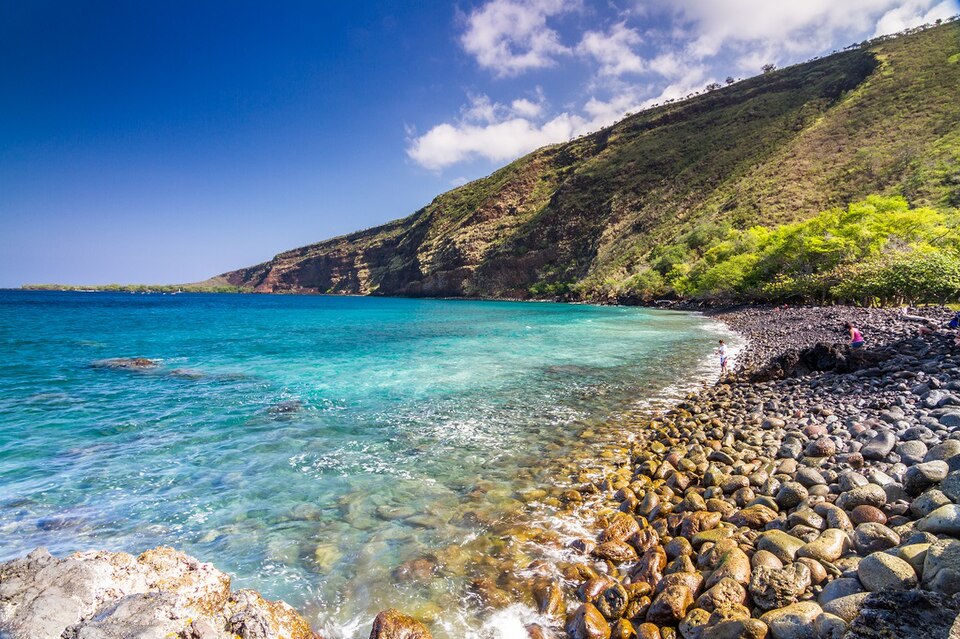
- Captain Cook Monument — Kaʻawaloa, north shore
A plain white obelisk stands at Kaʻawaloa on the north shore, close to where Cook died. Reaching it by land means a long, hot, exposed trail, and most visitors see it from the water instead. The monument is a landmark more than a spectacle, but it explains why ships once anchored here.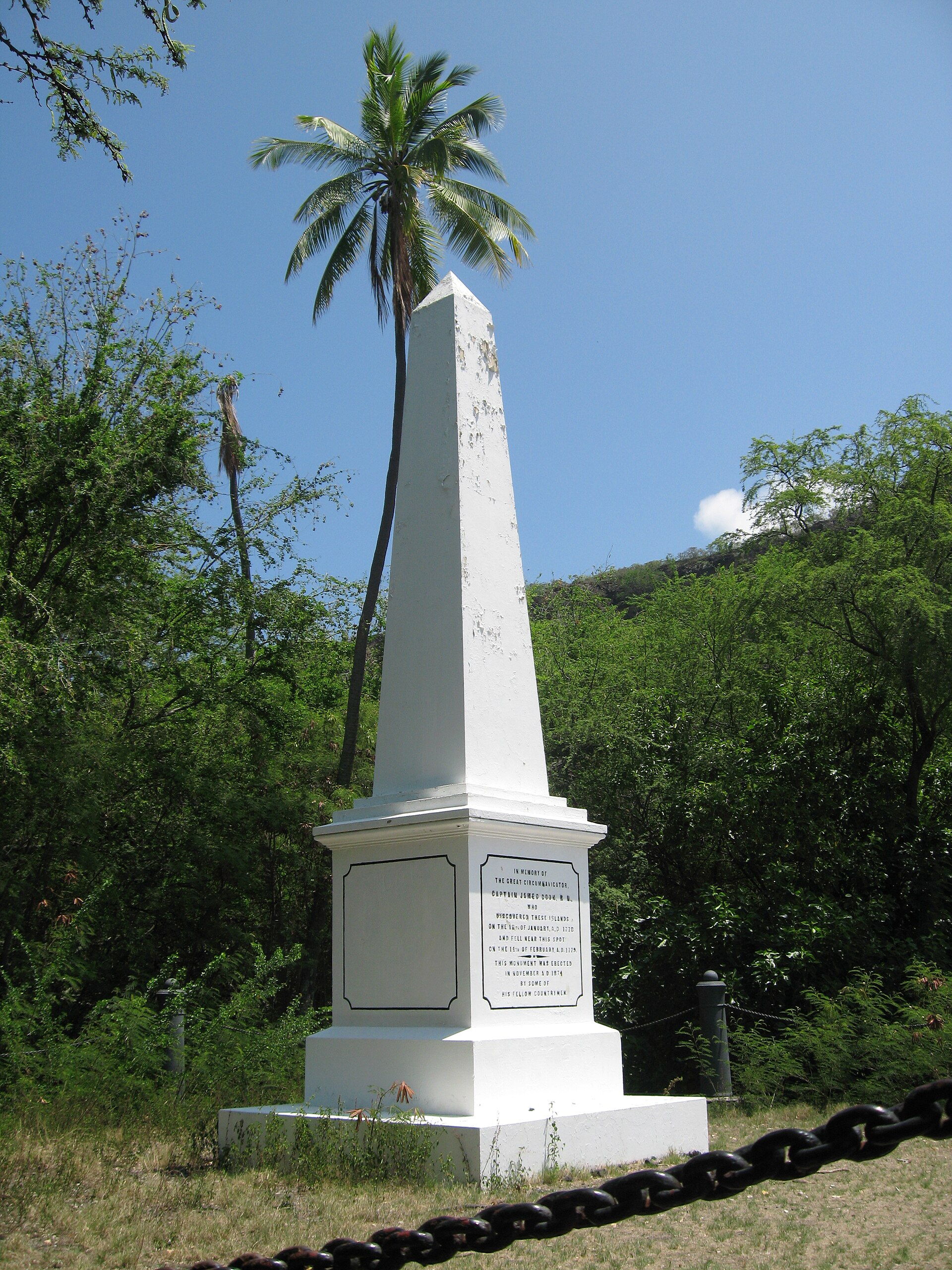
- Hikiau Heiau — South end of the bay
At the south end of the bay, a large stone platform marks one of the old luakini temples. Only the foundation remains, set among trees beside the shore, but it gives a sense of the scale of ceremony held here. Read the signs, stay on the paths and treat it as sacred ground.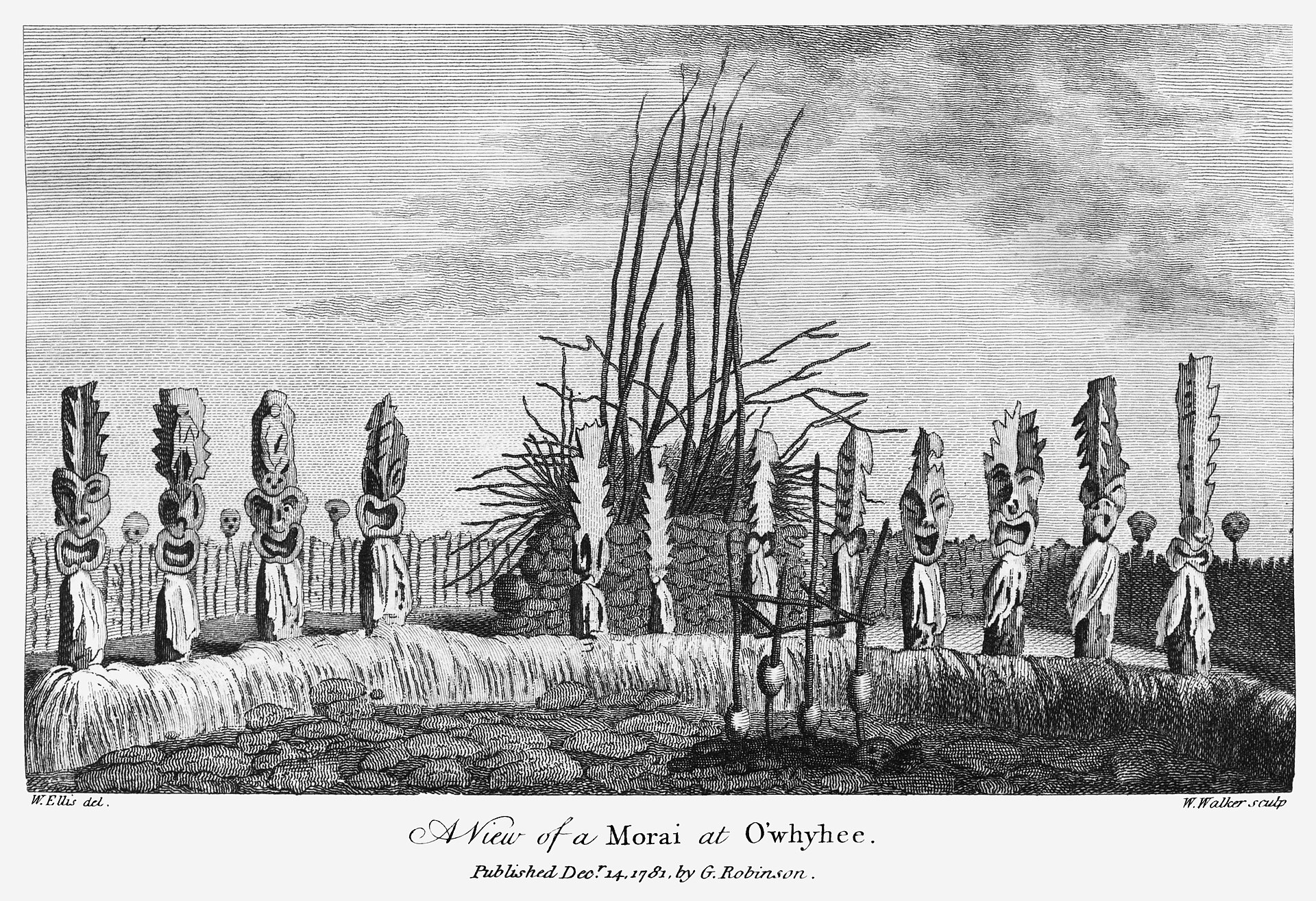
- Kaʻawaloa village site — North shore
The flat land at the north end of the bay was once a village with royal residences and the Puhina O Lono Heiau. Little stands now beyond walls, terraces and low platforms, but John Webber's 1779 painting shows how busy it looked. It is a good place to picture the bay before the monument.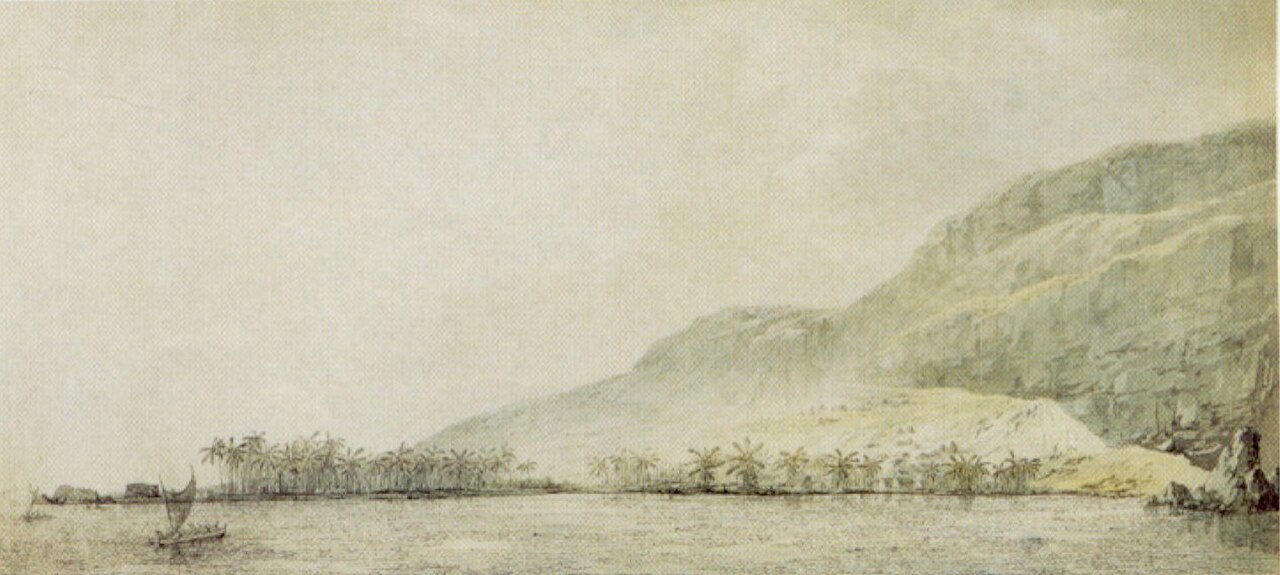
- The burial cliffs — Cliffs above the bay
The steep cliff face above the bay, Ka-pali-poko-a-Manuahi, holds the graves of chiefs and their companions, and its north-western part is named for Keōua Nui. The burial places are deliberately hidden, so the sight is simply of tall rock above the water. Look quietly from a boat or kayak and do not try to climb.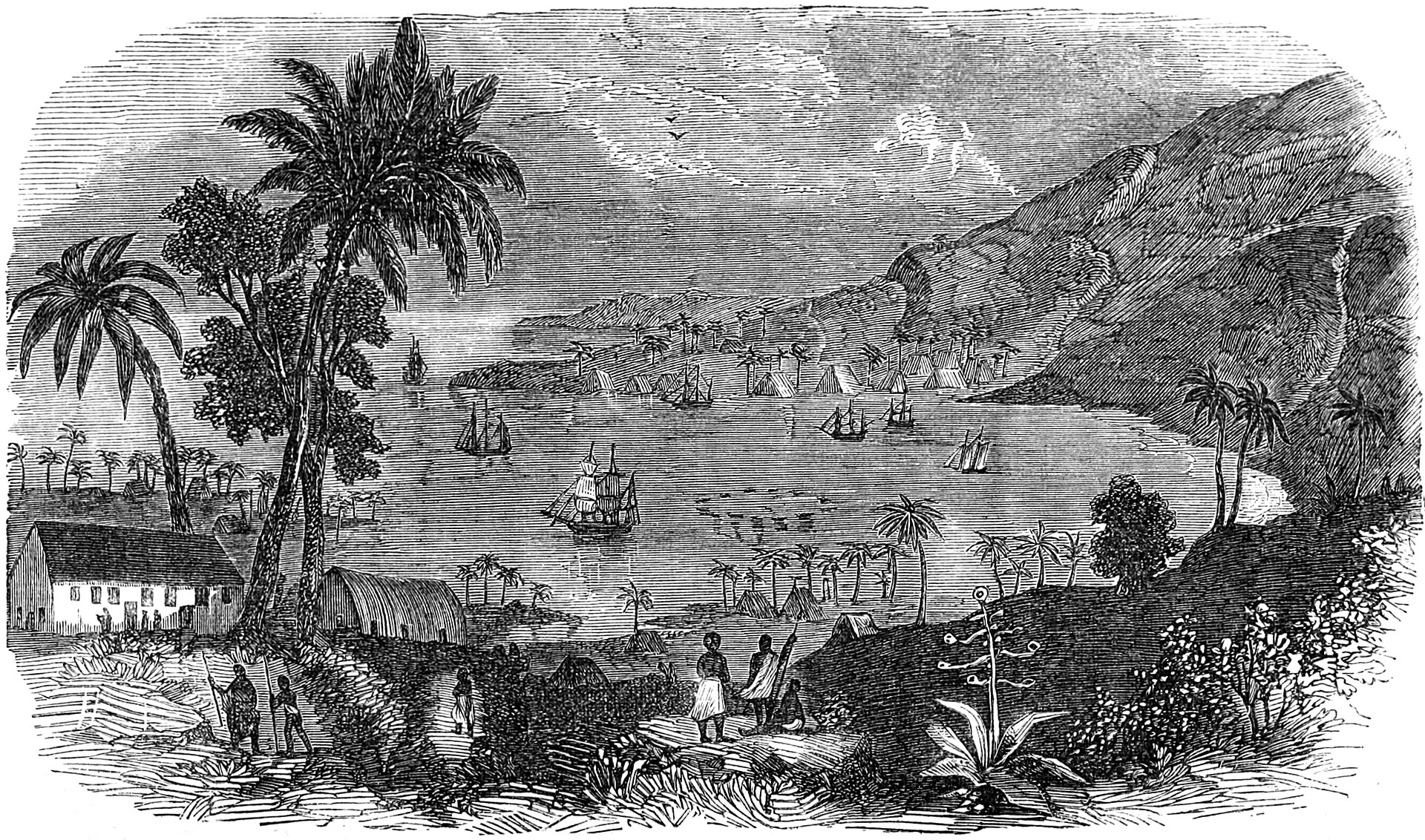
Culture
Kealakekua Bay carries living Hawaiian heritage, not just a history lesson. Native Hawaiians, and the large communities of Asian descent who settled in the islands, shape local manners alongside the general American norms most visitors will recognise. Homes are the clearest example: shoes come off at the door, and guests leave sandals on the porch or just inside. Around the bay the more important matter is the heiau, the temples of the old Hawaiian religion. Some have become tourist stops, and what a visitor sees there only scratches the surface of Hawaiian culture, but they remain sacred places and deserve the manner one would use in any church, mosque or temple. The cliffs above the water are a burial ground for chiefs and their companions, which is one reason the bay is more than a snorkelling spot. Names matter too. The glottal stops in words such as Kaʻawaloa and Keōua show how they are pronounced, and local people notice when visitors make the effort. Conversations about Captain Cook can be sensitive, because he is remembered differently on the island than in Britain. Do not climb on temple walls or platforms, do not move or stack stones, and keep to the marked paths at Hikiau Heiau.
What to wear
Kealakekua Bay lies in a culture with its own distinctive textiles. Traditional Hawaiian dress was made from kapa, a bark cloth beaten from the paper mulberry (wauke) and printed with patterns. Men wore a malo, a loincloth, and a kīhei, a cloth knotted over one shoulder, while women wore a pāʻū, a wrapped skirt. Chiefs had feather capes and helmets, and garlands (lei) of flowers, leaves and shells were worn then as now for honour and welcome. Missionaries in the nineteenth century introduced the loose holokū gown, which in time shaped local formal wear, and the aloha shirt grew from the same mix of cloth and influences. Today people on the Kona coast mostly dress for heat and water: shorts, cotton shirts, rash vests, caps and rubber sandals, which locals call slippers. Aloha shirts and floral dresses come out for weddings and celebrations. A visitor should dress for sun and sea more than for ceremony. Bring a long-sleeved rash vest, a wide-brimmed hat, reef-safe sunscreen and water shoes for rocky entries. Closed shoes are better for any walk down to Kaʻawaloa, where the ground is hot and uneven. Cover up a little more than on the beach when visiting temple sites.
What to eat
- Plate lunch — Lunch wagons and small eateries along the Kona coast road
Local takeaway at its most reliable: grilled fish, chicken or pork on a tray with rice and a spoonful of macaroni salad. It is filling, good value and easy to eat on the shore after a morning in the water. - Poke — Fish counters at supermarkets and markets in Kailua-Kona
Cubes of raw fish, usually tuna, dressed with soy, sesame, onion and seaweed. The flavours change from counter to counter. It keeps well in a cool bag, which suits a day at the bay. - Kona coffee — Farms and roasteries in the uplands above the bay
Coffee is grown on the slopes above the Kona coast, and the farms around the nearby upland villages offer free tastings. Expect a smooth, fairly mild cup. Buying direct from a farm is better than choosing a blend at the airport. - Fresh tropical fruit — Farmers' markets and roadside stands on the Kona side
Papaya, mango, bananas, guavas and pineapple appear at roadside stands and market tables. Some of the fruit in shops is imported, so ask which is grown locally. A ripe papaya with lime makes a very good breakfast. - Shave ice — Small shops and stalls in Kailua-Kona and Captain Cook town
Fine ice piled into a cone and soaked in fruit syrups, sometimes over a scoop of ice cream or sweet beans. It is a Hawaiian treat shaped by Japanese influence, and welcome after a hot trail.
Plan it
Best time. April–May and September–October usually give calm water, sun and fewer visitors than the school-holiday peaks. Mornings are clearest all year, and winter swells can roughen the bay, so check conditions before booking a trip.
How long. 1–2
Getting there. Fly to Kona International Airport at Keāhole on the island of Hawaiʻi, then drive south through Kailua-Kona and up to the town of Captain Cook. From there a narrow, steep road runs down to the south landing at the bay. Public transport is very limited, so a hire car or an organised tour is the practical choice. Foreign visitors follow general US entry rules and must complete Hawaii's online agricultural declaration before arrival.
Budget. mid
Tips
- Be on the water early, before the wind picks up and the tour boats arrive
- Book kayak or boat trips ahead with a permitted operator and check the state park rules on landing
- Carry plenty of drinking water, as there is little shade and no shop near the north shore
- Use reef-safe sunscreen and a long-sleeved rash vest to protect both skin and coral
- Bring a card and some cash, since small stops along the coast road may not take cards
Etiquette
- Stay off heiau walls and platforms and do not move stones
- Keep a respectful distance from the burial cliffs and do not try to climb them
- Do not touch, feed or stand on the coral and sea life
Nearby
Sources
- Wikidata Q2879655 (CC0)
- Wikipedia — Kealakekua Bay (rev 1373467004) (CC BY-SA 4.0)
- Wikivoyage — Hawaii (rev 5383942) (CC BY-SA 4.0)
- Kealakekua Bay in the morning — Nnachappa64 (CC BY-SA 4.0)
- Na mokupuni o Hawaii nei — Simona P. Kalama, Lahainaluna Seminary (Public domain)
- Kealakekua Bay and the Village Kowroaa, 1779 — John Webber (Public domain)
- Kealakekua Bay heiau illustration — William Wade Ellis (Public domain)
- Priests traveling across Kealakekua Bay for first contact rituals — User:Makthorpe (Public domain)
- Kealakekua Bay, by Rufus Anderson (Public domain)
- Prosopis pallida, Kaawaloa — Forest & Kim Starr (CC BY 3.0)
- Cook Monument, Kealakekua — Surfsupusa at en.wikipedia (Public domain)


