Katmai National Park
Katmai National Park, United States
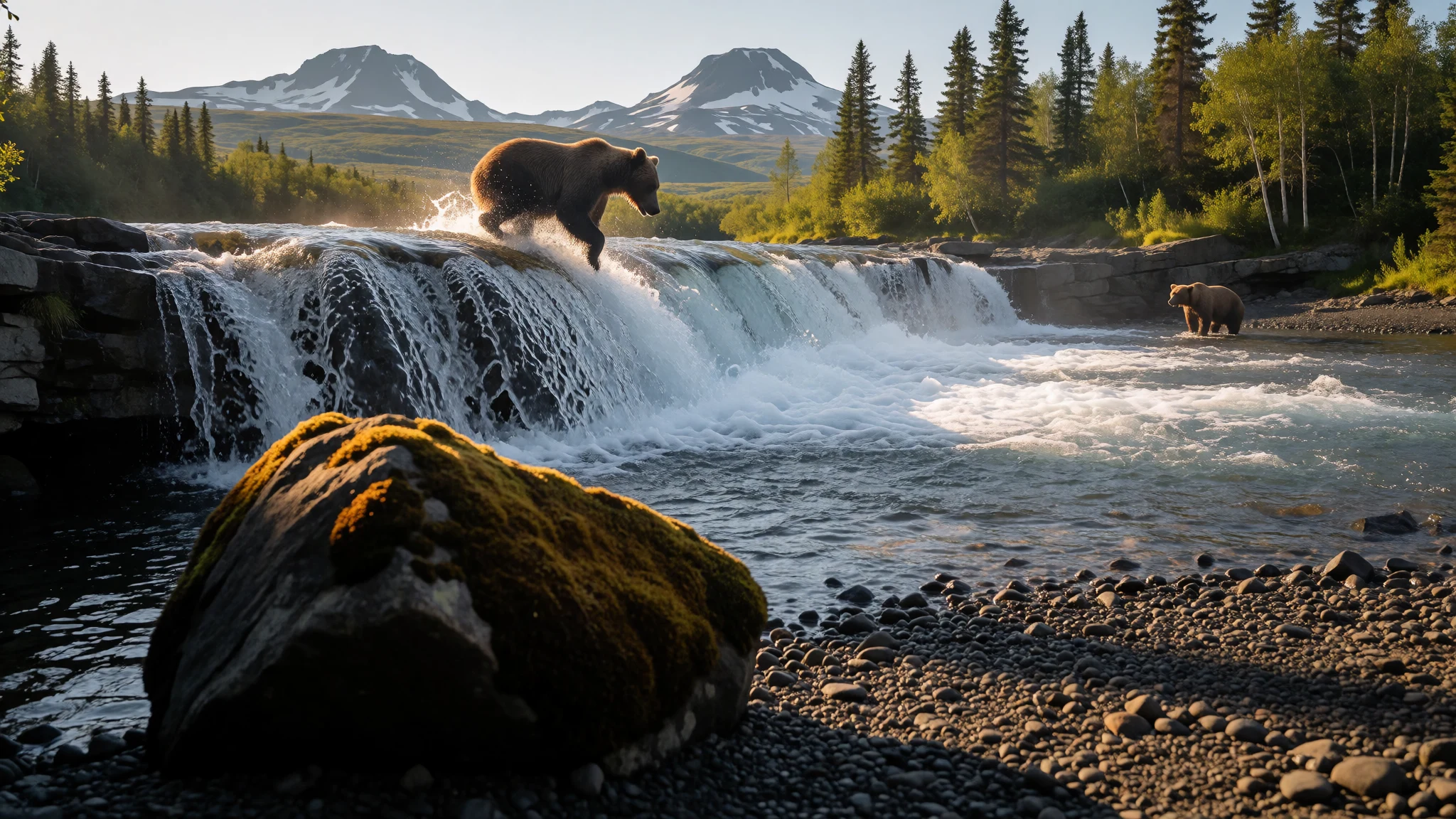
Katmai National Park is a roadless Alaskan wilderness where brown bears fish for salmon beside a valley still marked by a huge volcanic eruption.
The place
Katmai National Park and Preserve sits on the Pacific side of the Alaska Peninsula in south-west Alaska, facing Kodiak Island across the Shelikof Strait. It became a national park and preserve in 1980, and most of it is managed as designated wilderness. No roads lead in from outside, so people arrive by small plane or boat. The park takes its name from Mount Katmai, a stratovolcano at its heart.
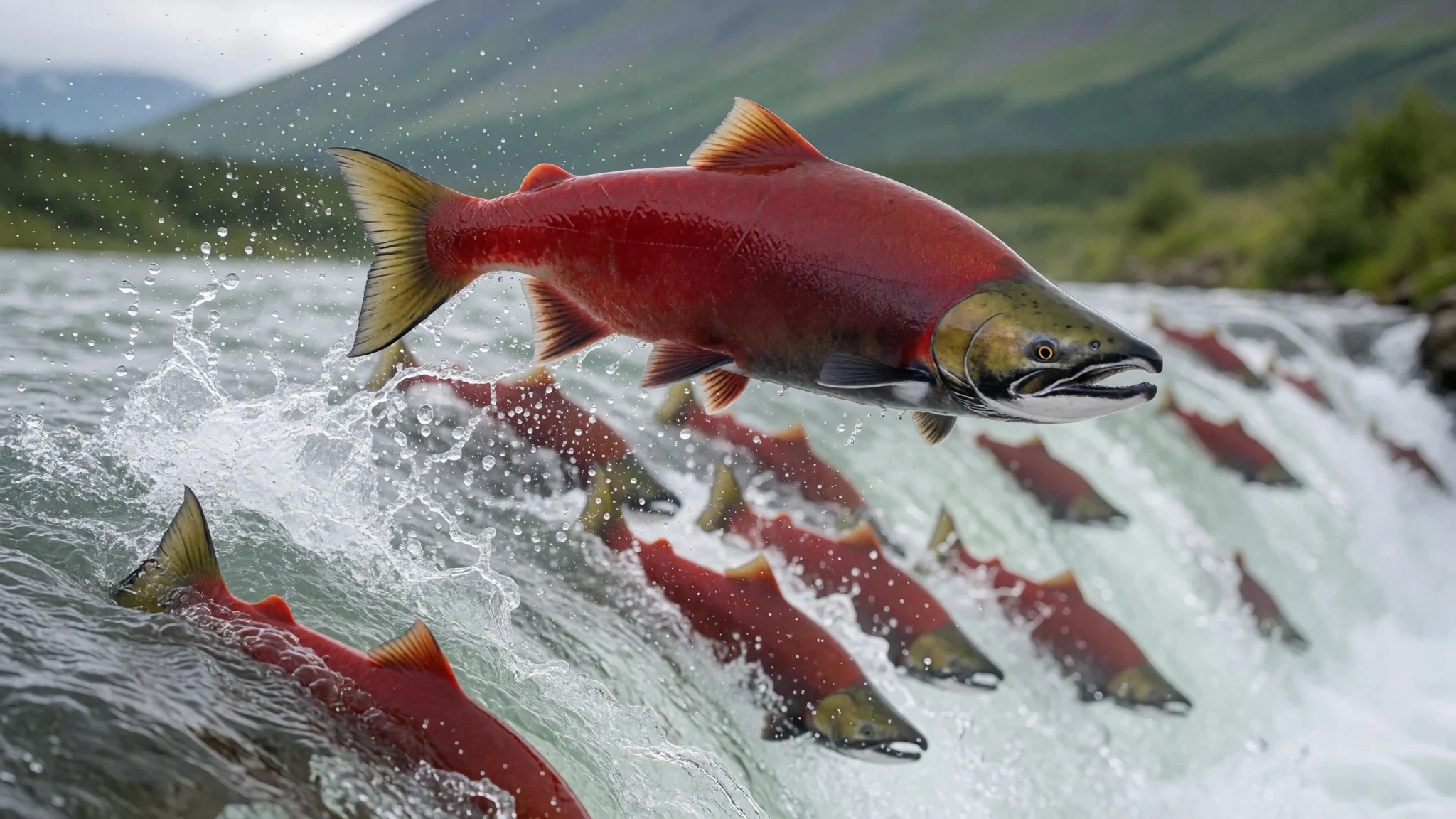
The landscape falls into three bands. The coast is a ragged line of bays, beaches and tidal flats where bears graze on sedges and dig for clams. Behind it runs the Aleutian Range, a chain of volcanic mountains, several of them active in the modern era. Further west the ground flattens into big lakes that drain towards Bristol Bay, the route sockeye salmon take each summer. Those fish explain why the bears gather, and the bears explain why most visitors come.
The second draw is volcanic. The 1912 eruption of Novarupta left a valley buried in ash, and the scar is still plain to read from the ground. The park's administrative base is the small town of King Salmon, reached by scheduled flight from Anchorage, and from there float planes and boats fan out to the lodges and camps.
Weather decides everything. Fog and wind can ground small aircraft for a day or more, so sensible trips carry slack. Summer is short, cool rather than warm, and often damp. Costs run high, mostly because everything arrives by air.
Its story
Katmai National Park holds a human story far older than its protected status. Stone tools and other artefacts near the old Katmai village on the south coast show that people lived along this shore about 6,000 years ago, and finds around Amalik Bay push the record back beyond 7,000 years. Brooks Camp, beside the salmon river, is itself an archaeological site and is recognised as a National Historic Landmark.
Russian fur traders were the first Europeans to appear in numbers. They met the Aglegmuit on the Bristol Bay side of the peninsula and the Koniag on the Shelikof side. Katmai Village was the one place in the park where outsiders settled for any length of time, and even there they stayed few. A scattering of other villages grew up later in the nineteenth century, some inland and some on the coast.
In June 1912 Novarupta erupted and changed the map. Ash and pumice poured down a valley and filled it to a great depth, and villagers at the mouth of the Savonoski River left for good. Steam rose from countless vents in the new deposit for years afterwards, which gave the Valley of Ten Thousand Smokes its name.
The area was set aside as a national monument in 1918 to protect that volcanic landscape. For decades it stayed undeveloped and almost unvisited. Interest grew in the 1950s as people noticed the salmon runs and the bears that feed on them, and a series of boundary expansions followed. The current national park and preserve took their official shape in 1980 through the Alaska National Interest Lands Conservation Act.
What to see
- Valley of Ten Thousand Smokes — Southern interior of the park
The ash-filled valley left by the 1912 Novarupta eruption is the park's volcanic showpiece. Grey and ochre ground stretches towards the mountains, cut by streams that have carved narrow canyons through the deposit. The steam has long since faded, but the scale is still hard to take in. Access is by guided trip from Brooks Camp, weather permitting.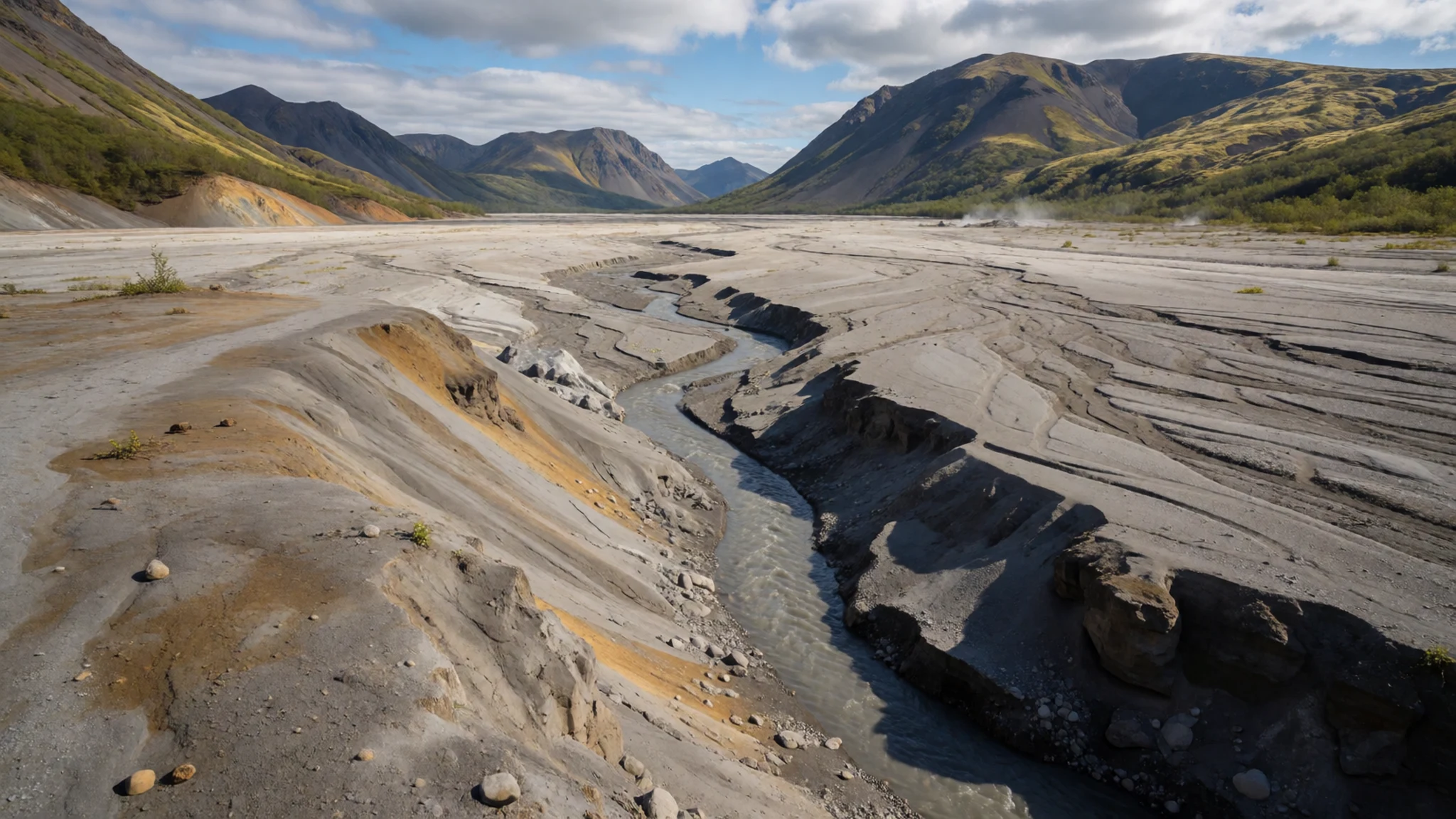
- Brooks Falls and Brooks Camp — Brooks River, Naknek Lake
Brooks Falls is the classic bear-watching spot. When sockeye salmon run upstream, bears stand at the lip of the falls and catch fish out of the air. Raised viewing platforms keep people and bears apart, and rangers manage the numbers on busy days. Expect queues for the best places on the main platform.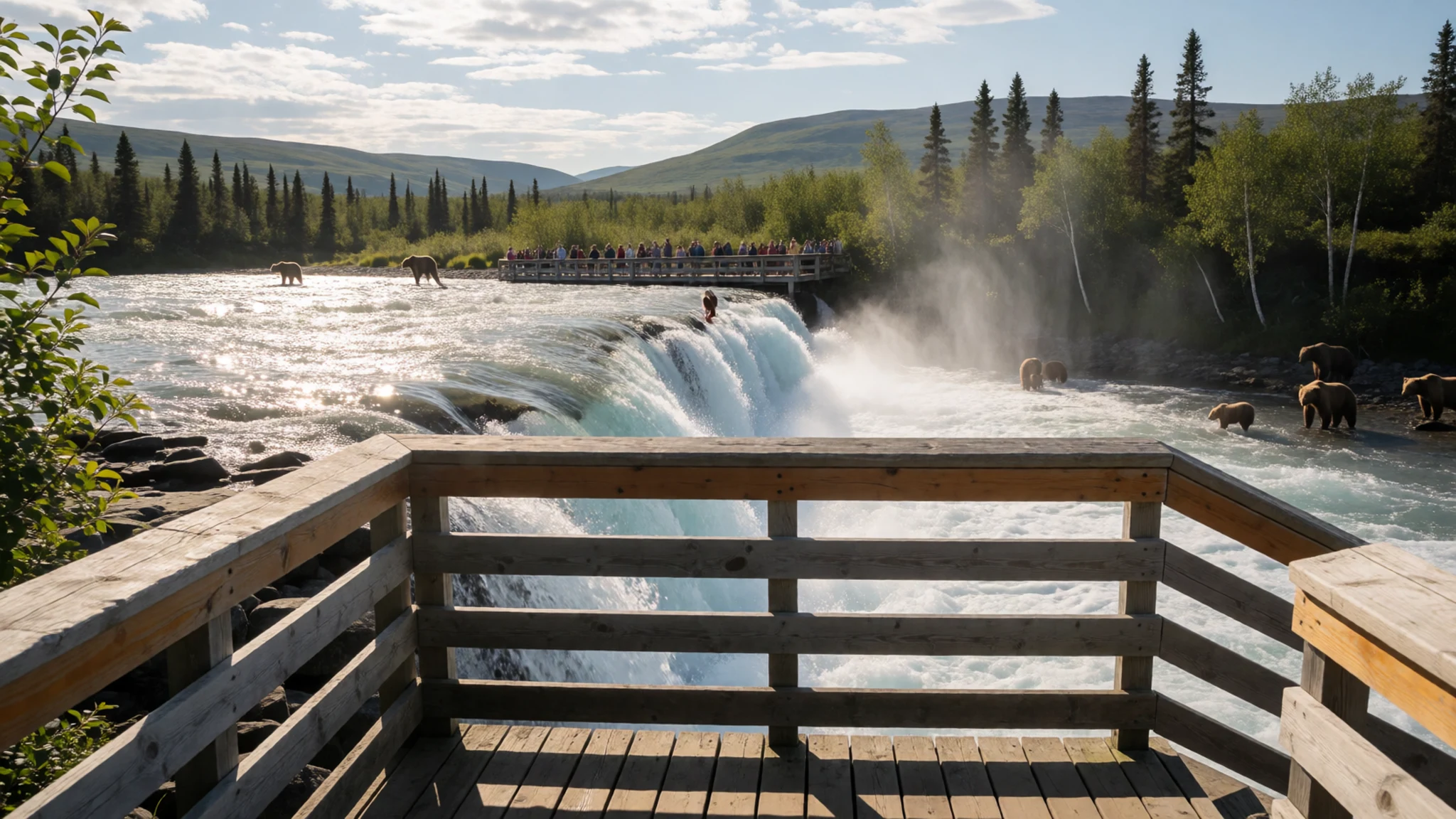
- Hallo Bay — Pacific coast
Hallo Bay offers a quieter kind of bear viewing on the Pacific coast. Bears wander the sedge meadows and beaches while visitors watch from a respectful distance with a guide. It suits those who want open coastal scenery rather than a crowded platform, though it needs a chartered flight and good weather.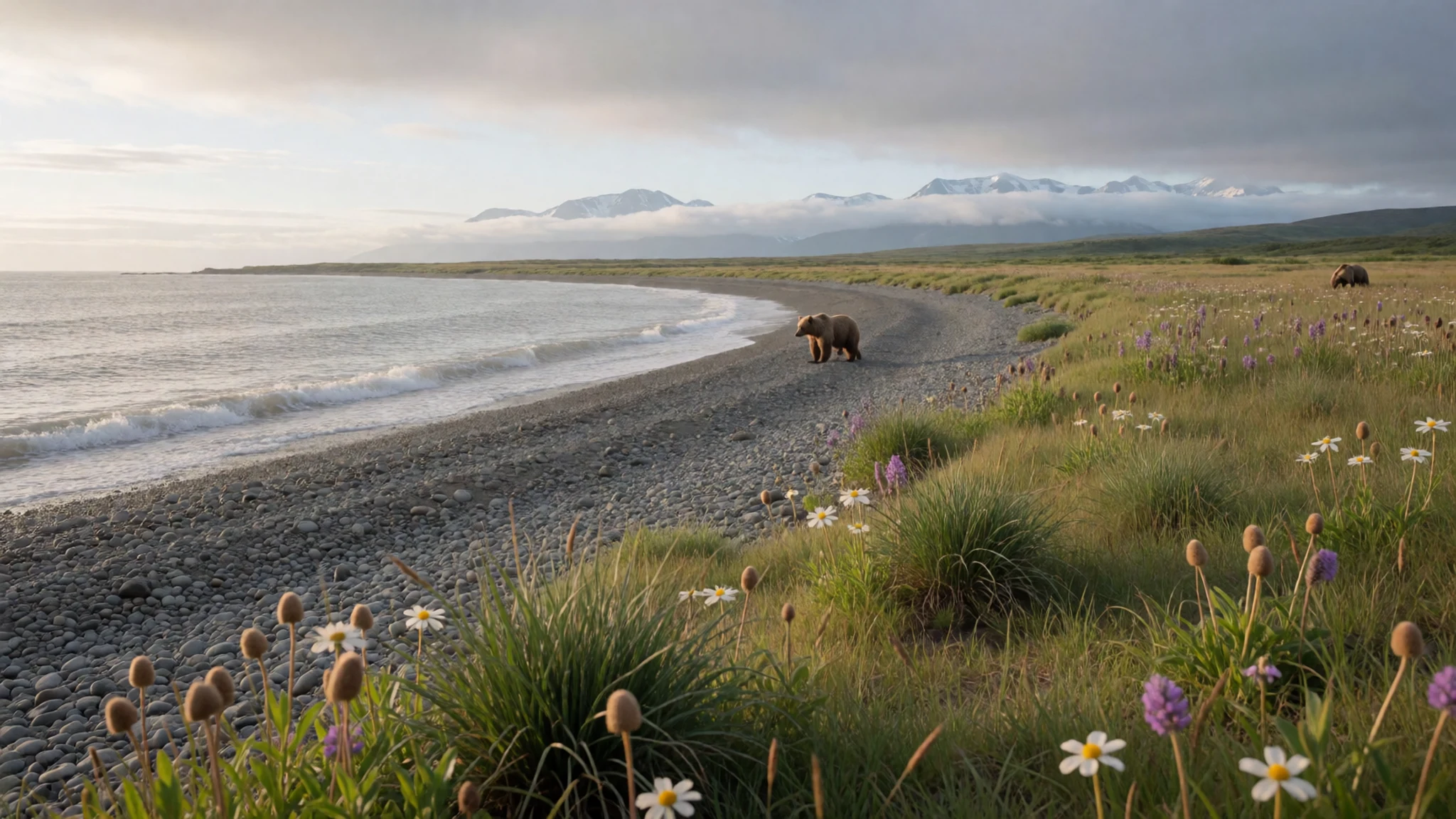
- Katmai Crater — Aleutian Range
Mount Katmai's summit holds a collapsed crater, a reminder that the 1912 eruption drained magma from beneath this mountain rather than from its own vent. The caldera now holds a lake. Reaching it is a serious backcountry undertaking, so most people see it from the air on a flightseeing trip.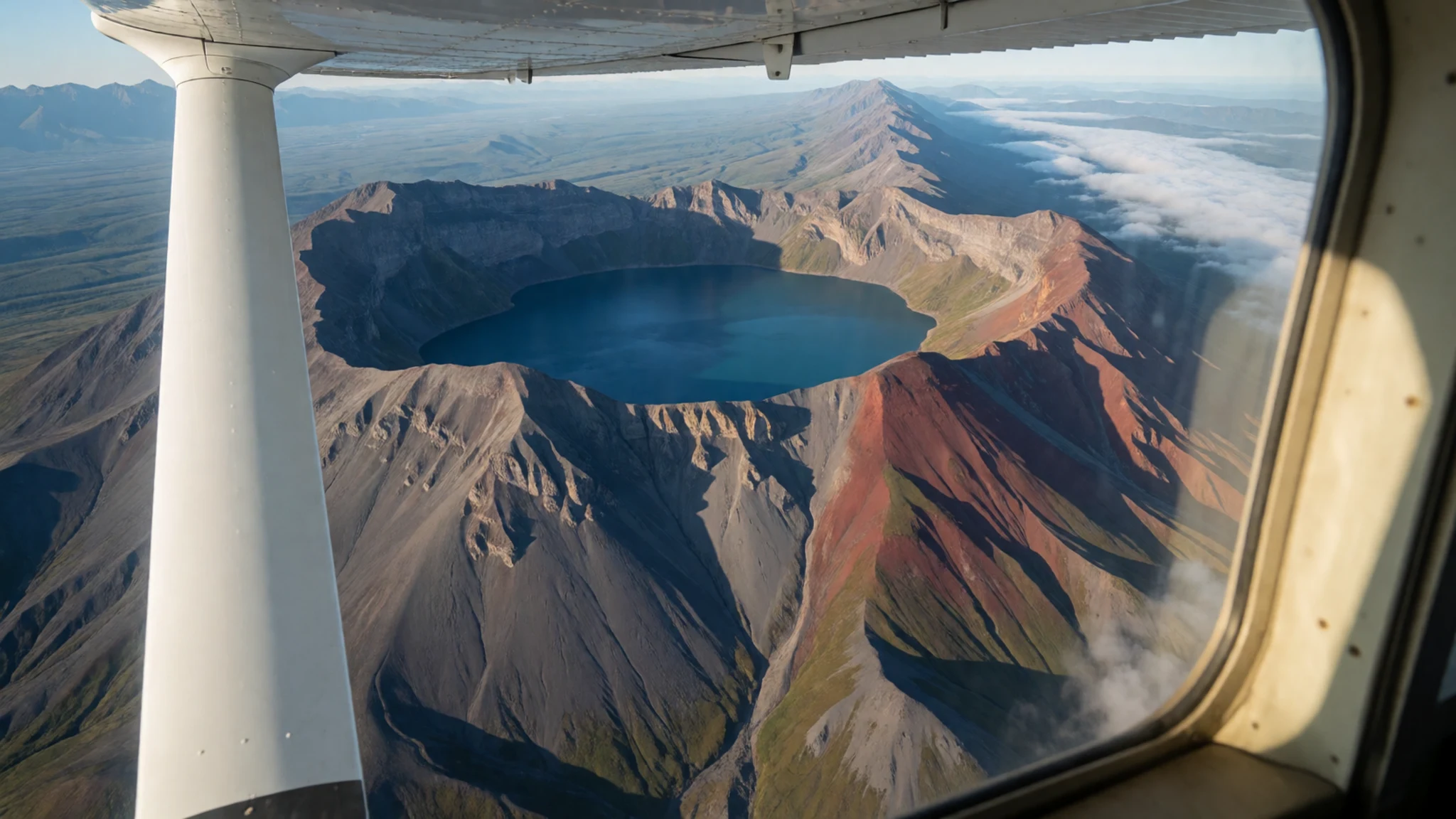
- Moraine Creek and the preserve — Katmai Preserve
The preserve side of the park, inland from the coast, draws anglers and bear watchers who want fewer people. Moraine Creek and Funnel Creek attract bears at salmon time, and the rivers hold rainbow trout, grayling and Dolly Varden. Most visits here are arranged through a lodge or an air taxi operator.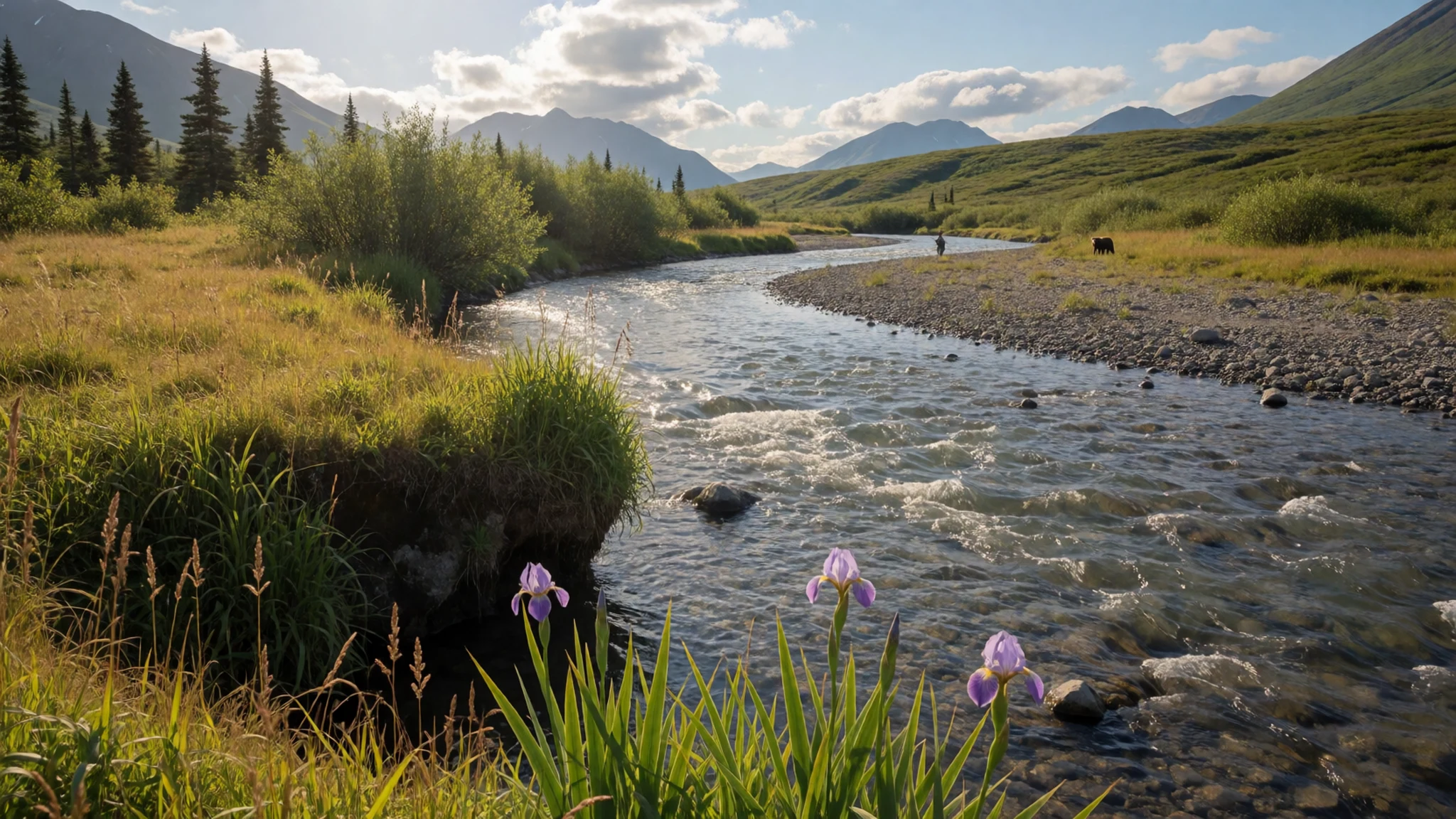
Culture
Katmai National Park lies in the traditional country of the Alutiiq people, including the Koniag of the Shelikof coast, and of the Yup'ik-speaking Aglegmuit on the Bristol Bay side. Their ancestors fished these rivers for salmon long before any park existed, and subsistence fishing and hunting remain part of regional life. Villages around the peninsula, such as those near King Salmon, still centre on seasonal runs of fish.
The 1912 eruption broke some of those ties. Communities left their villages near the Savonoski River and relocated, and the memory of that displacement is part of local history. Today the park is run by the National Park Service, with the wider region shared among lodges, air taxi operators, guides and Alaska Native corporations.
The working culture of Katmai is shaped by bears. Rangers explain the rules at Brooks Camp before anyone walks to the falls, and the rules are strict because the bears are wild and the margin for error is small. Food, rubbish and scented items are kept in bear-resistant containers, and visitors are expected to move calmly and give animals right of way on the trails. Staff and pilots set the pace, and plans change with the weather. Patience is the local virtue.
When a bear appears on a path or at the water's edge, stop, step back quietly and let it pass rather than trying to get closer for a photograph.
What to wear
Traditional dress around Katmai belongs to the Alutiiq and Yup'ik peoples of the Alaska Peninsula. Historically, parkas were sewn from the skins of seabirds and ground squirrels, and waterproof outer coats were made from the gut of sea mammals, stitched with fine seams that shed rain. Sealskin was used for boots and mittens, and ornament came from beadwork and fur trim. Such garments are now seen mainly at dance festivals, in museums and on ceremonial occasions.
Everyday clothing in King Salmon and the lodges is practical and working-class in the best sense: fleece, quilted jackets, waterproof shells and rubber boots, often the tall pull-on type fishermen wear. Baseball caps and wool hats are common. Anglers add chest waders, and guides tend to dress in muted greens and browns.
Visitors should plan for weather rather than style. Pack layers: a warm base, a fleece or light down jacket, and a fully waterproof jacket and trousers, since rain can arrive in any month. Waterproof walking boots with good grip are essential on wet, rocky trails, and chest waders or hip boots help if fishing. Bring a warm hat, gloves and a buff, even in summer, and a head net for insects. Dull colours are sensible around wildlife. Avoid strong perfumes and scented lotions, which can attract unwelcome attention from bears.
What to eat
- Sockeye salmon, grilled or baked — Lodge dining rooms at Brooks Camp and around King Salmon
Wild sockeye is the region's signature fish, with deep red flesh and a rich flavour. Lodges serve it fresh from the river or the bay, usually grilled or baked with lemon and herbs. The season for eating it fresh matches the salmon run.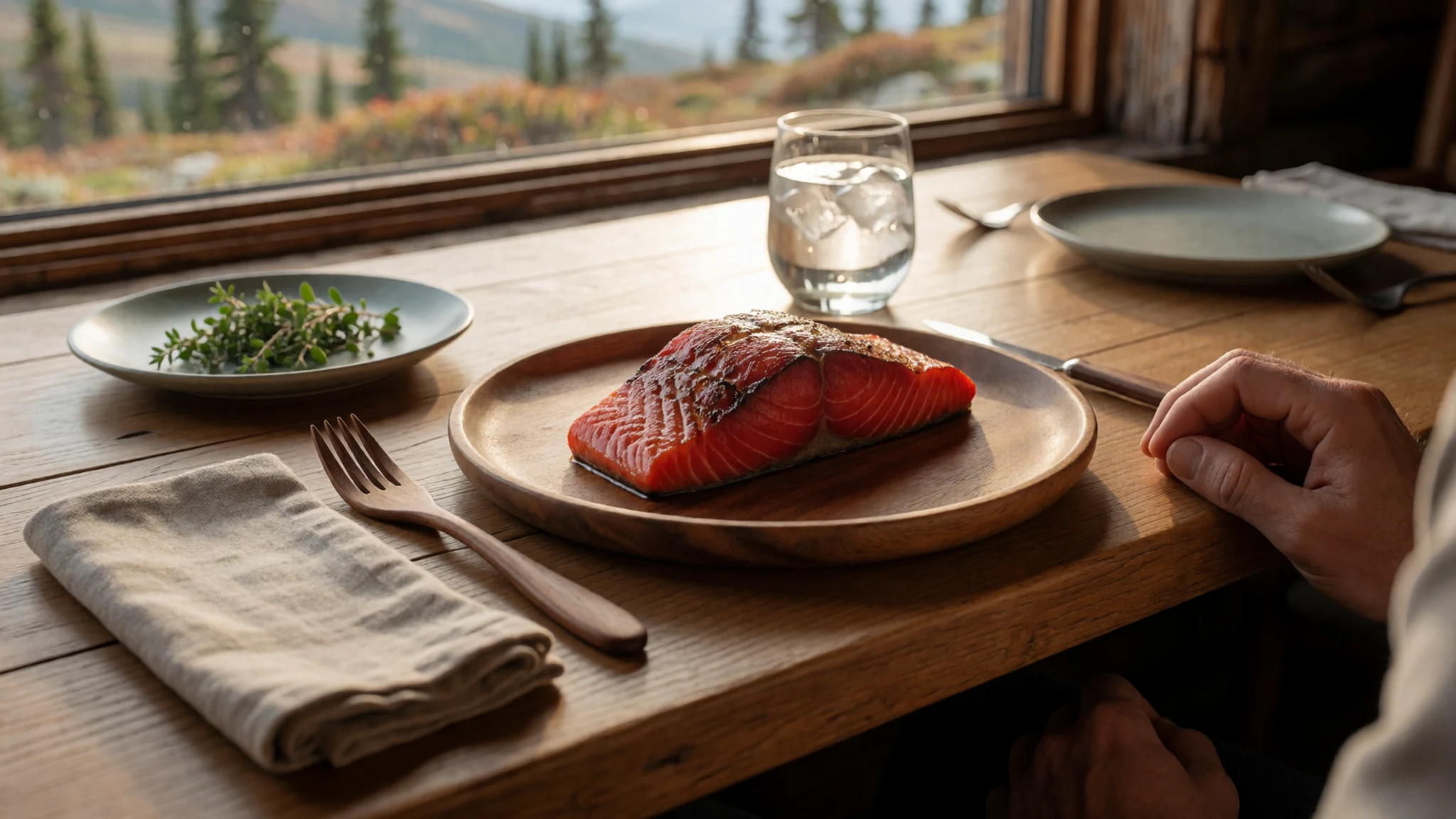
- Smoked salmon — Small shops in King Salmon, and in gift shops at Anchorage airport
Strips or fillets of salmon cured with salt and smoked over alder or similar wood are a staple of Alaska. They are eaten as a snack, flaked into dips or served on crackers, and travel well in a day pack.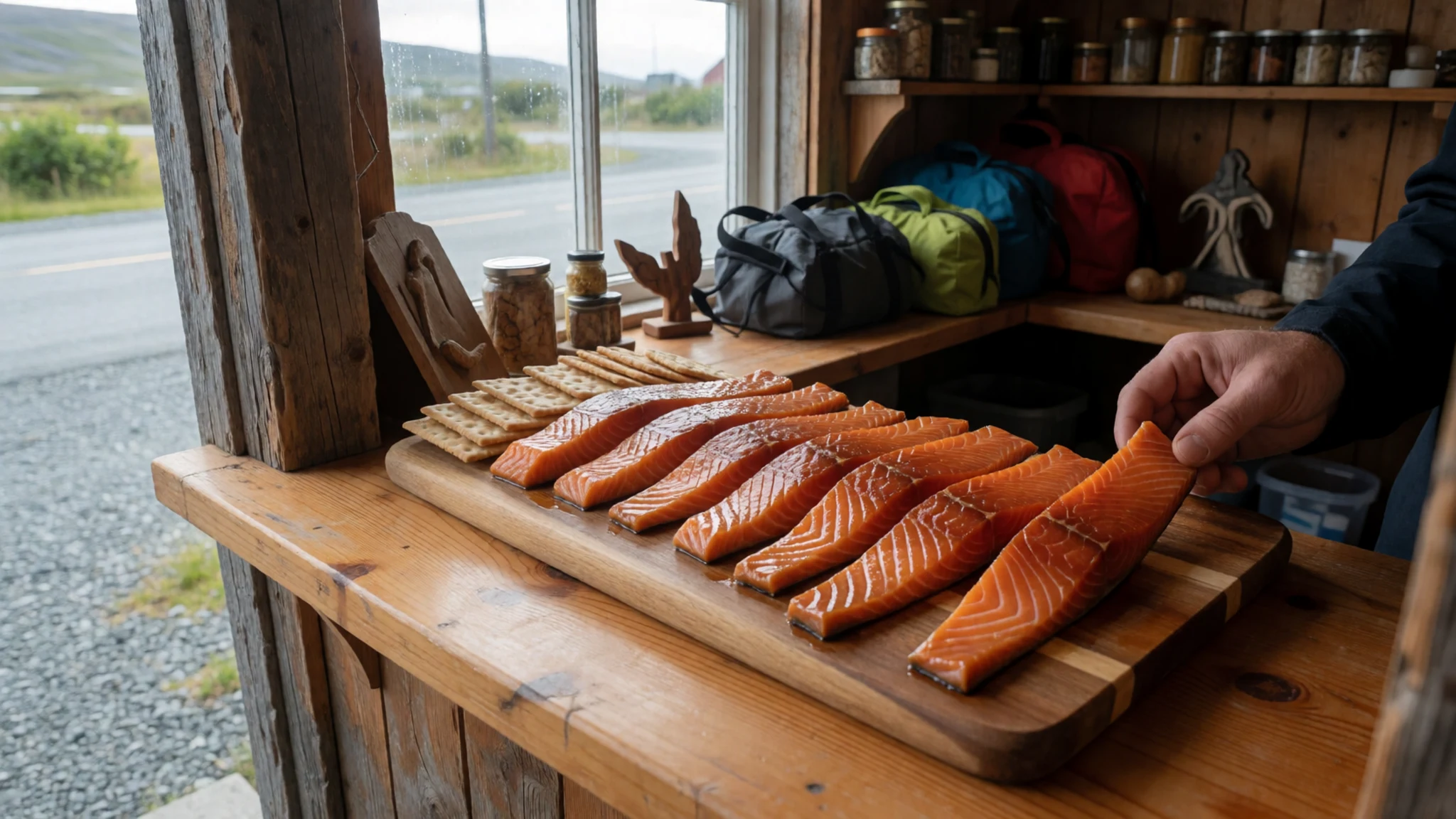
- Halibut and chips — Cafés and fish shacks in King Salmon and Anchorage
Pacific halibut is mild and flaky, and fried in a light batter with thick chips it is a comfortable meal after a day in the wind. Cod is sometimes served in the same way. - Sourdough pancakes — Breakfast tables at lodges and small diners
Sourdough is part of Alaskan tradition, from gold-rush days to modern breakfast tables. The pancakes come tangy and fluffy, usually with butter, syrup or berry compote, and fuel a long morning of bear watching. - Wild berry preserves — Craft stalls and general stores in the region's towns
Blueberries, salmonberries and cranberries grow across the tundra and are made into jams, syrups and pies. They appear on bread, with pancakes and as pie fillings, and make a good edible souvenir.
Plan it
Best time. June to September, with July and September the usual choices for bears at Brooks Falls when the salmon are running. Summer is cool, damp and changeable. Winter is cold, dark and mostly closed to ordinary visitors, so check the official site at nps.gov/katm for current services.
How long. 3–4
Getting there. Fly from Anchorage to King Salmon on a scheduled service, then take a float plane or boat to Brooks Camp, or a chartered air taxi to the coast. Air taxis also run from Homer and Anchorage, weather permitting.
Budget. high
Tips
- Book flights, lodging and camping well ahead, as Brooks Camp is popular in peak salmon weeks
- Leave a spare day in the schedule, because fog and wind regularly delay small planes
- Use the bear-resistant containers lent out at Brooks Camp and the King Salmon Visitor Centre
- Carry layers and waterproofs even for a day trip, and bring insect repellent or a head net
- Check the official site at https://nps.gov/katm for fees, permits and current conditions
Etiquette
- Never approach a bear; stay on marked paths and viewing platforms and wait if one is in the way
- Keep all food, drinks and rubbish stored properly and never leave a pack unattended
- Keep voices low and give wildlife room to feed
Nearby
Sources
- Wikidata Q609902 (CC0)
- Wikipedia: Katmai National Park and Preserve (rev 1384839249) (CC BY-SA 4.0)
- Wikivoyage: Katmai National Park (rev 5238902) (CC BY-SA 4.0)
- Katmai Crater 1980, Captain Budd Christman, NOAA Corps (Public domain)
- Katmai National Park, Alaska, NASA (Public domain)
- Lower end of the Valley of Ten Thousand Smokes, Katmai National Park and Preserve (CC BY 2.5)
- Brown bear, Marshmallow (CC BY 2.5)
- Grizzly Bear Fishing Brooks Falls, Azov (CC BY 3.0)
- Katmai National Park Geologic Map, Wes Hildreth and Judy Fierstein (Public domain)
- The silence of nature is very real, KatmaiNPS (CC BY 2.5)
- Photo courtesy of C. Chapman, Katmai National Park and Preserve (Public domain)


Wildlife
- Brown bear (animal)
The brown bear is a big, hump-shouldered bear with a coat anywhere from creamy to deep brown, and paws made for digging. In Katmai, a roadless Alaskan wilderness, bears gather to fish for salmon beside a valley still scarred by a vast volcanic eruption. Ask the park staff about the best time to look. Watch from a respectful distance, keep quiet, go with a guide, and never feed a bear.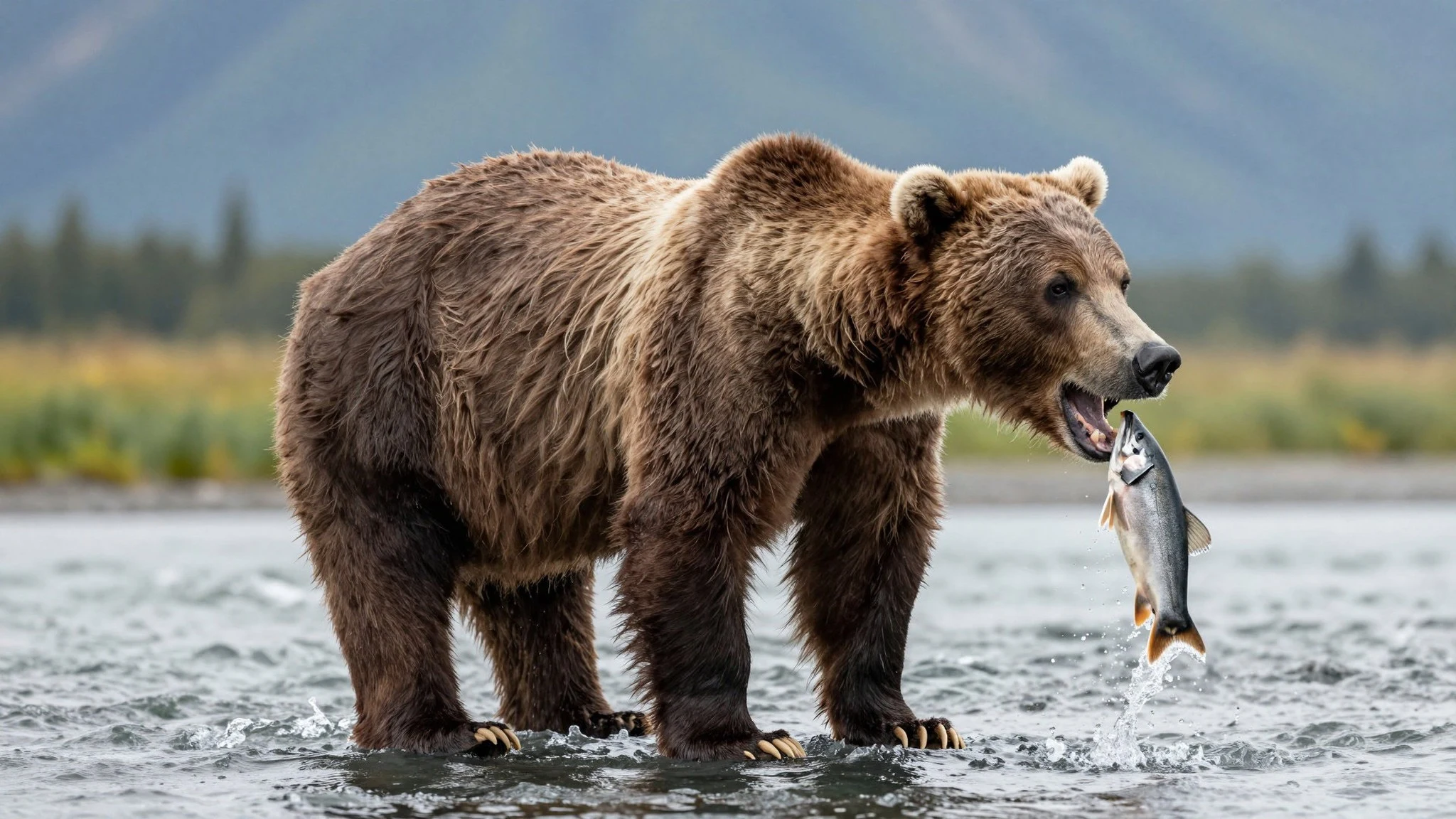
- Sockeye salmon (animal)
The sockeye salmon is a sea-going fish that turns bright red when it is ready to spawn. In Katmai, when the sockeye swim upstream, bears wait at the top of the falls and snatch them from the air. Ask the park staff when the run is likely to happen, since the timing is not certain. Watch quietly from a safe distance, ideally with a guide, and never feed the bears or any other wildlife.