Kartchner Caverns
Kartchner Caverns, United States
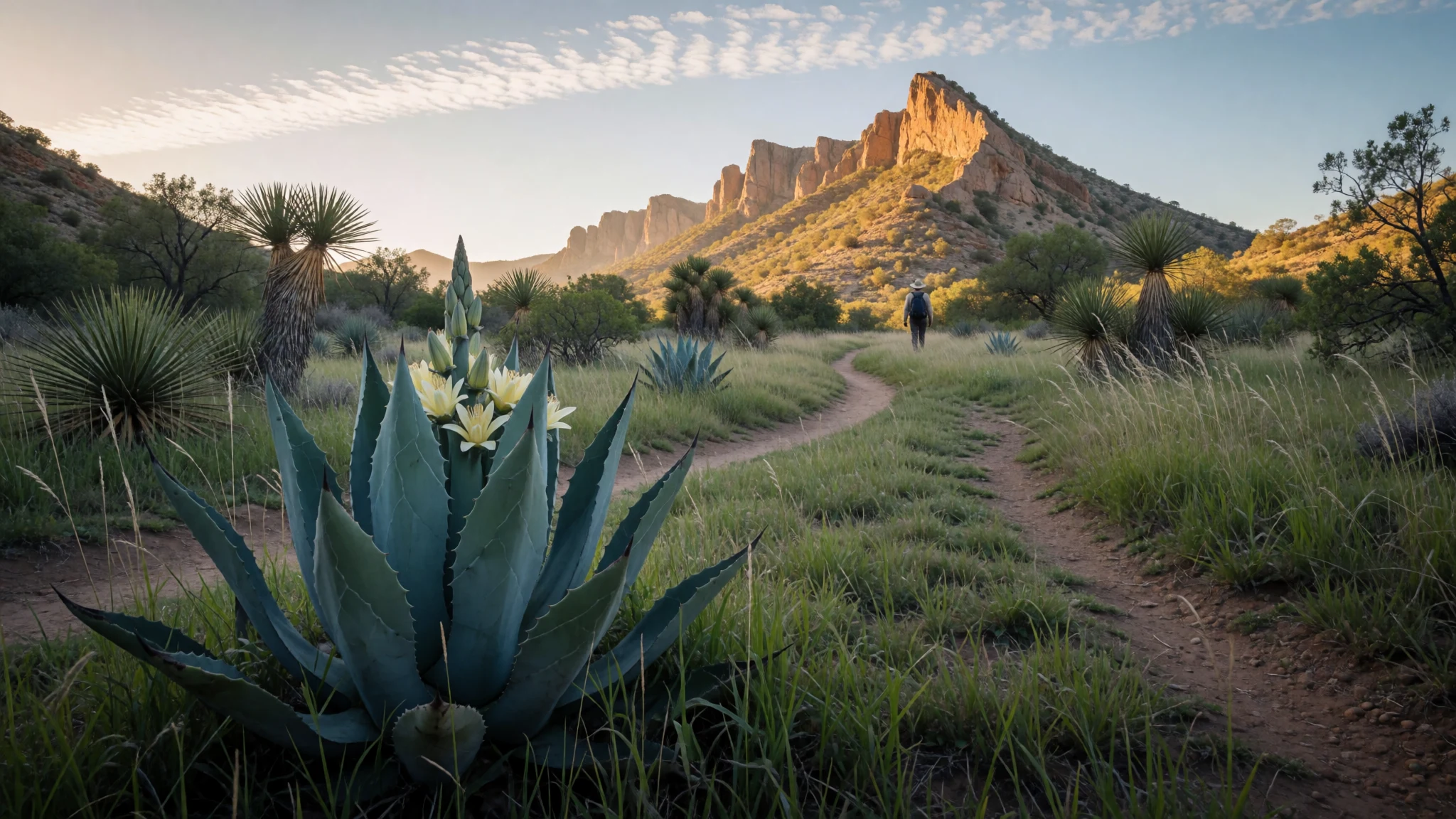
Kartchner Caverns is a living limestone cave in southern Arizona, where mineral formations still grow in the dark and visits are carefully managed.
The place
Kartchner Caverns State Park lies in southeast Arizona, roughly 14 km from Benson, on the western side of the San Pedro River valley. The park was founded in 1988, and its heart is a show cave: a cave fitted out for guided visits so that the public can see it without wrecking it. About 3.9 km of passages are known. Above ground, the setting is high desert grassland and scrub, with the Whetstone Mountains rising behind. The ground here is a slab of ancient marine rock that slipped downward along faults beside those mountains, and the cave formed inside its limestone. Water seeping through the rock dissolved the passages over a very long time, and the same water now deposits the stalactites, stalagmites, columns and ribbons that fill the chambers. These formations began growing at least 50,000 years ago and have not stopped, which is why the management is so strict about humidity, lighting and who goes where. The cave is entered on guided tours only, and which sections are open can change with the seasons, so the official site (https://azstateparks.com/kartchner/) is the place to check. Benson is the nearest town, small and practical, with fuel and basic services. Tucson is the nearer big city. Most people treat Kartchner as a half-day stop on a wider southeast Arizona trip rather than a destination for several days.
Its story
Kartchner Caverns stayed unknown to the wider world until 1974, when two cavers, Gary Tenen and Randy Tufts, noticed a narrow crack at the bottom of a sinkhole. Warm, damp air was drifting out of it, and the pair followed that faint breath inward. What they found was a long run of untouched passages, decorated with formations that nobody had broken or carried off.
Tufts had been shaped by earlier disappointments. A geologist uncle took him to caves around Arizona when he was a boy, and many were wrecked: walls scrawled on, rubbish left behind, stalactites and stalagmites snapped off as souvenirs. At 13 he read a children's adventure story, Five Boys in a Cave, and decided that one day he would locate a cave that no-one had spoiled, then keep it that way. He went on to a career as a geologist with NASA.
The search took years. Tufts and his university friends combed the Whetstone foothills, walking the ground in a systematic grid and finding nothing. The break came when they asked a local miner whether he knew of any cave nearby, and he simply pointed at the slopes just below them. The discoverers kept the find quiet for a long time, to shield it from the damage Tufts had seen elsewhere. The state later developed the site with protection built into every decision, from the design of the entrance to the routes that visitors follow. The park exists because a boy's wish to protect something eventually became a plan.
What to see
- The Big Room — Inside the cave, guided tour
The Big Room is the broad chamber that most photographs of Kartchner show: a high ceiling hung with stalactites, with columns, shields and rippled drapery of calcite below. Guided groups pass through in dim, controlled light. It rewards slowing down, especially to notice how the stone shifts from cream to rust where mineral-stained water has run.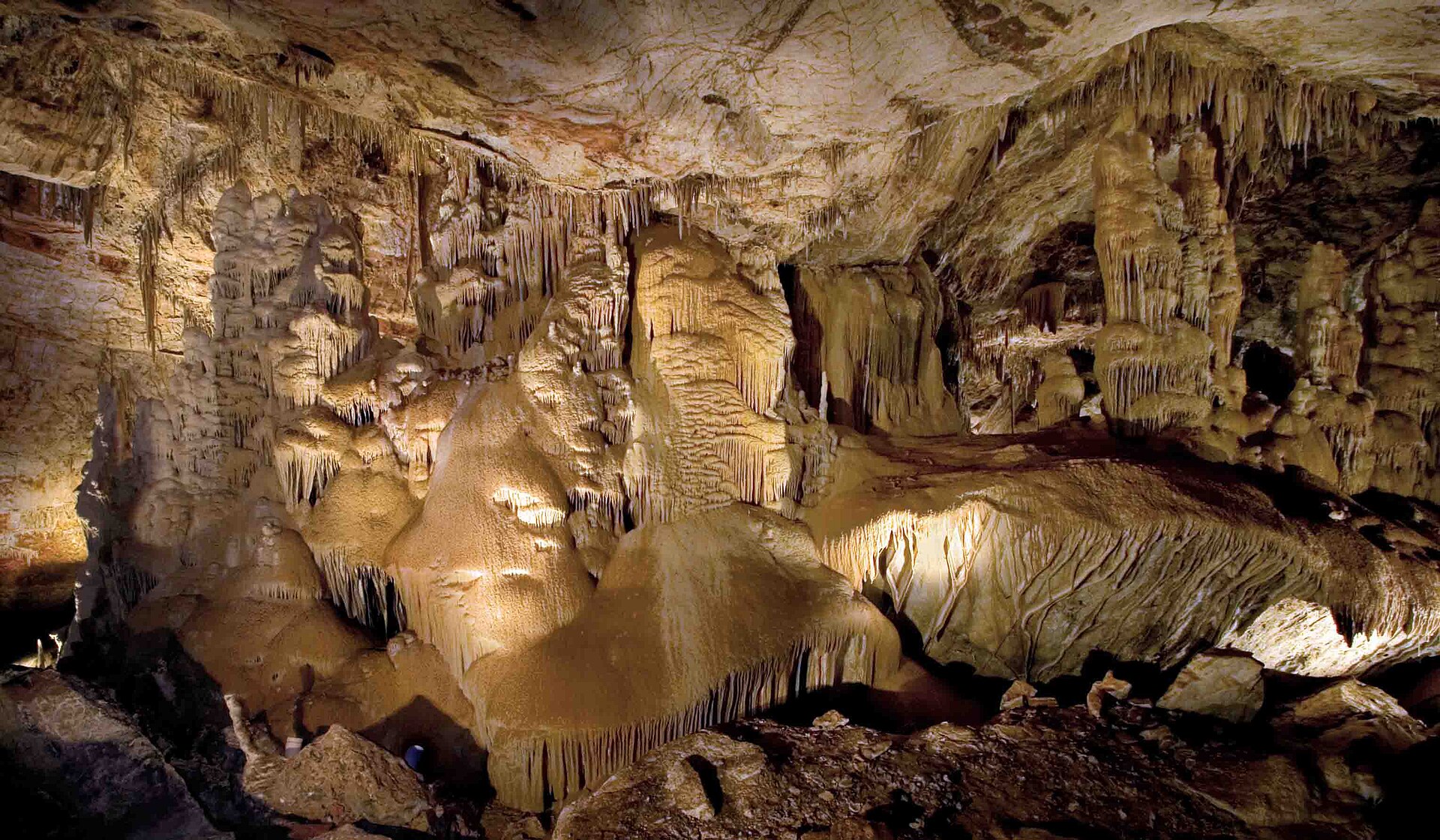
- Crinoid fossils in the limestone — Kartchner Caverns State Park
Crinoids are marine animals related to starfish, often called sea lilies, and their stem segments survive as small discs and casts in the park's limestone. Spotting them is a reminder that this dry corner of Arizona once lay under a shallow sea. The fossils are small, so a ranger's pointing finger helps.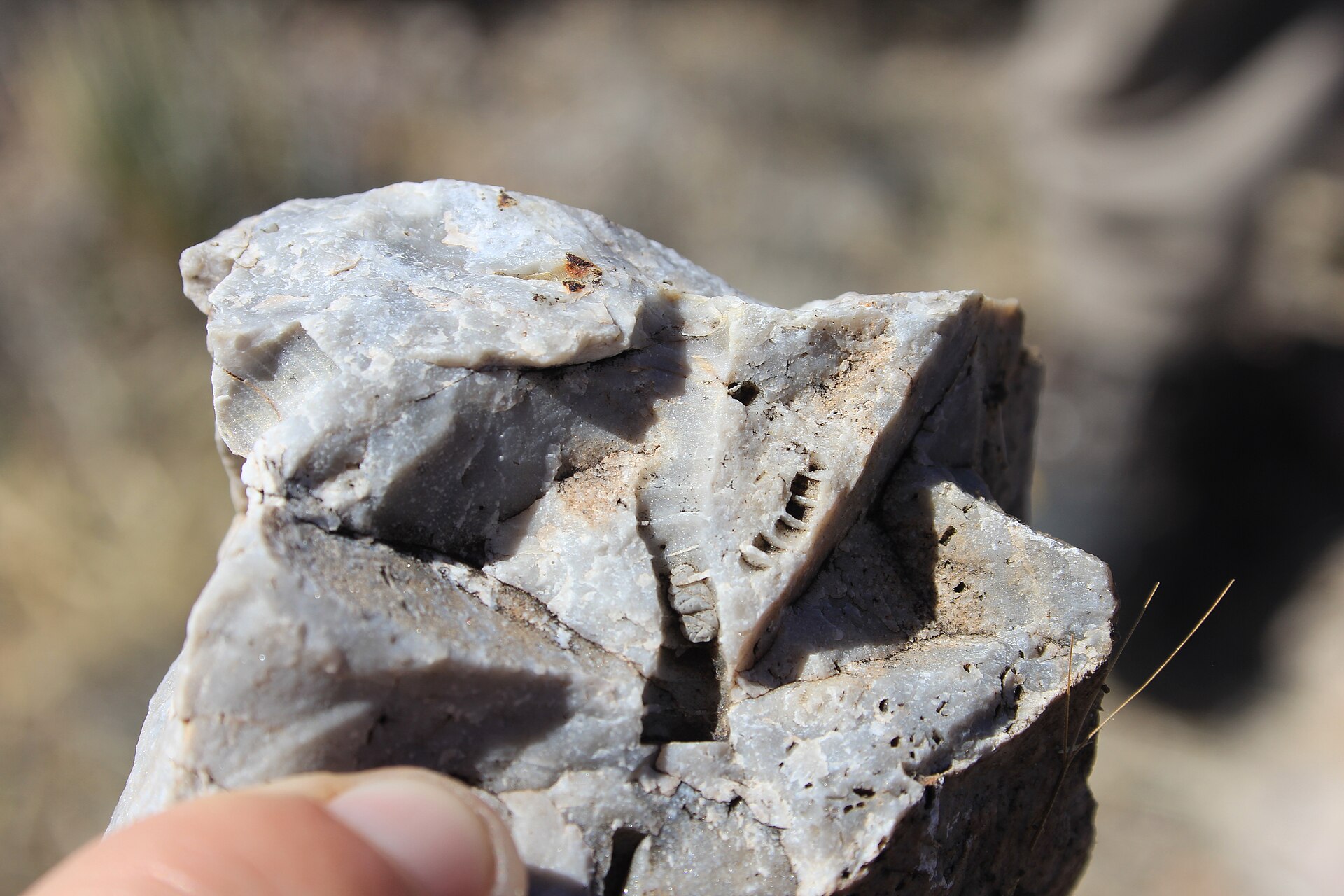
- The fault — Kartchner Caverns State Park
A fault at the park shows where blocks of rock have slid past each other. It matters to the story because the cave sits in a down-dropped block, and cracks in rock also give water a way in. Seen in section, the offset layers make the geology easy to follow even without any training.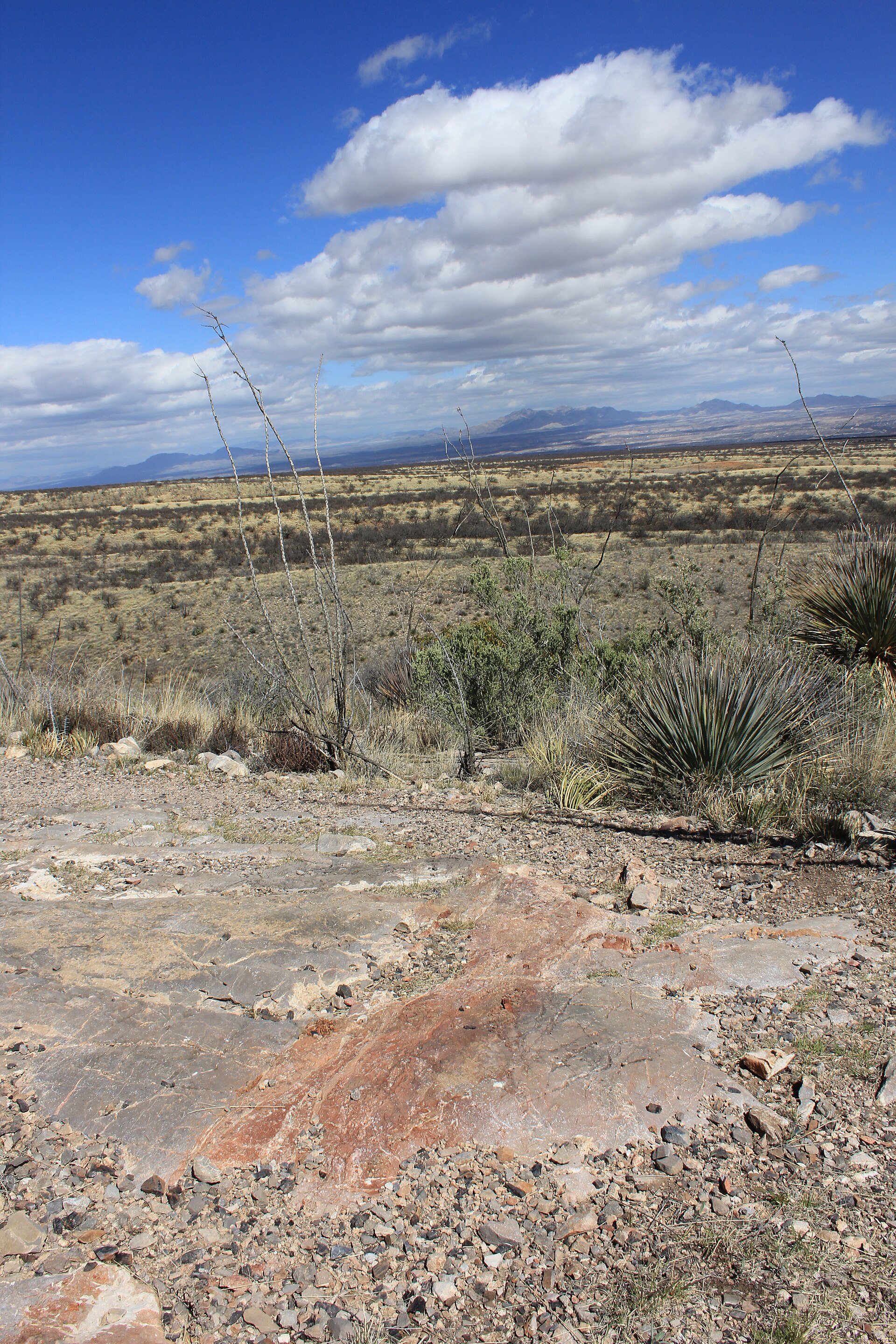
- The discovery exhibit — Main building, near the entrance
The small museum in the main building tells the discovery story, and one display holds the worn boots of the two men who found the cave. They are plain working boots, and that is the appeal: the cave was found by walking, crawling and persistence. The displays also explain the care taken to preserve the place.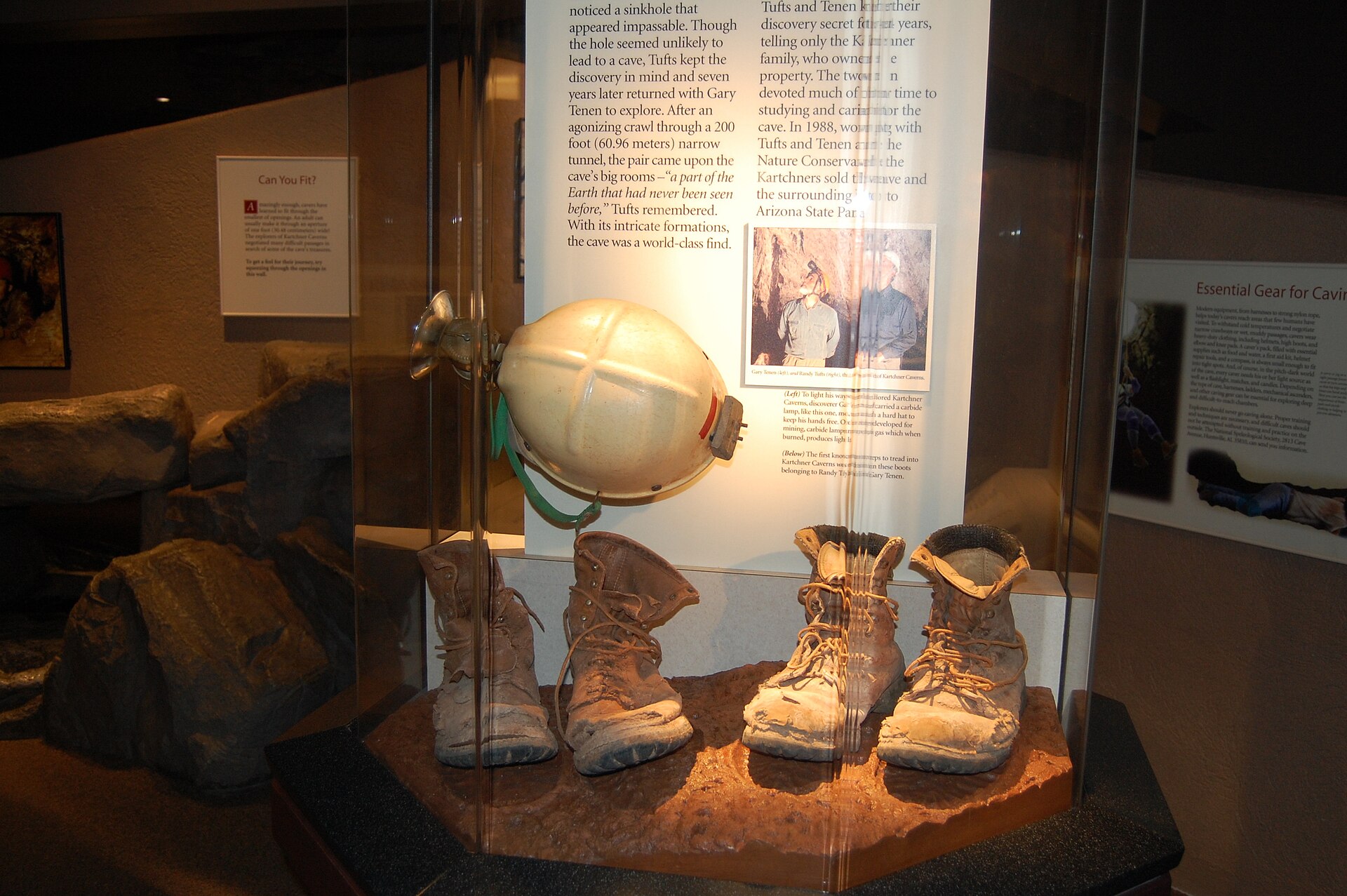
- The Whetstone Mountains and Apache Peak — Surface trails around the park
Outside the cave, the park looks across desert grassland to the Whetstone Mountains, with Apache Peak among the skyline features. Short surface trails give a feel for the surrounding high desert of yucca, mesquite and agave. In warm months, go early, since shade is scarce and the sun climbs quickly.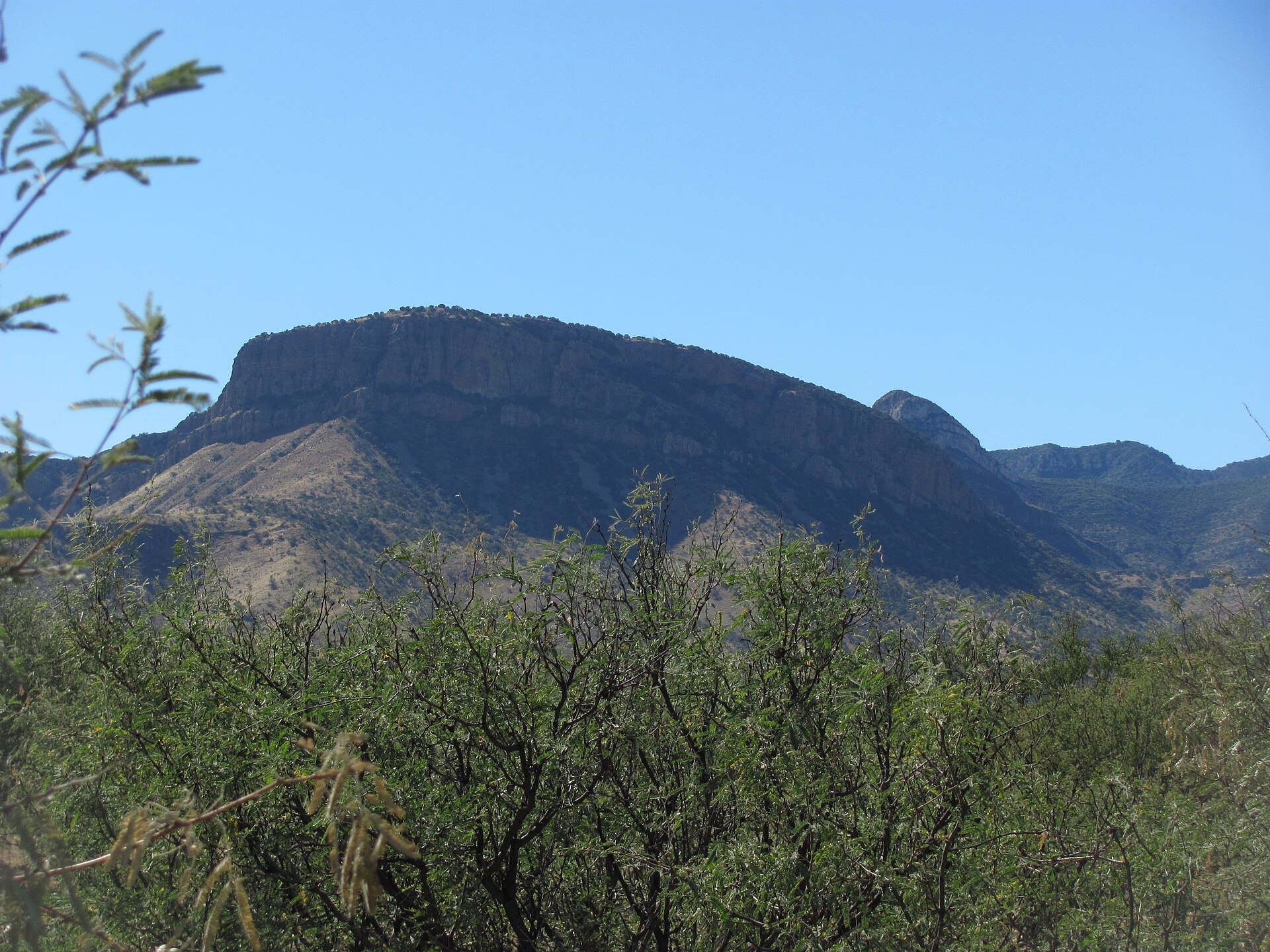
Culture
Kartchner Caverns State Park sits in Cochise County, a part of Arizona shaped by ranching, mining and a long Apache presence. The Chiricahua Apache homeland lay across these valleys and mountains, and Cochise's name is still attached to the county and to landmarks nearby. Mexican influence runs deep too, in place names, in cooking and in the Spanish heard in shops and on the radio. Today the area is quiet and rural, with small towns and cattle country, and retired incomers living alongside families who have worked the land for generations.
The cave has a culture of its own: a conservation ethic. Cavers like Randy Tufts had watched other caves be stripped and defaced, so the guiding idea here is that the place is for looking at, not taking from. Rangers talk about this openly on tours, and groups tend to fall quiet inside. Elsewhere in the state, religion and politics can be sensitive subjects, and it is wise to follow a local's lead rather than raise them yourself.
Keep your hands off every formation and stay on the marked path, because the oils on skin mark the stone and can stop it growing.
What to wear
Kartchner Caverns State Park is in a region where dress traditions are layered. Western ranch wear is the most visible: snap-button shirts, denim, leather boots and felt or straw hats, worn for work and for local fairs and rodeos. The Native nations of the Southwest each have their own textiles. Apache women's camp dresses, made of bright cotton with ruffled skirts, are worn at ceremonies such as coming-of-age rites, alongside basketry and beadwork. Further north, Navajo weavers make wool rugs and blankets, velvet blouses are common, and silver and turquoise jewellery is worn widely. Mexican Sonoran influence shows in embroidered blouses and straw hats at festivals.
Day to day, most people in southeast Arizona wear T-shirts, shorts or jeans, caps, and sturdy sandals or trainers; smart dress is rare outside weddings and church.
Visitors should plan for two climates. Outside, summer sun is fierce, so light long sleeves, a hat, sunglasses and sunscreen all make sense, while winter evenings can turn cold. The cave itself is mild and humid, so one thin layer is enough. Wear closed shoes with good grip for damp, sloping paths, and avoid dangling straps or scarves that could snag. There are no modesty rules at the park.
What to eat
- Sonoran hot dog — Street carts and food trucks in Tucson
A hot dog wrapped in bacon, tucked into a soft roll and piled with beans, onion, tomato and sauces. The style comes from the Sonoran borderlands and is sold from carts and trucks, mostly in the evening. Best eaten standing at the cart with a cold drink. - Chimichanga — Family-run Mexican eateries in Benson and Tucson
A burrito that has been deep-fried until crisp, then served with salsa, beans or rice. Arizonans claim it as a local invention, though the story is disputed. It is filling and rich, so one is usually plenty after a morning of walking. - Carne asada burrito — Taquerias, burrito stands and food trucks
Grilled beef, usually with beans, salsa and onion, folded inside a large, thin flour tortilla in the northern Mexican style. The tortilla is half the point, soft and slightly blistered. Street-side stands often sell these in the middle of the day. - Nopales — Mexican markets and home-style eateries
Cactus pads, spines removed, cooked into tender green strips with a light tartness. They turn up in salads, in scrambled eggs and as a taco filling. Anyone nervous of the idea can think of them as something between green beans and peppers. - Fry bread — Tribal fairs and roadside stands in Native communities
A round of fried dough, crisp at the edge and soft in the middle, eaten with honey or sugar, or topped with beans, meat and salad. It is tied to Native communities in the Southwest and has a complicated history, so it is worth asking about it.
Plan it
Best time. October–November and March–April, when days outside are warm and nights mild. Summer is very hot, with storms from July to September, and winter is cool with the occasional frost. The cave itself stays steady all year, so it works in any season.
How long. 1–2
Getting there. Fly into Tucson International Airport (TUS) and hire a car; Kartchner is a drive east along Interstate 10 to Benson and then south on the state road to the park. Most travellers in Arizona rely on a hire car, as public transport out here is limited.
Budget. mid
Tips
- Book the cave tour in advance on the official site (https://azstateparks.com/kartchner/), because tour numbers are limited
- Check the official site for which sections are open, as parts of the cave can close seasonally
- Carry plenty of water for the surface trails in warm months and keep valuables out of sight in a locked car
- Arrive early in summer to see the surface trails before the heat builds
- Check the park's rules on bags and cameras before you set out
Etiquette
- Do not touch the formations or step off the marked path
- Follow the guide's instructions, including lights and quiet, so the cave stays undisturbed
Nearby
Sources
- Wikidata Q387762 (CC0)
- Wikipedia: Kartchner Caverns State Park (rev 1386188079) (CC BY-SA 4.0)
- Wikivoyage: Arizona (rev 5400383) (CC BY-SA 4.0)
- Photo: A view of the Big Room in Kartchner Caverns, Mike Lewis (CC BY-SA 1.0)
- Photo: Wikipedia workshop and field trip with University of Arizona Geo Club, Samantha (Wiki Ed) (CC BY-SA 4.0)
- Photo: Kartchner Caverns State Park, Shaunnamm (CC BY-SA 4.0)
- Photo: Crinoid casts at Kartchner Caverns State Park, Shaunnamm (CC BY-SA 4.0)
- Photo: A fault at Kartchner Caverns State Park, Shaunnamm (CC BY-SA 4.0)
- Photo: Apache Peak AZ, Pete Forsyth (CC BY 3.0)
- Photo: Arizona Map, Shal Farley (CC BY-SA 2.0)
- Photo: Kartchner Caverns boots, ~Pawsitive~Candie_N (CC BY 2.5)


