Karakol
Karakol, Kyrgyzstan
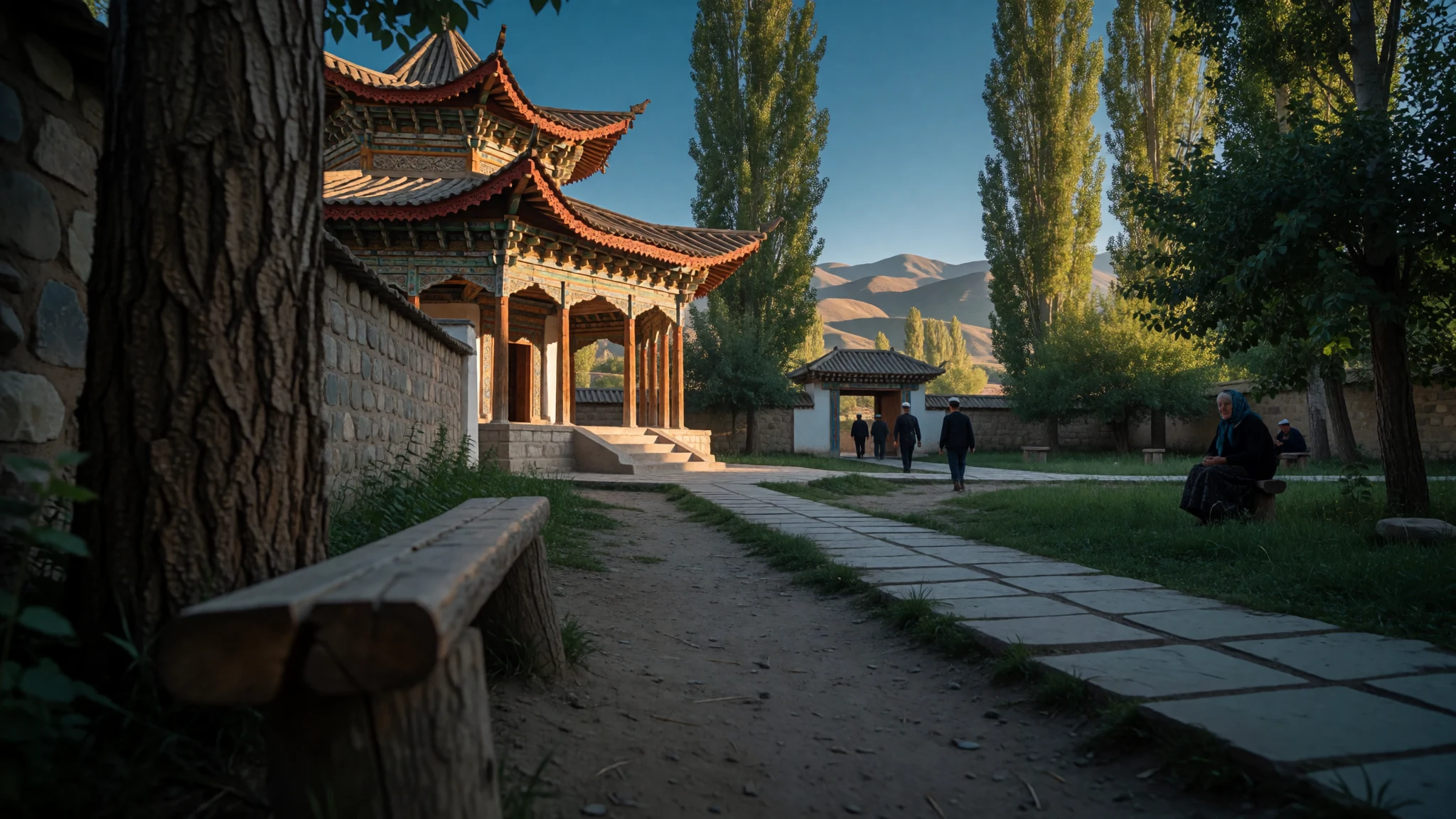
Karakol is a Russian-founded garrison town at the foot of the Tian Shan, where a Dungan mosque, timber houses and mountain trails sit together.
The place
Karakol sits at 1690 metres above sea level near the eastern end of Lake Issyk-Kul, with the Tian Shan rising to the south and east. It is the administrative centre of Issyk-Kul Region and home to 85,588 people, yet it is compact and easy to cross on foot in an afternoon. The climate is humid continental: snowy winters that suit skiing, and warm summers that suit trekking. Under the Tsars and the Soviets the town was called Przhevalsk, after the Russian explorer Nikolai Przewalski, who is buried close by. That layer is still visible in the low timber houses with painted shutters, the tree-lined streets and the Orthodox church, and the town keeps one of the few Slavic communities left in Central Asia. Dungan families, descended from Hui Muslim refugees, add another layer, and Kyrgyz life fills in the rest. Karakol is less a destination in itself than a base. Most of the action is outside the centre: gorges and alpine valleys reached by minibus or taxi, the Jeti-Ögüz area to the southwest, and the lake shore to the west. Tour companies, hostels and cafés cluster in the middle of town, so arranging a trek, a ski day or a homestay is straightforward. The pace is slow and evenings are quiet. The town works best as a place to rest between mountain days rather than a list of sights to tick off. Bishkek lies a long way to the west, so most visitors arrive tired and stay a few nights.
Its story
Karakol's story begins with a contest between empires over the Kyrgyz lands around Lake Issyk-Kul. After the Qing defeated the Dzungars in the eighteenth century, eastern Kyrgyzstan stayed outside formal Qing rule, and the Tian Shan ridge served as a natural frontier. Early in the nineteenth century the Khanate of Kokand pushed in with traders and soldiers, building small forts along the lake shore where garrisons guarded caravans and helped collect taxes. The Kyrgyz of the Karakol valleys resented this rule and rebelled, driving Kokand's officials out of the river forts and declaring themselves independent. Russia was by then expanding into the region, and a first Russian settlement was recognised in the mid-1860s. The town proper dates to 1869, when a Russian military outpost was founded after surveyors came to map the peaks and valleys that divide Kyrgyzstan from China. Later in that century Karakol grew quickly as Dungans, Muslims of Chinese origin, arrived fleeing war. Kazakh and Uyghur refugees crossed the border too, and a small number of Koryo-saram, ethnic Koreans, settled as well. Those arrivals explain the town's mix today: a Russian street plan, a mosque built in Chinese style, and several languages heard in the market. The name Przhevalsk was used through the imperial and Soviet periods, and the older name Karakol returned afterwards.
What to see
- Dungan Mosque — Central Karakol
Karakol's Dungan Mosque is built in the manner of a Chinese temple, with a tiered wooden roof and carved eaves, yet it serves a Muslim congregation. Local accounts say a Beijing architect and a team of carvers worked on it. Look around the outside freely; for the interior, ask about dress and timings locally. It is the town's most photographed building.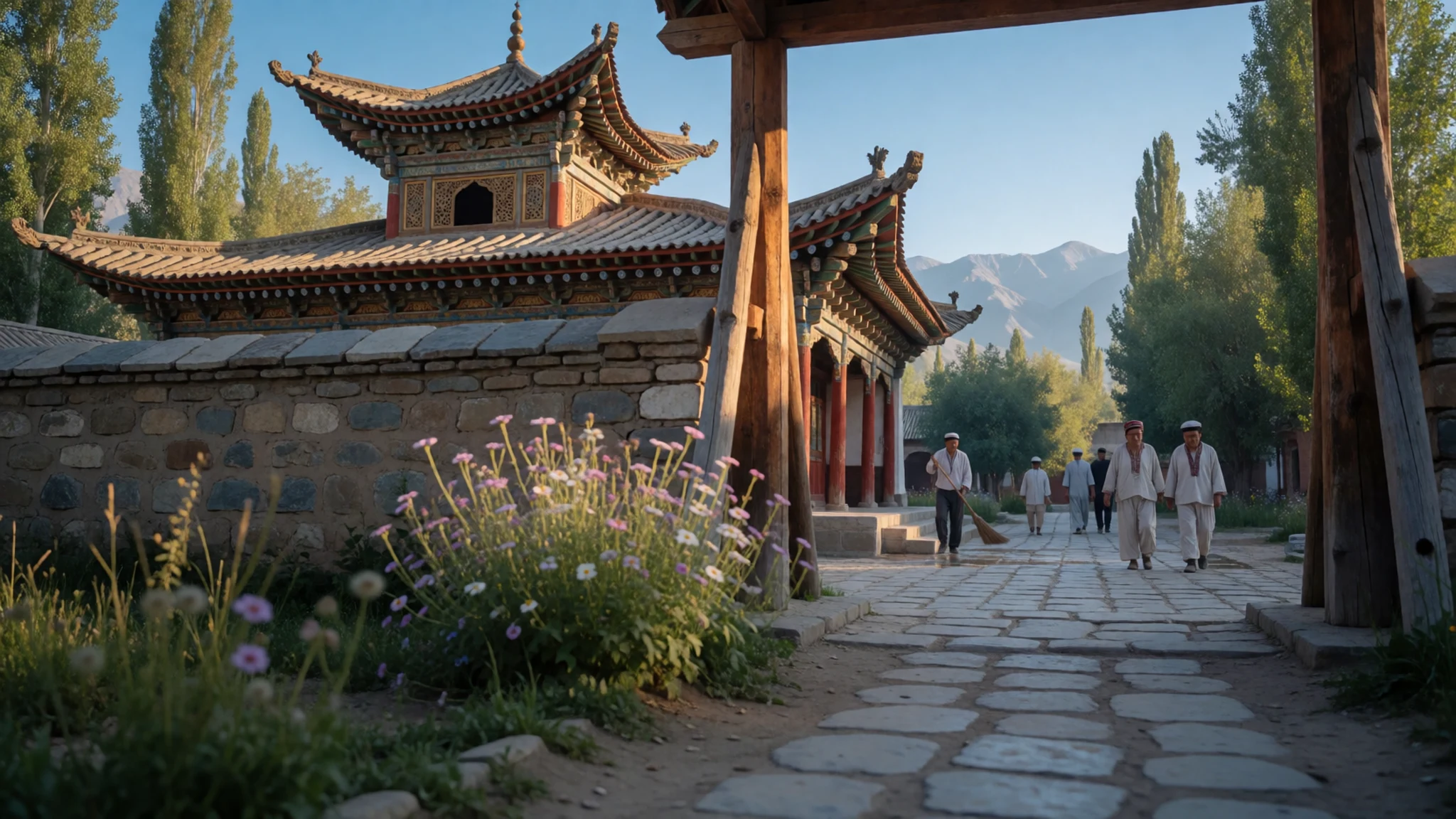
- Holy Trinity Church — Central Karakol
Holy Trinity is the Russian Orthodox church of Karakol, and it recalls the garrison years, since the first stone church on this spot was built in 1872. Services still take place. Modest dress is expected inside, and women usually cover their heads. Photograph the exterior, and ask before taking pictures of worshippers.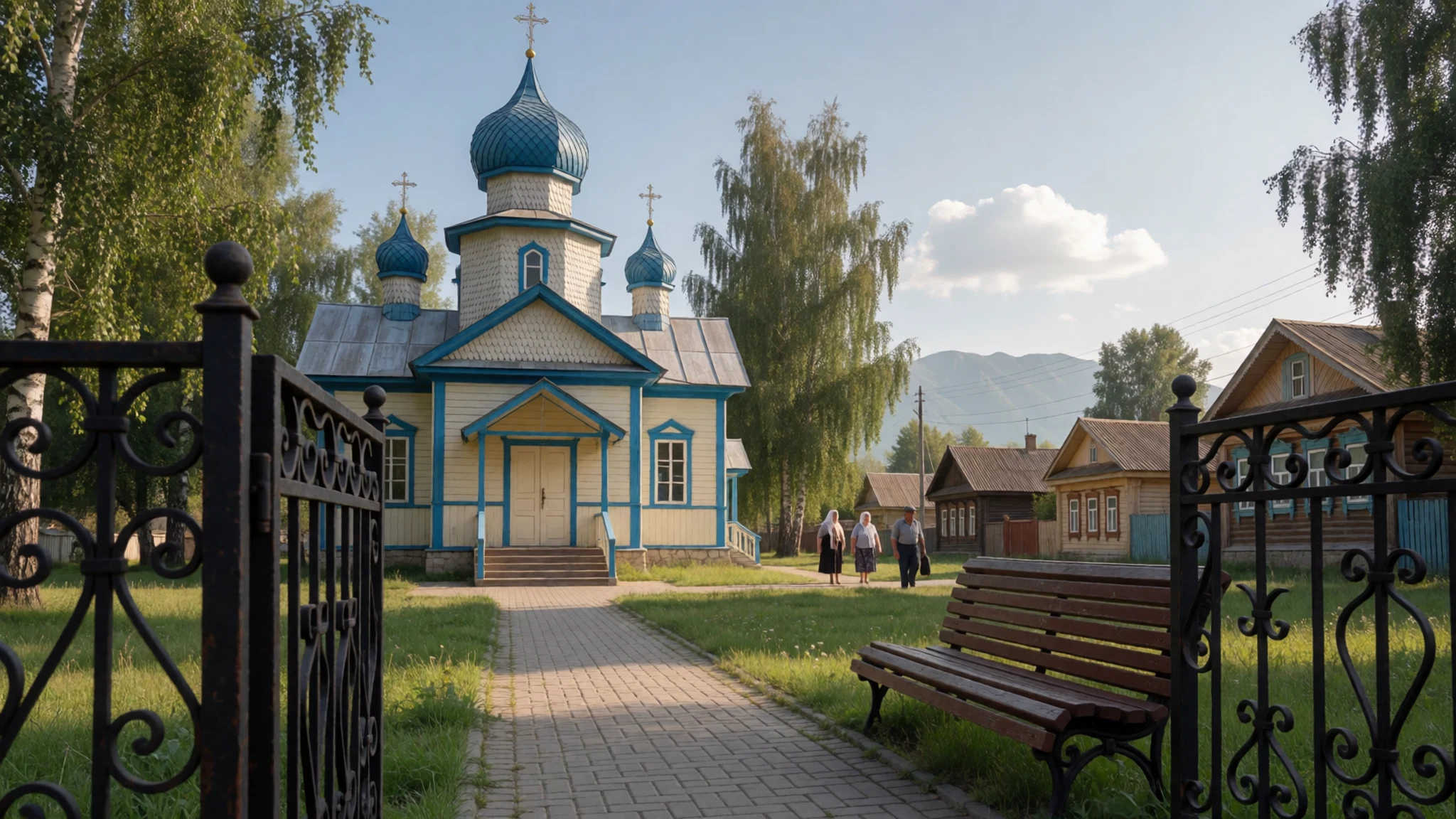
- Karakol Regional Museum — Central Karakol
The regional museum occupies a pretty cottage in the middle of town, once the summer home of a merchant family before the revolution. The building is as much of a draw as the displays, which cover local history, peoples and nature. It is a small stop, easy to fit between a mosque visit and lunch.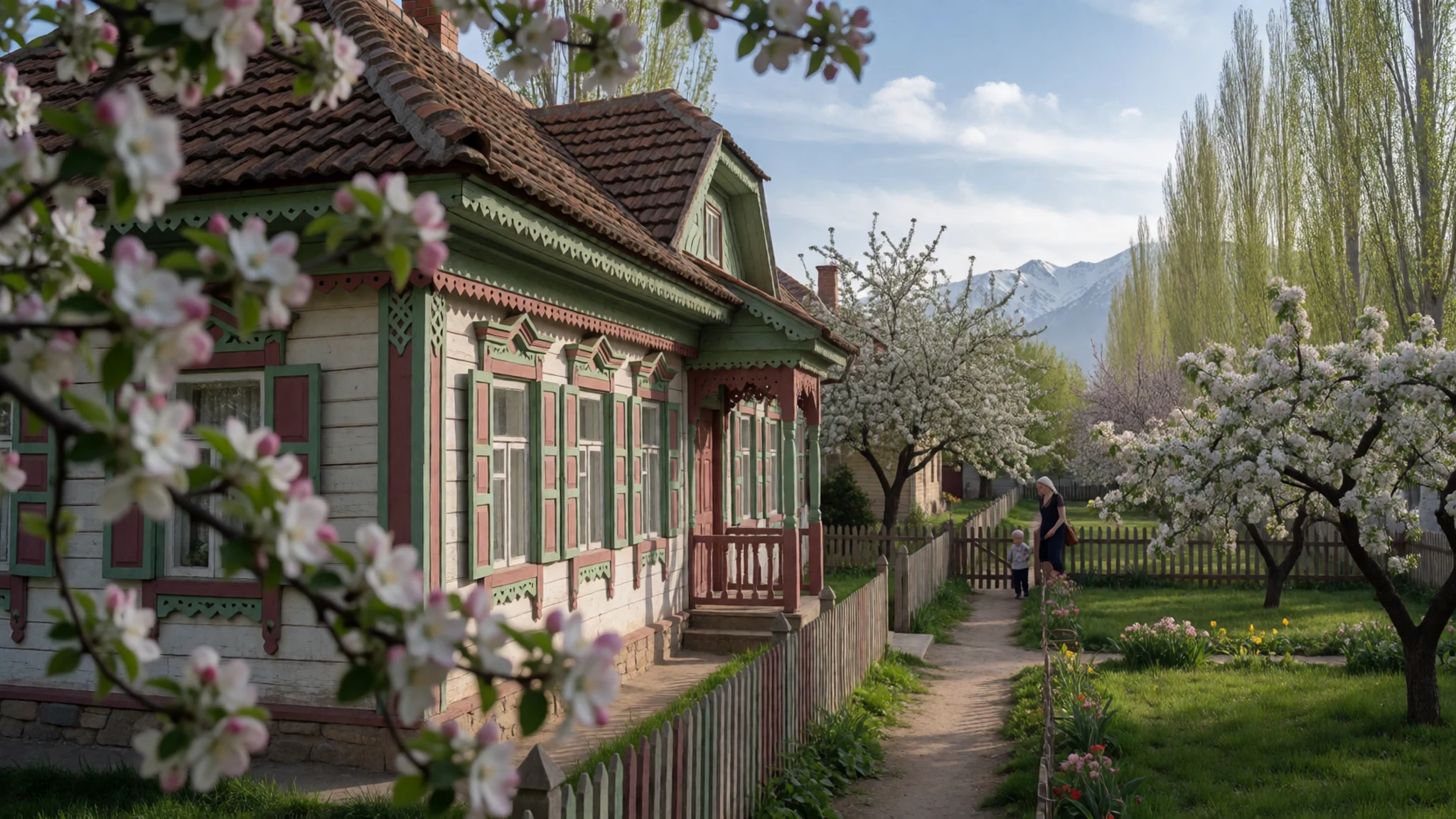
- Przhevalsky Museum and Memorial — North of Karakol, towards the lake
North of town, near the lake shore, a museum and memorial honour Nikolai Przhevalsky, the Russian geographer who studied the geography, plants and animals of Central Asia. His grave is in the grounds. It suits a half-day outing by taxi, combined with the shoreline. Check the official site before going, as opening arrangements change.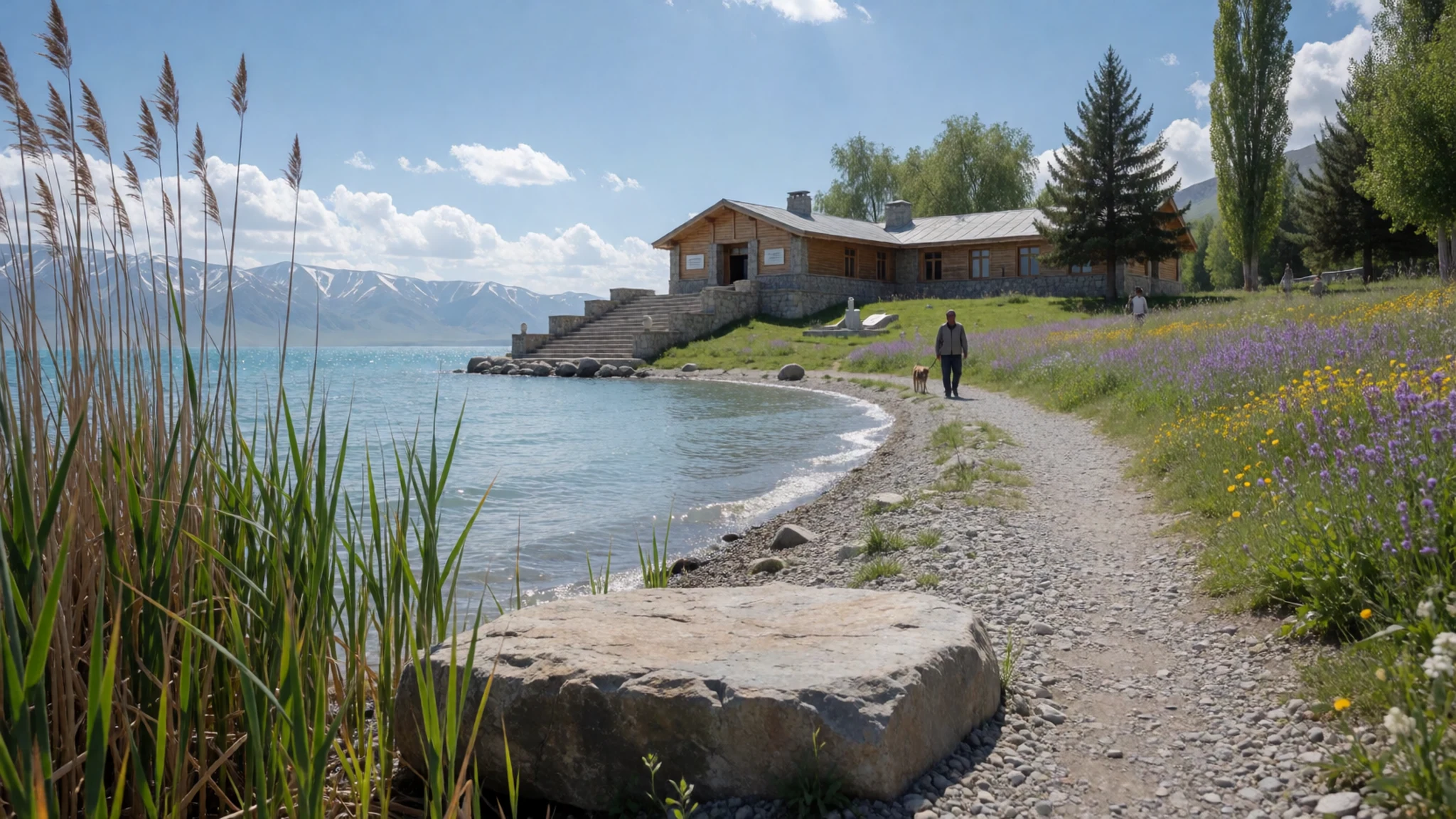
- Karakol Gorge — Mountains south of Karakol
A river gorge in the mountains south of town is the usual first taste of the Tian Shan: pine slopes, a fast stream and trails that climb towards alpine valleys. Summer brings day walkers and trekkers, winter brings skiers nearby. Go early, carry layers and water, and ask locally about trail conditions before heading up.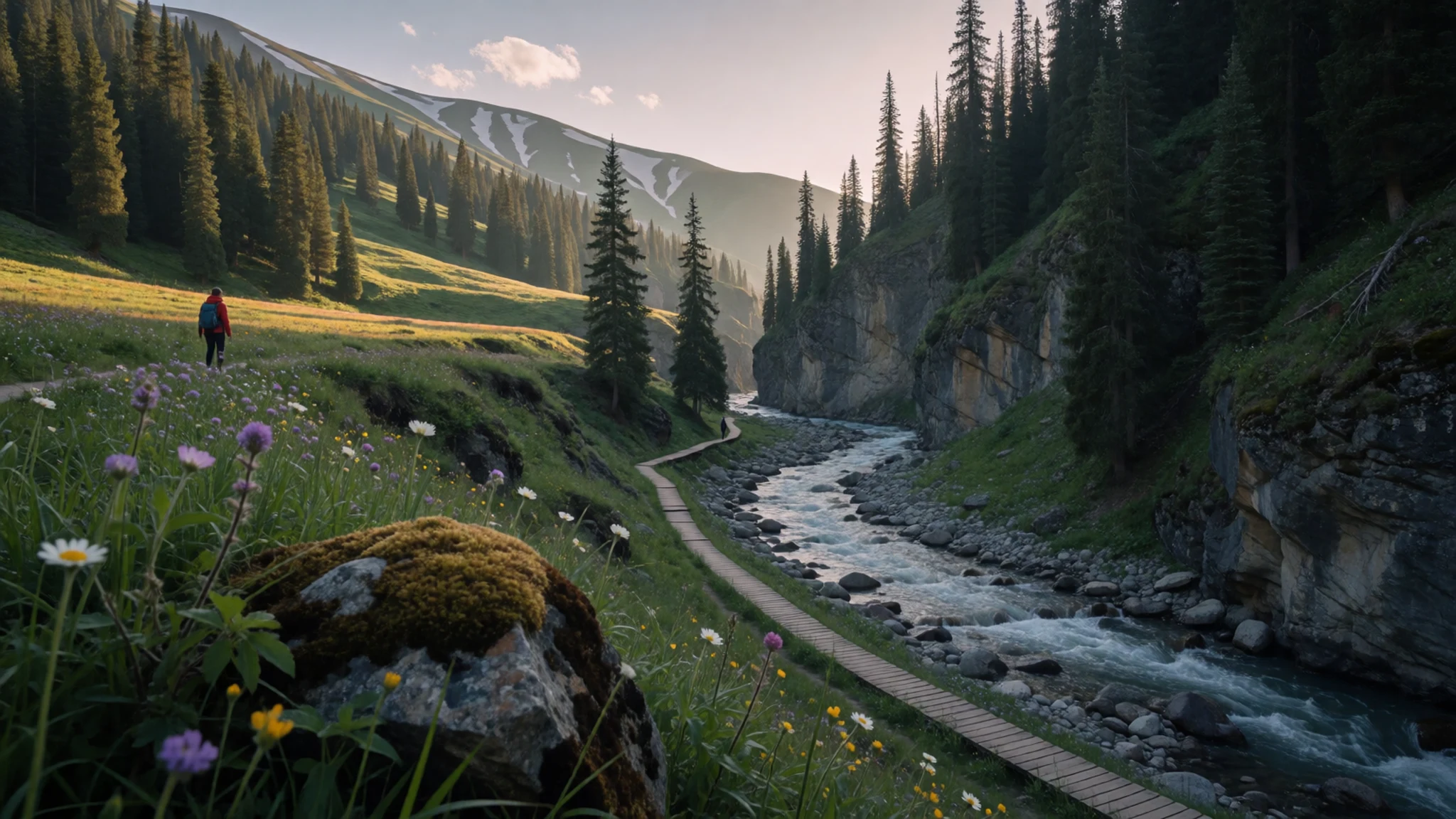
Culture
Karakol's culture is layered: Kyrgyz, Russian and Dungan traditions share the same streets. Kyrgyz life has its roots in semi-nomadic herding, and that shows in hospitality: guests are fed generously, tea comes first, and refusing all food can feel awkward. Felt, horses and yurts remain strong symbols, and families still take animals up to summer pastures in the mountains. Russian influence shows in language, Orthodox worship and the old timber architecture, and Russian is widely understood alongside Kyrgyz. The Dungan community, Muslims of Chinese origin, keeps its own cooking, its mosque and its decorative traditions, which is why the town's most distinctive building looks like a pagoda. Islam in the region is practised moderately, and mosques, churches and homes all expect modest behaviour. Life moves at a relaxed pace, markets are social places, and bargaining is gentle rather than fierce. Seasonal rhythms matter: winter is for skiing and staying warm indoors, summer for pastures, trekking and lakeside holidays. Visitors who learn a few words of Kyrgyz or Russian get a warm response. When invited into a home, take off your shoes at the door and accept at least a little tea or bread before you leave.
What to wear
Traditional Kyrgyz dress in the Karakol area comes from herding life. The best-known piece is the ak-kalpak, a tall white felt hat with dark trim, still worn at festivals and weddings and by many older men. Felt, pressed from sheep's wool, also gives warm coats and the patterned shyrdak rugs seen in homes and craft shops. Women's festive dress includes embroidered velvet waistcoats, long dresses and decorated headwear, while Dungan women's traditional clothing is known for bright embroidery. Day to day, people in Karakol dress as in most Central Asian towns: jeans, jackets, fleeces and trainers, with headscarves common among Muslim women and more formal coats among older residents. Traditional dress mostly appears on holidays and at cultural events. For visitors, layers matter most, since the town stands at 1690 metres and mornings and evenings are cool even in summer. Bring sturdy waterproof boots for trails, a warm hat and gloves for winter and high passes, and sun protection for the mountains. In town, shorts and T-shirts are acceptable in warm weather, but cover shoulders and knees at the mosque and the church, and carry a light scarf for the church.
What to eat
- Ashlyan-fu — Dungan-run cafés and eateries around the bazaar
Karakol's best-known Dungan dish: cold noodles in a sharp, spicy vinegar sauce, often with pieces of starch jelly. It is refreshing in summer and very cheap. Some cafés do not list it on the menu, so ask for it by name.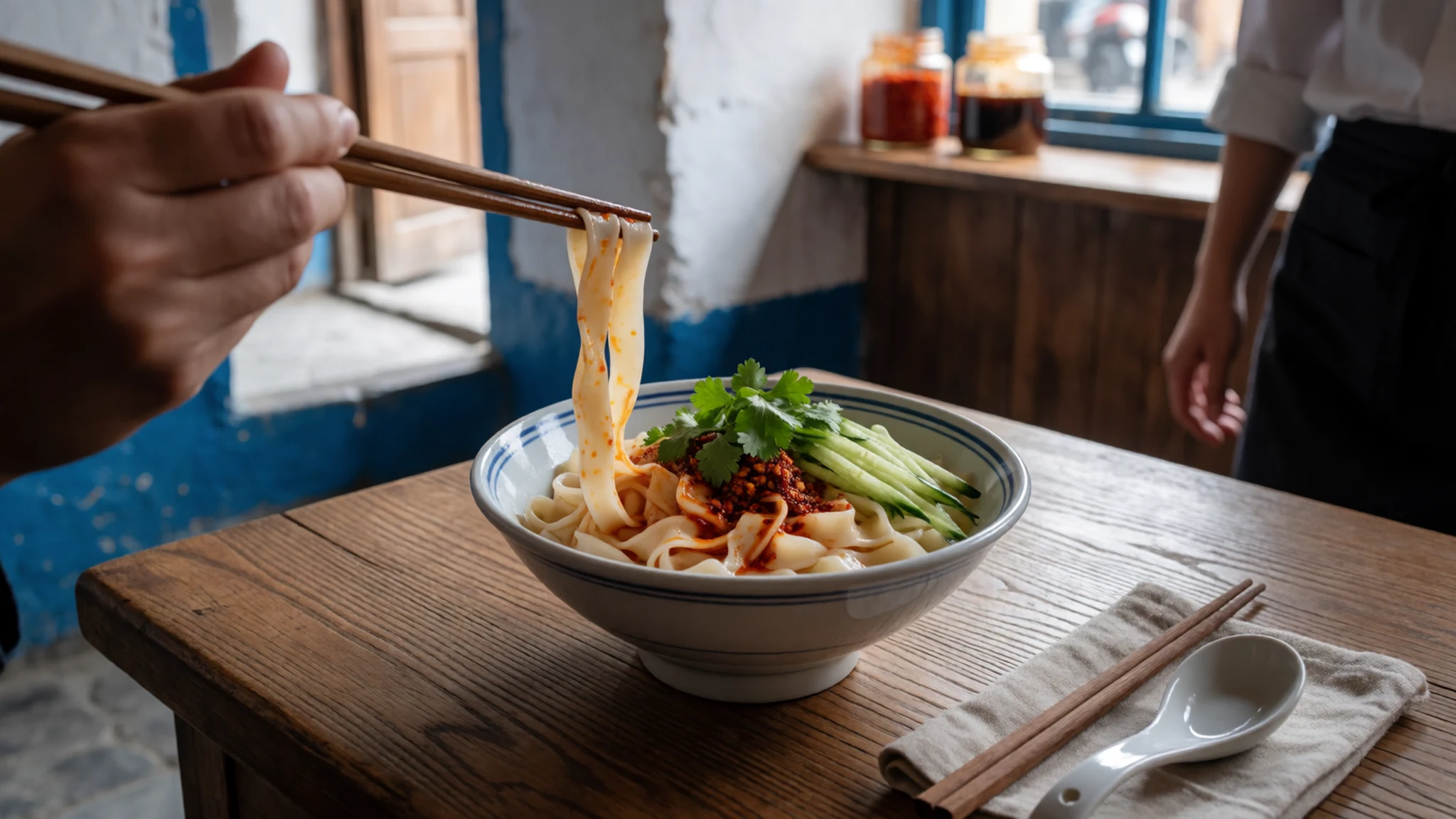
- Laghman — Almost any local café in the centre
Hand-pulled noodles served in a savoury sauce of meat and vegetables, either as a soup or with the sauce on top. It is a filling mountain meal found across Central Asia, and a safe first order for newcomers.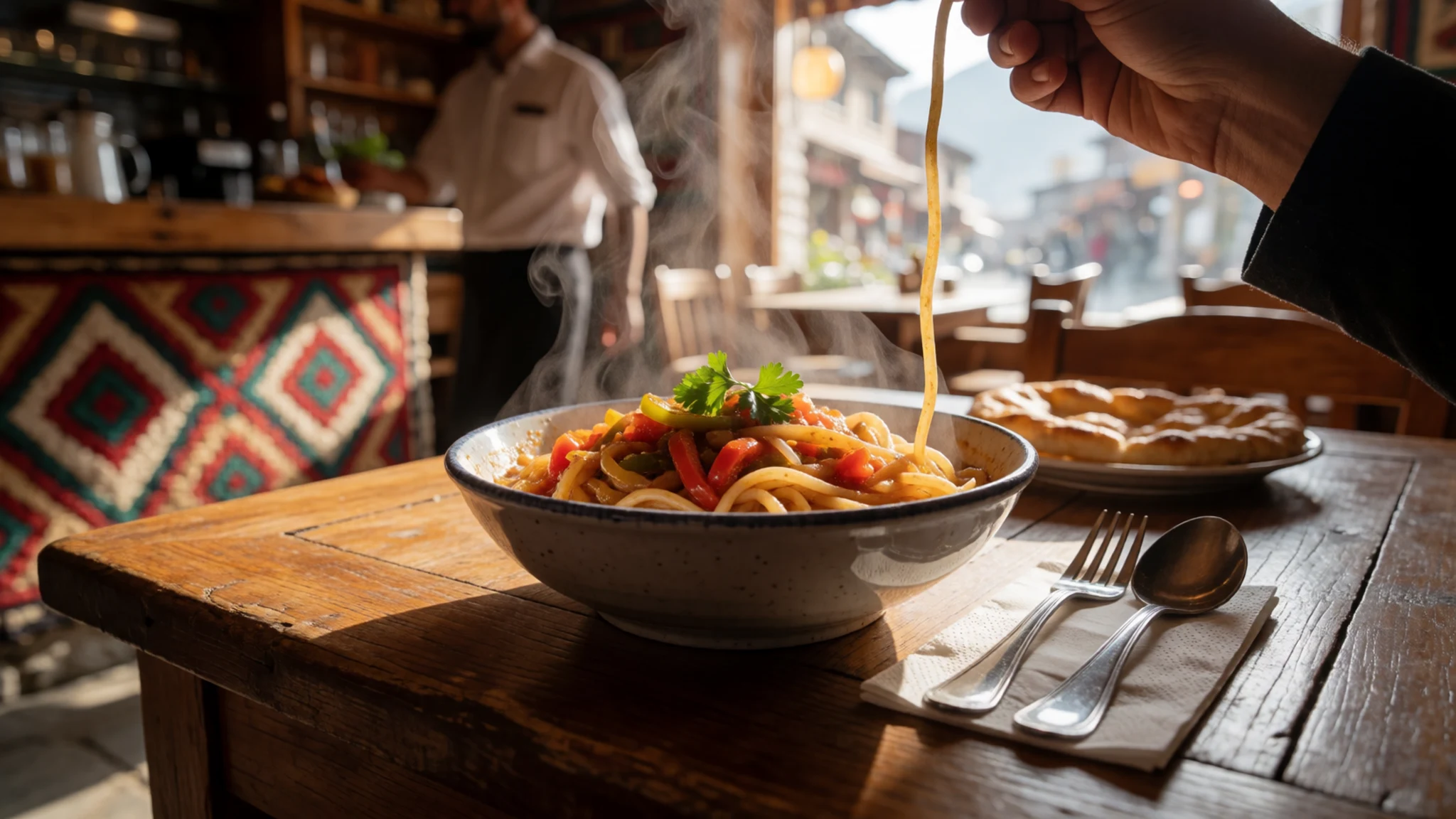
- Manti — Family-run cafés and canteen-style eateries
Large steamed dumplings filled with chopped meat and onion, eaten with the hands or a fork and often with sour cream or a chilli sauce. They are heavy, warming food after a day on a cold trail. - Beshbarmak — Restaurants serving traditional Kyrgyz cuisine, and family celebrations
Kyrgyzstan's celebration dish: boiled meat laid over flat noodles with onion broth. Its name refers to eating with five fingers. It is usually made for guests and festivals, so order it ahead where possible. - Samsa and fresh bread — Bakery counters and stalls at the main market
Baked pastries filled with spiced meat and onion, sold hot from the oven with round loaves of local bread. They make a cheap breakfast or trail snack, best eaten while still crisp.
Plan it
Best time. June to August for trekking, when valleys are green and most trails are clear of snow; December to March for skiing. The climate is humid continental, with cold snowy winters and warm summers, and higher passes hold snow into early summer. Spring and autumn are changeable.
How long. 3–4
Getting there. Fly to Manas International Airport (FRU) in Bishkek, which has the widest connections, including flights from Delhi, Dubai, Istanbul and Moscow. From Bishkek, take a bus, marshrutka or shared taxi to Karakol, a road journey of several hours along the northern shore of Lake Issyk-Kul. Shared taxis are faster than buses, and most services leave in the morning from the main bus station. The Kazakh border crossing at Kegen is open in summer only.
Budget. low
Tips
- Carry cash in som for markets, small cafés and taxis, as cards are not accepted everywhere
- Start trail days early, since mountain weather often turns in the afternoon
- Bring layers even in summer; the town stands at 1690 metres and trails climb higher, so ascend gradually
- Agree taxi fares before setting off, and ask your guesthouse what a fair price is
- Book guesthouses ahead in peak summer and in ski season; check the official site, http://www.karakol.com.kg/, for local information
Etiquette
- Take off your shoes when entering a home or when you see shoes lined up at the door
- Dress modestly at the mosque and the church, and cover your head if you are a woman entering the church
- Ask before photographing people, especially worshippers and older residents
Nearby
Sources
- Wikidata Q194452 (CC0)
- Wikipedia: Karakol (rev 1381465607) (CC BY-SA 4.0)
- Wikivoyage: Karakol (rev 5406282) (CC BY-SA 4.0)
- Photo: Dungan mosque from above, Nikolai Bulykin (CC BY-SA 4.0)
- Photo: Pushkin park panorama, Nikolai Bulykin (CC BY-SA 4.0)
- Photo: Statue of Tagay-Biy, Adam Harangozó (CC BY-SA 4.0)
- Photo: Holy Trinity church, Petar Milošević (CC BY 3.0)
- Photo: Kyrgyzstan Karakol, Kalpak Travel (CC BY 2.5)
- Photo: Flat in Karakol, Bruno Rijsman (CC BY 2.5)
- Photo: Relief map of Kyrgyzstan, NordNordWest / Виктор_В (CC BY 3.0)
- Photo: Karakol Gorge, Jigitekov (Public domain)


