Kuakata
Kuakata, Bangladesh
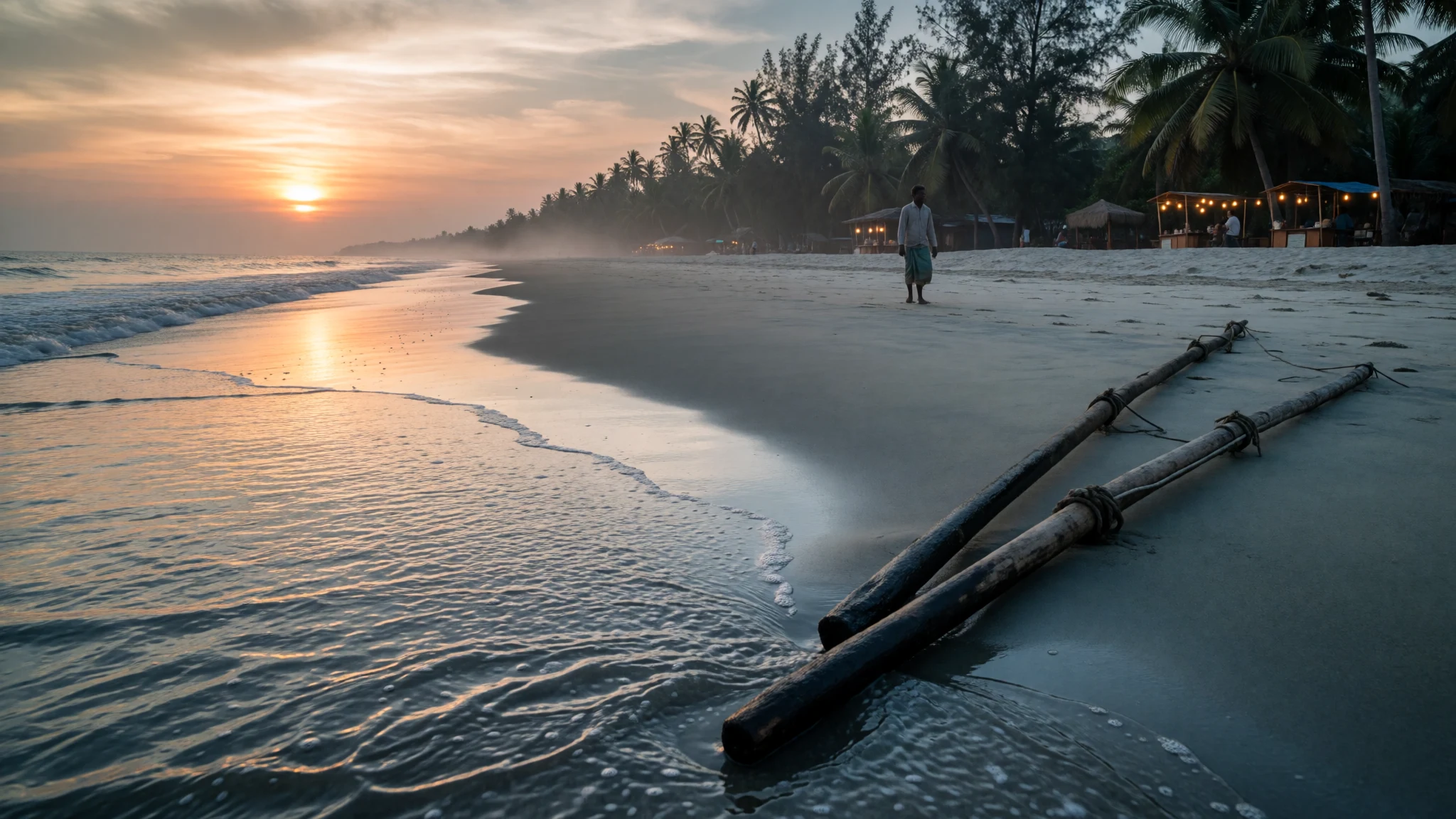
Kuakata is a long, quiet Bangladeshi beach where the sun rises and sets over the Bay of Bengal, with Rakhine monasteries and mangroves close by.
The place
Kuakata is a town in Kalapara Upazila, Patuakhali District, on the southern edge of Bangladesh, about 320 km south of Dhaka. Its main draw is the beach, a broad sandy strip roughly 18 km long and 3 km wide, facing the Bay of Bengal. The same stretch of sand serves for watching the sun come up and go down over open water, which is why visitors tend to arrive for a dawn and a dusk rather than a single afternoon. At low tide the sand is wide and flat. The sea is muddy brown rather than clear, a reminder that the delta's great rivers empty nearby. This is not a polished resort coast. Expect simple lodging, small eateries, rickshaw and motorcycle rides, and a crowd of Bangladeshi families on weekends and holidays. Behind the beach are groves of jhau (casuarina) and coconut palms, and to the west a protected mangrove forest that locals sometimes call a second Sundarban. Inland and along the shore sit Rakhine villages with Buddhist monasteries, and the fishing port of Alipur lies a short way north. Kuakata lacks the international name of Cox's Bazar, and that shows in a quieter, more local feel, but also in rougher roads and thinner services. The journey is long, so the place suits people who want a slow few days rather than a quick stop.
Its story
Kuakata's story is that of a frontier shore settled by people who came to fish, farm and pray. The name is usually explained through the Bengali word kua, a well, and the wells that Rakhine settlers dug to find fresh water on a salty coast. Old wells still stand beside a Buddhist monastery near the beach, and locals treat them as part of the town's origin. The Rakhine are a Buddhist people whose roots lie along the Arakan coast to the south-east. They built villages such as Keranipara and Misripara, and their monasteries, weaving and market still give the area a character distinct from the Bengali villages inland. Hindus have long come here as well. The town is a pilgrimage place for both Hindu and Buddhist communities, and ritual bathing in the bay at full-moon festivals turned a remote beach into a gathering ground with fairs and stalls. Fishing carries the everyday economy. Alipur, a short way north, is a working landing port for the southern coast, with boats, drying racks and traders. Tourism arrived later and is still modest, held back by the long road from Barishal and the ferries along it. The coast itself is low and exposed. Tides reshape the shore, and cyclones and storm surges are part of life in this corner of the delta, which shapes how people build, fish and travel.
What to see
- Kuakata Beach — Kalapara, Patuakhali
The main beach is a very wide, gently sloping sweep of sand that is best walked at low tide. Early in the morning, small crabs and lobster-like creatures scuttle across the wet sand. Rent a bicycle or motorcycle for the hard sand, or just stroll. The sea is brown and the current can be strong, so paddle with care.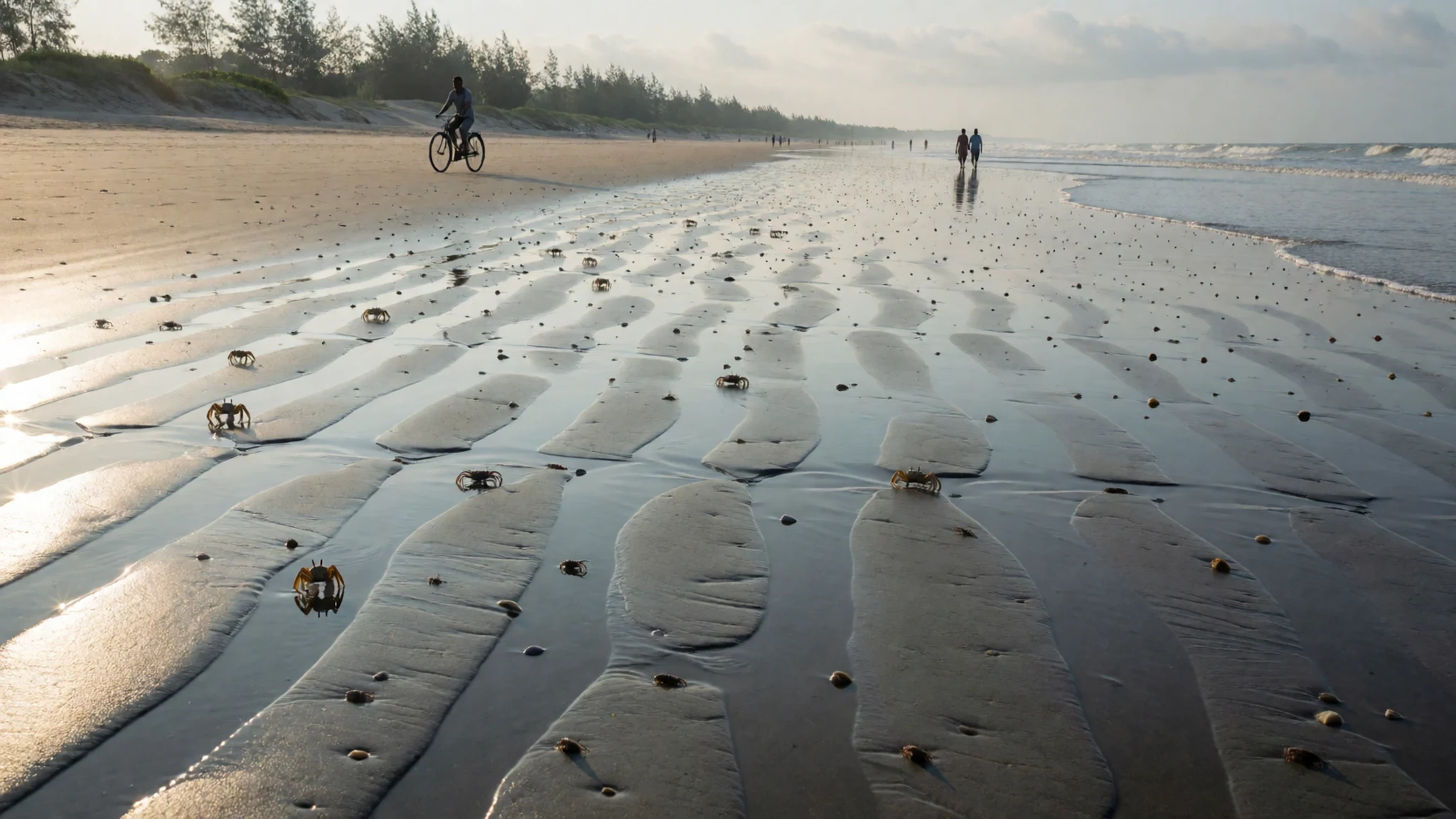
- Sunrise point — Kuakata Beach
Locals gather at the beach before first light to watch the sun lift out of the Bay of Bengal. The sky changes quickly, so arrive early. Tea stalls and fishermen heading out give the scene its life. In the monsoon, cloud often hides the horizon, so winter mornings are the better bet.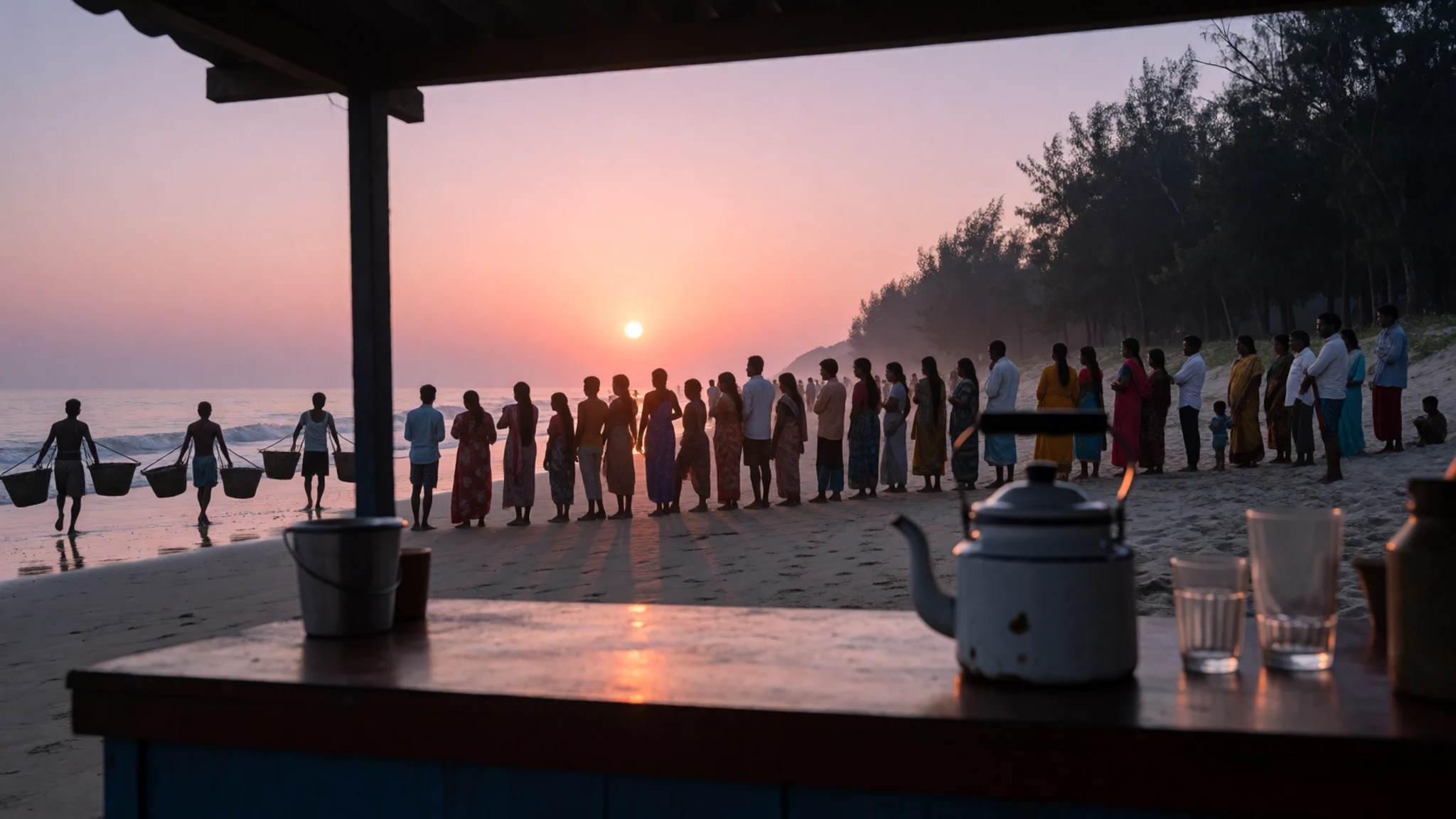
- Sunset point — Kuakata Beach
Evenings draw the biggest crowds, with families, hawkers selling snacks and children running along the waterline. The sun sinks into the bay and the wet sand turns copper. It is lively rather than peaceful, so walk a little way along the shore for more room, and keep an eye on the incoming tide.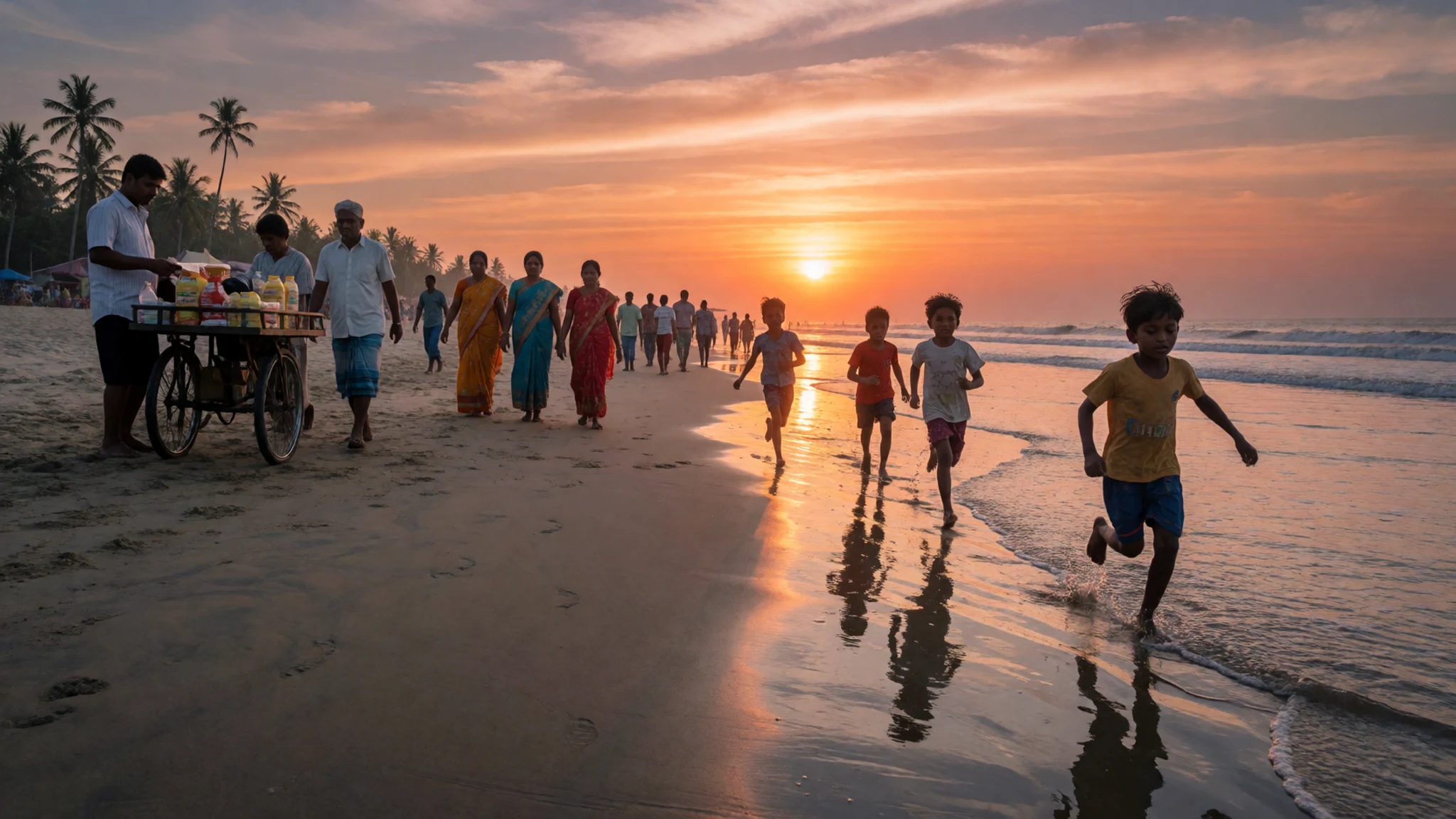
- Fatra mangrove forest — West of Kuakata Beach
West of the beach, a protected mangrove forest spreads across tidal flats and creeks. Locals compare it to the Sundarban, though it is far smaller. Reaching it usually means a boat or trawler with a local guide. Expect mud, insects and heat, and go with the tide in mind, since channels change quickly.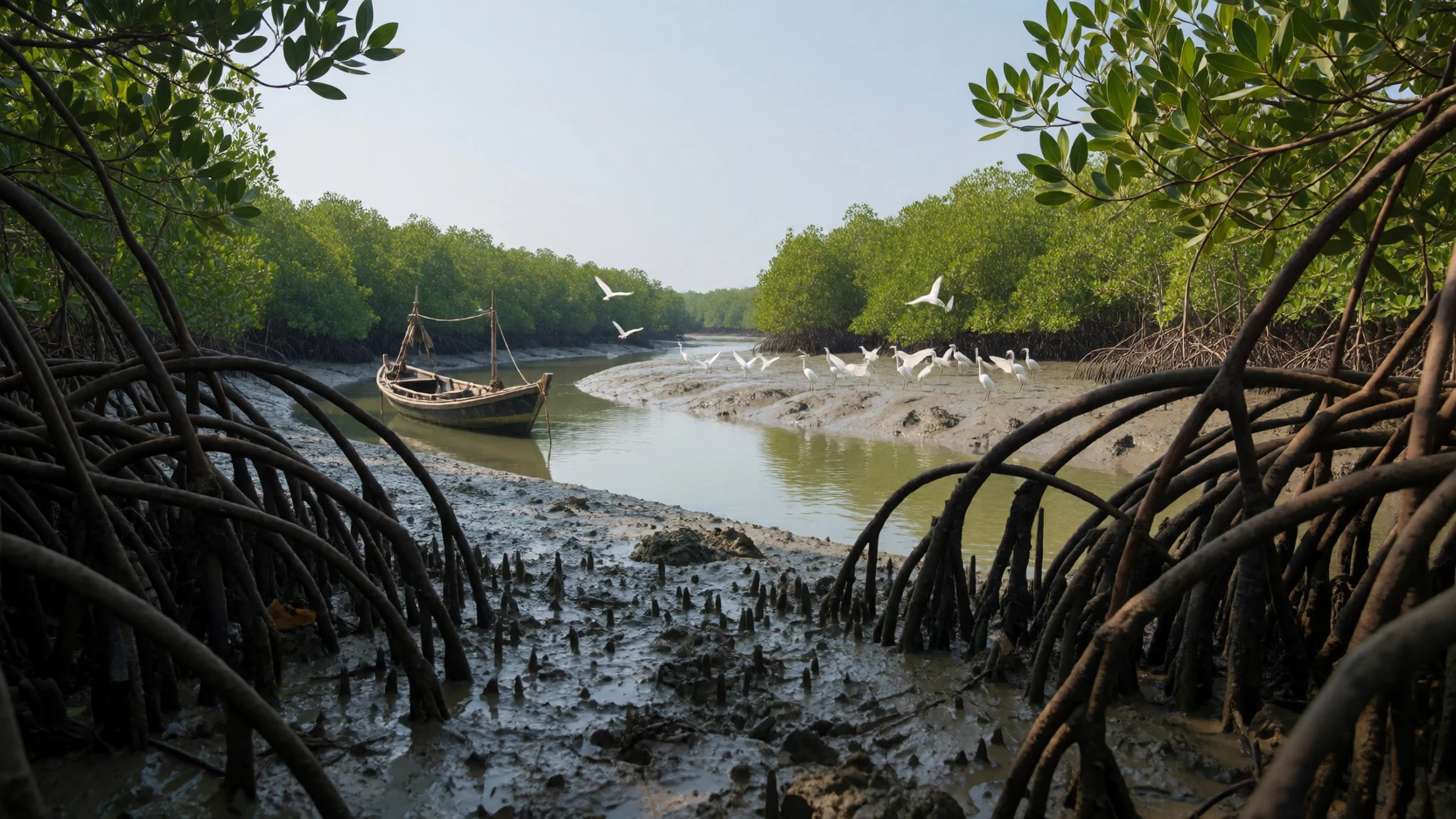
- Keranipara and Seema Vihara — Near Kuakata Beach
Keranipara is a Rakhine village near the beach, where wooden houses, looms and a small market sit beside an old Buddhist monastery. In front of the monastery stands an ancient well, and inside is a seated Buddha image cast in a mixed-metal alloy. Visit politely, as people live and worship here.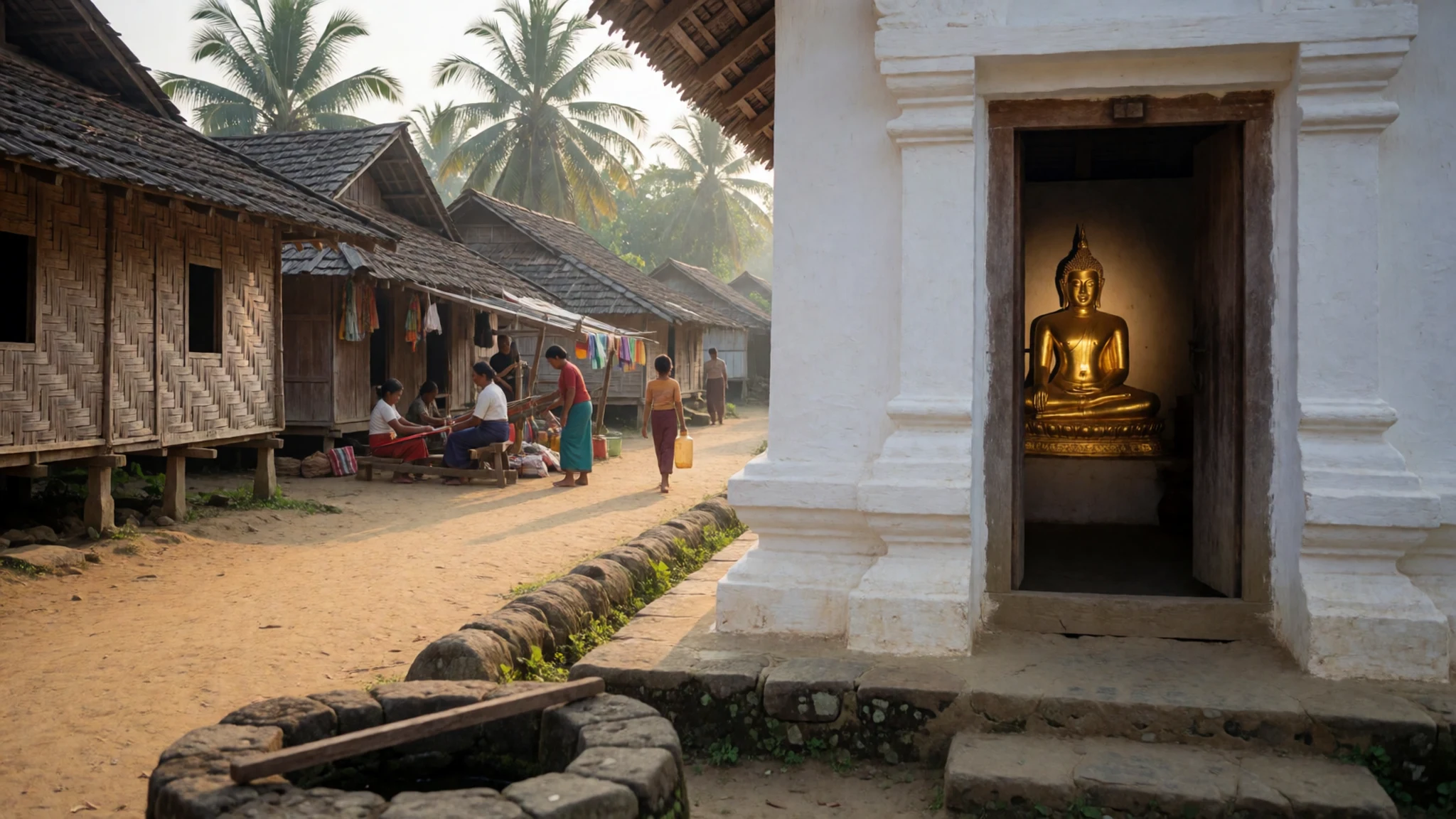
- Misripara Buddhist temple — East of Kuakata Beach
Misripara is another Rakhine village, a short ride east of the beach, known for a temple with a statue claimed to be the highest in Bangladesh. The road is rough, and a motorcycle taxi is the practical way to go, especially after rain. The setting is calm and green, and the monks are generally happy to explain the temple.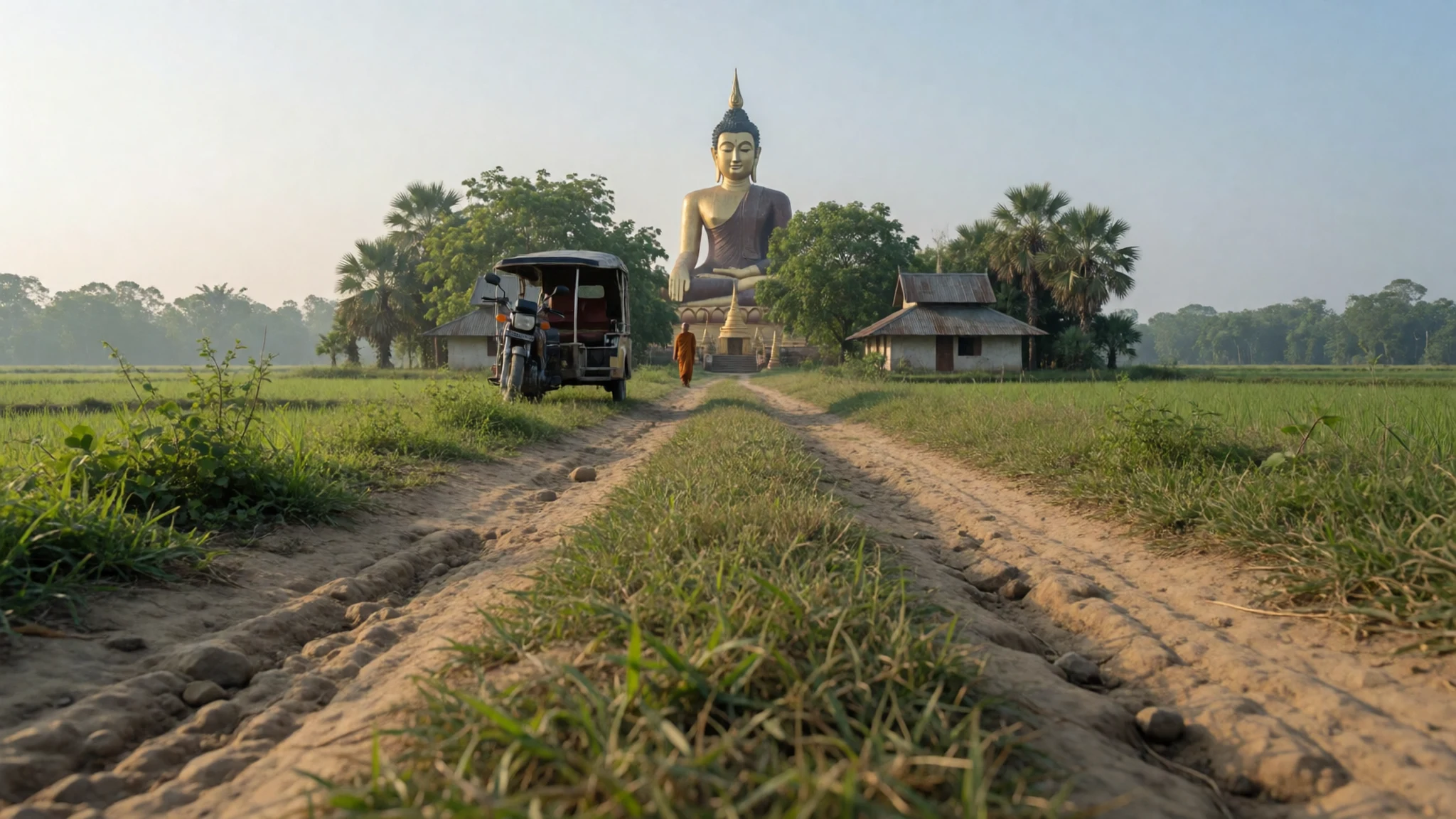
Culture
Kuakata sits where two faiths meet at the sea. Hindu and Buddhist communities both treat it as a pilgrimage place, and large numbers of devotees arrive for the festivals of Rush Purnima and Maghi Purnima. On those full-moon days pilgrims take holy baths in the bay and join traditional fairs on the shore, with stalls, music and food. The Rakhine people, who are Buddhist, keep their own monasteries, festivals and crafts in villages near the beach, and a visit to an old temple with a seated Buddha and ancient wells shows how long they have lived here. Most Bangladeshis are Muslim, so the beach is also a family holiday spot, and the mood is friendly, curious and a little formal. Visitors may be asked to pose for photographs or be stared at kindly. Baul songs, the wandering mystic songs of Bengal, can sometimes be heard at the beach in the evening, usually with a simple one-string instrument and a hat held out for tips. Respect for religious places runs deeper than the tourist trade, and the monks and pilgrims are not there as a show. Take off your shoes before entering any monastery or temple, dress modestly, and ask before photographing monks, worshippers or women bathing.
What to wear
In Kuakata, Bengali women traditionally wear the sari, often in cotton or in the finer woven styles of Bengal, while men wear the lungi, a wrapped cloth, or the long panjabi shirt on festival days. Rakhine women wear the thami, a wrapped skirt woven in bright stripes on a simple backstrap loom, usually with a fitted blouse; men wear lungis too. Handloom weaving is one of the crafts visitors can still see in the Rakhine villages. Day to day, people now wear what suits heat and work: salwar kameez and saris for women, shirts and trousers for men, and lungis among fishermen and boatmen. Families on holiday swim in their everyday clothes, and many women stay fully covered even when bathing. For a visitor, light, loose cotton with long sleeves and long trousers or skirts is the sensible choice, kinder to the sun and to local norms. Swimwear is best kept for private spaces, with a cover-up on the sand. Bring a hat, sunglasses and sunscreen, a light rain jacket in the wet months, and sandals you do not mind getting muddy. Slip-on shoes help at monasteries, where footwear comes off at the door.
What to eat
- Fried sea fish — Eateries along the beach road
Fresh catch from the bay is fried whole or in steaks with turmeric, chilli and salt. Different fish come in with each tide. Eat it hot with rice and a squeeze of lime, ideally at the open-fronted eateries just back from the beach.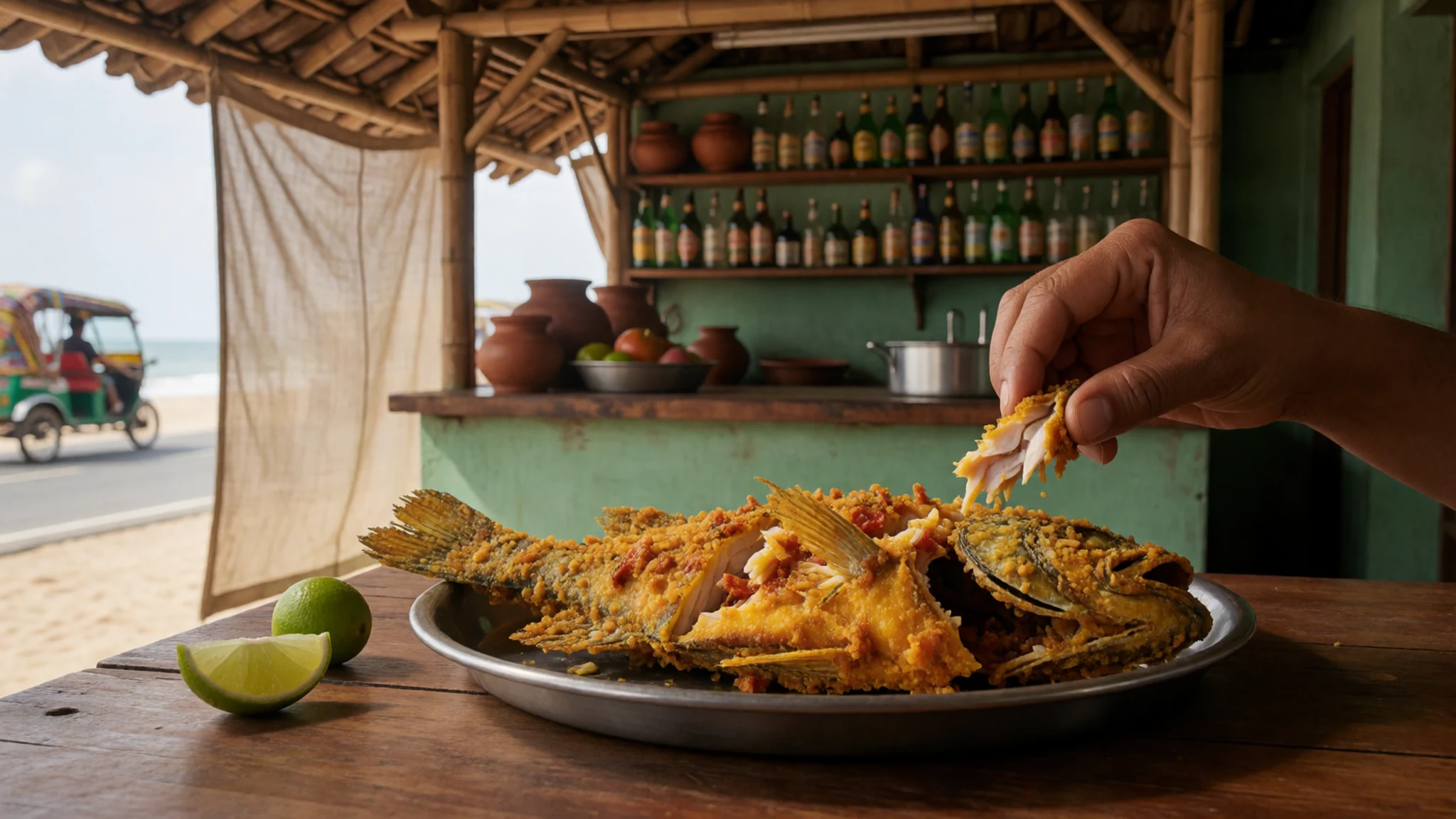
- Ilish (hilsa) curry — Local restaurants in Kuakata town and at the Alipur fish landing
Hilsa is the fish most Bengalis love, bony but rich. It is cooked in mustard paste or a light turmeric gravy and served with plain rice. Availability depends on the season and the catch, so ask what has come in that day.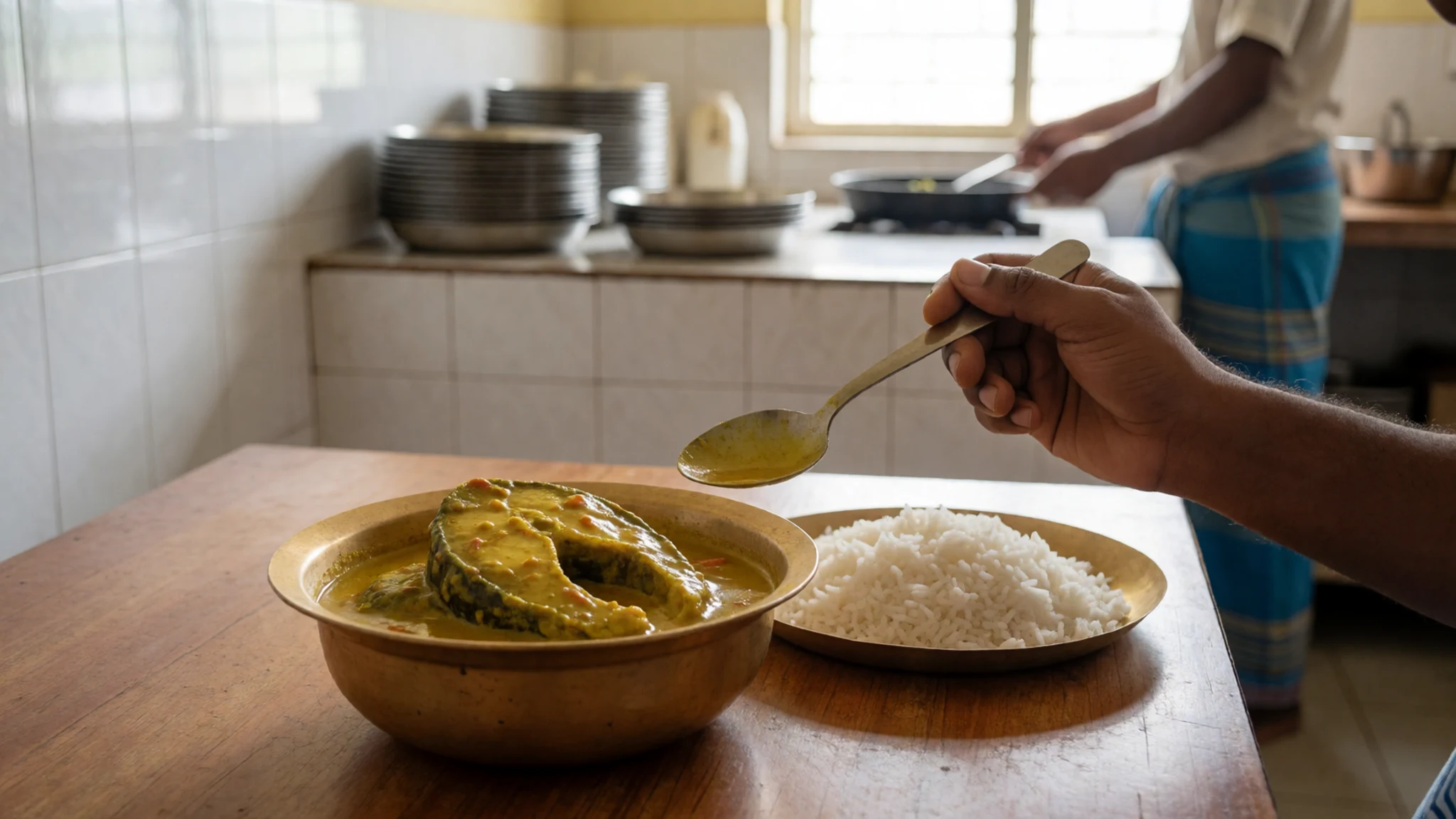
- Prawn and crab curry — Family-run eateries near the main beach
Coastal prawns and mud crabs are cooked with onion, ginger and chilli into thick, spicy gravies, sometimes with coconut. The shells are messy to eat, so expect to use your hands, as locals do. A dish for a long, slow lunch. - Shutki (dried fish) — Drying yards and stalls around Alipur port
Fish dried in the sun on racks near the port is cooked into strong, pungent curries or mashed into spicy bhorta. The smell is powerful, but the flavour is loved across the south. Try a small portion first with plain rice. - Green coconut water — Stalls on the beach and in the coconut groves
Coconut palms line the shore, and vendors split green coconuts on the spot with a machete. The water is cool, lightly sweet and welcome after a hot walk. Scrape out the soft flesh afterwards with a piece of the shell.
Plan it
Best time. December to February is the best time, with the coolest, driest weather and clearest skies for sunrise and sunset. March to May is the hottest period, and June to September is the monsoon, with the heaviest rain, rough water and a real risk of cyclones.
How long. 2–3
Getting there. The usual route is Dhaka to Barishal, by overnight river launch, bus or flight, then a bus from the Barishal launch port to Kuakata. The second leg takes about 5–6 hours because of poor roads and five ferry crossings; allow extra time in rain.
Budget. low
Tips
- Allow a full day each way, and book bus or launch seats ahead at weekends, holidays and festival full-moons
- Reach the beach before dawn for sunrise, and move away from the crowds by walking along the shore
- Carry cash, as cards and cash machines are patchy outside the main town
- Check the weather and cyclone warnings before travelling, especially from June to October
- Take bottled water, sunscreen, insect repellent and a rain layer
Etiquette
- Remove shoes and dress modestly at monasteries and temples
- Ask before photographing monks, worshippers or families
- Swim in modest clothing, and take rubbish back from the beach
Nearby
Sources
- Wikidata Q6440964 (CC0)
- Wikipedia: Kuakata (rev 1376562021) (CC BY-SA 4.0)
- Wikivoyage: Kuakata (rev 4715022) (CC BY-SA 4.0)
- Photo 01: Kuakata beach, Sparkle24 (CC BY 3.0)
- Photo 02: Sunset! Their best moment together, S.H. Tanim (CC BY 2.5)
- Photo 03: Kuakata sea beach, Mmrsafy (CC BY-SA 4.0)
- Photo 04: Kuakata Sea Beach, ArifHossainFC (CC BY-SA 4.0)
- Photo 05: Kuakata, Islam Bashirul (CC BY-SA 4.0)
- Photo 06: Mangrove Forest in Kuakata Sea Beach, Shahnoor Habib Munmun (CC BY 3.0)
- Photo 07: Sunrise at Kuakata beach, Happiest persoN (CC BY-SA 4.0)
- Photo 08: Sunset at Kuakata beach, Lonely Explorer (CC BY 3.0)


