Kadamjai
Kadamjai, Kyrgyzstan
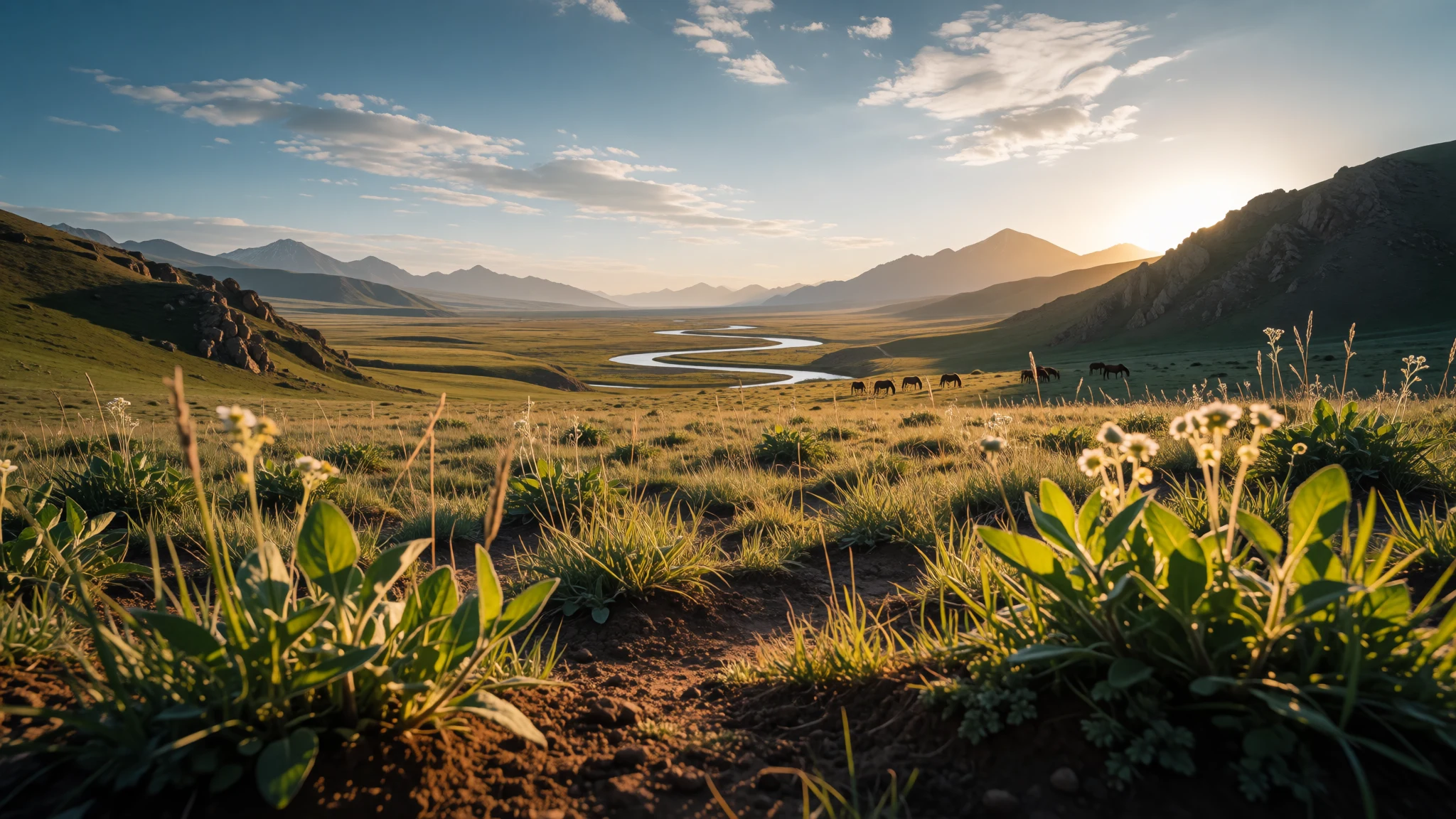
Kadamjai is a working mining town in Kyrgyzstan's far south-west, offering an unpolished look at herding country, Soviet-era industry and the road to Osh.
The place
Kadamjai is the administrative seat of Kadamjay District in Batken Region, in the far south-west of Kyrgyzstan, and it is a working town rather than a resort. The Shaymerden river (Kyrgyz Шаймерден, also called the Shohimardonsoy) runs through it, and the town lies between the mining settlements of Aydarken (Khaidarkan) and Kyzyl-Kyya. The district covers about 6,146 square kilometres and had 201,457 residents in 2021, so it is thinly settled: homes cluster along rivers and roads, and the rest is hill, orchard and grazing land. Two more rivers, the Isfayramsay and the Sokh, cross the district. Industry gives the area its character. Mercury and antimony are mined and processed locally, the Khaidarkan mercury plant dates from 1942, and an antimony factory operates in Kadamjai itself. That makes this a corner of Kyrgyzstan where heavy industry from the Soviet period still sits beside shepherding and small-scale farming. Visitor facilities are modest. There is no famous monument here and foreign tourists are a rare sight, so the appeal is a plain look at everyday life in the south, close to the southern rim of the Fergana Valley with higher pastures in the hills behind. Local time is UTC+06:00. Most travellers who pass through combine Kadamjai with Osh or with the walnut forests around Arslanbob, treating the town as a stop rather than a base for a long stay. Russian and Kyrgyz are the languages that will get a visitor furthest, and cash is safer than cards outside the bigger towns.
Its story
Kadamjai's story is the story of layered peoples. The Scythians lived across much of what is now Kyrgyzstan in antiquity. The Kyrgyz arrived later, traditionally traced to the Tuva region of southern Siberia, with a major movement into these mountains in the 13th century as the Mongol empire rose. They lived as herders, moving flocks between winter valleys and summer pastures, and that rhythm still shapes rural life. The valleys to the west were part of the Khanate of Kokand until 1876, when it was destroyed and the land was folded into the Russian Empire. Russian officials of the day called the Kyrgyz 'Kara Kirghiz' and used plain 'Kirghiz' for the people now known as Kazakhs. Annexation brought Slavic settlers who ploughed up pasture, which cost many herding families their grazing. In the same period Uighur and Dungan Muslims fled the failed rebellion against Qing rule in north-west China and found new homes on this side of the border, adding to the local mix. The Soviet era added another layer: mines and factories opened in this district, among them the Khaidarkan mercury plant in 1942. Kyrgyzstan became independent in 1991, and the mines and plants that still run are now part of the district's economy alongside farming and herding. Reading Kadamjai means reading all of that together: nomad pastures, imperial borders, Soviet industry and a young state still working out how to use each of them.
What to see
- Kadamjai town and the Shaymerden river — Kadamjai town
A walk through the centre of Kadamjai and along the Shaymerden shows a district town at work: market stalls, minibuses, the factory skyline and the river that supplies the valley. Nothing is staged for visitors, which is the appeal. Early morning and late afternoon are cooler and busier, and better for watching local life.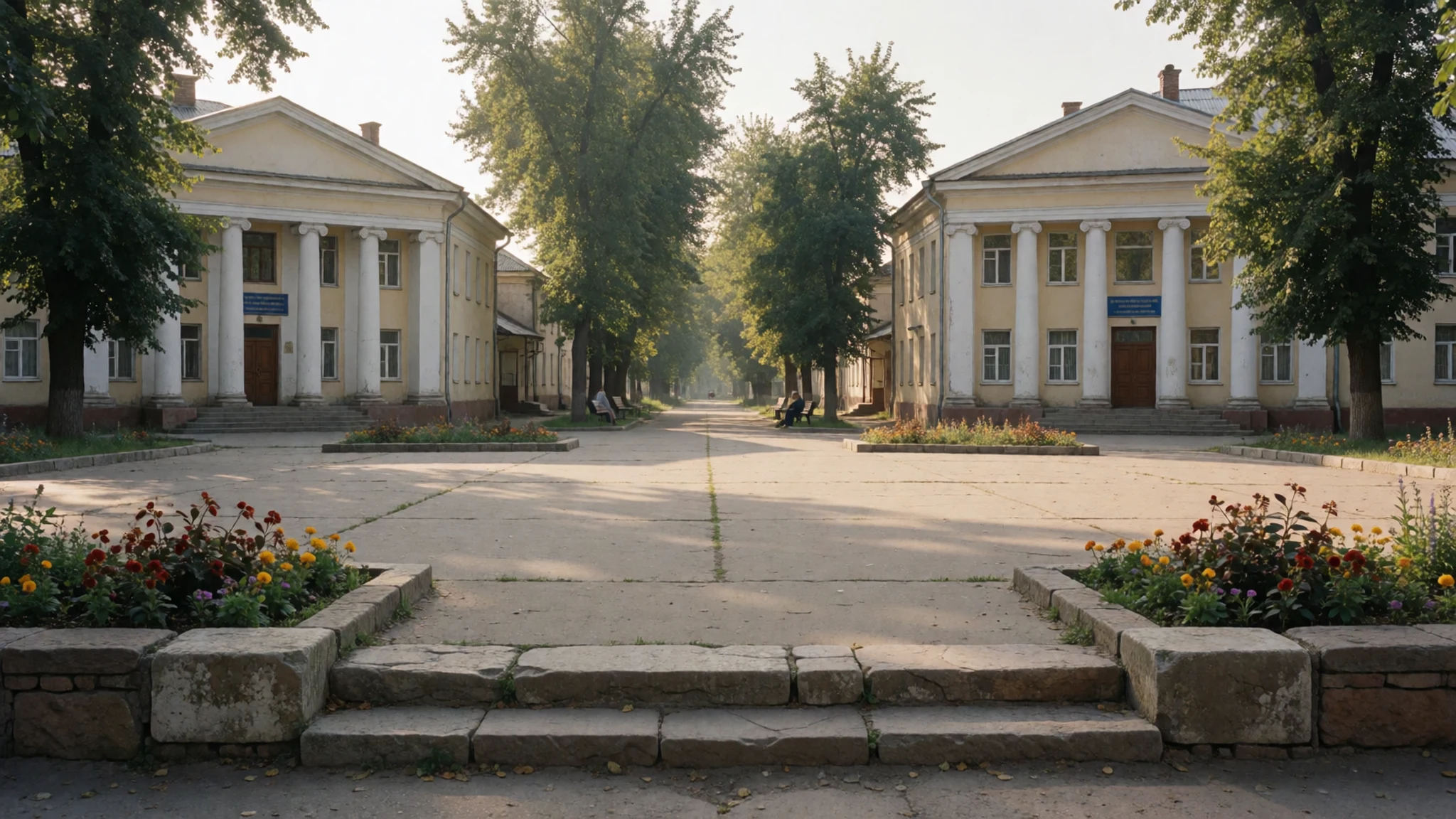
- Summer pastures in the hills — Upland grazing areas of Kadamjay District
Above the valleys lies the grazing land that herding families use in summer, the clearest living link to the Kyrgyz nomadic past. Flocks move up as the lowlands dry out, and herders put out salt because pasture grass alone does not always meet the animals' needs. Go with a local host or guide rather than wandering into camps.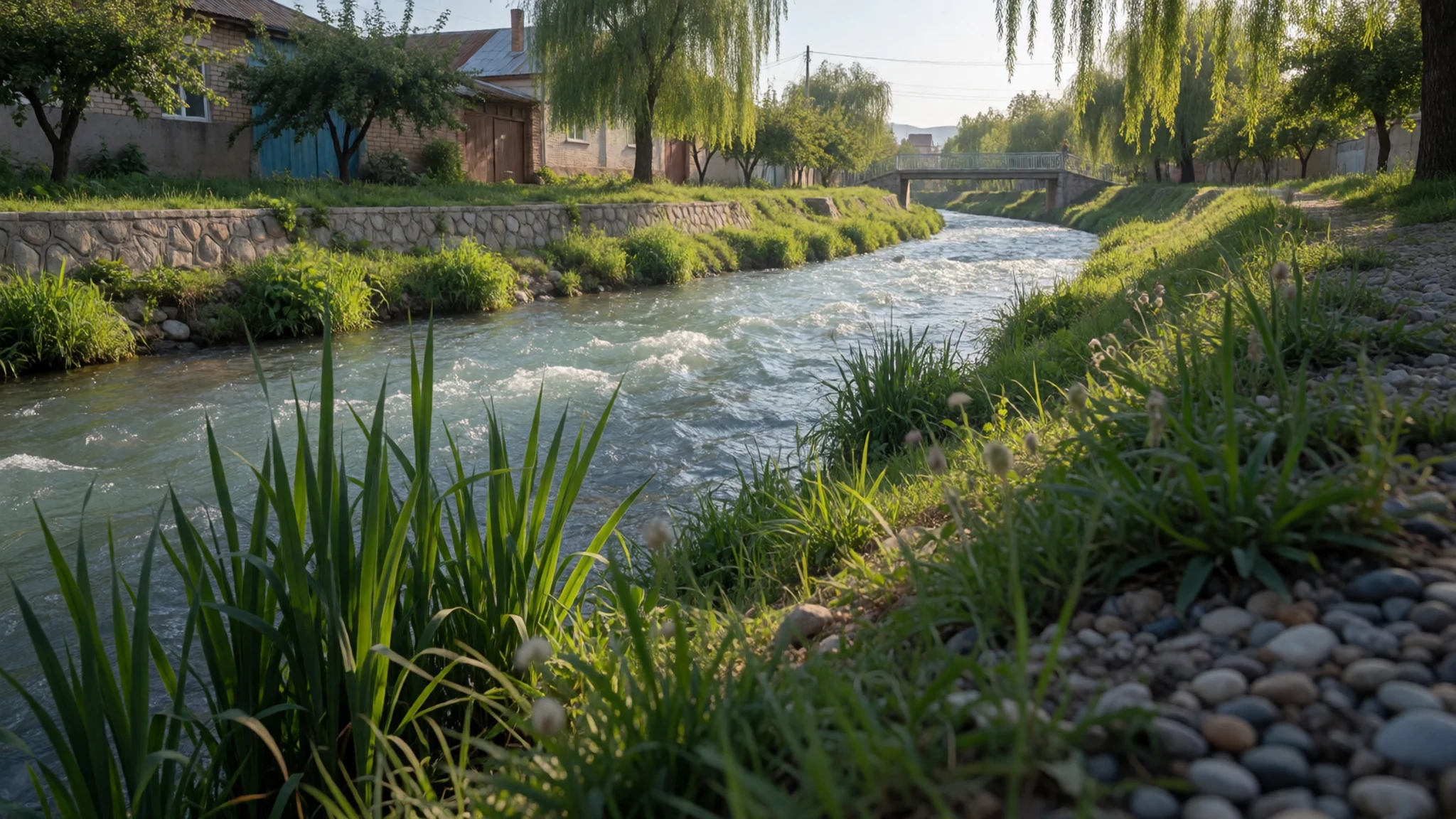
- Osh Bazaar and Sulaiman-Too — Osh
Osh is the southern city most travellers use for onward connections. Its bazaar sells produce, bread, spices and household goods, and the rocky mountain of Sulaiman-Too rises beside the centre as a viewpoint and a place of pilgrimage. It is a long road from Kadamjai, so plan it as a full day or an overnight.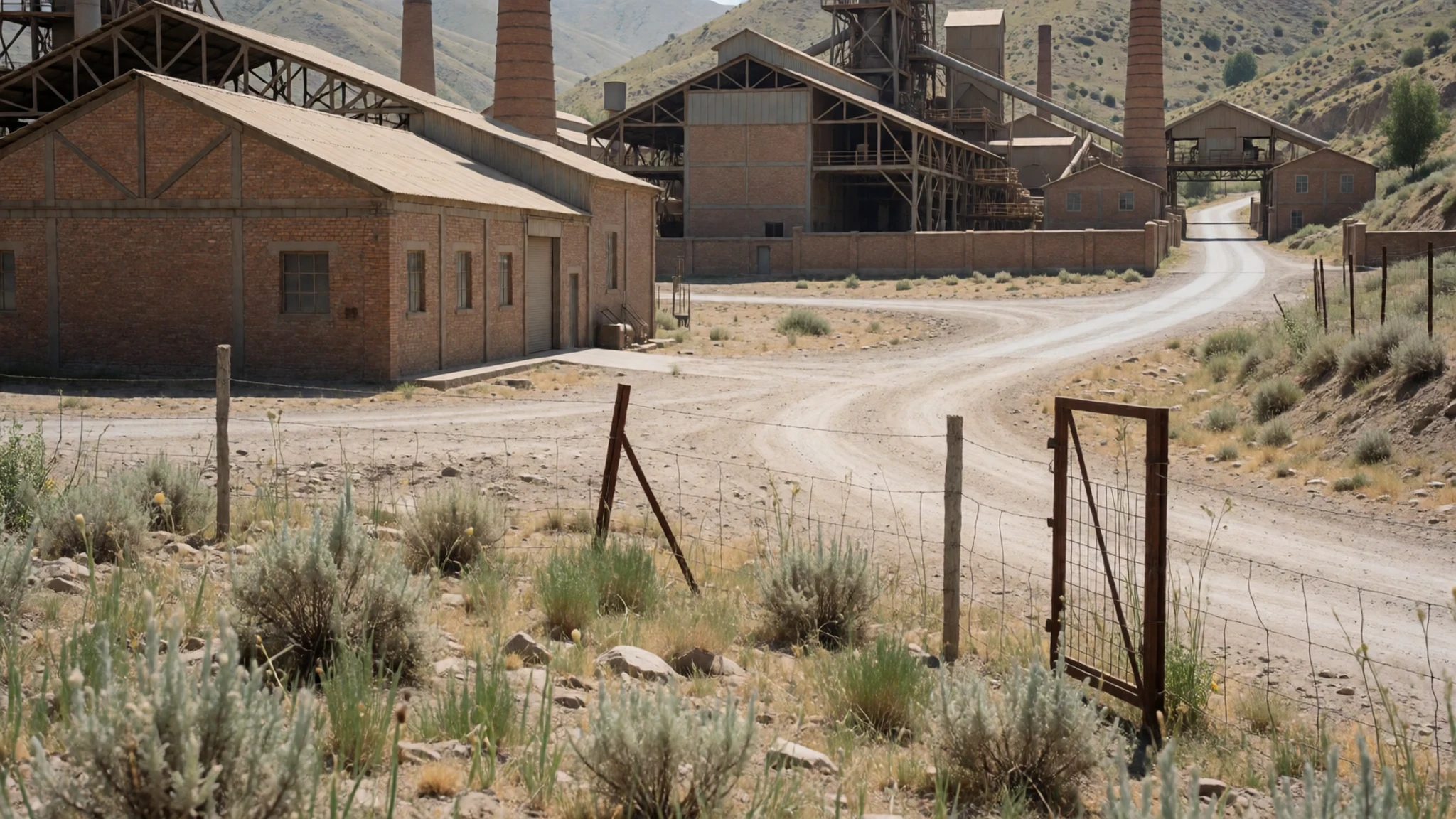
- Arslanbob walnut forest — Arslanbob valley, Jalal-Abad Region
Arslanbob is known for its walnut woods, set in a valley where village life and short-stay tourism sit side by side. Kyrgyz and Uzbek families come for walks and picnics. It lies well north of Kadamjai, so it suits travellers continuing through the south rather than a quick detour.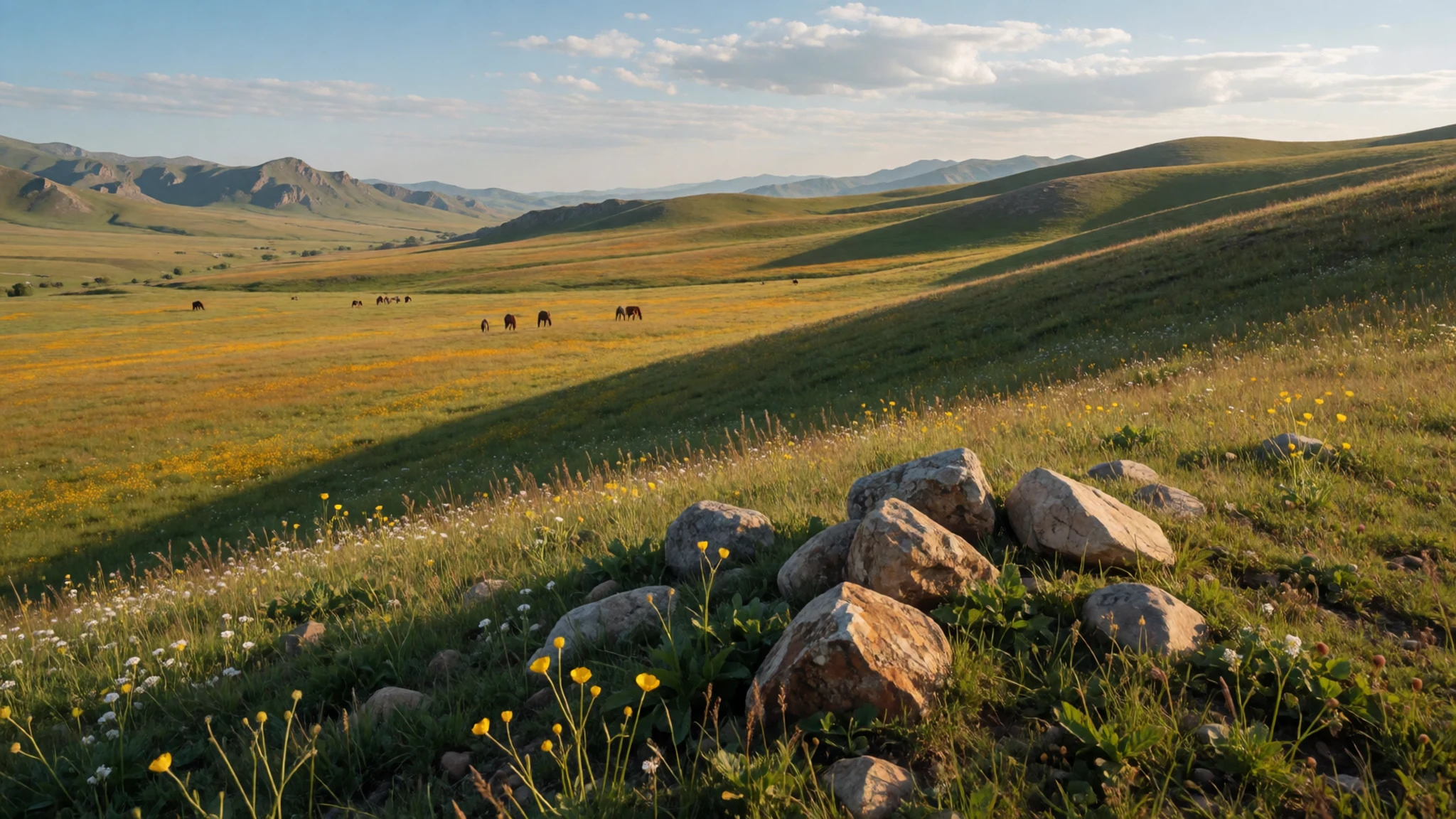
- Aydarken and Kyzyl-Kyya — Either side of Kadamjai
These mining and industrial towns flank Kadamjai, and the Khaidarkan mercury plant belongs to Aydarken. They are not sightseeing stops, but driving through them explains how the district earns its living. Ask before photographing plants, mine buildings or workers, and expect to be asked what you are doing.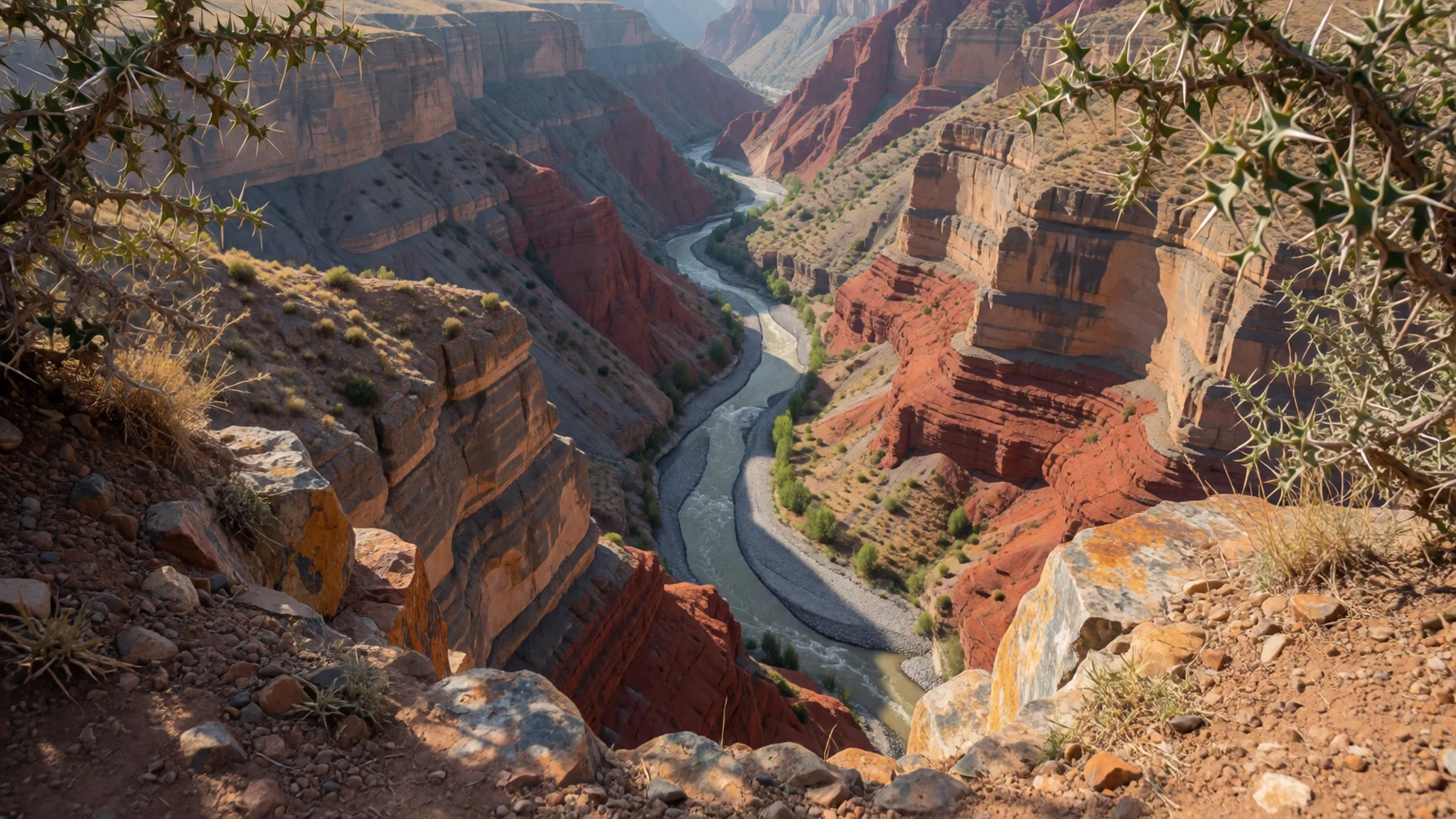
Culture
Kadamjai lies in the more conservative, Muslim-majority south of Kyrgyzstan, where daily life is shaped by family, hospitality and the memory of herding. Faith is mostly practised quietly and blends with older customs. The country is relaxed about dress and alcohol compared with some neighbours, but the south is noticeably more traditional than Bishkek. Hospitality is what visitors remember. An invitation into a home means tea, bread, sweets and usually something more, and refusing everything can come across as cold. Hosts rarely fill a cup to the brim so that they can keep topping it up, which is a courtesy and not stinginess. At large gatherings the national dish besh barmak is served in a set order, with the best cuts going to guests of honour and elders. Toasts with kymys or vodka are common, and evenings can turn rowdy where alcohol flows, so many travellers choose to head back early. Russian works as a common language across generations, Kyrgyz is the national tongue, and Uzbek is widely spoken in this part of the south. People tend to be curious about foreigners, and a few words of Kyrgyz or Russian are received warmly. Accept the first cup of tea with your right hand, and take your shoes off before stepping onto a carpeted or raised floor in someone's home.
What to wear
Kadamjai's traditional dress belongs to the wider Kyrgyz repertoire, built on felt, wool, cotton and silk. Men's best-known piece is the kalpak, a tall white felt hat with dark trim, worn today mainly at weddings, holidays and ceremonies. The chapan is a long quilted coat, often of velvet or printed cotton, worn against the cold and for formal occasions. Married women once wore the elechek, a large white headdress, which is now rare outside folk performances. Felt itself is the signature textile: shyrdak and ala-kiyiz carpets are made from sheep's wool, dyed and patterned by hand. Bright silk and cotton from the Fergana Valley, including streaky ikat fabric known as atlas, shows up in women's festive dresses. Everyday clothing in town is ordinary and practical: jeans, shirts, tracksuits and jackets for men, and long skirts or dresses for women, often with a headscarf among older and more observant women. Visitors should dress modestly, particularly in the south. Women should cover shoulders and knees and carry a light scarf; men should avoid shorts in town. Summers are hot, so choose breathable cotton, a sun hat and sunglasses. Sturdy closed shoes suit dusty, uneven roads and pasture tracks. Layers and a warm jacket matter for higher ground, where evenings cool quickly, and winter needs a proper coat.
What to eat
- Besh barmak — Family tables and celebration meals; ask at local eateries
The national dish of boiled meat, usually mutton or horse, served over noodles with onion and a rich broth. Its name means 'five fingers' for the way it is traditionally eaten by hand. Cuts are shared by social rank, with guests of honour served first.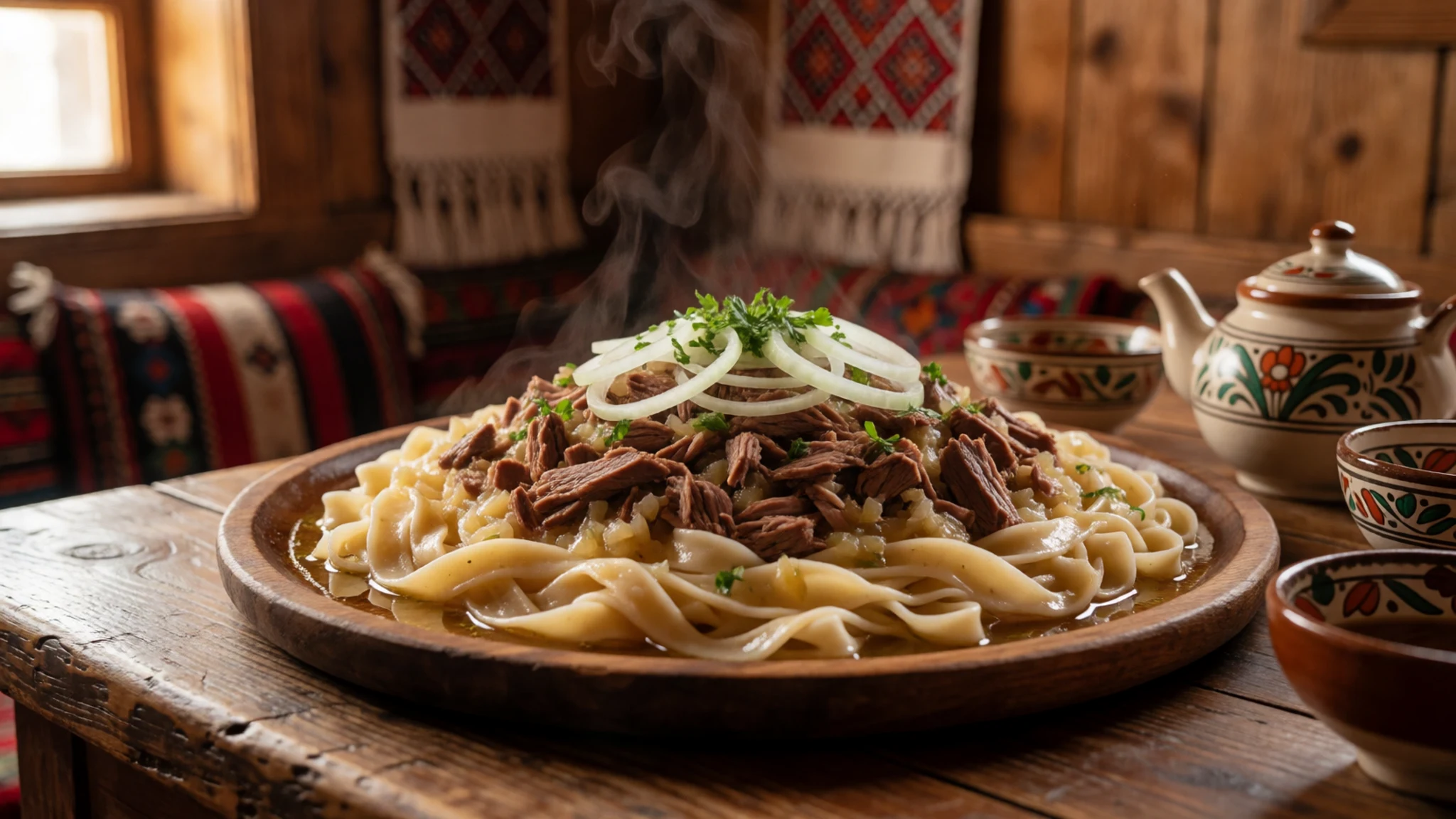
- Chai (tea) — Any home, tea house or roadside eatery
Tea is the start of every meeting. It is brewed strong in a small pot and diluted with hot water, so you can ask for light 'jengil chai' or strong red 'kyzyl chai'. Cups are deliberately part-filled so the host can refill them, a sign of welcome.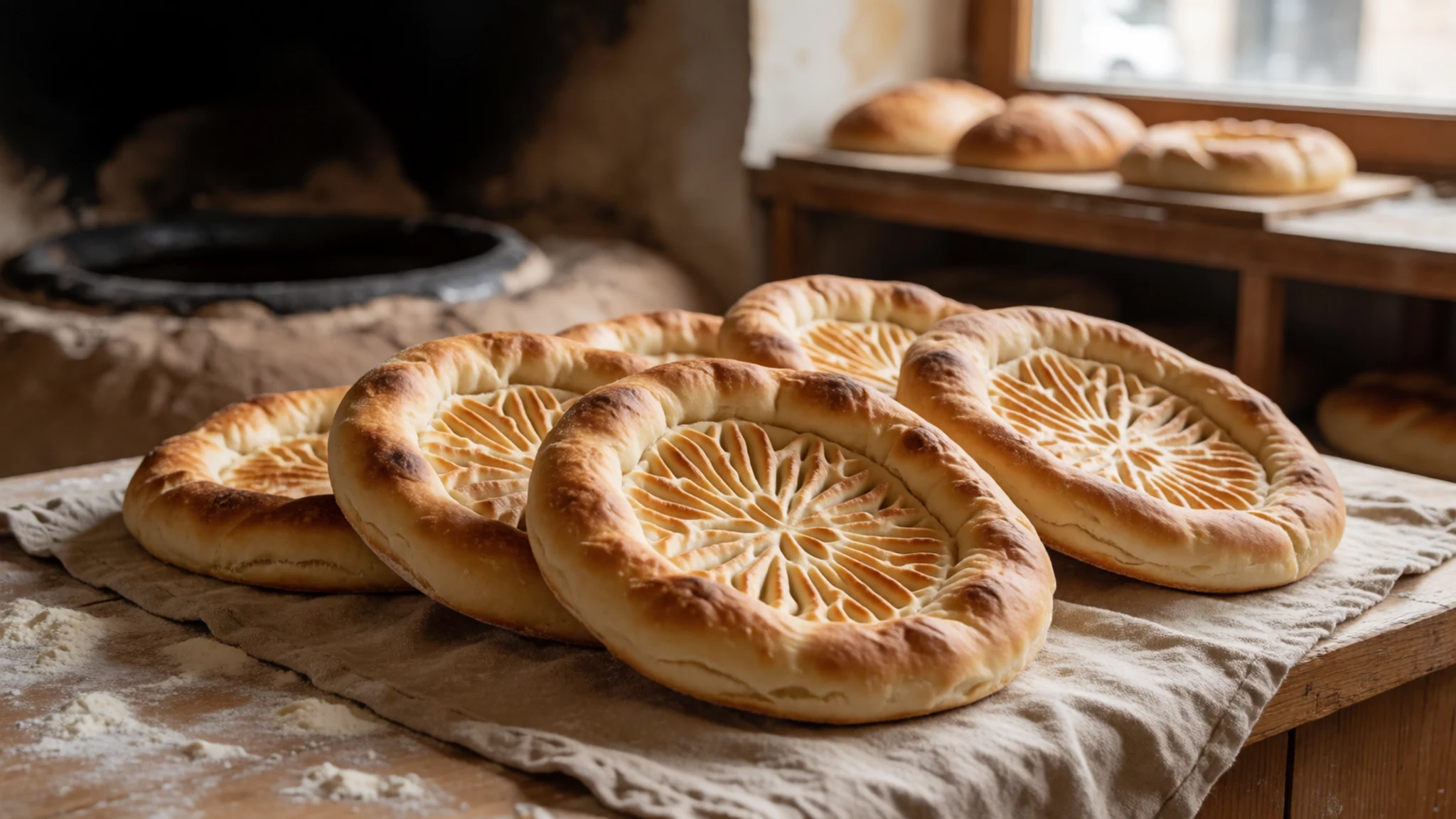
- Kymys — Offered by herding families in summer pastures
A fermented mare's milk drink, mildly sour and slightly fizzy, tied to Kyrgyz herding life. It is usually offered to guests at pasture camps and gatherings. The taste is unusual for first-timers, so take a small sip, and say if you would prefer something else. - Plov — Bazaar eateries and family celebrations across the south
Rice cooked with meat, carrot and onion in a large pan, found across southern Kyrgyzstan and shared with neighbouring Uzbek cooking. It is filling, usually served on a communal platter, and a sensible choice after a morning of travel. - Samsa — Bakery stalls and bazaar counters
Baked pastry parcels, commonly filled with minced meat and onion, eaten hot as a snack. They are easy to find around bazaars and bus stops. Vegetarian travellers should ask what is inside, since most traditional fillings contain meat. - Fresh bread, fruit and nuts — Food bazaars and small roadside stands
Flatbread, apricots, apples, almonds and walnuts are sold at stalls throughout the region. Produce tends to be small and full-flavoured. Wash fruit and vegetables before eating, which also makes bazaar shopping a safe way for vegetarians to eat well.
Plan it
Best time. Late spring (May–June) and early autumn (September–October) are the sensible windows: lowland summers in the south can be hot, and winters are cold enough to affect travel into the hills. Check local conditions before heading up to pastures.
How long. 1–2
Getting there. Fly to Osh Airport (OSS), the closer of the two main hubs, or to Manas Airport in Bishkek (BSZ). From Osh, Kadamjai is reached by road, by shared taxi or a hired car with a driver; ask locally for current routes and journey times.
Budget. low
Tips
- Check the Kyrgyz Republic's official eVisa system before travelling, and note that eVisa holders must enter through designated airports or border checkpoints.
- Carry cash, since cards cannot be relied on outside bigger towns.
- Keep money and documents on your person at rural guesthouses, as there are reports of cash going missing.
- Avoid walking alone at night, as petty crime has risen and evenings can get rowdy.
- Wash fruit and vegetables from bazaars, and bring a Russian phrasebook or translation app.
Etiquette
- Take your shoes off at the door of a home.
- Dress conservatively in the south, with shoulders and knees covered.
- Ask before photographing people, plants or work sites.
Nearby
Sources
- Wikidata Q2428223 (CC0)
- Wikipedia: Kadamjay District (rev 1384194354) (CC BY-SA 4.0)
- Wikivoyage: Kyrgyzstan (rev 5420229) (CC BY-SA 4.0)
- Photo 01-.jpg, SalamatKubanychkyzy (CC BY-SA 4.0)
- Photo 02-kyrgyzstan-kadamjay-raion.png, Sadalmelik (CC BY-SA 1.0)

