Jyrgalan Valley
Jyrgalan Valley, Kyrgyzstan
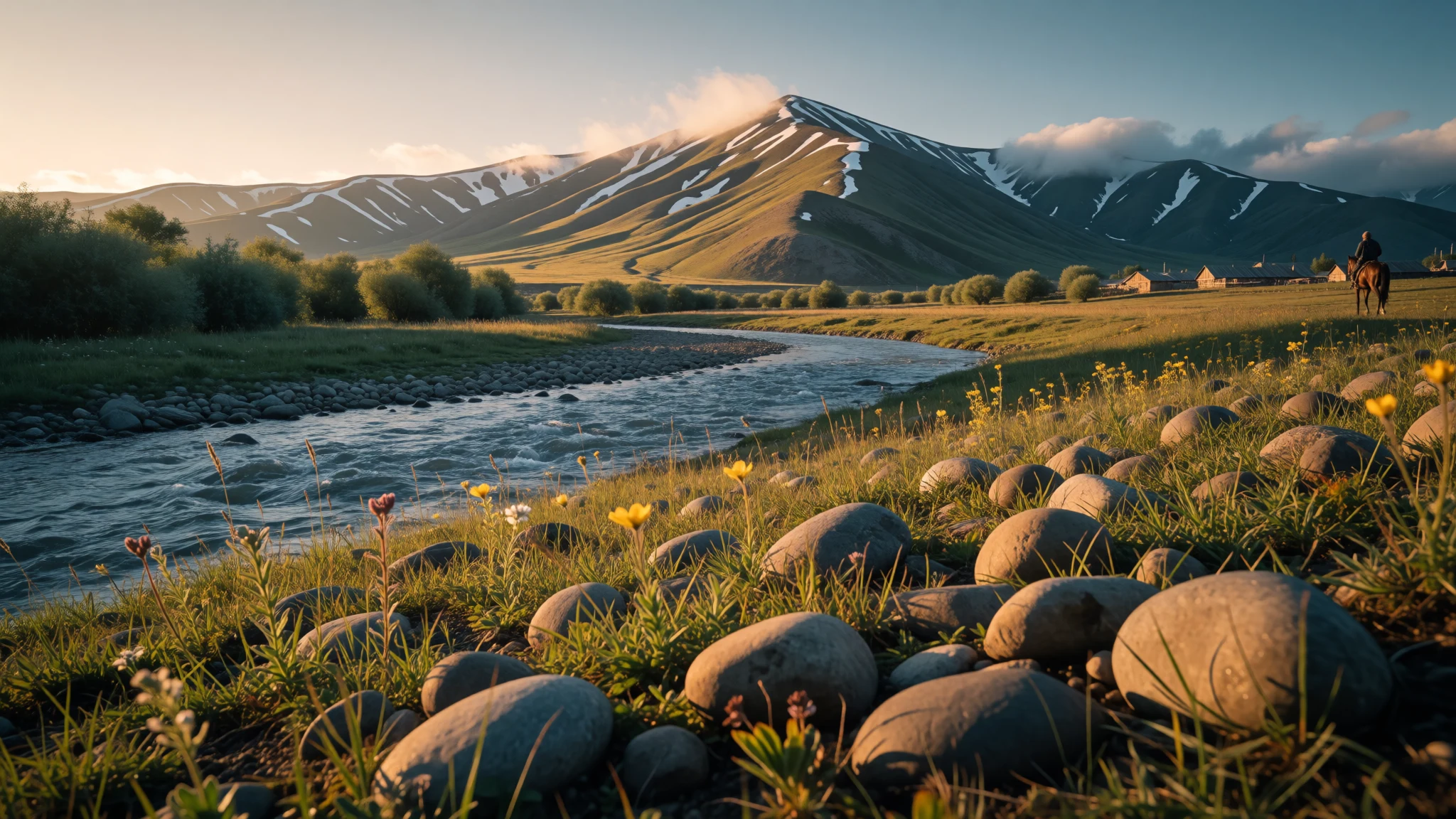
Jyrgalan Valley is a former coal-mining village in eastern Kyrgyzstan, now a quiet base for ski touring, long hikes and horse treks.
The place
Jyrgalan Valley lies in the Ak-Suu District of Issyk-Kul Region, in eastern Kyrgyzstan, at about 2,477 metres above sea level. The village at its centre, officially called Shakta Jyrgalang, stands on the right bank of the river that gives the valley its name. It was founded in 1964 to house workers for a coal mine, and the mine still operates, though at a modest level. Until 2012 the settlement had urban-type status. The 2021 population was 1,033, and many families have moved to the city of Karakol in search of steadier work. What has changed since 2013 is the arrival of guest houses. One existing house was rebuilt as a six-room guesthouse, another was newly built over three storeys, and several more homes were renovated in 2016 for skiers and hikers. Today the village has a handful of family-run guesthouses and a yurt lodge. There are no cafés or restaurants, so meals come from the host family. The setting is high pasture, river and ridgeline, with mountains running towards the Kazakh border and herds of horses and cattle grazing in summer. Jyrgalan is small, plain and still finding its way with tourism. Shops, nightlife and crowds are absent; what it offers instead is space, woodsmoke, long views and a pace set by weather and livestock.
Its story
The story of Jyrgalan Valley is one of a Soviet-era mining village finding a second purpose. The settlement was established in 1964 to support a coal mine, and for decades its identity was industrial: shifts, housing blocks and coal sent down the valley. After the Soviet period, jobs became scarce, and the village lost people, particularly to Karakol, the regional town where work and services are easier to find. The mine never closed, but it no longer carries the community alone. From 2013 onwards, a small group of investors and local families began converting houses into guest houses, betting that the surrounding mountains were worth more to visitors than anyone had assumed. The pitch was simple: deep winter snow for back-country skiing, and a network of valleys, passes and summer pastures for walkers and riders. More homes were renovated in 2016, and in 2017 a new multi-day loop trail was marked and tested. Since then, guide training has become part of the picture, including avalanche-safety courses held just outside the village. Destination Jyrgalan Valley now acts as the unofficial tourist information centre, and horse treks and day hikes are arranged through it. The transition is unfinished. Coal and tourism sit side by side, and the village is still more working settlement than resort.
What to see
- Tulpar Tash — Base of the Chunkur Tor range
Tulpar Tash is a large rock at the foot of the Chunkur Tor range. Local legend says the horse of the hero Manas climbed it and leapt from the top, leaving hoofprints in the stone. It is a short, easy outing and a good way to meet the region's epic tradition.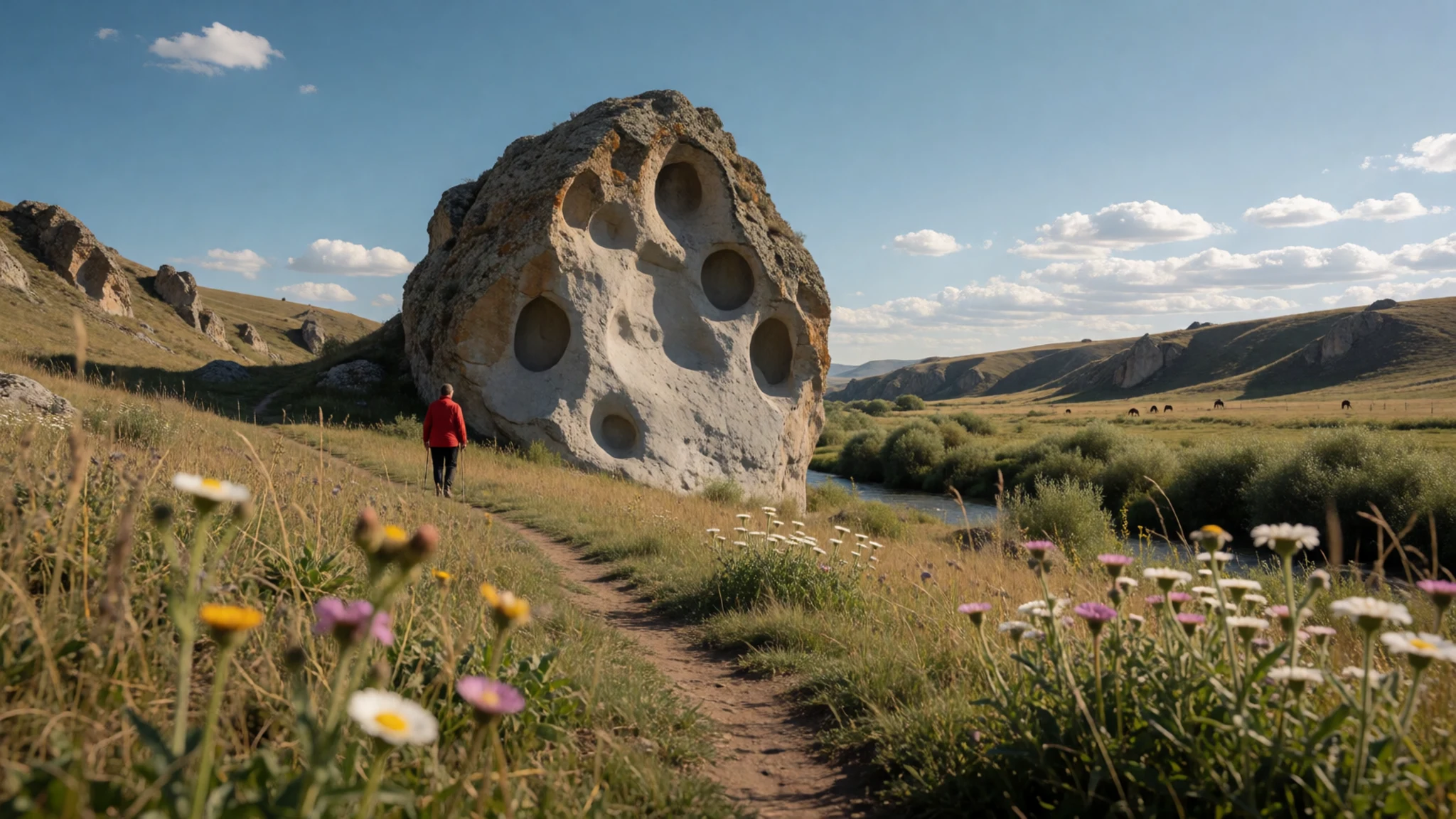
- Eki-Chat — Upper valleys above Jyrgalan
Eki-Chat is a summer pasture, or jailoo, at the meeting point of several valleys. Herders bring cattle and horses up here in the warm months, so the grass is dotted with animals and sometimes yurts. It suits a day on foot or horseback and shows the pastoral life that long predates the mine.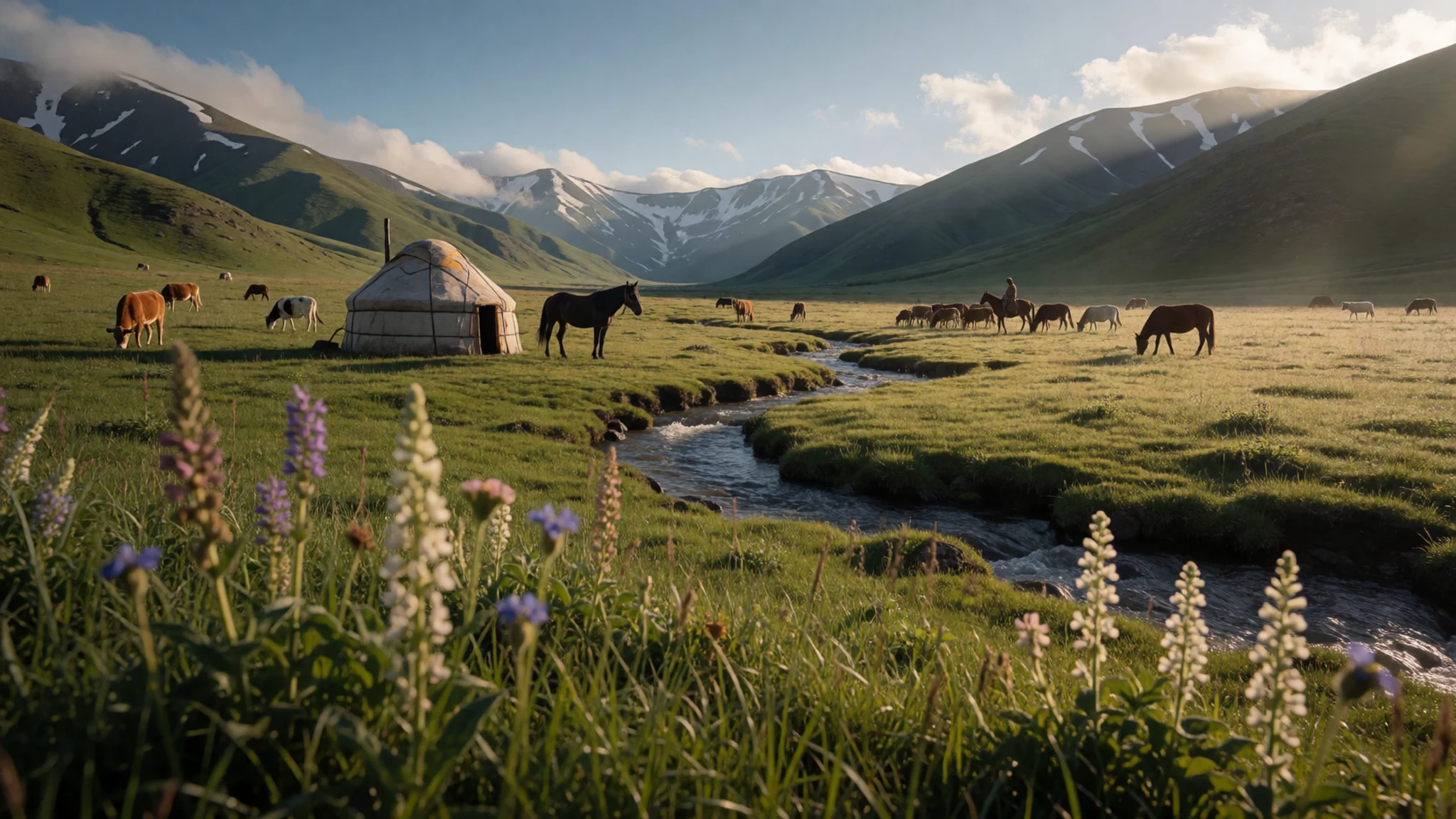
- Turnaluu-Kol Lake — Mountains above the village
Turnaluu-Kol is a mountain lake where cranes and ducks stay through the summer. It rewards walkers with quiet, birdlife and open ground for a picnic. Reaching it takes a proper day out, so carry food and water, and wear layers, because weather at this height changes quickly.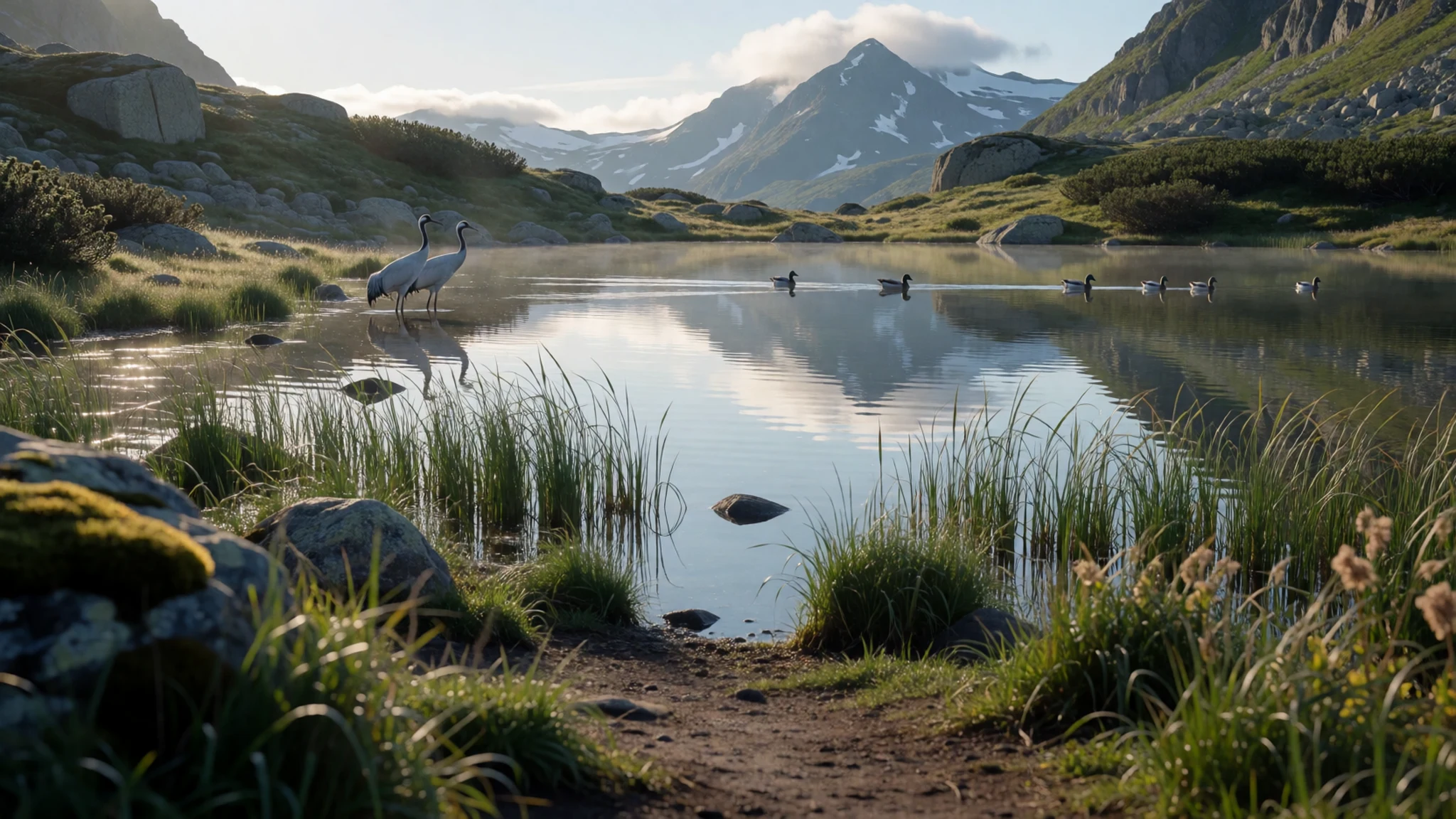
- Chaar-Jon viewpoint — Chaar-Jon range
The Chaar-Jon range gives wide views back over Jyrgalan Valley and across to neighbouring Kazakhstan. It is the place to understand how the valley fits into the larger landscape of ridges and plains. Clear mornings are best, and a guide helps with route choice and weather.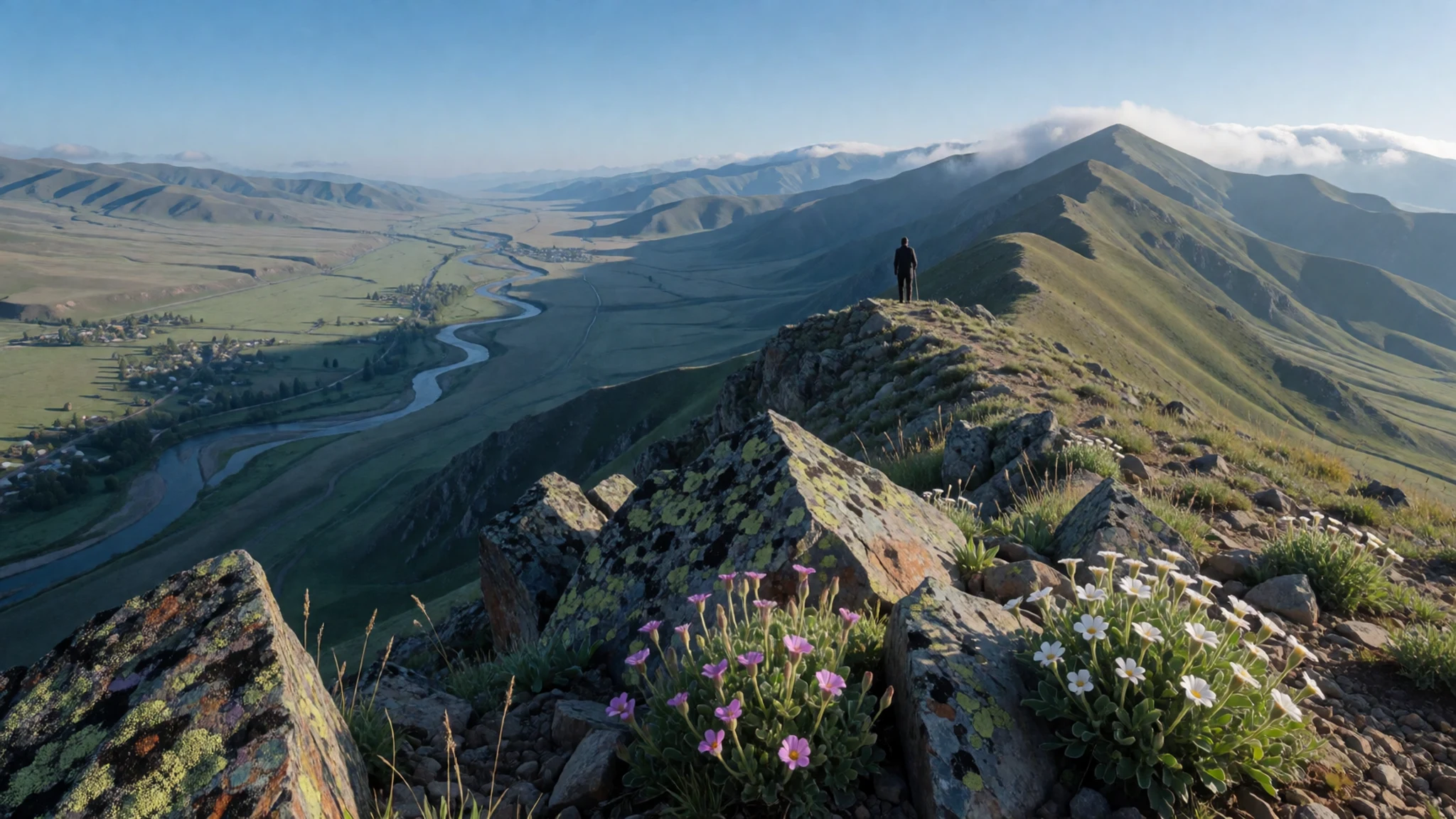
- Keskenkiya Loop Trek — Marked trail from Jyrgalan village
This marked trail was tested in 2017 and covers 64 km over four days, with red paint and arrows showing the way. It links valleys, passes and pastures, and suits walkers comfortable with long days at altitude. Guesthouses and the information centre can advise on logistics, camping and horse support.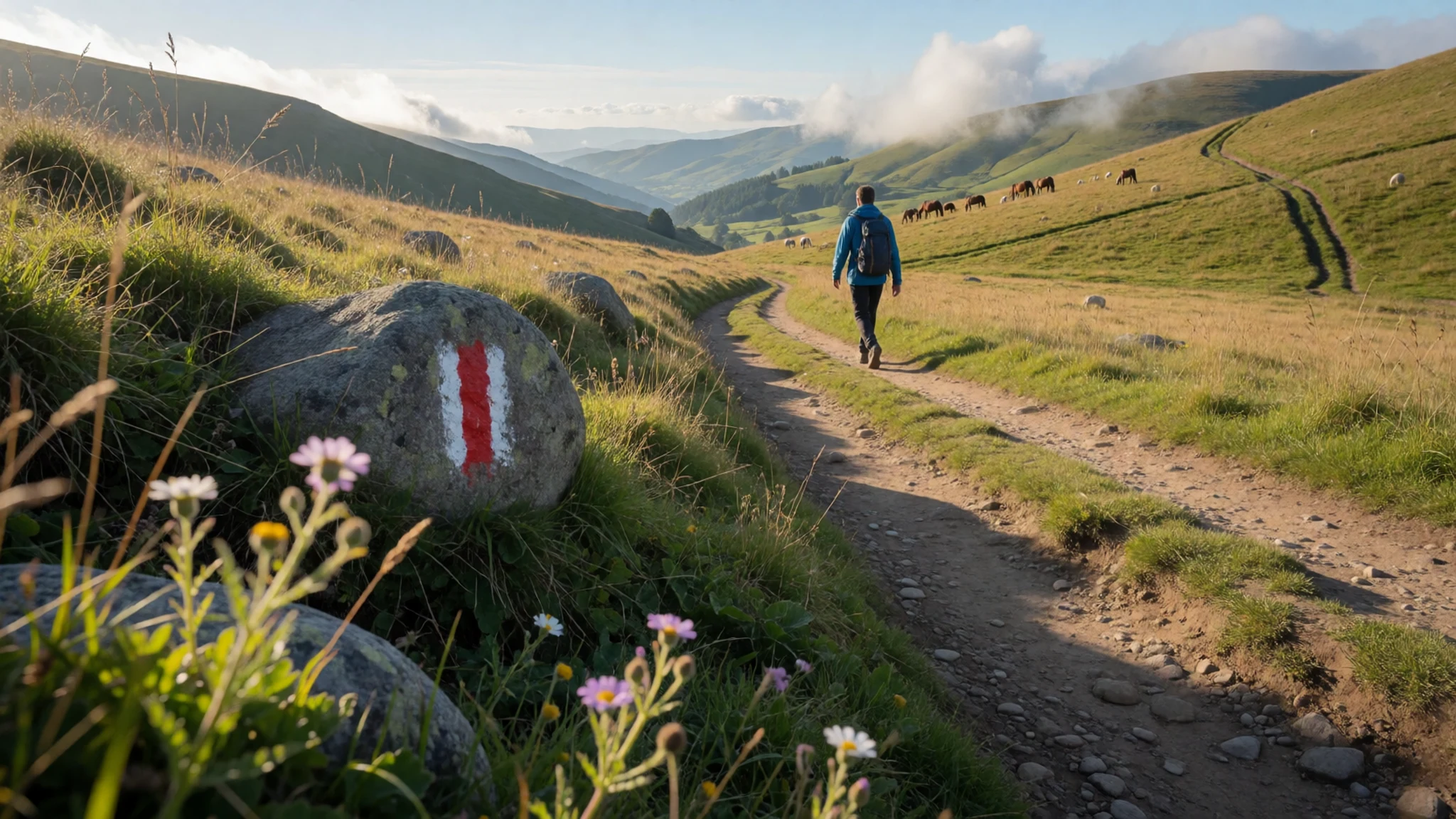
- Back-country ski terrain — Slopes around the village
In winter the slopes around Jyrgalan draw ski tourers, and the village hosts avalanche-safety training for local guides. This is unpatrolled terrain without lifts, so skiers climb for every descent. Travel with a qualified guide, carry avalanche gear, and check snow conditions locally before setting out.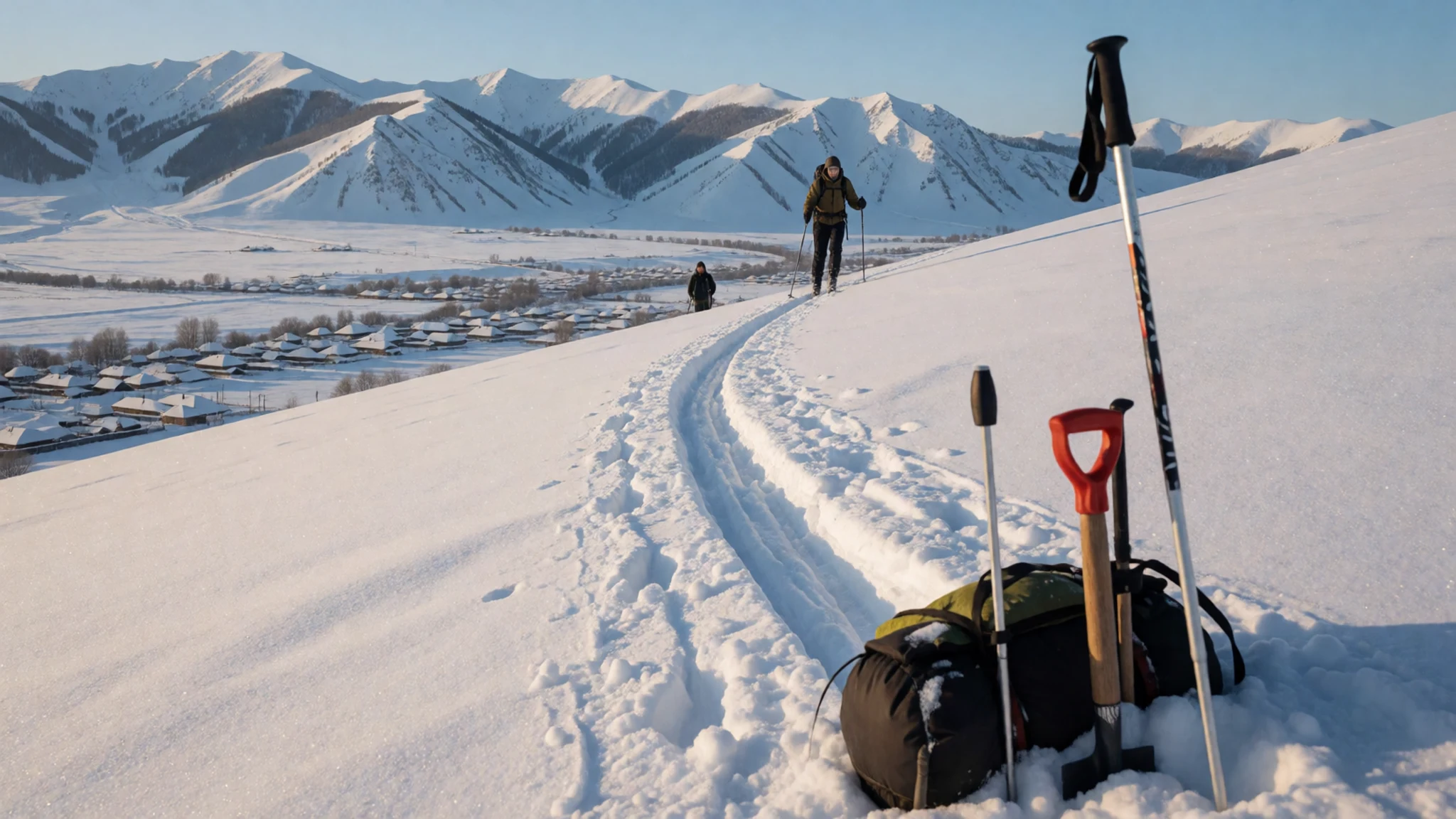
Culture
Jyrgalan Valley sits within Kyrgyz herding country, where life has long followed the seasons: winter in the lower villages, summer on the high pastures called jailoo. Even in a village founded around a Soviet coal mine, that rhythm shows in the horses tied outside houses, the cattle driven up the valley in warm months and the yurts that appear on the grass. Hospitality is central. Guests are usually welcomed with tea, bread, jam and something hot, and refusing food entirely can seem odd, so accepting a little is polite. The epic of Manas, the hero said to have united the Kyrgyz, is the best-known story tradition, and local legend ties his horse to the rock called Tulpar Tash. The population is mostly Kyrgyz and mostly Muslim, with a relaxed everyday practice, and the mining history adds a Soviet-era layer of Russian language, apartment-style housing and shared memory of industrial work. Tourism is new here, so many hosts are learning the trade alongside their guests. Spending in the village, eating at guesthouse tables, hiring local guides and horses, and booking through the information centre keeps money close to the people who live there. Always ask permission before photographing people or their animals, and remove your shoes before stepping onto a yurt's carpets or into a family home.
What to wear
Traditional Kyrgyz dress draws on a herding life. Felt is the signature textile: wool is pressed into hats, boots, rugs and yurt coverings. The tall white felt hat, the ak kalpak, with its dark trim, is worn at ceremonies, festivals and by older men, and women's festive dress can include embroidered velvet waistcoats, long dresses and decorated headwear. Silk, wool and sheepskin are used for coats and winter wear. These garments appear at weddings, national holidays and cultural events rather than every day. In Jyrgalan village, everyday clothing is practical and plain: work trousers, fleeces, padded jackets, rubber boots and woollen hats, with headscarves worn by some women. Residents who work with visitors often wear outdoor gear. Visitors should dress for altitude and changeable weather. In summer that means layers, a waterproof shell, a warm mid-layer for evenings, sun protection and broken-in walking boots. In winter, thermal base layers, insulated gloves, goggles and proper ski-touring boots are essential. Modesty norms are relaxed but respectful: in the village and in guesthouses, cover shoulders and knees, particularly outside the hiking season. Bring slippers or warm socks, as shoes are removed indoors. Quick-drying fabrics help, since there is little chance to dry clothes in a hurry.
What to eat
- Beshbarmak — Guesthouse dinner, ordered in advance
Beshbarmak is boiled meat, usually mutton or beef, served over wide noodles with onion broth. It is the Kyrgyz dish of celebration and hospitality. In Jyrgalan, it is best requested ahead from a guesthouse host, since there are no restaurants.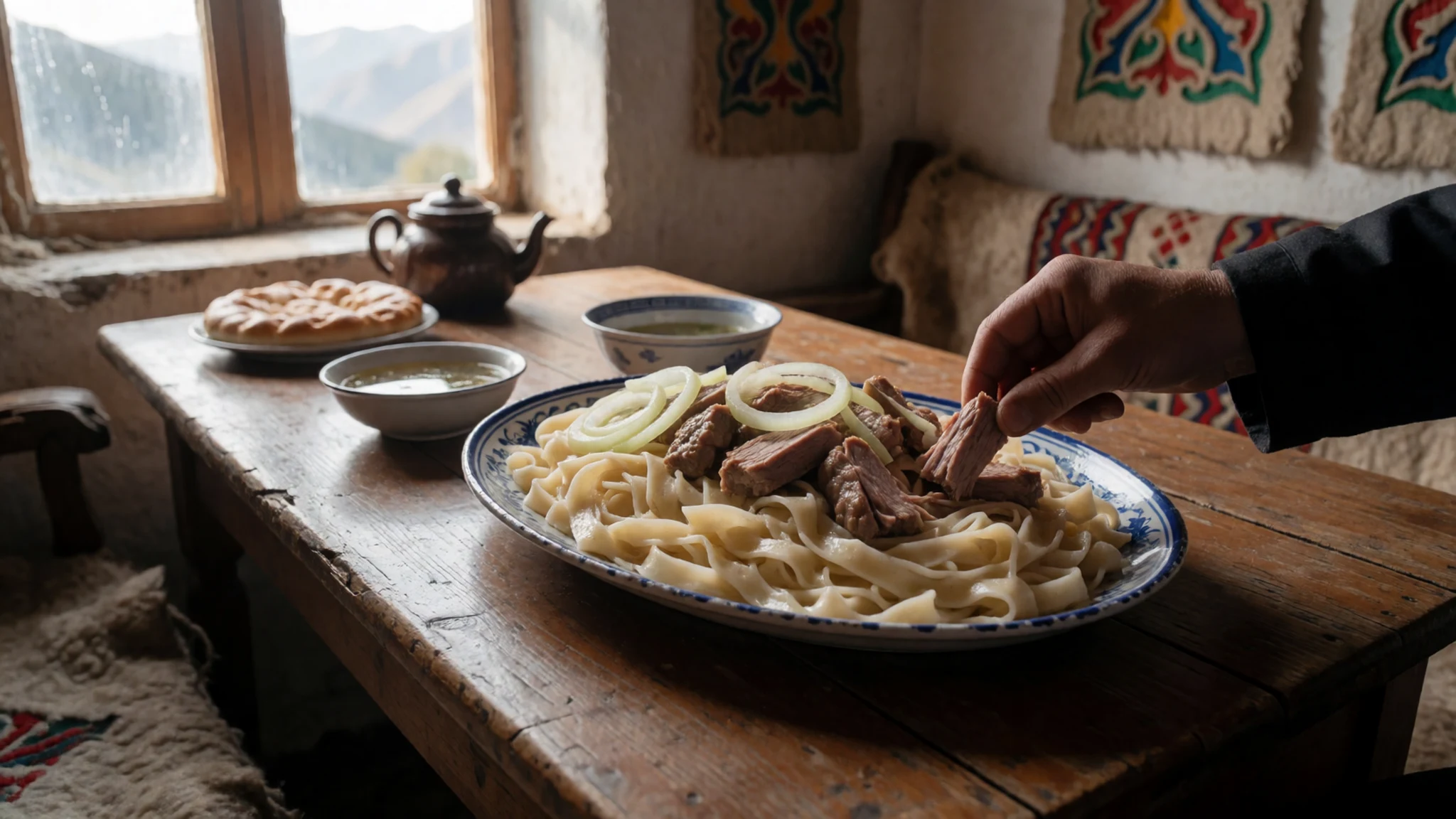
- Laghman — Guesthouse kitchens, or in Karakol before the journey
Laghman is a bowl of hand-pulled noodles in a savoury sauce of meat and vegetables, sometimes served as a soup. It is filling after a day's walking or skiing. Hosts usually serve a home version, and portions are generous.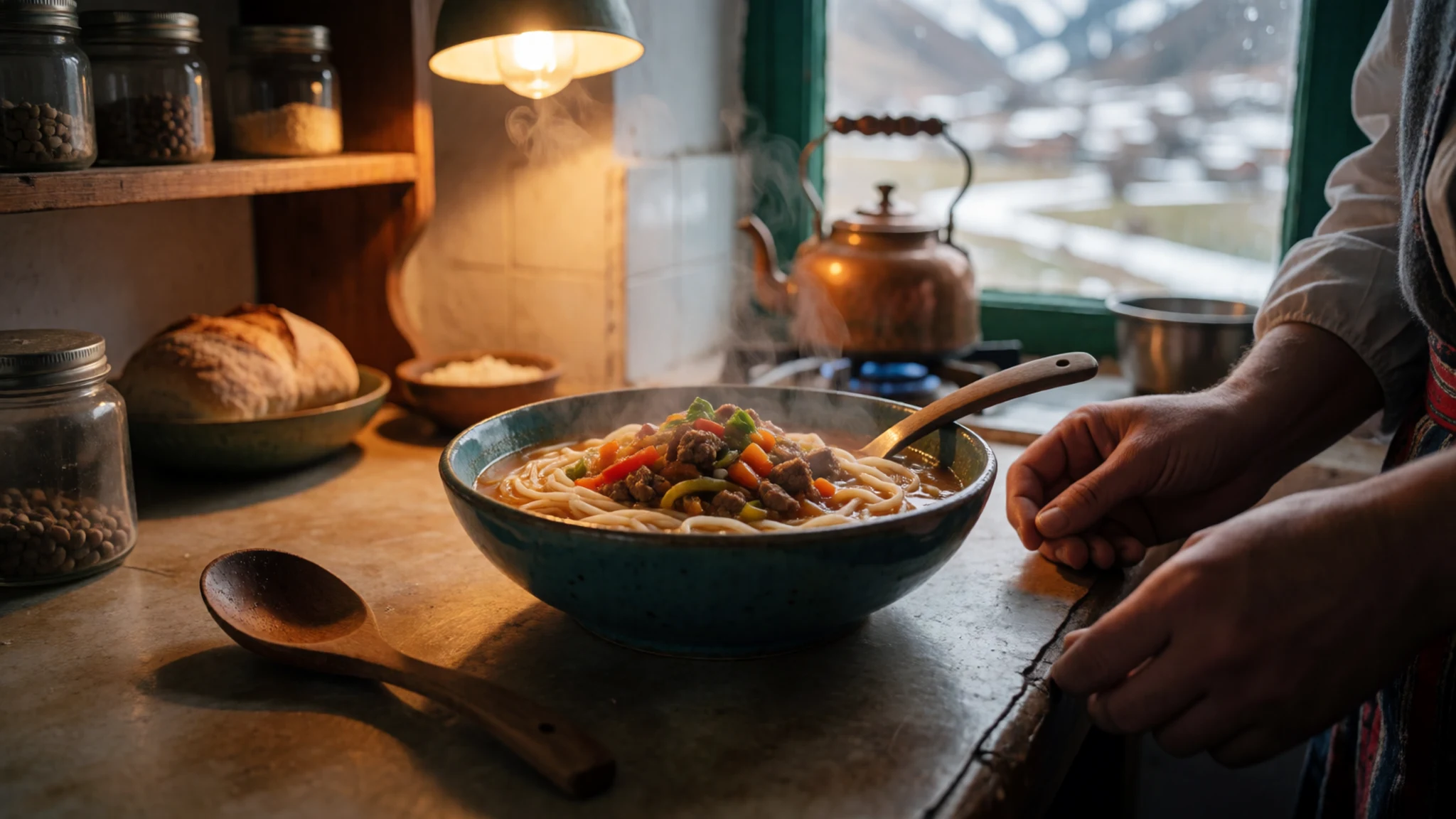
- Manti — Home kitchens in the village
Manti are large steamed dumplings, filled with minced meat and onion and often topped with sour cream. They are a common family dish and a good request for dinner when the weather is poor and everyone wants something warm. - Boorsok — Breakfast tables at guesthouses
Boorsok are small pieces of fried dough, golden outside and soft within. They arrive with tea at most Kyrgyz meals, often with jam or honey. Hosts tend to make them fresh, and they travel well as a trail snack. - Kymyz — Summer pastures and herders' yurts
Kymyz is fermented mare's milk, a mildly sour and slightly fizzy drink tied to horse-herding summers. It is offered at jailoo camps and some homes. The taste is distinctive, so try a small cup first.
Plan it
Best time. January–March for ski touring while snow lies deep, and July–September for hiking and horse treks when the high pastures and passes are open. Spring thaw and autumn can bring mud, cold nights and sudden weather, so check conditions locally.
How long. 3–5
Getting there. Fly to Bishkek, then travel on to Karakol, the regional town on Lake Issyk-Kul, by road. From Karakol, take a shared marshrutka or a taxi up the valley to Jyrgalan village; check current departure times locally, as schedules change.
Budget. low
Tips
- Book guesthouses ahead in winter and in peak summer, as the village has only a few
- Arrange meals with your host, because there are no cafés or restaurants
- Bring enough cash from Karakol, as card payments and cash machines are unreliable in the village
- Allow a day to adjust to altitude before long treks or ski tours
- Ask Destination Jyrgalan Valley about guides, horses and current trail conditions
Etiquette
- Take off your shoes when entering a home, guesthouse or yurt
- Ask before photographing people, children or their animals
- Close gates behind you and keep clear of grazing herds
Nearby
Sources
- Wikidata Q13640256 (CC0)
- Wikipedia: Jyrgalang (rev 1376264922) (CC BY-SA 4.0)
- Wikivoyage: Jyrgalan (rev 5433081) (CC BY-SA 4.0)
- Jyrgalan Avalanche Training, Paulhamlin44 (CC BY-SA 4.0)

Wildlife
- Crane (animal)
The common crane, also called the Eurasian crane, is a medium-sized bird from the crane family. In Jyrgalan Valley, look for it at Turnaluu-Kol, the mountain lake, where cranes stay right through the summer. Watch from a good distance and keep your voice low, so the bird carries on undisturbed. A local guide will help you find a calm spot along the shore. Please never feed it; wild cranes should find their own meals.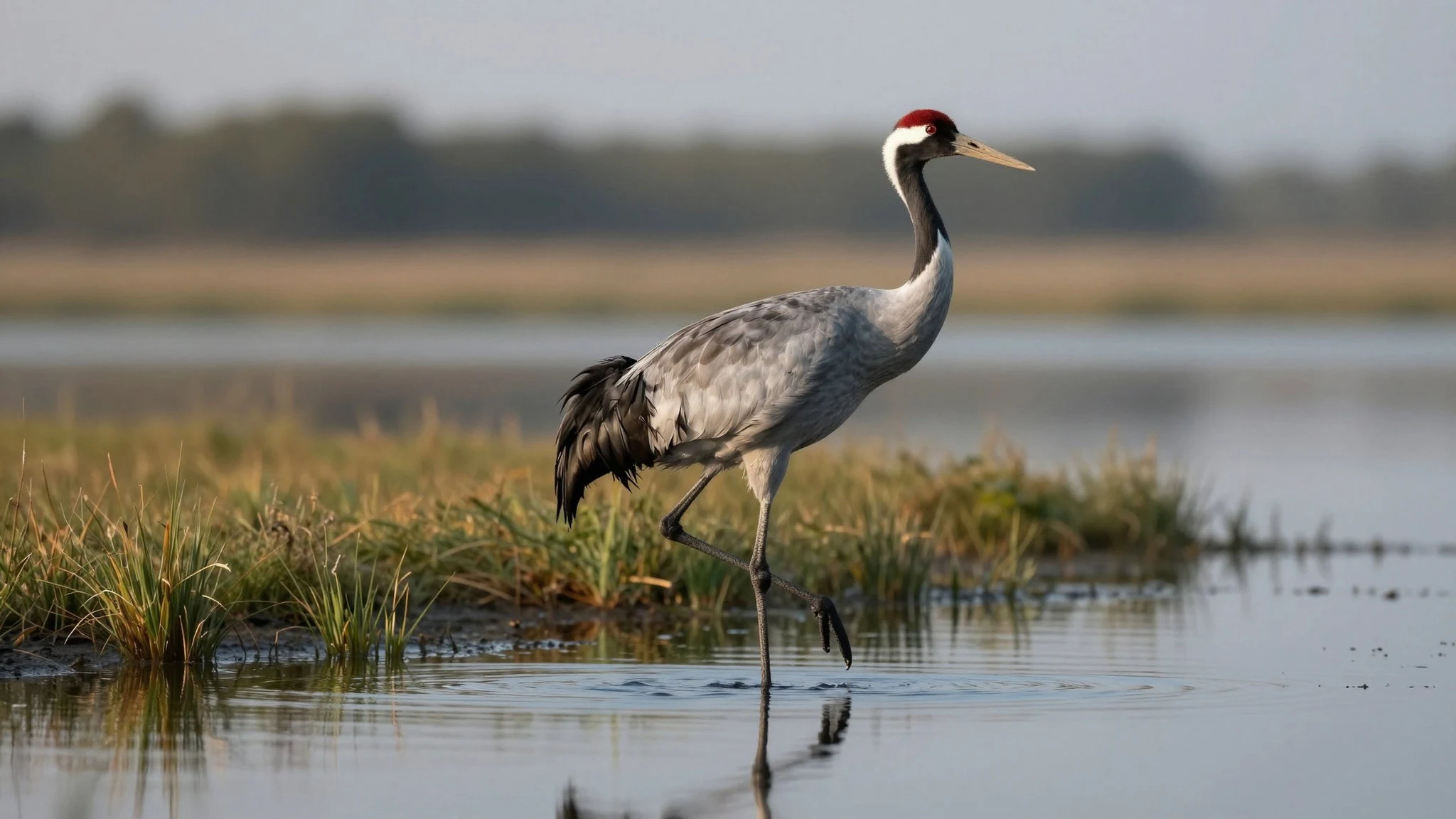
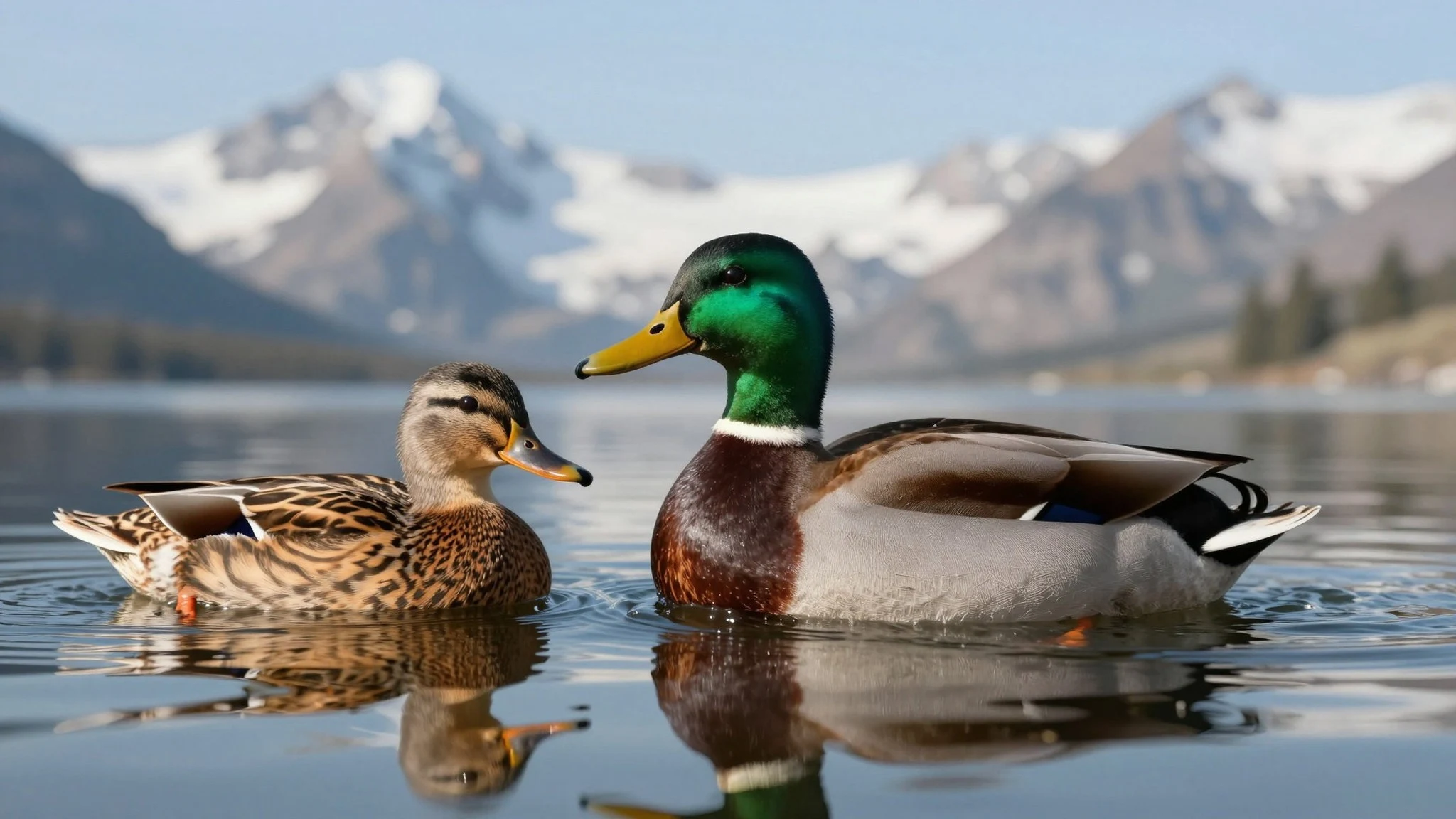
- Duck (animal)
The mallard is the classic wild duck, a dabbling bird that eats water plants and small animals. It likes company, so expect a flock rather than a loner. In Jyrgalan Valley, ducks stay through the summer at Turnaluu-Kol, the mountain lake. Watch from a respectful distance, stay quiet and move slowly, and let a guide show you the best spots. Never throw bread or any food to them; wild ducks do best on their own diet.