Juneau
Juneau, United States
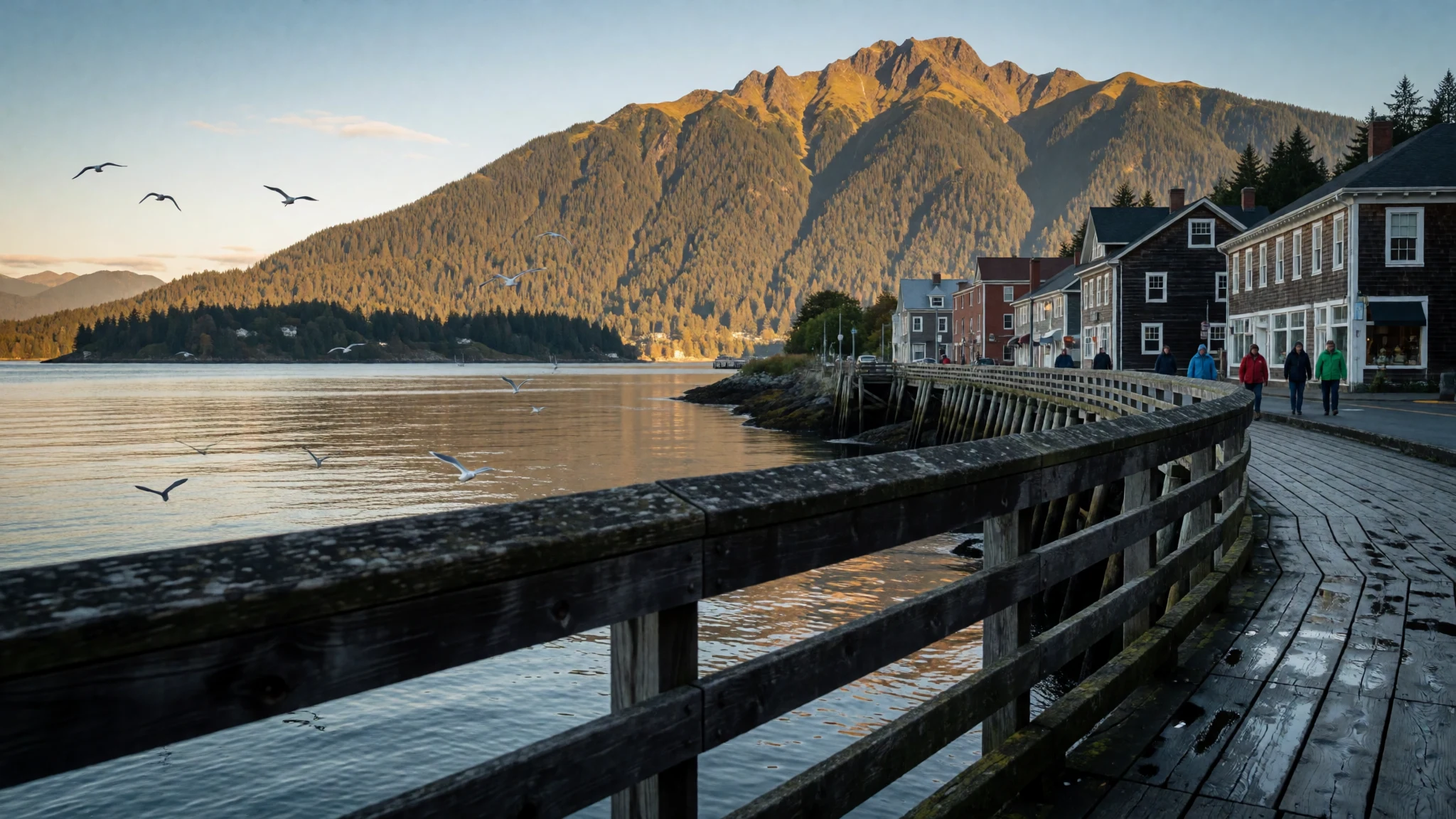
Juneau is a capital with no road out, where cruise ships, glaciers, Tlingit culture and rainforest mountains share one narrow channel.
The place
Juneau sits on the Gastineau Channel in Southeast Alaska, squeezed between the water and a wall of steep, forested mountains. It is the state capital, yet no road or rail line links it to the rest of the continent; people and goods arrive by air or by sea. About 32,000 people live here, at an elevation of just 17 metres above the channel. Downtown is a tight grid of shops, offices and old wooden and brick buildings pressed against the foot of Mount Juneau, with Douglas Island facing it across the water. The borough itself is enormous, running far beyond the town into icefields, inlets and rainforest, and it covers more ground than some entire American states. In summer the mood changes sharply. Cruise ships tie up along the waterfront from May to September, and on busy days the downtown streets fill for a few hours, then empty again by evening. Locals plan around the schedule: shops and tour desks open for the ships, while residents head to trails, beaches and fishing spots away from the docks. Outside those months the town feels quieter, wetter and more like a working government centre, with legislators, fishers and teachers filling the cafés. The Tlingit name, Dzántik'i Héeni, means roughly Base of the Flounder's River, a reminder that the place was named by its own people long before it carried the name of a prospector from Quebec. Weather is the constant companion here: expect cloud, drizzle and sudden clearings that reveal fresh snow on the peaks.
Its story
Juneau's story begins with the Tlingit, not with gold. The Auke (A'akw Kwáan) and Taku peoples fished the Gastineau Channel for thousands of years, and the A'akw Kwáan kept a village and a burial ground at the spot now called Indian Point. Each spring they gathered herring as the fish spawned, and families still collect shellfish, chitons, urchins, grasses and bark for medicine along that shore. Settlers followed the lure of gold. A prospector from Quebec, Joe Juneau, and his partner Richard Harris made the find that drew people in, and the camp passed through the names Rockwell and Harrisburg before settling on Juneau. The town dates its founding to 1881. Mining shaped the early economy, with the Treadwell mine working across the channel on Douglas Island. Later, Congress ordered the seat of Alaska's administration to move north from Sitka, and Juneau became the capital in the early twentieth century. Much later still, the city merged with Douglas and the borough around it, producing the single, sprawling local government of today. Indian Point remains quietly contested ground. The A'akw Kwáan and the Sealaska Heritage Institute have pushed back against outside development proposals, calling the point sacred, and the site has since been entered on the National Register of Historic Places as a traditional cultural property, the first site of that kind listed anywhere in the region. Tlingit carving, weaving, song, dance and oral history remain part of everyday life in the town.
What to see
- Alaska State Museum — Downtown
The Alaska State Museum gathers the state's history, Native cultures, wildlife, industry and art under one roof, and it makes a sensible first stop for anyone trying to understand the region beyond the waterfront shops. It is an easy walk from the cruise terminal, so it suits a short port call, or a wet day when the mountains are hidden in cloud. - Saint Nicholas Russian Orthodox Church — Downtown
Saint Nicholas Russian Orthodox Church is a small, ornate octagonal building put up by Tlingit parishioners in the late nineteenth century. It recalls the Orthodox mission that spread from Sitka, where a priest translated the Bible into Tlingit. It is a working church, so check visiting arrangements locally before going. - Alaska State Capitol — Downtown
The Alaska State Capitol was finished as the territorial capitol before statehood, and it looks nothing like the domed legislatures of other states. It reads more like a plain, dignified office block on a downtown street. That modesty is part of the appeal, and it makes a quick, easy stop between the museum and the shops.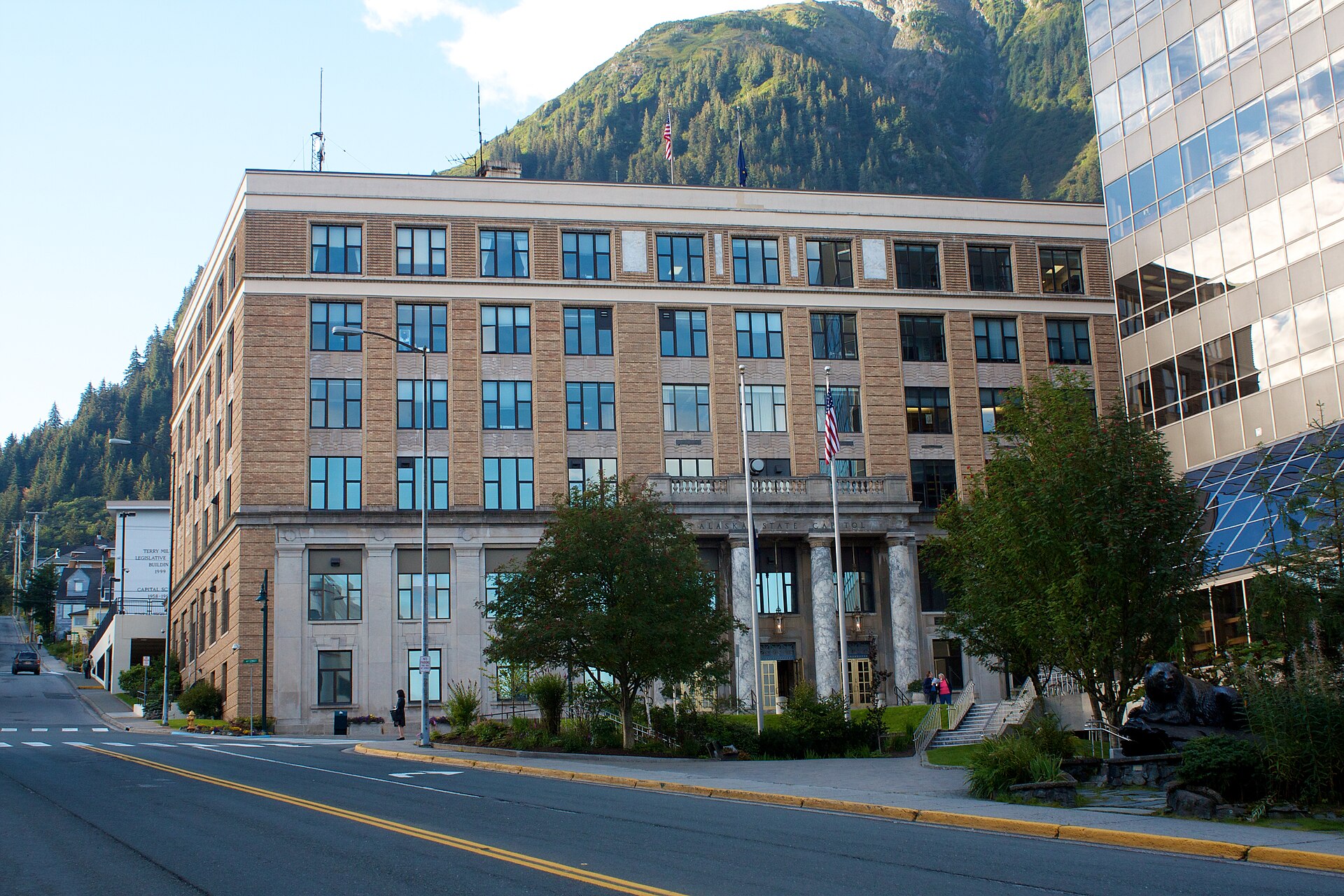
- Mendenhall Glacier — North of downtown
Mendenhall Glacier is a broad river of ice that ends in its own lake, a short drive north of downtown. Buses and organised tours run there in the cruise season, so it can be busy. Rain is common and the air off the ice is cold, so bring layers, and check the official site for current access. - Downtown and Mount Juneau — Downtown waterfront
Downtown Juneau is best taken on foot. Compact streets such as Franklin Street hold souvenir shops, bars and older commercial buildings, with Mount Juneau rising almost straight behind them. Go early or in the evening, when the ships have thinned out, and the waterfront and the mountain face are far easier to enjoy.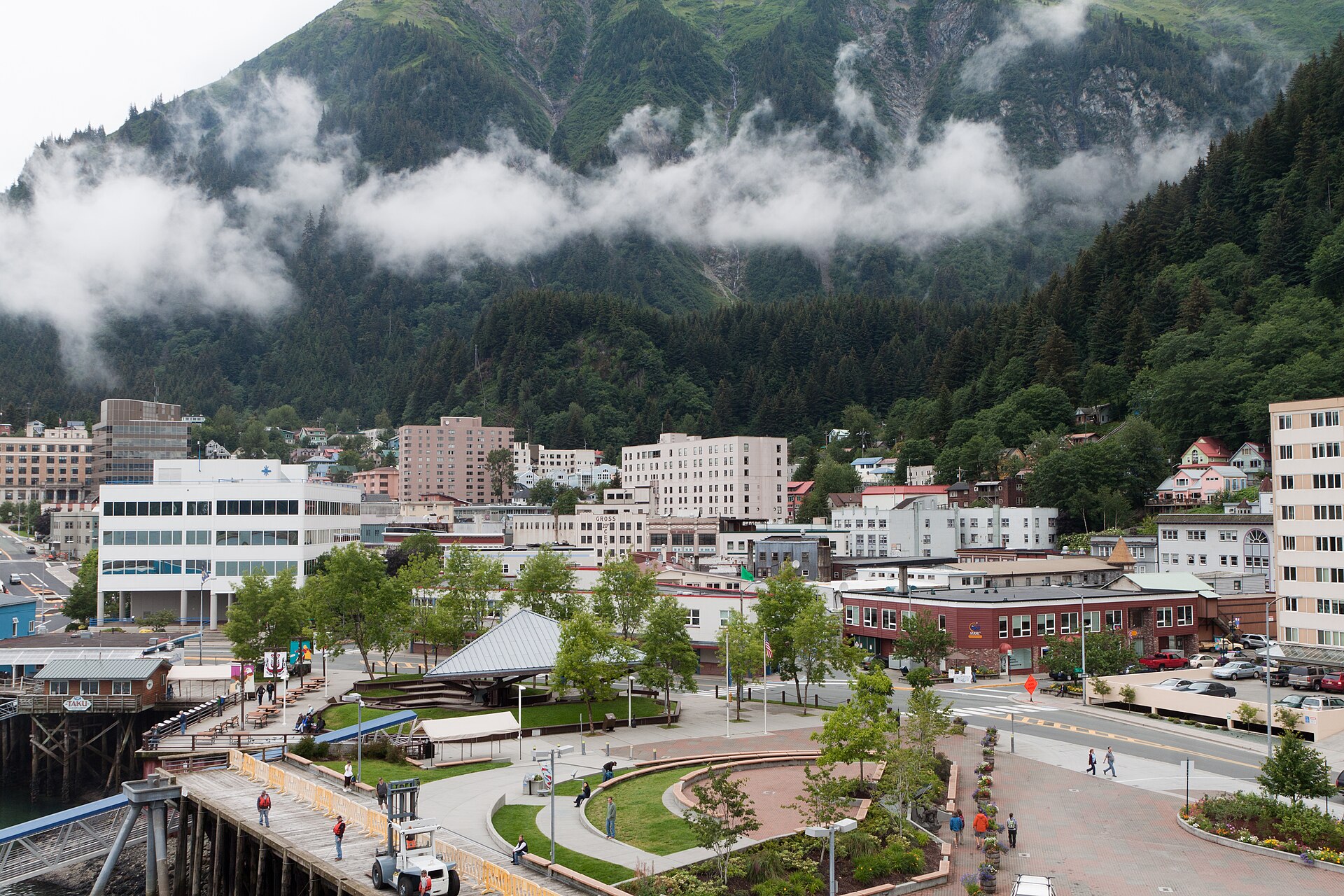
Culture
Juneau has a livelier cultural calendar than its size suggests. The Alaska Folk Festival and Juneau Jazz & Classics bring musicians to town, and Celebration, a biennial gathering of Alaska Native peoples, fills the streets with Tlingit and other Native song, dance and regalia. Between festivals, the town supports several theatre companies, including Perseverance Theatre, along with a symphony and small opera groups, which says something about a capital where civil servants, artists and fishers share the same few streets. Outdoor life is just as central. Eaglecrest, a city-owned ski area on Douglas Island, serves winter, and the Treadwell ice rink on the same island, named after the old gold mine, hosts skating, hockey and open skates, then turns to rollerblading, tennis and concerts in the months without ice. Tlingit art is visible in carving, weaving and public design, and local people are used to explaining it with patience. Conversation tends to be unhurried, practical and weather-driven, and residents are often glad to talk about fishing seasons, politics and the effect of the cruise crowds. Visitors who ask questions and spend money in locally owned places are generally received warmly. When watching Native dance, song or ceremony at Celebration or any other gathering, ask before photographing or filming performers and stay quiet during songs and speeches.
What to wear
Traditional Tlingit dress in Juneau is a living art rather than a costume. Ceremonial regalia includes Chilkat and Ravenstail woven robes, made from mountain-goat wool and cedar bark, and button blankets in red and black wool decorated with clan crests. Carved and painted wooden headdresses, spruce-root hats and cedar-bark pieces complete the picture. These are worn for dances, potlatches and at Celebration, when families bring out heirloom pieces and wear them with obvious pride. Everyday clothing in Juneau is thoroughly practical. Rain shells, fleece, wool hats and sturdy boots are the local uniform, and tall rubber boots are common among people who work on the water. Office staff and legislators dress a little smarter, but still tend to carry a waterproof layer. Visitors should dress for wet, changeable weather whatever the month. Pack a proper waterproof jacket, quick-drying layers, a warm hat and gloves even in summer, and shoes with real grip for muddy trails and slippery decks. Modest dress is not a particular concern in town, but it is courteous to dress simply and put cameras away when attending Native ceremonies or services at the Orthodox church. Leave white or very light shoes at home, since wet gravel and trail mud will ruin them quickly.
What to eat
- Wild Alaskan salmon — Waterfront eateries and smokehouses downtown
Salmon is the dish most closely tied to Juneau, served grilled, smoked, baked or in chowder. Look for it at fish counters, smokehouses and casual waterfront eateries, and ask what is in season. Smoked salmon packed for travel is a common souvenir and keeps well in a bag. - Halibut and chips — Casual fish-and-chip counters near the docks
Fried halibut with chips is the easy, filling choice after a day in the rain. The fish is firm, white and mild, and the batter is usually light. Expect queues at lunchtime on cruise days, so eating a little early or late helps. - Local crab — Seafood restaurants in the downtown streets
Crab is a seasonal treat, usually served simply, cracked and steamed with butter or in a salad or bisque. It is a fairly pricey order, so ask staff what is local rather than shipped in. Seafood restaurants downtown are the usual places to look. - Filipino deli dishes — Supermarket delis such as the one at Foodland IGA
Supermarket delis in Juneau cook Filipino food on the premises, reflecting a long-established community in the town. Expect rice dishes, noodles, fried snacks and stews, packed to take away. It is an honest, filling lunch and a quiet alternative to the tourist-focused eateries. - Natural-food deli lunch — Natural-food store in downtown Juneau
A downtown natural-food store has a weekday deli and runs Thursday night dinners, popular with residents. Expect hearty salads, soups, hot dishes and baked goods, often made with local produce. It is a handy place to assemble a picnic for a glacier or trail day.
Plan it
Best time. May to September, when the days are long, the weather is at its mildest and the cruise season keeps shops, tours and boats running. Expect rain at any time of year, and note that the waterfront is at its busiest on ship days. Winter is dark, quiet and cold, but suits skiing at Eaglecrest and anyone avoiding the crowds.
How long. 2–3
Getting there. Juneau cannot be reached by road or rail, so travel is by air or sea. Fly to Juneau's airport, usually via Seattle or Anchorage, or take the Alaska Marine Highway ferry from towns such as Haines or Skagway. Downtown is a short taxi or bus ride from the airport.
Budget. high
Tips
- Book glacier tours, whale-watching and flights well ahead for summer, as popular departures sell out
- Check which cruise ships are in port and plan sights for early morning or evening to avoid the busiest hours
- Carry a waterproof jacket every day, even when the morning looks clear
- Bring a card as well as some cash, but check the official site at juneau.org for local services and opening arrangements
Etiquette
- Ask before photographing Native performers, artwork or ceremonies
- Keep a respectful distance from wildlife such as bears and eagles, and never feed them
- Stay on marked trails and carry out all litter, especially near the glacier
Nearby
Sources
- Wikidata Q29445 (CC0)
- Wikipedia: Juneau, Alaska (rev 1386435140) (CC BY-SA 4.0)
- Wikivoyage: Juneau (rev 5406032) (CC BY-SA 4.0)
- Photo: MS Queen Elizabeth in Juneau (Ifly6) (CC BY-SA 4.0)
- Photo: MS Queen Elizabeth in Juneau, cropped (Ifly6) (CC BY-SA 4.0)
- Photo: Alaska State Capitol Building (Jay Galvin) (CC BY 2.5)
- Photo: Franklin St, Juneau (Gillfoto) (CC BY-SA 4.0)
- Photo: Downtown Juneau with Mount Juneau (Velkiira) (CC BY-SA 2.0)
- Photo: Shrine St Therese (gillfoto) (CC BY-SA 4.0)
- Photo: Alaska Governor's Mansion (Gillfoto) (CC BY 3.0)
- Photo: Valentine Building against Mount Juneau (Gillfoto) (CC BY-SA 4.0)


Wildlife
- Pacific herring (animal)
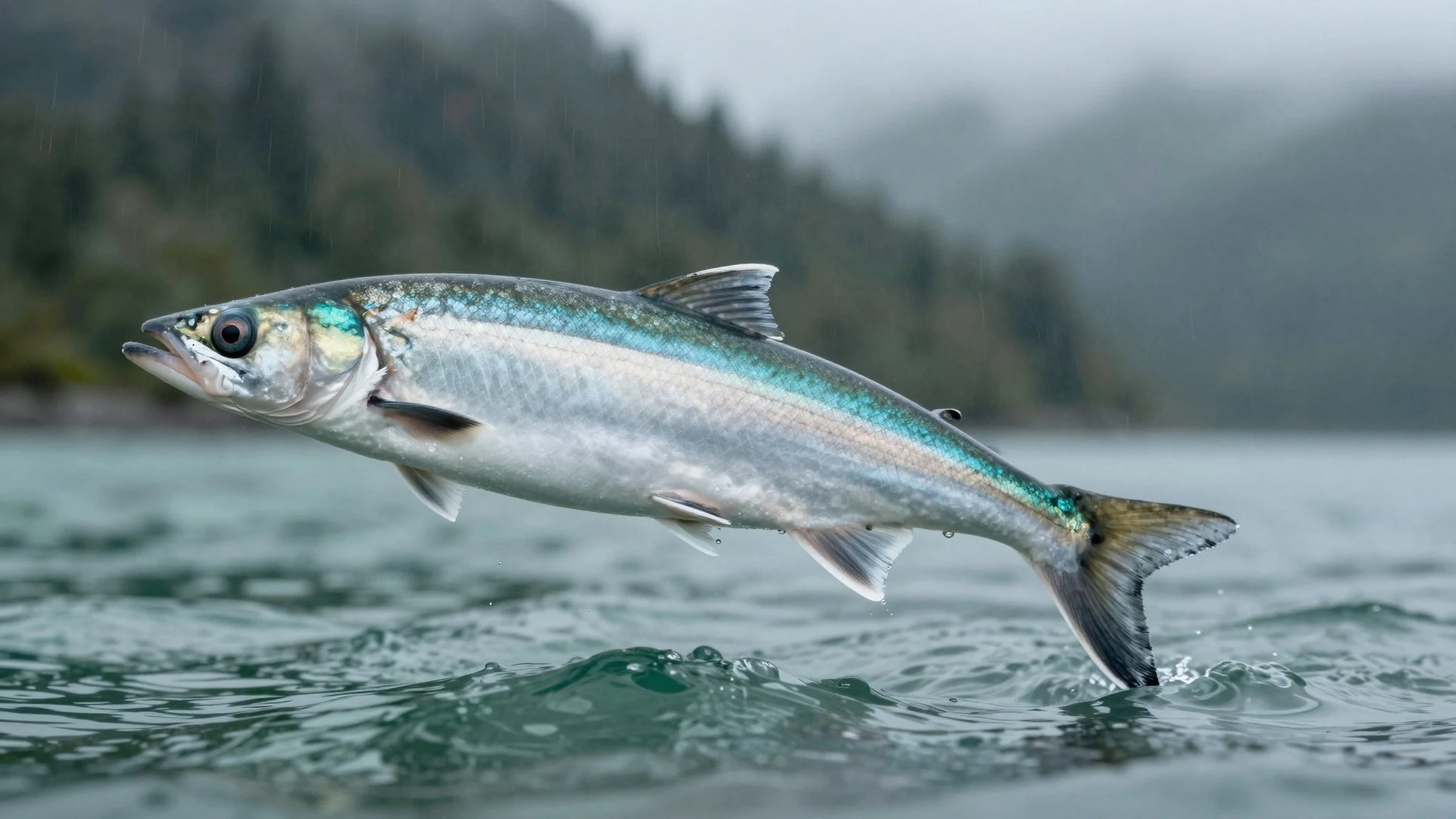
The Pacific herring is a small silvery fish with a deeply forked tail, and it matters far more than its size suggests, because so many other animals depend on it. Around Juneau, spring is the time to look, when the herring spawn and local families have long gathered them along the shore. Spawning often happens in shallow water, on eelgrass or seaweed. Watch from the shoreline, keep your voice low, tread gently on the vegetation, consider a local guide, and never feed or handle the fish.