Jerome
Jerome, United States
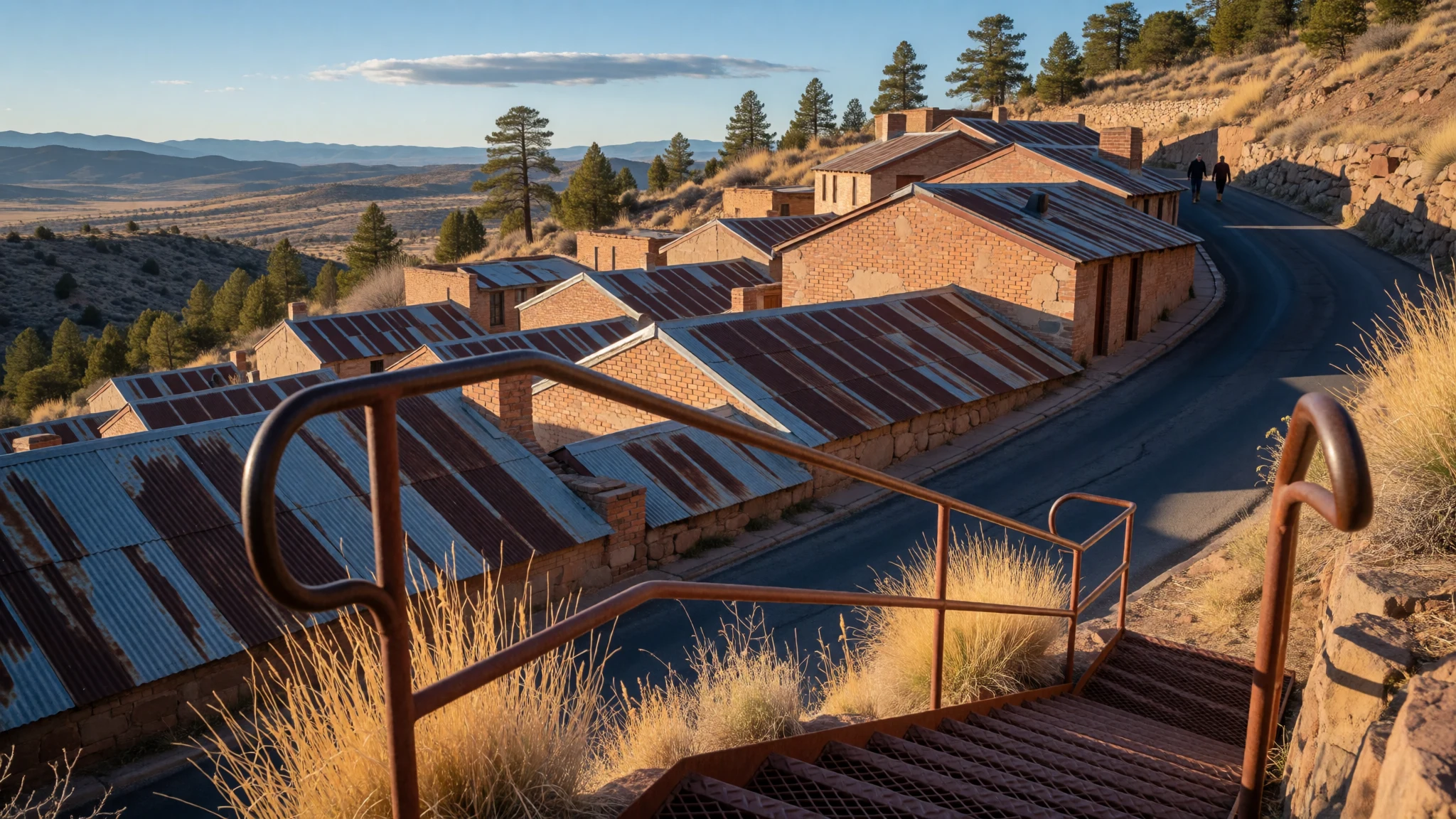
Jerome is a former copper-mining town stacked on a steep Arizona hillside, now a small artists' village with huge views over the Verde Valley.
The place
Jerome clings to the side of Cleopatra Hill at 1,544 m, looking out over the Verde Valley in central Arizona. It is a town of 464 people now, though the streets, stairways and stone retaining walls were built for a crowd many times that size. Roads switch back on themselves and the buildings sit in tiers, so one street's rooftops are often level with the pavement above. The town lies on State Route 89A, the winding road that links Sedona to the north with Prescott to the south-west, while the approach from Phoenix is a long drive through desert country. The setting explains the town. Two copper-rich ore bodies lie under the hill, formed deep in geological time around an ancient undersea volcano, and the mines that followed them drew thousands of workers up the slope. In the 1920s the population passed ten thousand. Today the same slope holds galleries, tasting rooms, cafés, a state park and a scatter of rusting mining relics. The mood is that of an industrial town reinvented by artists, with weekend visitors drifting around a looping Main Street. The views are the other draw: on clear days the valley falls away below and the red rock country around Sedona sits on the horizon. Weekends are busiest, and weekday mornings are noticeably calmer. Parking is tight, which is why the free shuttle along Main Street earns its keep.
Its story
Jerome's story begins long before the town. The Hohokam farmed in this part of Arizona centuries ago, and later peoples probably dug at the surface of the ore body for colourful copper minerals such as malachite and azurite, which showed on the hillside. Spanish explorers noted the ore in the sixteenth century but moved on, since they had been sent to look for gold and silver. The land passed from Spain to Mexico and then to the United States after the war that ended in 1848. Prospectors filed the first copper claims in 1876, and a group of eastern financiers later backed the United Verde Copper Company. One of them, Eugene Jerome of New York, gave the town its name, and Jerome was founded in 1899. Two men dominate the story that follows: William A. Clark, whose United Verde mine worked the larger ore body, and James Douglas Jr., whose Extension mine tapped the second deposit. In 1917, labour unrest involving the Industrial Workers of the World ended with dozens of its members expelled at gunpoint, loaded on to a cattle car and sent west. Output surged during the First World War, slumped, recovered, then slumped again through the Depression. Once the final mining operations wound down in 1953, the town's population shrank significantly, leaving only a handful of residents behind. Artists and shopkeepers later moved into the emptied buildings, and the town found a second life as a heritage destination.
What to see
- Main Street loop — Main Street
Jerome's main tourist area is a large loop of Main Street, with galleries, bars, shops and eateries spread over several levels of the hillside. Walking every tier takes longer than the map suggests because of the slopes and steps. On the first Saturday evening of each month an Art Walk opens many galleries, and a free shuttle runs along the street.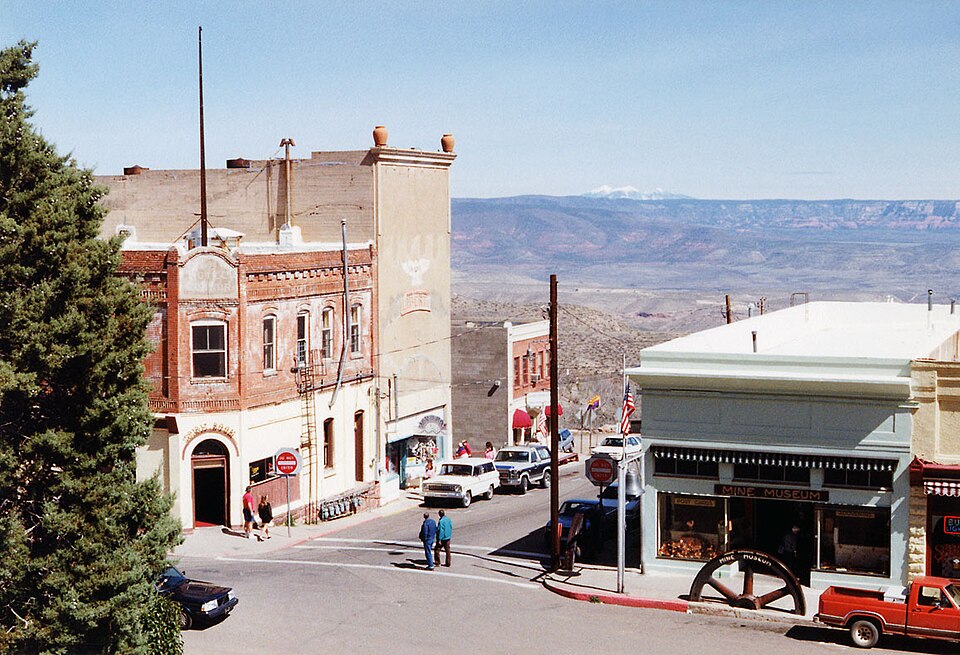
- Jerome State Historic Park and the Douglas Mansion — Edge of town, above the Verde Valley
Jerome State Historic Park is built around the Douglas Mansion, the former home of mine owner James Douglas Jr. It now works as a museum covering the area's mining history and the Douglas family. It is the best single stop for understanding who owned the hill and who worked it.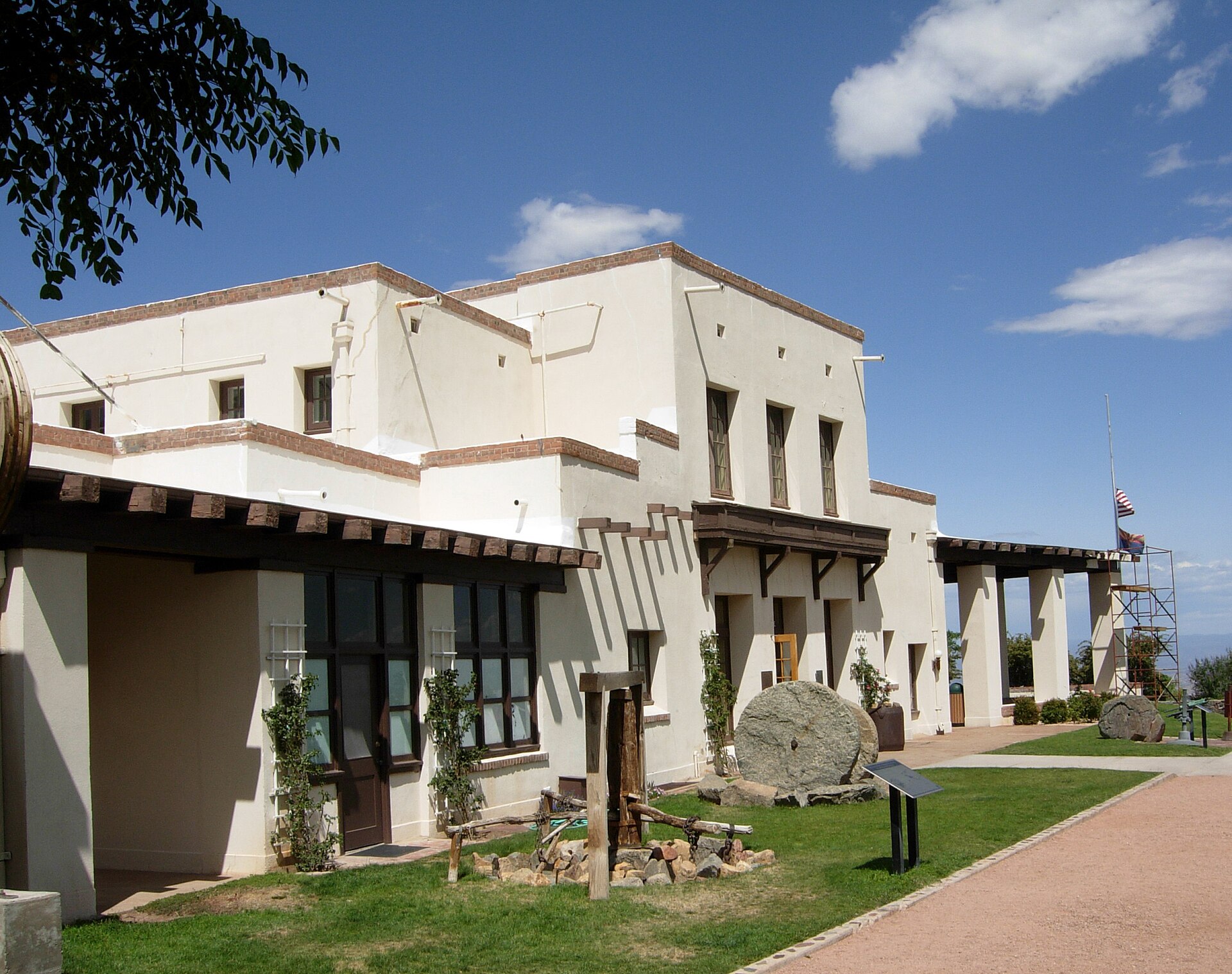
- Audrey Shaft Headframe Park — Upper town
This small park preserves a wooden headframe, the tower that once lowered miners and raised ore. A glass panel lets visitors stand over the deep shaft and look straight down. Wooden headframes of this size are rare survivors, and the spot gives a physical sense of how far below the town the work went. - Jerome's Sliding Jail — Lower Main Street
The old jail is one of Jerome's best-known oddities. Blasting and the unstable slope slowly moved the building downhill, and it now sits well away from where it was built. It is a quick roadside stop, and a neat illustration of why a town built on a steep, mined hill is always shifting. - Mine Museum — Main Street
The Mine Museum has displays on the history of mining in Jerome, from early claims to the closure of the last workings. It is compact, so an hour is plenty, and it fits well before or after a walk through the old shop streets. A gift shop is on site. - Gold King Mine Ghost Town — Outskirts of town
The Gold King Mine grounds hold old machinery, vehicles and weathered outbuildings, set out as a ghost-town attraction on the road out of town. It suits visitors who like open-air relics. Activities such as gold panning depend on the weather, so call ahead before making the trip specially.
Culture
Jerome is a town whose identity was set by mining and then rewritten by artists. Miners from many backgrounds worked the hill, and the labour disputes of the First World War era remain part of local memory. When the mines closed in 1953 the town nearly emptied. Those who stayed, and the painters, potters, glassmakers and musicians who arrived later, turned abandoned commercial buildings into studios and shops. The result is a small community with a strong sense of its own oddness, where a jail has slid downhill and a saloon hosts live music most weekends. Ghost stories are part of the local pitch, and several eateries lean on spooky names, though the real history is more interesting than the folklore. Gallery culture matters here. The monthly Art Walk on the first Saturday brings residents and visitors out together into the early evening, and many shopkeepers are also the makers of what they sell. Conversation with them is part of the experience, and most are happy to explain how a piece was made or what a building used to be. Visitors who treat the town as a living village, not a theme park, tend to get the warmest welcome. Residents live above and behind the shopfronts on Main Street, so keep voices low after dark, stay off private steps and terraces, and never climb on mine relics or fences for a photograph.
What to wear
Jerome has no folk costume of its own. The clothing tied to the place is the working dress of its miners, and the wider Western wardrobe that grew from it. Miners typically wore heavy cotton, denim and canvas, wool layers, leather boots and hard hats, every working day, and that utilitarian look still shows in the hats, boots and belts sold in local shops. Today people dress casually. Residents favour jeans, linen shirts, wide-brimmed hats and boots, with artists adding bright scarves and handmade jewellery from the galleries, while weekend visitors arrive in everything from hiking kit to smart summer clothes. A visitor should dress for the hill rather than the occasion. Streets and stairways are steep and uneven, so closed shoes with good grip beat sandals. July highs average 32 °C, so bring a hat, sunglasses and sun cream. January highs average only 10 °C and nights are colder, so pack a warm layer and a windproof jacket, as the town is often windy, especially in spring and autumn. A light rain jacket helps during late-summer thunderstorms. No dress code applies in the galleries, cafés or museums, though modest, quiet clothing is polite at the cemetery or anywhere that feels like a private home.
What to eat
- Burger and salad plates — Grills and pubs along Main Street
Burgers are the town's staple order, served with salads in several grills on or just off Main Street. Portions are hearty and a full bar usually sits alongside. Lunch is the busiest time at weekends, so expect a short wait on a sunny day. - Cream puffs — Bakery café on Main Street
A bakery on Main Street is known for its cream puffs, light choux pastry filled with sweet cream. They suit a mid-morning stop between galleries, and the same place does breakfast and lunch. Arrive early, as pastries can sell out on busy weekends. - Espresso and a casual breakfast — Corner cafés in the lower town
Several small cafés pull good espresso and serve simple breakfasts, which suits a cool, windy morning on the hill. Casual menus here lean on eggs, toast and baked goods. Sitting by a window gives a good view over the roofs below. - Mexican plates — Cantina on the Main Street loop
Mexican cooking has a long place in Arizona, and a cantina on the main loop serves it in a relaxed, bar-like setting. It is a good option for a sit-down evening meal, with something filling after a day of climbing the town's many steps. - Fine dining with a view — Hillside restaurant overlooking the Verde Valley
For a more formal meal, a restaurant in a former hillside building offers a more sophisticated menu and wide views of the valley. Booking ahead for sunset tables is sensible at weekends, and check the venue's own site for current menus.
Plan it
Best time. April to June and October. Spring has little rain, though it is often windy, and autumn is similar. July is the warmest month, with highs around 32 °C. August is the wettest, with violent thunderstorms possible. January highs average about 10 °C, and light snow and fog occasionally occur.
How long. 1–2
Getting there. The nearest major airport is Phoenix Sky Harbor, followed by a drive. From Phoenix, take Interstate 17 north to Camp Verde, then State Route 260 north-west to Cottonwood, and continue on State Route 89A through Clarkdale up to Jerome. From Flagstaff, State Route 89A runs south through Sedona and on to Jerome, which is the scenic option.
Budget. mid
Tips
- Park in the lower or middle car parks and use the free shuttle along Main Street, since the steep streets are tight.
- Visit on a weekday morning for quieter streets, or on the first Saturday evening if you want the Art Walk and are happy with crowds.
- Carry water, a hat and a warm layer, because the weather changes quickly on the hill.
- Check the town's official site, http://www.jerome.az.gov, for events, parking and any closures, and call ahead to attractions such as Gold King Mine if you want a particular activity.
Etiquette
- Keep noise down after dark, as people live above and behind the shops.
- Stay off private steps and terraces, and do not climb on mine relics.
- Ask before photographing residents or shop staff.
Nearby
Sources
- Wikidata Q985248 (CC0)
- Wikipedia: Jerome, Arizona (rev 1379362529) (CC BY-SA 4.0)
- Wikivoyage: Jerome (Arizona) (rev 5436164) (CC BY-SA 4.0)
- Photo: Jerome Avenue, Jerome, Arizona — Seasider53 (CC BY 4.0)
- Photo: United Verde open pit panorama — Finetooth (CC BY 3.0)
- Photo: Old horizontal mine shaft — Scotwriter21 (CC BY-SA 4.0)
- Photo: William Andrews Clark — Pirie MacDonald (Public domain)
- Photo: United Verde smelter panorama — West Coast Art Co. (Public domain)
- Photo: High Street, Jerome — Andrew Dunn (CC BY-SA 2.0)
- Photo: Douglas Mansion — Benjamin Cody (CC BY 3.0)
- Photo: Jerome wider panorama — Finetooth (CC BY 3.0)


