Iliamna Lake
Iliamna Lake, United States
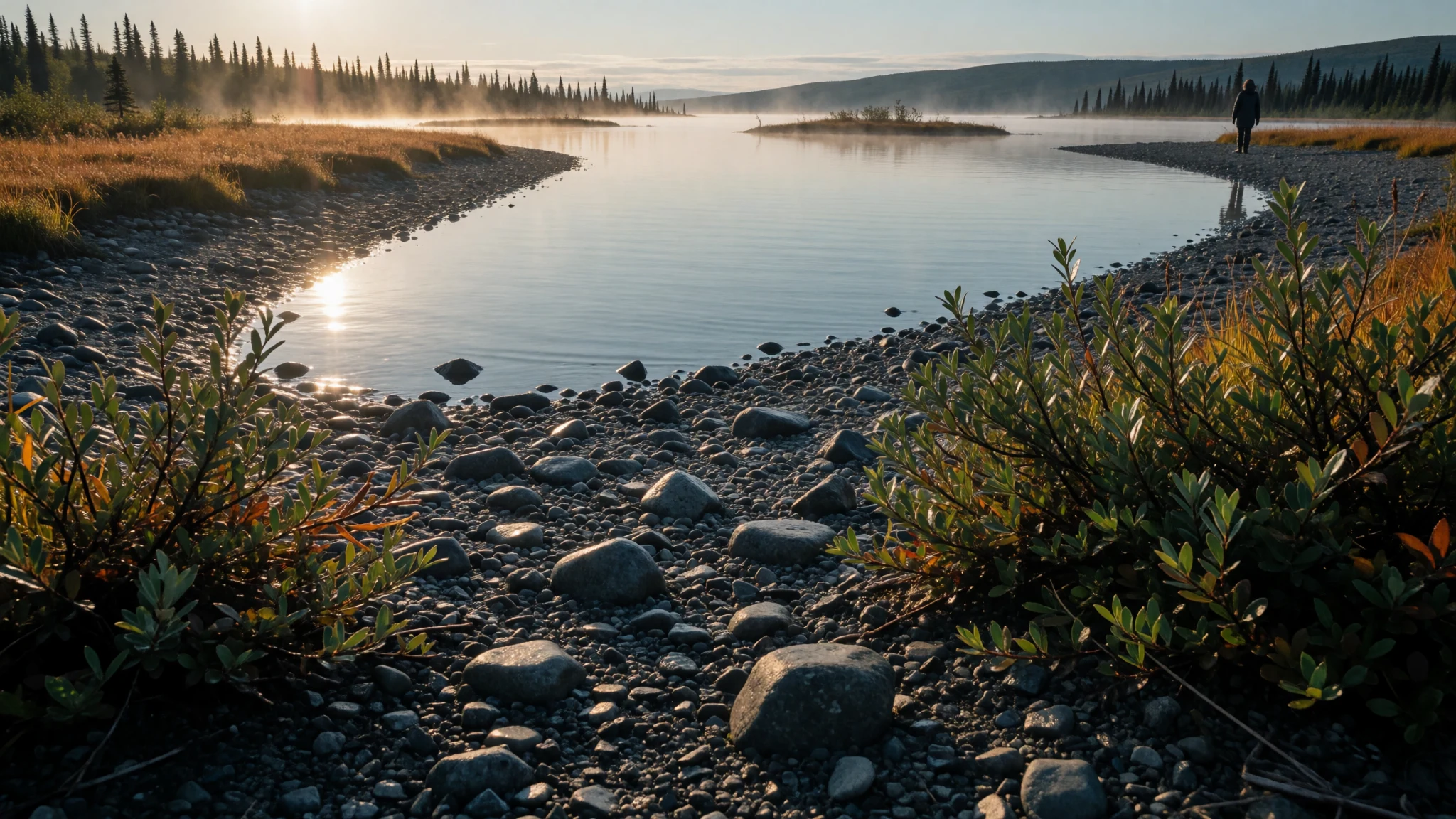
Iliamna Lake is Alaska's biggest lake, a wide cold basin of fog, fish and small villages, reached only by air and boat.
The place
Iliamna Lake sits in southwest Alaska at the northern end of the Alaska Peninsula, with Cook Inlet on one side and Kvichak Bay on the other. It is the biggest lake in the state, covering about 2,600 km², running roughly 124 km from end to end and reaching 35 km across at its widest. The deepest point drops to 301 m, yet the surface lies only 14 m above sea level, so this is a vast low basin rather than a mountain tarn. Water leaves through the Kvichak River and runs on into Bristol Bay.
The shoreline is thinly settled. Small communities including Iliamna, Newhalen and Pedro Bay sit around the lake, and the Iliamna River feeds it from the uplands nearby. None of these places is linked by road to Anchorage, so the lake is a country of small aircraft, skiffs and, in winter, snow machines.
Names carry the history. Nila Vena is the Dena'ina Athabascan name, and Nanvarpak is the Yup'ik one; both peoples have known these waters for a very long time. The weather is the thing to plan around. Low cloud and fog can sit on the water for days, and wind can raise a serious chop on a lake this size. On a clear day the horizon is enormous, the water cold and pale, and the shore mostly spruce, willow and tundra. Visitors come mainly for fishing, flightseeing and as a gateway to wild country, not for promenades or nightlife. Services are few, and weather decides the schedule.
Its story
Iliamna Lake has carried several names, and each one records who was looking at it. The Dena'ina Athabascan name, Nila Vena, means roughly the lake of the island. A Russian map from 1802 labelled it Lake Shelekhov, after the explorer Grigory Shelekhov. By 1852 a Russian naval chart showed it as Big Ilyamna Lake, and the spelling we use today grew out of that family of names.
The name also has a legend attached. A geologist with the United States Geological Survey, G. C. Martin, recorded that Iliamna was said to belong to a great blackfish living in the lake. In the story it punctures the skin boats of people who have behaved badly. Whatever the creature's truth, it is a fitting tale for a lake where wind and cold water make small boats a real risk, and the story is still told in connection with the place.
The wider political story is short but sharp. In 1867 Russia sold Alaska to the United States, a deal many Americans at first thought foolish. Statehood did not arrive until 1959. Through all of that, the lake's people carried on with fishing, hunting and travel by water, and the Kvichak River's connection to Bristol Bay tied the lake to one of the great salmon fisheries of the north Pacific. Today Dena'ina, Yup'ik and other Alaskan communities still live around it, and their names for the water remain in use alongside the official one.
What to see
- The lake from the air — Iliamna and surrounding villages
Iliamna Lake is best grasped from a small aircraft, which shows the whole pale sheet of water, its scattered islands and the rivers draining in. Satellite pictures show the same shape clearly. Flights depend on weather, so leave slack in the schedule, and ask operators what the day's visibility allows.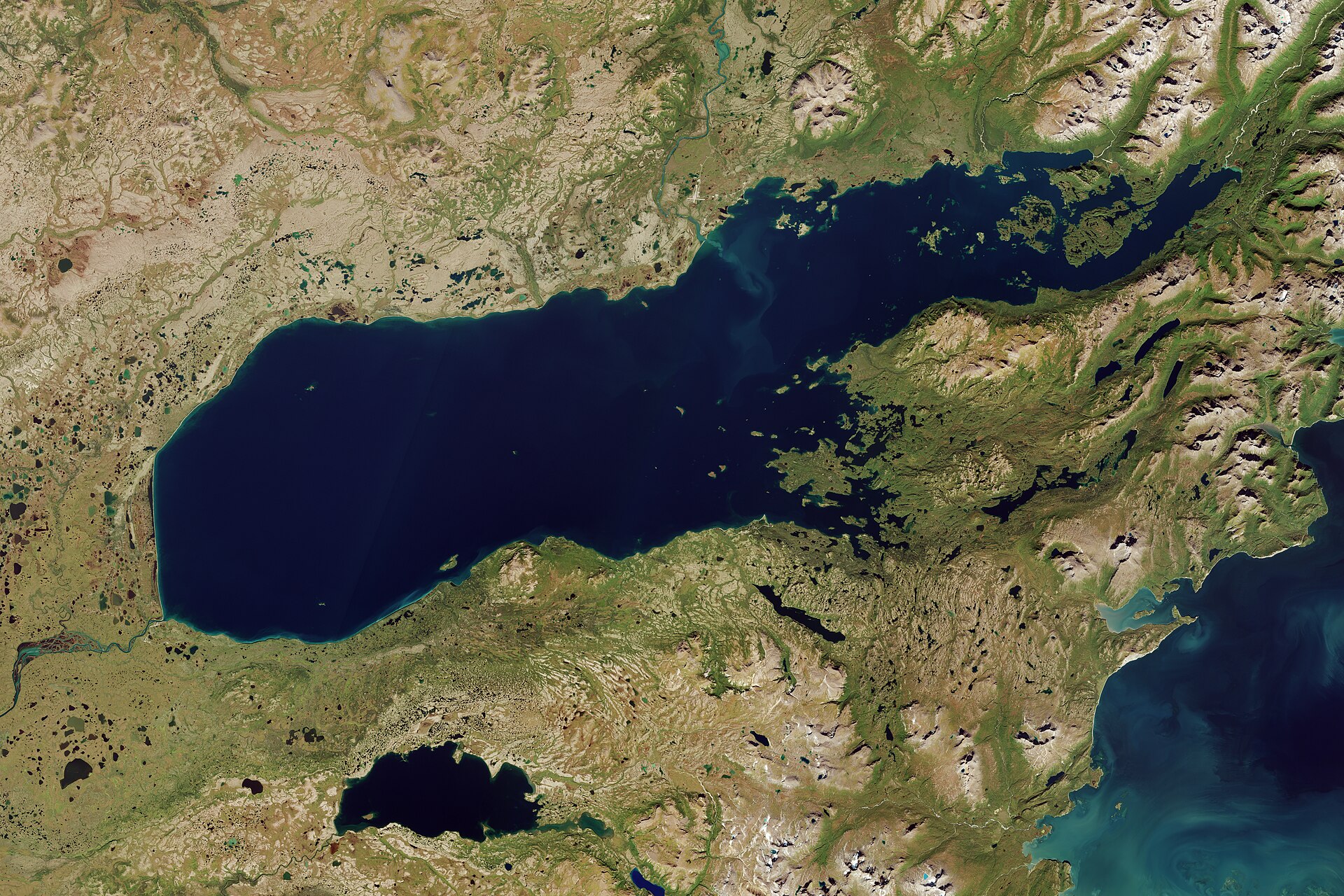
- Pedro Bay — Eastern shore
Pedro Bay is a small community on the eastern end of the lake, a place of fishing boats, low houses and frequent fog. It gives a sense of everyday lake life rather than a tourist setting. Facilities are minimal, so arrange lodging and transport in advance and respect that these are private homes.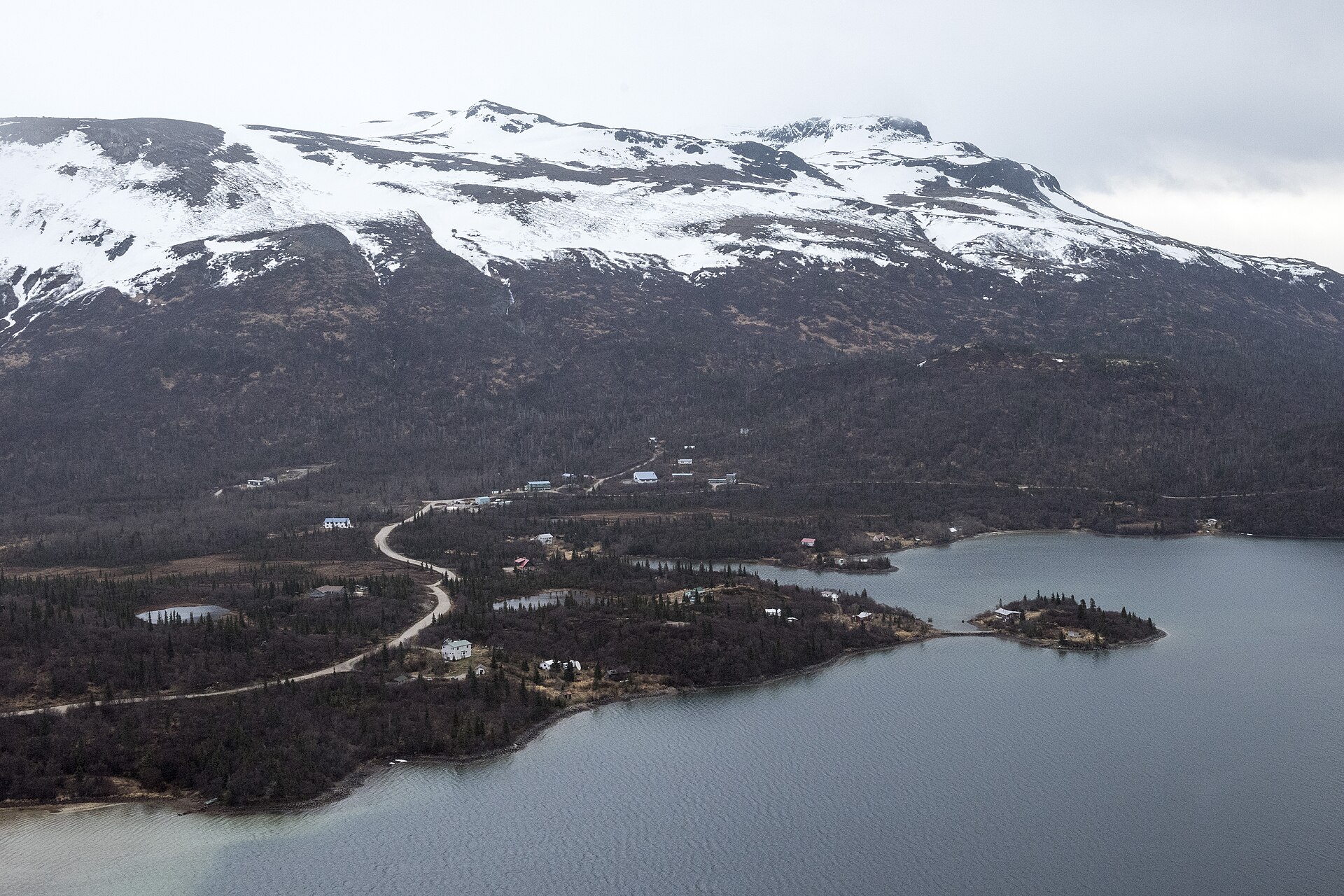
- Nila Vena shoreline — Lake margins and islands
The shore and islands under the Dena'ina name Nila Vena, island's lake, reward slow travel by boat. Spruce, willow and open tundra edge the water, and birds and the occasional bear work the margins. Go with a local guide who knows the wind, depth and landing places.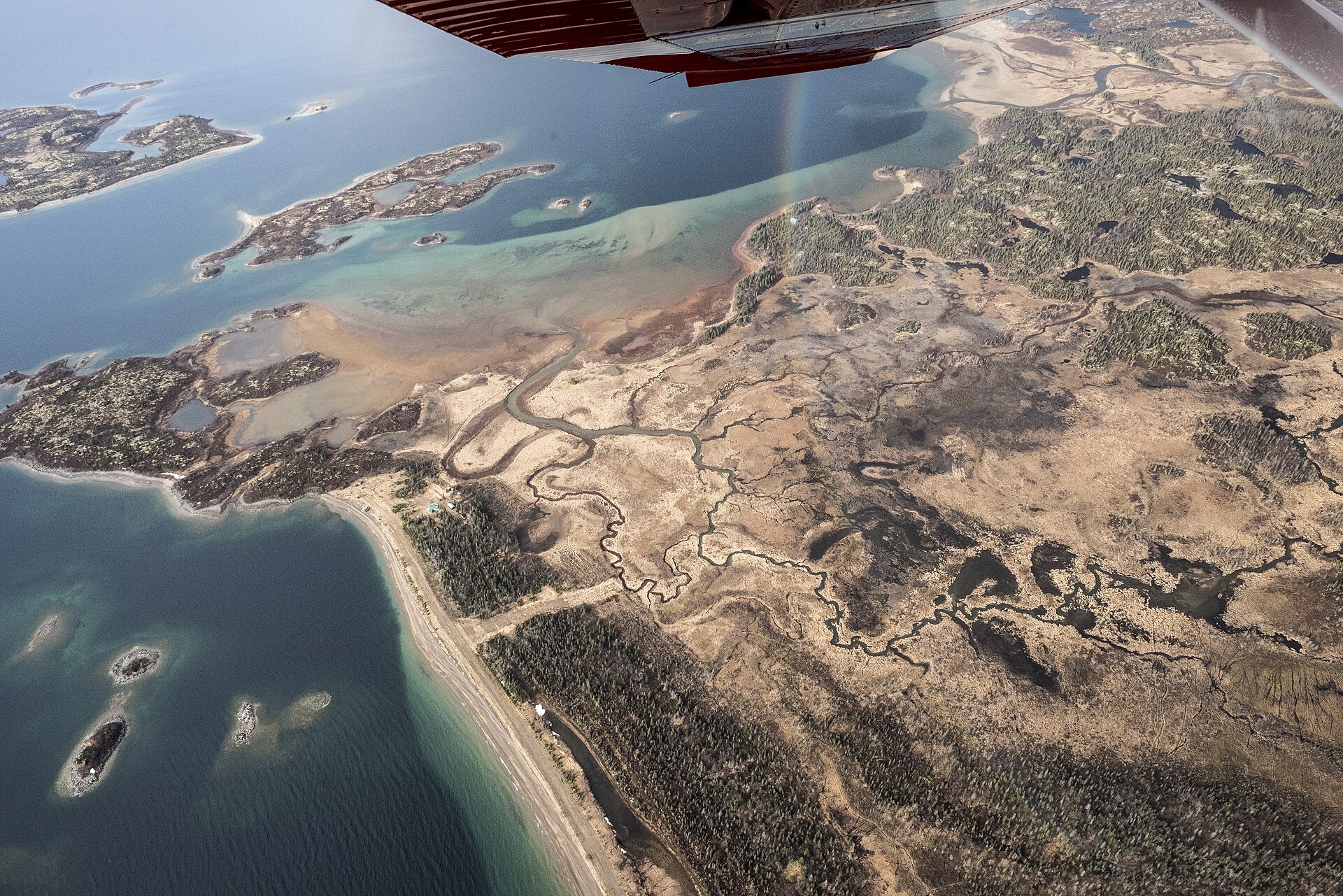
- Kvichak River outlet — Western end of the lake
The Kvichak River carries the lake's water west towards Bristol Bay, and the river and its salmon runs have shaped life in the villages along it. In season the river is a draw for anglers and for bears. Fishing rules vary, so check current Alaska regulations before casting a line. - Lake Clark National Park — North-east of the lake
Lake Clark National Park lies just to the north-east and is the usual add-on for visitors, with mountains, glacial lakes and the volcano Redoubt on the official map. Reaching it needs a flight. Check the National Park Service site for current access, permits and conditions before planning.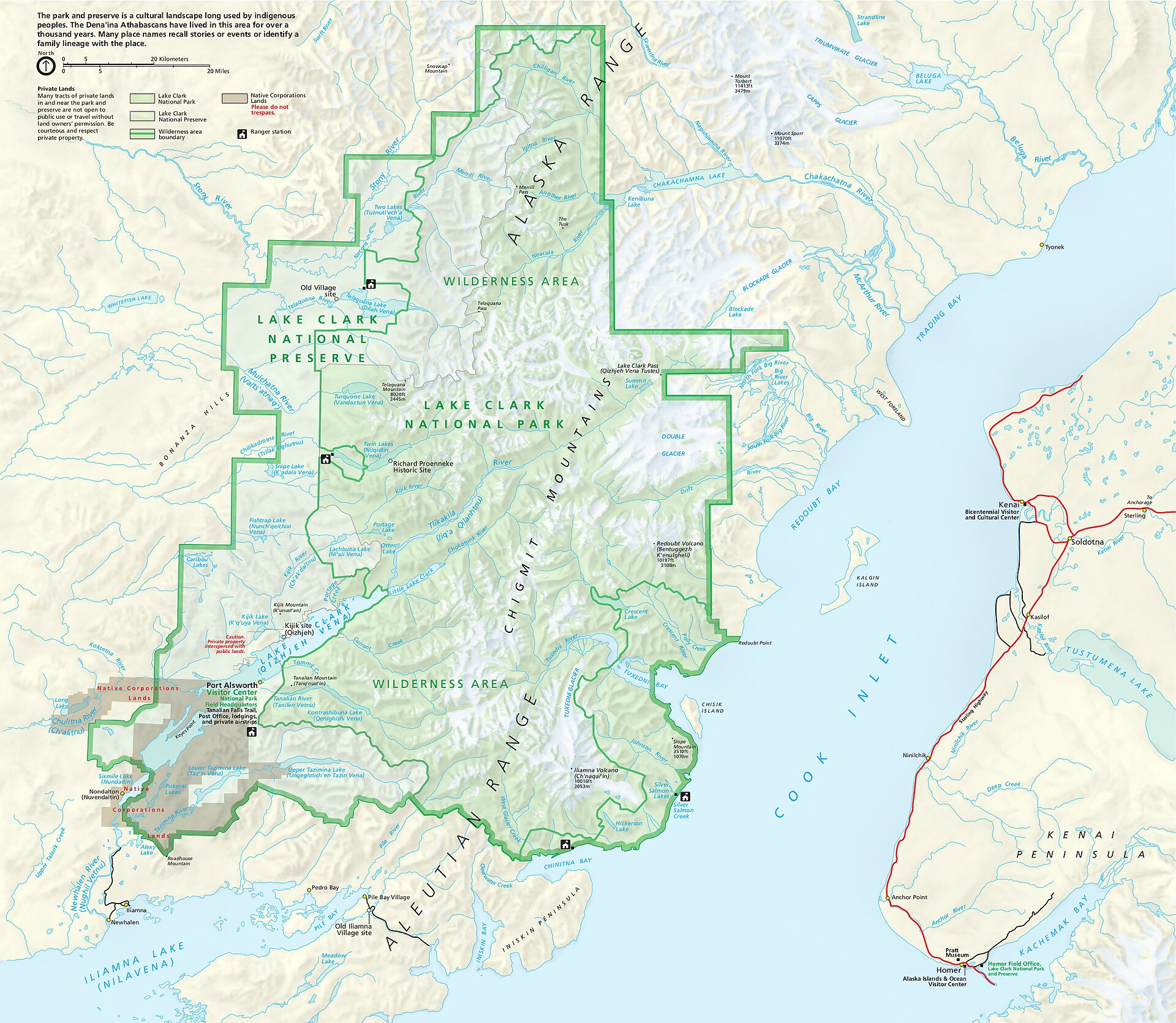
Culture
Iliamna Lake belongs first to the people who live around it. Dena'ina Athabascan and Yup'ik communities have fished, hunted and travelled here for generations, and the two names, Nila Vena and Nanvarpak, are a reminder of that. Salmon from the Kvichak system still matters for household food as well as for the commercial fishery, so a boat on the water or a rack of drying fish is part of someone's living, not a picture opportunity.
The villages are small and private. Houses, fish camps, boats and equipment belong to families, and a visitor is a guest in a place where everyone knows everyone. Shops and services are limited, supplies arrive by air or barge, and patience with delays caused by weather is simply part of life here.
The land itself asks for care. In natural areas, and especially in national parks and forests, nothing should be picked or collected, from flowers to stones, because the tundra recovers slowly and insects depend on the blooms. Litter is a real problem in remote places where it cannot easily be removed, so everything carried in should be carried out. Campfire rings are for fires only, not for burning cans, bottles or rubbish, which leave residue that outlasts the visit.
In short, travel quietly, take your rubbish away with you, and ask before photographing people, their homes or their fish racks.
What to wear
Around Iliamna Lake, traditional clothing was made from what the land offered. Dena'ina and Yup'ik people historically wore parkas and boots of animal skin and fur, chosen for warmth and for how they handled wet and wind, and Dena'ina clothing was often decorated with beadwork. The Yup'ik hooded overshirt, the qaspeq, is a lighter garment that is still seen today. Traditional pieces are now worn mostly at celebrations, dances, gatherings and for certain seasonal work, and they are made by skilled local sewers whose work should be respected.
Everyday dress in the villages is practical. People wear fleece, waterproof jackets, wool hats, jeans, and rubber boots or waders, often with a knife or tools on the belt. Brand names matter little; usefulness matters a lot, and dress changes quickly with the weather.
A visitor should dress for cold water, wind, rain and, in summer, biting insects. Layers work best: a thermal base, a fleece or light down jacket, and a fully waterproof shell and trousers. Rubber boots or sturdy waterproof hiking boots are better than trainers, since landings are often wet and muddy, and wool socks help. Bring a warm hat, gloves even in summer, sunglasses and a head net for mosquitoes. There are no formal dress rules, but modest, practical clothing sits comfortably in small communities. Anyone going out on a boat or in a small aircraft should add a spare warm layer in a dry bag.
What to eat
- Sockeye salmon — Fishing lodges and village kitchens near the Kvichak River
Salmon from the Kvichak system is the food most tied to this lake and to Bristol Bay. It is grilled, baked, dried or smoked, and eaten in summer when the runs come through. Look for it at fishing lodges and at community gatherings, and ask what is in season. - Smoked fish — Village stores or from local families when offered
Smoked and dried salmon is a long-standing way to store the summer catch for winter. Strips are salty, chewy and rich, and travel well as a snack for a boat day. It is usually made by families, so buy only where it is offered for sale. - Reindeer sausage with eggs — A local diner in a small Alaskan town, often in Anchorage before flying out
A filling Alaskan breakfast of reindeer sausage, eggs and hash browns with plenty of hot coffee. Portions are large, which suits a cold morning before a long day on the water. - Fireweed honey — Gift shops and craft stalls in Anchorage and larger towns
Fireweed honey is a pale, delicately floral honey made from the tall pink flower that colonises cleared ground across Alaska. It is a good small gift to take home and goes well on bread or in tea. - Spruce tip syrup — Specialist food shops and markets in Anchorage
A sweet, resinous syrup made from the bright young tips of the spruce tree in spring. It sounds odd but tastes citrusy and piney, and works on pancakes, in cocktails or over ice cream.
Plan it
Best time. June to September, when the lake is free of ice, daylight is long and flights and boats run most reliably. Fog and wind can still disrupt plans at any time, and winter brings deep cold and short days.
How long. 3–5
Getting there. Fly to Anchorage, which is served from Seattle and other cities by major airlines, then take a scheduled or chartered small aircraft to Iliamna or another lake village. Alaska's road network is limited, so air is the main way in. The last leg to a lodge or fishing camp is usually by boat or a short flight.
Budget. high
Tips
- Book lodges, guides and charter flights well ahead, as places are few in summer
- Leave spare days in the schedule because fog and wind often ground small aircraft
- Carry cash and any supplies you need, since shops and cash machines are scarce
- Bring insect repellent and a head net for the summer months
- Check Alaska fishing rules and National Park Service pages before planning
Etiquette
- Ask before photographing people, homes or fish racks
- Take all rubbish away and never burn it in fire rings
- Keep to guides' advice around bears and on boats
Nearby
Sources
- Wikidata Q965436 (CC0)
- Wikipedia: Iliamna Lake (rev 1372730883) (CC BY-SA 4.0)
- Wikivoyage: Alaska (rev 5434329) (CC BY-SA 4.0)
- Iliamna Lake by Sentinel-2, Copernicus Sentinel-2, ESA (CC BY-SA 3.0 igo)
- Fourpeaked map, Alaska Volcano Observatory / USGS (Public domain)
- Iliamna Lake by Sentinel-2 (Original 10m Res), Copernicus Sentinel-2, ESA (CC BY-SA 3.0 igo)
- Pedro Bay, Lake Clark Place Name Project, Dev Dharm Khalsa / NPS (Public domain)
- Lake Iliamna, DPLA, National Park Service Alaska Region (Public domain)
- Nila Vena, Iliamna Lake (37b6a2b3), Dev Dharm Khalsa / NPS (Public domain)
- Nila Vena, Iliamna Lake (ff2f26b1), Dev Dharm Khalsa / NPS (Public domain)
- Lake Clark map, U.S. National Park Service (Public domain)


Wildlife
- Brown bear (animal)
The brown bear is a big, hump-shouldered bear with a coat that can be creamy, reddish or deep brown, and wide paws built for digging. Around Iliamna Lake, you may glimpse the occasional bear working the shoreline, where tundra, willow and spruce meet the water. The notes do not say which season or hour is best, so ask locally. Watch from a generous distance, stay quiet, go with a guide, and never offer food.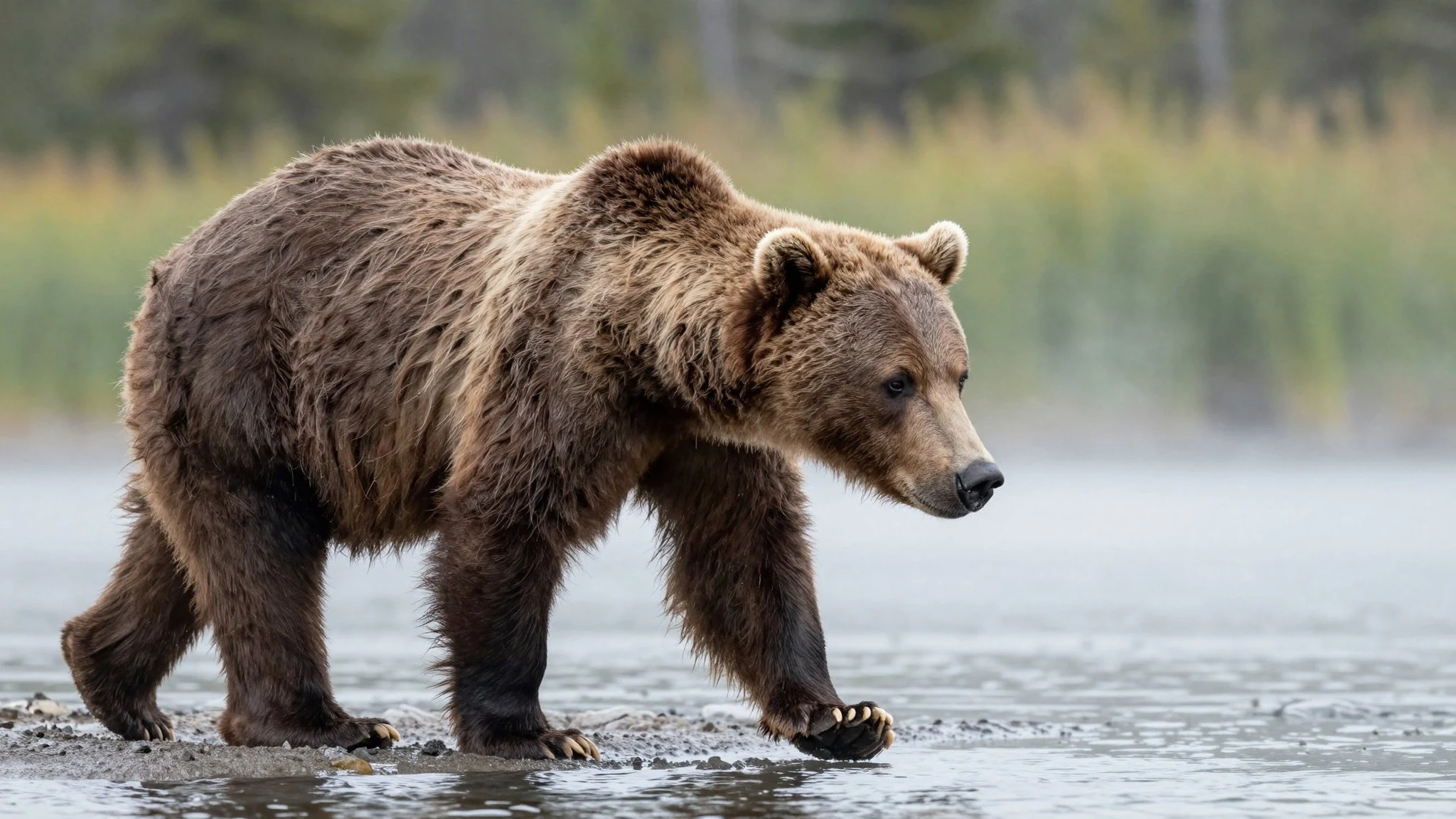
- Sockeye salmon (animal)
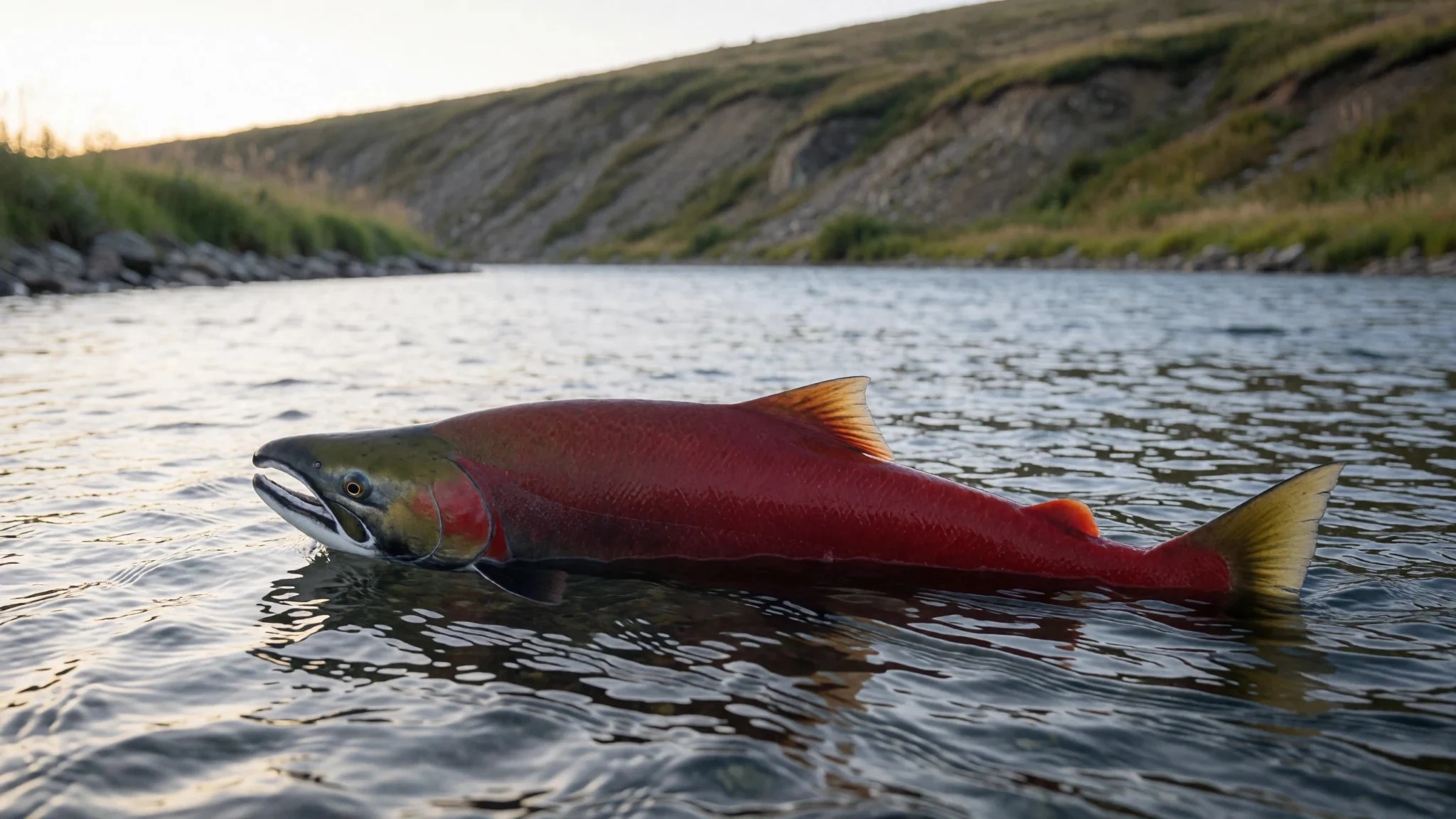
The sockeye is a Pacific salmon that turns brilliant red when it spawns, like a fish dressed for a party. Iliamna's water flows west along the Kvichak River towards Bristol Bay, and the salmon runs there have shaped life in the villages along it. The notes do not give a month or time of day, so ask a guide. Watch quietly from the bank, keep your distance, and never feed the fish.