ʻĪao Valley
ʻĪao Valley, United States
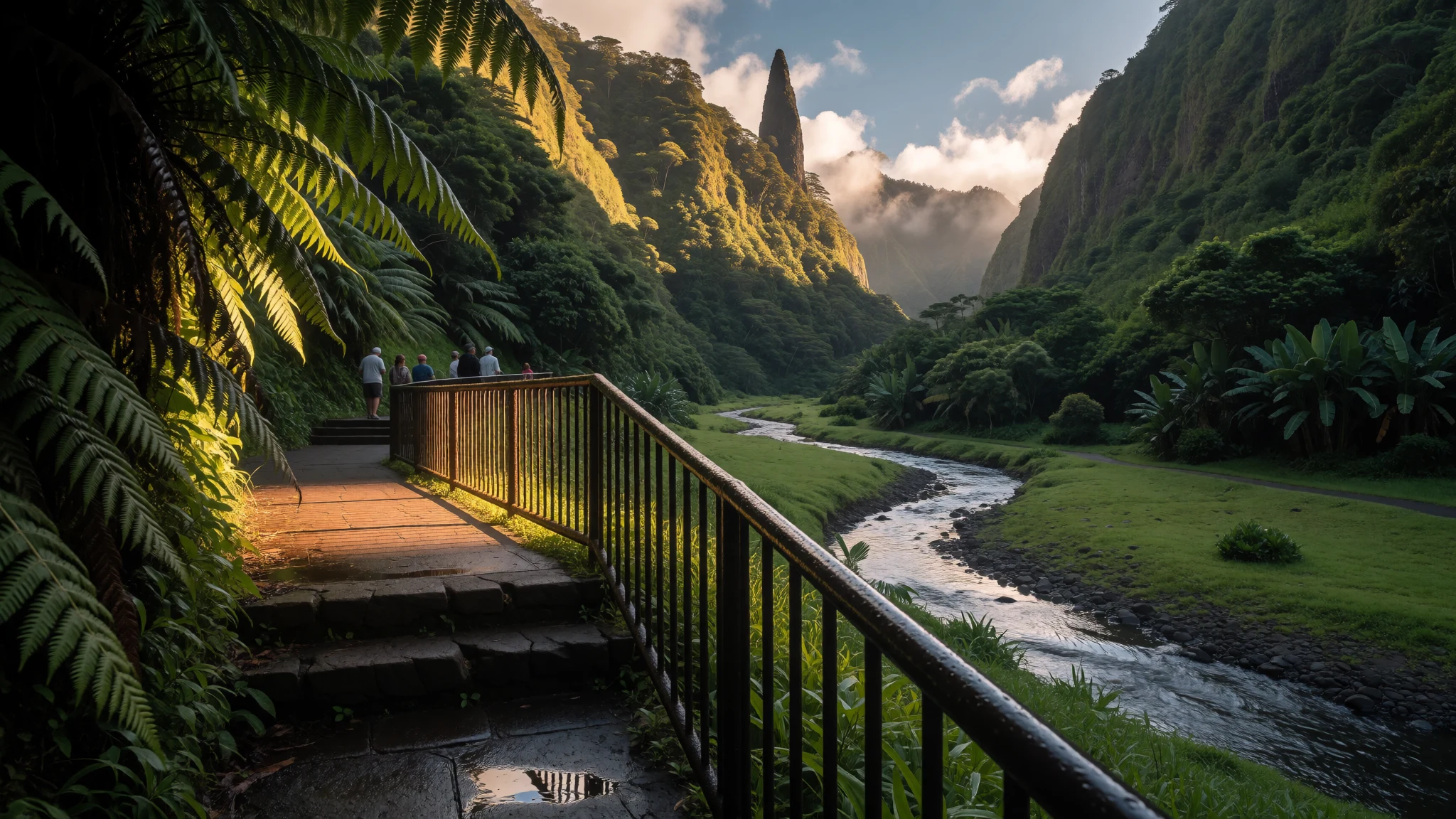
ʻĪao Valley is a cloud-hung green gorge on Maui where Hawaiian myth, a royal burial ground and a famous battle share one short walk.
The place
ʻĪao Valley is a steep, green cleft in the West Maui Mountains, a short drive inland from the town of Wailuku on Maui, Hawaii. Its name is usually translated as "cloud supreme", and the weather lives up to it. Cloud tends to gather on the ridges by late morning, rain can arrive within minutes, and ʻĪao Stream, which runs along the valley floor, swells quickly after heavy showers. The walls rise sharply on both sides, draped in forest, and the road ends at a state park where most visitors spend an hour or two. A paved path climbs to a lookout over the landmark that defines the valley, the ʻĪao Needle, a slim green pinnacle standing apart from the surrounding slopes. Below it, a gentler trail follows the stream through plantings of native and introduced species. The valley was named a National Natural Landmark in 1972, and it is also a place of deep importance in Hawaiian history, which gives the quiet a different weight. Crowds are the honest drawback. Tour coaches and hire cars fill the car park by mid-morning, and the viewing areas can feel tight. Early starts help a good deal, both for space and for clearer views before the cloud settles in. Visits are short rather than all-day affairs because the developed paths are brief, so most people pair the valley with Wailuku's streets or a stretch of coast. Warm, damp air and slippery steps are normal in any season.
Its story
ʻĪao Valley carries layers of Hawaiian belief and memory. In traditional thought the god Kāne, giver of life, is tied to fresh water, rain, clouds, streams and springs, which suits a valley that depends on all five. The ʻĪao Needle, known as Kukaʻemoku, is read as a stone form of Kanaloa, the god linked with the underworld, so one landscape holds two very different divine presences. The valley was also a resting place for chiefs. Kapawā, a ruler of Hawaiʻi who came before Pilikaʻaiea, was laid here, and in the late 15th century the Maui ruler Kakaʻe set the valley aside as a burial ground for aliʻi, the chiefly class. Remains were hidden in secret locations, which is part of why the place is treated with restraint today. In 1790 the valley became a battlefield. Kamehameha the Great, working to bring the islands under a single rule, defeated Kalanikūpule and the Maui forces at Kepaniwai. Tradition says the stream was clogged with the fallen, and the site took the name Kepaniwai, "the damming of the waters". Today the same stream runs through a calm, green setting, and knowing this history changes how the spot reads. The park paths, gardens and viewing platforms sit on top of an older story rather than replacing it, and local people still regard the valley as a place of ancestors as much as a scenic stop.
What to see
- ʻĪao Needle lookout — ʻĪao Valley State Monument, above Wailuku
A short paved path with steps climbs to a platform facing the ʻĪao Needle, a slim, forest-covered spire. This is the main viewpoint and the busiest spot in the park. Go early, before cloud covers the top, and expect the steps to be wet and slick after rain.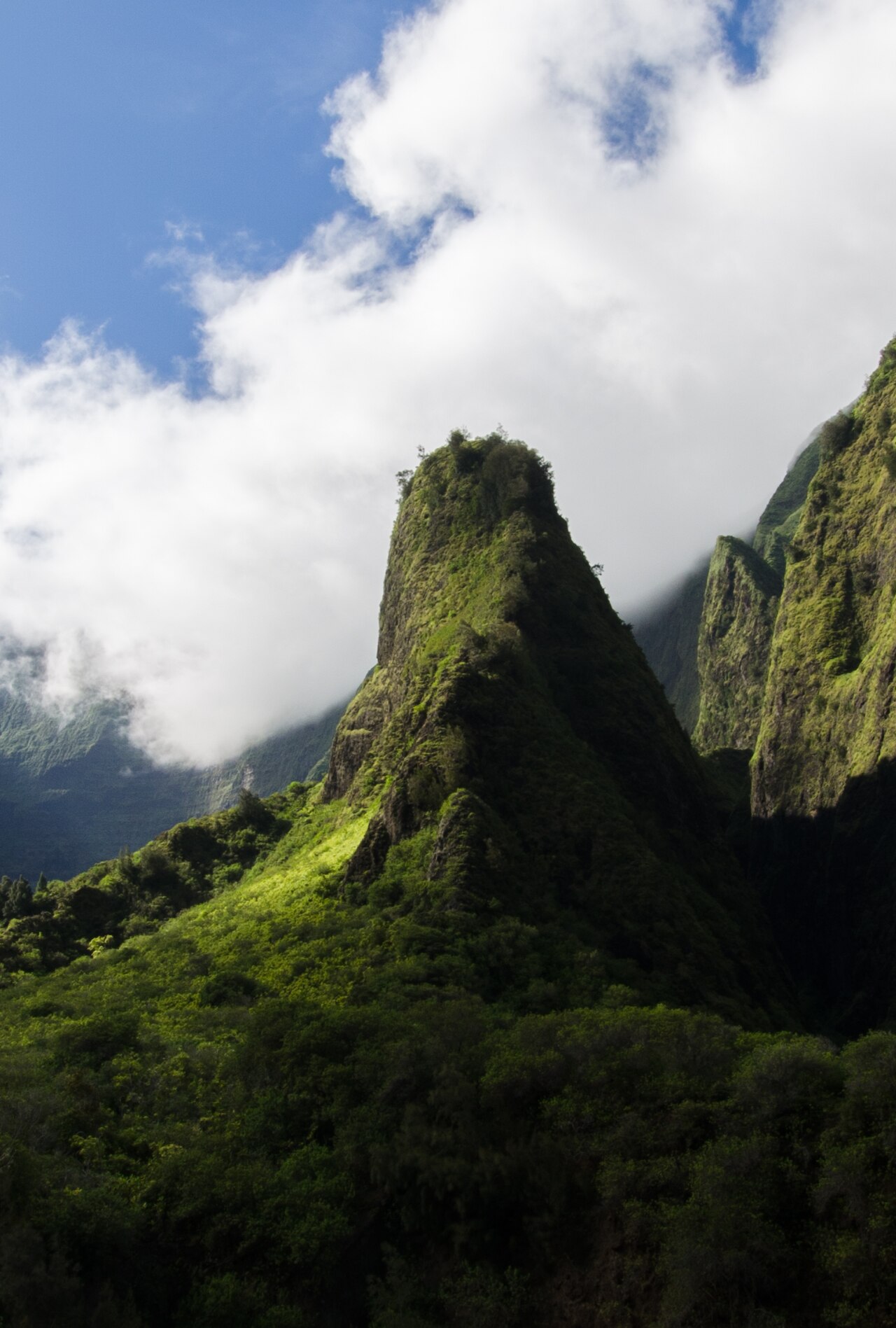
- Stream-side loop trail — Valley floor, ʻĪao Valley State Monument
Below the lookout, a gentle loop runs beside ʻĪao Stream and through gardens of native and introduced plants. It is easy walking, but the ground is damp and roots catch the unwary. Pause at the footbridge to watch how quickly the water level can shift after a shower.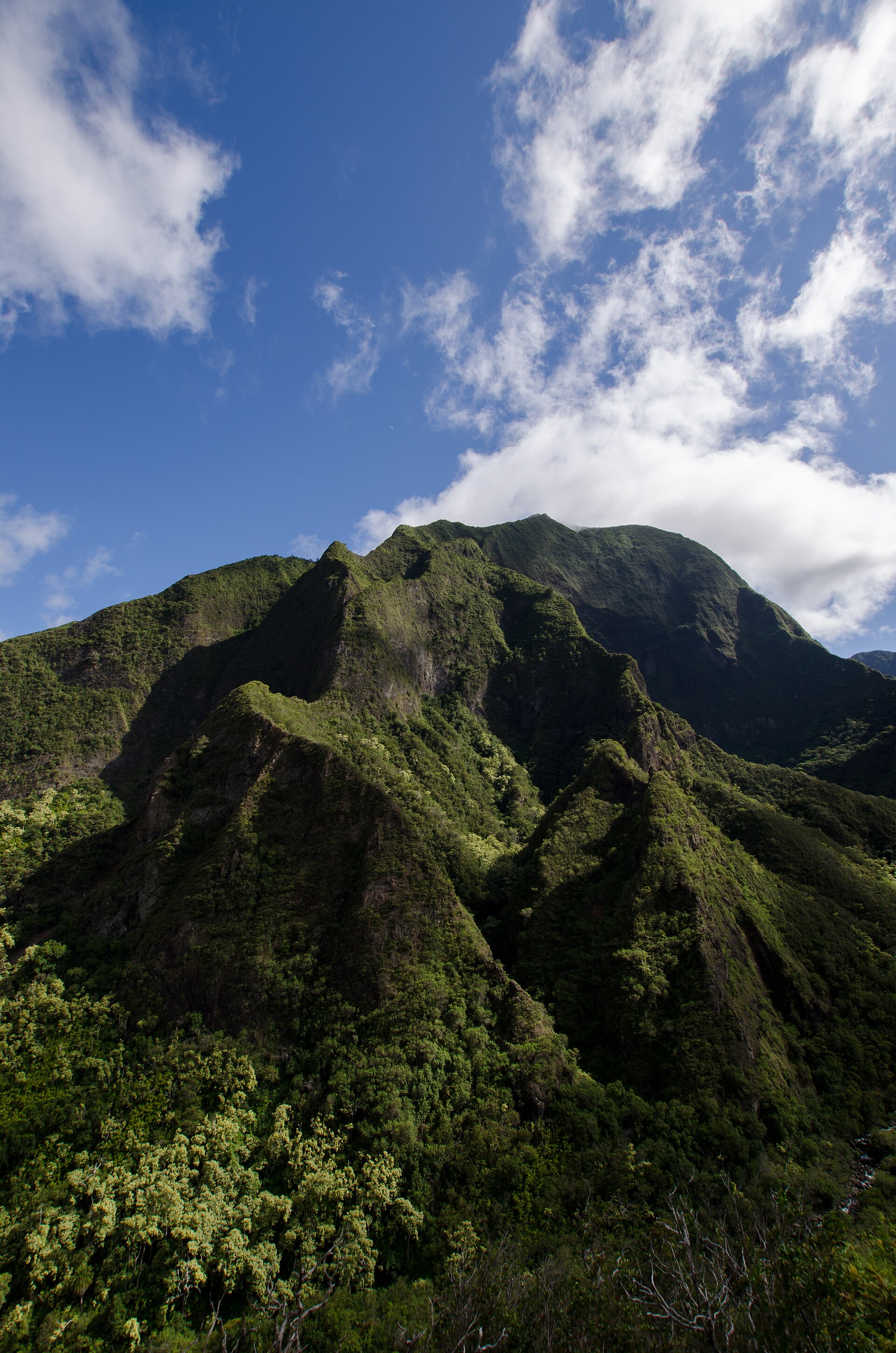
- Valley walls and ridgelines — Viewpoints inside the park
The forested mountainsides enclosing the valley are worth a slow look from the park's viewing points. Ridges fold into one another, and low cloud drifts through them within minutes. Photographs taken here show how quickly the light changes, so wait a few minutes rather than giving up on a grey start.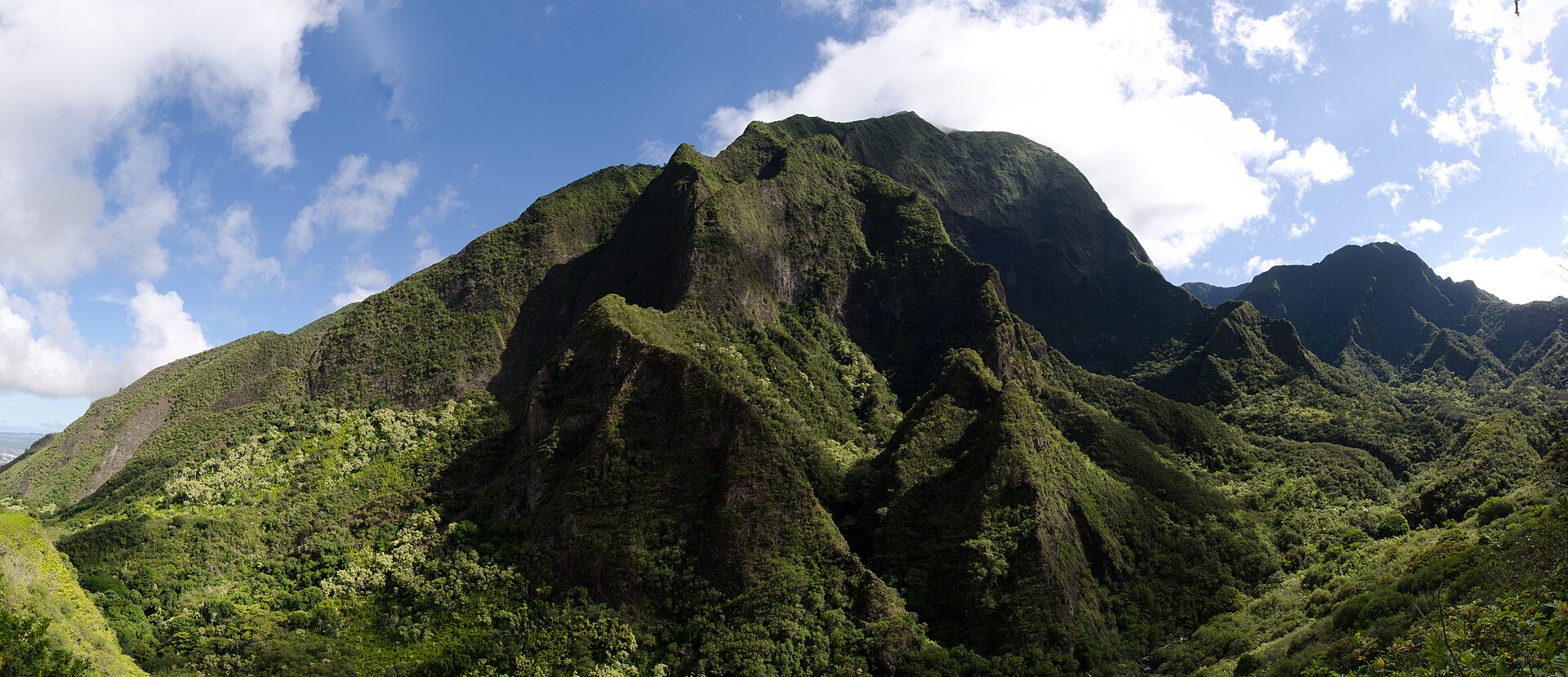
- The valley mouth from the road — Iao Valley Road, between Wailuku and the park
On the drive up from Wailuku the road climbs between steep slopes, and the opening of the valley, facing east, can be seen behind you on the way back. Pull over only at signed, safe spots, and note how the greenery thickens as the road rises into the rain.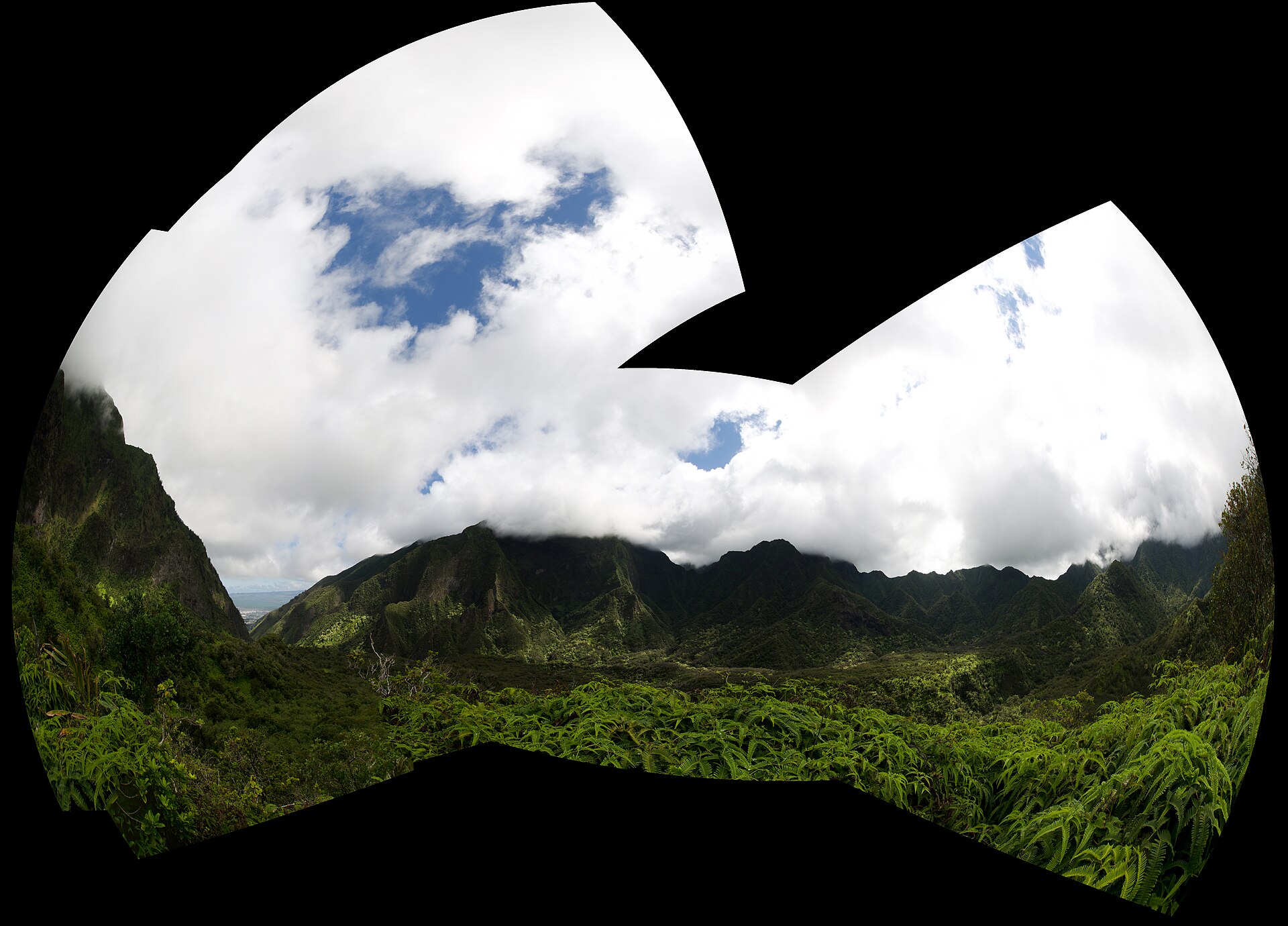
- Kepaniwai and Wailuku — Lower valley and Wailuku town
Kepaniwai, the battle site whose name means "the damming of the waters", lies in the lower part of the valley, close to a heritage garden area that reflects the island's mixed communities. Wailuku, the old county town just below, makes a sensible stop for lunch and a wander through its older streets.
Culture
ʻĪao Valley sits in the middle of Native Hawaiian heritage, and the culture of Maui more widely is a blend of Hawaiian, Asian, Portuguese and mainland American influences. Everyday manners are friendly and relaxed. Visitors will hear Hawaiian words in place names and greetings, and a little effort at pronouncing them, including the ʻokina (the glottal stop) and the kahakō (the long-vowel mark), is appreciated. In a home, shoes are left at the door, as in much of Asia. The valley itself is a burial ground for chiefs and a battle site, and many local people feel a connection to it that goes well beyond sightseeing. Hawaiian belief links the water, cloud and stone of the valley to named gods, so the landscape is read as alive rather than merely pretty. Across the islands, heiau, the old temples where the ancient religion was practised, deserve the respect given to any place of worship, even where they have become visitor attractions. Tourist experiences of Hawaiian culture can only scratch the surface, so it helps to listen to local guides, read the interpretive signs and buy crafts or books from Hawaiian makers where possible. Visiting early in the day, when the valley is quieter, makes this easier. Keep to the marked paths, speak quietly at the lookout, and do not move, stack or take any stones, plants or other natural objects from the valley, since it is both a burial ground and a protected landmark.
What to wear
ʻĪao Valley's traditional Hawaiian dress was made largely from kapa, bark cloth beaten from the inner bark of plants such as wauke (paper mulberry) and stamped with patterns. Men wore the malo, a loincloth, and women the pāʻū, a wrapped skirt. A kīhei, a shoulder cloak, gave warmth in the cool, wet uplands. Chiefs added feather capes and lei made from flowers, leaves, shells or feathers. These garments appear today mainly at hula performances, festivals and cultural events, while lei are still given for graduations, birthdays and welcomes. In everyday life on Maui, people dress for warmth and ease. Aloha shirts, often in bold prints, are normal at work and at celebrations, and women wear muʻumuʻu or simple sundresses. Shorts, T-shirts and rubber sandals, locally called slippers, are the default. For the valley, visitors should wear light, quick-drying layers and carry a rain jacket, since showers arrive without warning even in the drier months. Shoes with a grip matter more than style, because the steps and the stream-side path stay slick. A hat and sun protection help in the open areas, and insect repellent is useful near the water. No special cover-up is required, but shoulders and legs need no more than ordinary decency at any heritage site, and swimwear belongs at the beach rather than in the park.
What to eat
- Plate lunch — Small eateries and lunch wagons in Wailuku
The island staple: a main of meat or fish such as teriyaki chicken or fried fish, two scoops of rice and a scoop of macaroni salad. It is filling and good value. Look for it at lunch wagons, small eateries and food courts in Wailuku and Kahului. - Food-truck fish plate — Food trucks around Wailuku and Kahului
Converted trucks and vans park in regular spots, including petrol-station forecourts and some parks, serving fresh fish with rice and salad. Check the day's catch with the cook, and expect a queue at midday. It is a simple, quick meal after the valley. - Fresh tropical fruit — Corner shops and roadside stands
Pineapple, mango, banana, guava and papaya are sold in corner shops and roadside stands, along with fresh sugar cane. Some of the fruit is now imported, so ask what was grown locally. A cold, ripe piece is welcome after a warm, damp walk. - Poke — Supermarket counters and fish shops
Cubes of raw fish, usually tuna, dressed with soy sauce, sesame oil, onion and seaweed. It is sold by weight at supermarket counters and fish shops, and eaten with rice. Buy it fresh and keep it cool if it is going to wait. - Maui beef — Cafés and grills in Wailuku and upcountry towns
Ranches on Maui supply beef that appears in burgers and grilled plates at local cafés. The island also has brewpubs and coffee shops serving beans grown elsewhere in Hawaii. It is a good choice for a slower meal after a morning outdoors.
Plan it
Best time. May–June and September–October are usually the more settled months for the valley. The cooler, wetter winter brings more rain and more cloud on the ridges, and showers are possible at any time of year. Mornings are clearer than afternoons whatever the season.
How long. 1
Getting there. Fly to Kahului Airport on Maui, then drive or take a taxi to Wailuku and on up Iao Valley Road to the park. The last leg is short but winding. Parking and entry arrangements can change, so check the official Hawaii state parks website before going.
Budget. mid
Tips
- Arrive early in the morning for clearer views and fewer people
- Check the official state parks website for entry and parking rules before setting out
- Carry a rain jacket and wear shoes with a good grip
- Bring water and insect repellent, and do not enter the stream after rain
- Keep to marked paths, since the valley is a protected landmark and a burial ground
Etiquette
- Speak quietly at the lookout and treat the valley as a place of ancestors
- Stay on the paths and take nothing from the valley
- Learn a few Hawaiian place names and pronounce them with care
Nearby
Sources
- Wikidata Q423539 (CC0)
- Wikipedia: Iao Valley (rev 1371582511) (CC BY-SA 4.0)
- Wikivoyage: Hawaii (rev 5383942) (CC BY-SA 4.0)
- Iao Valley panorama cropped (CC BY 3.0)
- Location map Maui (OpenStreetMap contributors) (CC BY-SA 2.0)
- 2011 Oct 01 Iao Needle (Crop), Mark Fickett (CC BY 3.0)
- 2011 Oct 01 Iao Valley Panorama to South, Mark Fickett (CC BY 3.0)
- 2011 Oct 02 Iao Valley Mountainside Panorama crop, Mark Fickett (CC BY 3.0)
- 2011 Oct 02 Iao Valley Mountainside Panorama, Mark Fickett (CC BY 3.0)
- 2011 Oct 02 Iao Valley Mountainside, Mark Fickett (CC BY 3.0)
- A pride of Feral cats, Sara Golemon (CC BY-SA 2.0)


