Hudson Valley
Hudson Valley, United States
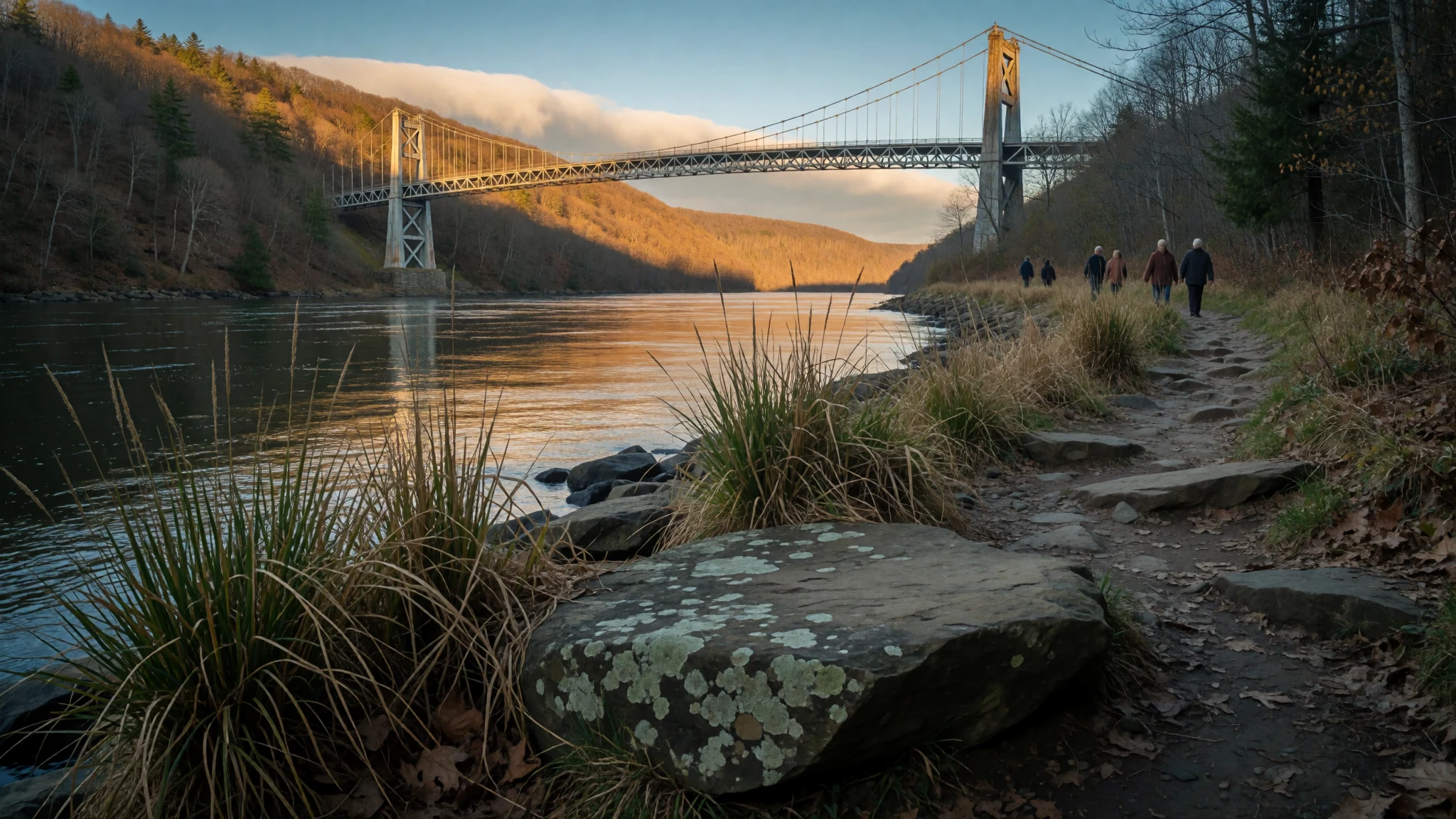
Hudson Valley offers river views, orchard farms and old estates within reach of New York City, best taken slowly by car or train.
The place
The Hudson Valley is the part of New York State that follows the Hudson River from the Capital District, around Albany and Troy, south to Yonkers on the edge of New York City. It is a region of river towns, farmland and low mountains rather than a single destination with one centre, so a visit usually means choosing a stretch and exploring it. The river runs mostly north to south along the eastern side of the state, and the rock beneath it changes on the way: reddish Triassic sandstones in the south, far older Precambrian gneiss towards the north and east. In the Hudson Highlands the water squeezes through a channel cut by ice-age glaciers, a true fjord, with the Appalachian Highlands rising to the west. Further downstream, around the Tappan Zee, tough diabase rock forms high cliffs along the western bank. Ice made the valley. During the last ice age a glacier filled it, and as the climate warmed, meltwater from a vast glacial lake, the forerunner of Lake Ontario, drained down the river and left sand deposits far upstream. Writers have long called the Hudson "America's Rhine", a comparison Life magazine put in print, and the castle-like bluffs and bends explain why. The region is easy to reach from the city, which means weekends in autumn can be busy on the main roads and in the popular riverside towns.
Its story
The Hudson Valley was home to Algonquian-speaking peoples long before Europeans arrived. The Lenape lived along the lower river, the Wappinger from around Manhattan up to the Poughkeepsie area, and the Mahican in the northern valley, with a capital near present-day Albany. They lived in small clans and villages, traded with one another, and kept fortified places in the Highlands and at Croton Point, where a stronghold called Navish overlooked the water. European contact began in earnest in 1609, when the Dutch East India Company paid the English navigator Henry Hudson to look for a sea route to Asia. He turned his ship up the river that would later carry his name, and when it widened into Haverstraw Bay he believed he had found the Northwest Passage. He sailed on as far as the Troy area before accepting that the water was only a river. The Dutch drew a different conclusion from his voyage: the valley was good for the fur trade. Explorers such as Adriaen Block followed in the years after, and the Dutch founded the colony of New Netherland, with trading posts at New Amsterdam, Wiltwyck and Fort Orange. Those names survive in altered form today as New York City, Kingston and Albany, so the river's whole length still carries traces of that first Dutch commercial map.
What to see
- Bear Mountain Bridge and the Hudson Highlands — Hudson Highlands, west and east banks
At the Highlands, the Hudson Valley narrows into the old glacial fjord, and the Bear Mountain Bridge gives a clear look down the channel between wooded hills. Walkers use the trails on either bank. Weekends in autumn bring heavy traffic on the approach roads, so an early start helps.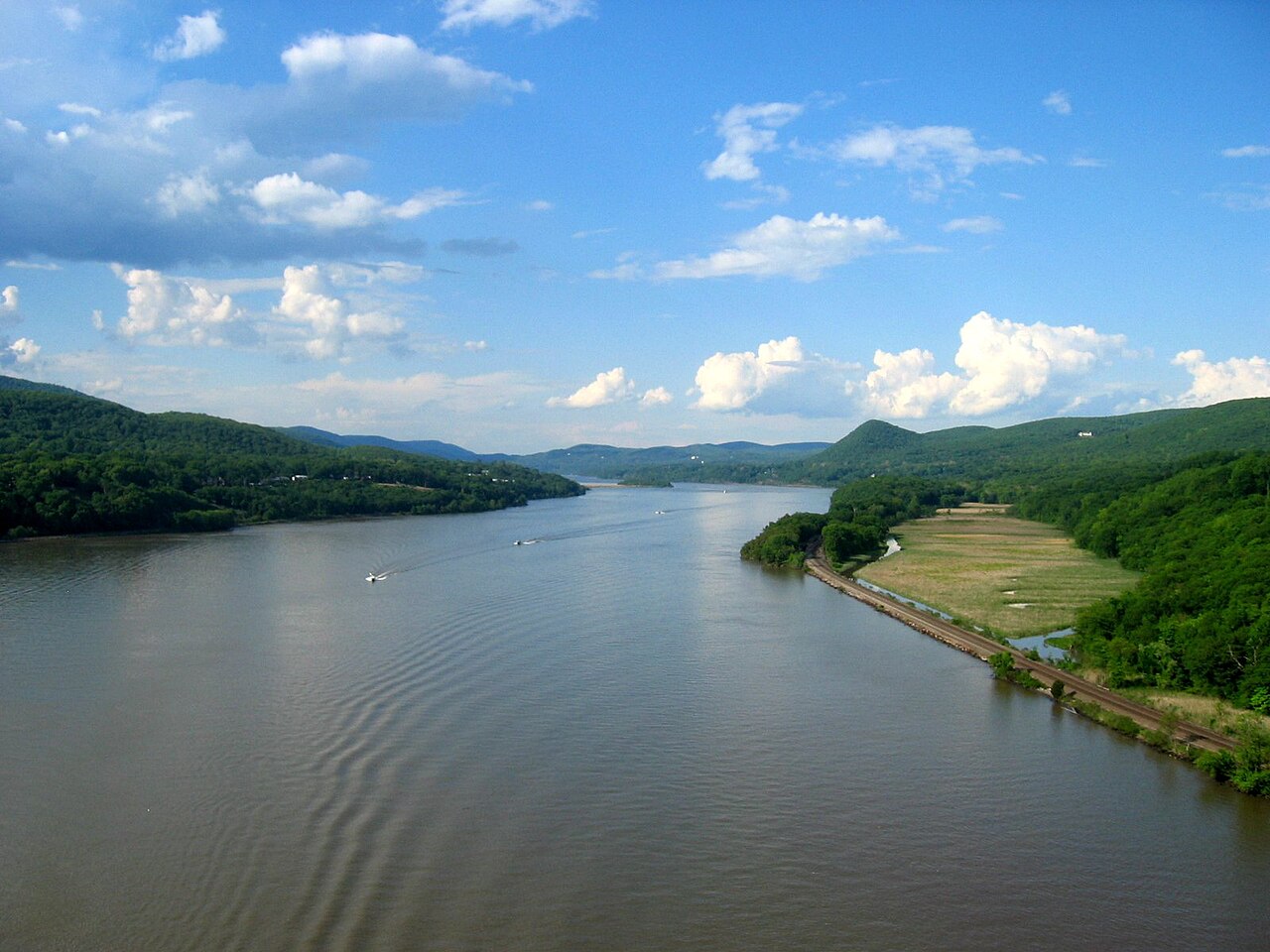
- West Point — West Bank, Orange County
The United States Military Academy sits on a bluff above a bend in the river, and the setting explains why the site mattered for defence. Visitors pass through security checks, and access rules change, so check the official site for current tour arrangements before driving up from the city.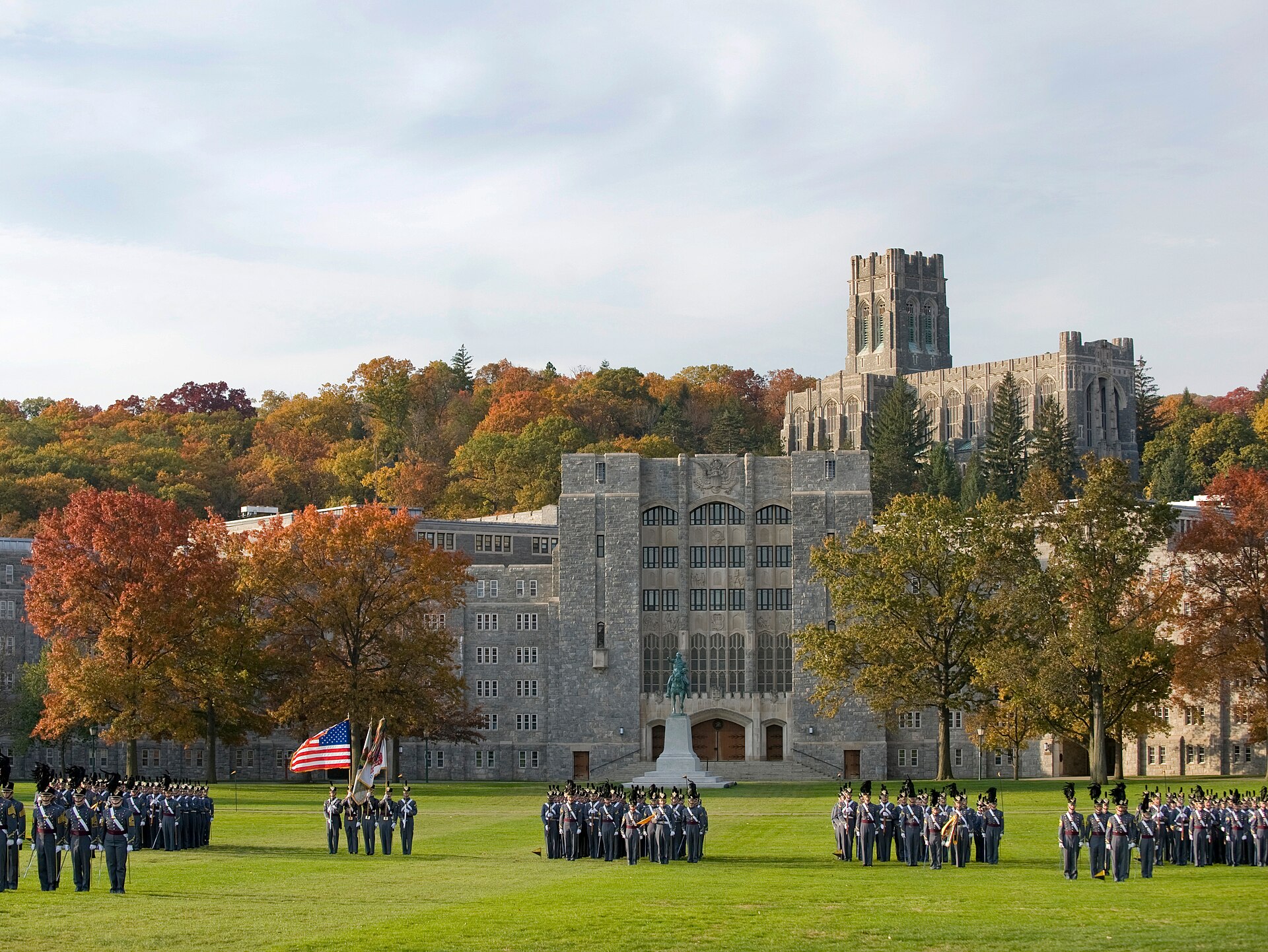
- Kykuit, Tarrytown — Tarrytown, Westchester County
Kykuit is the Rockefeller family estate above the river, with a stone house, terraced gardens and sculpture set out across the grounds. Entry is normally by guided tour, and spaces fill up in peak season, so book ahead through the official site. The riverside town below has cafés and a walkable centre.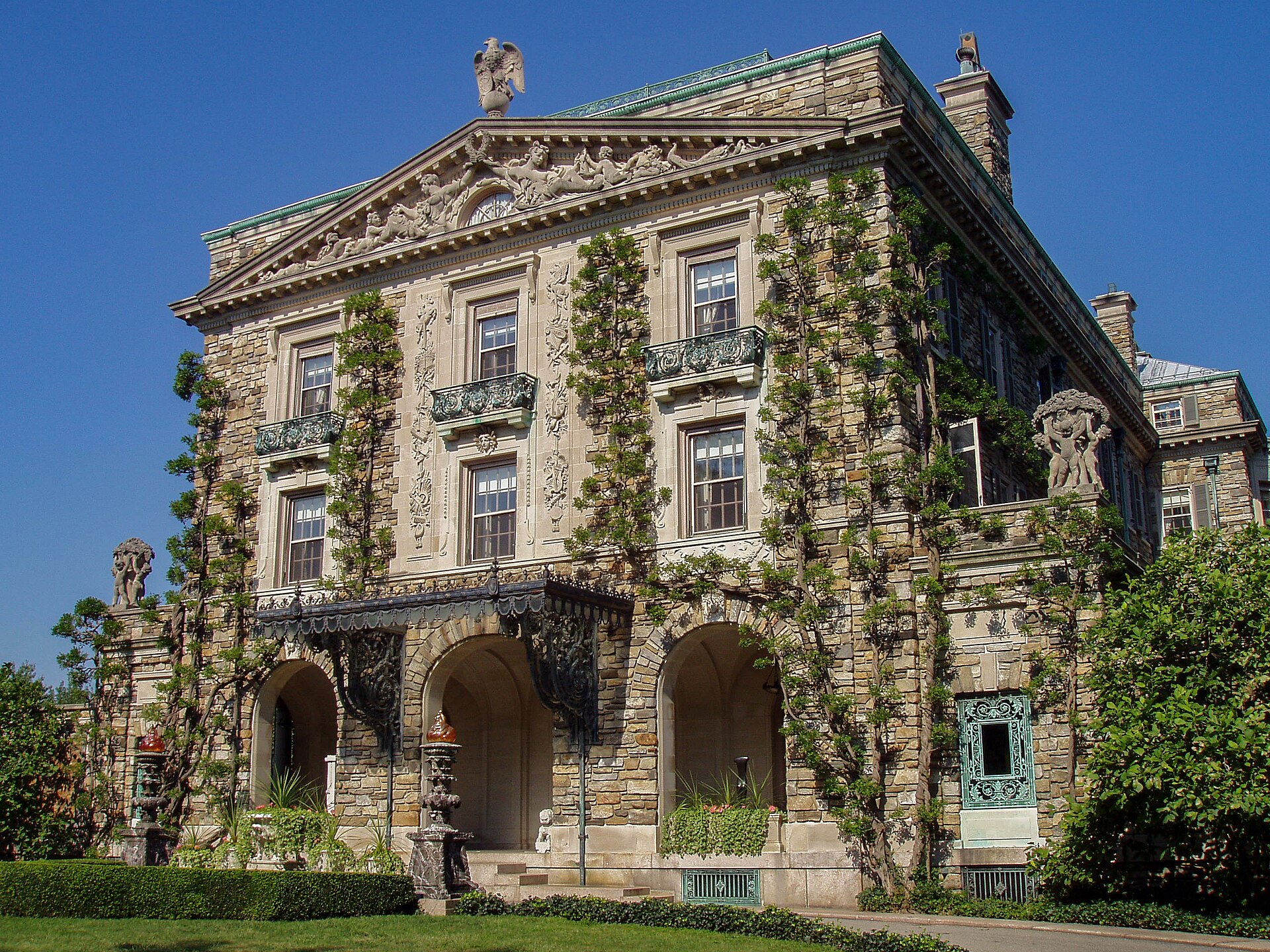
- Ossining riverfront — Ossining, Westchester County
Ossining is a working river town on the eastern bank, with a steep main street running down to the water and a railway station close to the shore. It is known for the Sing Sing prison. The town suits a few hours of wandering and a meal, rather than a full day.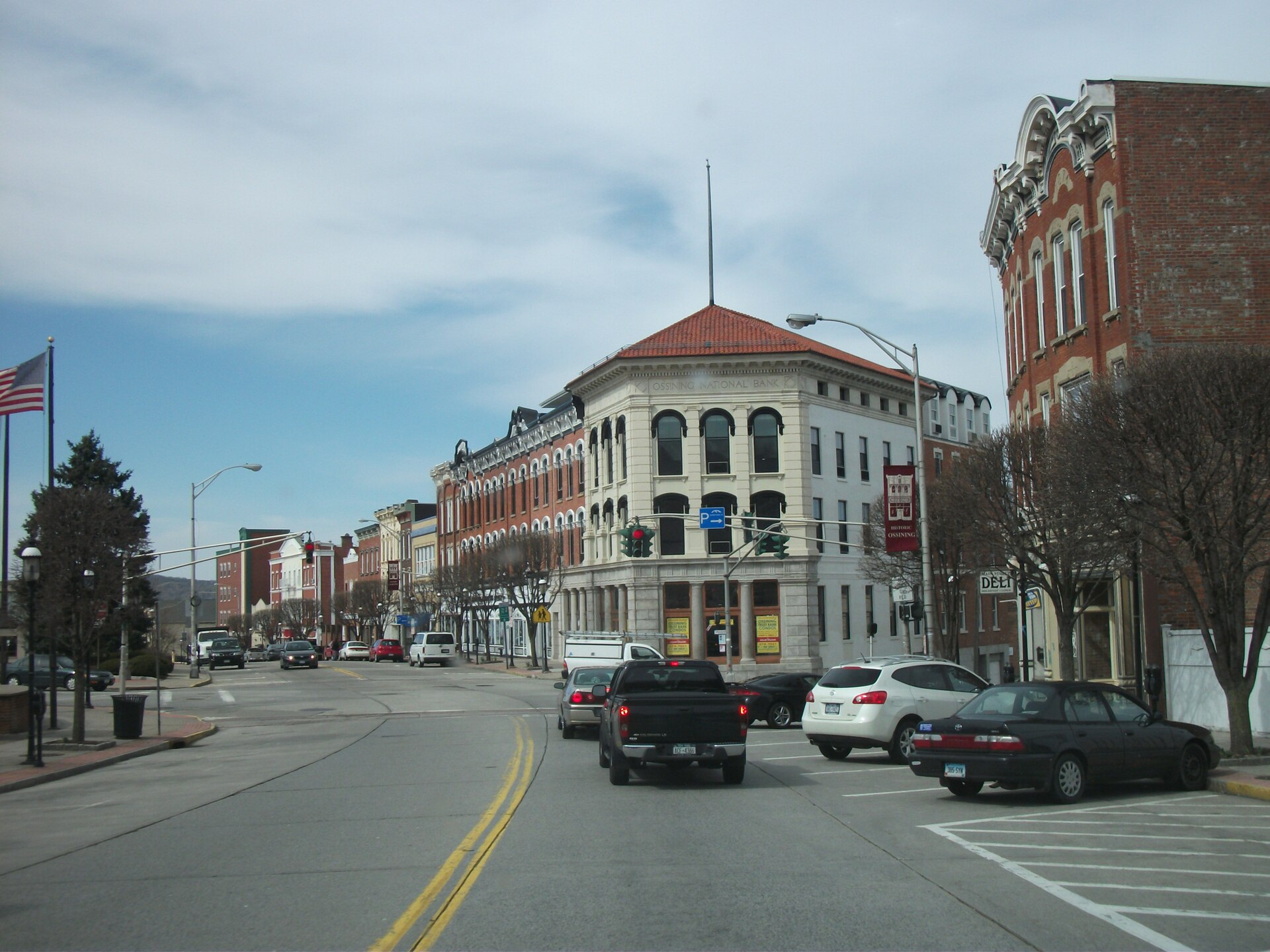
- Albany and Empire State Plaza — Capital District
Albany, at the northern end of the region, is the state capital and the place where the Dutch outpost of Fort Orange once stood. Empire State Plaza, with the State Capitol beside it, is a large modern civic complex worth a stop, and the old streets nearby add a quieter historic layer.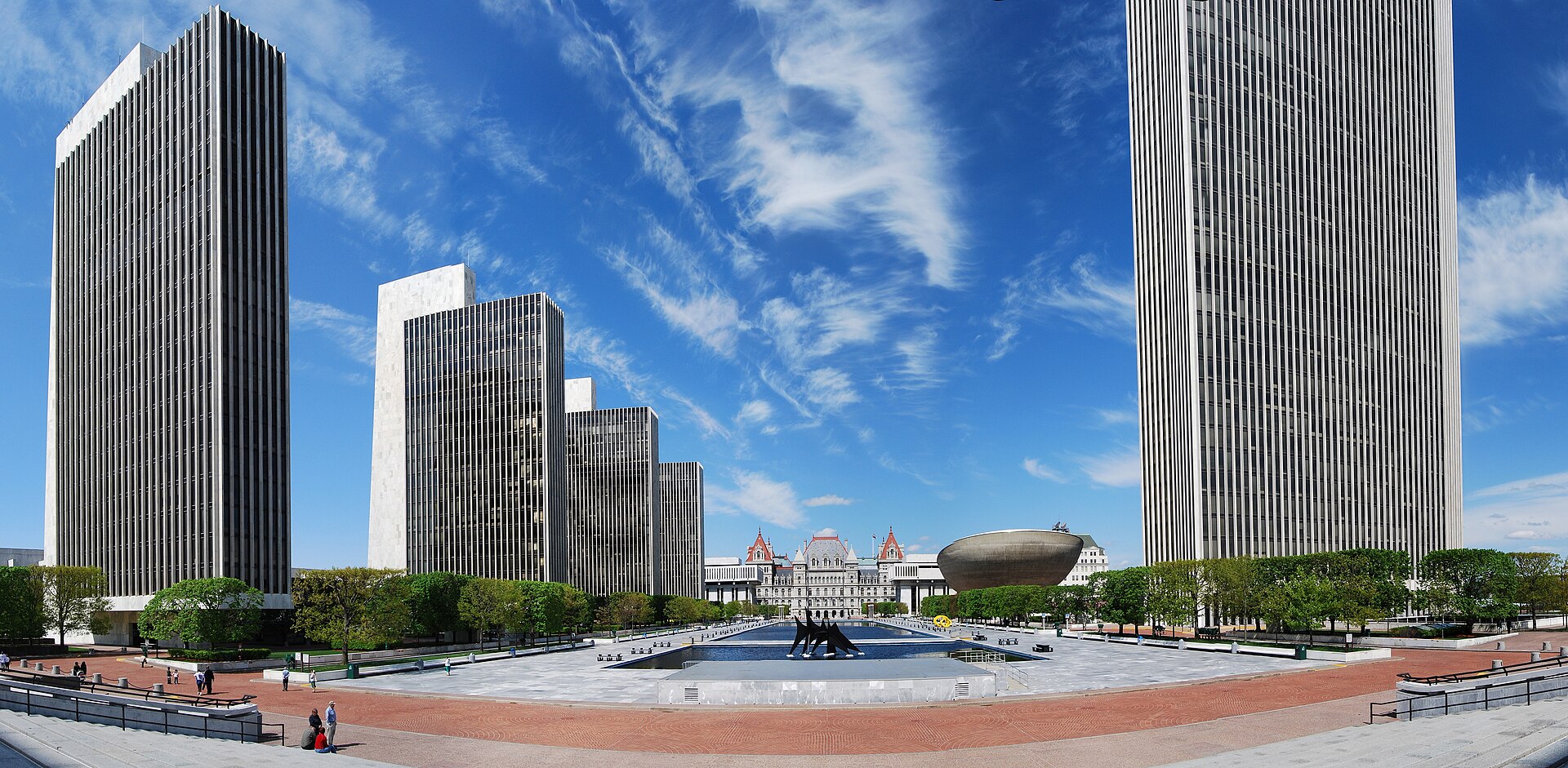
Culture
Hudson Valley culture is layered, and the layers are visible in the landscape. Indigenous Lenape, Wappinger and Mahican communities shaped the river's trade and place names long before the Dutch arrived, and those names still appear on towns, creeks and roads. Dutch influence survives in surnames, stone farmhouses and the names of places such as Kingston and Albany, whose roots lie in the colonial trading posts. Later, the valley's dramatic river scenery drew landscape painters, and the Hudson River School of the nineteenth century made these views famous; the painting by Robert Havell Jr. in the staged photographs is one example of how the river was portrayed. Today the region mixes commuters from New York City, old farming families, artists, weekenders and students. Villages hold farmers' markets, harvest fairs and small-town festivals through the warmer months, and antique shops, galleries and independent bookshops fill many main streets. The region also has a reputation for the unusual: Wikidata files it among places associated with claims of anomalous or paranormal events, and local ghost walks and tales lean into that. Conversation tends to be relaxed, and people are generally happy to give directions or recommend a favourite orchard or trail. Tipping follows American custom in restaurants and for tour guides. At historic houses, estates and military sites, follow the guide's instructions about where you may walk and photograph, and never step over ropes or into restricted areas.
What to wear
The Hudson Valley has no single traditional costume, and its dress history reflects the people who settled it. The Lenape, Wappinger and Mahican made clothing from deerskin and other hides, and later adopted trade cloth and glass beads from the Dutch. Dutch and other colonial households wore homespun wool and linen for farm work, with finer fabrics kept for church and market days. Those textiles are shown in museum collections and at living-history sites, not worn day to day. Today people dress casually and practically. Flannel shirts, jeans, fleeces, canvas jackets and sturdy boots are common in the villages, while the commuter towns near New York City lean towards smarter casual wear. Weekend visitors often pair outdoor kit with city style. A visitor should plan around the weather and the activity. Layers work best, because mornings by the river can be cool even in summer, and afternoons turn warm and humid. Bring a waterproof jacket for sudden showers and a warm coat, hat and gloves for winter, when snow and ice are common. Comfortable walking shoes or hiking boots suit orchard paths and Highlands trails, and long trousers and insect repellent help in woods and tall grass. No special dress is required at historic houses or churches, though covered shoulders and tidy clothes are polite at a funeral or service.
What to eat
- Cider doughnuts — Orchard farm shops and pick-your-own farms
Warm, cinnamon-sugared doughnuts made with apple cider are the signature treat of autumn in Hudson Valley. Buy them at orchard farm shops and pick-your-own farms, where queues build at weekends. Eat them fresh, because they lose their soft crumb within a day. - Orchard apples and apple pie — Orchard farm stands and village bakeries
Hudson Valley orchards grow many apple varieties, and farm stores sell them by the bag from late summer into autumn. Pies, crumbles and baked apples appear on café and diner menus. Ask the orchard which variety suits eating, baking or juicing. - Farm-stand produce — Roadside farm stands and weekly farmers' markets
Sweet corn, tomatoes, berries and squash sell from roadside stands and weekly markets through summer and early autumn. Prices vary by season and stand, so carry some cash for small sellers. It makes an easy picnic along the river. - Craft cider and local spirits — Farm cideries and distillery tasting rooms
The apple harvest feeds a craft drinks scene of dry ciders, brandies and small-batch spirits. Many producers have tasting rooms in barns or farm buildings. Check opening days on the official site, and plan a driver, since distances between producers can be large. - Diner breakfast — Diners in river towns and village main streets
Small-town diners along the river serve eggs, pancakes, home fries and strong filter coffee in large portions. They are a practical, sociable start to a day of walking or driving. Counter seats are often the quickest option at busy weekend hours.
Plan it
Best time. September to October for autumn colour and orchard season, and May to June for fresh green hills and thinner crowds. July and August are warm and humid, and winter is cold with snow and ice, which closes some seasonal attractions.
How long. 2–4
Getting there. Fly to Albany International or Stewart International Airport near Newburgh, or use the New York City airports. Metro-North trains run from Grand Central along the east bank, and Amtrak serves Albany-Rensselaer. A car is the practical last leg for orchards, trails and estates.
Budget. mid
Tips
- Book estate and house tours ahead through each official site, especially in October
- Start early at popular trailheads and orchards on autumn weekends to avoid queues and parking trouble
- Carry some cash for farm stands, small markets and roadside sellers
- Pick one stretch of the river rather than trying to see the whole region in a short trip
- Check seasonal opening days before driving to smaller museums and tasting rooms
Etiquette
- Follow signs and staff instructions at military and historic sites, including photography limits
- Stay on marked trails and keep dogs on a lead where posted
- Tip restaurant staff and tour guides in line with local custom
Nearby
Sources
- Wikidata Q1140235 (CC0)
- Wikipedia: Hudson Valley (rev 1382739025) (CC BY-SA 4.0)
- Wikivoyage: Hudson Valley (rev 4686093) (CC BY-SA 4.0)
- Photo: Brunswick autumn farm silos (UpstateNYer) (CC BY 3.0)
- Photo: Downtown Ossining (Doug Kerr) (CC BY-SA 2.0)
- Photo: Hudson River from Bear Mountain Bridge (unknown author) (CC BY 3.0)
- Photo: U.S. Military Academy cadets (DoD, Chad J. McNeeley) (Public domain)
- Photo: Getty Square, Yonkers (Dennis Fraevich) (CC BY-SA 2.0)
- Photo: Kykuit, Tarrytown (Daderot) (CC BY 3.0)
- Photo: Empire State Plaza, Albany (UpstateNYer) (CC BY 3.0)
- Photo: View of the Hudson River (Robert Havell Jr., 1866) (Public domain)


