Hot Springs Cove
Hot Springs Cove, Canada
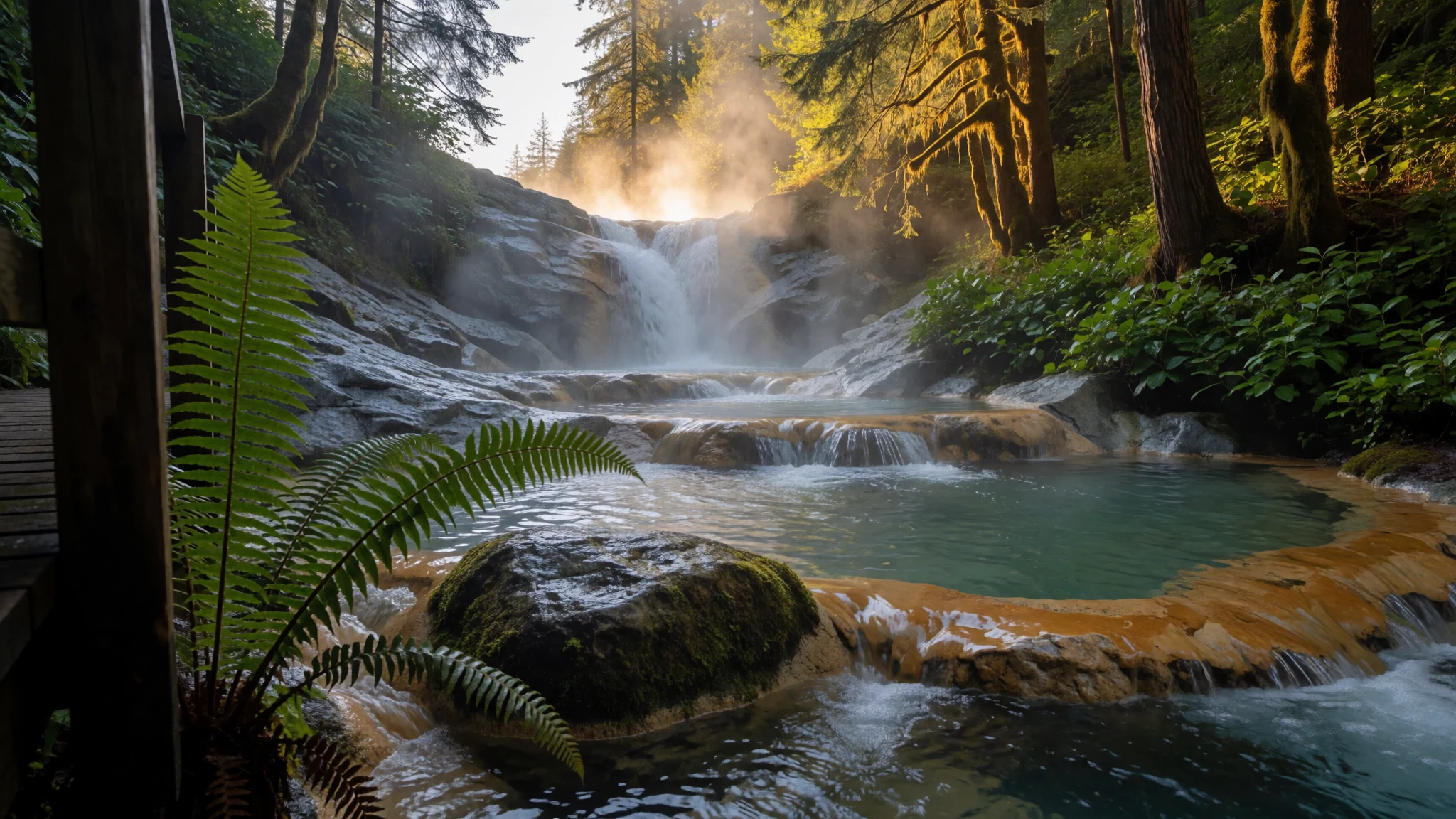
Hot Springs Cove is a roadless Pacific inlet where naturally heated water tumbles over rock into forest pools, reached only by sea or air.
The place
Hot Springs Cove is a small settlement on Sydney Inlet, on the exposed outer coast of Vancouver Island in British Columbia, Canada. It sits on the western side of the Openit Peninsula, within the Clayoquot Sound region, and no road reaches it. Everything arrives by water or air, usually from the surf town of Tofino, which gives the place a hush that roadside springs rarely have. The name comes from the nearby Ramsay Hot Springs, where naturally heated water leaves the forest, spills down rock ledges and runs through a chain of pools before meeting the cold Pacific at the shore. The surrounding land is protected as Maquinna Marine Provincial Park, so what a visitor meets is mostly cedar, hemlock, boardwalk, mist and a dock. The settlement was once called Refuge Cove, a fitting name for a sheltered anchorage on a coast known for swell. It remains tiny: the post office closed in 1974, yet a few people still live in the area all year round. Weather is the main variable. The outer coast is wet for much of the year, and fog or rough water can cancel crossings, so a day here depends on the sea as much as on any plan. Summer brings the most visitors and the busiest pools, while quieter months trade crowds for rain and cooler air that makes the hot water feel even better. This is not a spa. It is a rustic set of natural rock pools with basic facilities, and the pleasure lies in sitting in warm water under tall forest.
Its story
Hot Springs Cove was home to people long before it had a name on any chart. British Columbia's coast supported settled communities with complex social structures, largely because of the salmon runs, and the Nuu-chah-nulth peoples have lived on this part of Vancouver Island for thousands of years. Their relationship with the springs, the inlet and the forest predates every later label. European traders arrived and at first the contact may have brought some benefit, but smallpox and other diseases then devastated Indigenous communities along the coast. For years several powers, including Spain, Russia, the United Kingdom and the United States, each claimed the lands that became British Columbia. The settlement's own paperwork is modest by comparison. A post office opened in 1947 under the name Sydney Inlet and was renamed in 1948, taking its identity from the hot springs close by. It closed in 1974, though people stayed. The older name, Refuge Cove, recalls what boats needed here: shelter from open ocean. Later, the springs and the surrounding land were protected as Maquinna Marine Provincial Park, and the park's name points back to Nuu-chah-nulth leadership rather than to a European founder. Today the story is one of continuity and change at once: a working coastal community, a protected park and a steady flow of day visitors, all sharing one small cove that the sea still controls.
What to see
- Ramsay Hot Springs pools — Maquinna Marine Provincial Park
The main draw is a series of natural rock pools fed by hot water that emerges higher in the forest. The pools step down toward the sea, and the water cools as it descends, so visitors choose their own temperature by moving between them. Go early or late to avoid peak crowds.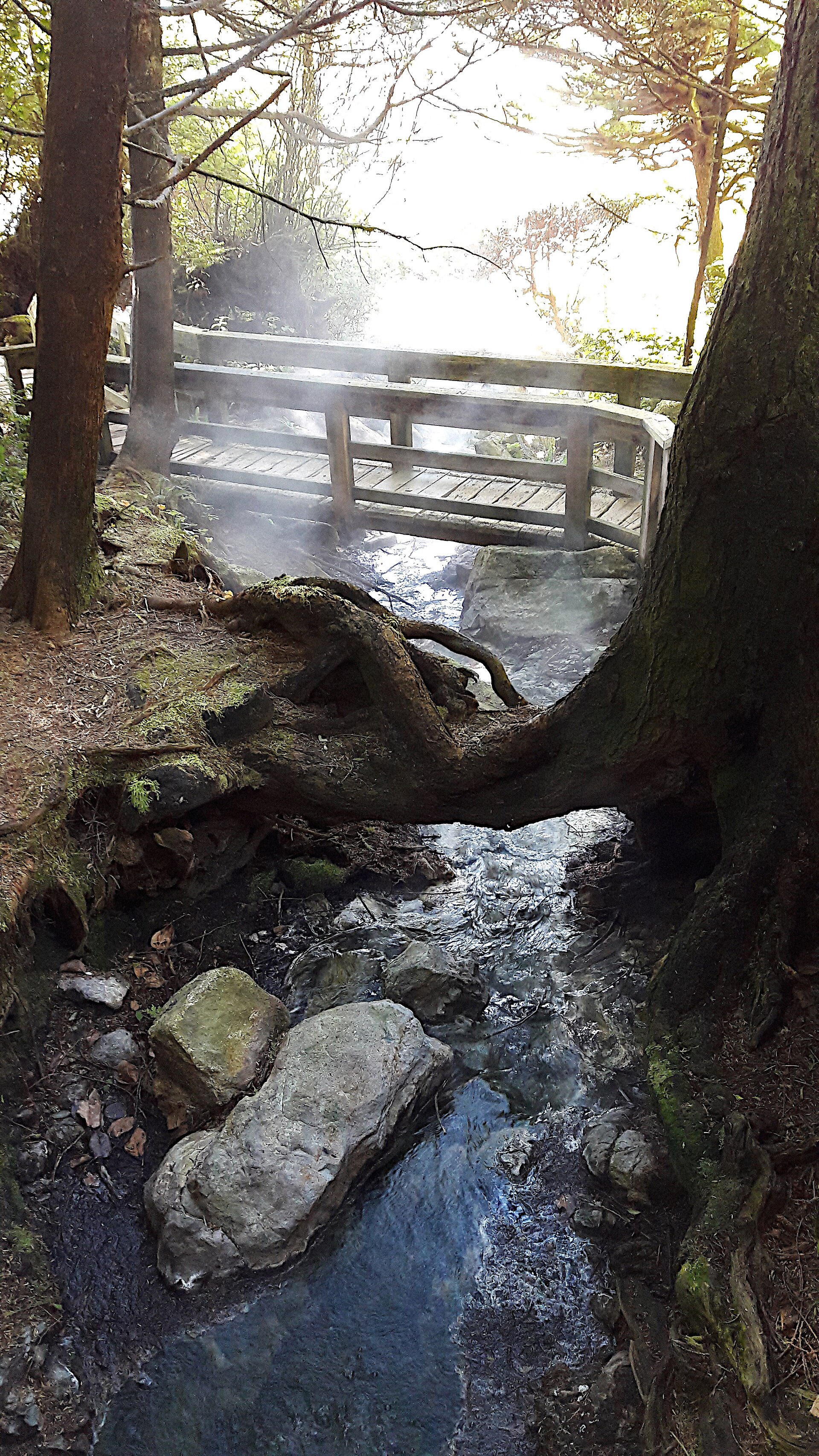
- The hot spring waterfall — Upper pools, Maquinna Marine Provincial Park
Where the spring water drops over a rock lip it forms a small waterfall of steaming water, a natural shower into the pools below. Steam hangs in cooler air and lights up in morning sun. It makes a good photograph, but the rocks are slippery, so move slowly and keep footwear on until the edge.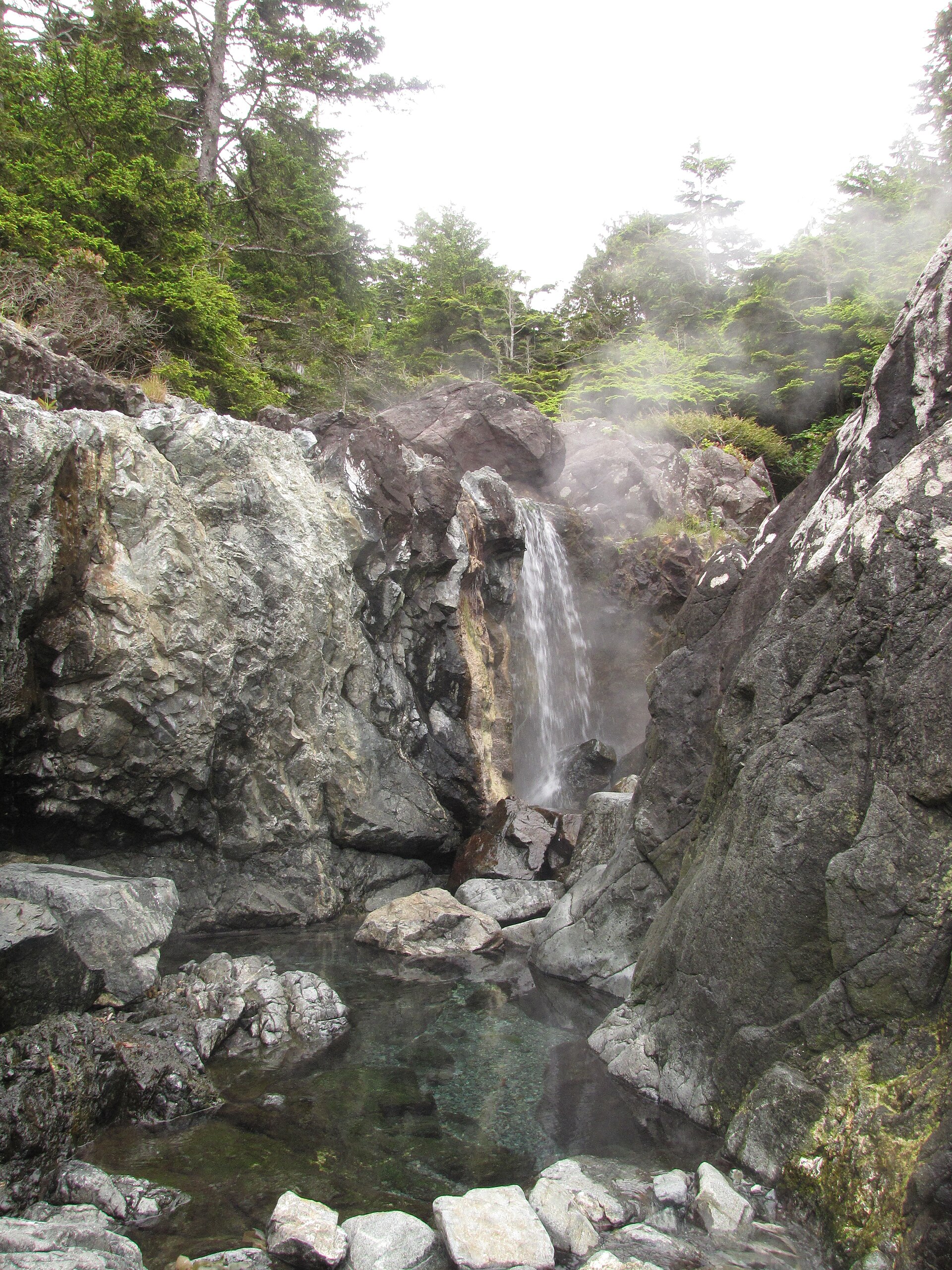
- The boardwalk through the forest — Between the dock and the springs
A wooden boardwalk links the dock to the springs, running through old coastal forest of cedar and hemlock. The walk is gentle but takes time, and the timber can be wet and mossy. It is a quiet way to arrive, with birdsong, dripping branches and the smell of damp conifer.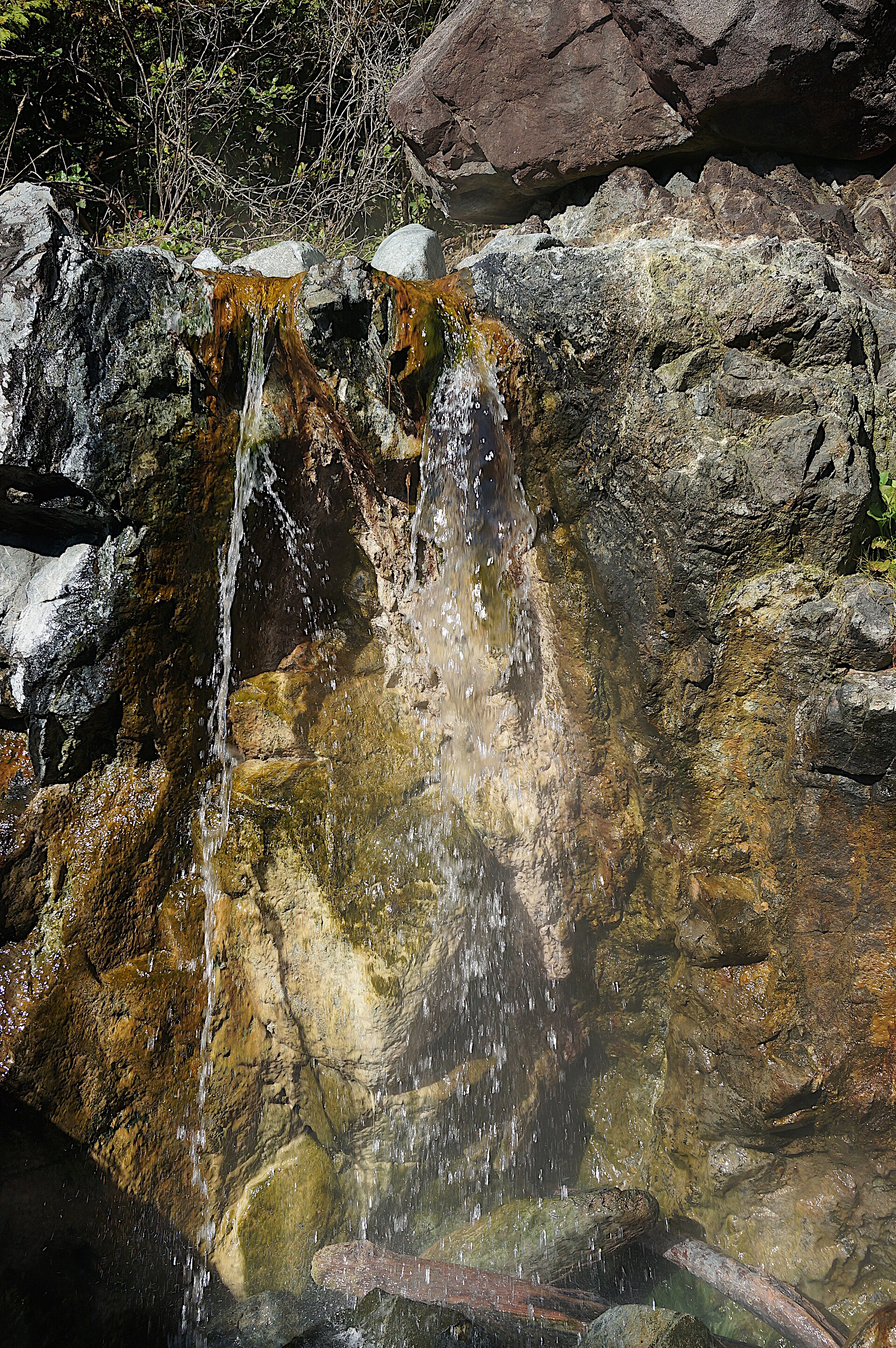
- The dock and the cove — Hot Springs Cove
The dock is where nearly every visit begins and ends. Boats and floatplanes tie up in the sheltered water of the cove, with forested hills rising directly behind. It is worth a pause on arrival to read the weather, watch the tide and note the time of the last return crossing.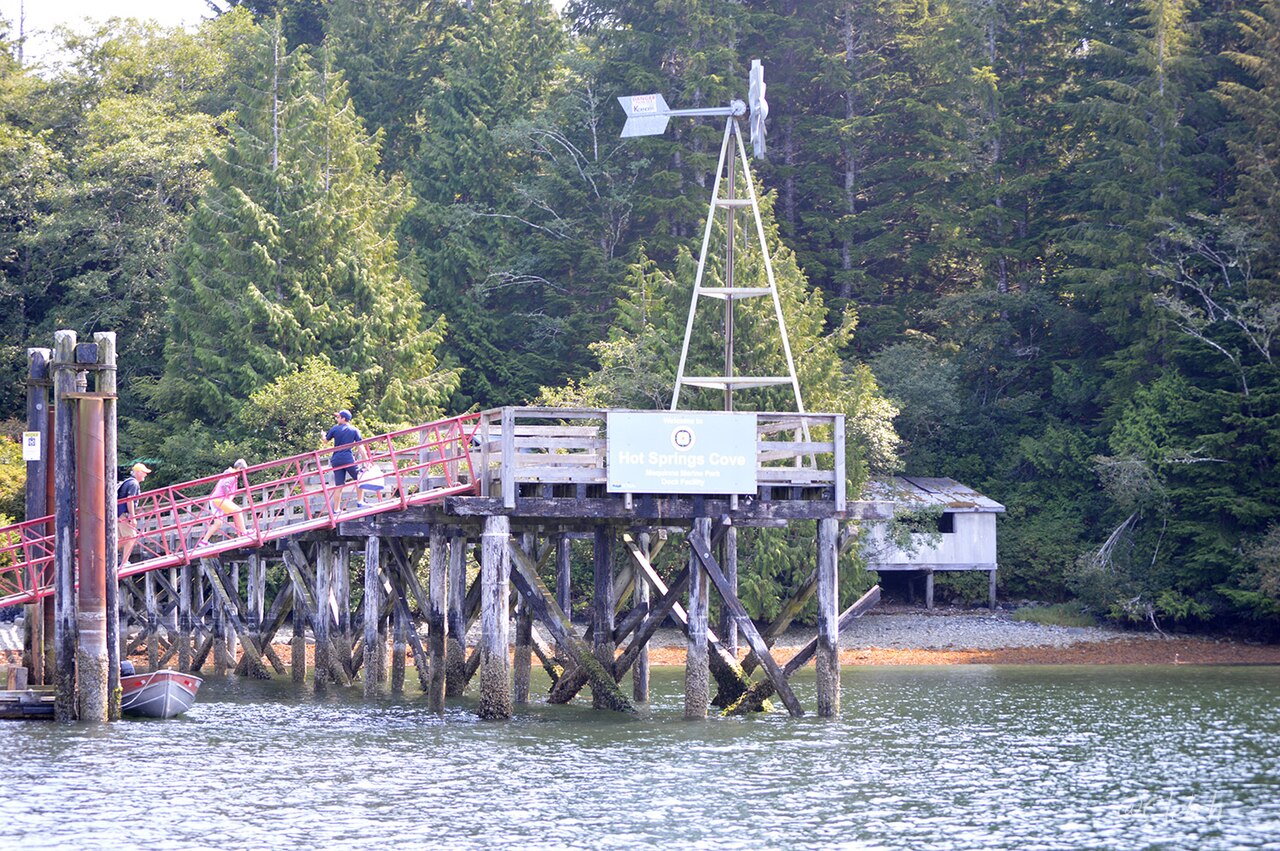
- Wildlife on the crossing — Clayoquot Sound
The boat journey from Tofino through Clayoquot Sound is part of the experience. Operators often combine the springs with a chance of spotting whales, sea otters, seals or bears along the shore, though sightings are never guaranteed. Calm days show the water at its clearest, while swell makes for a livelier ride.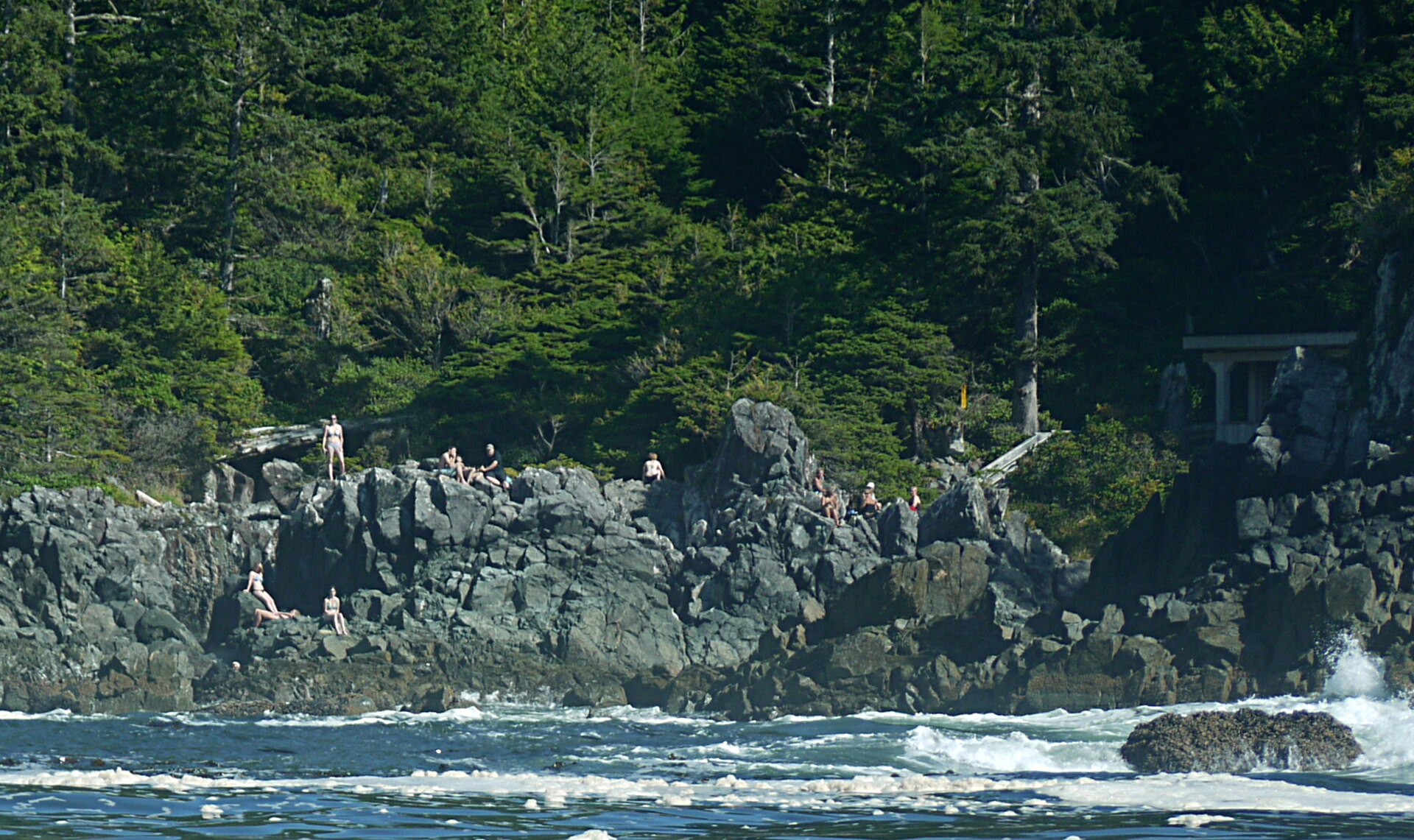
Culture
Hot Springs Cove lies within the homelands of the Nuu-chah-nulth peoples, and the cultural story of the coast here is Indigenous first. British Columbia was home to many nations for thousands of years, with more than thirty languages across seven language families spoken when Europeans began recording them. On the coast, abundant salmon supported settled villages and layered social hierarchies, and that heritage is still present in carving, ceremony, language and the way communities speak about the land. Today's terms are Indigenous or First Nations, which are the words to use, rather than older labels now considered outdated. Visitors who want to understand more can look to museums and cultural centres across the province, including Royal British Columbia Museum in Victoria and a number of smaller community museums, and to Indigenous-led tours on Vancouver Island. The park's name honours a Nuu-chah-nulth figure, a reminder that the protected area is also a cultural landscape. The modern settlement is small and mixed, shaped by the fishing economy, the park and tourism, and by a long habit of self-reliance in a place without road access. Newcomers are guests in someone's home waters. Quiet respect for people and place goes further here than any itinerary. Keep your voice low on the boardwalk and at the pools, take all rubbish back with you, and ask before photographing local residents or anyone who has not clearly agreed to be in the frame.
What to wear
Hot Springs Cove has no single costume of its own, but its dress traditions come from the Nuu-chah-nulth peoples of the Pacific coast. Traditional clothing was made from processed cedar bark, woven into capes, hats and skirts that shed rain well, and wool and hide were used for warmth. Woven conical hats and cedar-bark regalia are still made and worn for ceremonies, potlatches and cultural gatherings, often alongside button blankets decorated with family crests. These are worn on special occasions rather than daily. Day to day, people on this coast dress for rain and cold water: waterproof jackets, rubber boots, fleece, wool socks and sturdy work trousers. Fishing gear and practical layers are the real local look, with little concern for fashion. A visitor should dress for a wet, changeable outer coast, even in summer. Wear a waterproof layer and a warm one, with quick-drying trousers and closed shoes with good grip for the wet boardwalk. Carry a swimsuit under your clothes, because changing facilities at the springs are basic. Bring a towel in a dry bag, and sandals or water shoes for slippery rock. A hat helps in sun and drizzle alike. There is no strict modesty code at the pools beyond ordinary swimwear, though cover up sensibly on the boardwalk and around the settlement, where people live and work.
What to eat
- Wild salmon — Harbourside eateries and smokehouses in Tofino
Salmon has long been the backbone of coastal life in British Columbia. It is often grilled, smoked or baked on a cedar plank, giving a gentle woody flavour. Look for it at harbourside eateries in Tofino, or ask whether any local smokehouse sells it by the piece. - Dungeness crab — Dockside seafood stalls around Clayoquot Sound
Fresh crab is a local treat, usually served cracked and simply seasoned with butter or lemon. It is messy and wonderful. Seafood shacks and dockside stalls in the villages around Clayoquot Sound are the best bet, and availability depends on season and catch. - Halibut and chips — Takeaway counters and food trucks in Tofino
Battered white fish with thick chips is the classic cold-day meal after a boat trip and a soak in hot pools. Many small takeaway counters in coastal towns serve it, often with a squeeze of lemon and tartare sauce. - Geoduck — Japanese and Chinese restaurants in Vancouver and Richmond
A giant burrowing clam found on this coast and one of the province's main shellfish specialties. It is usually sliced thin as sashimi or briefly cooked. It is easier to find in Vancouver's Japanese and Chinese restaurants than at the cove. - Nanaimo bar — Bakeries and cafés across Vancouver Island
A no-bake square of crumbly chocolate and coconut base, custard-flavoured buttercream and a hard chocolate top. It is named for Nanaimo on Vancouver Island and sold in many cafés and bakeries, which makes it an easy snack for the road or ferry.
Plan it
Best time. May to September, when the outer coast is generally at its mildest and boat crossings are more dependable; summer is busiest, while winter is wetter, rougher and quieter, and crossings can be cancelled by weather.
How long. 1–2
Getting there. Fly to Vancouver International Airport (YVR), then continue to Tofino on Vancouver Island by ferry and road or by a connecting flight. The last leg is a boat or floatplane from Tofino across Clayoquot Sound to the dock at Hot Springs Cove, as no road reaches it. Check operators and the park authority for current schedules and conditions.
Budget. mid
Tips
- Book the boat or floatplane ahead in summer, and check cancellation terms because weather can stop crossings
- Choose the earliest or latest sailing to meet the pools with fewer people
- Carry cash and cards as services are limited, and bring water, snacks and a dry bag, because shops are not nearby
- Wear water shoes or grippy sandals, as rock and boardwalk are slippery
- Mobile coverage in remote coastal areas can be patchy, so tell someone your plan and check the return time on arrival
Etiquette
- Keep noise low at the pools and on the boardwalk, as people come here to relax
- Take all rubbish away and do not use soap or shampoo in the natural pools
- Respect Indigenous homelands and local residents, and ask before photographing people
- Stay on the boardwalk and marked paths to protect the forest and keep clear of wildlife
Nearby
Sources
- Wikidata Q5910444 (CC0)
- Wikipedia: Hot Springs Cove (rev 1377384739) (CC BY-SA 4.0)
- Wikivoyage: British Columbia (rev 5400129) (CC BY-SA 4.0)
- Photo: Dock at Maquinna Marine Provincial Park, Pat (Cletch) Williams (CC BY 2.5)
- Photo: Hot spring waterfall, Gerry Thomasen (CC BY 2.5)
- Photo: Hot spring waterfall II, Gerry Thomasen (CC BY 2.5)
- Photo: In Maquinna Marine Provincial Park (2), Kristina D.C. Hoeppner (CC BY-SA 2.0)
- Photo: In Maquinna Marine Provincial Park (3), Kristina D.C. Hoeppner (CC BY-SA 2.0)
- Photo: In Maquinna Marine Provincial Park (4), Kristina D.C. Hoeppner (CC BY-SA 2.0)
- Photo: Steam coming from the hot springs, Kristina D.C. Hoeppner (CC BY-SA 2.0)
- Photo: Hot Springs Cove, Hardo Müller (CC BY-SA 2.0)


Wildlife
- Sea otter (animal)
The sea otter is a small sea animal wrapped in the thickest fur of any creature, like a cosy floating coat. It belongs to North Pacific coasts and can live its whole life in the water. Around Hot Springs Cove you may spot one along the shore on a tour that also visits the springs, though sightings are never guaranteed. Go with an operator, keep well back, stay quiet, and never offer it food.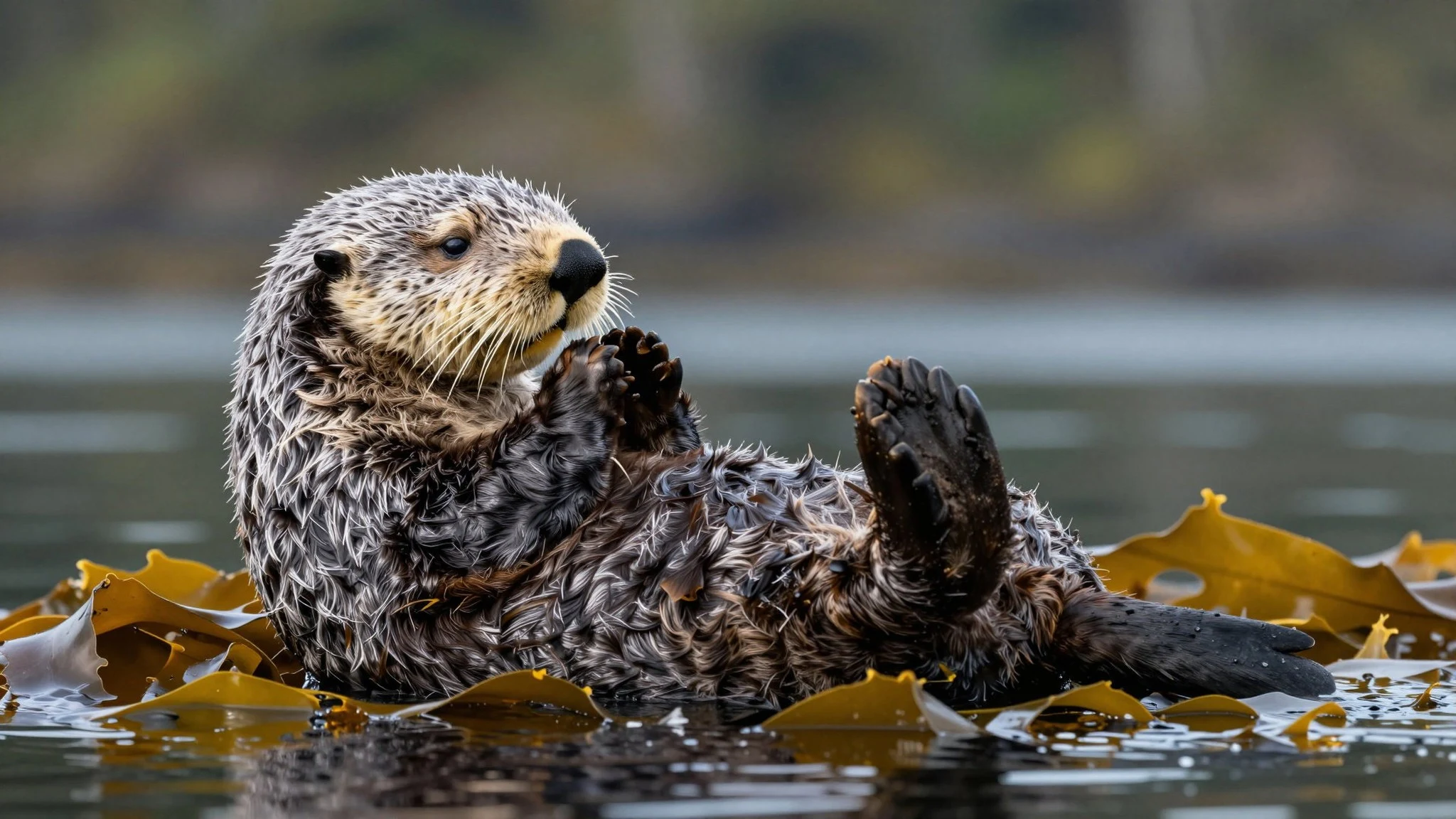
- Black bear (animal)
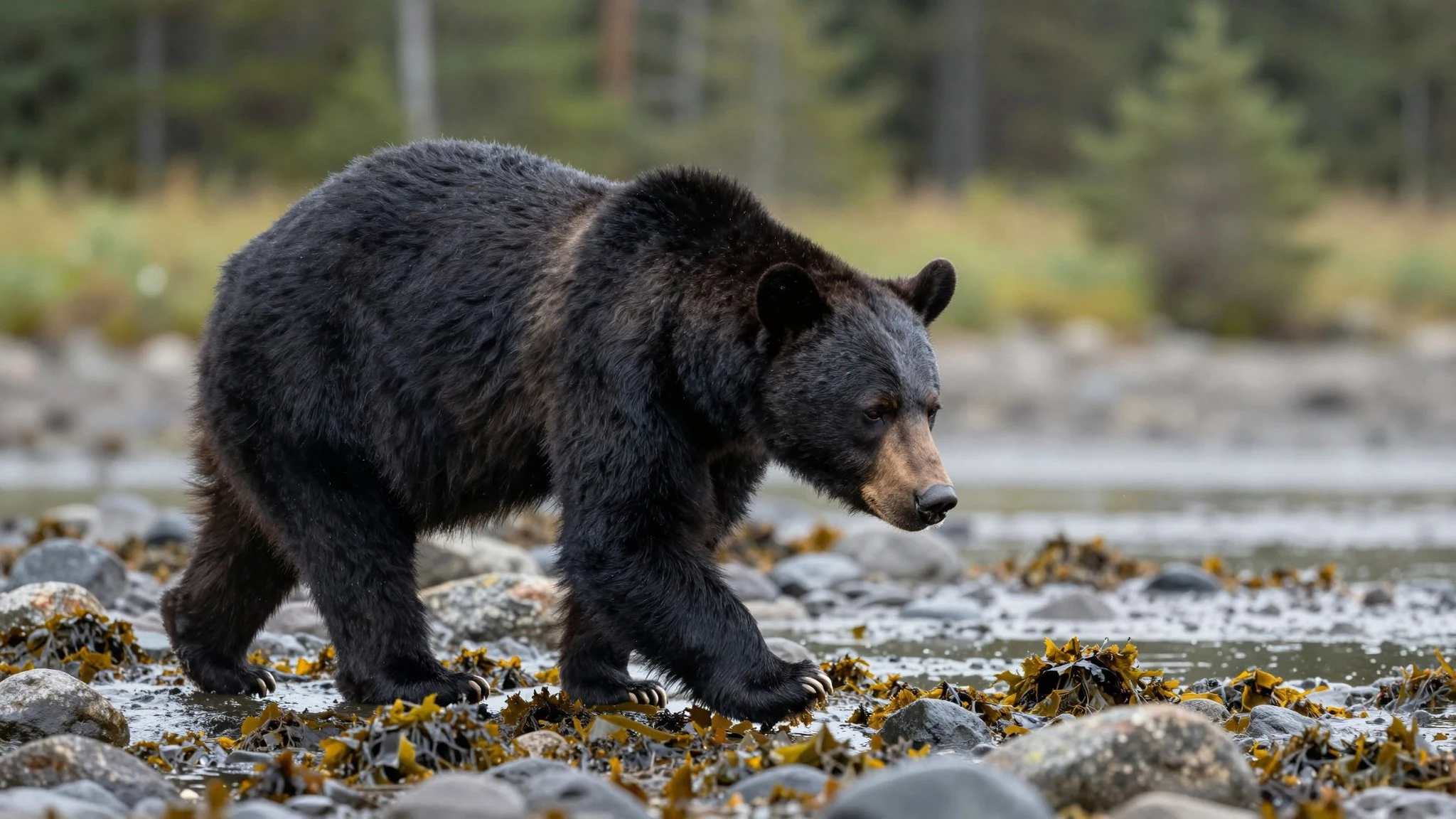
The black bear is North America's smallest and most widespread bear, a medium-sized forest dweller that eats a bit of everything. Along the shore near Hot Springs Cove, tours sometimes spot one, though sightings are never guaranteed. Bears sometimes wander out of the trees looking for food, and are occasionally drawn towards people's homes by easy meals. Watch with an operator, keep a generous distance, stay quiet, and never feed it, so it never learns to link people with food.