Algonquin
Algonquin, Canada
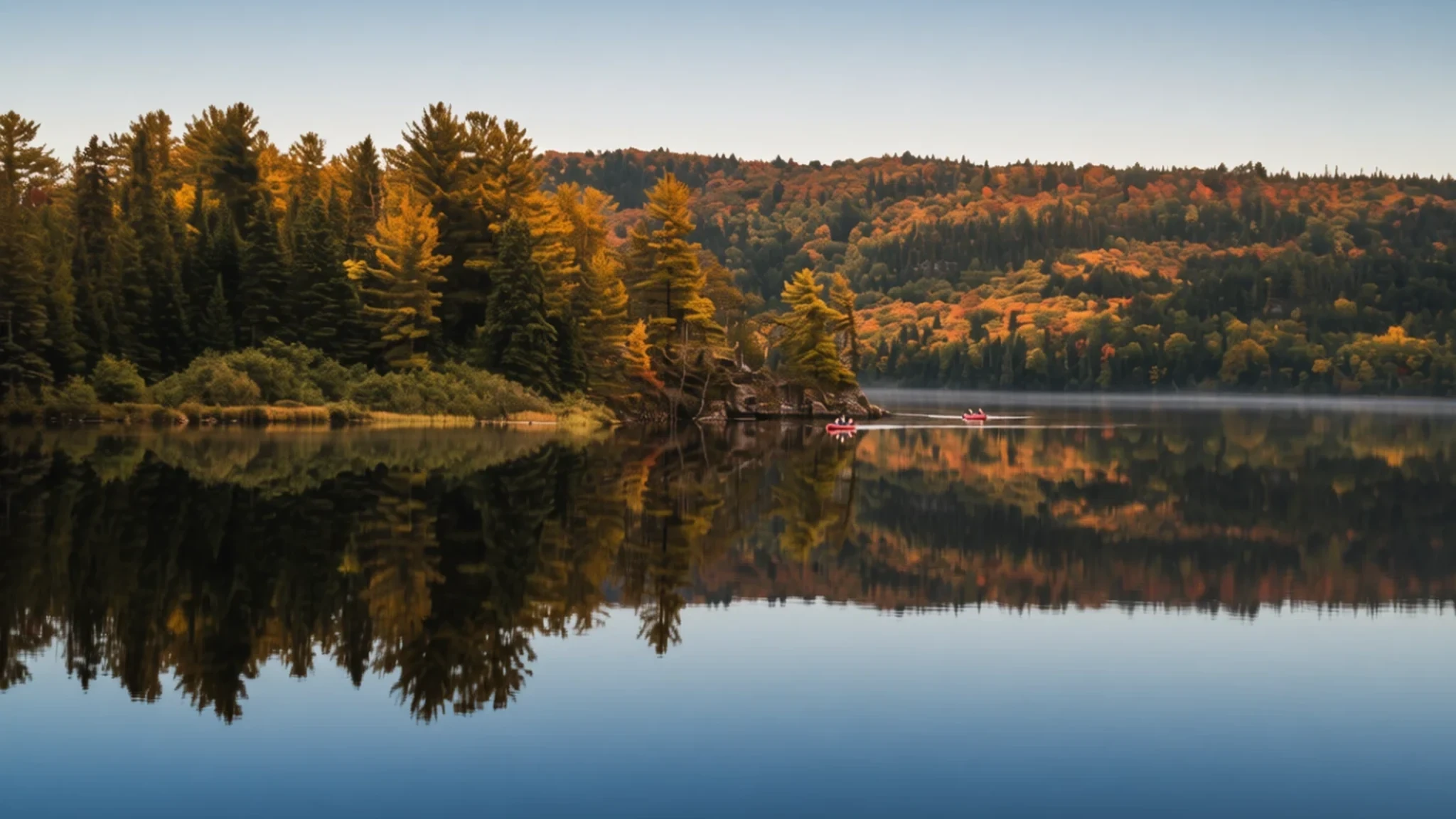
Algonquin is lake-and-forest country in Ontario, where a canoe, a portage and a quiet campsite are the point of going.
The place
Algonquin is a broad protected landscape of lakes, rivers and mixed forest in central Ontario, Canada, lying on the worn rock of the Canadian Shield. A single road corridor holds the campgrounds, short trails and visitor centre; past that edge the park becomes a network of water, where travel is by canoe and the link between lakes is a portage through the trees. Pine, maple, birch, hemlock and spruce crowd the shores. Loons call across still water in the evening, beavers work the inlets, and moose feed in the marshy bays. Black bears move through the same woods, usually shy and usually interested in anything left open at a campsite. Winter locks the corridor under snow and quiets the interior. Spring opens the water and brings dense clouds of biting insects. High summer is warm, busy beside the road and bright on the lakes. Autumn colours the hardwoods and thins the traffic. Roadside and interior are different experiences of the same park. The roadside version is a picnic site, a lookout, a marked trail and a night in a campground. The interior version asks a party to carry food and shelter and to measure the day in lakes crossed. Water is not scenery at the margin. It is the route, the camp address and the reason Algonquin sits with lakes rather than with city streets. Sound carries far across it, and so does weather: a clear start can become wind and rain before a canoe is off a long crossing. That changeability belongs to Algonquin, and it asks for patience rather than a rigid timetable.
Its story
Algonquin takes its name from the Algonquin people, whose routes and seasonal camps long used these waterways between the Ottawa Valley and the Great Lakes. The lakes and portages were roads before they were scenery: bark canoes, fishing places and family movement with the seasons. Later the pine on the ridges drew industrial logging, and camps, dams and timber drives reshaped rivers so that logs could reach the mills. A railway once carried visitors and supplies into the woods; traces of that era remain in old clearings and in paintings made when artists came north to work outdoors. Tom Thomson painted and paddled here and died on Canoe Lake. Painters who worked with Thomson took the shoreline, the burnt ridges and the autumn colour into the way Canada pictured wild land. Protection and cutting have never fully parted in Algonquin. Large areas are kept for paddling and camping, while timber harvest continues in designated zones under provincial oversight, which is why a visitor can meet both a loon and the signs of a working forest in the same park. The story that matters on the water is simpler than the policy. People return because the waterways still connect, the forest still closes behind a canoe, and the old habit of travelling light between lakes has become the modern interior trip. Algonquin's past shows in a portage that feels older than the sign at its start, and in a campsite chosen because the wind falls off and the swimming rock faces the evening sun.
What to see
- Cache Lake lookout — road corridor
Algonquin's Cache Lake lookout, on the Track and Tower trail, sits above a sheltered lake in the road corridor. The climb through pine and hardwood ends at a rocky gap with the water held in a bowl of trees. It is a short steep walk, and it shows the park's pattern clearly: closed forest, open water, no settlement. The rock slicks after rain.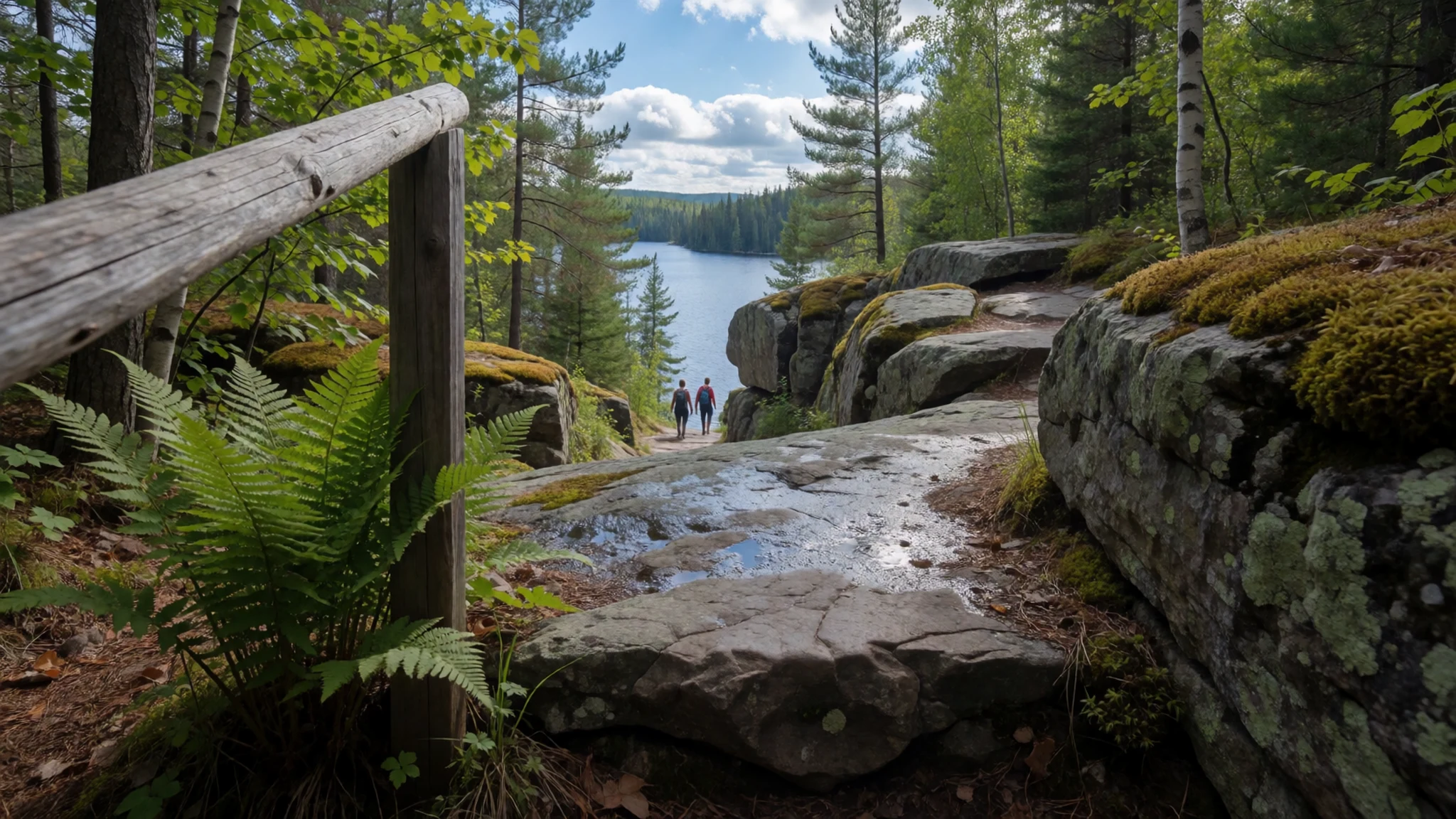
- Visitor Centre — road corridor
Algonquin's Visitor Centre, beside the main road through the park, is the place to learn the landscape before walking into it. Exhibits set the Shield rock, the logging years and the wildlife in context, and large windows look onto forest that matches the displays. It earns a wet-morning stop, when notices about fire, bears and trails matter as much as the view.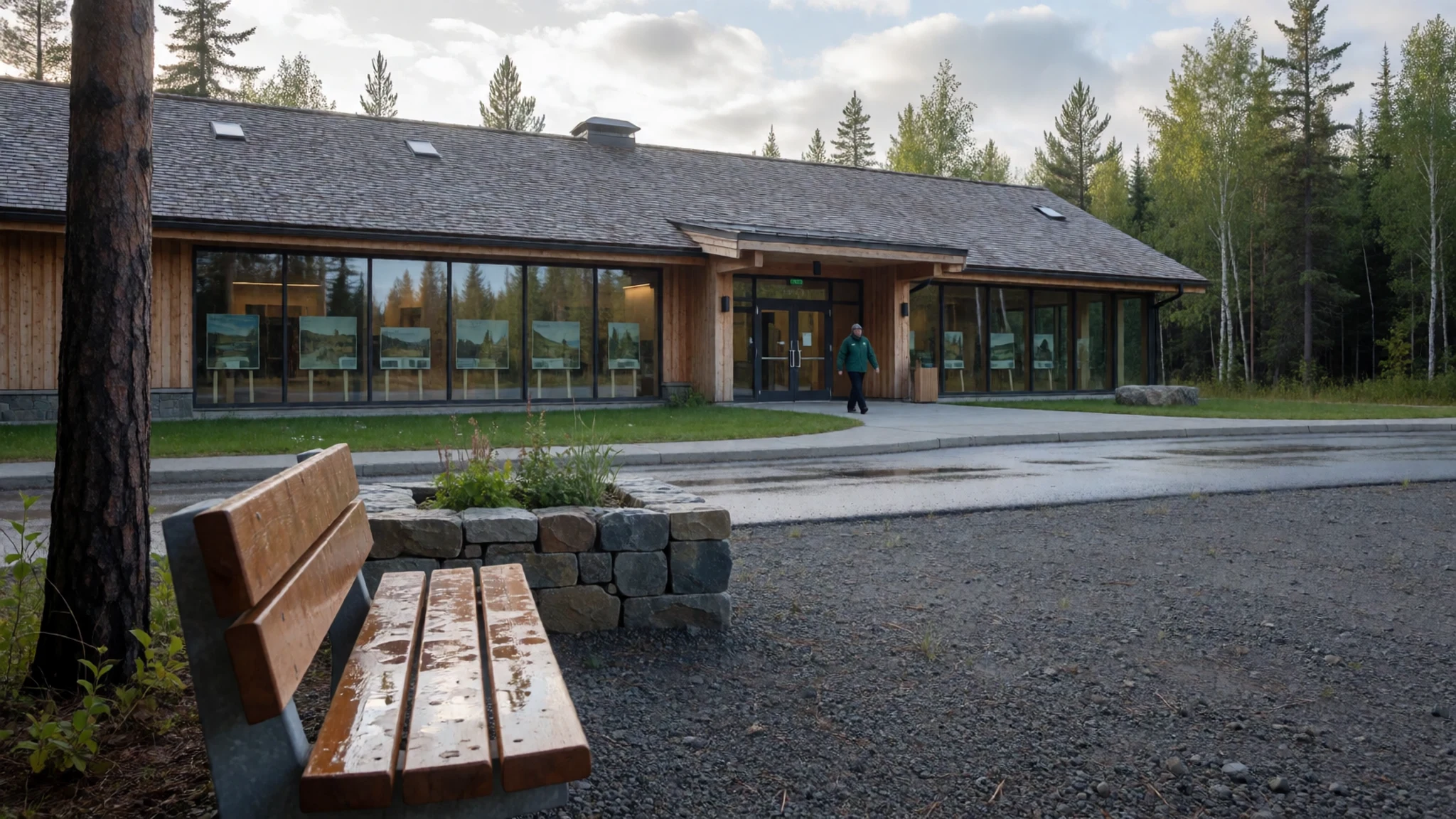
- Canoe Lake — Canoe Lake
Algonquin's Canoe Lake is both a busy access point and a painter's shore. Tom Thomson worked and died on this water, and the low hills and autumn hardwoods still resemble the studies made here. The landing fills with cars and rental canoes; the far bays settle once a portage lies between the party and the dock. Wind runs the length of the lake.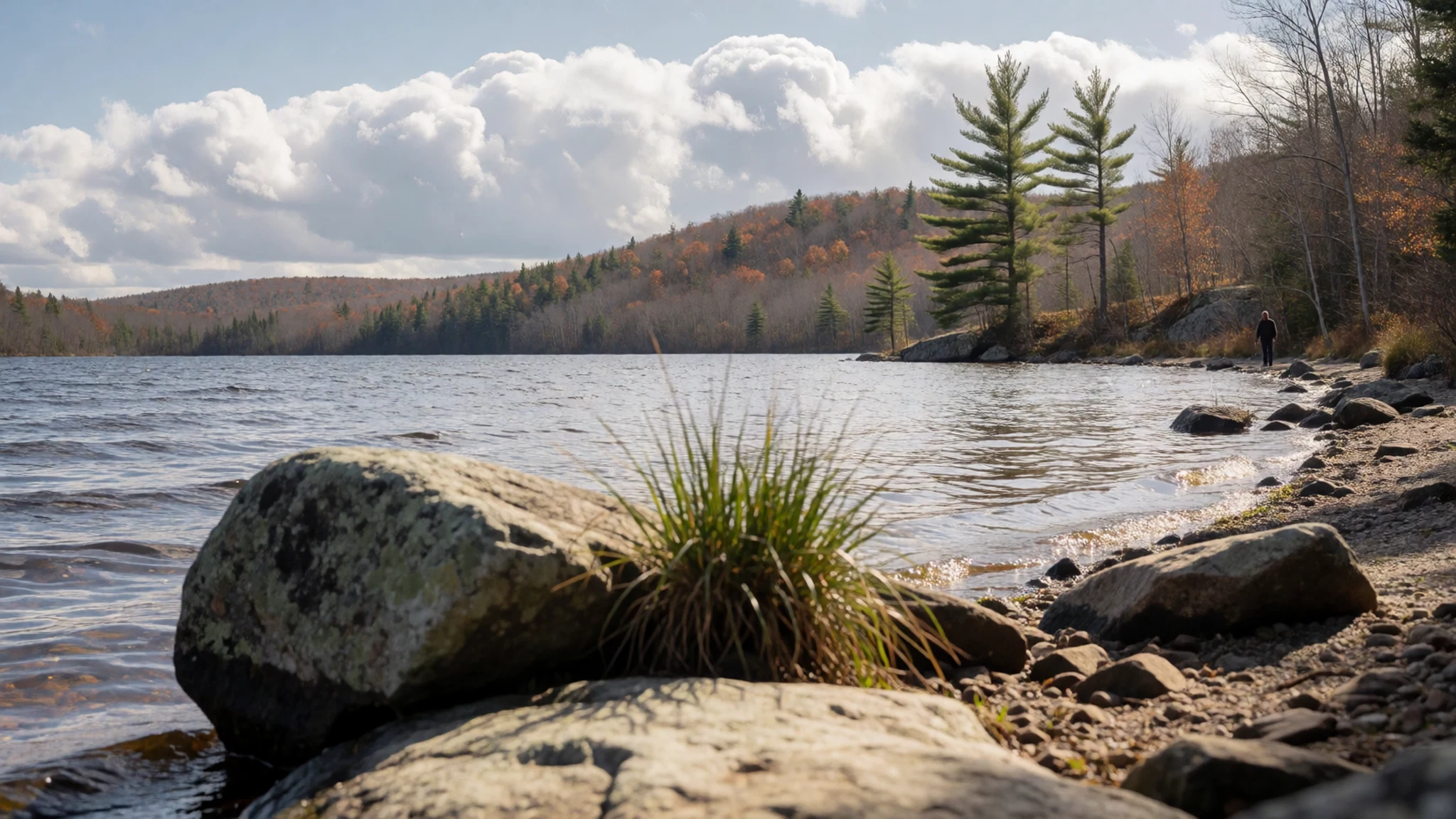
- Lake Opeongo and the interior — east-side access
Algonquin's interior begins where the road ends and the portages start. Lake Opeongo, on the east side, is a usual put-in: a wide windy lake feeding routes deeper into country day visitors rarely reach. Travel is by canoe, with food and shelter carried, and camps are designated sites. Days turn on weather, wind and the weight of a pack on the muddy trail between waters.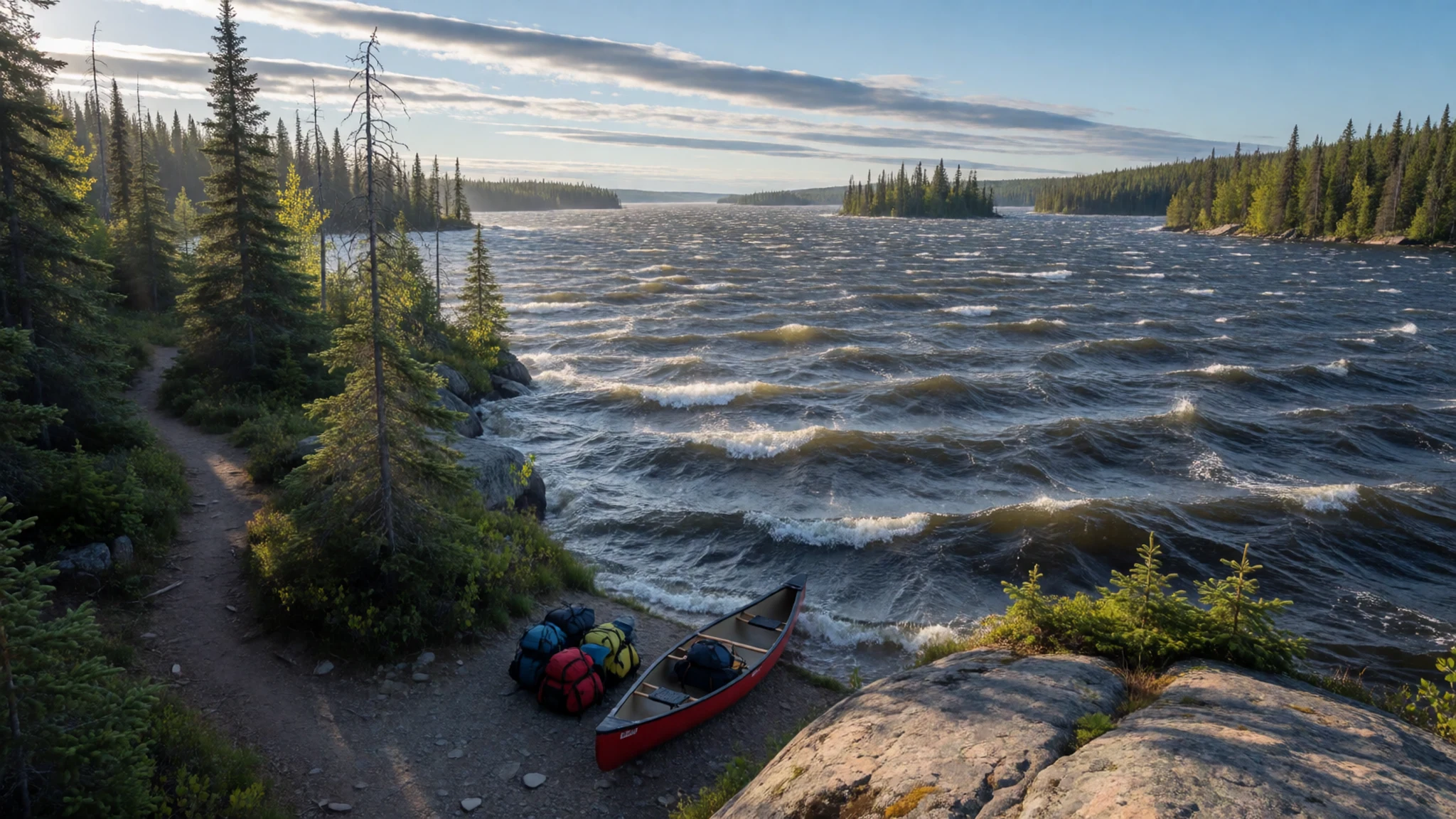
- Corridor streams in winter — road corridor
Algonquin in winter is a different park, and the snow-covered streams along the corridor show it plainly. Waterways that carry canoes in August narrow to dark current between white banks, and the hardwoods stand bare. Marked routes suit snowshoes and skis, and the road is quieter than in the camping months. Cold sets the day: short light and stiff fingers the moment a walker stops.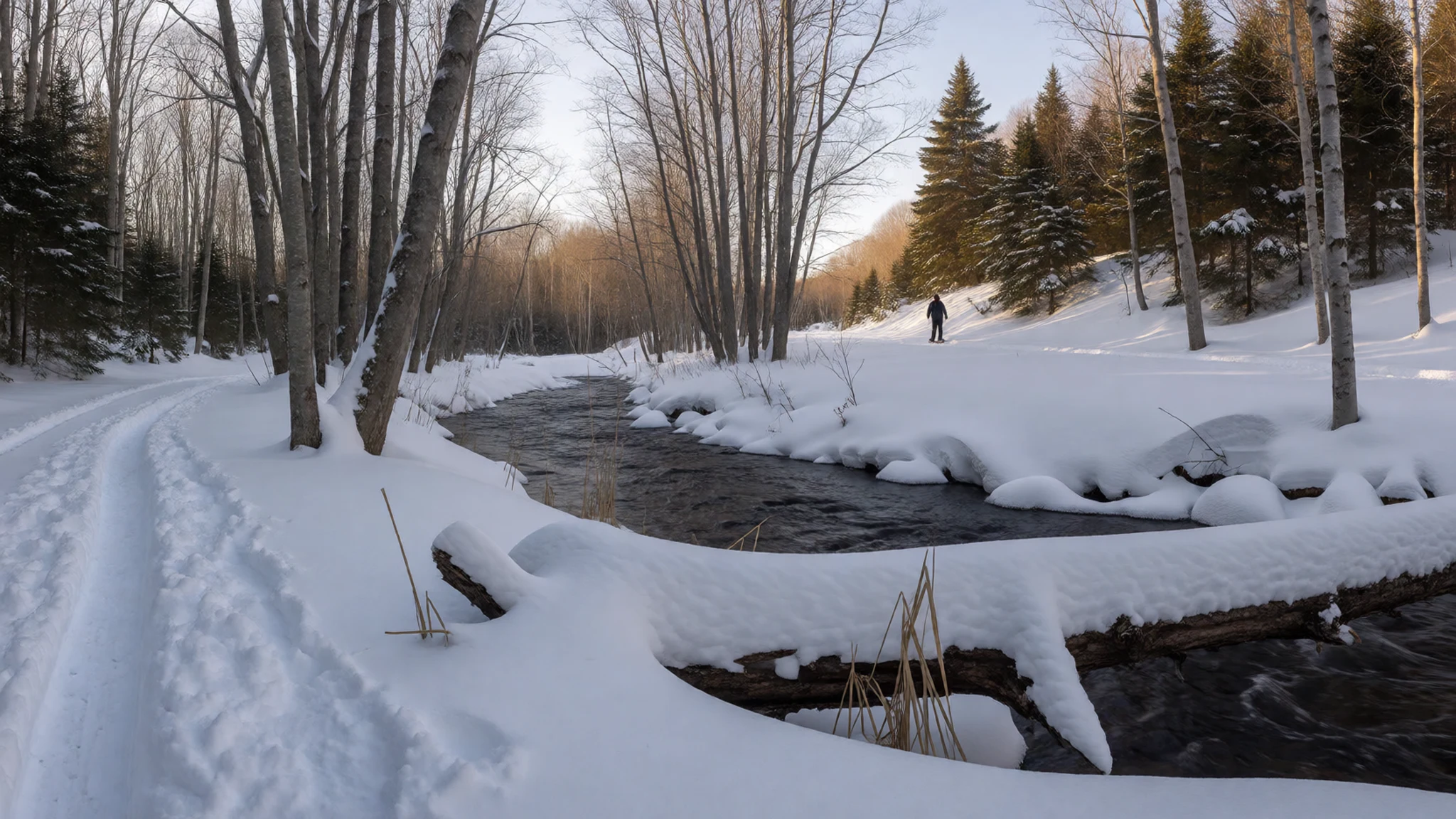
Culture
Algonquin's culture is a culture of moving through water and leaving little behind. Canoe tripping, with its portages, its tandem paddling and its nights on designated sites, is the art people practise here, whether they live within a day's drive or have come for a short trip. Public evenings built around wolf howls, ranger talks and looking at a dark sky sit beside a working woodland. Logging still has a role in parts of the park, and outfitters, campground staff and trail crews are the community a traveller actually meets. The painting tradition is part of daily life as well. Thomson and the artists who worked these shores made Algonquin a reference for Canadian landscape painting, and prints hang where canoes are rented, as if the view and the picture were the same habit. Wildlife is treated as a neighbour. Loons are listened for, moose are left the marsh, and bears are the reason food is locked away. Indigenous presence is older than the park boundary. Algonquin and other Anishinaabe travellers knew these routes, and the name on the gate is a people's name. Quiet counts as a shared good on the lakes, because a shout carries and a motor, where motors are permitted at all, sounds louder than it would on a highway. At a campsite and on a portage, keep food sealed from bears, leave the site clean, and do not approach or feed any animal.
What to wear
Algonquin has no ceremonial costume put on for visitors, but the clothing that belongs to this bush is old and practical. Anishinaabe makers worked hide, wool and beadwork into moccasins and garments that could meet cold water, wet forest and long walks. Timber camps later added plaid wool, heavy boots and oilskins, a working wardrobe for men who spent the winter in the cut. What people wear now along the road is ordinary outdoor clothing: fleece, softshell jackets, trail shoes, caps and rain shells carried in a daypack. Cottage-country plaid still appears, less as a costume than as a shirt that is cheap and slow to dry. A visitor should dress for weather that turns on open water and for insects that dominate late spring and early summer. Layers, a waterproof shell, a brimmed hat and footwear that can stand in mud or on a rocky landing matter more than how the outfit looks. Cotton jeans are a poor canoe choice because they stay wet and pull heat away. In the interior the useful kit is quick-drying trousers, a spare warm layer and boots that may be soaked on a portage. Bright cloth is sensible in hunting season in the surrounding region, while duller tones help anyone hoping to watch animals. No shrine dress code applies in Algonquin. Warmth, rain and biting insects set the rules.
What to eat
- Lake fish, shore-cooked — interior campsites and quiet picnic rocks
A lake fish, often trout, fried or grilled beside the water, is the meal paddlers in Algonquin still cook for themselves. Bread and a little fat finish it. Eat it at an interior site or a quiet picnic rock, made by the party rather than bought at a counter.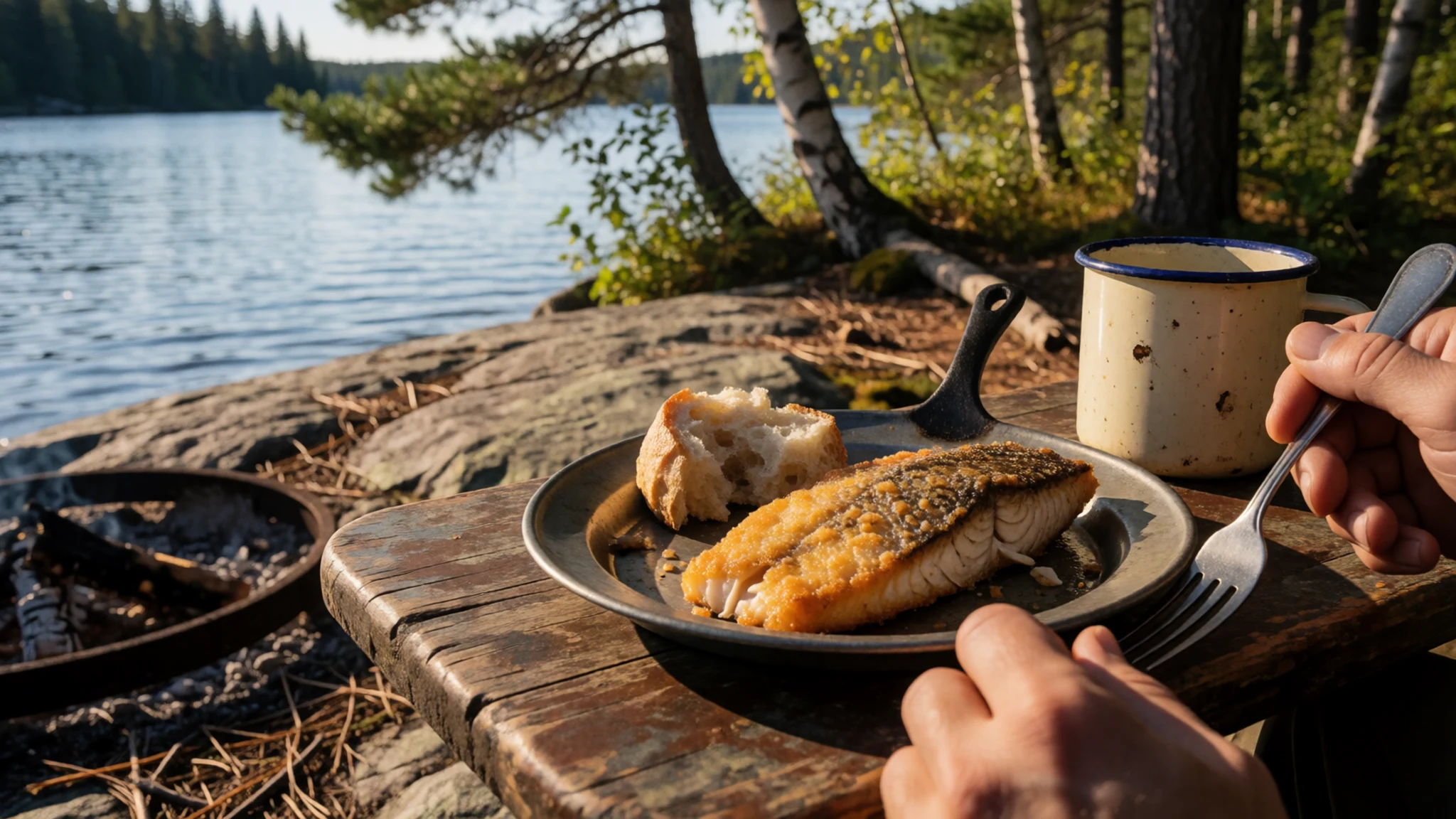
- Bannock — interior sites and corridor campground grates
Bannock is a plain flour bread cooked in a pan or over a fire, and it belongs to Algonquin camp cooking rather than to a dining room. It packs flat. Make it at an interior site when fires are allowed, or on a campground grate along the corridor.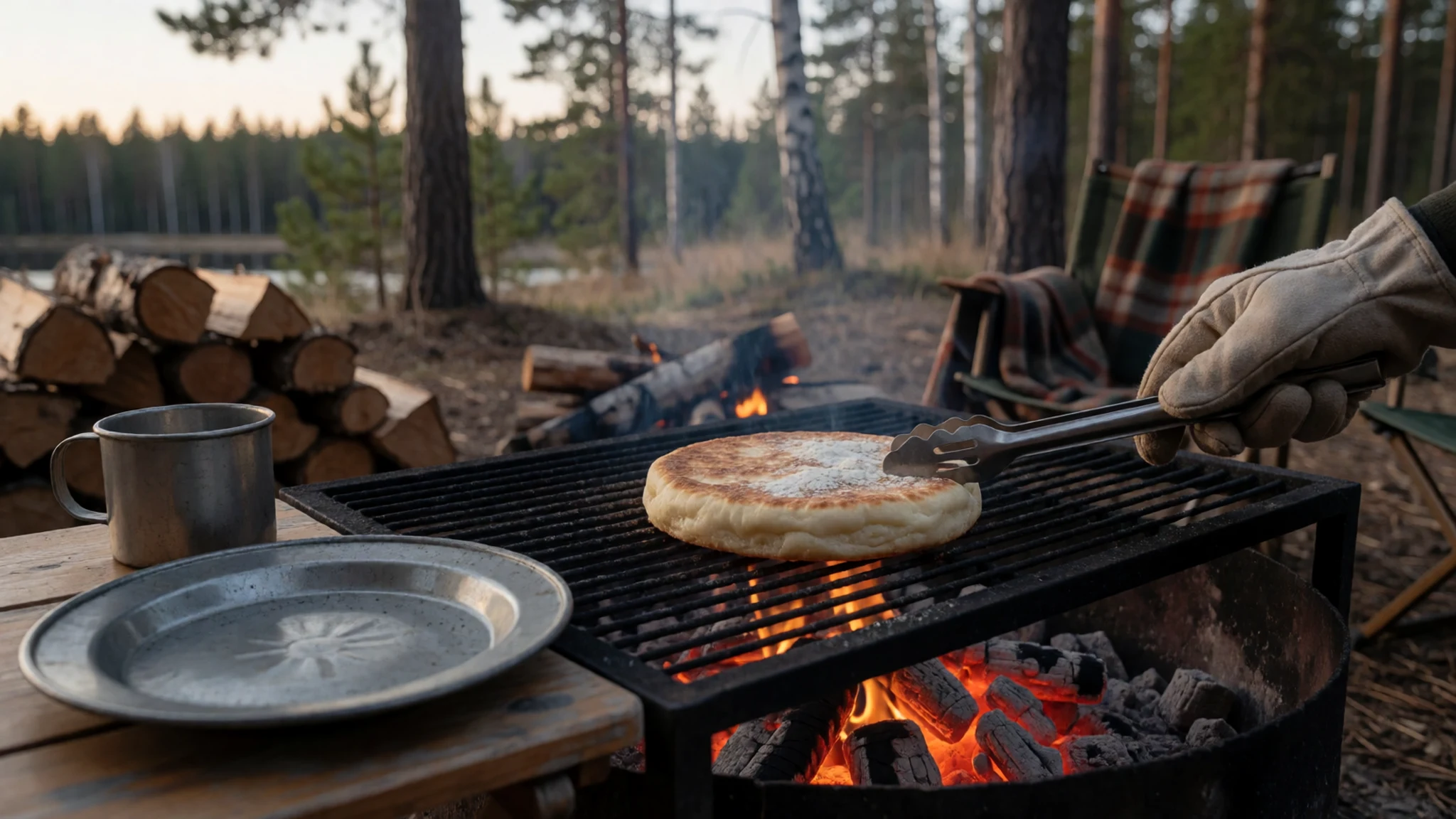
- Maple syrup — campground breakfast griddles and eateries in the gateway towns
Maple syrup from the late-winter sap run is the sweetness of the country around Algonquin, poured on pancakes or stirred into baking. The park is not a sugar-bush tour, yet campground breakfast griddles and small eateries in the gateway towns serve it through the year. - Butter tarts — bakeries and general stores in the gateway towns
Butter tarts, pastry shells with a sweet filling, are the bakery pause on an Algonquin road day. They are eaten from a bag between trailheads, not plated as camp cuisine. Bakeries and general stores in the towns at either end of the park road are the place to find them. - Camp chili or stew — designated interior sites and corridor camp pitches
A pot of chili or thick stew, heated on a small stove, is the real dinner of an Algonquin canoe day: hot, filling and possible when everyone is tired. It is planned in the food pack. Designated interior sites and corridor camp pitches are where it gets eaten. - Blueberry jam — open edges in season, and shops on the park boundary
Blueberry jam, and fresh berries where the bushes fruit, tastes of the Shield country around Algonquin. Late summer is the season on open edges, though foraging rules inside the park should be checked before anyone picks. Boundary shops and cafés sell the jam through the year.
Plan it
Best time. Late summer suits Algonquin for warm paddling once blackflies ease, and September into October brings cooler days and hardwood colour. Late spring and early summer bring heavy insects. Winter suits snowshoes and skis on the corridor when the road is open.
How long. 3–4
Getting there. Fly into Toronto or Ottawa, then continue by road to the towns on the park's western or eastern edge and into the corridor. No passenger train serves Algonquin. Interior landings are a further short drive off that same road network.
Budget. mid
Tips
- Book campgrounds and interior sites well ahead for summer and autumn weekends.
- Begin popular corridor walks early; car parks fill on fair summer days.
- Carry insect protection from late spring through midsummer, including a head net if you plan to portage.
- Treat or carry drinking water in the interior; clear lake water is not automatically safe.
- Use food lockers where they are provided and do not leave packs unattended in bear country.
Etiquette
- Do not feed, follow or crowd moose, bears, wolves or loons.
- Camp only on designated interior sites and leave them clean.
- Keep voices down after dark, because sound travels across still water.
- Stay on the portage and give way to people carrying a canoe.
Nearby
Sources
- Wikidata Q656169 (CC0)
- Wikipedia — Algonquin Provincial Park (CC BY-SA 4.0)
- Wikivoyage — Algonquin Provincial Park (CC BY-SA 4.0)
Wildlife
- Moose (animal)
The moose is the biggest deer in the world, and the males wear wide, flat antlers like enormous hands. In Algonquin, look for moose feeding in the marshy bays. Watch from a long way off, keep very still and speak softly so the animal stays calm. A guide will know the likely bays and how close is too close. Never feed a moose, and never walk towards it for a better view.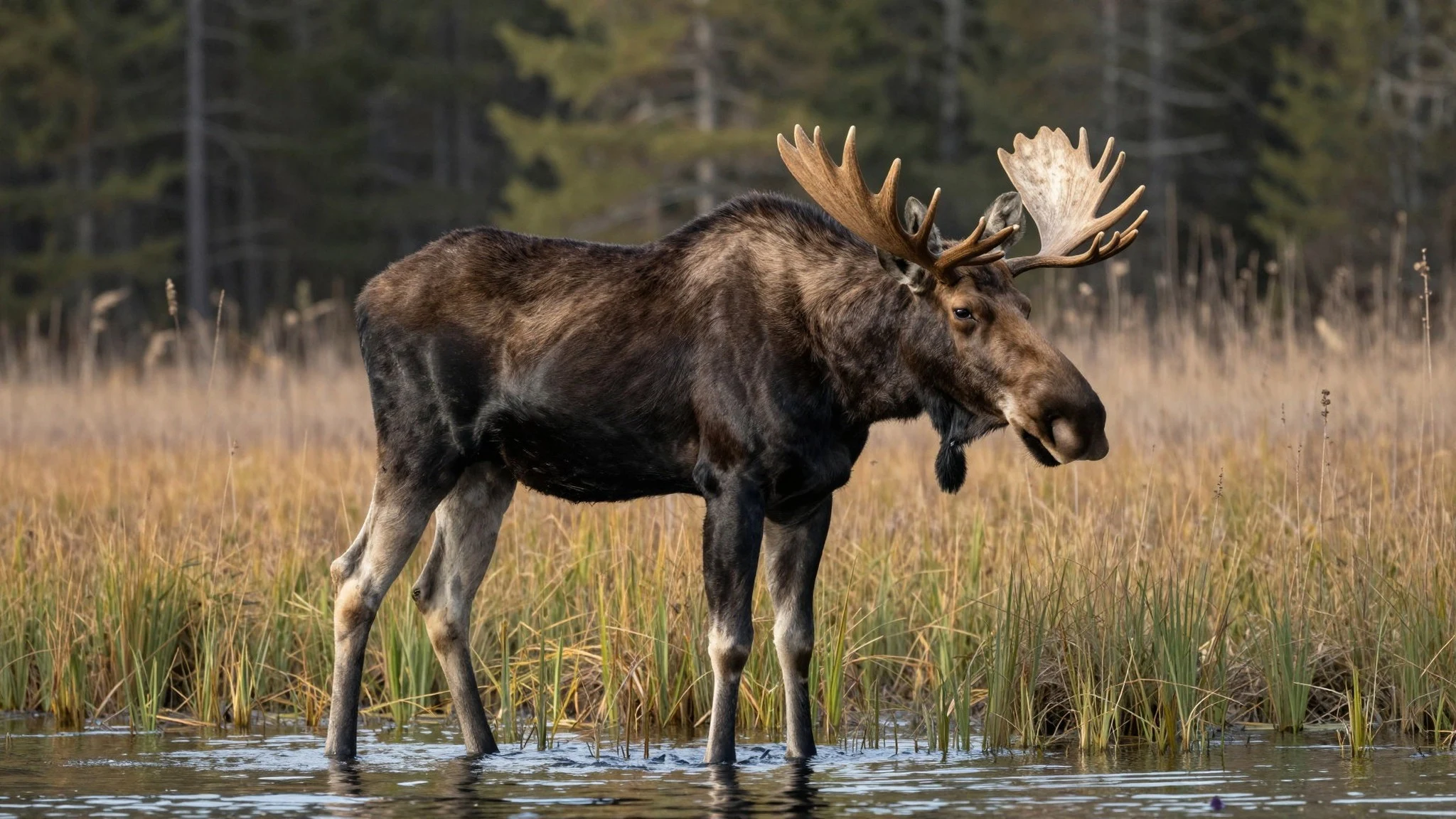
- Loon (animal)
Picture a big black-and-white diving bird whose haunting call floats over a lake: that is the common loon. In breeding dress its dark head shimmers with a green or purple gleam, and males and females look alike. In Algonquin, evenings on still water are the time to listen. Enjoy it from a distance, keep your voice low, and go with a guide if you can. Please never offer it food. - Loon (bird)
Picture a big black-and-white diving bird whose haunting call floats over a lake: that is the common loon. In breeding dress its dark head shimmers with a green or purple gleam, and males and females look alike. In Algonquin, evenings on still water are the time to listen. Enjoy it from a distance, keep your voice low, and go with a guide if you can. Please never offer it food.