Helmcken Falls
Helmcken Falls, Canada
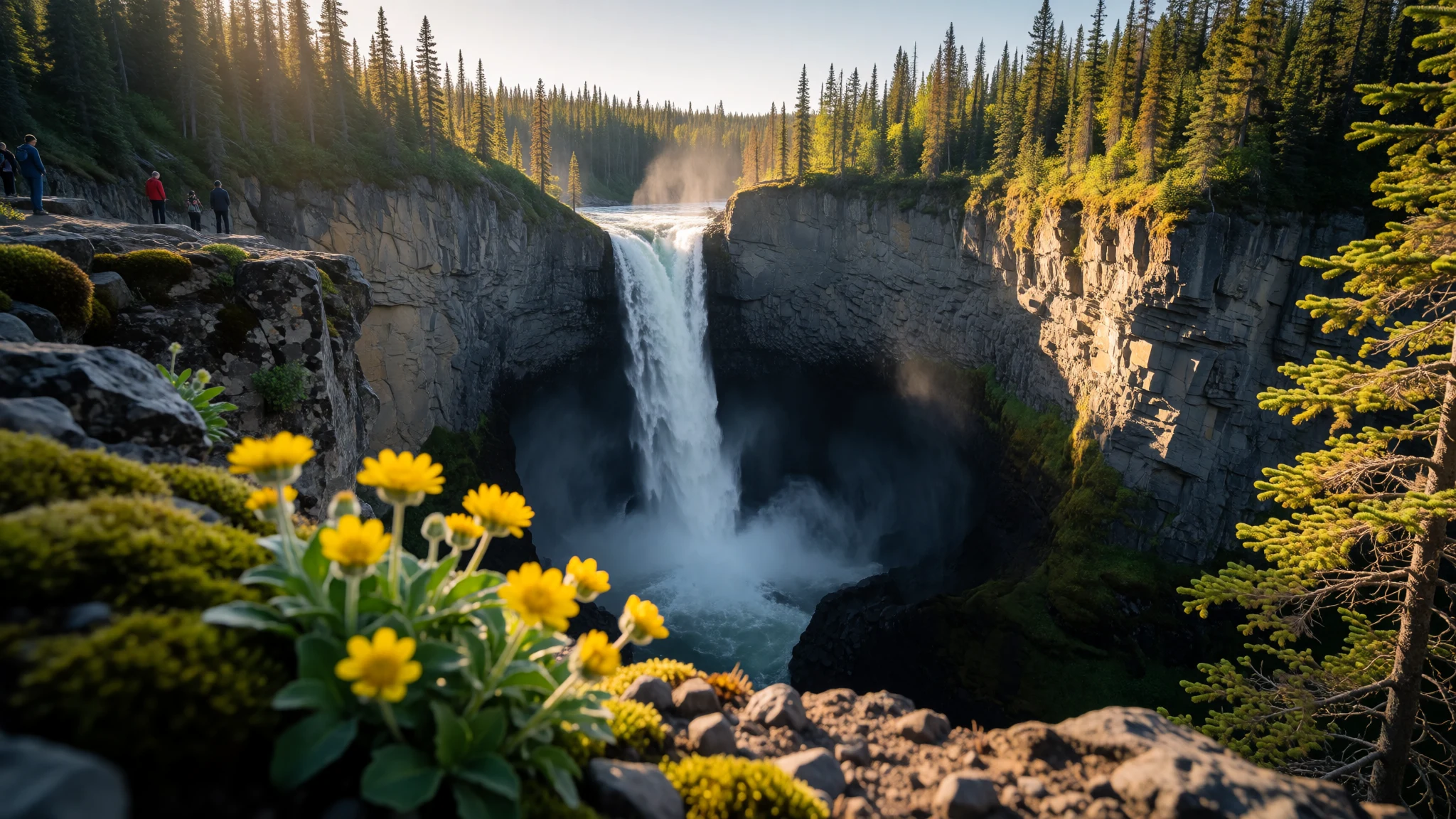
Helmcken Falls pours 141 m into a deep forested gorge, and a short walk from the car park puts you at the rail.
The place
Helmcken Falls drops 141 m over a rock lip on the Murtle River, in a provincial park in the interior of British Columbia, Canada. The river crosses a quiet plateau, then vanishes over the edge into a deep, curved gorge whose walls throw the roar back at the viewpoint. On cool mornings the spray hangs in the canyon like smoke, and on bright afternoons rainbows form in it.
The Murtle has seven named falls, six of them upstream of Helmcken. Only Helmcken, The Mushbowl and Dawson Falls can be reached by road; Majerus, Horseshoe and McDougall need a trail, and Meadow Falls is really a sight for people in aircraft. That makes Helmcken the easy one, and a reason it is busy in summer.
The main viewpoint is a short walk from the car park, and a longer rim trail gives other angles for anyone who wants to stretch their legs. The setting matters as much as the drop: forested country, rivers, meadows and old volcanic ground in every direction.
The nearest town for beds and supplies is Clearwater, and the road in is long enough that visitors should arrive with fuel, food and a plan. Summer brings the crowds, the long days and the easiest access. Spring carries more water. Winter brings snow, hard cold and a frozen cone below the falls that draws ice climbers. Mobile coverage in rural British Columbia is patchy, so maps are best downloaded before leaving town.
Its story
In 1939 the land around Helmcken Falls was set aside as a provincial park, and the waterfall itself was part of the argument for doing it.
The country had a far longer human history by then. British Columbia has been Indigenous homeland for thousands of years, and the people of the interior lived in small groups that moved with the seasons to find food, in contrast to the large settled societies that grew up around salmon on the coast.
The falls now carry a European surname, a reminder that the modern map was written over much older names and ways of knowing the land.
The twentieth-century story is about access and attention. A road made the viewpoint an easy stop for families on a long drive, while winter gave the place a second audience. When the spray freezes into a tall cone, ice climbers arrive to attempt routes on it, and one line here, Clash of Titans, was filmed with the climber Angelika Rainer and shown at a mountain film festival in St. Anton.
Today the falls make a good case for why parks exist. The drop is dramatic, but it is the surrounding river system, meadows and forest that give it meaning, and the fenced viewpoints and marked trails are how that wider landscape survives its visitors. Seasonal flow still decides the show: plenty of water in the snowmelt months, a thinner and icier version in deep winter.
What to see
- The main viewpoint — Helmcken Falls, Murtle River
The fenced overlook is a short walk from the car park and gives the classic frontal view of the whole 141 m drop into the curved gorge. Photographers should carry a lens cloth, because the spray drifts a long way. Expect crowds on summer afternoons, and take turns at the rail.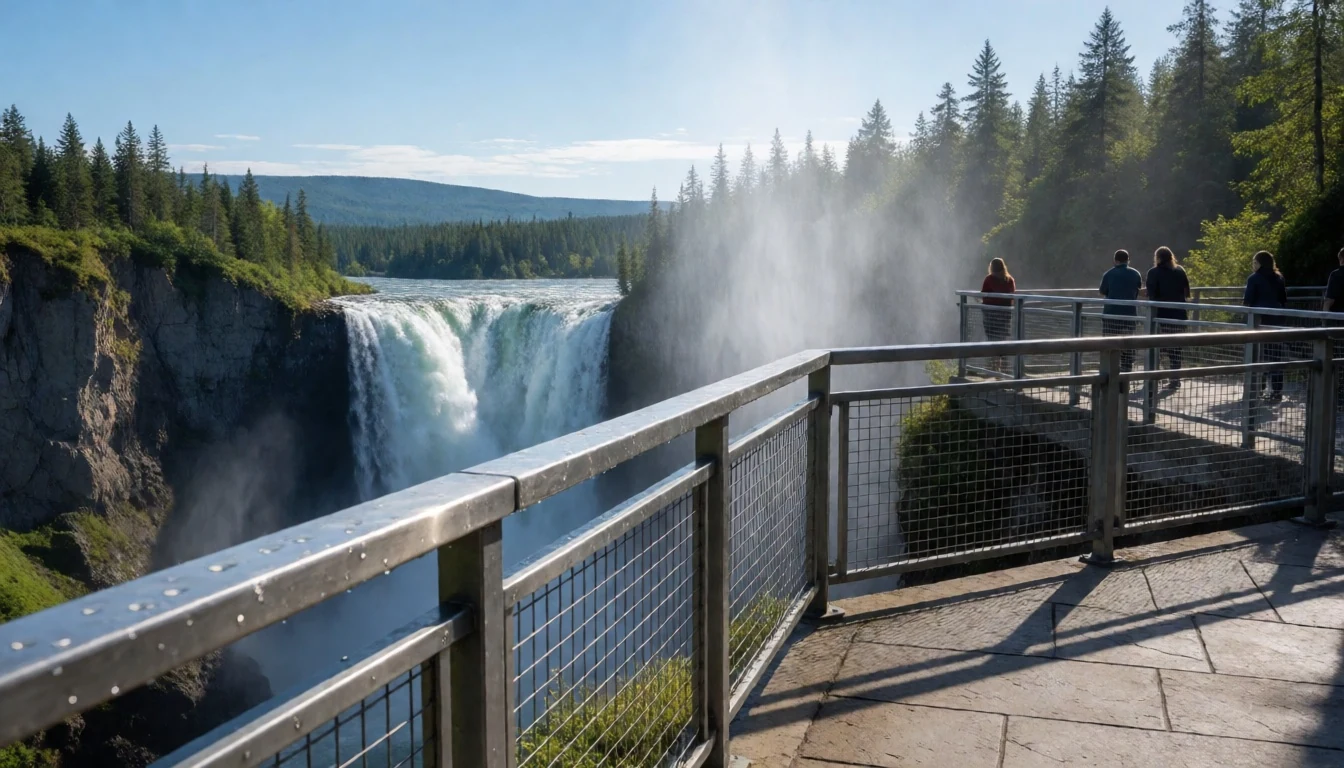
- The rim trail — Canyon rim above Helmcken Falls
A longer path follows the canyon's edge and opens other angles on the falls and the gorge they have cut. It suits visitors with an hour or two and sturdy shoes. The edges are sheer and the ground can be wet or icy, so stay behind barriers and on the marked route.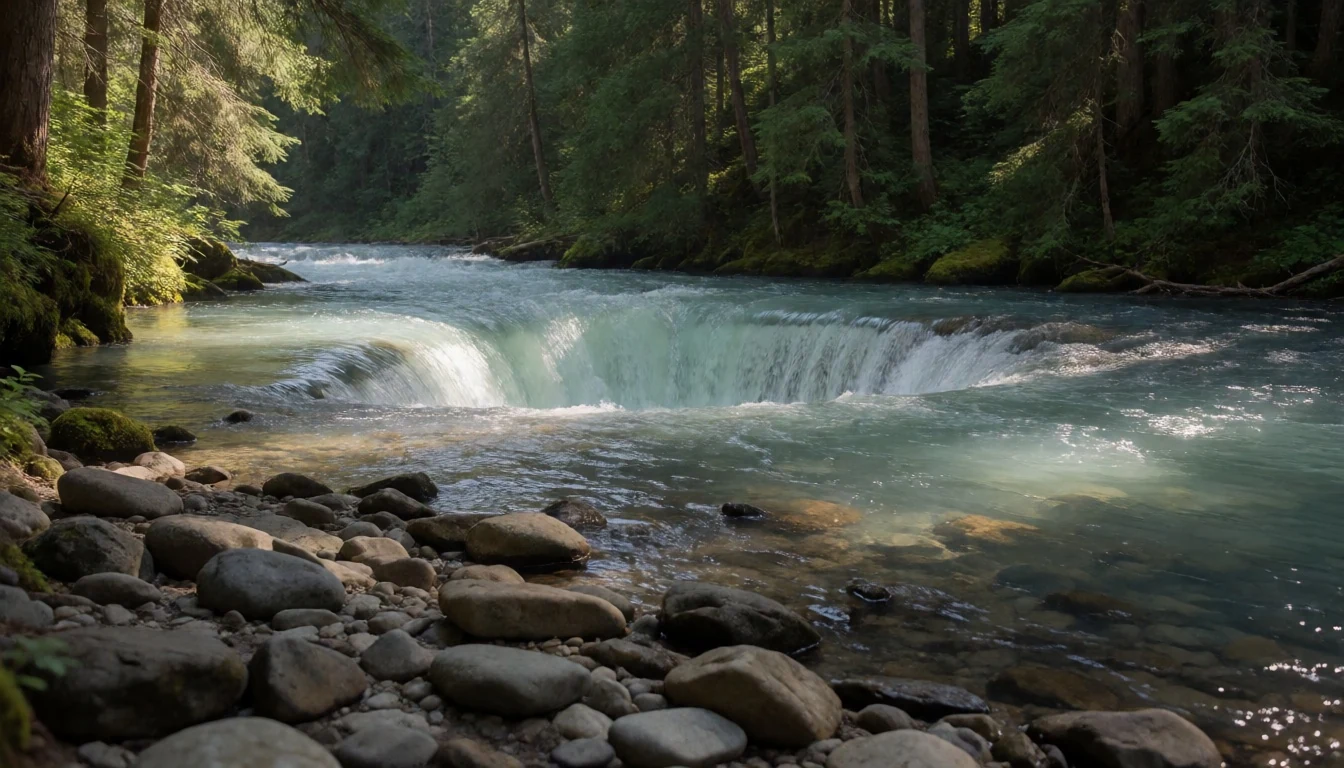
- Dawson Falls — Murtle River, upstream of Helmcken Falls
Dawson Falls sits upstream on the same river and, like Helmcken, can be reached by road. It makes a good second stop, showing the Murtle in a gentler mood before the big drop. Check current road and trail conditions with the park before setting out.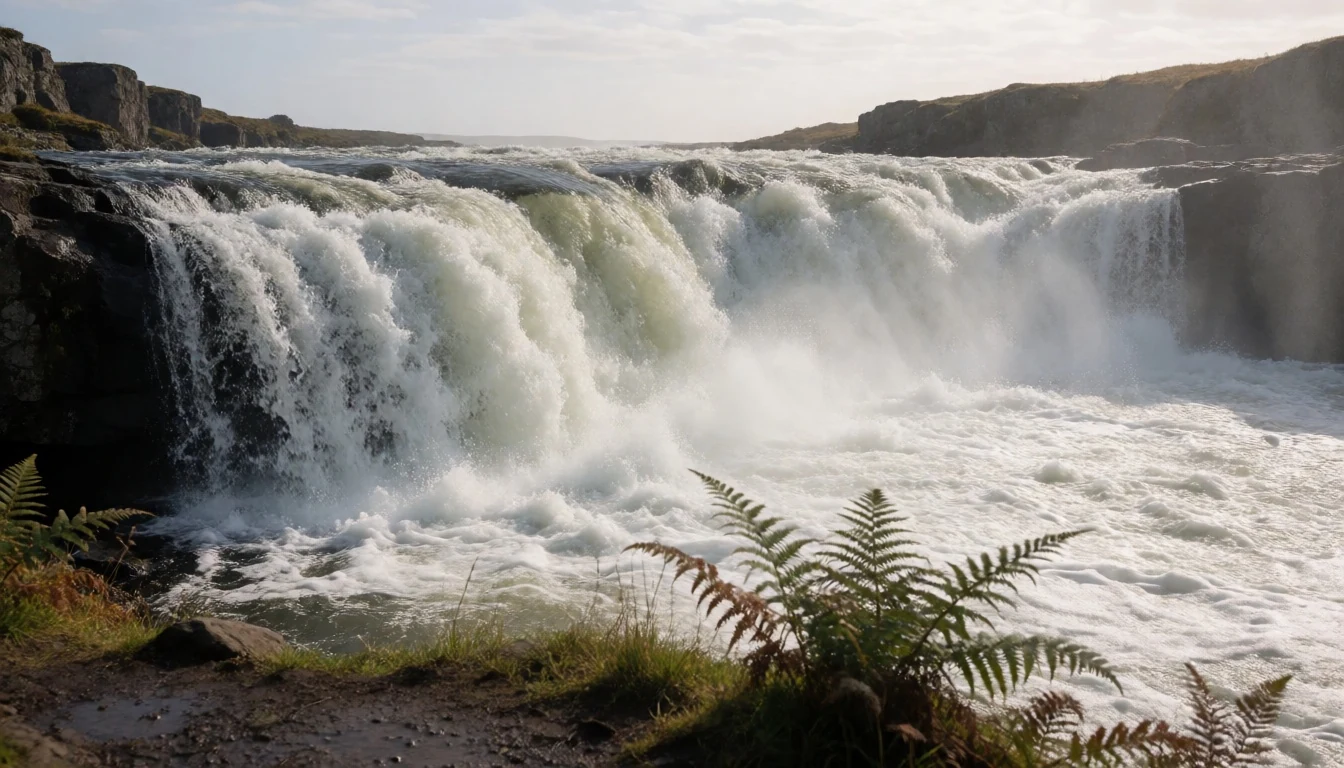
- The Mushbowl — Murtle River, upstream of Helmcken Falls
The Mushbowl is the third waterfall on the Murtle that can be reached by road, and it works best as a short stop for people already driving the park road. Its charm is the churned, rocky pools of the river rather than height, so allow time to look rather than to tick it off.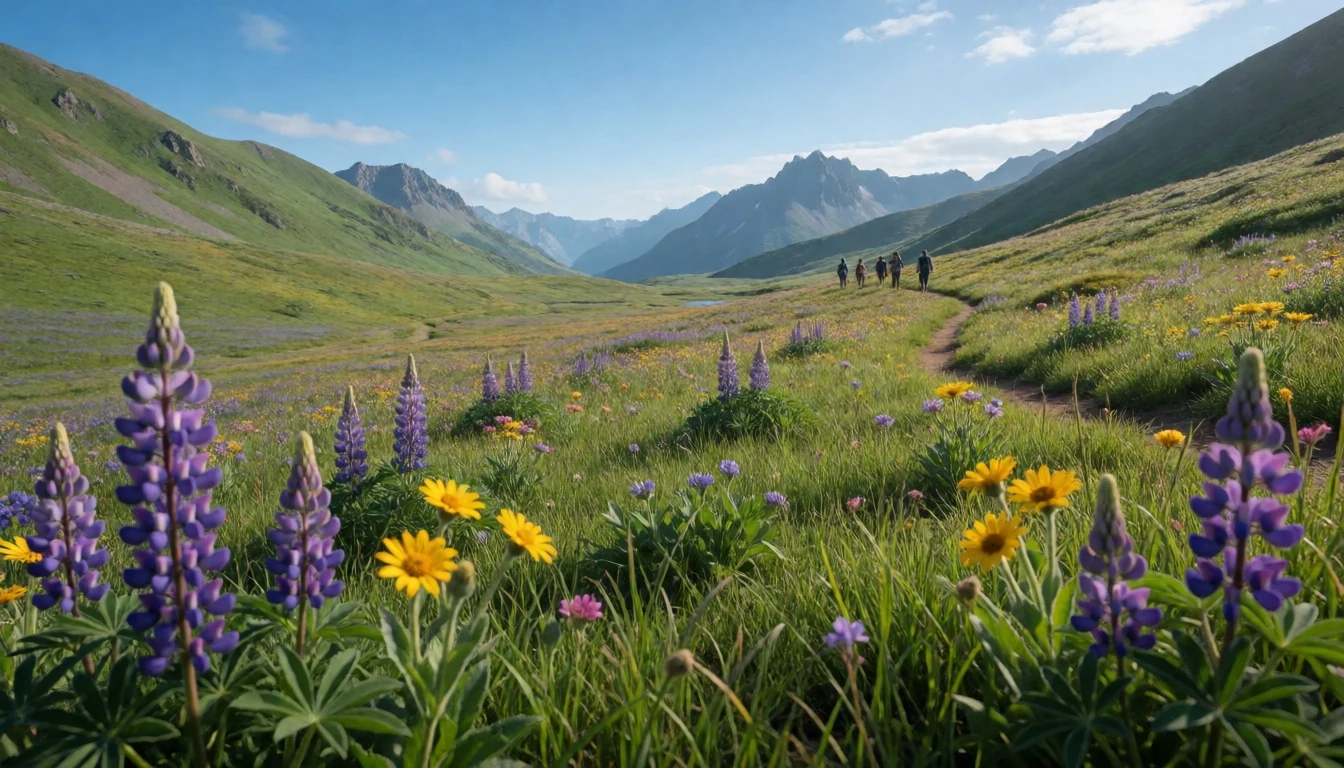
- The winter ice cone — Base of Helmcken Falls, winter only
In deep winter the spray freezes into a tall cone at the foot of the falls, and ice climbers attempt routes on it, including one called Clash of Titans. Most visitors will only watch from a distance, if winter access is open at all; check with the park before planning a cold-season trip.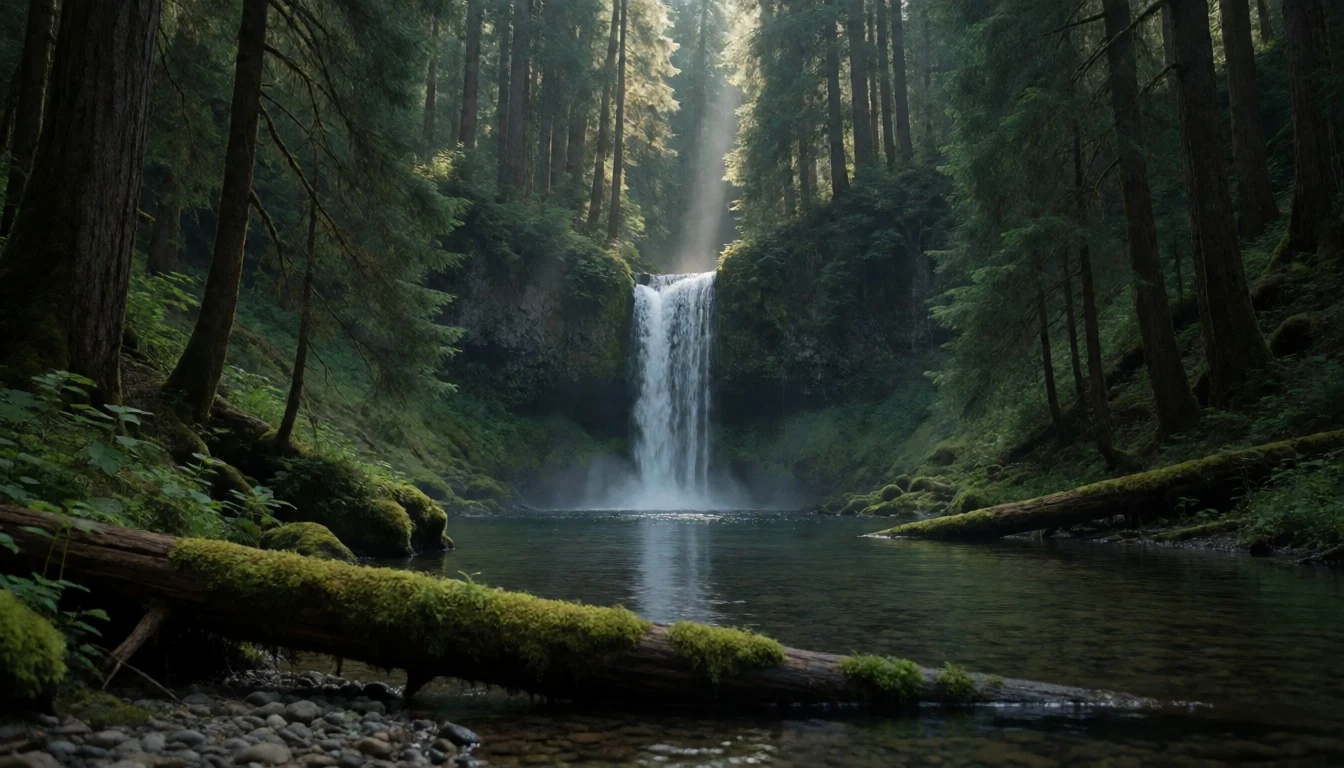
Culture
Helmcken Falls sits in country that was Indigenous homeland long before the park existed, and the culture of British Columbia is still shaped by that history alongside later settlement from Europe, Asia and elsewhere in North America. The accepted terms today are Indigenous or First Nations, rather than older labels such as Indians or Aboriginals, and visitors will see them used on signs and hear them in local conversation.
Local life around the falls is outdoors-first. Clearwater, the gateway town, runs on the visitors and trades that serve the park, and talk tends to turn to road conditions, snow, water levels and wildlife. Hiking, camping, canoeing and winter sports are everyday pastimes rather than special occasions, and people are generally friendly and practical about them.
Viewpoint manners are quiet and patient: people take turns at the railings, share the space for photographs and keep voices low enough to hear the water. Bears and other wildlife share the park, and the local habit is to treat food, rubbish and distance from animals seriously.
Stay behind the fences at the viewpoint, carry out all your rubbish, and give any wildlife you meet plenty of room.
What to wear
Helmcken Falls lies in interior British Columbia, where traditional Indigenous clothing was historically made from tanned hides, furs and plant fibres chosen for cold winters and wet springs. On the coast, woven cedar bark and blankets became well known, and button blankets and carved or woven regalia are still worn for ceremonies, dances and family occasions. Such regalia carries family and community meaning, so it is dress, not costume.
What people wear now is practical outdoor clothing: fleece, waterproof shells, caps, work jeans and hiking boots. In Clearwater nobody dresses up; checked shirts, down jackets and sturdy boots are ordinary.
Visitors should plan for layers. The spray at the viewpoint is cold and wet even in summer, so a waterproof jacket and quick-dry trousers earn their place, with a sun hat and sunscreen for the open stretches. Shoes need grip for wet rock and gravel paths; in winter, insulated waterproof boots, ice grips, gloves and a warm hat are sensible. There are no dress codes or modesty rules at the falls, though insect repellent helps in summer.
What to eat
- Wild salmon — Cafés and restaurants in Clearwater; delis along the route
Grilled or smoked salmon is one of the province's signature dishes, and menus in Clearwater and larger towns along the way usually carry it. Smoked salmon also turns up in delis, handy for a picnic near the viewpoint.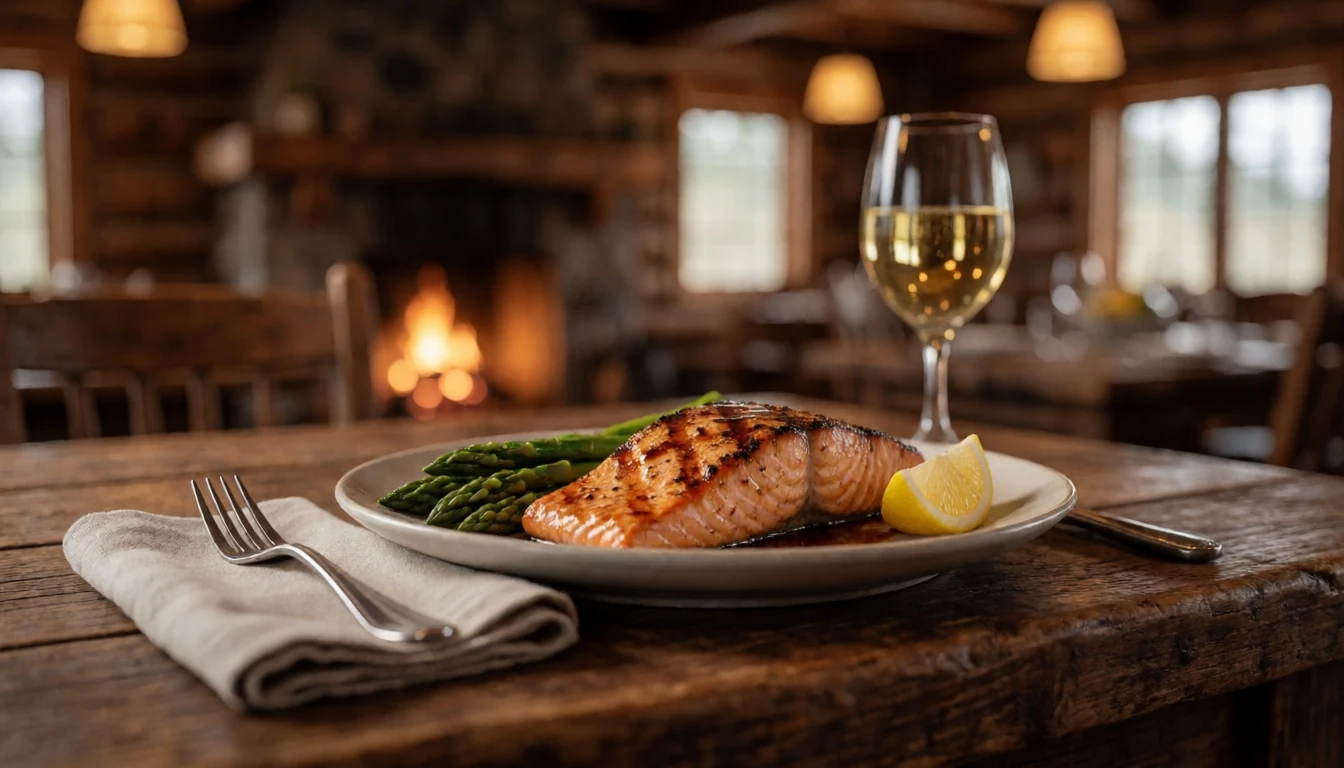
- Nanaimo bar — Bakeries and cafés in Clearwater and across the province
A layered square of chocolate, coconut and a sweet creamy filling, named for Nanaimo on Vancouver Island. Bakeries and cafés across British Columbia sell it, and one slice with a hot drink suits a cold day at the falls.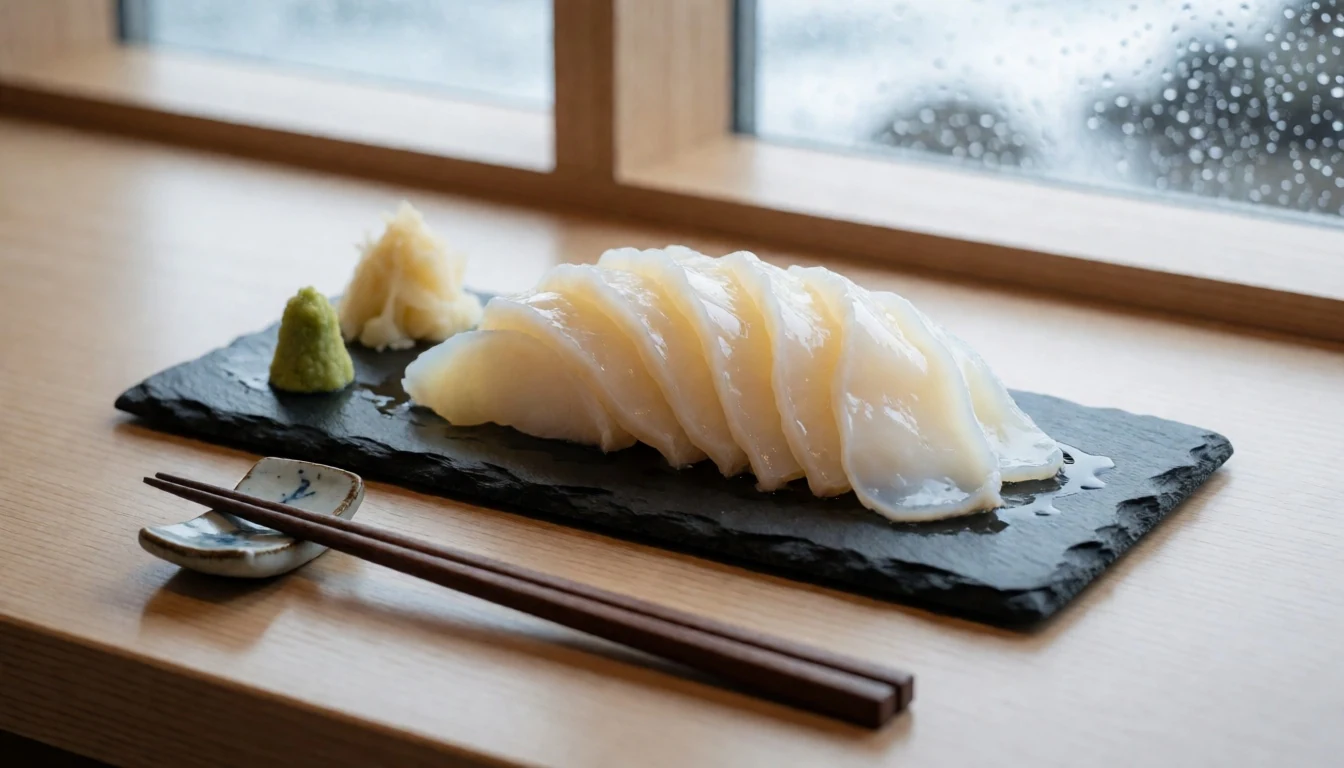
- Pub burger and fries — Pubs in Clearwater
After a day of walking, town pubs near the park serve burgers, fries and other hot plates in large portions, often with local beer. It is plain, filling food, and a sensible reward after a cold morning on the rim. - Dim sum — Chinese restaurants in Richmond, near Vancouver
Anyone driving up from Vancouver can stop in Richmond, a southern suburb known for East Asian shopping malls and good-value Chinese restaurants. Dim sum there is a hearty start before the long drive inland to the falls. - Sushi — Japanese restaurants across Vancouver
Vancouver is thick with Japanese restaurants, so sushi is easy to find and a reliable fresh-fish meal before heading inland. Look for neighbourhood sushi counters in the city centre rather than tourist strips, and eat the day before the drive.
Plan it
Best time. June to September for open roads, long days and comfortable walking; late spring brings more water over the falls, while winter is cold and snowy with access that needs checking, and ice climbers' cone forms in the coldest weeks.
How long. 1–2
Getting there. Fly to Vancouver International Airport (YVR) for international connections, or to a regional airport such as Kamloops, then drive to Clearwater, the gateway town, and on along the park road to the falls car park. A hire car is the practical choice for the last leg.
Budget. mid
Tips
- Check the BC Parks website for current road, viewpoint and trail conditions, especially outside summer
- Go early or late in the day to avoid the busiest summer crowds
- Fill the tank and buy food in Clearwater, as mobile coverage is patchy on rural roads
- Carry a waterproof layer, because the spray at the viewpoint wets everything
- Book rooms or campsites ahead for summer weekends
Etiquette
- Stay behind fences and barriers at the canyon edge
- Keep food secure and give wildlife plenty of space
- Carry out all rubbish
Nearby
Sources
- Wikidata Q747408 (CC0)
- Wikipedia: Helmcken Falls (rev 1372197776) (CC BY-SA 4.0)
- Wikivoyage: British Columbia (rev 5400129) (CC BY-SA 4.0)
- Photo: William Redmond, Helmcken Falls Soft (CC BY 3.0)
- Photo: Alan D. Wilson, Helmcken Falls (Columbia) (CC BY 3.0)
- Photo: Film festival of St. Anton, Angelika Rainer Helmcken Falls 3 (CC BY 3.0)
- Photo: Murray Foubister, Trophy Meadows hike (1) (CC BY-SA 2.0)
- Photo: Murray Foubister, Trophy Meadows hike (2) (CC BY-SA 2.0)
- Photo: Film festival of St. Anton, Angelika Rainer Helmcken Falls 1 (CC BY 3.0)
- Photo: Film festival of St. Anton, Angelika Rainer Helmcken Falls 2 (CC BY 3.0)
- Photo: Jason Hollinger, Chrysothrix chlorina (Helmcken Falls) (CC BY 2.5)


Wildlife
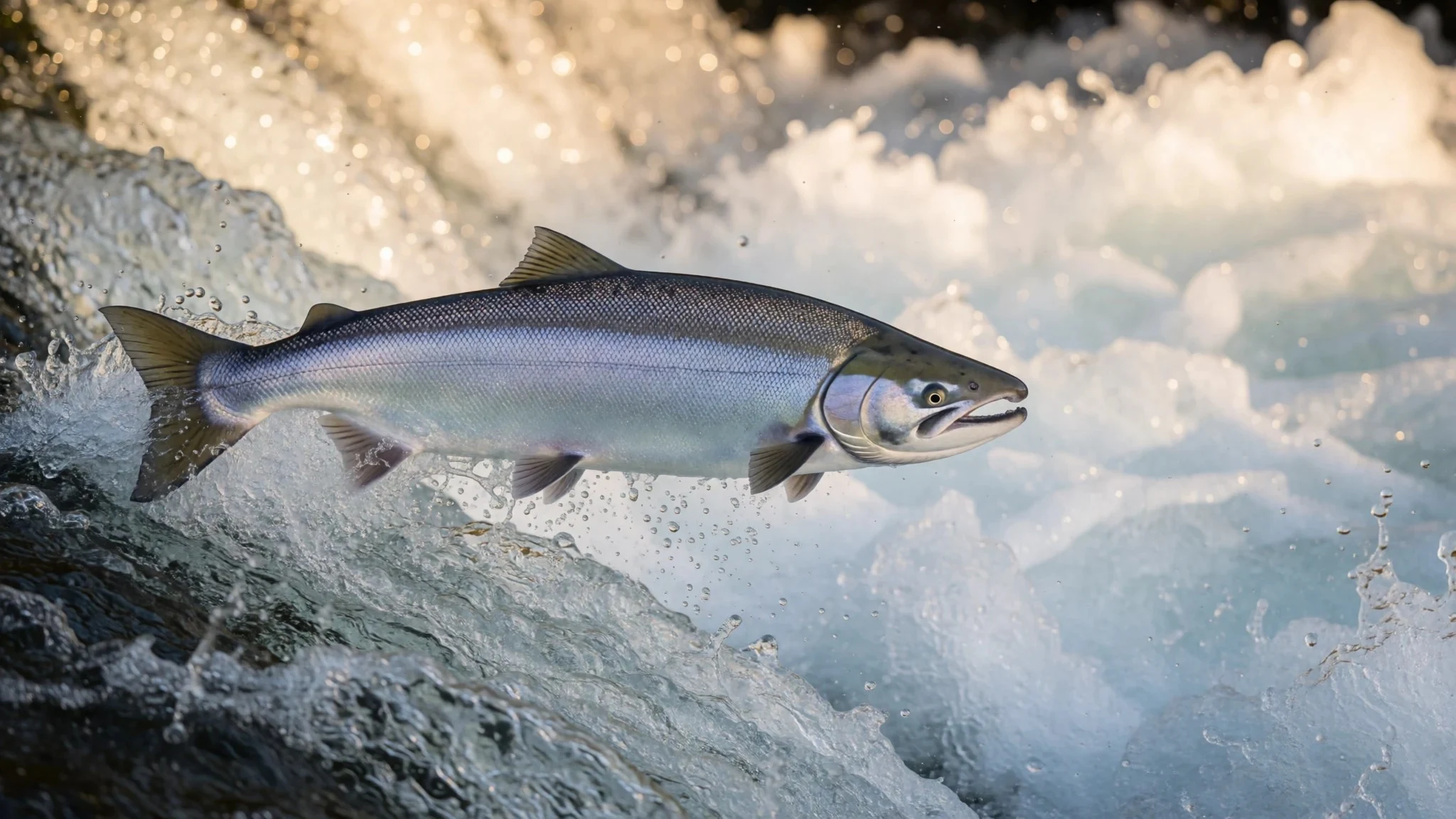
- Salmon (animal)
The Atlantic salmon is a sizeable fish that starts life in a stream, swims out to sea to grow up, then journeys home again. Fully grown adults travel back up rivers at certain times of year to lay their eggs. Ask a local guide whether any can be seen near Helmcken Falls, and where and when to look. Watch quietly from a distance, keeping back from the water's edge so the fish are not startled, and never feed them or any other wildlife.