Heceta Head Lighthouse
Heceta Head Lighthouse, United States
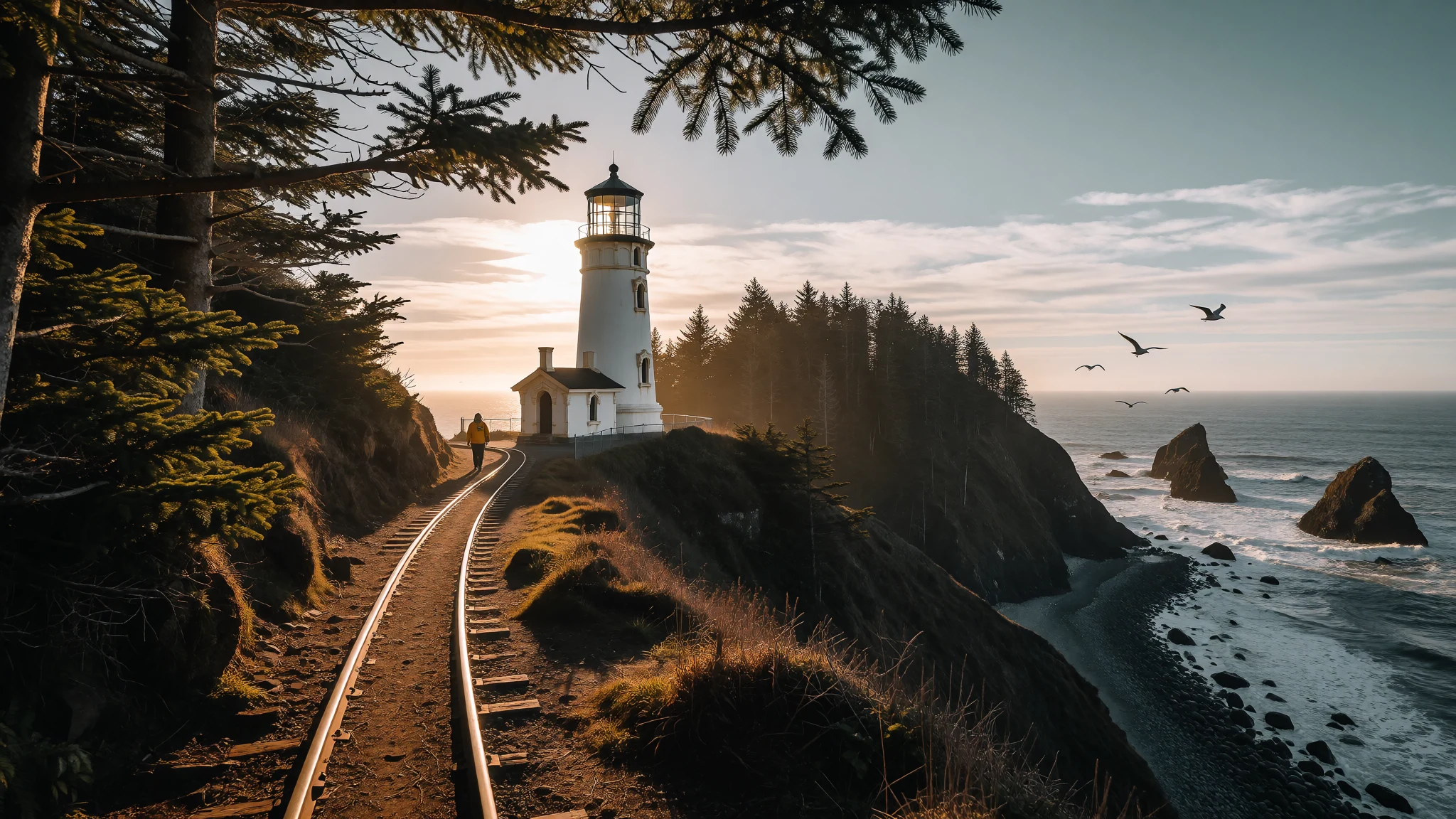
Heceta Head Lighthouse is a white tower on a forested Oregon headland, where the Pacific coast shows its fog, surf and sea-lion rocks.
The place
Heceta Head Lighthouse stands on the Oregon coast, about 21 km north of Florence and the same distance south of Yachats, inside a state scenic viewpoint. The tower sits partway up a headland that rises about 62 m above the water, and it is 17 m tall, so the lamp looks down on the surf from a long way up. Its beam reaches about 39 km out to sea. The light itself is looked after by the Oregon Parks and Recreation Department, while the former assistant keepers' house beside it is run as a bed-and-breakfast under the US Forest Service. Sea Lion Caves lie about 3 km away, so the two make an easy pairing on one coastal drive. The setting matters more than the building. Dark conifer forest drops to a rocky shore, offshore stacks catch the swell, and the white tower sits in the middle of it all. Visitors walk up from the car park through trees, and the last stretch is a steady climb rather than a hard one. Fog is common on this coast, and on a grey morning the lighthouse can vanish completely before the sun pulls it back into view. Summer weekends bring crowds and a full car park, so early or late in the day is calmer. Oregon as a whole lies at the far end of the old Oregon Trail, and this wild shoreline feels a world away from the farmland those wagon families were chasing.
Its story
Heceta Head Lighthouse takes its name from Bruno de Heceta, the Spanish explorer who sailed the Pacific Northwest in the late eighteenth century. The headland was known long before that. The Siuslaw people, whose traditional lands include this stretch, call it ɫtúwɪs, and they hunted sea lions here and collected seabird eggs from the offshore rocks. A local legend explains the cliffs as a great stone wall built by the Animal People, who used it to trick the Grizzly Bear brothers to their deaths. Settlers arrived in 1888, the same year the United States Lighthouse Service approved a light for the headland, and the government bought part of the land that had just been claimed. Building began in 1892 with a crew of 56. The site was so remote that materials came in by ship when weather and tide allowed, or by wagon from Florence, a slow half-day haul. The stone was brought from the Clackamas River, and the bricks came all the way from San Francisco. The lighthouse was finished in 1894, and the lamp has been guiding ships past this rough shore ever since. The keepers' house below it tells the other half of the story: a small community living in isolation, keeping a light burning through winter storms.
What to see
- The lighthouse and its lamp room — Heceta Head headland
The white tower is the reason for the trip, and the path up through the trees builds the view slowly. From the grounds the tower stands against open ocean, with the headland falling away on both sides. Tours of the tower are run by the park, so check the official state parks site for current access before going.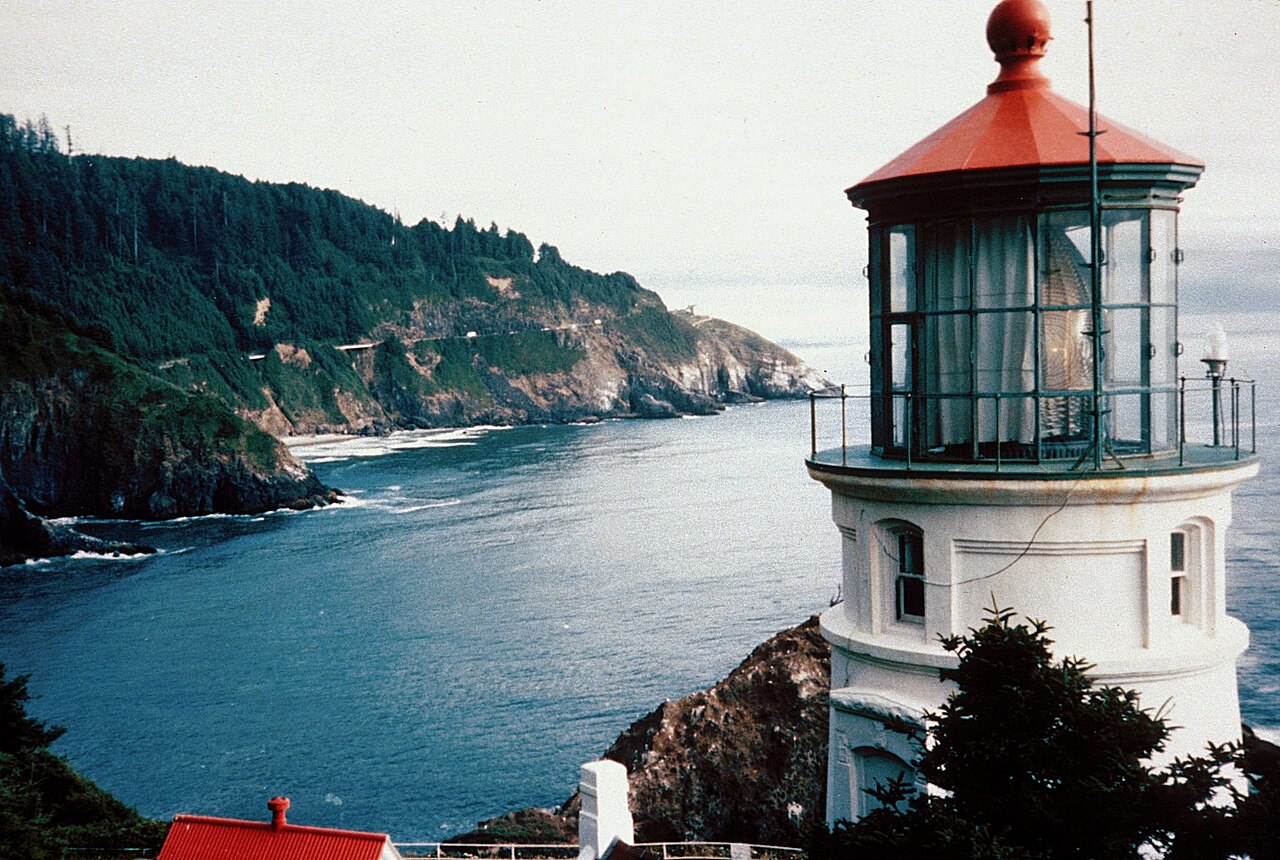
- The keepers' house — Below the lighthouse
The assistant keepers' house sits just below the tower, and it is now a bed-and-breakfast looked after by the US Forest Service. Even if you are not staying, the building is worth a slow look from outside, with its garden and its view over the water. Historic photographs show how little the setting has changed.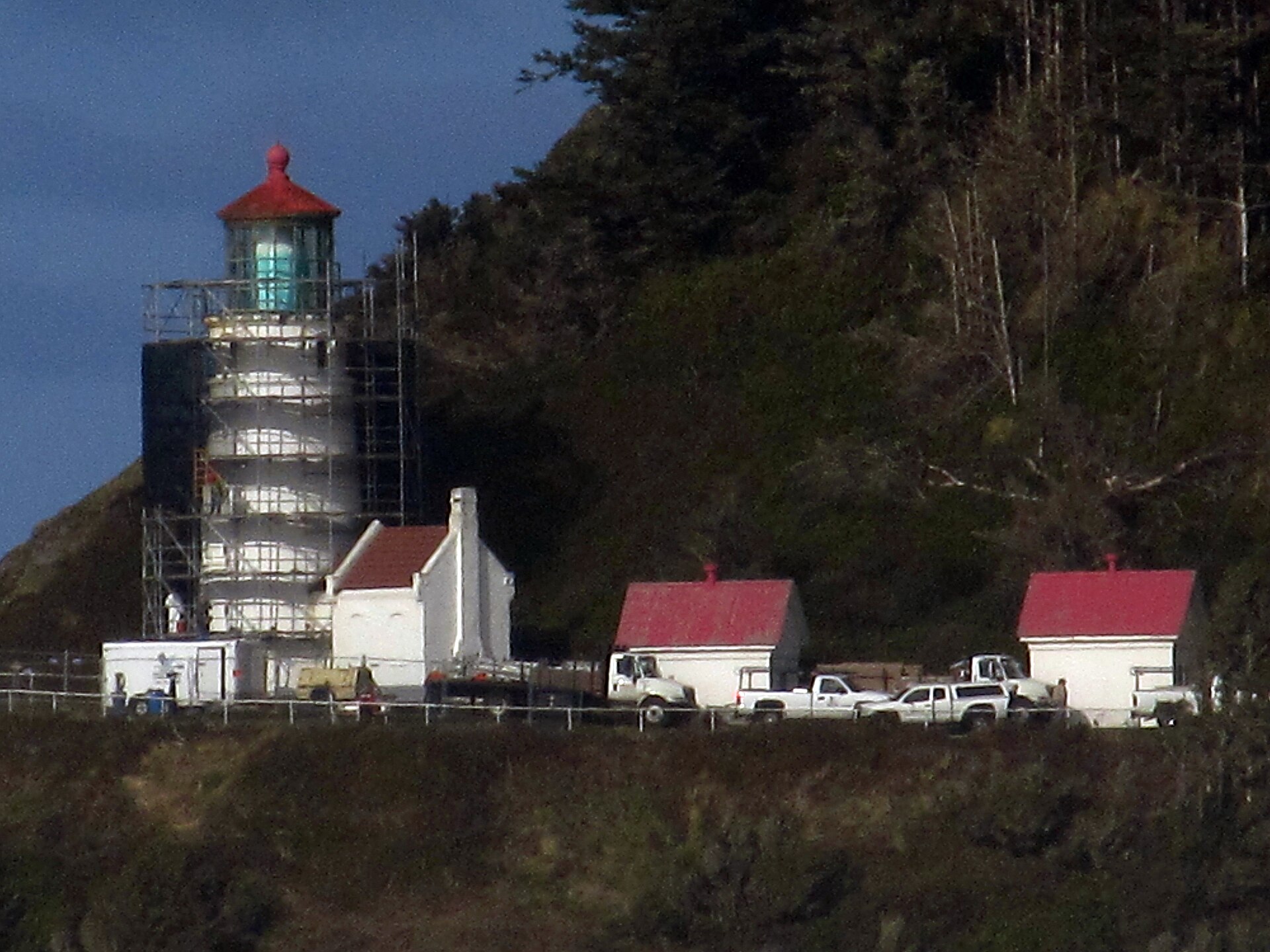
- The coast-road overlook — Coast highway, south of the headland
The classic postcard view of the lighthouse comes from a pull-out on the coast highway to the south, where the tower appears small and bright against the green headland. It is a good place for photographs in evening light, and it needs no climb, so it suits anyone short of time or energy.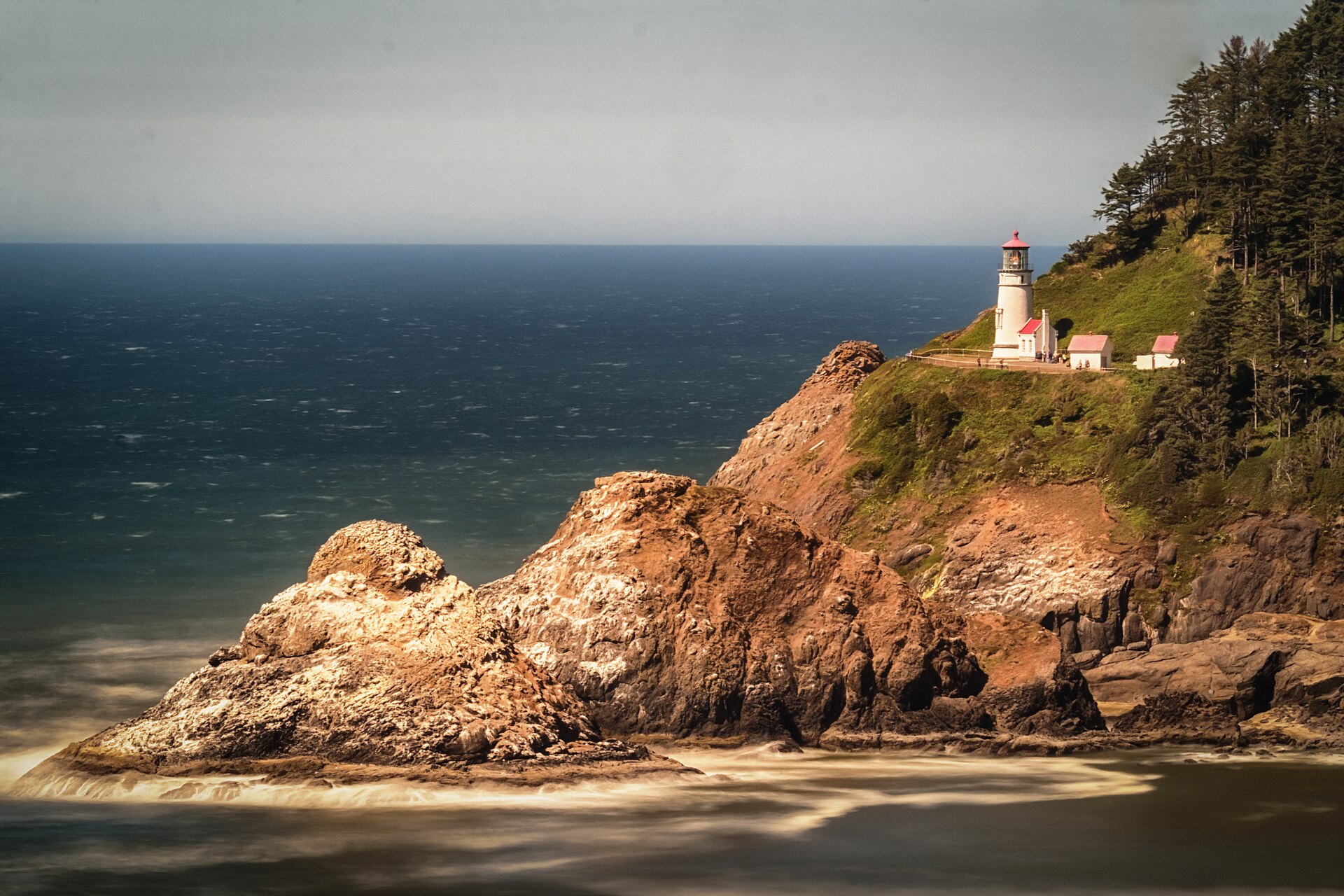
- Cape Creek Bridge — Cape Creek, below the headland
The concrete arch bridge over Cape Creek carries the coast road beneath the headland, and old Forest Service photographs show it together with the keepers' house and a road tunnel nearby. It is best seen as part of the walk or drive, a reminder that this road was a considerable piece of engineering.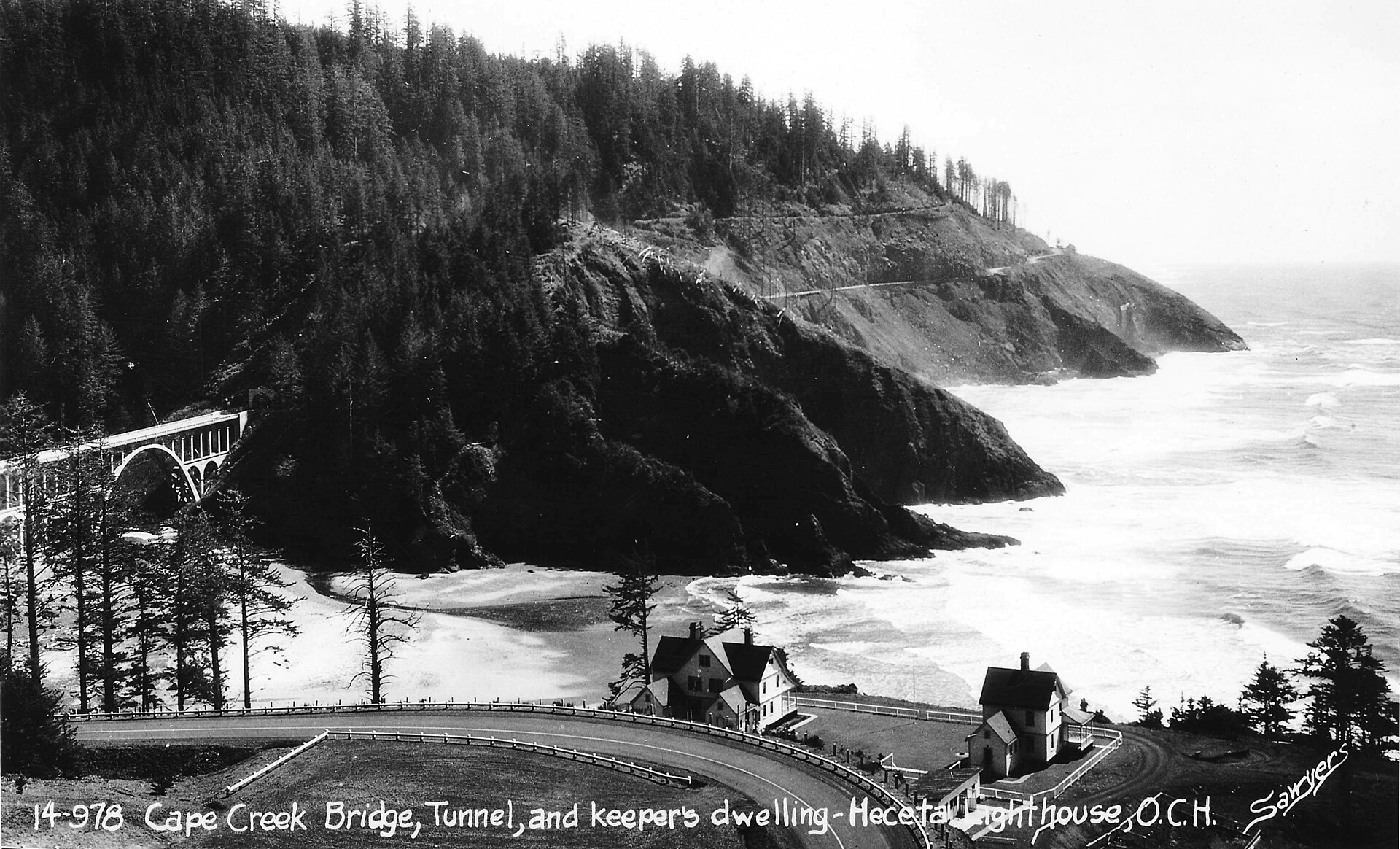
- Sea Lion Caves — South of the lighthouse
Sea Lion Caves lie about 3 km from the lighthouse, and they are a natural second stop. Sea lions have used this coast for as long as people have lived here, and the Siuslaw hunted them nearby. Check the official site for opening arrangements and entry costs before you plan the day around it.
Culture
Heceta Head Lighthouse sits in a part of Oregon where pride in the natural landscape is close to a local creed. Oregonians are fiercely protective of their coast, forests and wildlife, and dropping litter or disturbing animals is likely to get a sharp reaction, and sometimes a fine. The coast itself is open to everyone, and that public-access tradition shapes how the shoreline is used and talked about. The lighthouse is also a working piece of heritage. Its beam is still maintained by the state parks department, and the keepers' house is cared for by the Forest Service, so the site is treated as a living landmark rather than a ruin. Local volunteers and rangers often explain the history to visitors. The Siuslaw people, whose traditional lands include this headland, have a long connection to it, including the legend of the Animal People and the cliffs, and it is polite to remember that this is their country before it was anyone's scenic stop. The western valleys of Oregon are generally relaxed and cosmopolitan in outlook, while the coast keeps a quieter small-town feel, with friendly but unhurried service. Conversation here often turns to weather, fog and the best time for whale watching, and locals are generally happy to share tips. Stay on the marked paths, keep a respectful distance from wildlife, and take every piece of rubbish away with you.
What to wear
Heceta Head Lighthouse has no single dress code, and the Oregon coast has never had a formal national costume of the kind seen elsewhere. The Siuslaw and other coastal peoples traditionally worked with materials from the region: woven cedar bark and plant fibres for hats and capes that shed the rain, and animal hides for warmth. Today such craft survives mainly in cultural centres, ceremonies and the work of Native artists, rather than daily life. What people wear now is practical. Rain jackets, fleece, jeans, walking shoes and woollen hats are the local uniform, and the Pacific Northwest is famous for its relaxed approach to clothes, where outdoor gear is fine nearly anywhere, from a bakery to a brewery. Waterproofs matter more than style. Visitors should dress in layers, because the coast can be cool and damp even in summer, with wind on the headland and fog rolling in without warning. A windproof, waterproof outer layer is the most useful item in the bag. Footwear needs grip, since the path up to the tower can be wet and muddy, and the rocky shore is slippery. Trainers or light walking boots are enough for the lighthouse itself. Sun hats and sunglasses help on clear days, when the glare off the ocean is strong. There are no religious sites or modesty rules to worry about here.
What to eat
- Smoked salmon — Fish shops and dockside stalls in coastal towns such as Florence
Smoked salmon has been eaten in Oregon since long before European settlers arrived, and it remains a regional staple. It is sold as fillets, jerky and spreads, and it makes a good picnic for a headland walk. - Dungeness crab — Seafood shacks and harbour-side eateries along the coast
Crab is a coastal favourite, served cracked and cold with lemon, in salads or in sandwiches. Availability follows the fishing seasons, so ask locally what is fresh rather than assuming it is on every menu. - Clam chowder — Small cafés and fish-and-chip eateries in Florence and Yachats
A thick, creamy soup of clams and potatoes, it suits foggy, windy afternoons. Many coastal cafés make their own version, and a bowl with bread is a simple, warming lunch after the climb up to the lighthouse. - Marionberry pie — Local bakeries and roadside cafés
The marionberry is a blackberry first bred in Oregon, and it is tart, deep-coloured and aromatic. It turns up in pies, jams and ice cream, and a slice with coffee is a pleasant stop on a long drive. - Craft beer — Brewpubs in coastal towns and inland cities
Oregon has a strong brewing culture, with many small breweries across the state, and even small coastal towns usually have a local brewpub. Pale ales and IPAs are the common styles, and food is often served alongside.
Plan it
Best time. May–June and September–October are usually the best compromise, with a better chance of clear skies and fewer crowds than midsummer. July and August are the busiest. Winter brings storms and big surf, which can be dramatic but also wet, windy and foggy, so check the forecast before driving.
How long. 1–2
Getting there. Fly to Portland International Airport (PDX), or to Mahlon Sweet Field (EUG) at Eugene, which is closer. From Eugene it is a drive of roughly an hour to Florence, and the lighthouse is a short way north along the coast highway. A car is by far the easiest way to get here.
Budget. mid
Tips
- Arrive early in the morning or late in the afternoon, when the car park is less full
- Bring a waterproof layer, because fog and wind can arrive even on a sunny day
- Check the official state parks site for tower tours, parking arrangements and seasonal access
- Fuel up and carry snacks in Florence or Yachats, since services along the headland are limited
- Book the keepers' house well ahead if you hope to stay overnight
Etiquette
- Stay on marked paths and keep clear of cliff edges
- Keep a respectful distance from wildlife, including sea lions
- Take all litter with you
Nearby
Sources
- Wikidata Q5696191 (CC0)
- Wikipedia: Heceta Head Light (rev 1376776720) (CC BY-SA 4.0)
- Wikivoyage: Oregon (rev 5398902) (CC BY-SA 4.0)
- Photo 01-hecetaheadlighthouse.jpg (Public domain)
- Photo 02-evening-light-at-heceta-head-27770099658.jpg (CC BY 2.5)
- Photo 03-heceta-head-light-station-1954-ca-1943-ca-1953-nara-298196.jpg (Public domain)
- Photo 04-restoring-heceta-head-lighthouse-february-2012.jpg (CC BY 3.0)
- Photo 05-14-978-cape-creek-bridge-heceta-lh-keepers-house-or-22714556.jpg (Public domain)
- Photo 06-15-405-heceta-head-light-house-och-22540238250.jpg (Public domain)
- Photo 07-15-570-heceta-head-lighthouse-and-tunnel-och-22105385704.jpg (Public domain)
- Photo 08-170817-heceta-head-lighthouse.jpg (CC BY-SA 4.0)


Wildlife
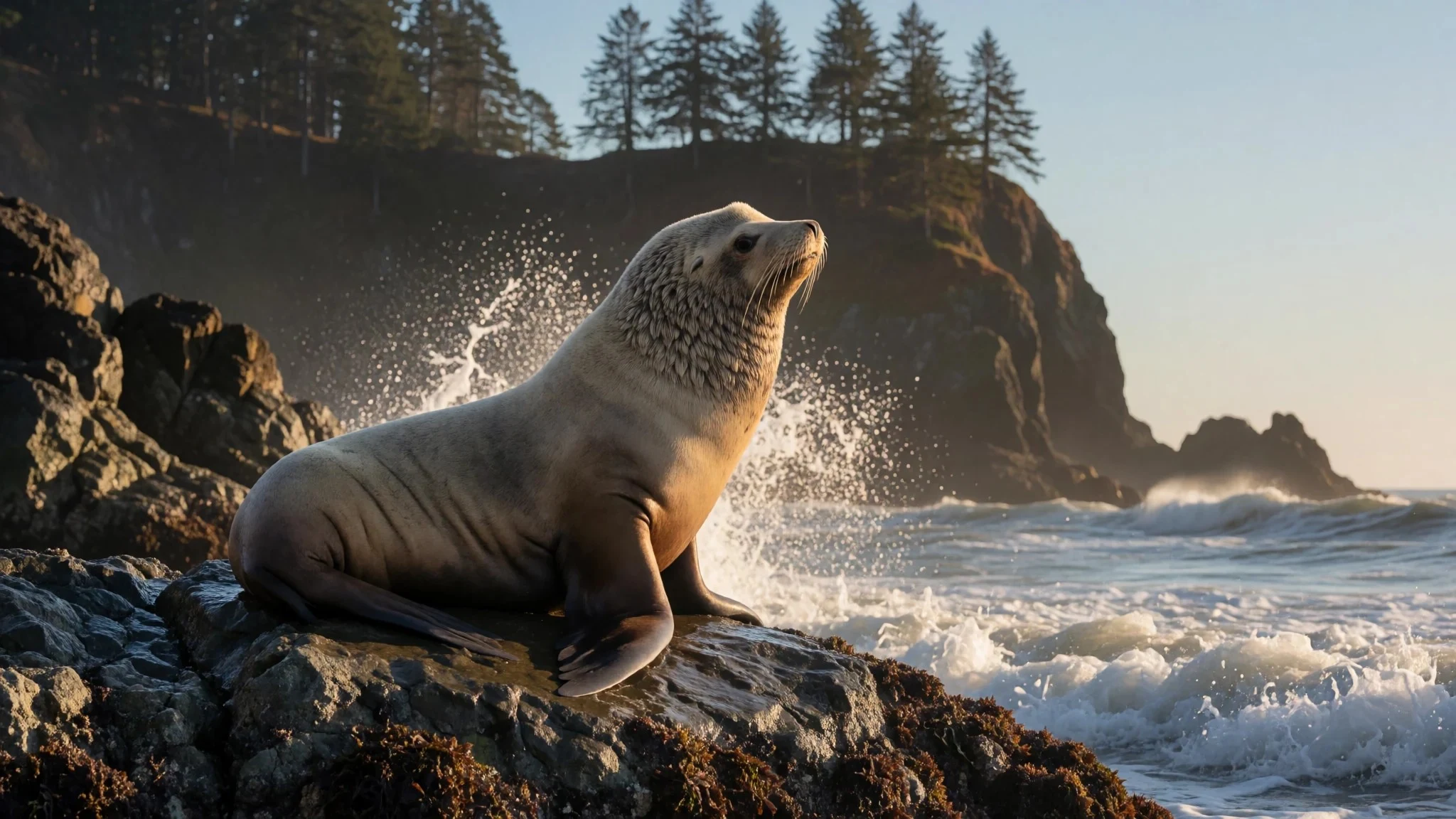
- Steller sea lion (animal)
The Steller sea lion is the biggest of the eared seals, a heavy, whiskery swimmer that a child might remember as a giant puppy of the sea. Its kind has shared this coast with people for as long as anyone can tell, and the Siuslaw once hunted them nearby. The species now faces an uncertain future, so give them room: watch from well back with binoculars, keep your voice soft, think about going with a guide, and never offer food.