Hanalei
Hanalei, United States
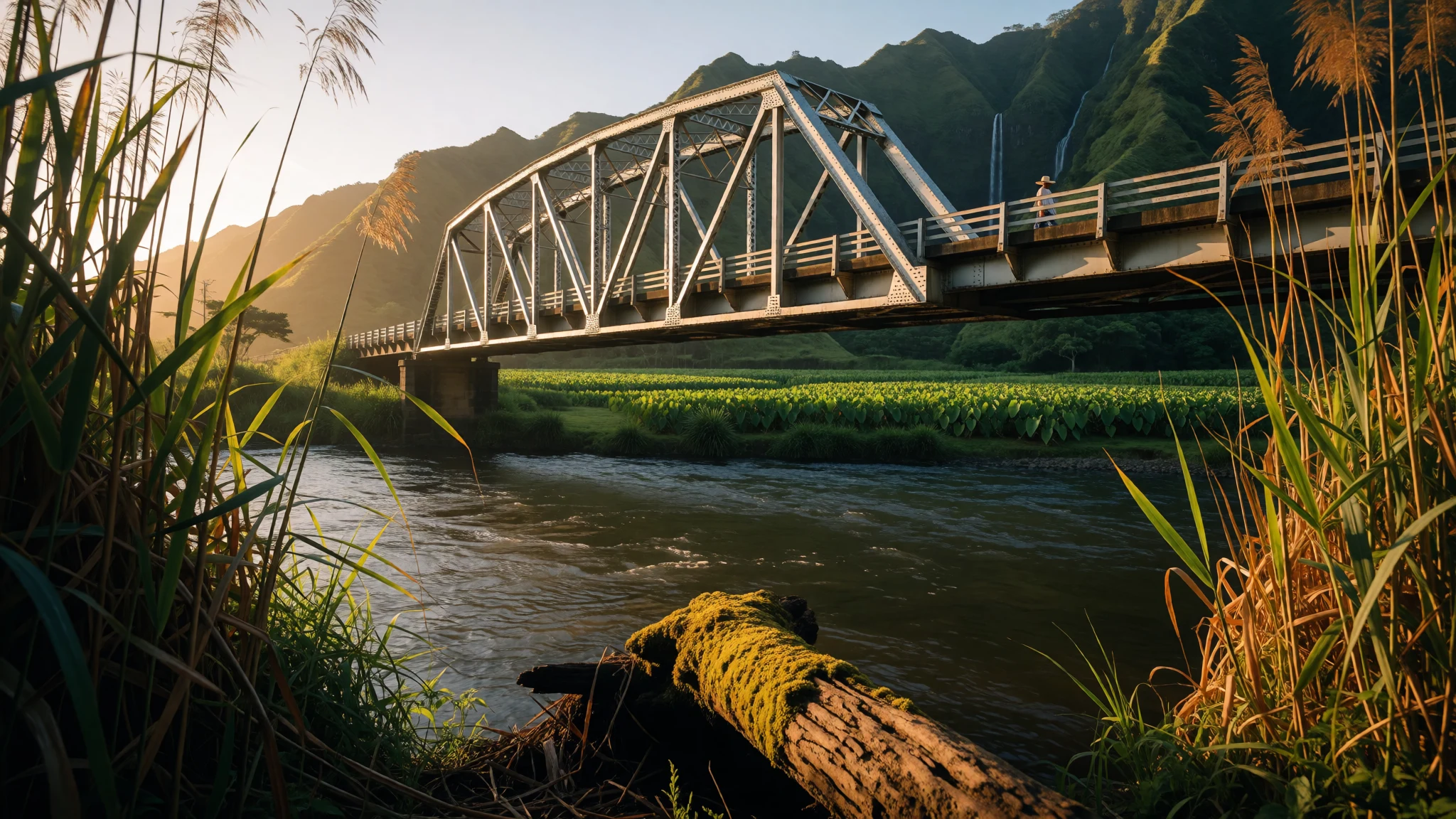
Hanalei is a small crescent bay on Kauai's wet north shore, where taro fields, steep green mountains and warm sea sit close together.
The place
Hanalei is a small settlement on the north shore of Kauaʻi, in Hawaii, close to where the Hanalei River reaches the sea. It has 444 residents, so it feels more like a few lanes and a beach than a town, with Princeville as its neighbour to the east. The name carries several meanings in Hawaiian: lei making, a crescent bay, and a valley wreathed in rainbows. All three fit. The bay curves in a wide arc, the valley behind it is patched with wet fields, and passing showers often leave bands of colour over the ridges.
Rain explains much of the place. Kauaʻi's north and east sides face the trade winds, which push moisture against the land, so these windward districts collect more rain than the rest of the island and grow the thickest greenery. Waterfalls appear on the cliffs after heavy showers, the river runs brown, and the lanes are often damp. Visitors who expect dry resort weather are sometimes caught out, and those who accept the showers as part of the deal tend to enjoy the place more.
The setting also feels remote. Roads in and out are narrow, one old bridge carries the main road over the river, and the pace follows tide, surf and weather more than timetables. Surfers, paddlers, farmers and visitors share the same few streets. Hanalei works best as a base for slow days on the coast, with longer sightseeing saved for other parts of the island, and with a rain jacket always within reach.
Its story
Hanalei's story begins with farming. Before outsiders arrived, the valley and bay supported a dense community that drew its food from both land and sea. Wet fields grew taro, and the people also raised bananas, breadfruit, sweet potatoes, yams and coconuts, while the bay and reef supplied fish and other marine food. The river, the fertile floor and the sheltered water made the area a reliable larder.
Contact with foreign traders in the nineteenth century brought new crops and new markets. Hanalei became a notable supplier, trying out coffee, rice, sugarcane, cotton, tobacco, citrus, pineapples and a long list of vegetables and fruit. Some of these ventures faded and others lingered, but the habit of working the valley floor stayed. Taro fields still define the view from the overlook above the river.
Hanalei also drew Hawaiian royalty. Kamehameha II made a long sea voyage to Kauaʻi, and Kamehameha III later visited Hanalei. Kamehameha IV came with Queen Emma, and returned with their young son, Prince Albert. These visits show that the bay was a place of standing and welcome, and not a remote corner of the island.
What survives today is the old pattern: a river, fields, a bay and a small community. A traveller walking the shore is looking at a landscape that has fed and hosted people for many generations. The sensible response is to keep to public lanes, stay out of working fields, and learn a few Hawaiian place names before arriving, so that the history is respected as well as photographed.
What to see
- Hanalei Valley overlook — Above the village, on the road in
The valley overlook looks down on taro fields in different stages of growth, with the river winding between them and steep ridges closing the far end. It is a short stop and a good first orientation. Go in the morning, when light is soft and showers are fewer.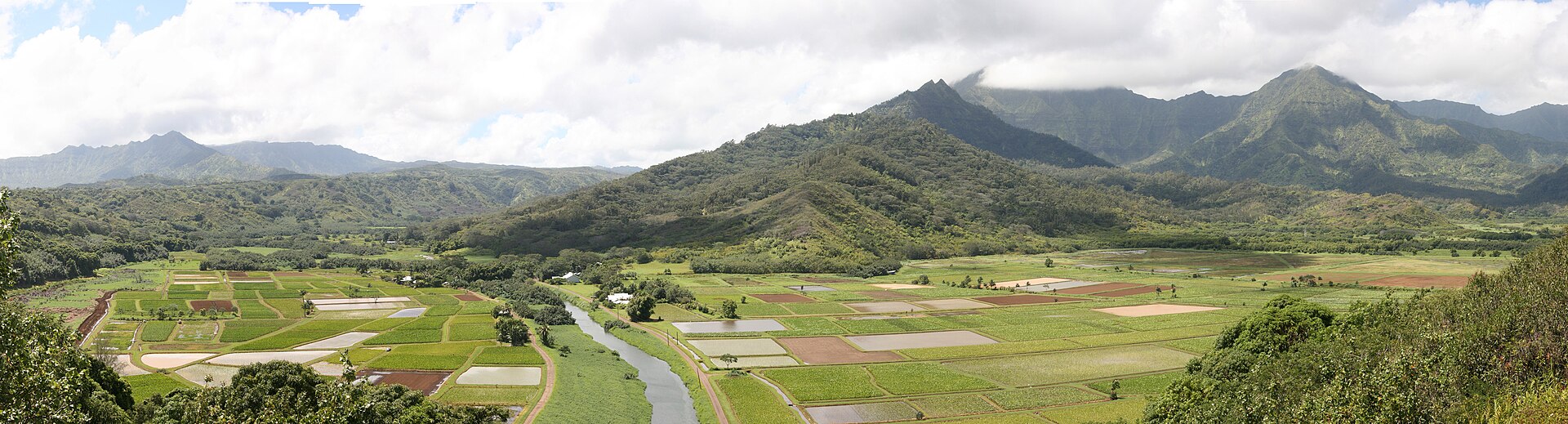
- Hanalei Bay — Seafront, village centre
The bay is a wide crescent of sand backed by green mountains. Calmer months suit swimming, paddling and beginner surf lessons, while rougher seas call for staying on the sand. Check with lifeguards before entering the water, since currents here can be strong and there is little reef shelter.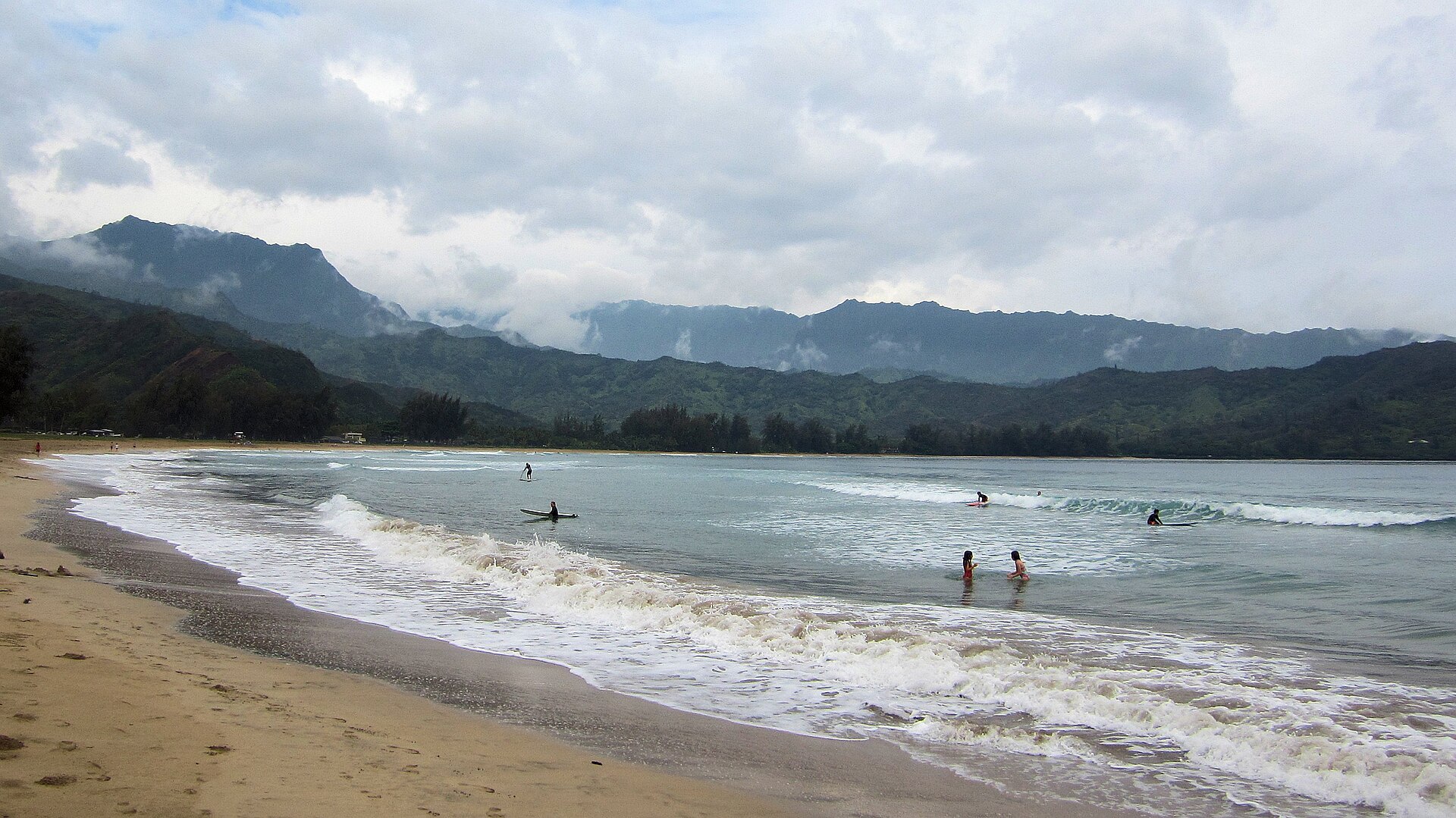
- Hanalei Bridge — Main road at the village edge
The old bridge carries the coast road over the Hanalei River, while the nearby pier is listed on the National Register of Historic Places. Its narrow steel span makes traffic take turns, which slows everyone down in a useful way. Park safely nearby and look at the river and the hills.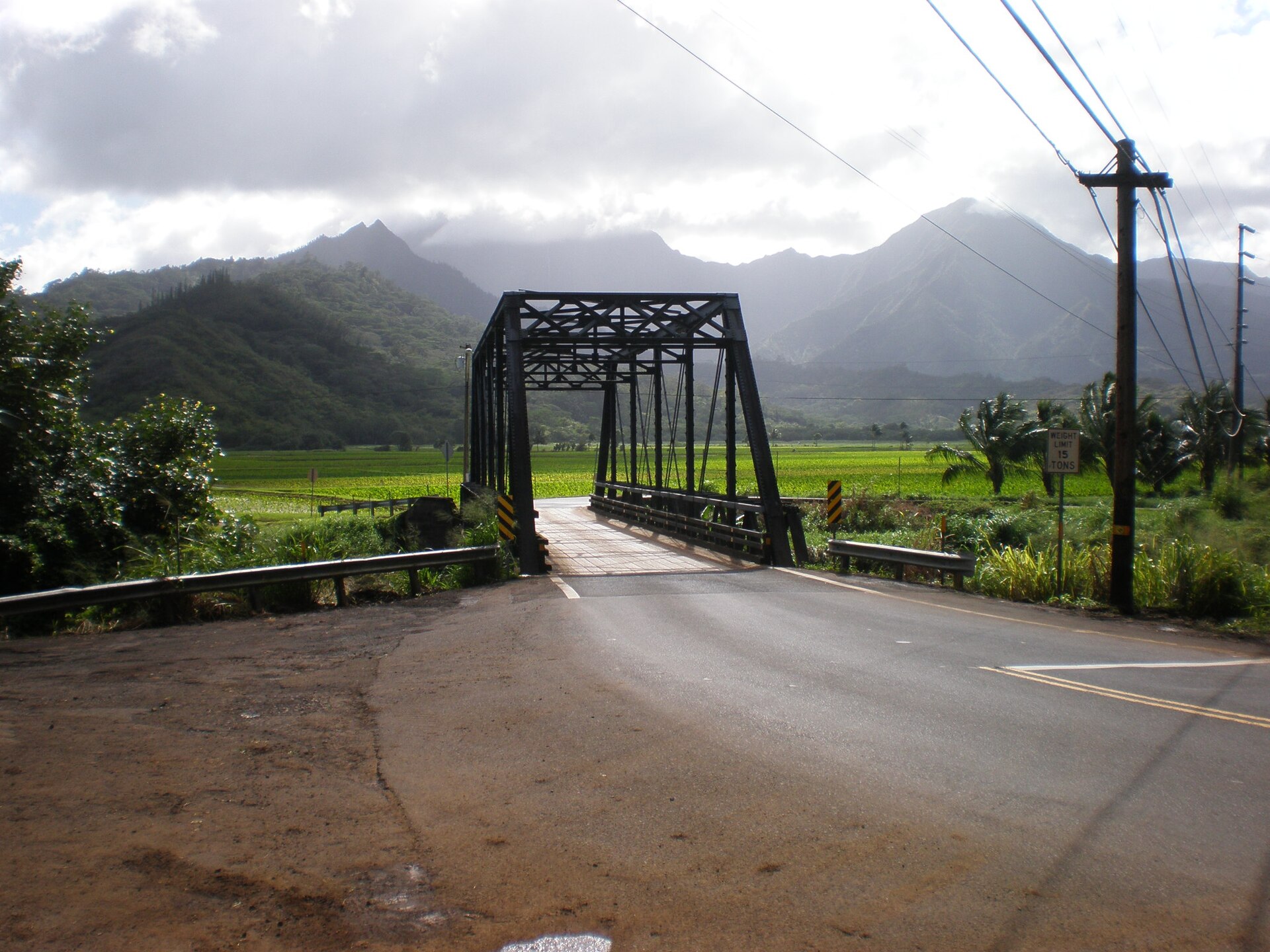
- Hanalei town — Village centre
The village is a short strip of low buildings with shops, surf stores and eateries, set below the peaks of Namolokama and Mamalahoa. Walking it takes little time, so it suits an unhurried afternoon. Rain passes quickly, and shop porches make good shelter.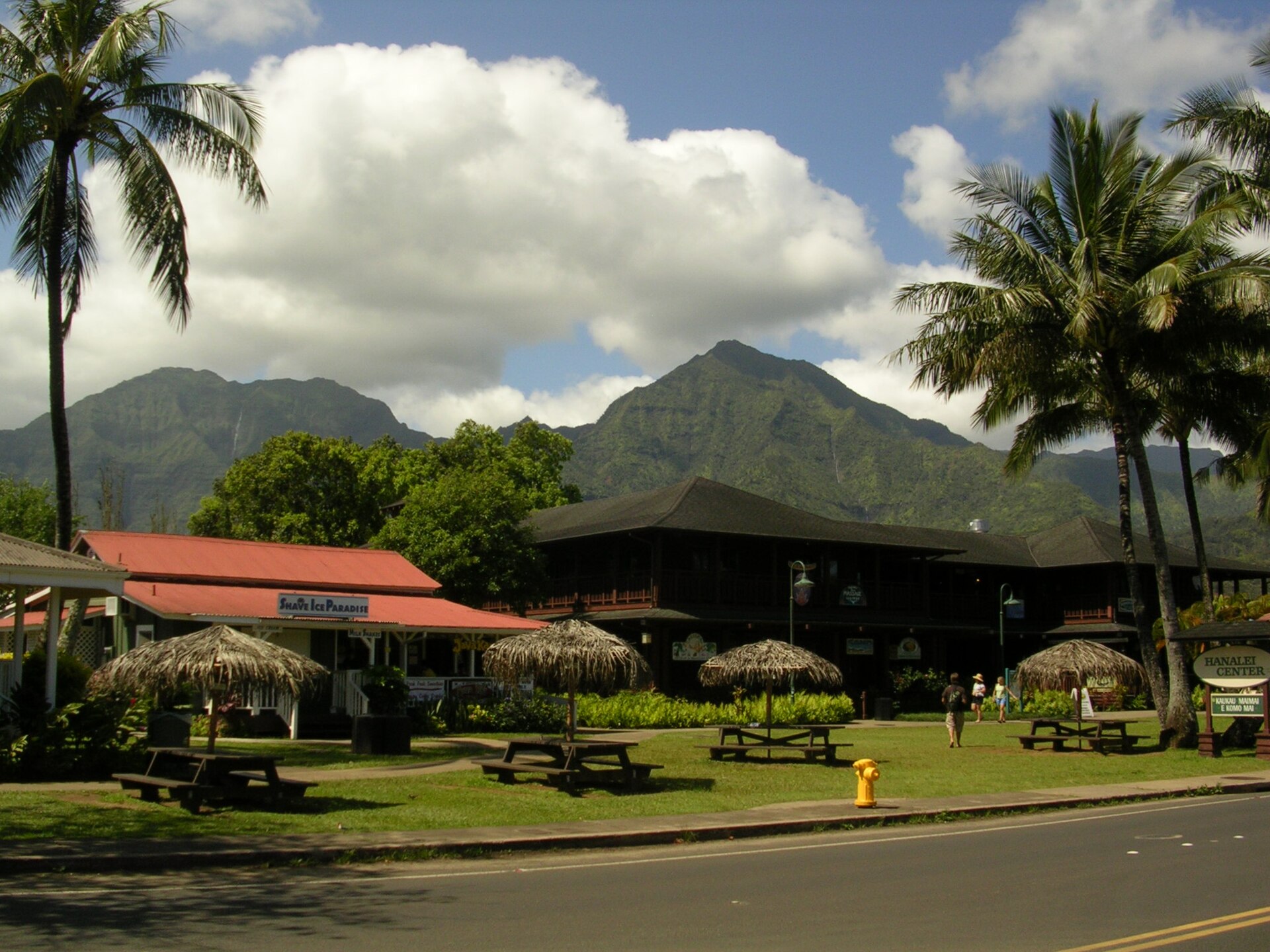
- Wailua Falls — Near Lihue, a day trip
Wailua Falls is a day trip from Hanalei, near Lihue on a dead-end road. From the viewing area it reads as a twin cascade, though the water drops in more steps than it first seems. Cliff diving once drew crowds here; today it is a photo stop. - Opaekaa Falls — Near Wailua, a day trip
Opaekaa Falls is another day-trip stop on the east side, seen from a roadside vista point with room for cars. It pairs naturally with Wailua Falls on a drive south. After rain the flow is strongest, but the viewpoint can be wet and slippery.
Culture
Hanalei sits on Hawaiian ground, and the local ethic of caring for the ʻāina, the land, shapes what residents expect from visitors. The islands carry plants and animals found almost nowhere else, and tourism puts real pressure on them. Leave No Trace is therefore treated as a basic rule and not an optional extra. Feeding or harassing wildlife is illegal, and so is taking rocks, sand or plants from the shore, however small the souvenir.
The valley's taro fields are living farmland and part of Hawaiian food heritage. They are admired from overlooks and not walked through. Hawaiian words are part of everyday speech here: aloha for greeting and farewell, mahalo for thanks, and place names such as Hanalei deserve a careful attempt at pronunciation, including the ʻokina, the short catch in the voice. Residents are generally patient with newcomers who make the effort.
Community life is small-scale. Surf breaks have regulars with their own unwritten manners, parking is limited, and the road through the village is shared with cyclists, children and dogs. Slowing down is the local norm, and rushing reads as rude. Rain is simply part of the rhythm of the north shore.
Water safety is a cultural matter too, in a place where people have read the sea for generations: lifeguard advice, warning signs and local knowledge are worth heeding every time.
Take every piece of rubbish with you, keep to marked paths and viewpoints, and leave shells, sand and stones exactly where you find them.
What to wear
Traditional Hawaiian dress around Hanalei began with kapa, bark cloth beaten from the inner bark of the wauke (paper mulberry) plant and printed with patterns. Men wore the malo, a loincloth, and women the pāʻū, a wrapped skirt, while feather cloaks and capes were reserved for chiefs. Lei, garlands of flowers, leaves or shells, were and still are worn for ceremony, welcome and celebration, and the name Hanalei is linked to lei making. Contact with missionaries in the nineteenth century led to the loose muʻumuʻu dress, and printed cotton later gave rise to the aloha shirt. Both appear today at weddings, graduations and formal occasions.
Everyday dress in Hanalei is far simpler. Residents wear board shorts, swimwear, T-shirts, sundresses and flip-flops, known locally as slippers, with rash vests for the water and a light rain jacket kept in the car. Bare feet are common on sand and around beach shops.
Visitors should pack light cotton or quick-dry clothes, a waterproof layer for sudden showers, a hat, sunglasses and mineral sunscreen. Sturdy shoes or trail sandals suit muddy paths and wet rocks, and water shoes help at river mouths. Cover swimwear with a shirt or wrap in village shops and eateries. At cultural sites or ceremonies, dress modestly and follow the lead of the hosts.
What to eat
- Saimin — Noodle stands and casual eateries across Kauaʻi
Saimin is Hawaii's own noodle soup, a light broth with wheat noodles and simple toppings. It is cheap comfort food that locals eat after the beach or on a wet day. Look for small, plain noodle stands rather than anything fancy. - Burger with local sides — Burger counters in Hanalei village
Burger counters in the village serve large portions, often eaten at outdoor tables with limited seating. The Hawaiian word ono means good, and some places borrow it for their names. Expect queues at lunchtime and a quick turnaround. - Fresh bakery pizza — Bakeries and pizza counters in nearby Kilauea
Bakeries on the north shore turn out fresh bread and pizza, usually eaten at outdoor tables. Kilauea, a short drive east of Hanalei, is the usual stop. It makes an easy lunch before or after the lighthouse and wildlife viewpoints. - Pineapple macadamia nut French toast — Breakfast cafés on the south and west of the island
Island cafés pair thick French toast with local pineapple and macadamia nuts, often with strong coffee. It is a sweet, filling breakfast that suits a long beach day. Cafés in the Kalaheo area are known for versions of it. - Fresh coconut drink — Roadside stands and beach stalls
Roadside stands sell coconuts opened on the spot, with a straw and a spoon for the soft flesh inside. It is a cooling, simple drink after a hot walk. Stalls change with season and weather, so treat it as a happy find.
Plan it
Best time. June to September, when the weather is hottest and north-shore seas are generally calmer; winter is the wettest season and brings bigger surf. Hanalei is on the windward side of Kauaʻi, so showers can arrive in any month.
How long. 2–3
Getting there. Fly into Lihue Airport on Kauaʻi, then drive north along the coast road to Hanalei; a hire car is the practical choice. Cruise ships dock at the deep-water port at Nawiliwili, from where the same road leads north. The last stretch crosses the old Hanalei Bridge, where traffic takes turns.
Budget. high
Tips
- Look at a map of the island before booking lodging, since Hanalei is far from the airport and the south coast.
- Carry a rain jacket and quick-dry clothes, because showers on the windward side come and go quickly.
- Check the surf and ask lifeguards before swimming, as currents can be strong and many beaches lack a protective reef.
- Treat any fresh water you collect on trails with a filter or tablets, as bacteria such as leptospirosis occur in streams and mud.
- Start early for the valley overlook and beach, when light is soft and the road is quieter.
Etiquette
- Take rubbish away and do not remove sand, rocks or plants.
- Admire taro fields from overlooks and do not walk into them.
- Do not feed or approach wildlife.
Nearby
Sources
- Wikidata Q2638406 (CC0)
- Wikipedia: Hanalei, Hawaii (rev 1377785744) (CC BY-SA 4.0)
- Wikivoyage: Hanalei (rev 5429385) (CC BY-SA 4.0)
- Photo 01: Hanalei Town, Kauai, by Caracas1830 (CC BY-SA 2.5)
- Photo 02: Hanalei Bridge, by Joel Bradshaw (Public domain)
- Photo 03: Hanalei Bucht im April, by Hakilon (CC BY 3.0)
- Photo 04: Hanalei Valley from the Hanalei Lookout, by Gh5046 (Public domain)
- Photo 05: A spotted dove, by Benjamin Keen (CC BY 3.0)
- Photo 06: Behold! The Coconut Drink!, by cogdogblog (CC BY 2.5)
- Photo 07: Cookies make great art, by Frank Kovalchek (CC BY 2.5)
- Photo 08: Cool warning sign, by Frank Kovalchek (CC BY 2.5)


