Guánica Dry Forest
Guánica Dry Forest, United States
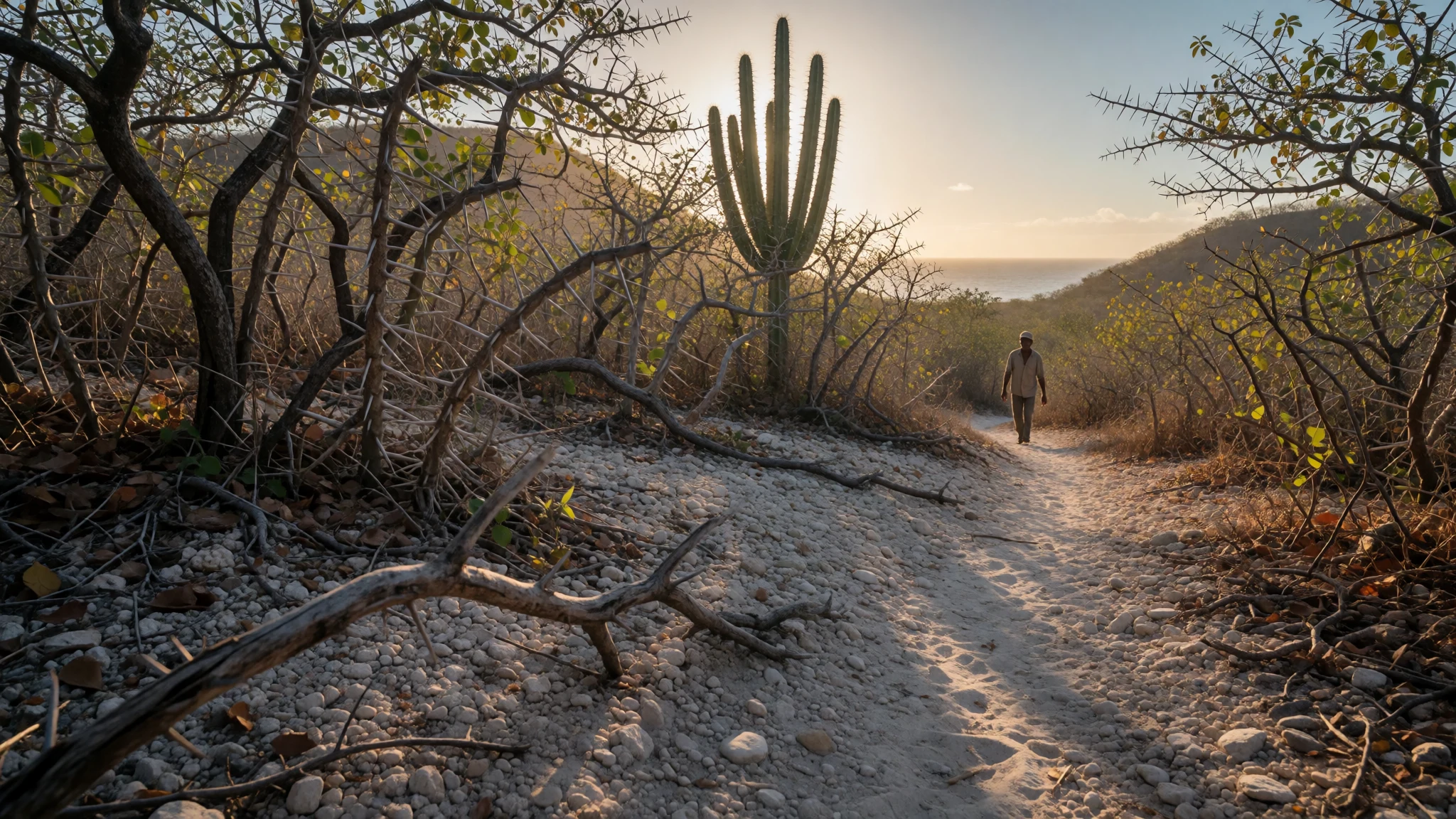
Guánica Dry Forest is a rain-shadow thicket on Puerto Rico's south-west coast, where cactus, old trees and quiet beaches replace the island's usual green.
The place
Guánica Dry Forest, officially Guánica State Forest (Bosque Estatal de Guánica), fills a dry corner of south-west Puerto Rico, at an elevation of 128 m at its marked point. Visitors who expect the whole island to be rainforest are surprised here. The Cordillera Central, the mountain spine of Puerto Rico, catches most of the moisture blowing in from the east, and the land behind it is left in a rain shadow. What grows there is a low, tangled woodland of thorny shrubs, cactus and gnarled trees, many of which shed their leaves when rain is scarce. The ground is stony and pale, and the canopy is too thin to keep out the sun.
The forest is not one solid block. It takes in land in Guánica, Guayanilla and Yauco, plus small cays and islets counted under Peñuelas and Ponce. Most walking happens around the town of Guánica, where trails leave the road and wander through scrub towards the coast, past a ruined stone lookout and a few quiet beaches with little shade.
Heat is the thing to plan around. It is noticeably hotter in the open than under the trees, and shaded stretches are rarer than they look. Birdsong is best in the early morning; by midday the woods go still. The place rewards slow, observant walking more than quick viewpoints: a lizard on a trunk, a cactus bristling with spines, the smell of dry leaf litter after a shower. Puerto Rico is a self-governing commonwealth of the United States, so travellers from India or the UK need to meet US entry rules.
Its story
Guánica Dry Forest has been protected for more than a century, and its history is mostly a story of officials slowly realising what they had. It was first set aside as a forest reserve in 1919, at a time when dry scrubland was easy to dismiss as poor country. The change in how it was valued came in 1981, when the United Nations recognised its ecological importance and named it a Biosphere Reserve. Puerto Rico already had one, El Yunque, then known as the Caribbean National Forest, so Guánica became the island's second. Setting a wet rainforest beside a dry forest says something about how much variety a small island can hold.
Protection tightened again on 16 October 1985, when the Puerto Rico Planning Board (Junta de Planificación) classed the forest as a nature reserve. That brought it under the provisions of a 1975 law covering such areas, which put firmer limits on what could be built or altered inside it. In 2007 BirdLife International listed the forest as an Important Bird Area, a label given to places that matter for bird populations. For anyone with binoculars, that listing is a practical pointer to why the thorn scrub is worth the early start.
The sequence of dates is the useful part of the story. Nothing here was protected in one grand gesture. First came a reserve, then international recognition, then a legal nature-reserve status, then a bird designation, each layer added as people learned more about a landscape that looks plain at first glance and rewards a closer look.
What to see
- Guayacán Centenario — Central forest trails, near Guánica
Guayacán Centenario is a veteran guayacán, a slow-growing hardwood tree of the dry forest, and a handy first stop on a walk. Old trees like this show how plants cope with thin soil and long dry spells. Stand beside it to judge the scale, then notice how little shade even a tree of this age casts.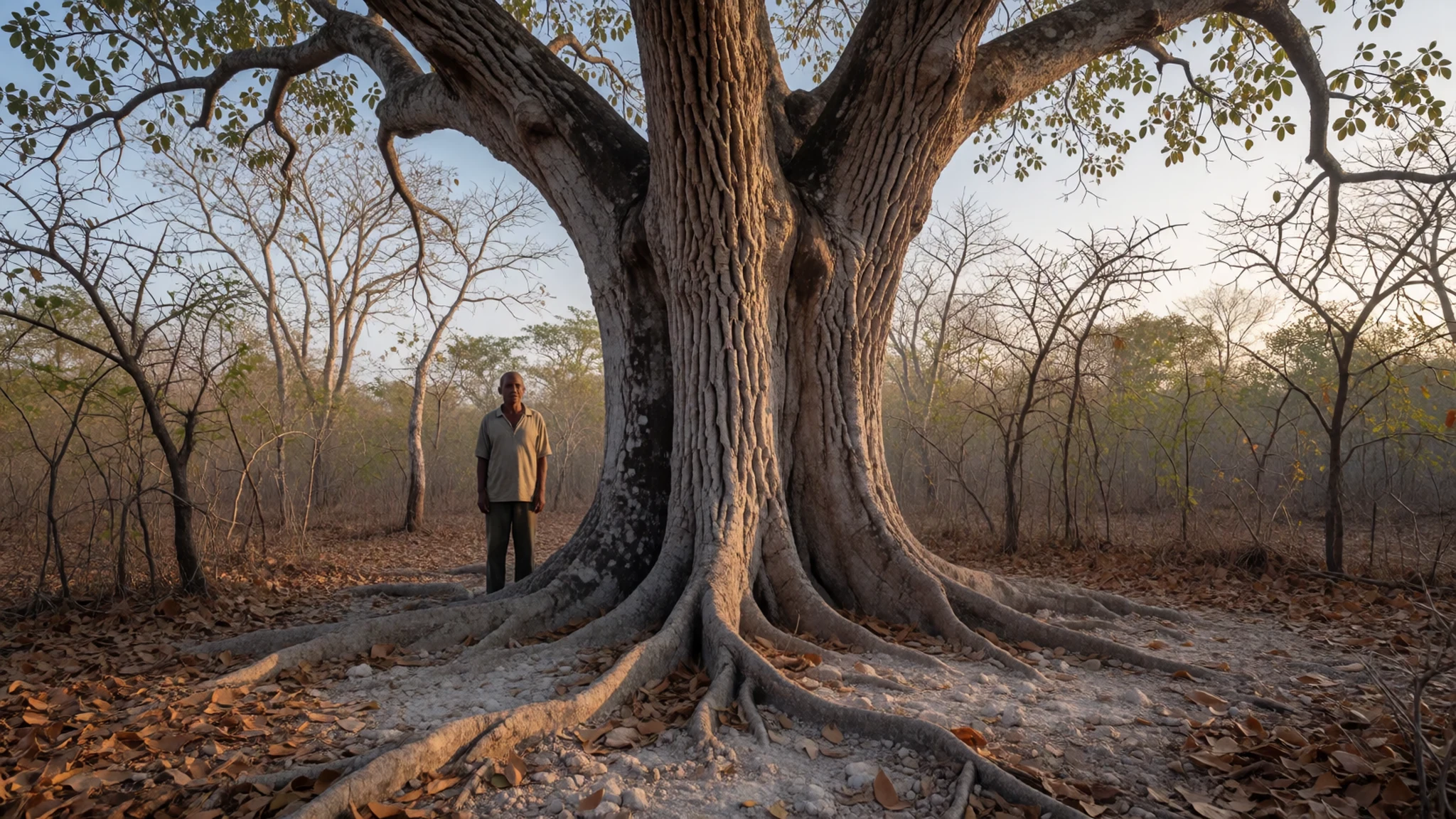
- Fuerte Caprón — Western part of the forest, near Guánica
Fuerte Caprón is a weathered stone ruin standing among the thorny scrub, reached on foot from the forest tracks. It is worth the walk for the contrast between old masonry and wild vegetation, and for a sense of how open the surrounding land is. Bring water, because the approach has little shade and the stones hold the afternoon heat.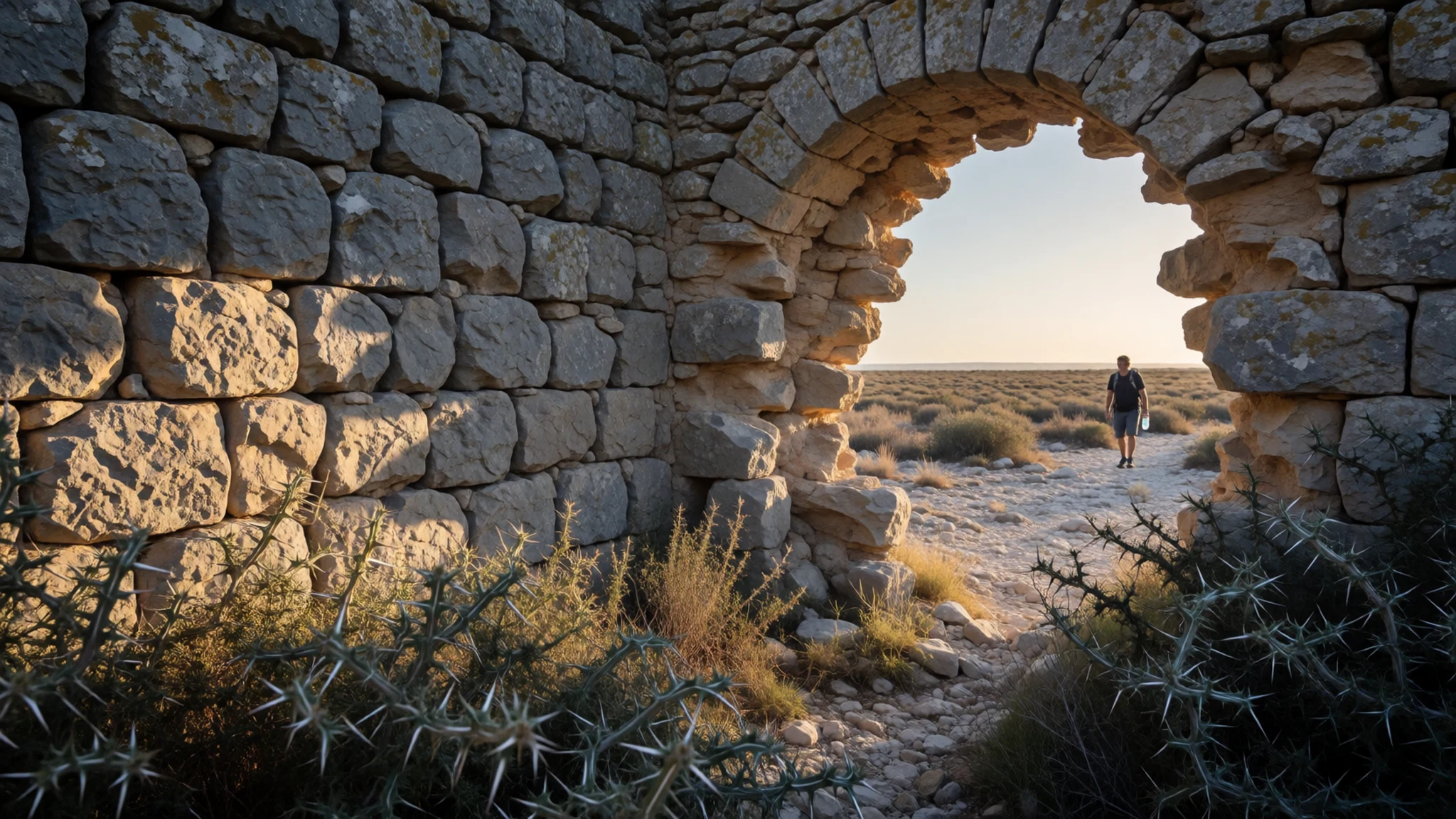
- Playa Jaboncillo — South coast, Guánica
Playa Jaboncillo is where the dry forest runs almost to the sea, so scrubby trees stand directly behind the sand. It suits a short swim after a hot morning walk, though shade is limited and facilities should not be assumed. Check the official forest pages for access and conditions before setting out, and carry out your rubbish.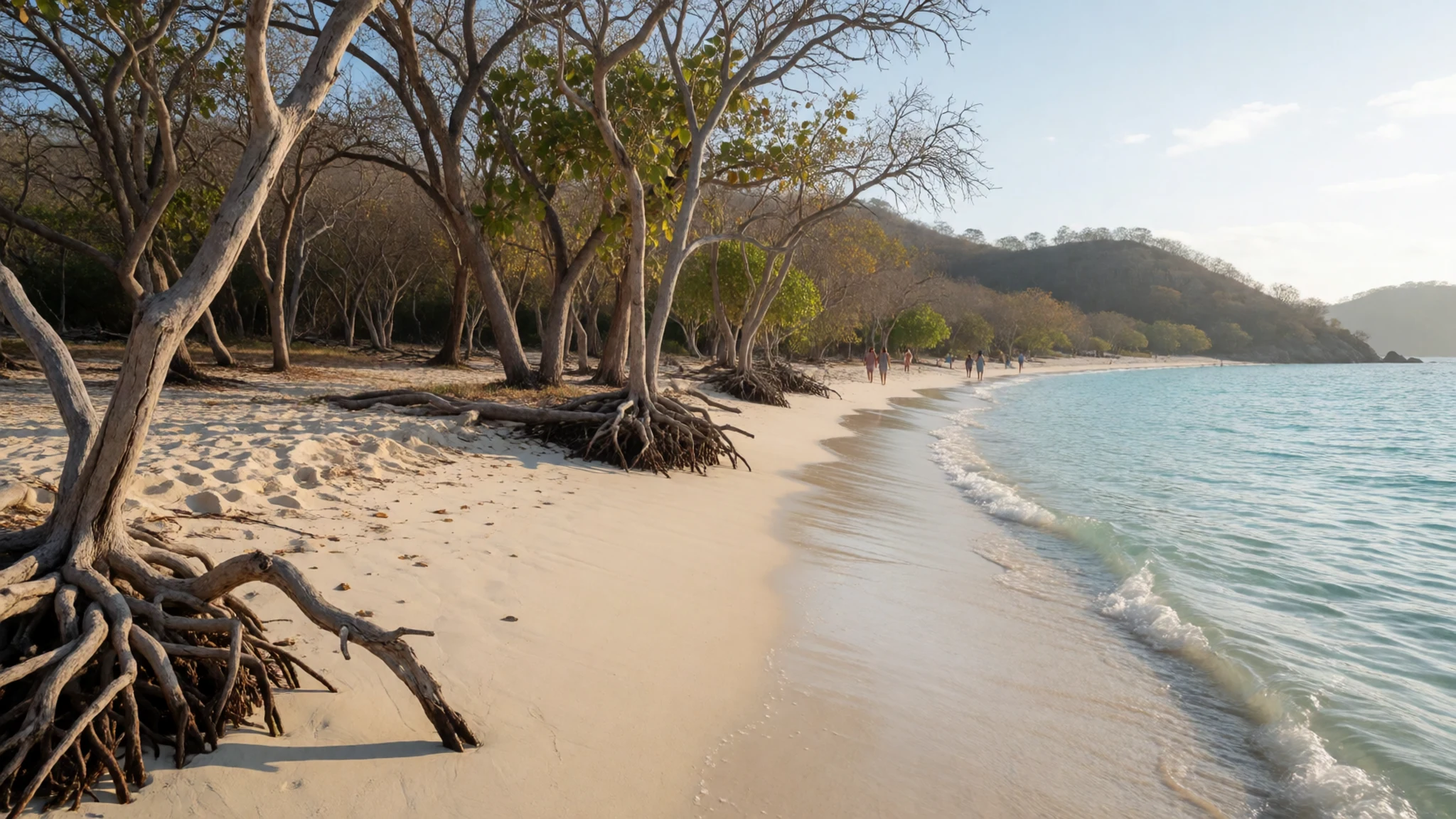
- The Puerto Rican crested toad — Dry forest habitat around Guánica
The Puerto Rican crested toad, Peltophryne lemur, is an amphibian linked with the island's dry southern limestone country, and a reminder that this forest matters for wildlife as well as scenery. Sightings are not something to count on, since amphibians are secretive and most active after rain. Treat any encounter quietly, and never handle or move one.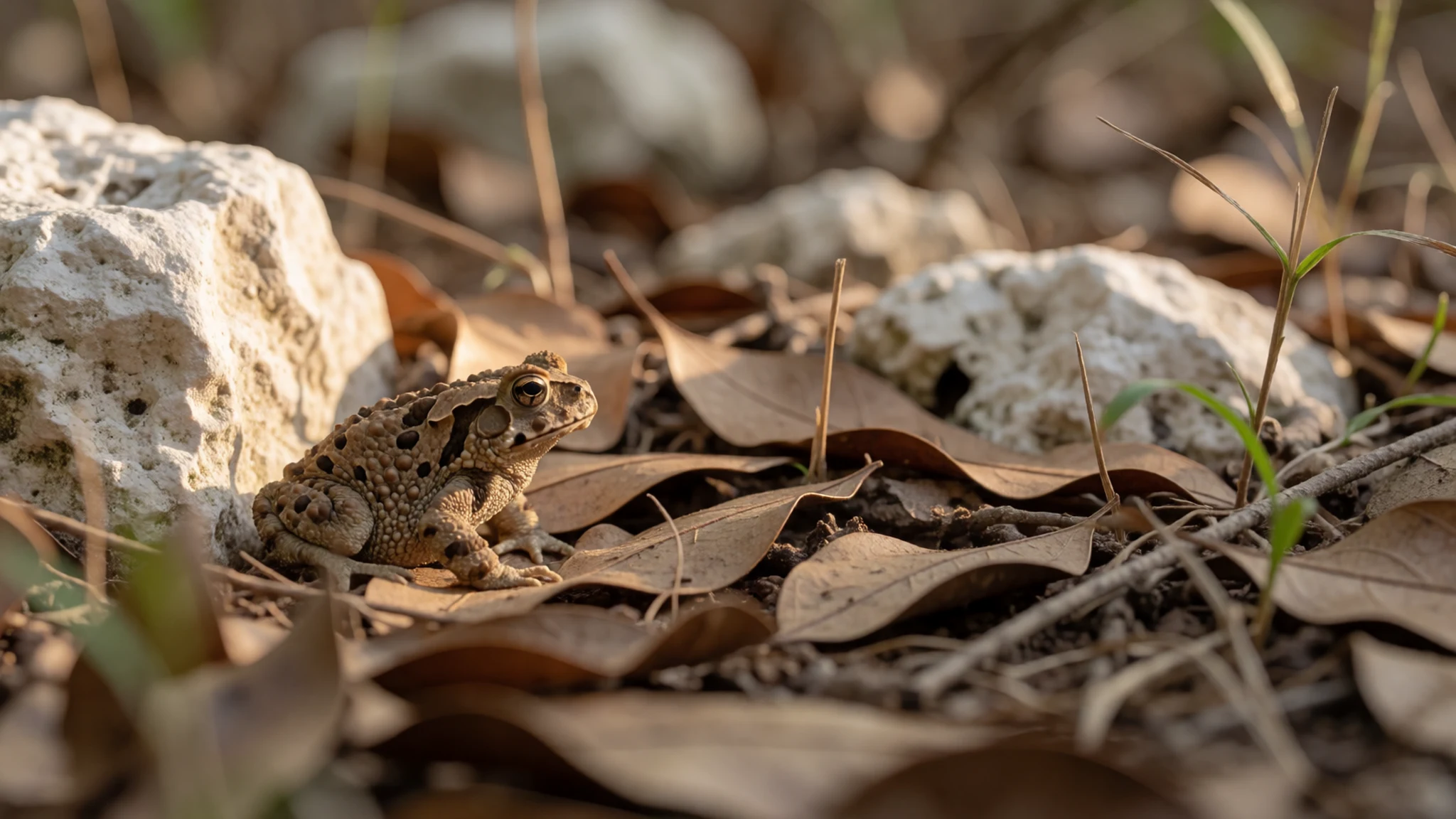
- Birdwatching on the forest roads — Forest roads and trailheads, Guánica
Birdwatching along the forest roads and trailheads is the quietest reason to come, helped by the forest's Important Bird Area listing from BirdLife International. Early morning gives the best chance of seeing and hearing birds before the heat builds. Binoculars, a hat and patience matter more than a guidebook, and slow walking beats covering distance.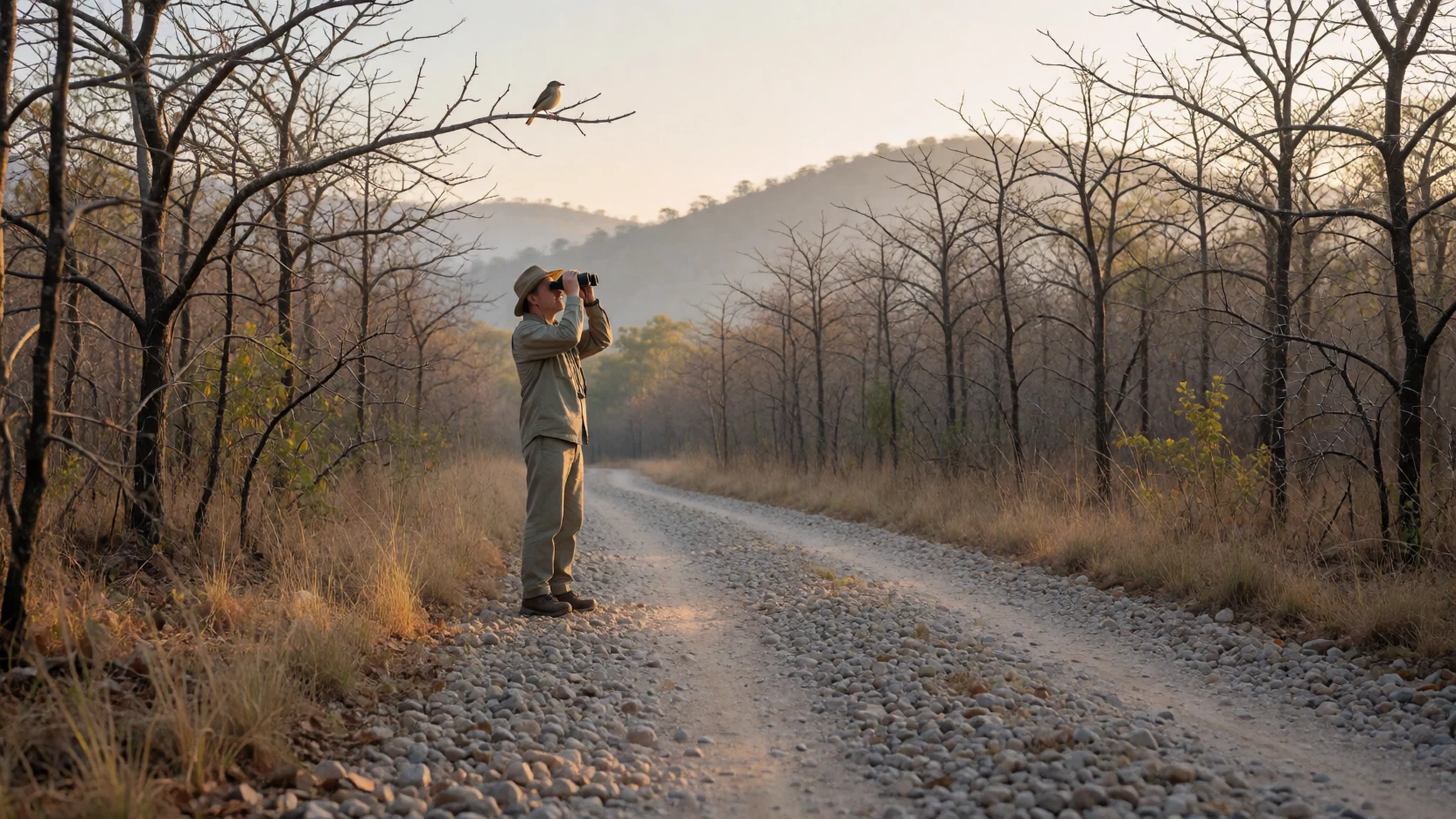
Culture
Guánica Dry Forest lies in a part of Puerto Rico where daily life is sociable, warm and a little closer than many visitors expect. Politeness and an easy smile count for a lot, whether in a village shop or at a trailhead. People tend to stand nearer to each other in conversation than is usual in the UK or much of India, and a greeting that involves a woman often includes a light kiss on one cheek; men do not greet other men this way unless they are relatives. Evenings are social: neighbours sit outside and talk late, and town squares fill once the heat eases.
Conversation flows easily on food, family, music and baseball. Politics is another matter. The island's relationship with the United States, and loyalties to its political parties, can stir strong feelings, so it is wiser to listen than to offer opinions. Service in restaurants can be unhurried, and that is part of the local pace rather than a slight.
The forest itself is protected land with a long conservation record, and local pride in it is real. Rangers, guides and neighbours tend to appreciate visitors who walk quietly, ask before photographing people, and treat the plants and animals as the attraction. Stay on the marked trails, take all your rubbish out with you, and leave plants, shells and stones exactly where you found them.
What to wear
Guánica Dry Forest and the towns around it are casual places, and the traditional dress of Puerto Rico now appears mostly at festivals and in folk performance. The best-known garment is the guayabera, a loose shirt in light cotton or linen with pockets and rows of fine pleats, worn for celebrations as well as hot days. The rural jíbaro tradition is linked with the pava, a wide-brimmed straw hat. Dancers of bomba and plena, the island's Afro-Puerto Rican music traditions, wear long, full skirts that swing with the rhythm.
Day to day, people dress for heat: shorts, T-shirts, sundresses, sandals or trainers, sunglasses and caps. Beachwear is normal on the coast, while people dress a little more neatly for church or an evening in town.
Visitors should dress for sun and stony ground. Light, long-sleeved cotton or quick-dry layers, a wide-brimmed hat and sunscreen all help, because shade is thin. Closed shoes with good grip suit the rocky, uneven trails; sandals belong on the beach. Insect repellent is wise. Pack a swimsuit, but cover shoulders and knees when stepping into a church or a shop in town. No special modesty rules apply inside the forest itself.
What to eat
- Mofongo — Town-square and coastal eateries around Guánica
Mofongo is fried green plantain pounded with garlic and oil into a dense ball, often stuffed or topped with pork crackling or seafood. It is salty, filling and best eaten after a hot morning on the trails, ideally with something cold to drink.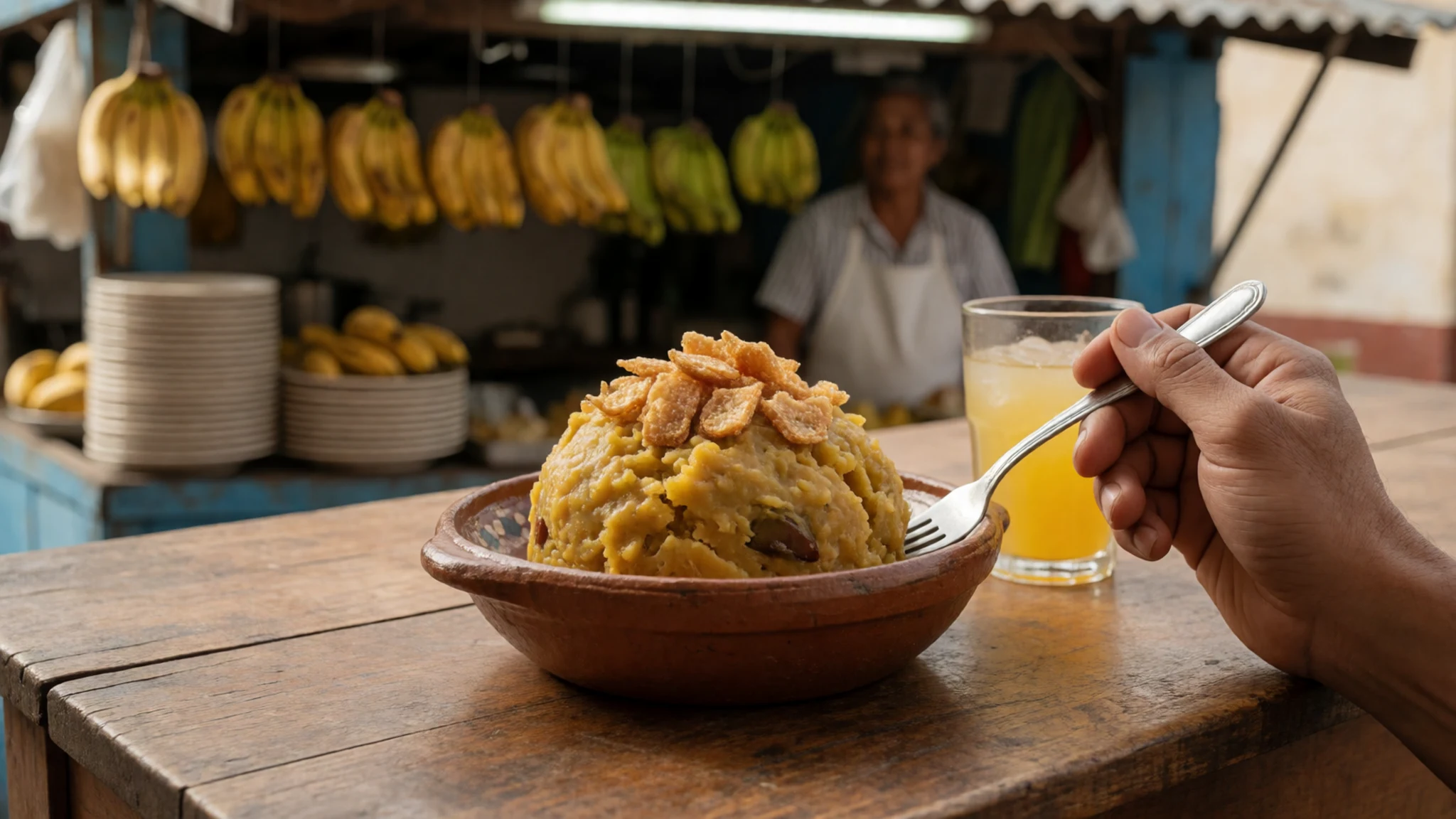
- Arroz con habichuelas — Family eateries in town squares and along the coast road
Rice served with stewed beans is the everyday base of comida criolla, the island's home cooking. It arrives beside almost every main dish, and it is a reliable, comforting plate in any small eatery when the menu is long and the kitchen is slow.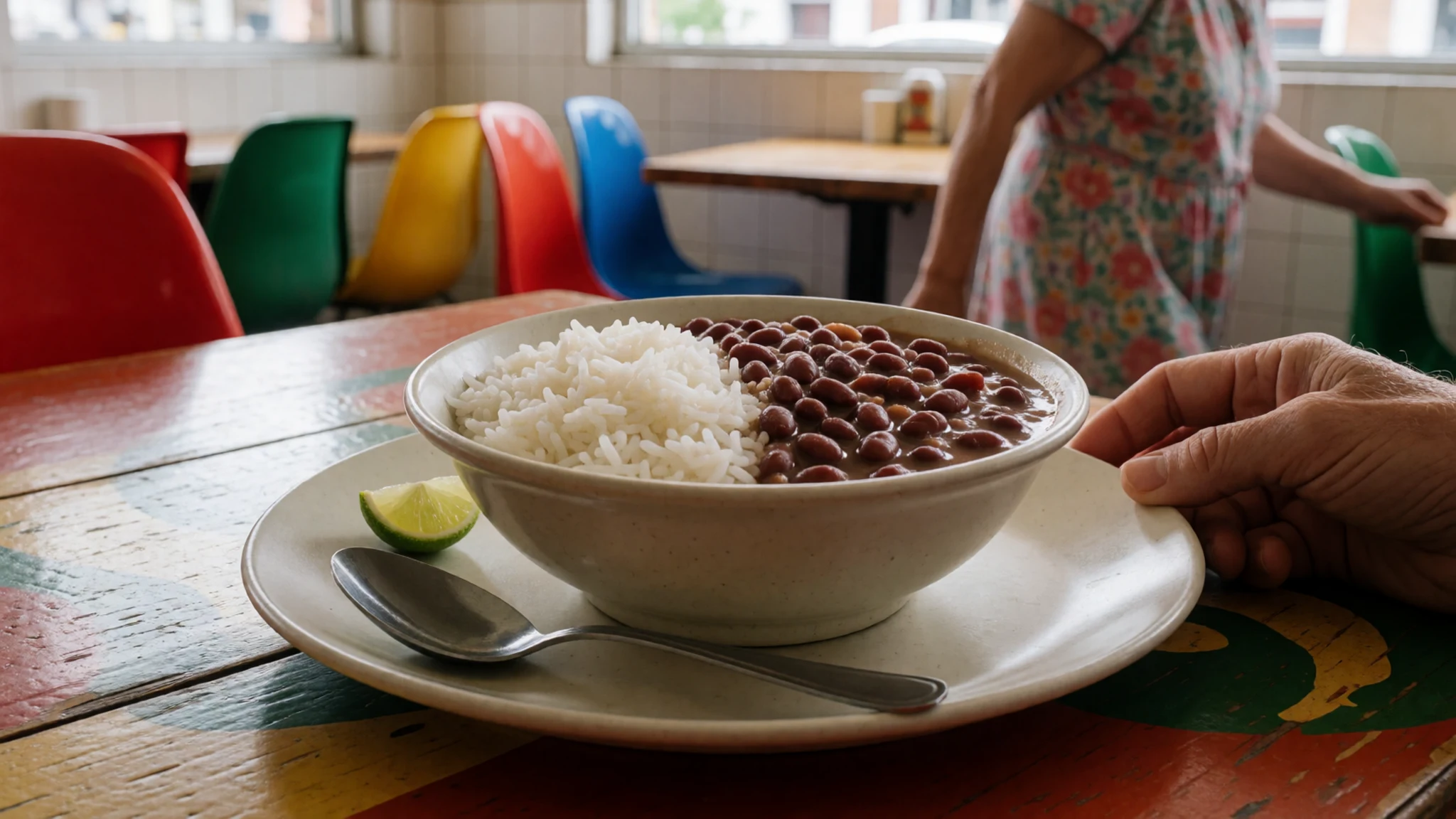
- Lechón asado — Roadside kiosks and weekend food stalls in the south-west
Roast pork, slow-cooked until the meat is tender and the skin crackles, is a centrepiece of Puerto Rican eating. Plantains and pork run through the island's cooking, and this is the dish that shows the pairing at its simplest. - Pescado frito con tostones — Seafood eateries near the Guánica waterfront
Whole fried fish comes with tostones, plantain slices fried twice and salted until crisp. Near the coast it is a natural lunch after a morning's walk, with lime squeezed over the fish and the plantains used to scoop up the garlic sauce. - Alcapurrias — Roadside kiosks (kioskos) and festival stalls
Alcapurrias are fritters made from grated green banana and starchy root vegetables, wrapped around a spiced meat filling and deep-fried. They are eaten hot and by hand, usually as a snack between sights rather than a sit-down meal. - Tembleque — Bakeries and family restaurants around town squares
Tembleque is a soft coconut pudding set with cornstarch until it wobbles, then dusted with cinnamon. It is cool, lightly sweet and a good ending after salty fried food, and it travels well if bought from a bakery.
Plan it
Best time. December to April, when the heat is gentler and walking is more comfortable. The forest is dry compared with the rest of the island, so heat rather than rain is the problem; start early in any month. Atlantic hurricane season runs roughly June to November, so check forecasts if travelling then.
How long. 1–2
Getting there. Fly into Luis Muñoz Marín International Airport in San Juan, or check airline options for Ponce, then hire a car for the last leg to the town of Guánica on the south-west coast; public transport is thin. From the US mainland there is no passport control; travellers from India or the UK must meet US entry requirements.
Budget. mid
Tips
- Walk early in the morning, before the heat and the midday stillness set in
- Carry more water than seems sensible, as shade and shops are scarce on the trails
- Hire a car and fuel up before the coast roads; carry some cash for kiosks and small stalls
- Check the official forest pages for access, trail conditions and any closures before setting out
- Wear closed shoes, a hat, sunscreen and insect repellent
Etiquette
- Stay on marked trails and leave plants, shells and stones where they are
- Take all rubbish out with you
- Ask before photographing people, and avoid debating the island's political status
Nearby
Sources
- Wikidata Q3728709 (CC0)
- Wikipedia: Guánica State Forest (rev 1362684379) (CC BY-SA 4.0)
- Wikivoyage: Puerto Rico (rev 5415166) (CC BY-SA 4.0)
- Photo: Guánica State Forest, Oquendo (CC BY 2.5)
- Photo: Guayacán Centenario, Steven Isaacson (CC BY-SA 2.0)
- Photo: Puerto Rican crested toad, Jan P. Zegarra, U.S. Fish and Wildlife Service (Public domain)
- Photo: Playa Jaboncillo y Bosque Seco, Caballero1967 (CC BY-SA 4.0)
- Photo: Critical electrical grid infrastructure in Guánica, USACE South Atlantic Division (Public domain)
- Photo: Fuerte Caprón, Caballero1967 (CC BY-SA 4.0)
- Photo: View from Guánica State Forest, Steven Isaacson (CC BY-SA 2.0)
- Photo: Bosque Estatal de Guánica en Boca, Jesse Avilés (CC BY 3.0)


Wildlife
- Puerto rican crested toad (animal)
The Puerto Rican crested toad is the island's very own toad, the only kind truly native here, and locals call it sapo concho. It belongs to the dry limestone country of the south, which is one reason this forest matters for wildlife as well as views. It is threatened, and was once feared lost, so give it room. Keep quiet, stay well back, go with a guide, and never feed or handle it.