Grandfather Mountain
Grandfather Mountain, United States
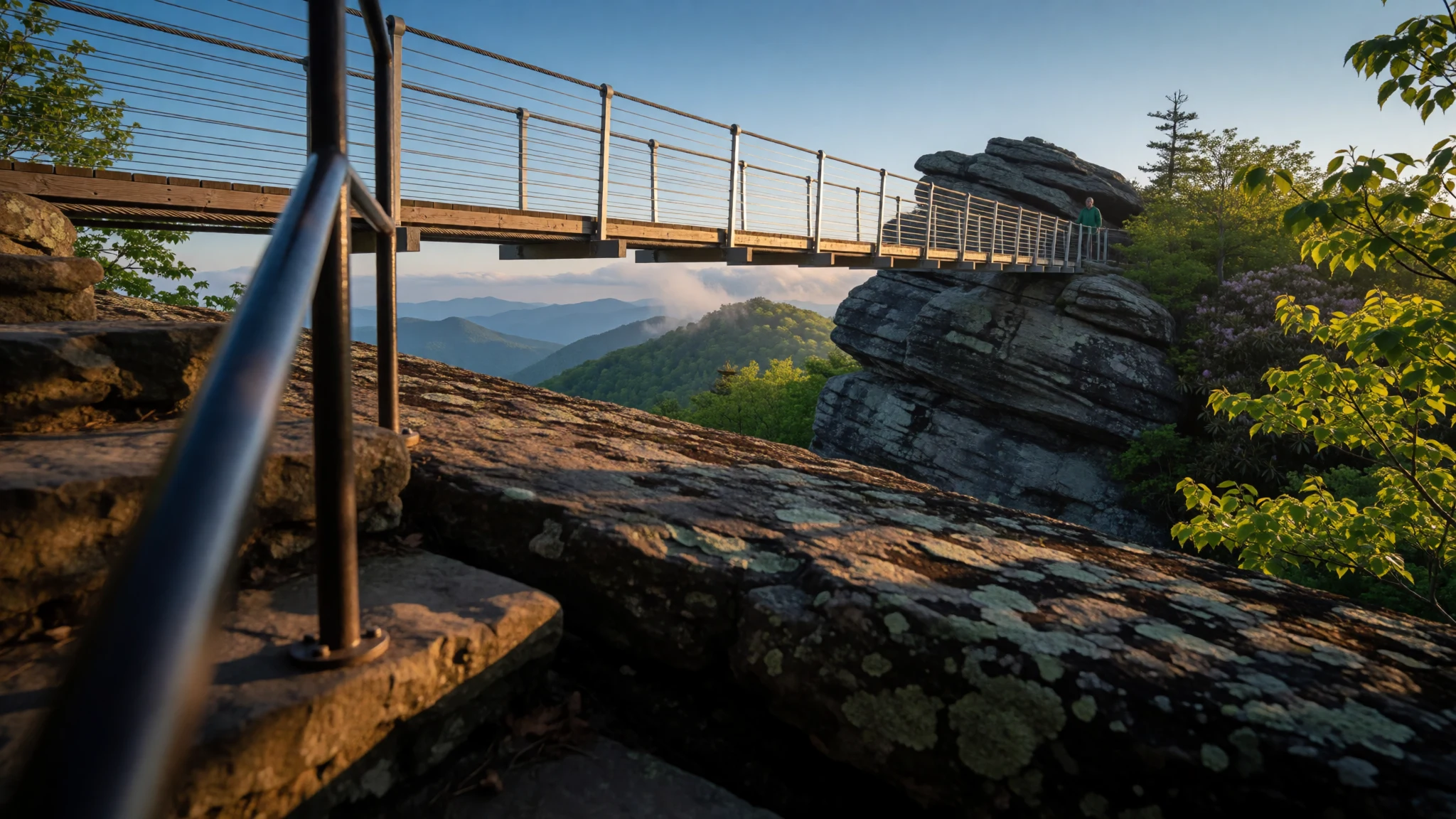
Grandfather Mountain gives a cool, cloud-wrapped Appalachian summit, a swaying footbridge and a scenic parkway, all within an easy drive of Carolina towns.
The place
Grandfather Mountain rises to 1,818 m on the steep eastern edge of the Blue Ridge, part of the wider Appalachian chain in North Carolina. It sits where three counties meet, Avery, Caldwell and Watauga, and the small town of Linville lies close by. The ground here is two things at once. Most of the mountain is a state park, with long trails and quiet backcountry. A smaller privately held parcel on the south-east side runs as a ticketed attraction, and that is where the swinging bridge, the wildlife habitats and the visitor buildings stand. The mountain also sits on the Eastern Continental Divide, so rain falling on opposite sides eventually drains towards different seas. Taller summits stand in the ranges just to the west, but they lie beyond that line. The Blue Ridge Parkway, the scenic road that follows the crest of the range, curls around the southern flank and crosses a nearby gap named Grandmother, a neat partner for the mountain's name. Weather decides almost everything. The summit is cooler than most of the state, winters are cold and snowy, summers are mild, and rain falls year-round with small peaks in June and September. Cloud can swallow a view within minutes, so a clear morning and a grey afternoon at the same viewpoint feel like two different mountains. Visitors from the lowland Carolinas often find the cool air the first pleasant surprise, especially in high summer.
Its story
Grandfather Mountain stayed in private hands for most of its recent history. It came to Hugh Morton through his family, passing down from his grandfather, and Morton turned it into a nature preserve and visitor attraction. In 1952 he opened the Mile-High Swinging Bridge, a footbridge joining two rocky peaks that earns its name from the way it sways in strong wind. Morton was also a photographer, and his pictures of the mountain, its animals and the people around it, including a bear called Mildred who became a local favourite, were left to the University of North Carolina at Chapel Hill after his death in 2006. The next chapter came in 2008, when the state of North Carolina agreed to buy the undeveloped parts of the mountain from the Morton family. Those lands became a state park, officially established in 2009, so the wild slopes and ridges passed into public ownership. The family did not step away entirely. They created a stewardship foundation to keep running the visitor side as an educational nature park, which is why the mountain today has this split character: a public park for walkers and a separate, ticketed attraction for those who want the bridge and the habitats. It is an unusual arrangement, and it explains why the practical details differ depending on which part of the mountain a visitor is aiming for.
What to see
- Mile-High Swinging Bridge — Attraction area, south-east side
The footbridge between two rocky peaks is the mountain's best-known feature, and it does move in wind. Most people cross for the open view over ridges and forest. On gusty or cloudy days it can feel exposed and chilly, so check conditions first and bring a layer.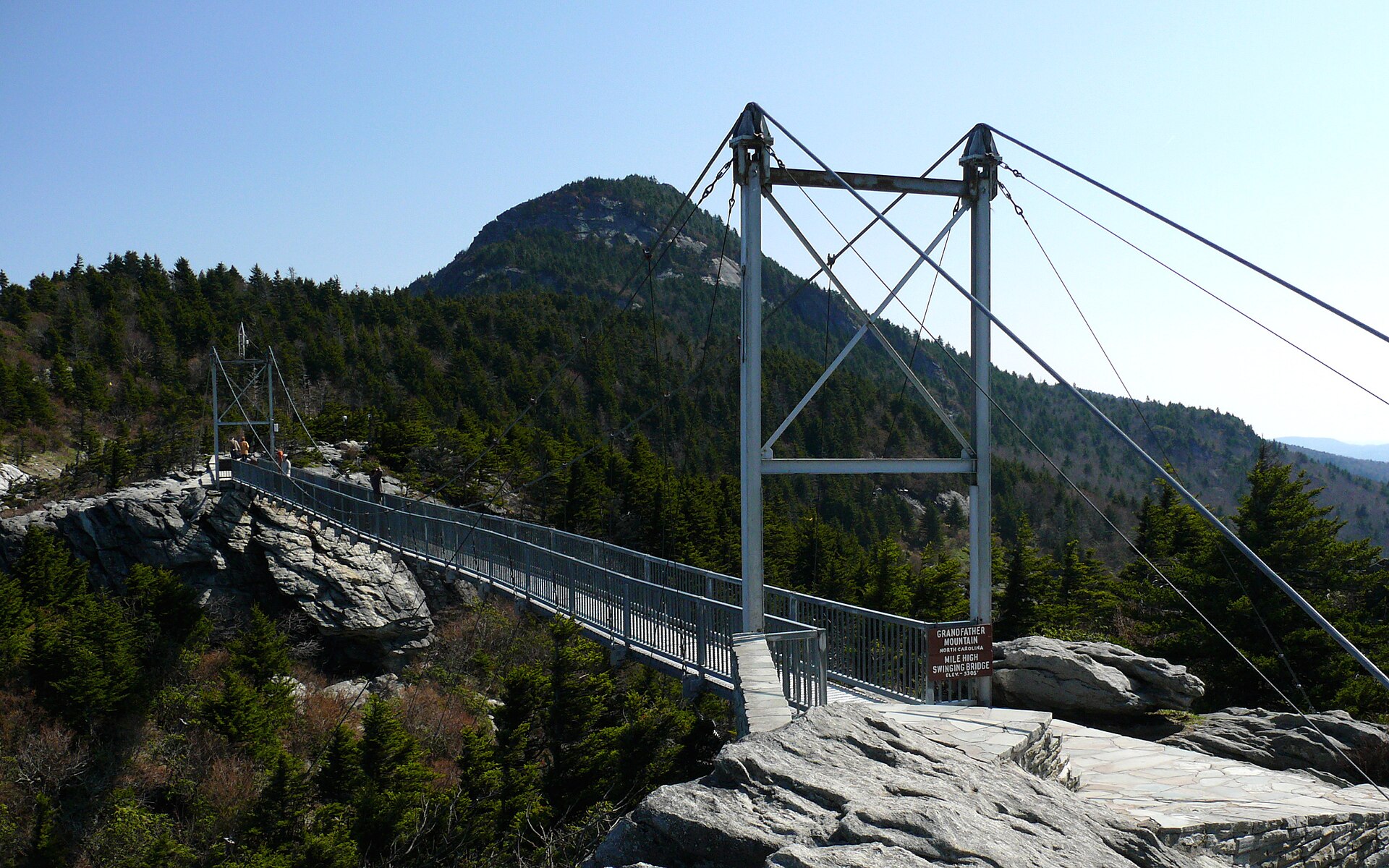
- Calloway Peak and the Raven Rocks — Summit ridge, state park
The summit ridge is a proper walk rather than a stroll, with rock steps, exposed sections and fast-changing weather. At sunrise in autumn, cloud can spill over the Raven Rocks while the forest below turns copper and red. Allow a full, unhurried day and tell someone your route.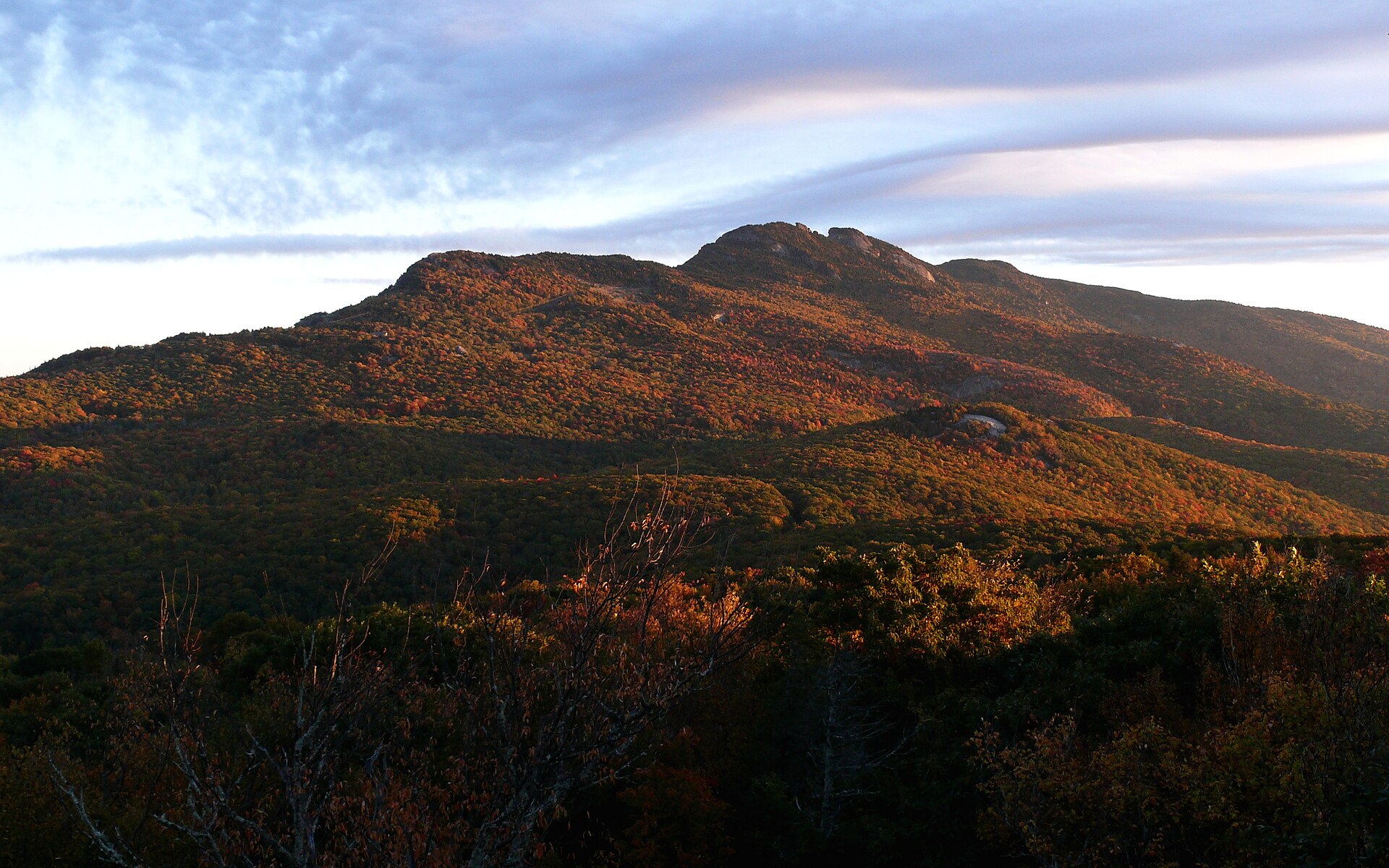
- Linville Peak panorama — Linville Peak, eastern side
From Linville Peak the view sweeps wide to the south, taking in ridge after ridge of the Blue Ridge and the lower country beyond. It is a good place to understand how steeply the mountain drops on its eastern face, and it works well on a clear, still morning.
- Linn Cove Viaduct and the Blue Ridge Parkway — Blue Ridge Parkway, near Mile Marker 304
The Parkway swings around the southern flank of the mountain, and the Linn Cove Viaduct carries it along the rocky slope in a curved concrete line. Pull-offs make short stops easy. It is a gentle way to see the mountain without a hike, though fog can close the views.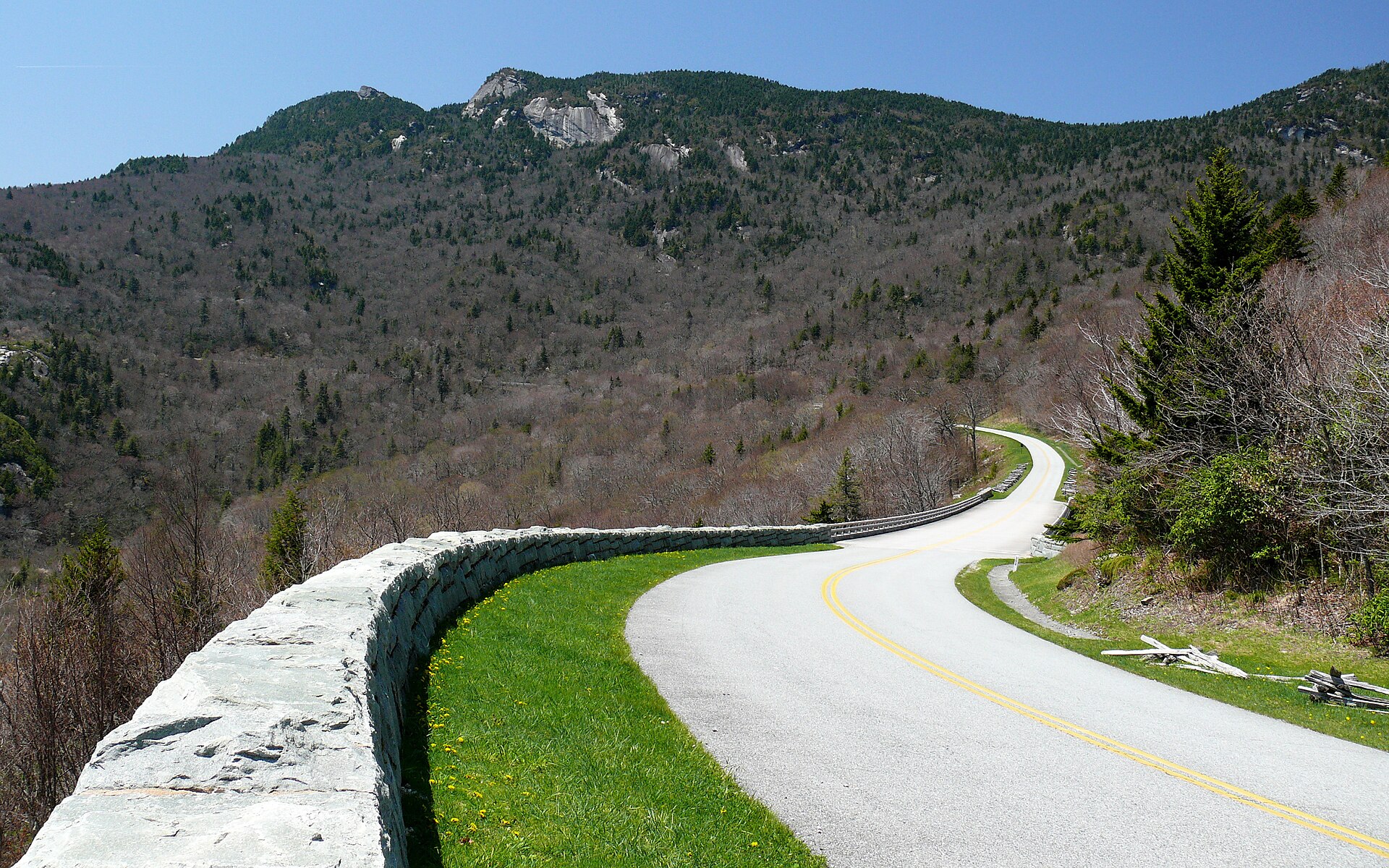
- Wildlife habitats — Attraction area, south-east side
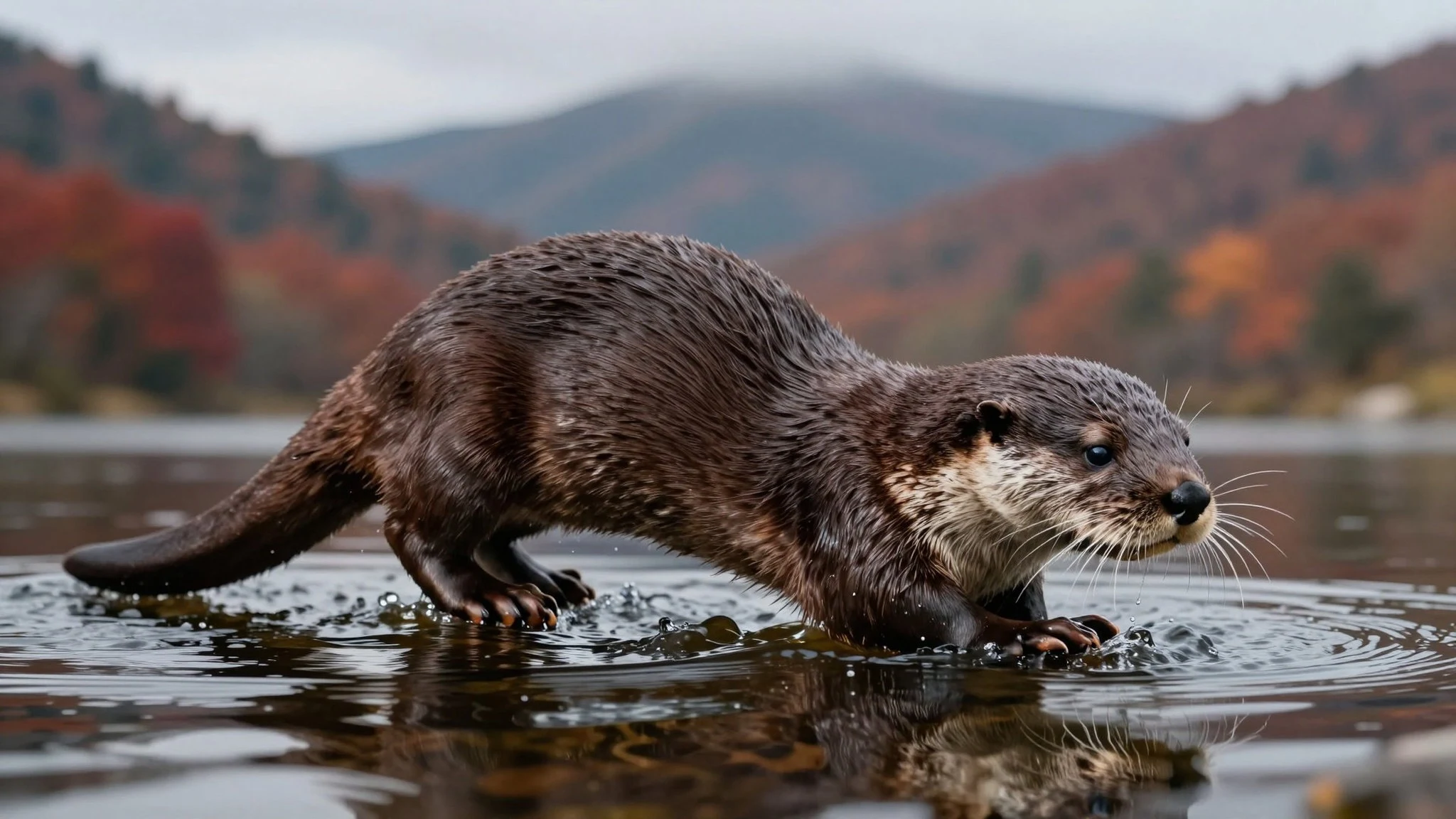
Within the attraction area, enclosures hold native animals, including river otters that can be watched swimming underwater through glass. It suits families and anyone wanting a slower stop after the bridge. The animals are kept for education, so check the official site for what is currently on show.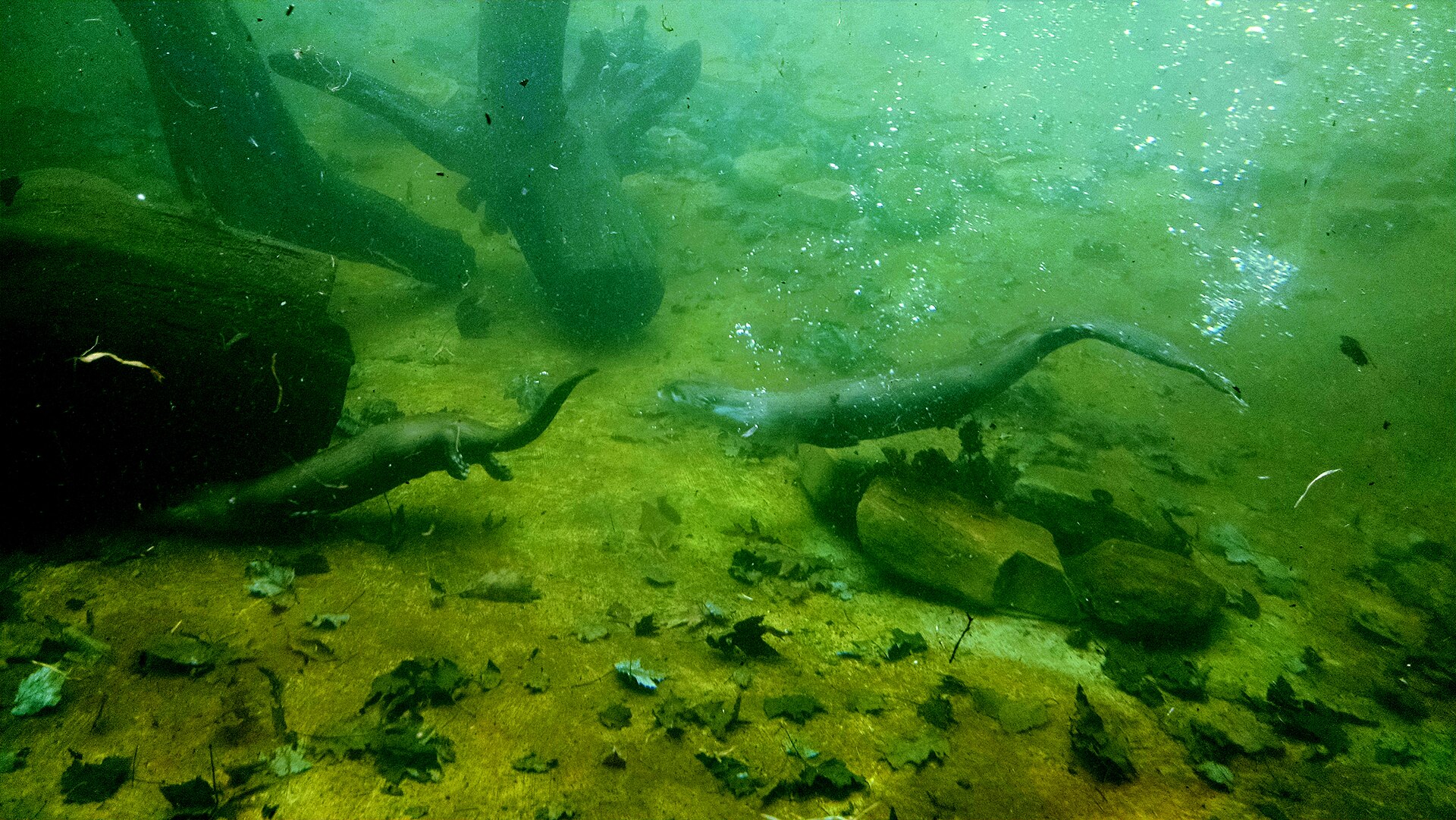
Culture
Grandfather Mountain belongs to the Appalachian highlands of western North Carolina, a region with its own pace, speech and manners. The soft Southern drawl is part of everyday talk, and courtesy matters more than polish. Holding a door for a stranger, going easy on the car horn and keeping voices low in a busy room are all small signs of the hospitality people here take pride in. Polite forms of address are common, and visitors who answer in the same spirit are warmly received. Mocking local people with stereotypes about country folk is considered rude, and it is a quick way to cool a friendly conversation. North Carolina also carries a long and painful history of slavery and institutional racism. Nearly a quarter of the state's population is African American, and visitors are wise to approach local history with care and curiosity rather than casual jokes. On the mountain itself, the culture is largely one of conservation: the park and the foundation both frame the place as somewhere to learn about nature, and rangers and staff are happy to answer questions. Many people come for the weekend from the lowland cities and the atmosphere is relaxed, with hikers, families and Parkway drivers sharing the same car parks. Stay on the marked trails, keep well back from cliff edges and rock faces, and never feed or approach the wildlife.
What to wear
Grandfather Mountain has no single costume, but the wider Appalachian region has a long practical tradition of homespun wool and linen, sturdy cotton and calico, and hand-sewn quilts, many of them still made by craft guilds and sold at local fairs. Plain work shirts, overalls and wool coats are the older working dress of the hills, and some of these styles appear at heritage festivals and craft demonstrations rather than in daily life. Today, people on the mountain dress for weather and walking: fleece or flannel, waterproof jackets, jeans or hiking trousers, caps and sturdy boots. Around Linville and the nearby towns the look is casual and outdoorsy, with smarter clothes saved for restaurants and weddings. Visitors should dress in layers whatever the season. The summit is cooler than the lowlands, wind can make the bridge feel cold even on a mild day, and rain or cloud can arrive without warning. Good walking shoes or boots with a firm grip matter more than anything else, since trails include rock steps and damp, rooty ground. Pack a light waterproof, a warm top and a hat, and add gloves outside summer. There are no strict modesty rules here, as no religious sites need covering up for, so comfort and safety set the dress code. In winter, snow and ice may call for proper boots and warm socks.
What to eat
- Pork barbecue — Roadside barbecue restaurants in the foothill towns
Slow-cooked pork, chopped or pulled and dressed with a tangy sauce, is the centrepiece of North Carolina cooking. It is usually served on a bun or a plate with sides such as slaw. Look for it at roadside barbecue places and community fundraising cookouts. - Livermush — Breakfast diners and small-town cafés
A local favourite that blends pig liver, parts of the head and cornmeal into a firm loaf, which is sliced and fried. It tastes rich and savoury, usually served at breakfast with eggs. Cooks in the region treat it as an old-fashioned comfort food. - Country ham biscuit — Bakeries, diners and gas-station counters along the Parkway approaches
Salty, cured ham tucked into a warm, flaky biscuit is a staple morning bite across the South. Pork in many forms flavours Southern cooking, and this is the simplest example. It travels well, so it makes a good trail breakfast. - Chitlins — Traditional Southern restaurants and church suppers
Cleaned, boiled and then fried pig intestines are a traditional dish that many people do not try unless they grew up eating them. Visitors who are curious can ask staff about it, though it is not found everywhere. Expect a strong smell and a polarising taste. - Southern sides: greens, beans and cornbread — Home-style 'meat-and-three' eateries in the mountain towns
Slow-cooked greens, beans seasoned with pork and a wedge of cornbread make a filling plate. Many Southern kitchens use pork fat for flavour, so vegetarians should ask before ordering. These plates suit a hearty meal after a day of hiking.
Plan it
Best time. October for autumn colour and clear air, and May for mild days with fresh greenery. September and June are usually wetter, summers are mild and busy, and winters are cold and snowy, so check conditions before driving up.
How long. 1–2
Getting there. Most visitors drive. Charlotte, the main hub of the Carolinas, is the usual gateway city, followed by roads towards Linville and the Blue Ridge Parkway, which passes the south side of the mountain. Check the Parkway's current status before setting out.
Budget. mid
Tips
- Check the official site (http://www.grandfather.com/) for tickets, opening hours and any weather closures before you travel
- Go early on a weekend or in October, when car parks and the bridge fill up
- Carry a warm layer and a waterproof, as wind and cloud can change the summit in minutes
- Bring water and snacks for longer hikes; services on the trails are limited
- Download a map before you go, as phone signal on the mountain can be patchy
Etiquette
- Stay on marked trails and keep clear of cliff edges and rock faces
- Do not feed or approach wildlife
- Keep voices low and give other walkers space on narrow sections
Nearby
Sources
- Wikidata Q833467 (CC0)
- Wikipedia: Grandfather Mountain (rev 1380167953) (CC BY-SA 4.0)
- Wikivoyage: North Carolina (rev 5331965) (CC BY-SA 4.0)
- Photo 01: Grandfather Mountain (Public domain)
- Photo 02: Clouds over the Raven Rocks and Calloway Peak (Ken Thomas) (Public domain)
- Photo 03: View south from Linville Peak (Ken Thomas) (Public domain)
- Photo 04: Facing North from Grandfather Mountain (Marshallhash89) (CC BY-SA 4.0)
- Photo 05: Mile-High Swinging Bridge (Ken Thomas) (Public domain)
- Photo 06: Swimming river otters (Killerlimpet) (CC BY-SA 4.0)
- Photo 07: Blue Ridge Parkway near Linn Cove Viaduct (Ken Thomas) (Public domain)
- Photo 08: Grandfather Mountain Bridge (Bill Pearmain) (Public domain)


Wildlife
- River otter (animal)
The river otter is a furry swimmer that lives both in water and on land, wrapped in a thick coat that keeps the wet out and the warmth in. At Grandfather Mountain, otters live in an enclosure within the attraction area, among the native animals kept there, and you can watch them gliding underwater through a glass window. Stay quietly at the glass, give them room, and never offer them food.