Garden of the Gods
Garden of the Gods, United States
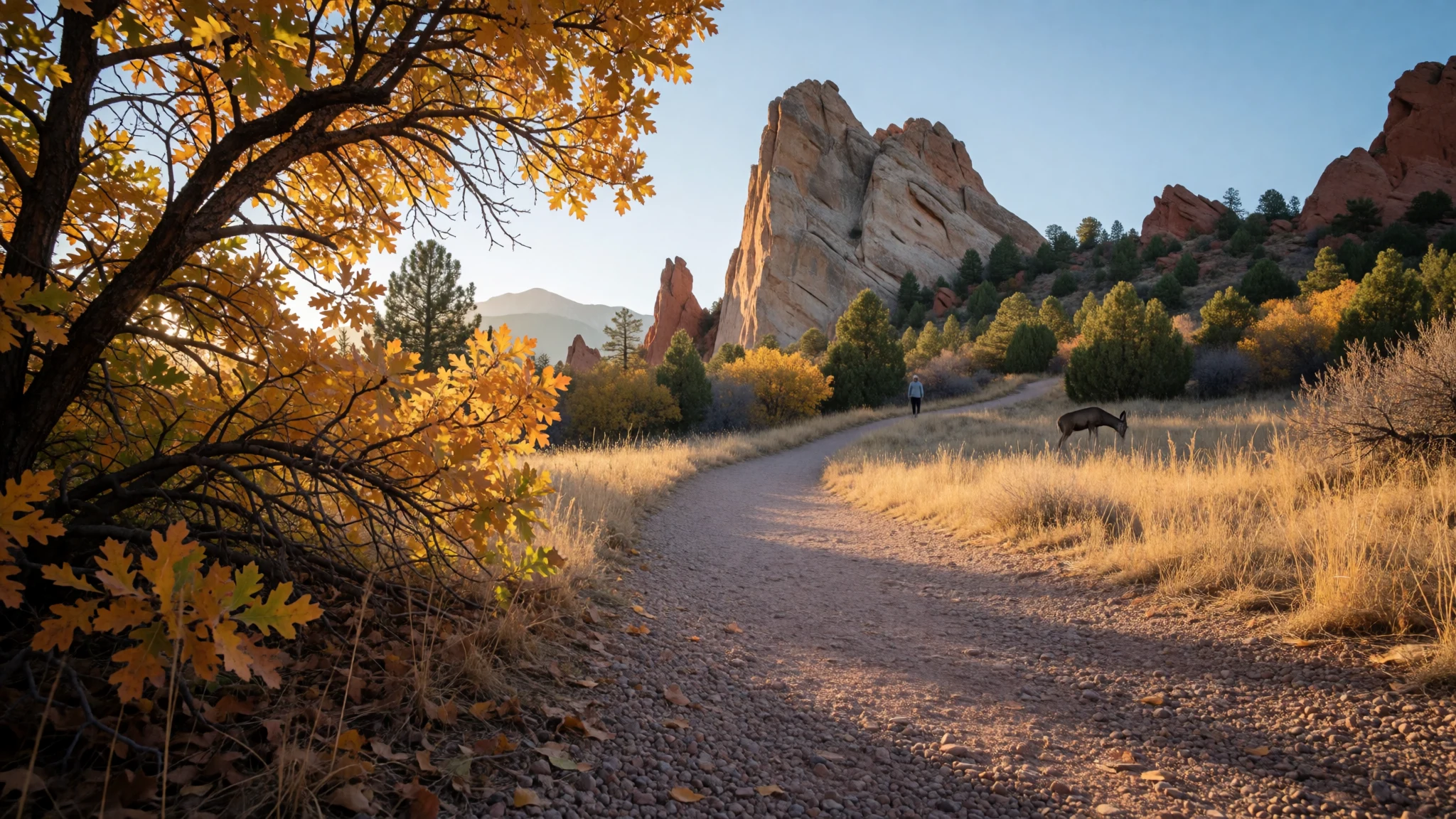
Garden of the Gods packs towering red sandstone fins and balanced boulders into an easy, free-to-wander park beside Colorado Springs.
The place
Garden of the Gods is a public park on the western edge of Colorado Springs, where tilted slabs and towers of red sandstone stand among pines, scrub oak and open grass. The park covers about 543 hectares, and about 349 hectares of it have been a National Natural Landmark since 1971. The rock is the attraction: fins in deep red, pink and cream lean at odd angles, and a few boulders sit on bases that look far too small for them. In photographs from the central viewpoints, Cheyenne Mountain fills the horizon on one side while the plains open out on the other. Paved and gravel paths thread between the formations, so a visit can be a short stroll near the main car parks or a half-day linking several loops on foot. Wildlife is part of the picture, and the overhangs and scrub that shelter animals today also drew people here for thousands of years. Honesty about crowds: summer weekends and holiday afternoons are busy, car parks fill and the loop road slows to a crawl. Early mornings are calmer, and the red rock glows warmest at the start and end of the day. The park sits well above sea level, so the sun feels strong and visitors from the coast can tire sooner than expected. For current access arrangements, parking and any events, check the official site at http://www.gardenofgods.com. Colorado Springs is the practical base for beds and meals, with Manitou Springs close by.
Its story
Garden of the Gods owes its shape to the Laramide Orogeny, a long episode of mountain-building millions of years ago that heaved and tilted the red rock layers into the standing slabs seen today. People arrived early. Archaeological evidence shows prehistoric visitors here around 1330 BC, and by about 250 BC groups were camping in the park, probably drawn by game, plants and the shelter of rock overhangs. Many nations remember a connection to the place, among them the Apache, Cheyenne, Comanche, Kiowa, Lakota, Pawnee, Shoshone and Ute. The Utes tell in their oral tradition of their creation here, and petroglyphs of a type typical of early Ute people have been found in the park. The Old Ute Trail passed close by on its way to Ute Pass, and later it guided explorers towards Manitou Springs. From the sixteenth century Spanish explorers came through, followed by European American explorers and trappers, including Lieutenant John C. Frémont and Lieutenant George Frederick Ruxton, who wrote about their visits in journals. The modern park began with private land purchases. In 1879 Charles Elliott Perkins, a friend of the railway builder William Jackson Palmer, bought a tract that took in part of the present park. The Arapaho name for the place is Ho3o’uu Niitko’usi’i, a reminder that the Garden of the Gods name is a relatively recent layer on a very old landscape.
What to see
- Central Gardens — Central part of the park
The Central Gardens are the heart of Garden of the Gods, where the tallest red fins crowd together beside easy, mostly level paths. Pullouts on the Juniper Way Loop give wide views from the north. It is the best first stop for orientation, and the busiest, so arrive early.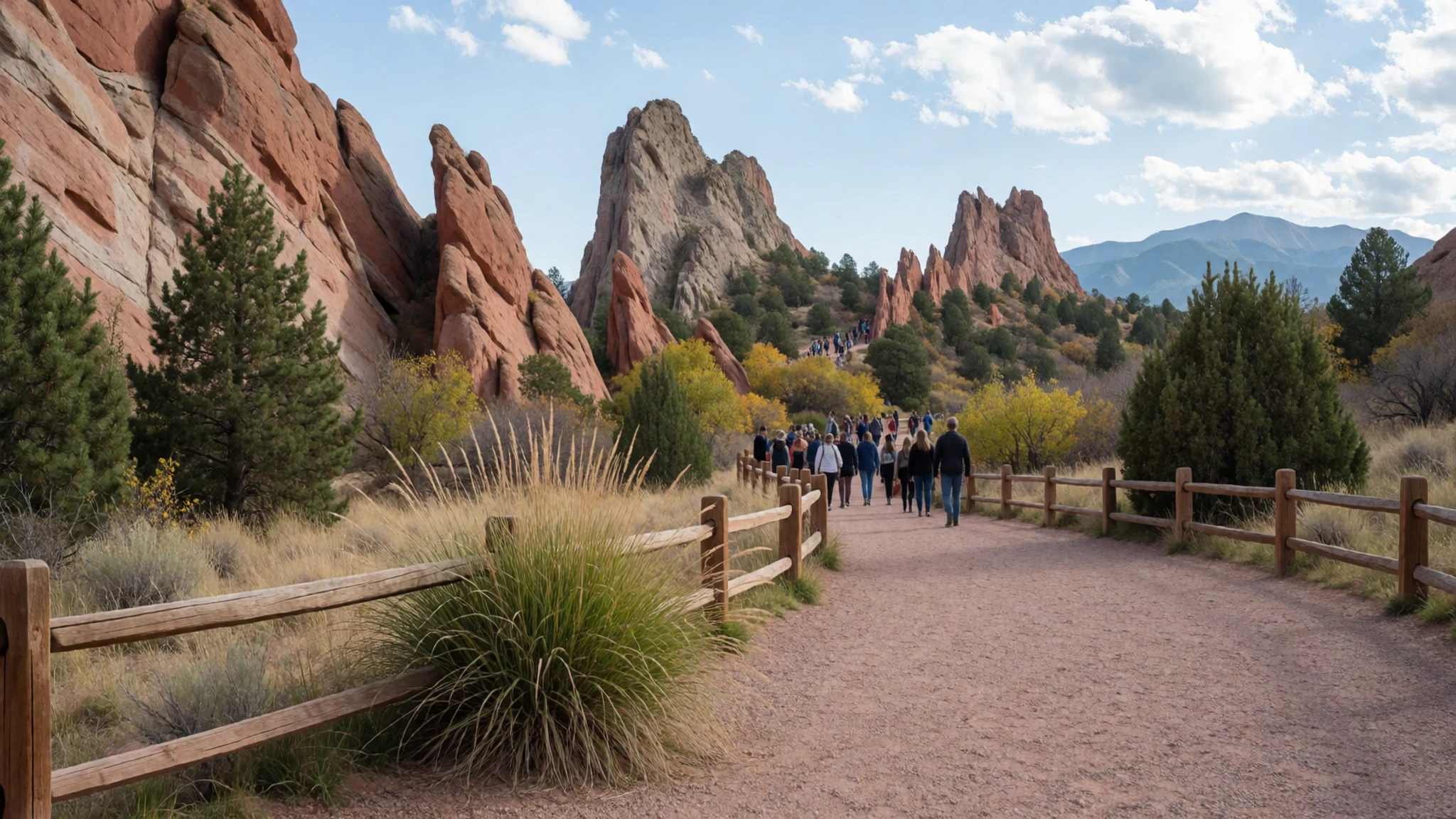
- Balanced Rock — Near the southern entrance
Balanced Rock is a huge boulder resting on a surprisingly small base at the edge of the road, and it is the formation most people photograph. Steamboat Rock stands nearby, so one short walk covers both. Mid-afternoon crowds can be thick, and the light is gentler at the ends of the day.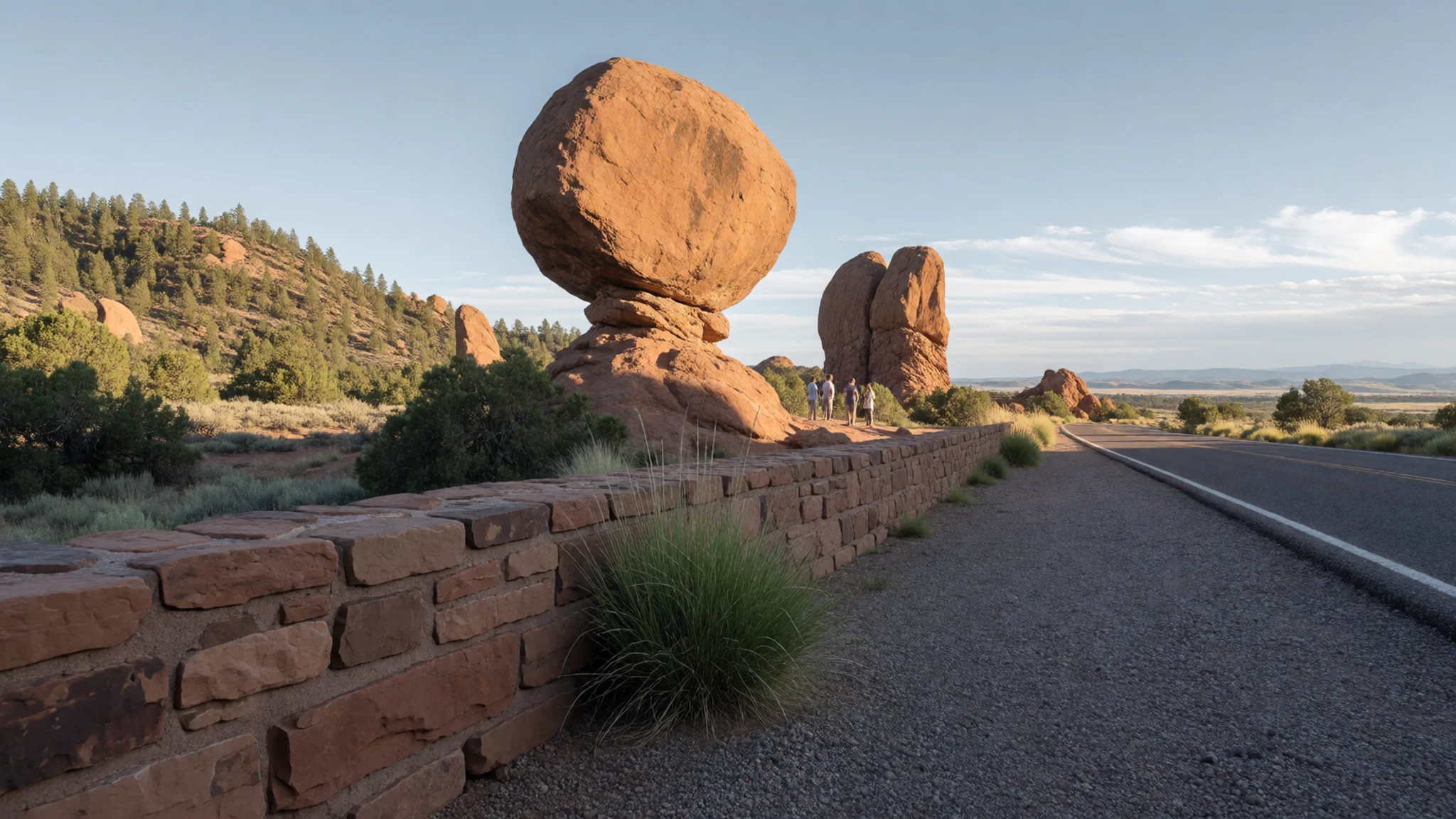
- Three Graces — Northern part of the park
The Three Graces are a trio of upright rock slabs, standing side by side like figures in conversation. They are a good subject for photographers who prefer a quieter corner to the busiest viewpoints. The surrounding trails are short, so it works well for families and unhurried walkers.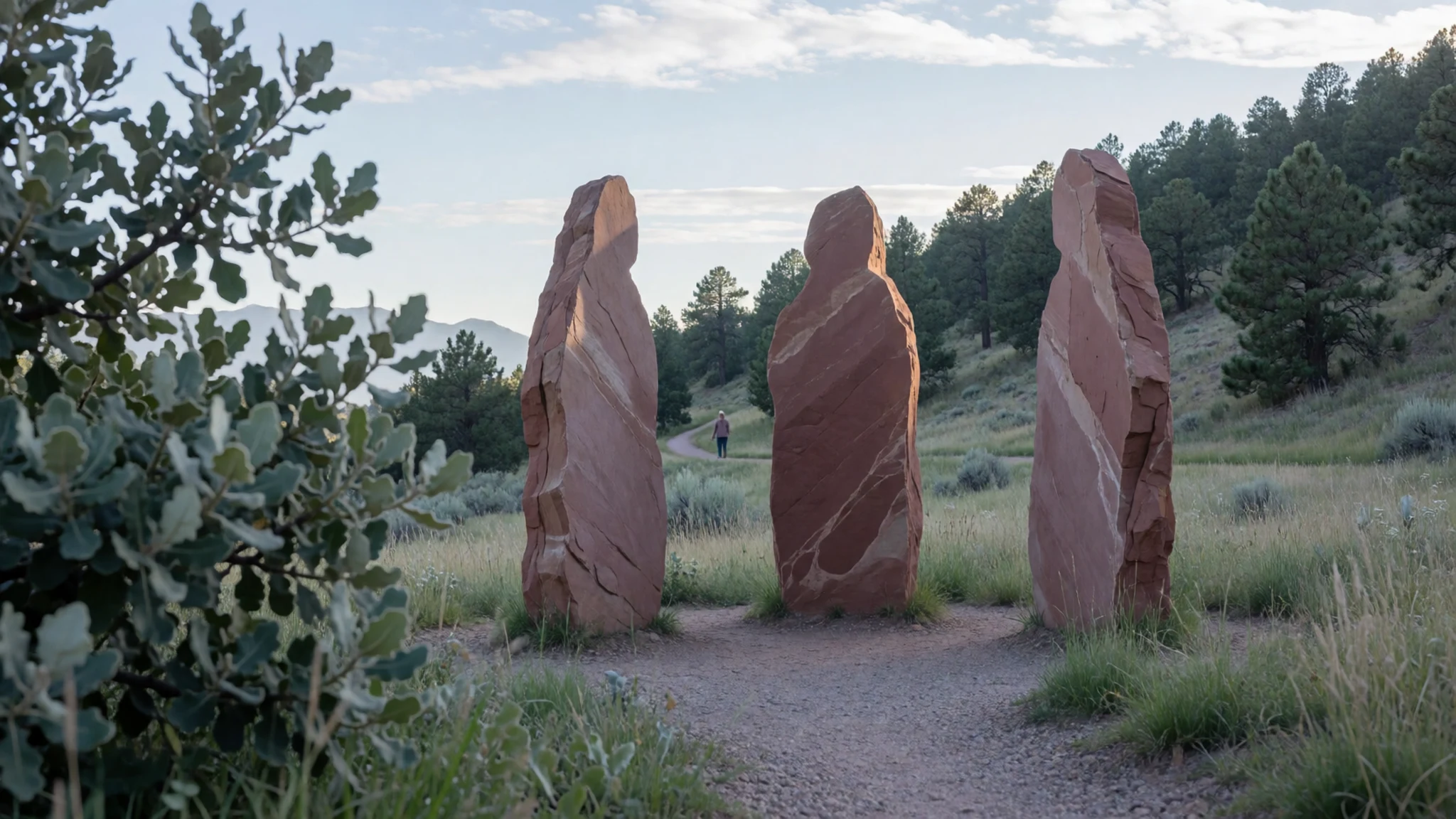
- Juniper Way Loop — Northern half of the park
The Juniper Way Loop is an easy walking circuit that looks back across the central formations from several angles. Pullouts along it give open views over the garden, with Cheyenne Mountain beyond. It suits anyone wanting a gentle walk with plenty of places to stop and look.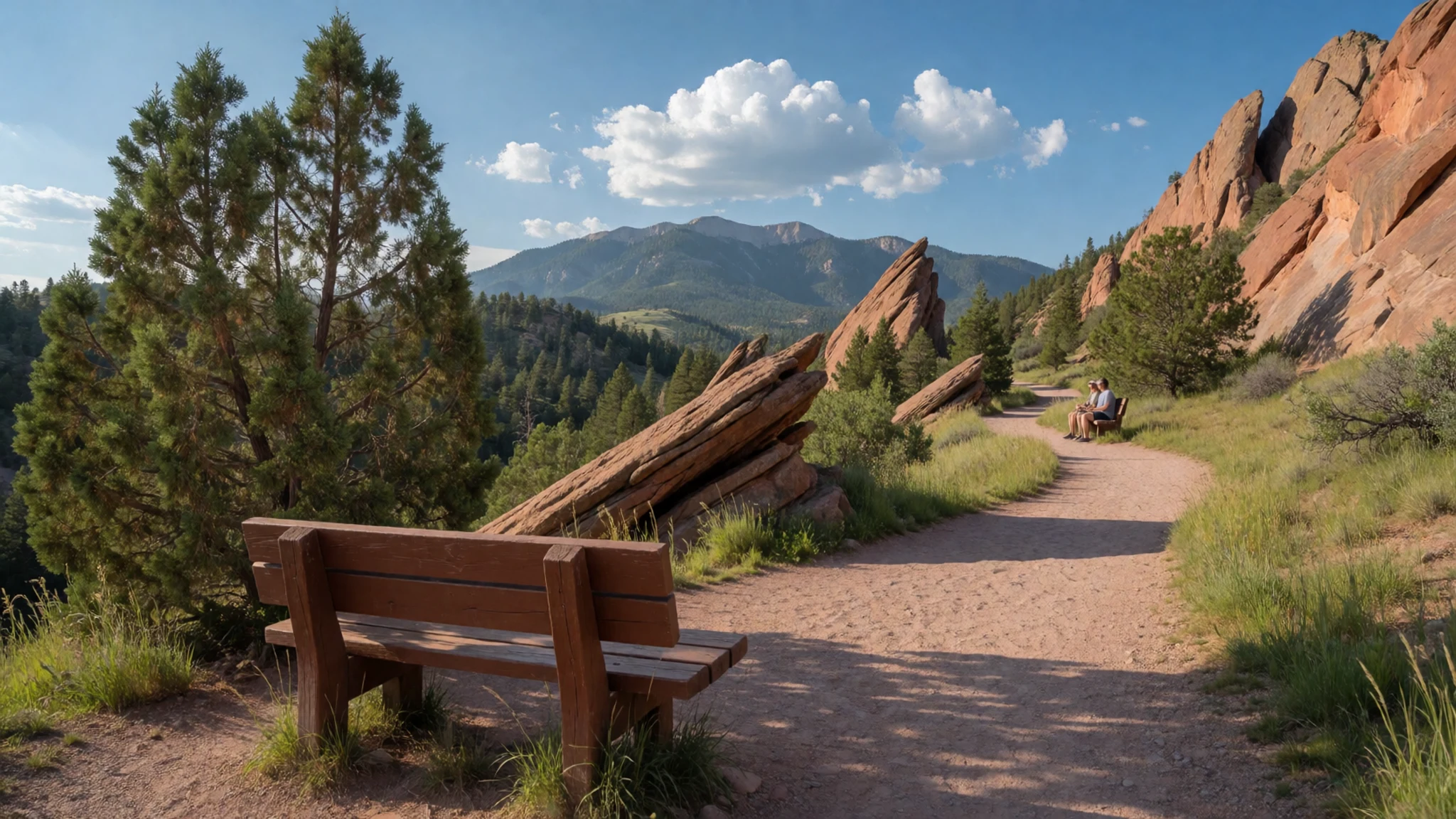
- Visitor and Nature Centre — Eastern edge of the park
The Visitor and Nature Centre is the place to start if you want context before walking. Its terrace looks over the formations, and indoor displays explain the geology and the people who have used the land. Check the official site for opening times and any guided programmes before you go.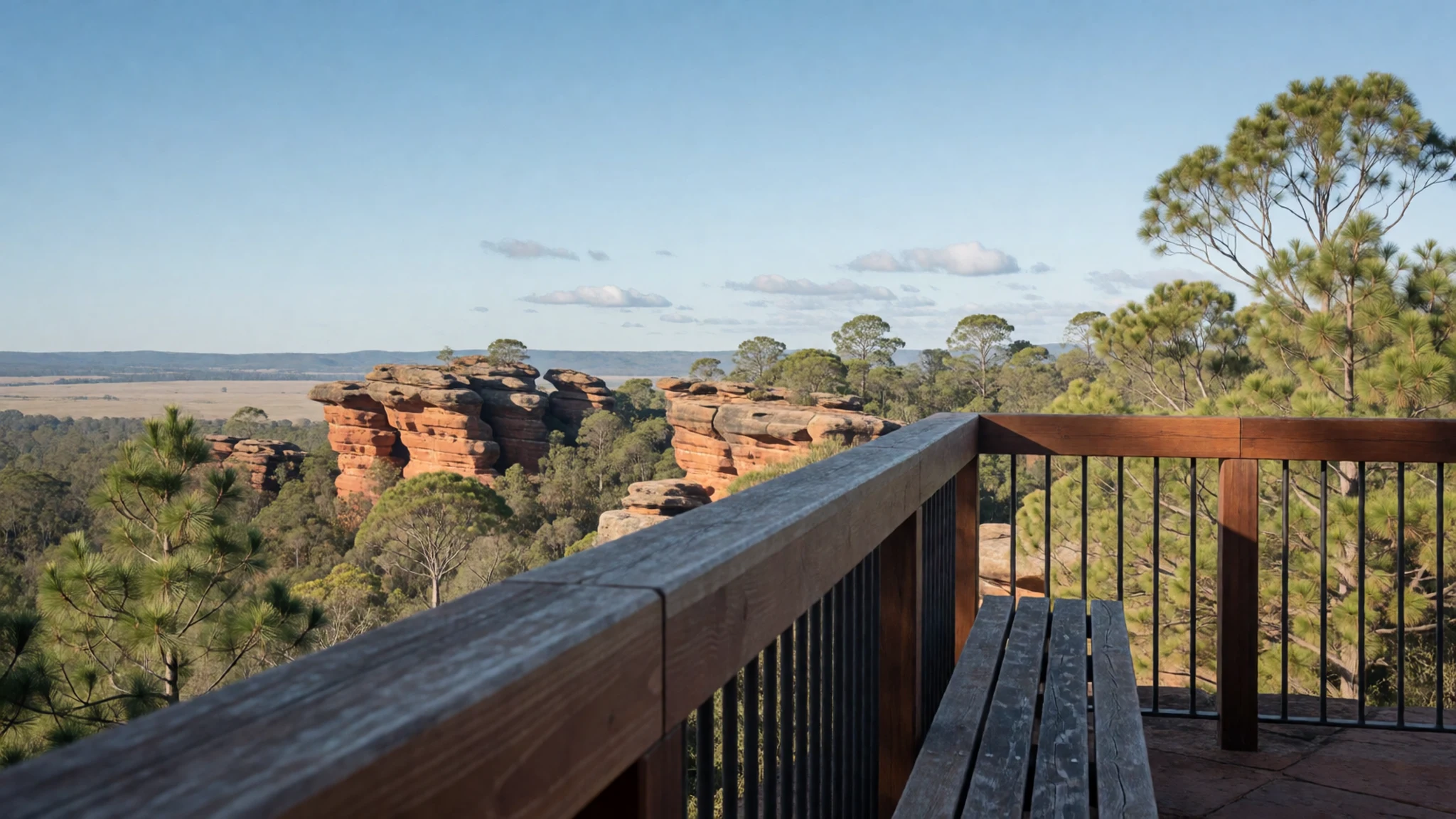
Culture
Garden of the Gods is a landscape that many peoples regard as meaningful, and that matters more than any single monument. The Utes tell in their oral traditions of their creation at the Garden of the Gods, and they found the red rocks spiritually significant, camping near Manitou Springs and the creek close to Rock Ledge Ranch on the park's edge. Apache, Cheyenne, Comanche, Kiowa, Lakota, Pawnee and Shoshone peoples have also reported a connection to the place, and petroglyphs typical of early Ute people have been found in the park. Later layers of history are visible too: explorers and trappers passed through, and the area was shaped by the railway-era interests of Colorado Springs' founders. Today it is a municipal park used by locals as much as by tourists, with runners, dog walkers, climbers with permission, and cyclists sharing the paths early in the day. Colorado Springs and Manitou Springs have a relaxed, outdoorsy character, and conversation with strangers on trails is friendly and brief. The region's Native histories are increasingly acknowledged in interpretation, and the Arapaho name Ho3o’uu Niitko’usi’i appears alongside the English one. Treat the rocks as both a natural and a cultural place. Stay on the marked paths and leave the formations unclimbed unless you have the park's permission, since climbing is regulated and the soft sandstone is easily damaged.
What to wear
Garden of the Gods sits in country shaped by many Native nations, and traditional dress here is best understood through them. Ute, Arapaho, Cheyenne and neighbouring peoples are known for buckskin clothing decorated with glass-bead work and quillwork, and for ceremonial regalia worn at powwows and dances rather than in daily life. Settler and cowboy dress added denim, wide-brimmed hats and leather boots, which remain part of the regional look. What people actually wear now is practical outdoor clothing: trail shoes or boots, shorts or lightweight trousers in summer, fleece and insulated jackets in cooler months, and caps or sun hats. In Colorado Springs, casual dress is normal almost everywhere, including restaurants and eateries. For a visit, dress for sun, altitude and changeable weather. Layers work best, because mornings can be cool and afternoons hot, and storms can roll in quickly in summer. Bring a sun hat, sunglasses and sunscreen, and carry a light waterproof. Choose closed shoes with grip, as the paths include loose gravel and rock, and sandals or smooth-soled shoes are uncomfortable on the longer loops. There is no special modesty requirement, though modest, respectful dress is sensible if you attend a Native cultural event.
What to eat
- Denver omelette — Breakfast diners in Colorado Springs
A Denver or Western omelette is eggs folded around cheddar, diced ham, onion and green pepper, probably born on cattle drives. It is a hearty breakfast before a morning walk, available at diners across Colorado Springs.
- Green chile stew — Local eateries in Colorado Springs and Manitou Springs
Colorado green chile is a thick, warming stew of roasted chiles and pork, often eaten with a tortilla. Heat levels vary, so ask before ordering. It suits cooler days and appears on many menus in the region.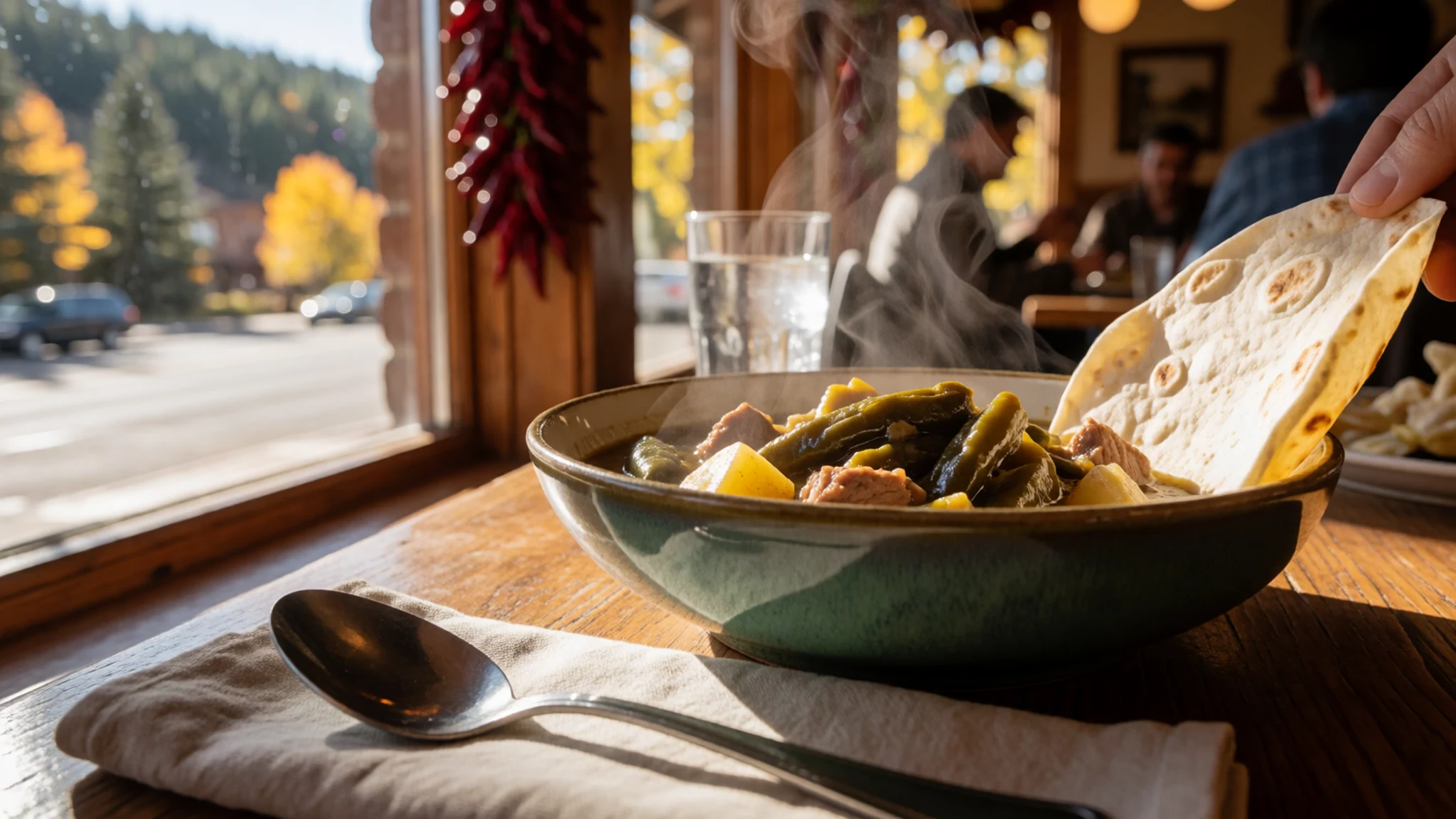
- Rocky Mountain trout — Restaurants in Manitou Springs
Trout from mountain streams is a regional staple, usually pan-fried or grilled with butter and herbs. It makes a lighter meal after a day of walking, and is common in mountain-town restaurants. - Bison burger — Burger places and pubs near the park
Bison, leaner than beef and slightly sweeter, is served as burgers and steaks across the Rockies. It is a straightforward way to taste the plains' ranching heritage with a side of fries. - Colorado peaches — Summer farmers' markets in Colorado Springs
In late summer, peaches from the state's orchards turn up as fresh fruit, pies and ice cream. They are seasonal, so ask at farmers' markets in August and early September for the best fruit.
Plan it
Best time. May–June and September–October are the most comfortable: warm days, cool mornings and fewer crowds than midsummer. July and August bring hot afternoons and sudden thunderstorms, and winter can bring snow, though the red rock looks striking against it.
How long. 1–2
Getting there. Colorado Springs Municipal Airport (COS) is the nearest, and Denver International Airport (DEN) has far more flights. From either, hire a car or take a taxi or ride-hailing service to the park on the western edge of Colorado Springs. Amtrak does not serve Colorado Springs, so road access is the practical option.
Budget. low
Tips
- Arrive early, ideally in the first hour of daylight, to beat crowds and heat.
- Check the official site, http://www.gardenofgods.com, for current access, parking and events before you go.
- Carry plenty of water and sun protection, as the park sits well above sea level and the sun is strong.
- Wear grippy closed shoes, and bring a waterproof for sudden afternoon storms in summer.
Etiquette
- Stay on marked paths and do not climb on the formations unless permitted.
- Take rubbish with you and keep dogs on a lead where required.
- Give wildlife space and do not feed animals.
Nearby
Sources
- Wikidata Q937606 (CC0)
- Wikipedia: Garden of the Gods (rev 1383431453) (CC BY-SA 4.0)
- Wikivoyage: Colorado (rev 5400360) (CC BY-SA 4.0)
- Dicklyon, Garden of the Gods central gardens from the north (CC BY-SA 4.0)
- John Fowler, Late afternoon in Colorado Springs (CC BY 2.5)
- WolfmanSF, Garden of the Gods partial pano (CC BY-SA 4.0)
- Garden of the Gods Park, Colorado, 1950s, Kodachrome by Chalmers Butterfield (CC BY 3.0)
- Ahodges7, Balanced Rock and Steamboat Rock (CC BY 3.0)
- Ahodges7, Three Graces rock formation (CC BY 3.0)
- Ahodges7, Balanced Rock in Garden of the Gods (CC BY 3.0)
- Aphexcoil, View of Garden of the Gods Park from the Visitor's Center (CC BY 3.0)


