Franconia Notch
Franconia Notch, United States
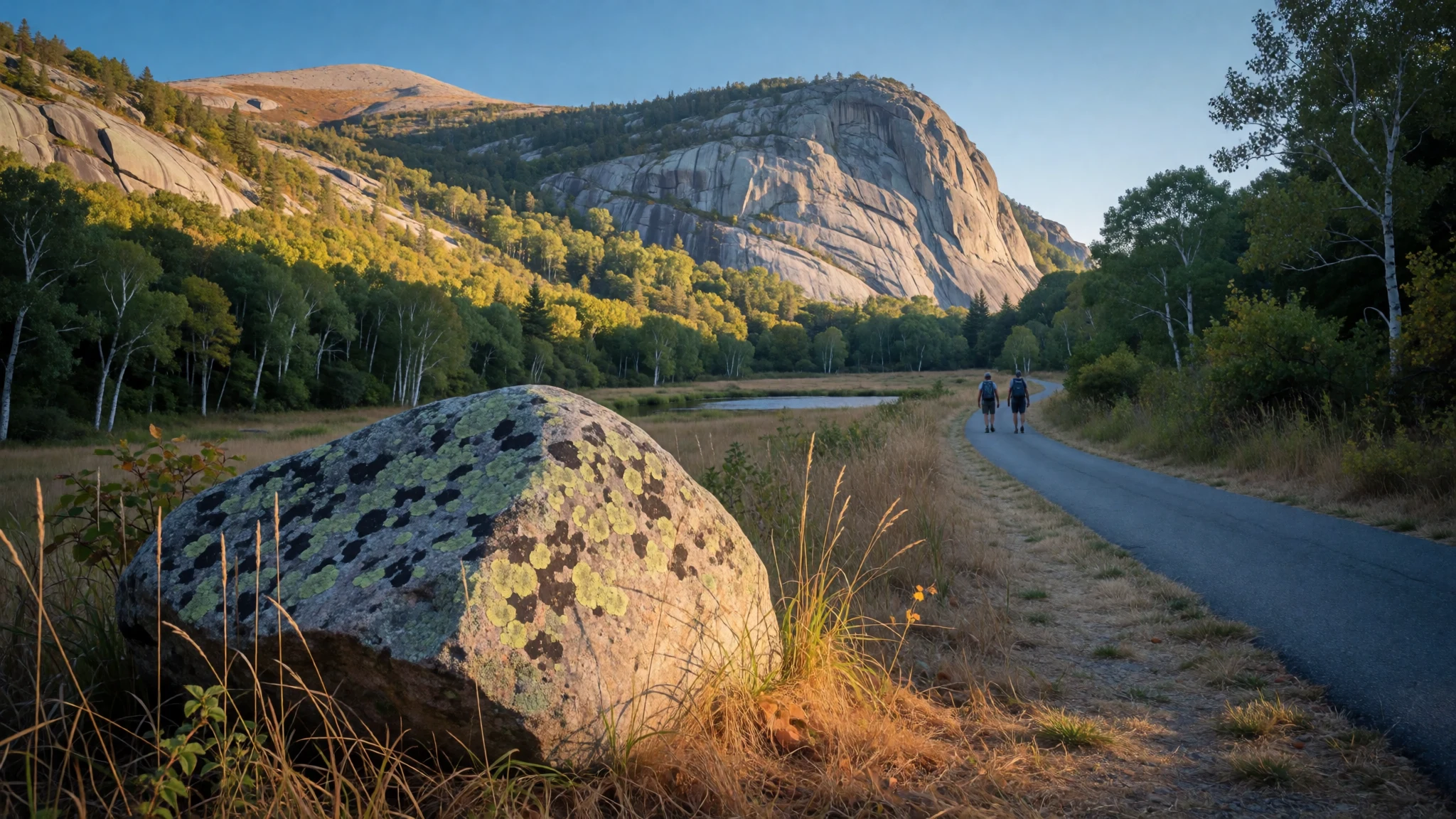
Franconia Notch packs granite cliffs, glacial lakes, waterfalls and big ridge walks into one narrow New Hampshire pass that can be seen in a weekend.
The place
Franconia Notch is a narrow pass through the White Mountains of New Hampshire, in the north-eastern United States. Cannon Mountain and its sheer cliff face wall in the western side, while the long Franconia Ridge, crowned by Mount Lafayette, forms the eastern wall. Most of the corridor is protected as Franconia Notch State Park. A main highway runs down the middle, but it behaves more like a country road: one lane each way, because Congress had to grant an exception to the usual interstate design standards. That restraint keeps the valley floor feeling intact rather than carved up by a wide motorway. The pass is also a watershed divide. Water from Echo Lake near the northern end drains towards the Connecticut River, while Profile Lake, a short way south, is where the Pemigewasset River begins on its journey to the Merrimack. Both lakes are short, easy walks from roadside car parks. Most of the notch lies in the town of Franconia, spilling into Lincoln at the southern end. Around the road are spruce and birch forest, granite ledges, a cable car up Cannon, a gorge with boardwalks and a paved recreation path. Weather is cool and changeable even when the valley towns are warm, and snow arrives early in winter. Summer weekends and the autumn leaf season bring heavy traffic and full car parks. Mobile signal is patchy, and the high ridge routes are serious full-day mountain walks, not strolls.
Its story
Franconia Notch is best known for a face that no longer exists. For generations a ledge of granite high above Profile Lake looked, from the right angle on the road, like the craggy profile of an old man. It became the emblem of New Hampshire, appearing on road signs, souvenirs and the state's coinage. In 2003 the formation collapsed, and the notch lost its most famous feature almost overnight. Locals had spent decades bracing the ledge with cables and repairs, and its fall was received with real grief. Today the spot is marked by a memorial where steel frames let visitors line up the outline of the lost profile against the cliff. Long before the collapse, the notch had already drawn travellers. Nineteenth-century painters and photographers, including the Bierstadt brothers, came to record waterfalls and rock walls in the White Mountains, helping to turn the region into a holiday destination for city people from Boston and New York. Grand hotels, railways and later motor roads followed. The modern parkway is the latest chapter, built with careful compromises so that it would fit the valley instead of dominating it. The story of the notch is therefore one of attraction and erosion: a landscape that people loved enough to alter, and to protect, even as nature reshaped it on its own timetable.
What to see
- Cannon Mountain — West side of the notch, Franconia
Cannon Mountain is the bare-shouldered peak on the western side of the notch, with a cliff face that catches the evening light. An aerial tramway runs to the summit in season, and its ski slopes open in winter. Check the official site for operating dates and fares before driving up.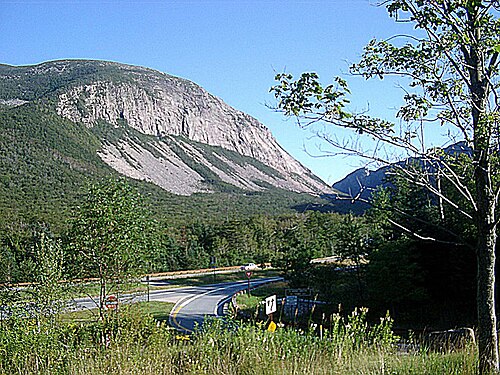
- Franconia Ridge — East side of the notch
Franconia Ridge is the knife-edged crest along the eastern side, running from Little Haystack across Mount Lincoln to Mount Lafayette. Much of it lies above the treeline, with open views in every direction. It is a long, exposed day hike, so start early, carry layers and turn back if cloud closes in. - Profile Lake and the Old Man memorial — Central notch, near the Cannon Mountain base
Profile Lake is a small, dark pool tucked under the cliff where the Old Man of the Mountain once hung. A short path leads to the memorial, where steel frames let visitors line up the vanished profile with the rock. Fishing is popular here, and the water is the start of a major river. - Echo Lake — Northern end of the notch
Echo Lake is the easiest swim and picnic stop in the notch, with a gently sloping beach and Cannon's cliff reflected in calm water. A flat path circles the shore. Water here runs north towards the Connecticut River, so this small lake sits on the opposite side of the divide from Profile Lake. - The Flume Gorge — Southern end of the notch, near Lincoln
The Flume Gorge is a narrow cleft in the granite near the southern end of the park, walked on boardwalks beside a cold stream, with mossy walls, small waterfalls and a covered bridge. It is busy on summer weekends and in leaf season, so arrive early and check the visitor centre site for opening and ticketing.
Culture
Franconia Notch sits in a part of New England where outdoor life is woven into daily habits. People in the nearby towns ski, hike, fish and hunt, and many have strong opinions about how the mountains should be looked after. Visitors are welcome, since tourism supports local shops, inns and ski areas, but careless behaviour on the trails is noticed quickly. Volunteer search and rescue teams cover much of the White Mountains, and they are usually called out because someone started late, wore the wrong footwear or ignored a forecast. Locals tend to be friendly but reserved, and small-town life is quiet, with early closing times and few late-night options. The north of the state is generally more conservative than the urban south, so everyday courtesy matters more than any display of opinion. The landscape also carries a sense of loss and stewardship around the Old Man of the Mountain, whose collapse in 2003 is still spoken about with affection. The profile appears on the state's symbols, and the memorial beside the lake is treated as a quiet place rather than a photo stop. Roads can be icy and busy with wildlife, which makes patience behind slow drivers part of the local manners. Carry out all your rubbish and keep to marked paths so the fragile mountain plants and thin soils survive the season's crowds.
What to wear
Franconia Notch has no single formal costume, but its clothing story is a working one. The region's traditional dress grew out of cold winters and a farming, logging and mill economy: thick wool, flannel shirts in checks and plaids, heavy knitwear, felt hats and leather boots. Wool remains the sensible fabric, and checked flannel is still a local trademark, worn as an everyday overshirt more than as a heritage gesture. Nobody wears traditional dress for a festival here in the way that happens elsewhere. What people actually wear now is practical outdoor gear: fleece, rain shells, hiking trousers, caps, trail shoes and boots, with ski jackets in winter. In the towns the look is relaxed and casual, jeans and a jumper in the evening, and nobody will mind muddy boots in a diner. For a visitor, the key is layering. Mornings and ridge-tops are cold even in July, and weather can turn within an hour, so carry a waterproof jacket, a warm mid-layer, a hat and gloves for higher walks. Wear sturdy shoes with grip for granite, which is slippery when wet, and add insect repellent in early summer. In winter, insulated boots, thermal layers and traction aids for ice are essential. There are no modesty rules or dress codes at the sights, though a cover-up helps at the cold lakes.
What to eat
- Pancakes with maple syrup — Roadside diners in Lincoln and Franconia; sugarhouses in late winter
Maple syrup is the signature taste of northern New England, poured over pancakes or waffles. Find it at roadside diners for a hearty breakfast before a hike, or at sugarhouses in late winter, when sap is boiled down and visitors are often welcome. - Cider doughnuts — Farm stands and orchards on the autumn leaf routes
Cider doughnuts are warm, cinnamon-sugared rings made with apple cider, and a fixture of the autumn leaf season. They are usually sold fresh with hot or cold cider, and are best eaten straight from the bag after a walk. - Craft beer — Brewpubs in Lincoln, Conway and the seacoast town of Portsmouth
New Hampshire has a thriving brewing scene, with microbreweries and brewpubs in towns across the state. Pale ales and seasonal stouts are common, usually served alongside burgers or pub food. Many places offer small tasting flights, which are a good way to sample several styles. - Clam chowder — Seafood shacks on the seacoast; pubs and diners inland
New England clam chowder is a thick, creamy soup of clams, potato and onion, often served with oyster crackers. It belongs to the coast but is on menus across the state, and it is a warming option after a cold mountain day. - Diner burgers and fries — Roadside diners along the valley roads near the notch
The state's roadside diners are known for large, no-frills plates: burgers, fried potatoes, sandwiches and pie. Portions are generous and prices modest compared with resort restaurants, so they suit hungry walkers who want a quick, filling meal.
Plan it
Best time. September to mid-October for autumn colour, and July to August for warm, long days on the lakes and ridges. December to March suits skiing but brings snow and ice. Late spring is muddy and wet, and early summer brings biting insects.
How long. 2–3
Getting there. Fly into Manchester–Boston Regional Airport or Boston Logan, then drive north on the interstate for roughly two hours; the notch is on the main road between Lincoln and Franconia. Coaches run from Boston to New Hampshire, but a car is far more practical for the trailheads, so check current services.
Budget. mid
Tips
- Arrive early on summer weekends and in leaf season, when car parks at the main stops fill up
- Check the weather and start long ridge hikes at first light, as conditions change fast above the treeline
- Carry water, layers and a map, as mobile signal is unreliable
- Watch for moose on dusk and dawn roads, and drive carefully on icy winter surfaces
- Check the official New Hampshire parks sites for opening dates, tickets and fares before you go
Etiquette
- Stay on marked trails and carry out all your rubbish
- Tell someone your route and return time before heading up the ridge
- Keep to a respectful tone at the Old Man memorial
Nearby
Sources
- Wikidata Q5484708 (CC0)
- Wikipedia: Franconia Notch (rev 1370230294) (CC BY-SA 4.0)
- Wikivoyage: New Hampshire (rev 5415772) (CC BY-SA 4.0)
- View of Franconia Notch, BIYM at en.wikipedia, via Wikimedia Commons (CC BY 3.0)
- Walker's Cascades, (First) Franconia Notch, N.H, Bierstadt Brothers, via Wikimedia Commons (Public domain)

