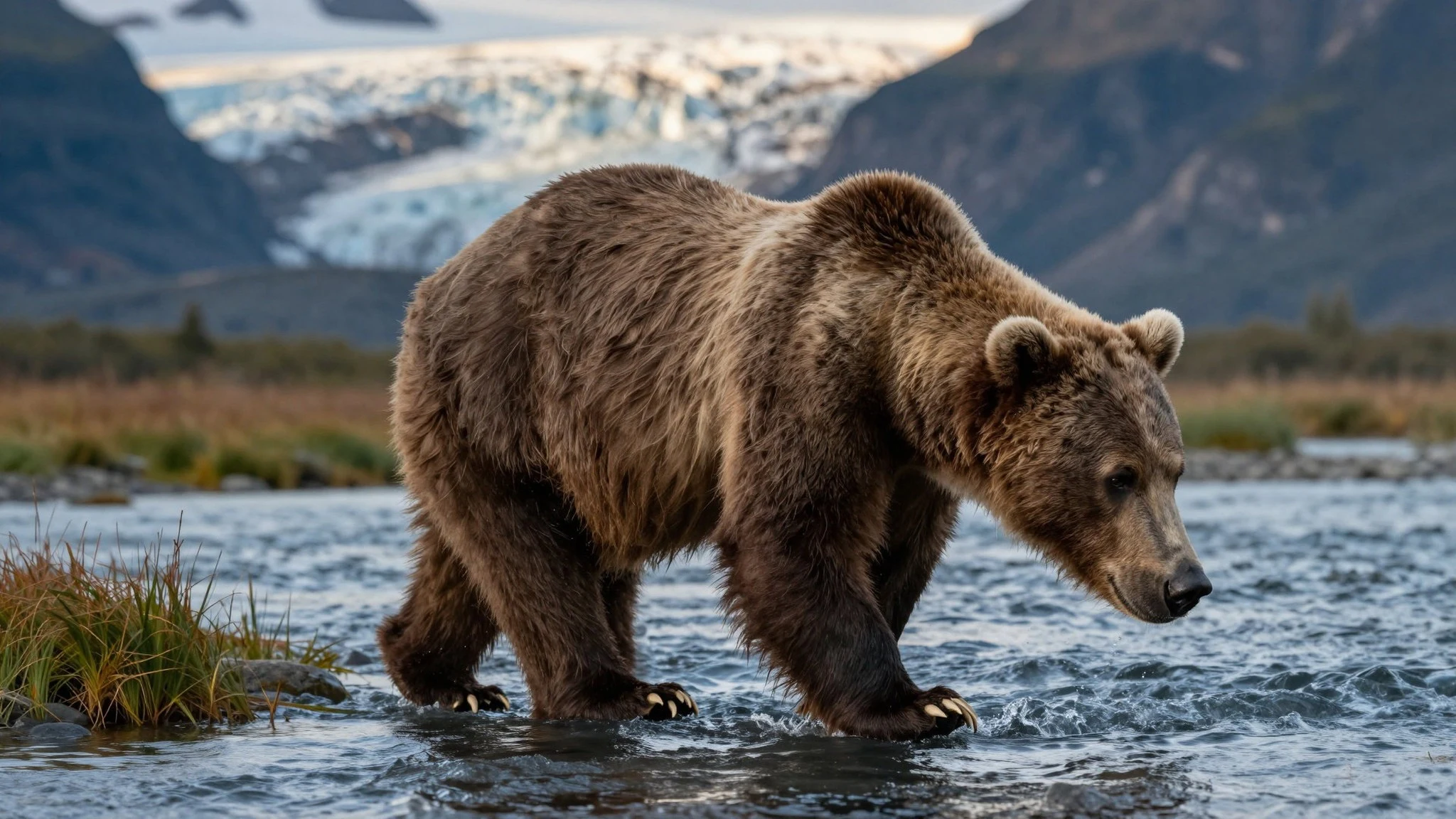
Exit Glacier
Exit Glacier, United States
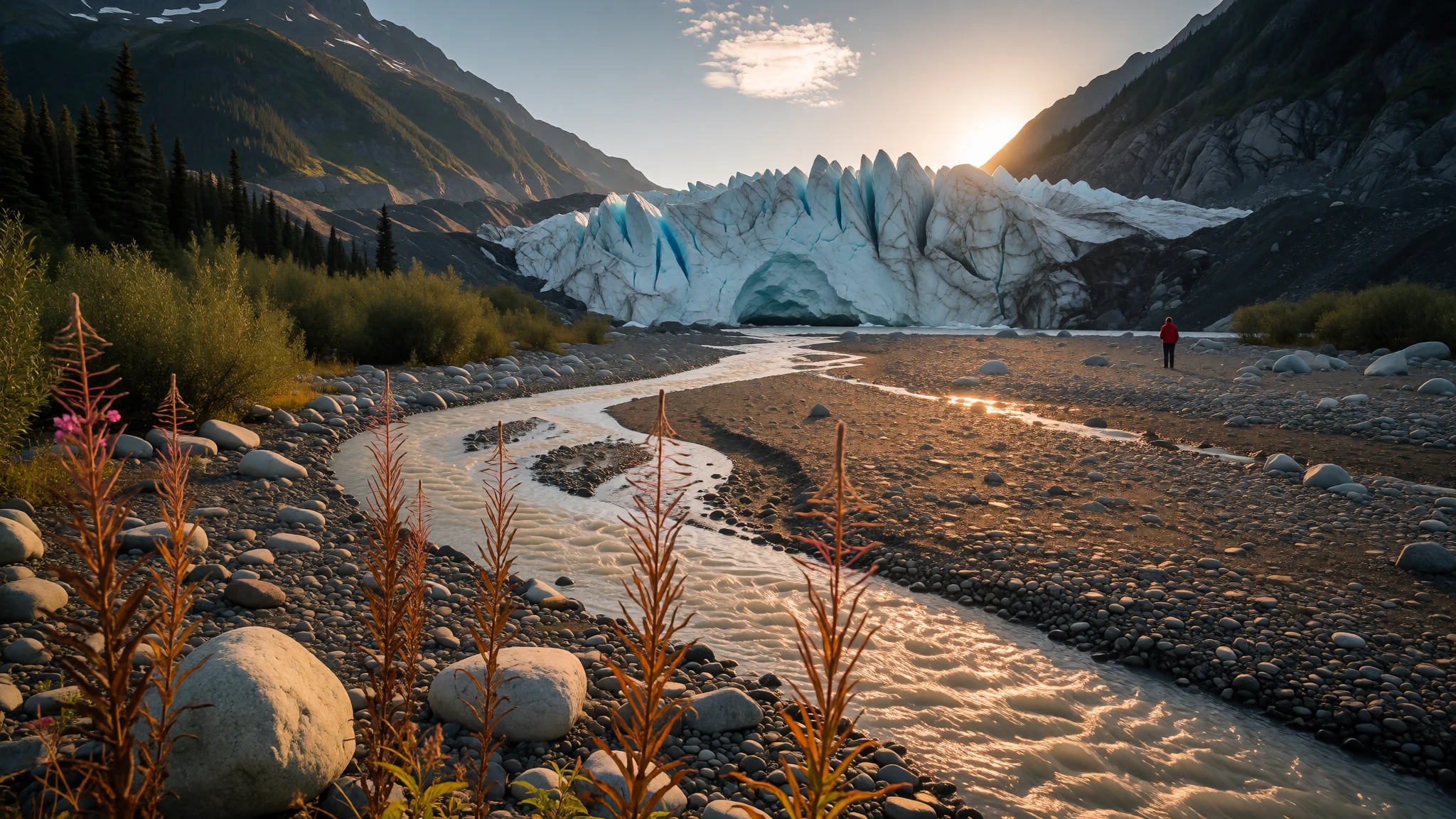
Exit Glacier is a road-accessible Alaskan ice tongue where a short walk shows how quickly a glacier can retreat.
The place
Exit Glacier is a tongue of ice spilling out of the Harding Icefield, high in the Kenai Mountains of southern Alaska, and it lies inside Kenai Fjords National Park. Most Alaskan glaciers are seen from a boat, a small plane or not at all. This one ends in a valley that a road reaches, so a short walk from the car park brings visitors to the edge of a real river of ice. That convenience is why it draws crowds in summer, and why scientists treat it as a teaching example of glacial retreat. The valley floor tells the story: bare gravel, braided meltwater channels, and young willow and alder growing where ice sat within living memory. Signs along the paths mark where the glacier's front stood in earlier years, and the gaps between them keep widening. The climate is subarctic, with long, cold winters and short, cool summers, so the weather can change between the trailhead and the viewpoint. Rain is common, and cloud sometimes hides the icefield completely. Seward, the small port town on Resurrection Bay, is the base for most trips, and the park's fjords are reached by boat from there. Exit Glacier works as a half-day stop, or as the start of a long day on the icefield trail for those with the legs for it. Alaska's scale is easy to underestimate, and this corner of the Kenai Peninsula is a manageable introduction to it.
Its story
Exit Glacier takes its name from a spring expedition in 1968, when ten people made the first recorded mountaineering crossing of the Harding Icefield. They set out from Homer, climbed onto the ice at Chernof Glacier, and came down the far side towards Seward. Newspapers reported that the group would descend by the 'Exit Glacier', and the label stuck to the ice itself. Only four of the ten walked the whole way across: Bill Babcock, Dave Johnston, Yule Kilcher and Vin Hoeman. Kilcher, Johnston and both Hoemans had tried before, so the crossing was the end of a longer campaign rather than one lucky week. Along the route the party also made a first ascent of a peak on the icefield's north-western rim. The glacier's later fame has less to do with exploration than with loss. Ice here forms from snow piling up on the icefield and creeping downhill, and when melt outpaces new snow, the front pulls back. Park scientists measure that retreat and report that it is accelerating; between 2013 and 2014 the ice front moved back by about 57 m. In 2015 President Barack Obama visited the glacier during a trip to Alaska, which put the site in front of a world audience as a plain, visible example of climate change on the Alaskan coast. Visitors now arrive partly to see ice and partly to see what is missing.
What to see
- The glacier viewpoint — End of Exit Glacier Road, near Seward
Exit Glacier's main viewpoint is the easiest way to meet the ice. A short, fairly gentle route from the car park leads to an overlook of the glacier's front, with blue crevasses and grey, silt-streaked flanks. Exhibits and ranger talks nearby explain how the ice moves and why it is shrinking. Go early, since summer brings company.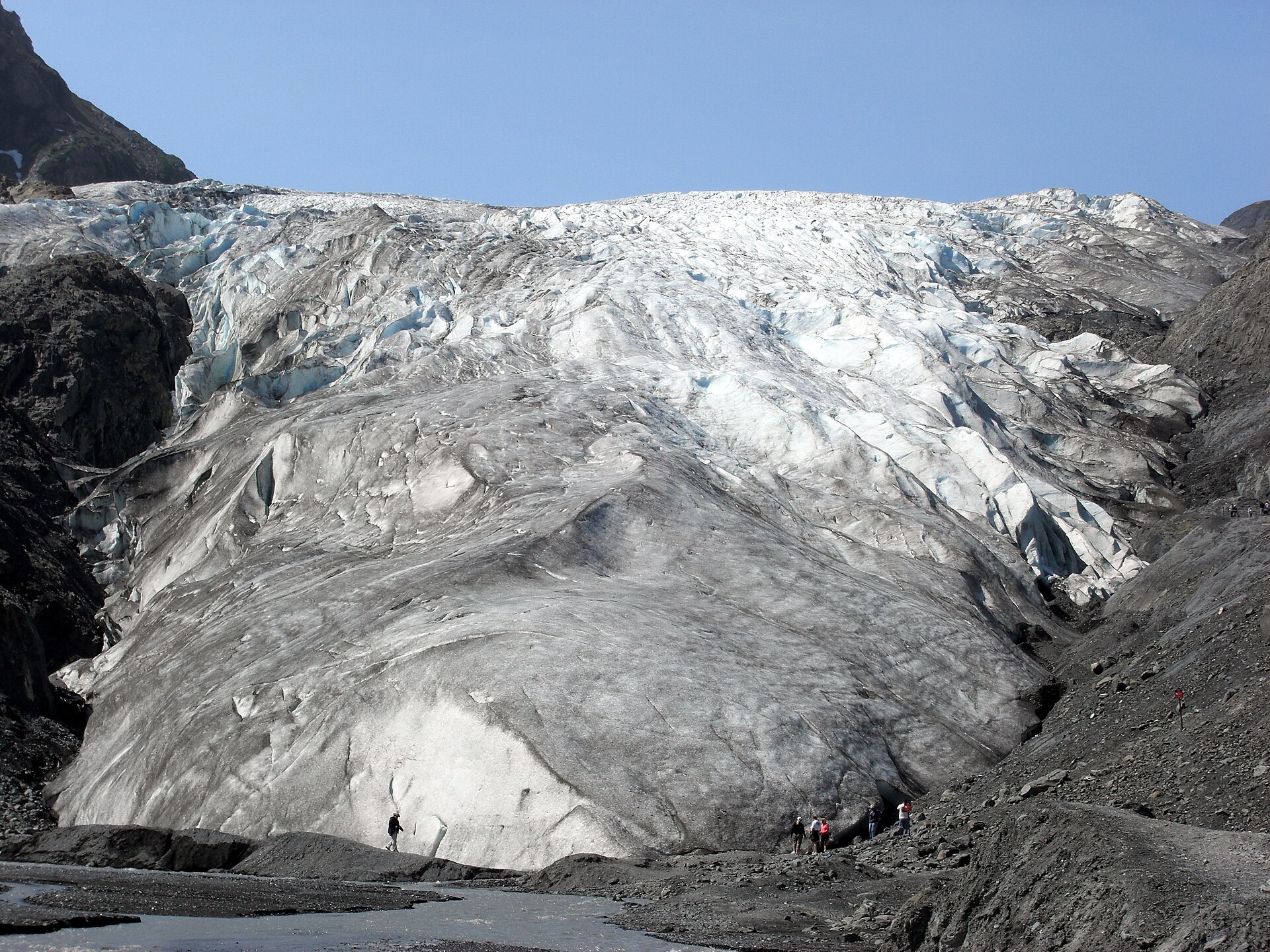
- The retreat markers — Glacier forefield, below the ice front
Exit Glacier's forefield paths carry signs giving the years when the ice front stood at each spot. Walking from the oldest sign towards the present ice is a quiet lesson in speed, with bare rubble giving way to shrubs and then to forest. Of the shorter walks here, this one is the most thought-provoking.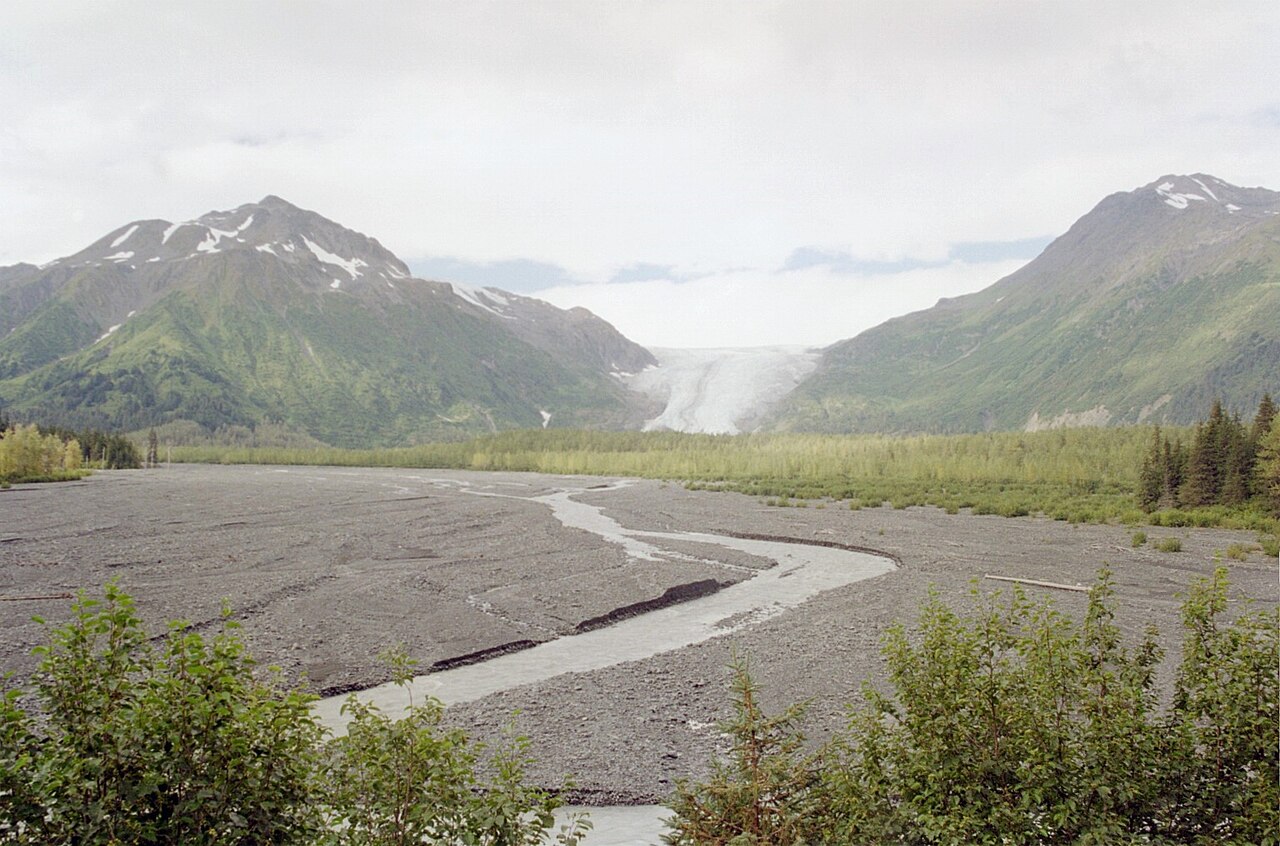
- Harding Icefield Trail — Trailhead beside Exit Glacier
The Harding Icefield Trail is a long, steep climb through alder thickets and then open alpine slopes, ending with a view over the vast white icefield that feeds Exit Glacier. Snow can linger late into summer and weather turns quickly. It suits fit, well-equipped walkers; ask rangers about conditions before setting out.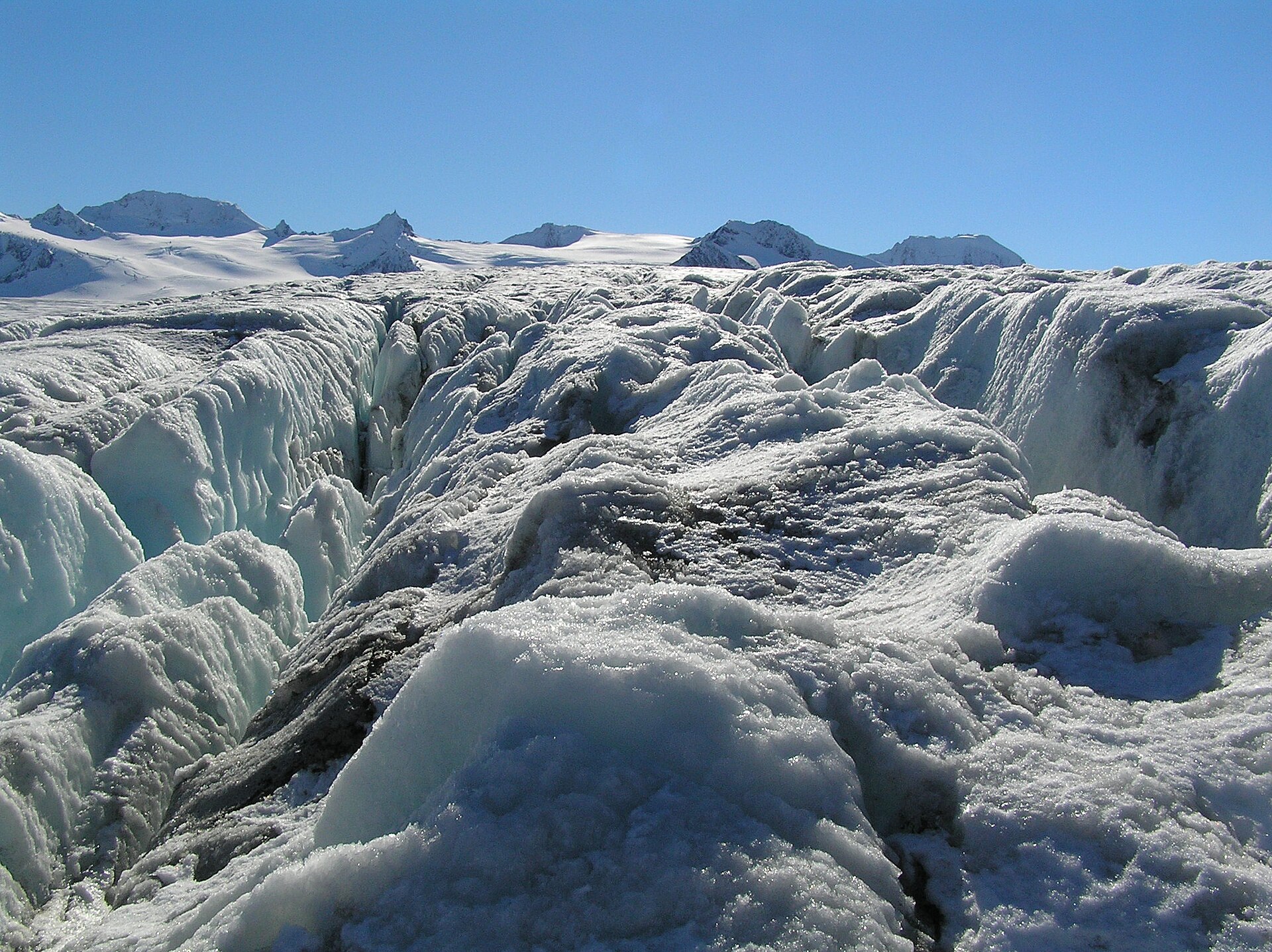
- Resurrection River valley — Valley floor below Exit Glacier
Below the glacier, meltwater spreads across a wide gravel plain and gathers into the Resurrection River, which runs towards Seward. The valley is a good place to see how glaciers shape land: pale braided channels, scattered boulders and fast-colonising plants. Light is best in the evening, when the ice glows against dark slopes.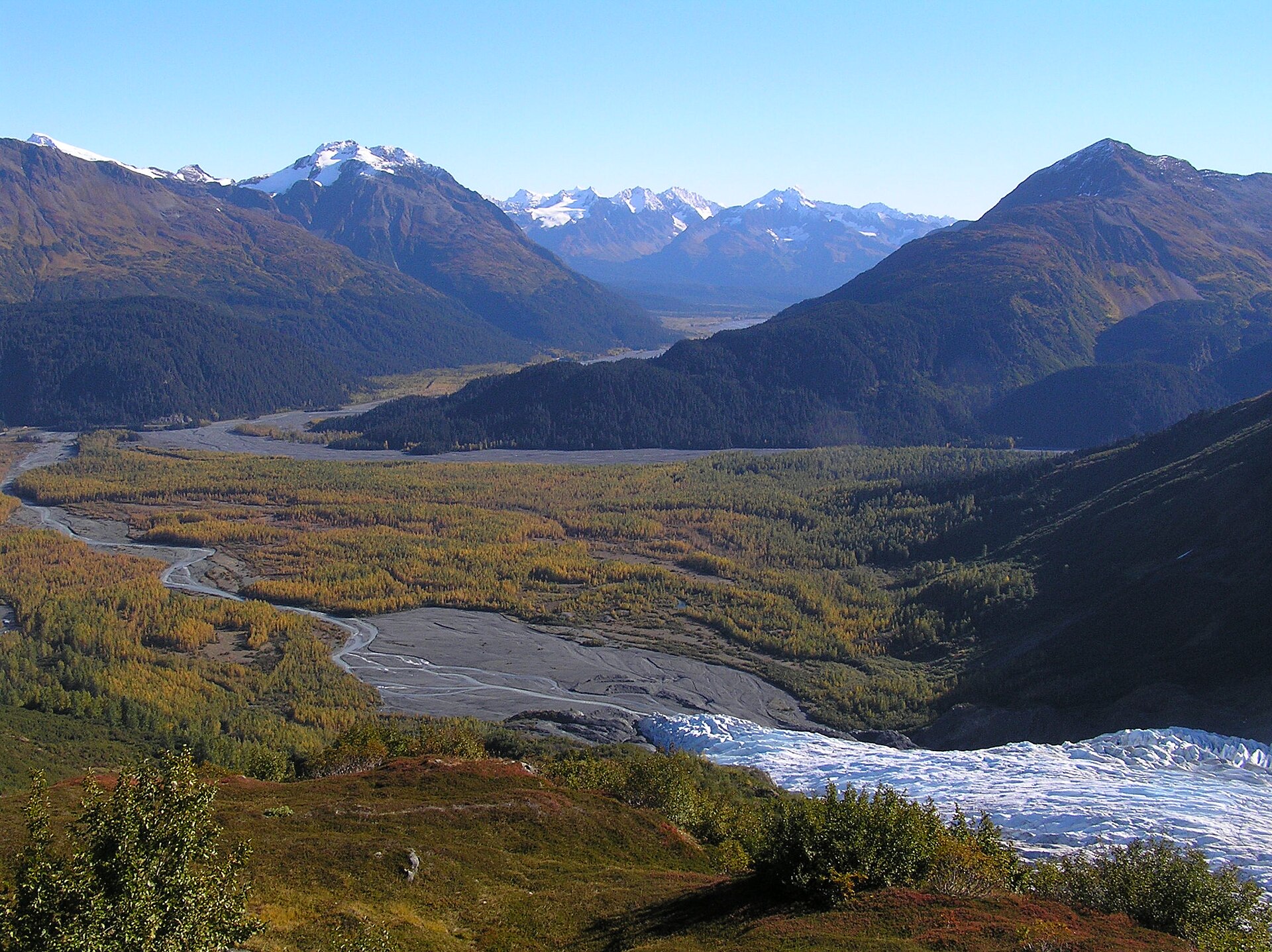
- Seward and Resurrection Bay — Seward, Kenai Peninsula
Seward is the working harbour town from which most visitors reach Exit Glacier. Boat trips leave from its waterfront for the coast of the national park, where tidewater glaciers, sea birds and marine mammals are the draw. Book summer sailings ahead, and allow a weather day, since the bay can be rough.
Culture
Exit Glacier lies in a national park, and the etiquette there is mostly about leaving the land as it was found. Picking flowers or collecting natural objects is discouraged in protected areas, and a flower taken is nectar lost to insects that have a short summer to feed. Litter is the other everyday issue: rubbish, cigarette ends and bottles belong in a bin or back in the rucksack, never in a campground fire ring, where burning cans and plastic gives off toxic fumes. Alaskans also like walkers to brush mud and seeds from their boots before a hike, so that plants do not hitchhike into the backcountry. Behind the park sits a longer human story. The Kenai Peninsula is the homeland of Alaska Native peoples, including the Dena'ina and the Sugpiaq (Alutiiq), and the coast around Seward has long depended on fishing; local museums and cultural centres are the place to learn more. Modern Alaska prizes self-reliance and a plain, friendly manner. Strangers chat at trailheads, swap news of weather and wildlife, and expect others to carry their own water, gear and common sense. Bears and moose are a fact of life here, and rangers brief visitors on how to behave around them, so listening is part of the courtesy. Stay behind the marked barriers near the ice and on the signed paths, and carry out every scrap of rubbish you bring in.
What to wear
Around Exit Glacier, traditional dress belongs to the Alaska Native peoples of the coast, whose clothing was designed for cold and wet. Parkas were made from animal skins and fur, and gut-skin, which sheds water, was used for waterproof outer layers, with sealskin for boots. Some of these skills survive in ceremonial regalia and craft. The kuspuk, a hooded cotton overshirt, is worn at gatherings and celebrations across many parts of Alaska, though it is more everyday in the west and interior than on the Kenai Peninsula. What people actually wear now in Seward and across southern Alaska is practical: fleece, rain shells, wool hats, jeans and sturdy boots. Tall rubber boots are standard on fishing crews and around the harbour. Nobody dresses up, even in restaurants. Visitors should dress for a cool, changeable climate rather than for any social norm. Pack layers, a proper waterproof jacket and trousers, a warm hat and light gloves even in summer, and sunglasses for the glare off the ice. Footwear matters most: boots with good grip and ankle support suit the wet rock and loose gravel of the paths. Insect repellent is useful in warmer months. There are no modesty rules to worry about, only the weather.
What to eat
- Reindeer sausage with eggs and hash — Local diners in Seward and along the highway
A classic Alaskan breakfast: smoky reindeer sausage beside eggs, hash browns and plenty of coffee. Portions are generous, which suits a day on the trail. Look for it at the local diners found in almost every small town on the road to Seward. - Fried halibut — Waterfront restaurants and fish-and-chip counters in Seward
Halibut, a firm white fish, is fried in a light batter and served with chips. Fresh landings make a clear difference. It is one of the dishes to try in Seward, where the boats come in and the waterfront restaurants buy straight from them. - Salmon — Seward harbour restaurants, smokehouses and fish shops
Alaskan salmon appears grilled, smoked, baked on a cedar plank or cured as lox. Many local eateries near the water serve it daily. Smoked salmon also travels well and makes a sensible edible souvenir; ask about airline carriage rules before buying. - King and snow crab — Seafood restaurants on the Seward waterfront
Crab legs, steamed and served with melted butter, are a treat of Alaska's coastal restaurants. King crab is the big, showy one; snow crab is sweeter and a little easier to eat. Expect it to be among the pricier items on a menu. - Fireweed honey and spruce-tip syrup — Gift shops, farmers' markets and roadside stalls on the Kenai Peninsula
Fireweed honey is pale, delicate and floral, made from the pink flowers that colour roadsides in summer. Spruce-tip syrup is a citrusy, resinous sweetener made from young Sitka spruce shoots. Both are good on pancakes and make easy gifts.
Plan it
Best time. June to September, when the paths are clear, the days are long and boats run most often. July and August are the warmest, but summers here are short and cool, and rain is common. Winters are long and cold, and access changes then, so check the official National Park Service page for Kenai Fjords before planning anything outside summer.
How long. 1–2
Getting there. Fly to Ted Stevens Anchorage International Airport, which has year-round flights from the lower 48 on carriers such as Alaska Airlines and Delta. From there go south by hire car, shuttle bus or seasonal train to Seward, then take the short road out of town to the Exit Glacier car park and trailhead.
Budget. mid
Tips
- Check the official National Park Service page for Kenai Fjords for current road, trail and ranger-programme details before travelling
- Arrive early, because the car park and paths are busiest on summer days
- Pack layers and waterproofs, as the weather can change within an hour
- Bring your own water and snacks, since services at the trailhead are limited
- Book Seward accommodation and boat trips well ahead for summer
Etiquette
- Stay behind the marked barriers and on the signed paths near the ice
- Pack out all rubbish and clean your boots before hiking
- Keep a respectful distance from wildlife and follow ranger advice
Nearby
Sources
- Wikidata Q1383867 (CC0)
- Wikipedia: Exit Glacier (rev 1373463046) (CC BY-SA 4.0)
- Wikivoyage: Alaska (rev 5434329) (CC BY-SA 4.0)
- Photo: Exit Glacier, Kenai Fjords National Park in July 2009 — Reywas92 (CC BY 3.0)
- Photo: Exit Glacier, Alaska — Dubhe (CC BY 3.0)
- Photo: Exit Glacier in May of 2015 — Kolmkolm (CC BY 3.0)
- Photo: 10-12-21: exit glacier — David Dugan (CC BY 3.0)
- Photo: 10-12-23: exit glacier — David Dugan (CC BY 3.0)
- Photo: Udolie resurrection river, Alaska — Dubhe (CC BY 3.0)
- Photo: Exit Glacier in Alaska — Dubhe (CC BY 3.0)
- Photo: Exit Glacier, Nature and wildlife of Alaska — Kevin Wood (CC BY-SA 2.0)


Wildlife
- Moose (animal)
The moose is the giant of the deer family, taller and heavier than any other deer on Earth. Grown-up males usually carry broad, flat, hand-shaped antlers instead of pointed, twiggy ones. Moose share the Exit Glacier area with visitors as an ordinary part of the place, though I can't say which season or hour suits you best. When the rangers brief you on how to behave around them, listen closely and follow their advice. Paying attention is part of being a considerate guest.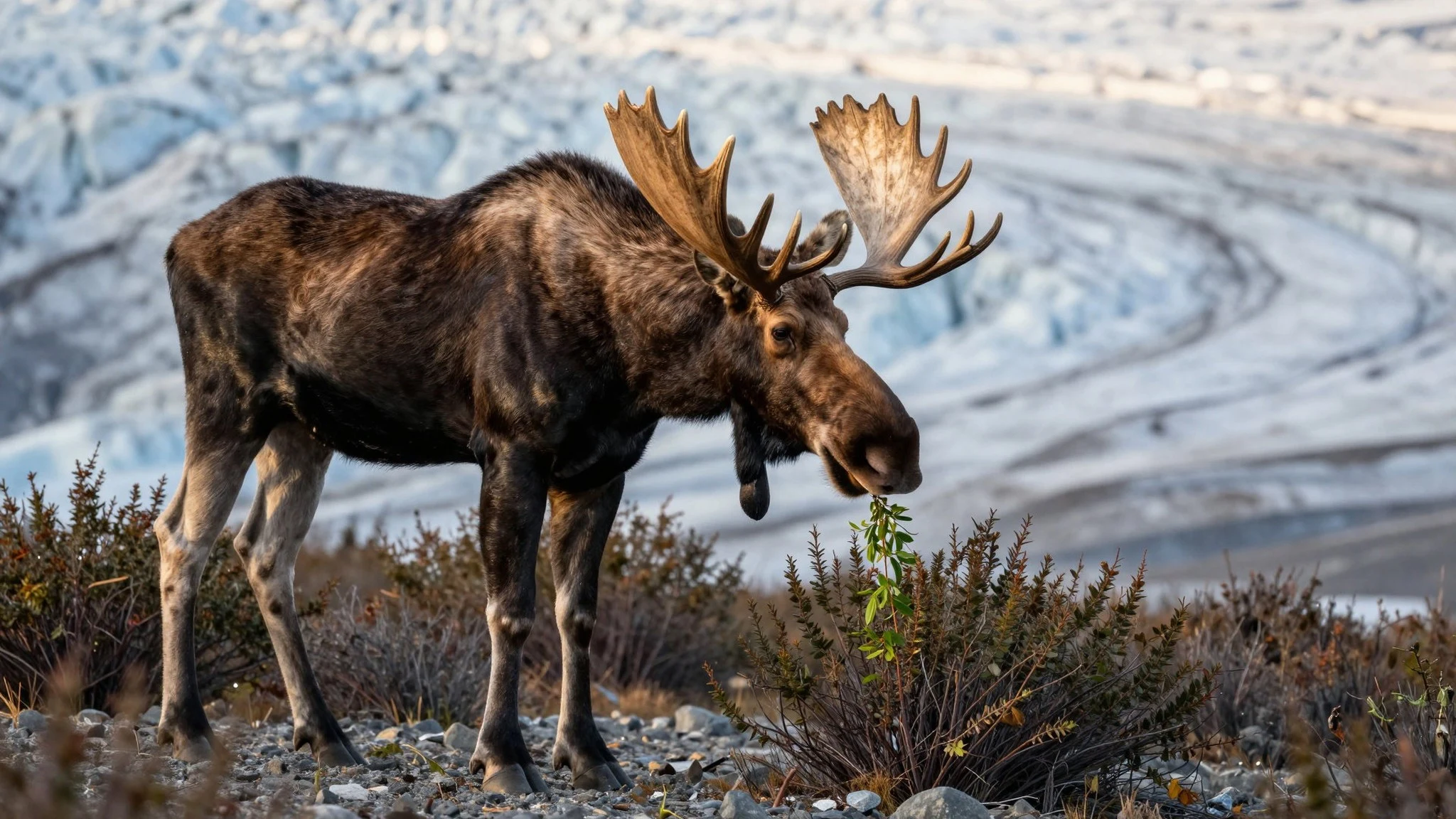
- Brown bear (animal)
The brown bear is a very big bear with a muscly hump on its shoulders and wide, powerful paws, rather like built-in shovels for digging. Its fur can be creamy, reddish or dark brown. Bears are a regular presence around Exit Glacier, though I can't say where or when you are likeliest to spot one. Listen carefully when the rangers brief you on how to behave around bears, and follow their guidance. It is part of watching them well.