Estes Park
Estes Park, United States
Estes Park is a small Rocky Mountain town at the gate of a national park, with elk, high trails and cool air.
The place
Estes Park is a small town in Larimer County, northern Colorado, with a population of about 5,900 and a setting far bigger than its size. It sits at 2,293 metres on the eastern side of the Front Range, where the plains end and the high country begins. The Big Thompson River runs through town, and Lake Estes and its dam lie just below the main streets. Forest land borders the town to the north, south and east, and the granite face of Lumpy Ridge rises immediately to the north. On the western side is the eastern entrance to Rocky Mountain National Park, whose headquarters are here, so the town works as the park's front door. Most visitors come for the outdoors: hiking, fishing, horse riding, birdwatching, rafting and climbing, with Longs Peak the great target for mountaineers. There is also golf. The word 'park' in the name has an older meaning than a protected area. In this part of the American West it describes a broad, open mountain valley, and the town takes its name from an early settler, Joel Estes, who tried to make a living from farming. The centre is a short, busy run of shops, galleries, sweet counters and restaurants along the main road, and it is crowded in summer and on holiday weekends. Two landmark buildings give it character: the Stanley Hotel and the Baldpate Inn, a mountain lodge. The climate is dry: summers are warm and sometimes hot, winters cold, with lows far below freezing. At this altitude the sun is strong and the air thin, so breathlessness on the first day is normal. Several small ski hills once operated nearby, but all have closed.
Its story
Estes Park was a summer home long before it had a name on any map. The Arapaho people, who called the valley 'the Circle', camped there in the warm months, and in the 1850s their camps around Mary's Lake included stone fireplaces, tipi sites and dance rings. Elders who returned in the early twentieth century could still point out those places, along with old trails, a buffalo trap, and the eagle traps on Longs Peak where feathers were taken for ceremonial use. Ute and Apache groups also used the valley, the Utes mainly to hunt bighorn sheep, and the Arapaho remembered fighting both. Settlement from outside began in 1859, when Joel Estes, a farmer from Missouri, founded the community; the land then belonged to Nebraska Territory. Farming at this height is hard work, and the town's future lay elsewhere. Its meadows, river and mountain views drew visitors, then summer resorts, lodges and hotels, and a main street of tourist businesses. Painters did their part: Albert Bierstadt was commissioned to paint the valley with Longs Peak behind it, and pictures like his helped fix the image of the Rockies in the minds of people who had never been. The national park later turned a seasonal resort into a permanent gateway. Skiing came and went, and the old ski hills are gone, though the habit of winter visits remains in quieter form.
What to see
- Rocky Mountain National Park and Trail Ridge Road — West of town
Estes Park is the eastern gateway to Rocky Mountain National Park, and most visitors spend their days inside it. Trail Ridge Road climbs over the mountains towards Grand Lake on the far side and is the classic drive, but it is seasonal and closes with snow, so check the park's official site before planning around it. - The Stanley Hotel — Above the town centre
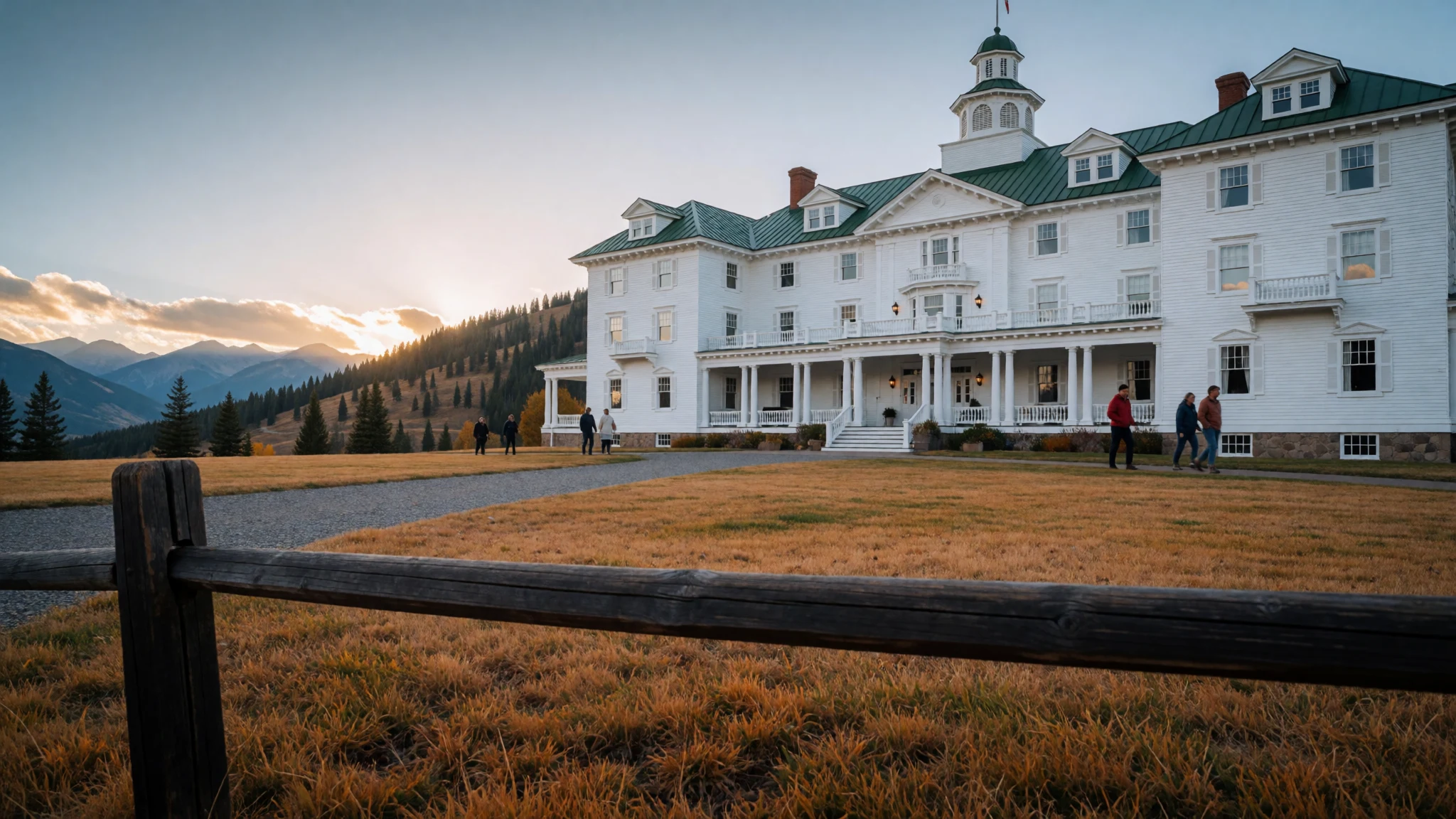
The Stanley Hotel stands on a rise above Estes Park and is the town's best-known landmark. Even without staying, visitors walk the grounds for the mountain views and the architecture. Check the hotel's own website for tours and opening arrangements, since these change with the season.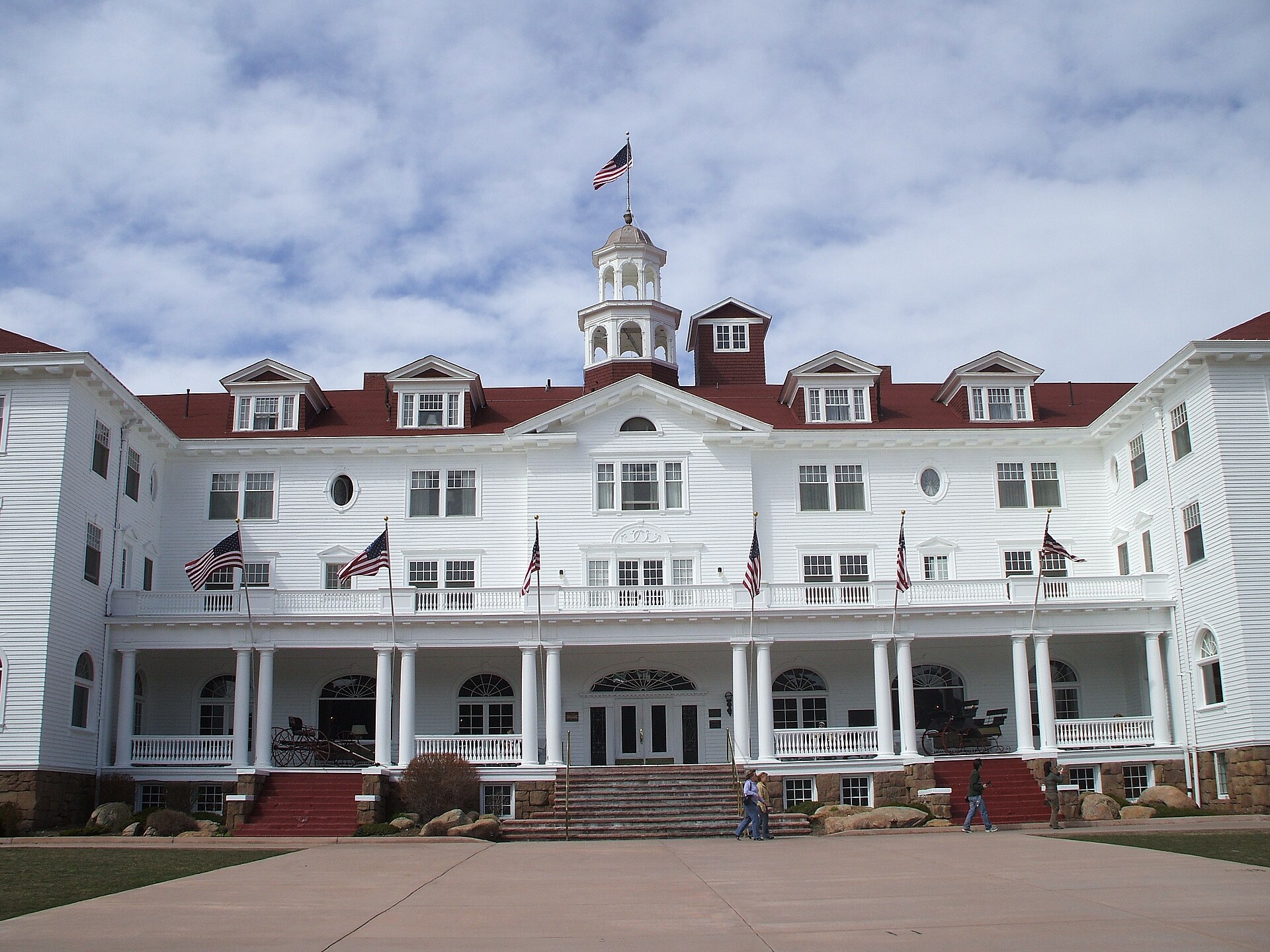
- Lumpy Ridge and Gem Lake — North of town
Lumpy Ridge, the granite ridge just north of Estes Park, holds trails with views back over the town and valley. The walk to Gem Lake is a popular one, and the panorama taken from there shows the whole basin. Start early, carry water, and allow for the thin air, since even short climbs feel harder here.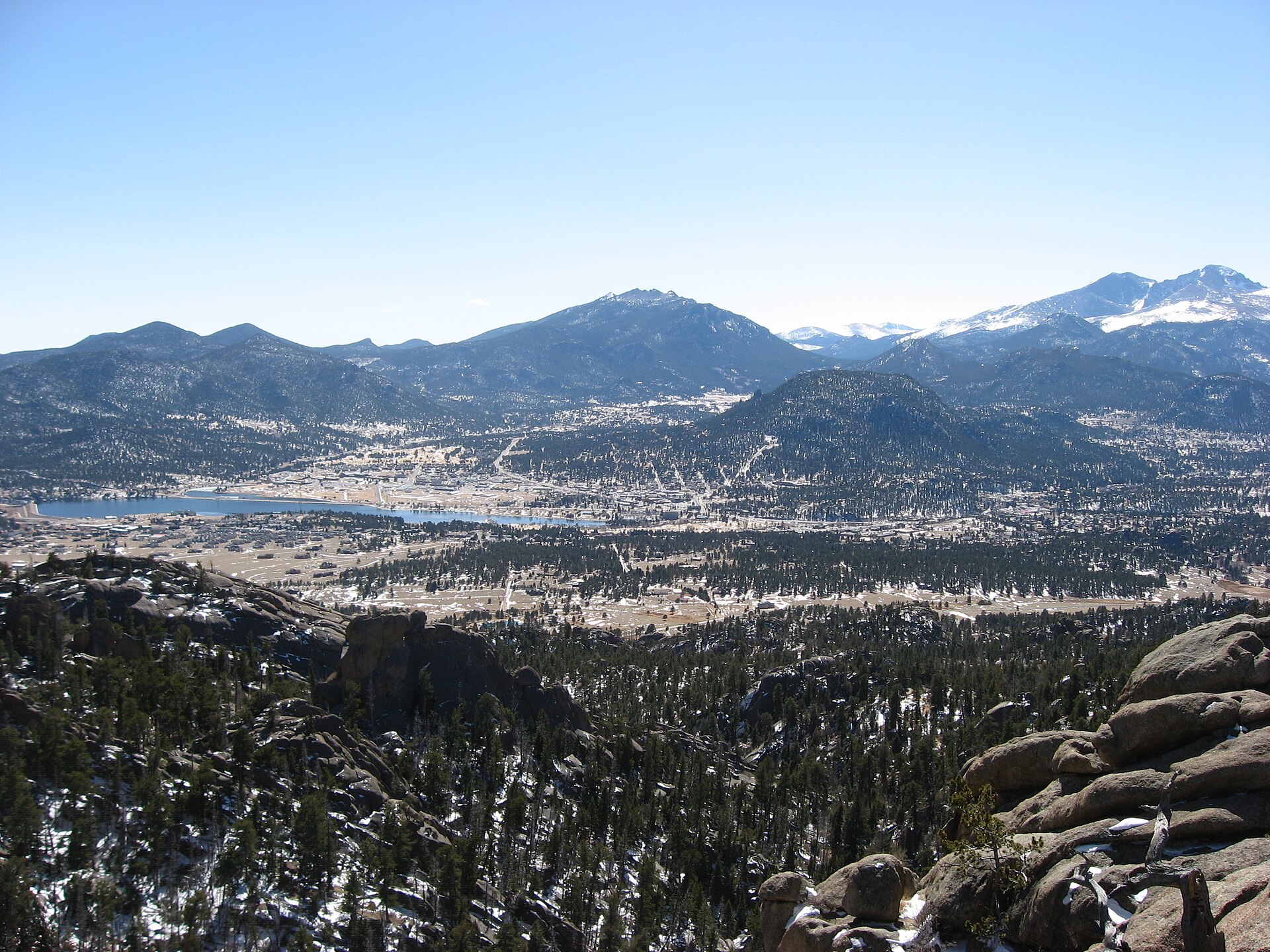
- West Elkhorn Avenue — Town centre
West Elkhorn Avenue is the main street of Estes Park, a strip of shops, galleries, sweet counters and restaurants with mountains visible at the end of the road. It is busiest in summer and on festival weekends, with events such as a Scottish festival in September and Elk Fest in early October. Evenings are calmer for a stroll.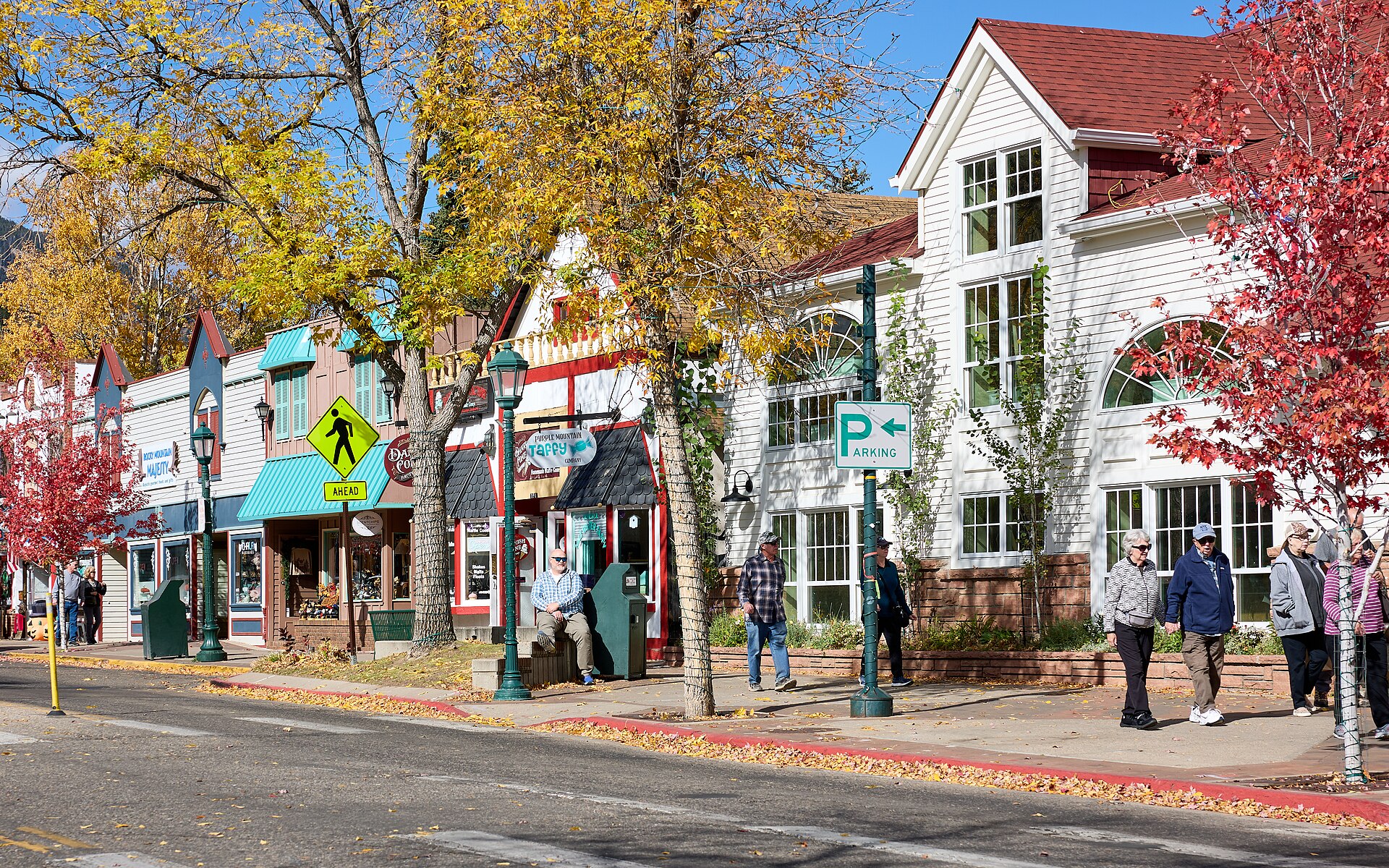
- Wildlife watching — Meadows and slopes around town
Elk, bighorn sheep and mule deer are the animals most visitors hope to see around Estes Park, in meadows and on slopes at the town edge and inside the national park. They are wild and can be dangerous, especially elk in autumn. Watch from a distance, use binoculars, and never feed them. - Via ferrata and the Open Air Adventure Park — In and around town
The Estes Park area has two via ferrata routes, Peregrine Ridge and the Cloud Ladder, where fixed cables and rungs let people climb rock faces without technical skill. In town, the Open Air Adventure Park offers ropes courses and zip lines. Book through the operators and check their safety and age rules online.
Culture
Estes Park has the culture of a mountain resort that has welcomed summer guests for well over a century, and its pace follows the seasons. Outdoor life comes first: conversation in cafés turns to trail conditions, weather and wildlife, and many people working in town are seasonal staff who arrive for the busy months. Beneath that sits older heritage. The Arapaho spent summers in the valley long before settlers came, and the town's historical museum is the place to learn about both Native and settler history. The year is marked by festivals: a Scottish festival and a yoga conference in September, Elk Fest in early October, a rodeo season, and a parade with lights, called Catch the Glow, the weekend after Thanksgiving. The Park Theatre, the galleries and the craft shops give evenings something to do beyond the restaurants. Service is friendly and informal in the American way: staff chat readily, and tipping in restaurants and for guides is customary. Days start early, and many people turn in early after a day at altitude. Conservation shapes daily life too, since the town depends on its wildlife and its national park, from bear-proof storage boxes at campsites to signs warning against feeding animals. Give elk and other wildlife plenty of room, never feed them, and lock food away in bear-proof boxes or vehicles when camping.
What to wear
Estes Park has no single local costume, but the Arapaho and other Plains peoples who knew the valley traditionally wore garments of tanned hide decorated with beadwork, porcupine quillwork and feathers. Such regalia appears today at ceremonies and powwows rather than in daily life. The look most associated with the town is the cowboy West: denim, pearl-snap shirts, wide-brimmed felt or straw hats and leather boots, seen at rodeo time and on country-music evenings. Day to day, residents and visitors alike dress for the outdoors, in fleece, padded jackets, quick-dry trousers, trail shoes and baseball caps. In restaurants and at the theatre the dress code is relaxed. A visitor should plan for changeable mountain weather at 2,293 metres: warm layers even in summer, a waterproof shell for afternoon storms, sunglasses, sunscreen and a hat, because the sun is strong at height. Sturdy, broken-in walking boots or trail shoes with good grip suit the rocky paths of Lumpy Ridge and the national park. Add gloves, a warm hat and insulated boots for winter. There are no modesty rules to worry about in town, and nothing special is needed for the Stanley Hotel beyond tidy casual clothes.
What to eat
- Breakfast plates — Breakfast cafés in the town centre
Eggs, hash browns, pancakes and biscuits are the standard start to a hiking day in Estes Park, served at local breakfast cafés around the centre. Locals and seasonal workers fill the counters early, so expect a short wait on summer weekends. - Doughnuts — Bakeries near the main street
Fresh doughnuts are a small-town habit in Estes Park, bought warm from a bakery counter in the morning and eaten on a bench or in the car on the way to the trailhead. Go early, as popular shops sell out. - Fruit pie — Pie shops on the main road
Fruit pie, from apple to seasonal berry, is a traditional mountain-town treat, sold by the slice or whole at dedicated pie shops on the main road. A slice with coffee makes a good afternoon stop after a day in the national park. - Burgers — Grill restaurants on the main streets
A beef burger with a side of fries is the default lunch in Estes Park, and several grill restaurants on the main streets have loyal local followings. Order it with a cold drink and eat outside if the weather allows. - Mexican plates — Cantinas and restaurants in the centre
Tacos, enchiladas and sizzling fajitas are widely served in Estes Park, and a cantina with a bar and a separate dining room is a reliable evening choice after a day on the trail, often busy with locals. - Wild game — Lodge dining rooms and steakhouse-style restaurants
Elk, bison and venison dishes, along with mountain trout, appear on menus across Estes Park, reflecting the Rocky Mountain table. Try them at a lodge or steakhouse-style restaurant in town, or ask what is local that day.
Plan it
Best time. June to September for open high roads, long days and the full range of trails; early October for autumn colour and Elk Fest, though nights turn cold. Winters are cold and snowy at this height, and Trail Ridge Road closes for the season.
How long. 2–3
Getting there. Fly into Denver International Airport, the nearest major airport, then hire a car or book a shuttle or limousine transfer for the mountain drive to Estes Park; small airfields near Boulder and Fort Collins have limited services. Several approach roads climb from the plains towns of Loveland, Lyons and the Boulder side, and a seasonal route crosses Trail Ridge Road from Grand Lake.
Budget. mid
Tips
- Book rooms well ahead for summer and holiday weekends, as lodging is mostly small motels and cabins and fills fast
- Allow a day to adjust to the altitude: drink plenty of water, go easy on the first hikes and use sun protection
- Start trails and wildlife watching early, since afternoons bring crowds and mountain weather
- An entrance fee applies for the national park; check the park's official site for current rates and road status, and the town site at http://www.estes.org/
- Pay by card in most places, but carry a little cash for small stalls and car parks
Etiquette
- Keep well back from elk and other wildlife, and never feed them
- Store food in bear-proof boxes or locked vehicles when camping
- Stay on marked trails and take your litter with you
Nearby
Sources
- Wikidata Q1010533 (CC0)
- Wikipedia: Estes Park, Colorado (rev 1375868713) (CC BY-SA 4.0)
- Wikivoyage: Estes Park (rev 5401800) (CC BY-SA 4.0)
- Estes Park from Gem Lake — Nyttend (Public domain)
- West Elkhorn Avenue, Estes Park (2024) — Frank Schulenburg (CC BY-SA 4.0)
- Estes Park and Longs Peak — Albert Bierstadt (Public domain)
- Estes Park Main Street 1912 — EB Marshall (Public domain)
- Estes Park City Centre — Wusel007 (CC BY 3.0)
- Stanley Hotel in Estes Park — Rominator (Public domain)
- Elk Meadow Lodge & RV Resort, Estes Park, 2009 — DimiTalen (CC0 1.0)
- Bear box at Estes Park Campground — Tony Webster (CC BY 2.5)


Wildlife
- Elk (animal)
The elk, also called the wapiti, is a giant of the deer family, second in size only to one other cousin. Visitors hope to spot it in the meadows and on the slopes at the edge of Estes Park and inside the national park. Keep a generous distance, speak softly, and let it graze undisturbed. A local guide can help you watch safely. Never feed it, because wild animals should stay wild.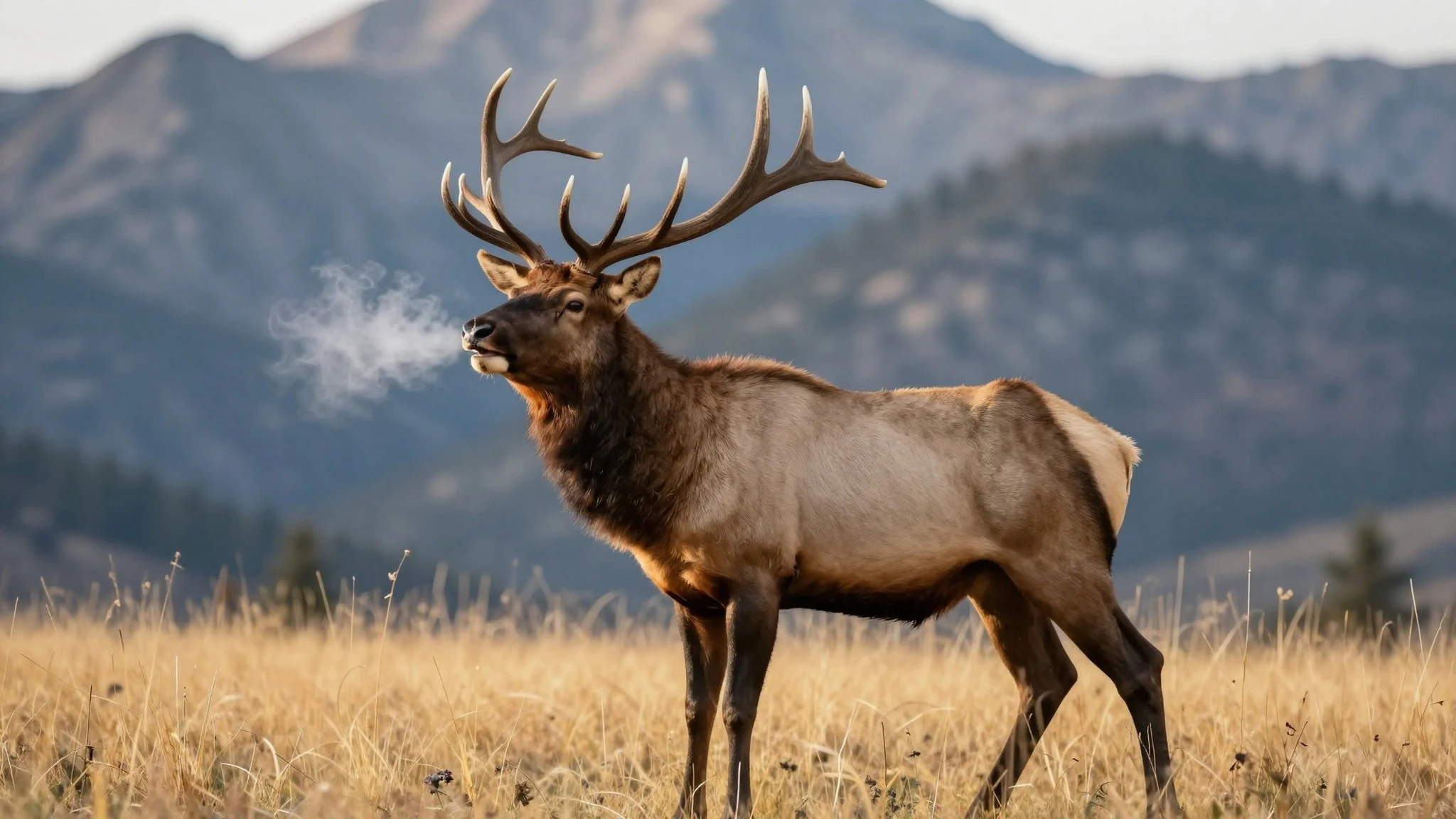
- Bighorn sheep (animal)
The bighorn is a wild sheep named for its enormous curling horns, which are heavy enough to make you marvel. Many visitors hope to see it on the slopes and in the meadows at the edge of Estes Park and inside the national park. Watch from far away, keep your voice low, and move slowly. A guide can help you find it respectfully. Never offer food, however close it wanders.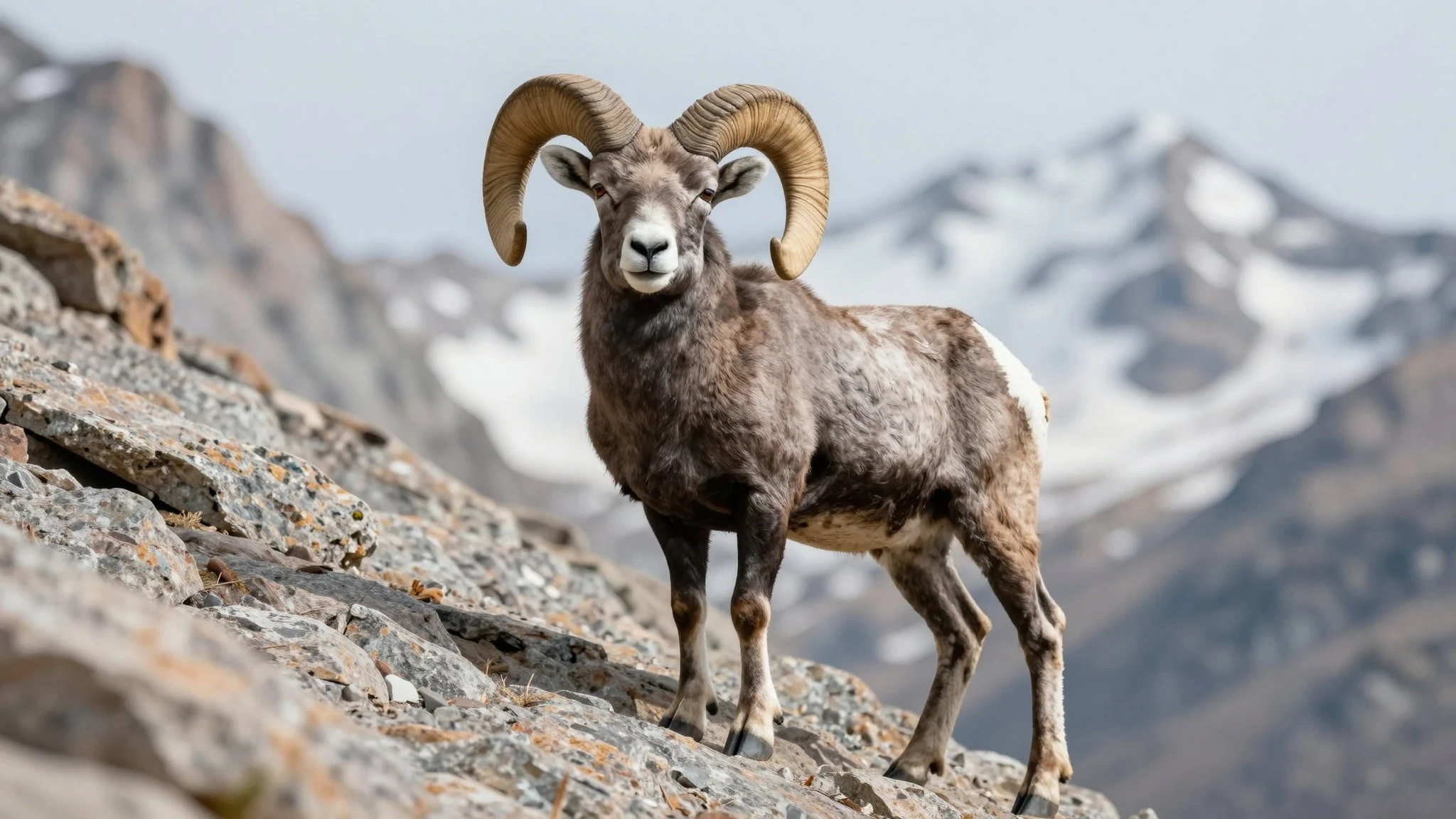
- Golden eagle (bird)
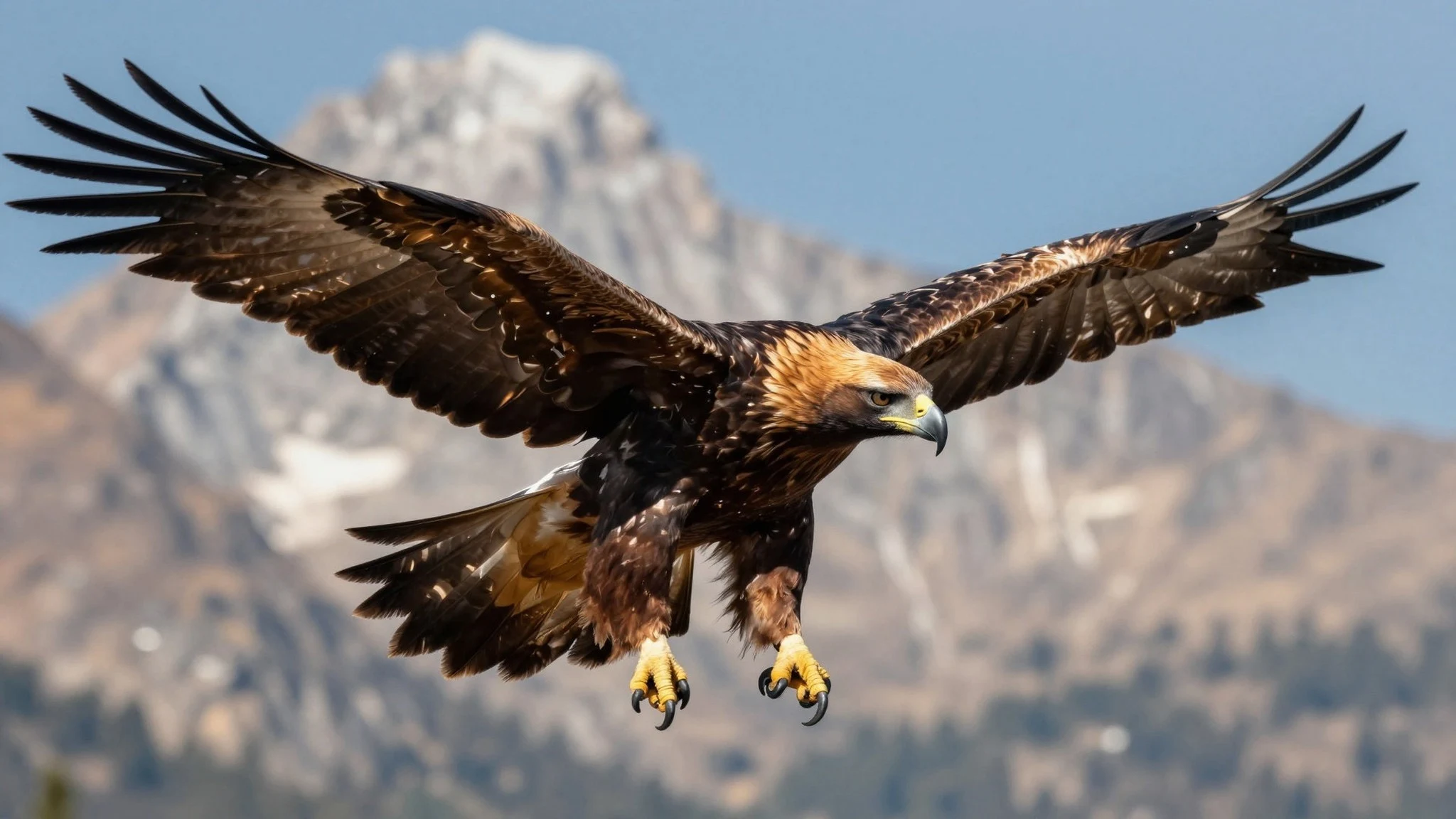
The golden eagle is a dark brown bird of prey with a golden shimmer on the back of its neck, like a crown. Its story here is old: people once trapped eagles on Longs Peak to gather feathers for ceremonies. It hunts hares, rabbits and marmots. Scan the sky with binoculars from a distance, stay quiet, and consider a guide. Never feed or lure a wild bird.