Dry Tortugas
Dry Tortugas, United States
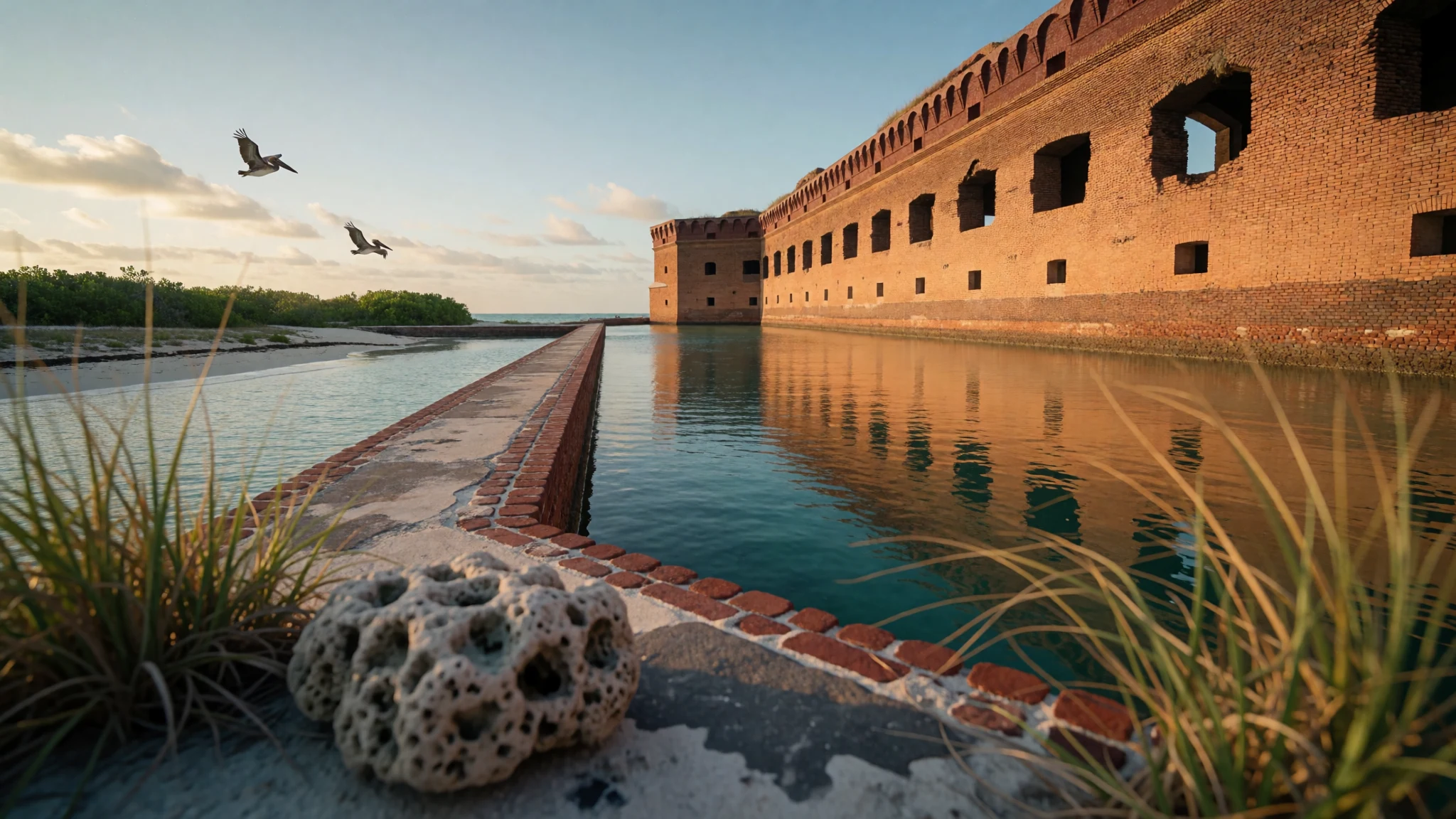
Dry Tortugas is a remote ring of low coral islands where a vast brick fort stands beside clear, snorkel-friendly water.
The place
Dry Tortugas National Park lies in the Gulf of Mexico about 110 km west of Key West, at the far end of the Florida Keys chain. More than 99 percent of its 64,657 acres is open water, so the land amounts to a scatter of low sand-and-coral islands, called keys, and one enormous brick fort. Garden Key holds Fort Jefferson and the campground. Bush Key and Long Key sit close by across shallow channels, while Loggerhead Key lies farther off and carries a lighthouse. None of them rises more than a few steps above the sea, and trees are scarce.
The park has no road link at all. It can be reached only by boat or seaplane from Key West, and that fact shapes every visit. Most people come on a day trip, spend a few hours walking the fort and snorkelling, then head back in the afternoon. Campers stay on Garden Key and must bring their own food, water and supplies, because the park offers almost nothing. Restaurants and beds are back in Key West.
The word Dry refers to the lack of fresh water on the surface. The sun is strong, shade is thin and the sandy soil drains at once. This is the driest corner of Florida, with about 970 mm of rain a year, though tropical storms do pass through. The reefs are in notably good condition for the Florida Keys, which is why snorkellers come, along with birdwatchers drawn to the nesting seabirds. The park was established in 1992 and also forms part of a biosphere reserve shared with the Everglades. Visitor numbers are modest, so the islands feel quiet once the day boats have left.
Its story
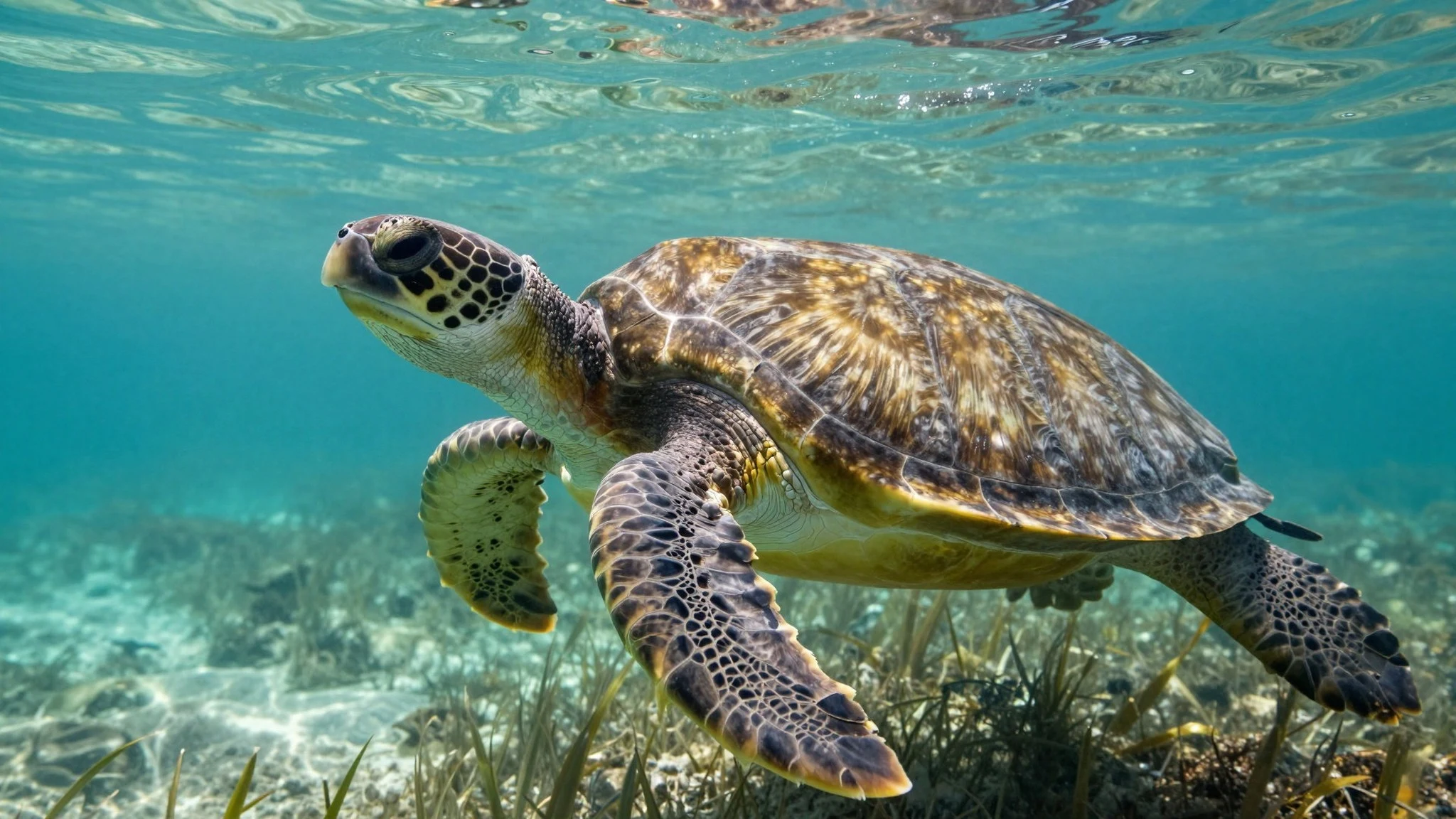
Dry Tortugas gets its name from turtles and thirst. Juan Ponce de León stopped here in 1513 and hauled in about 160 turtles during his visit, so the islands became Las Tortugas. Dry was added later, because the keys have no fresh water on the surface. The name is among the oldest European place-names still in use in the United States.
The reefs have claimed ships for centuries. In 1742 HMS Tyger ran aground, and the crew lived on Garden Key for 56 days. They fought off a Spanish sloop before leaving in several small boats for Jamaica. Far larger fortunes went down too. A hurricane drove the Spanish galleon Nuestra Señora de Atocha onto a reef near the islands in 1622, and the treasure hunter Mel Fisher found the wreck in 1985.
The United States took Florida from Spain in 1819, and these islands quickly looked valuable as a place to watch the Straits of Florida and the entrance to the Gulf. A lighthouse went up on Garden Key, and in 1846 work began on Fort Jefferson, a fortress that was never completed. Its walls, made of millions of bricks, now dominate the horizon from every direction.
Naturalists came as well. John James Audubon visited in 1832 to study the seabirds, and the nesting colonies are still a reason to make the journey.
What to see
- Fort Jefferson — Garden Key
Fort Jefferson fills most of Garden Key with red-brick walls, arched casemates and a wide moat. A self-guided walk takes in the gun galleries and, from the top level, views over the channels. Heat reflects off the brick, so the shaded corridors are the best places to rest.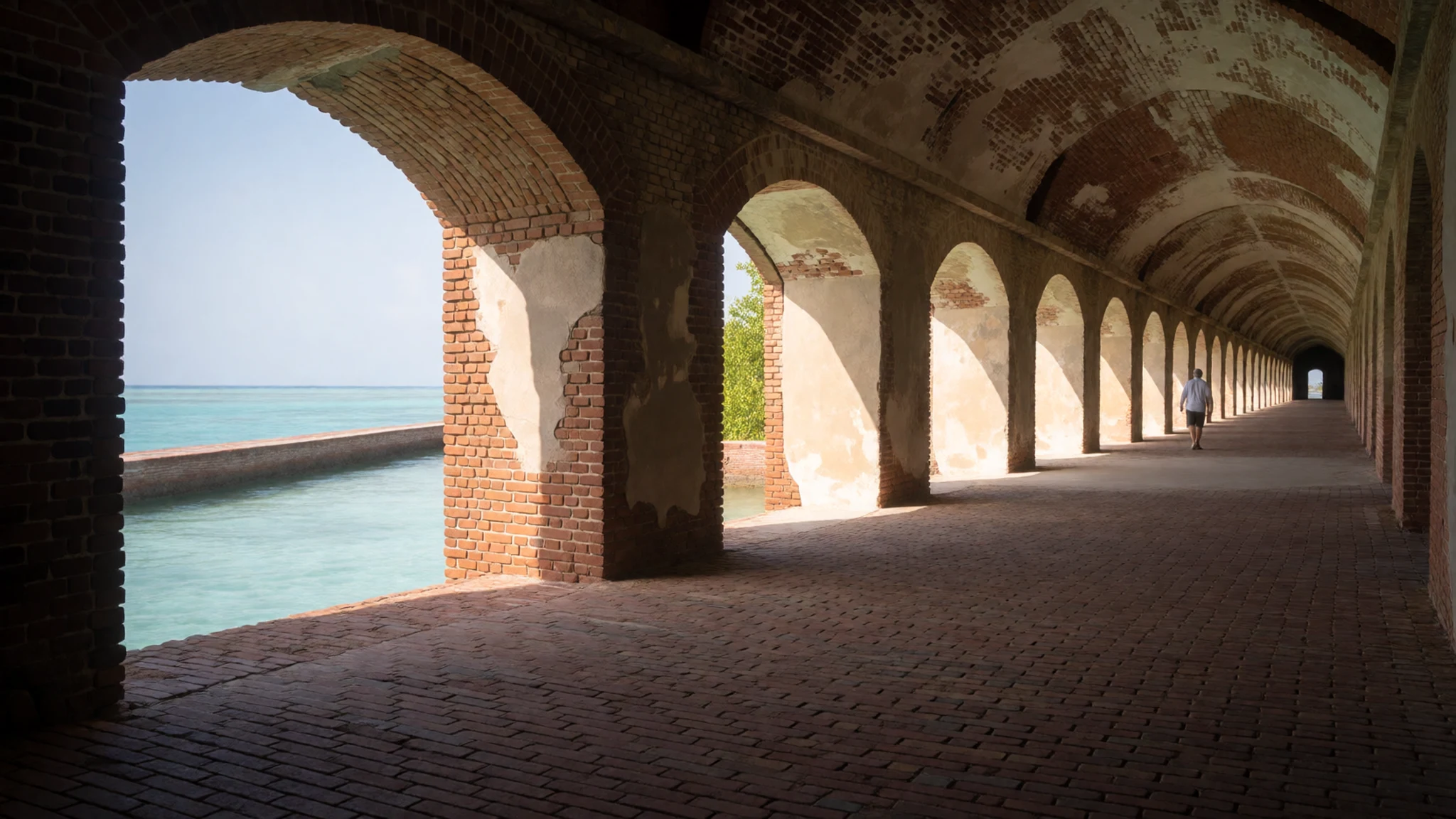
- Snorkelling along the moat wall — Garden Key
The outer moat wall has become a reef of sorts, with fish sheltering among the old stonework and coral on the seaward side. Water is shallow and usually clear, so it suits beginners. Visitors should bring their own mask, or check what the boat operator supplies.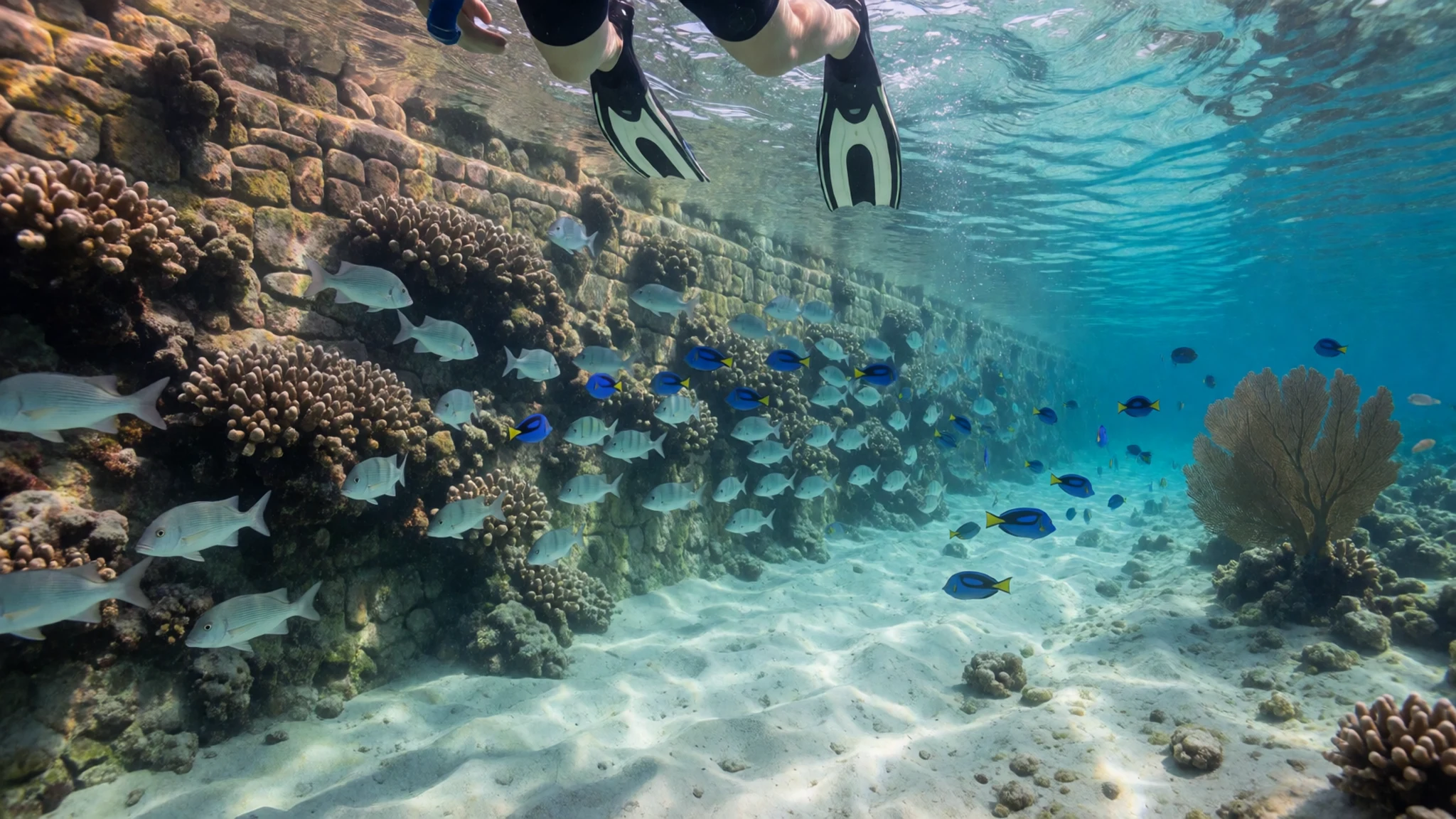
- Bush Key and Long Key — East of Garden Key
These two keys sit just across the channel from the fort and are best viewed from the Garden Key shore. Seabirds nest on them in season, so access is often restricted. Binoculars help, and so does checking current closures with park staff on arrival.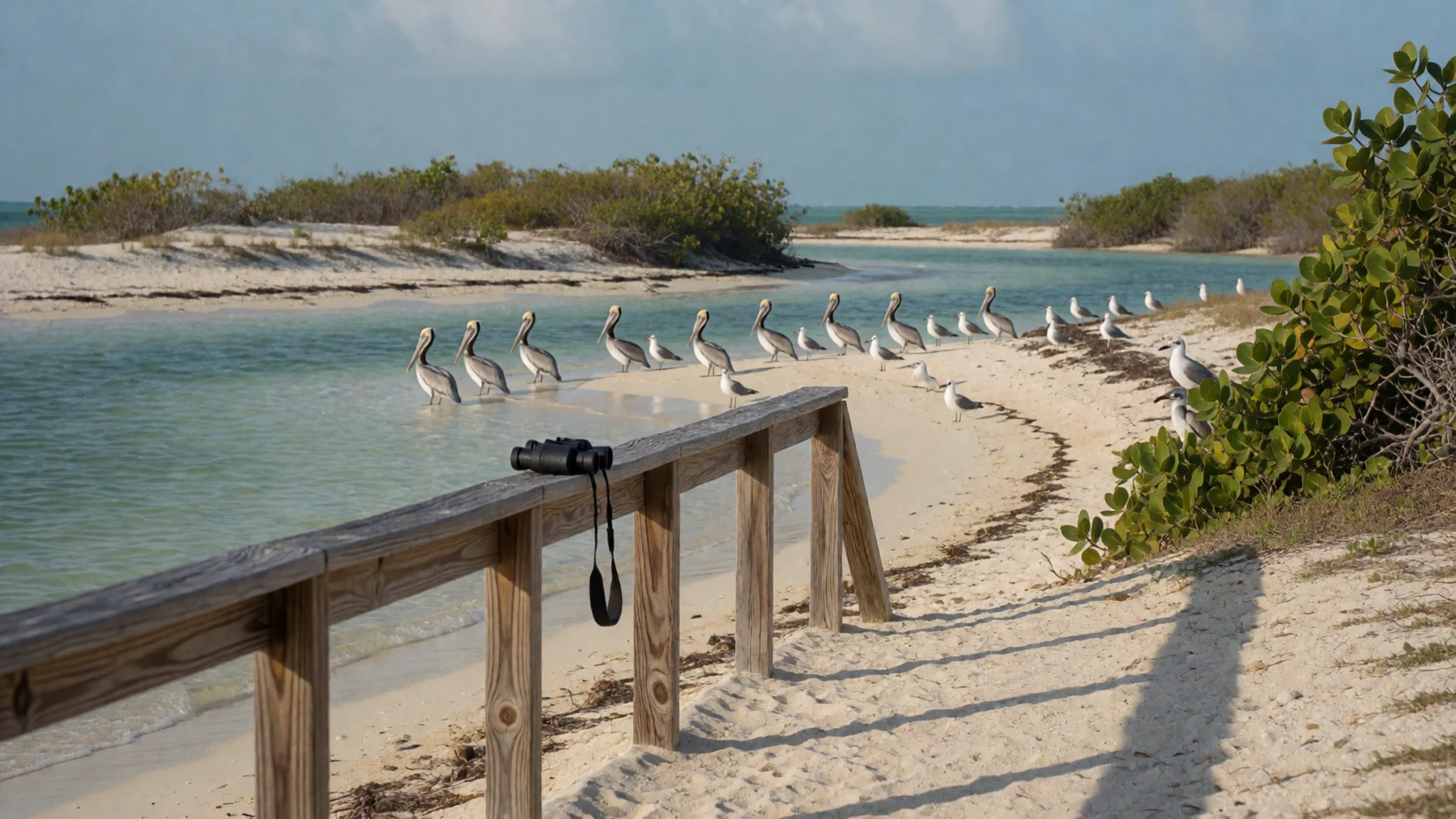
- Loggerhead Key — West of Garden Key
Loggerhead Key is the larger, flatter island to the west, with a lighthouse that replaced the older Garden Key light. It is usually reached by private boat or special arrangement, and it offers quieter beaches and reef. Check the official site before planning a landing.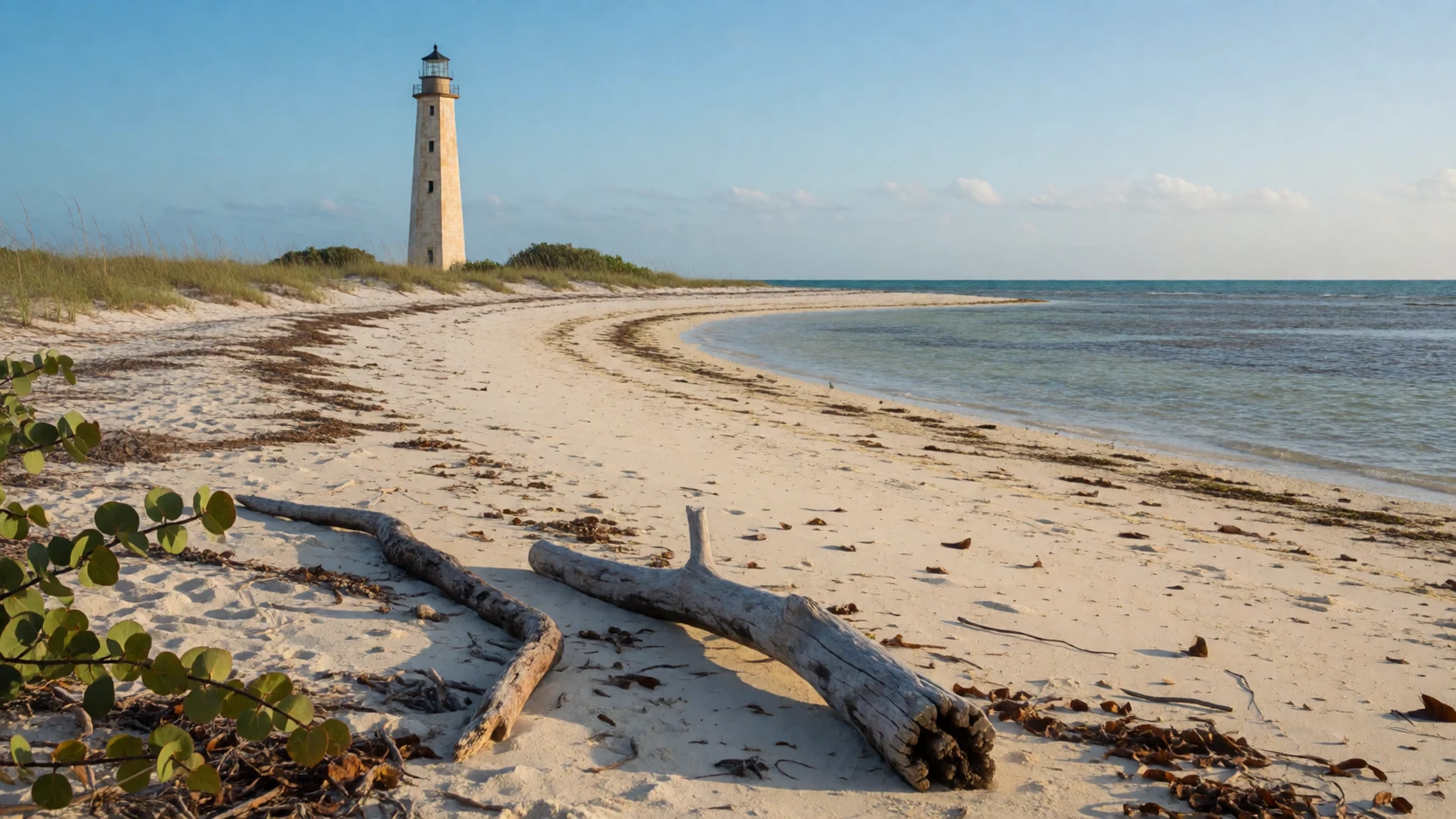
- Reefs and shipwreck dives — Waters around the keys
Beyond the shallows, divers explore reef walls and wrecks scattered through the archipelago, some of them very old. Guided trips run from Key West and from some charter boats. Conditions vary with season and weather, so skill level and local advice matter more than ambition.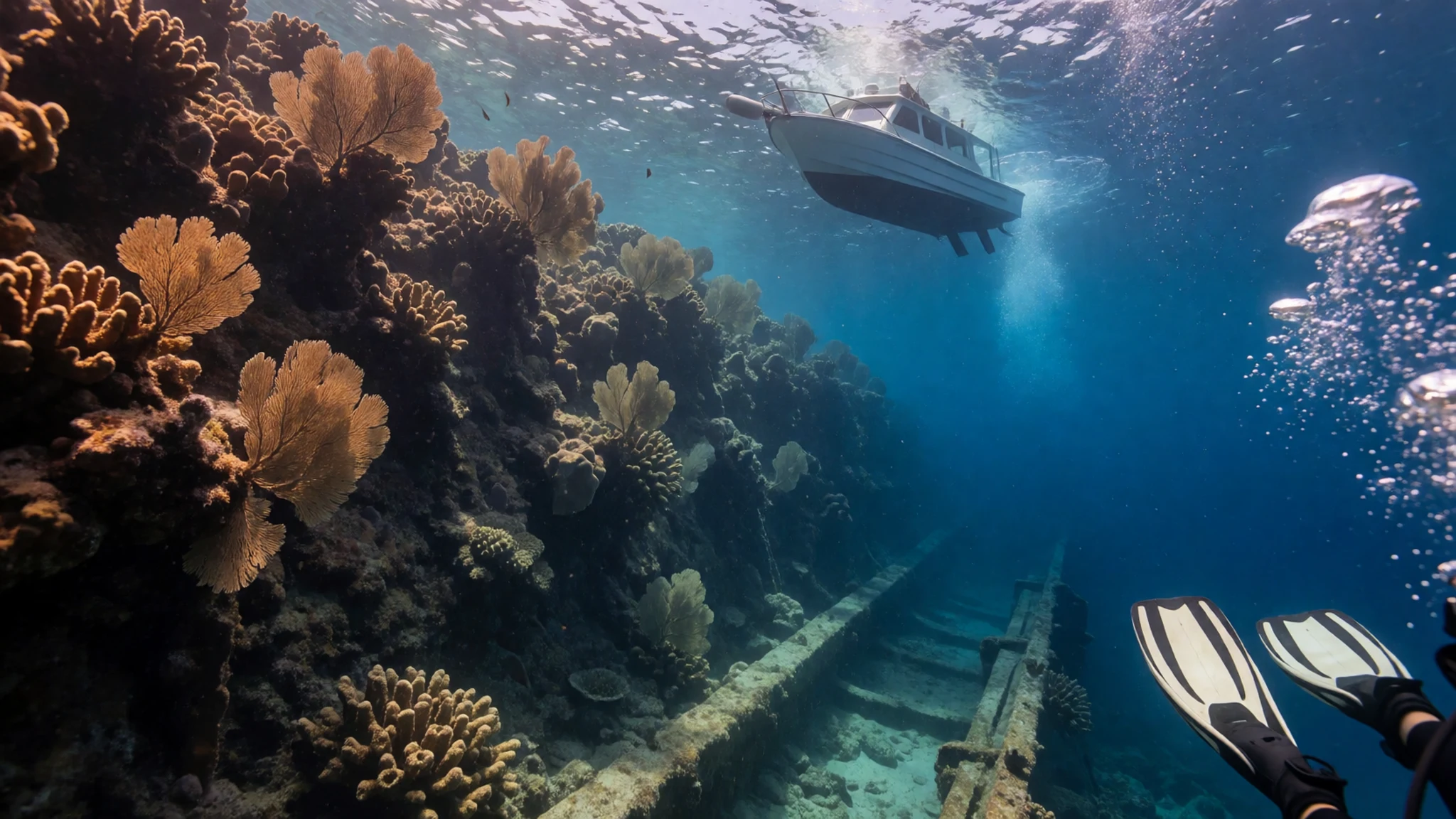
Culture
Dry Tortugas has no settled community, so its culture is a mix of military engineering, seafaring and conservation. The fort speaks of nineteenth-century American defence planning, and its scale shows how seriously the government took the Gulf entrance. The wider story belongs to sailors: turtle hunters, wreck survivors, lighthouse keepers and treasure salvors all passed through, and their traces now sit under protective rules.
The nearest living culture is in Key West, where Cuban, Bahamian and fishing-town habits blend into a relaxed, outdoorsy island life. Many of the boat crews and rangers who work at the park live there, and conversation on the crossing often turns to weather, fish and the sea.
Today the islands are managed as a place for reefs and nesting birds as much as for history. Visitors are asked to carry their rubbish out, keep to marked paths, and respect closed areas of beach. Fishing and boating are allowed in set zones, and rangers are happy to explain which. The quiet is part of the appeal, and most people lower their voices without being told once they see the nesting colonies.
Bring a reusable bottle, because drinking water is not available on the islands for day visitors beyond what the boat provides.
Do not touch or stand on coral, and never take bricks, shells or other objects from the fort or beaches, since everything on these islands is protected.
What to wear
Dry Tortugas has no traditional local dress, because nobody has lived here permanently in modern times. The nearest regional tradition belongs to Key West and the wider Caribbean, where light cotton and linen have long been the cloth of choice. The guayabera, a loose cotton or linen shirt with pleats and pockets, came with Cuban communities and is still worn for dressier occasions in the Keys.
What people wear now is shaped by sun and sea. Boat crews and rangers dress in quick-drying shirts, shorts, caps and sunglasses, while many passengers arrive already in swimwear under a loose top. Rash vests and long-sleeved sun shirts are common among snorkellers, since the sun is intense and shade is thin. Evenings in the dry season can feel cooler on the water, so a light layer is useful.
Visitors should plan around heat, wind and rough surfaces. A wide-brimmed hat, sunglasses and a long-sleeved sun-protective top matter more than fashion. Sunscreen should be reef-friendly where possible. Closed-toe shoes or sturdy sandals are better than flip-flops on the fort's brick and uneven paths, and water shoes help at the beach edge. There are no religious sites with dress codes, but a dry change of clothes and a towel make the return crossing far more comfortable. In winter, between November and April, a windproof jacket for the boat deck is worth packing.
What to eat
- Key lime pie — Bakeries and cafés in Key West
Key lime pie is the dessert most associated with the Keys, tart and creamy on a biscuit base. Bakeries and cafés in Key West sell slices or whole pies, and a portion makes a sensible treat for the morning before the boat.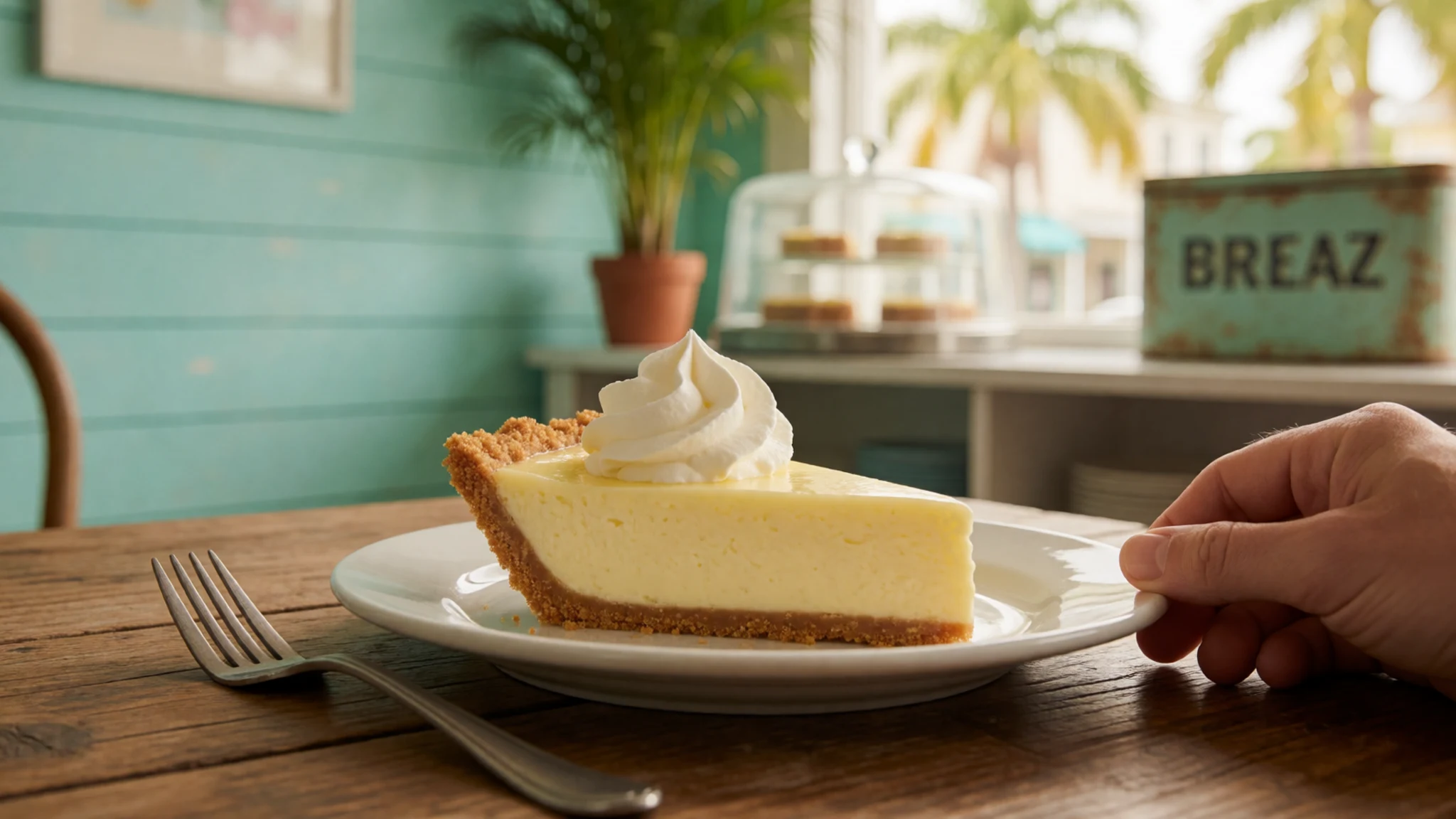
- Conch fritters — Harbour-side eateries in Key West
Conch fritters are fried balls of chopped conch in seasoned batter, served hot with a dipping sauce. They are a staple of casual Key West eateries, and a good snack before or after a day on the water.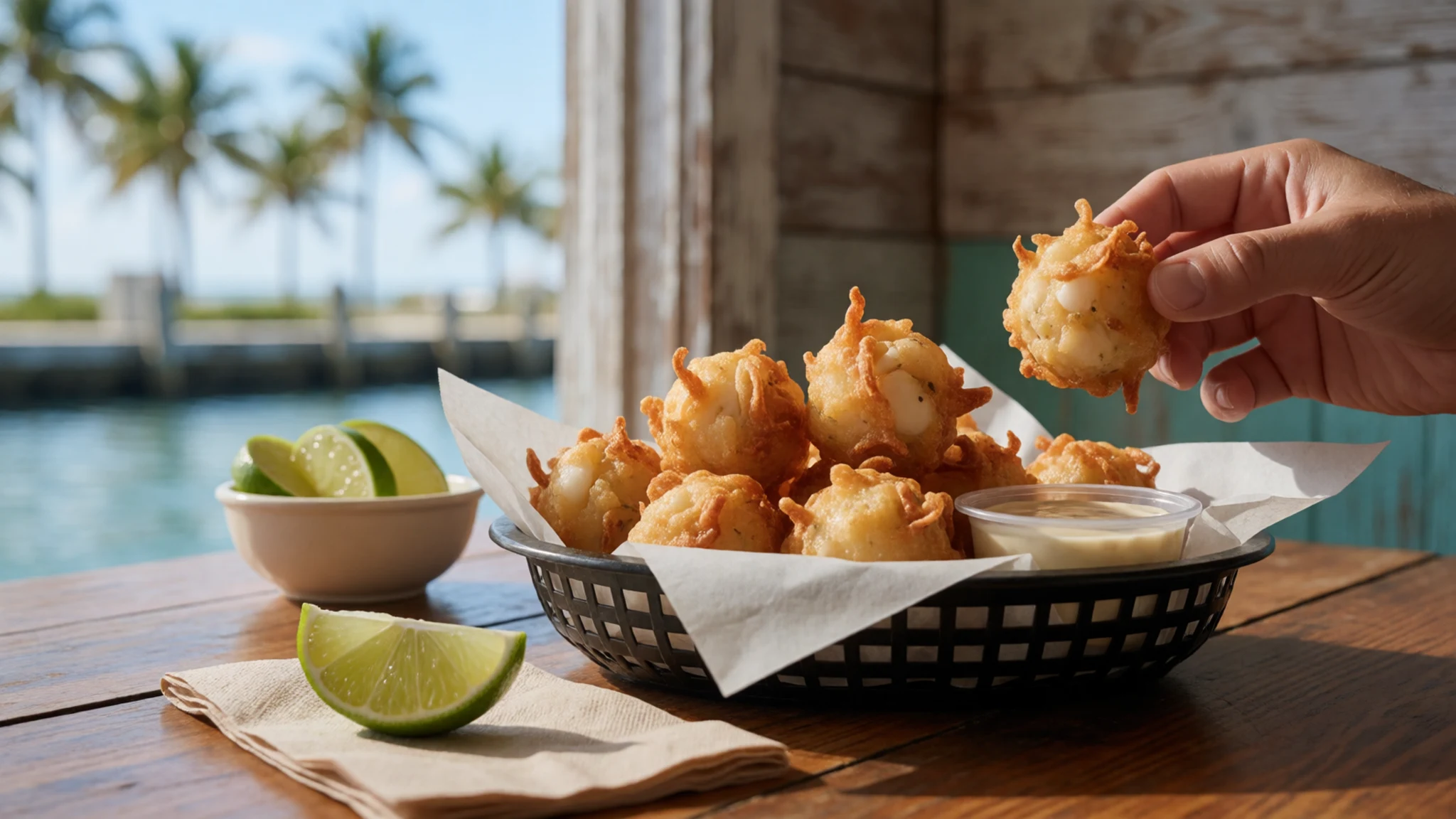
- Cuban sandwich — Delis and sandwich counters in Key West
The Cuban sandwich layers roast pork, ham, cheese and pickles in pressed bread. It travels well, so it is a popular choice for picnics at the fort, bought from a deli or sandwich counter before boarding. - Grouper or hogfish sandwich — Fish shacks and dockside restaurants in Key West
Local white fish, grilled or fried and served in a roll, is a reliable lunch in the Keys. Menus change with the catch and the season, so ask what came in that day. - Picnic lunch from the boat — The day-boat from Key West
Day trips usually include food on board, though options vary by operator, and the park itself sells almost nothing. Many visitors carry fruit, nuts and extra water in a cooler. Check the operator's page for what is included before packing your own.
Plan it
Best time. November to April is the dry season, with calmer, lower-risk weather and winter lows around 18 °C. May to October is the rainy season and overlaps with hurricane season, when trips can be cancelled; summer highs reach about 33 °C and the sun is fierce.
How long. 1–2
Getting there. Fly to Key West, then take the Yankee Freedom III catamaran or a seaplane to Garden Key. The park is only reachable by boat or seaplane; there is no road and no car access.
Budget. mid
Tips
- Book the boat or seaplane well ahead, and check the official site at https://nps.gov/drto for current operators and closures
- Bring all drinking water, food and sun protection, since services inside the park are very limited
- Start early and walk the fort before the brick heats up, then snorkel later in the day
- Campers need to carry everything in and out, and the campground has only eight primitive sites
- Report any lionfish sightings to park staff straight away, and do not touch them
Etiquette
- Keep off coral and out of marked nesting areas
- Take all rubbish back to Key West
- Do not take bricks, shells or other objects from the islands
Nearby
Sources
- Wikidata Q1143655 (CC0)
- Wikipedia: Dry Tortugas National Park (rev 1381858839) (CC BY-SA 4.0)
- Wikivoyage: Dry Tortugas National Park (rev 5239036) (CC BY-SA 4.0)
- Photo 01: Fort Jefferson, Dry Tortugas (U.S. National Park Service) (Public domain)
- Photo 02: NPS Dry Tortugas map (Public domain)
- Photo 03: Bush and Long Key (Albert E. Theberge, NOAA Corps) (Public domain)
- Photo 04: Under the sea at Dry Tortugas National Park (John Dengler, NPS) (CC BY 2.5)
- Photo 05: Dry Tortugas (Dominic Sherony) (CC BY-SA 2.0)
- Photo 06: Fort Jefferson, Garden and Bush Keys (Alan Schmierer) (CC0 1.0)
- Photo 07: Fort Jefferson, Garden and Bush Keys (Alan Schmierer) (CC0 1.0)
- Photo 08: Two people snorkelling the fort wall (Denise Diaz, NPS) (Public domain)


Wildlife
- Green sea turtle (animal)
The green sea turtle is a big sea turtle that grazes on seagrass, rather like an underwater cow. Its shell is olive to black, and the name comes from the green-tinted fat beneath it, not from its outside. Turtles like these gave the islands their name: when Juan Ponce de León stopped here in 1513, he took about 160 of them, and the place became Las Tortugas. Ask the park staff about the best time and place to watch them.