Coronado
Coronado, United States
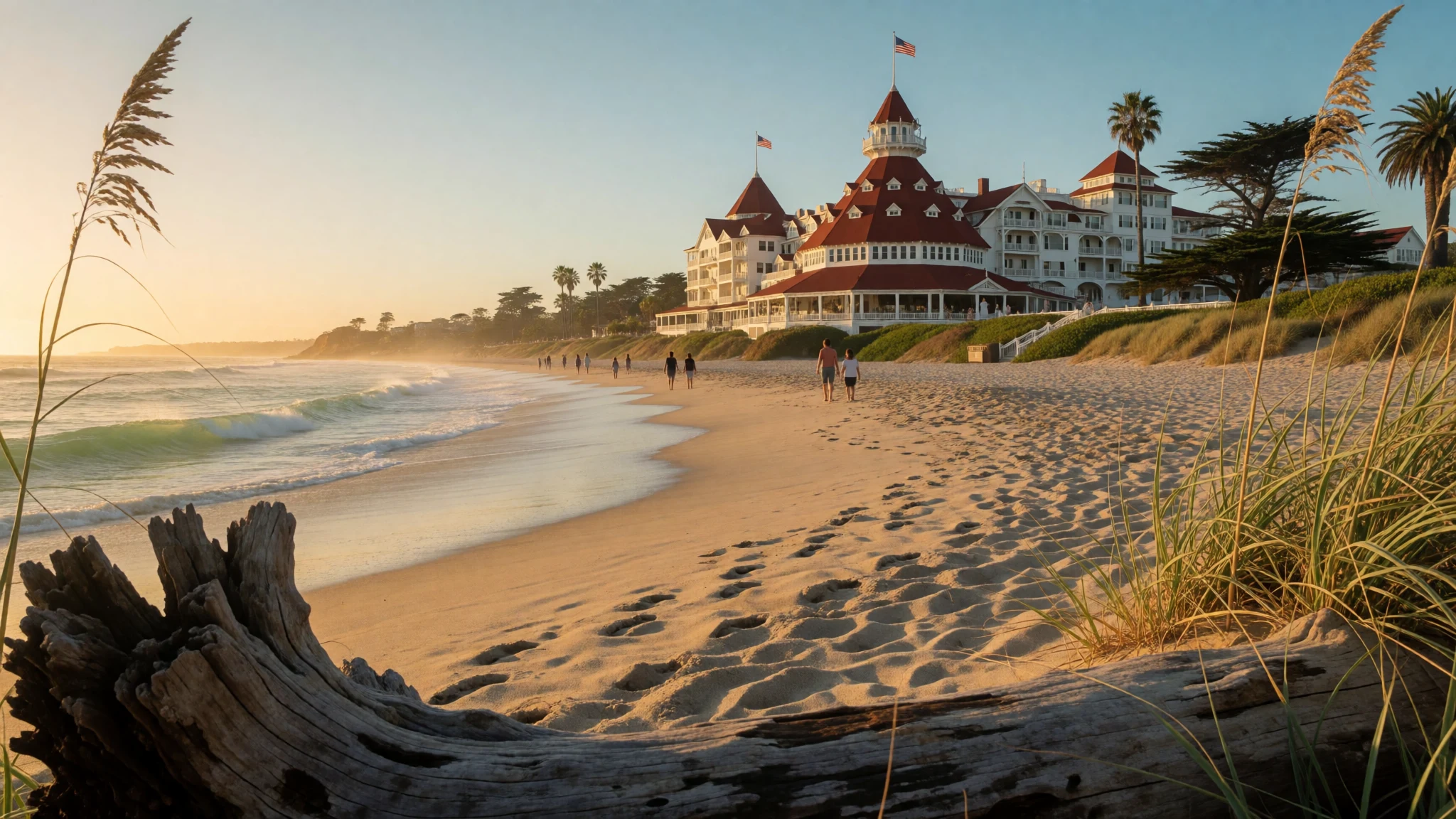
Coronado is a calm, bridge-and-ferry-linked beach town where a Victorian seaside hotel, naval aircraft and a wide pale shore share one small peninsula.
The place
Coronado is a small, orderly beach city in San Diego County, California, facing the towers of downtown San Diego across the bay. Locals call it an island, and the description is nearly right. A narrow sandbar called the Silver Strand ties it to the mainland, and a shallow inlet once cut it off from North Island, the flat northern end that now belongs to the navy. From a ferry deck it reads as a separate town. On the ground it is a grid of quiet streets laid out around Orange Avenue, the main strip for cafés, shops and a theatre. About 20,000 people live here, on land only about 5 m above the sea. The name is Spanish for crowned, borrowed from the Coronado Islands, a small Mexican archipelago offshore, and the town sometimes calls itself the Crown City. Most visitors come for the broad pale beach, the big wooden Victorian hotel and an easy, flat, bike-friendly pace. A few honest notes: summer weekends bring slow traffic over the bridge and crowded sand, rooms tend to cost more than on the mainland side, and early-summer mornings are often grey with sea fog that lifts by midday. The place suits a slow day or two rather than a long stay. For big museums and nightlife, most people cross back to San Diego.
Its story
Coronado's recorded history begins with the Kumeyaay, who kept fishing villages on the peninsula, on North Island and around what are now the Coronado Cays. As American settlers arrived, the Kumeyaay were pushed out, and the last six families were sent to the Mesa Grande Reservation in 1902. That removal sits behind the resort story that usually gets told first.
The resort grew out of a land deal in the 1880s. Elisha Babcock, Hampton Story and Jacob Gruendike bought the peninsula and organised the Coronado Beach Company in 1886, intending to sell a seaside getaway. A public naming contest produced Miramar, which people disliked, so the owners switched to Coronado, after the islands offshore. By 1888 the Hotel del Coronado stood on the sand, along with a school and clubs for sport, boating and baseball. The town was incorporated in 1890.
Later growth came in layers. In 1900 John D. Spreckels, who went on to own the hotel, opened Tent City, a holiday camp just to its south, where canvas slowly gave way to cottages; the last were cleared around 1940. Streetcars ran along Orange Avenue from the 1910s until 1939. In 1911 Glenn Curtiss, who had moved from motorcycle engines into aviation, founded a flying school on North Island, described as the first in the United States. It was the start of the naval air station that still occupies the site.
What to see
- Hotel del Coronado — Beachfront, west side of town
The Hotel del Coronado is a bright wooden Victorian-style building on the sand, with a slightly dated art deco interior. The history above is written into its corridors and grounds. Mornings are quieter than weekends and holidays. Check the hotel's own site for which areas are open to people who are not staying.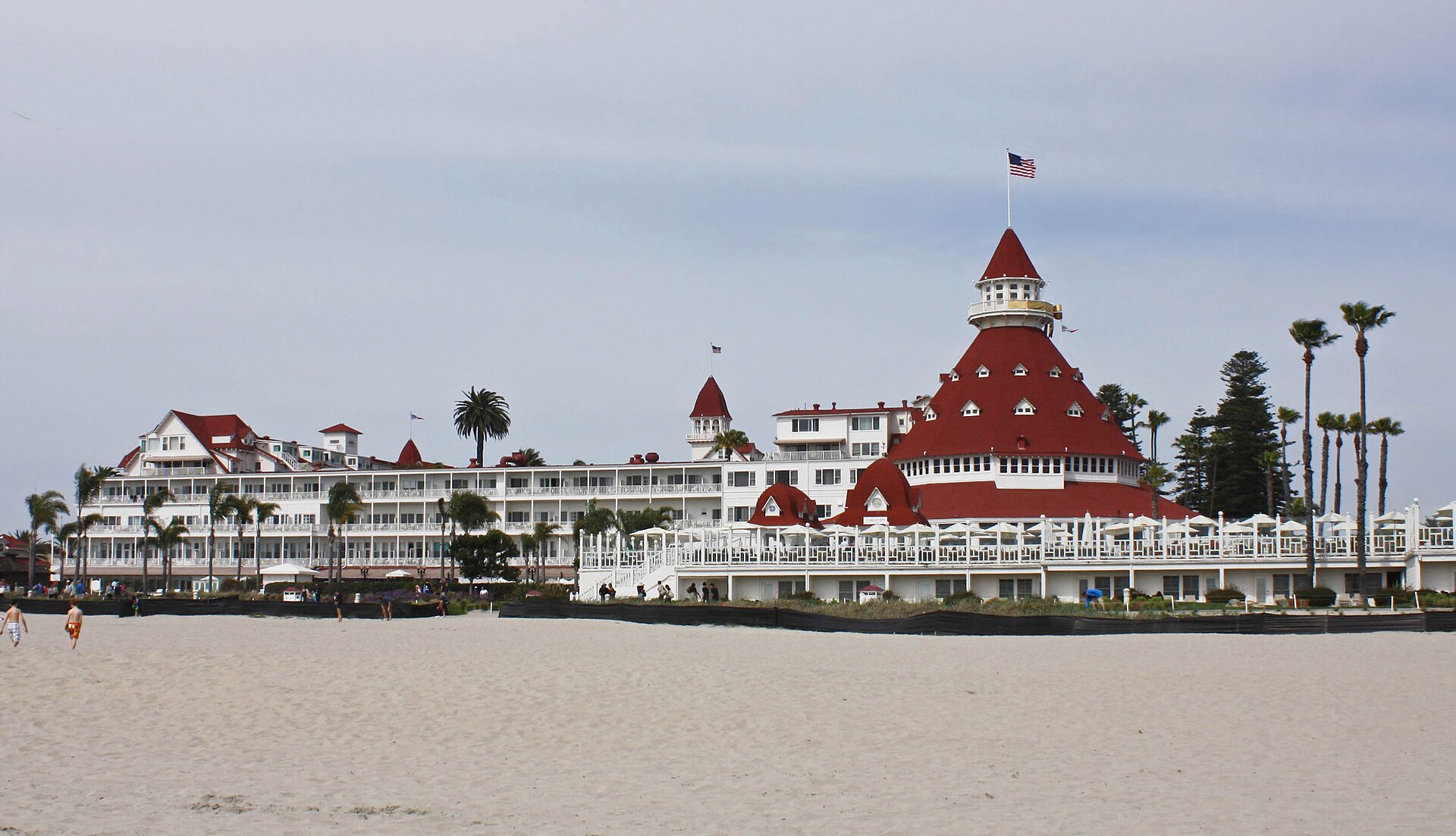
- Central Beach — Ocean side, beside the hotel
Central Beach is the town's main stretch of pale sand, and the crowd is mostly families rather than a party scene. The Pacific stays cool for much of the year, so many people paddle and stroll more than swim. Summer weekends fill up early, and parking nearby can be tight.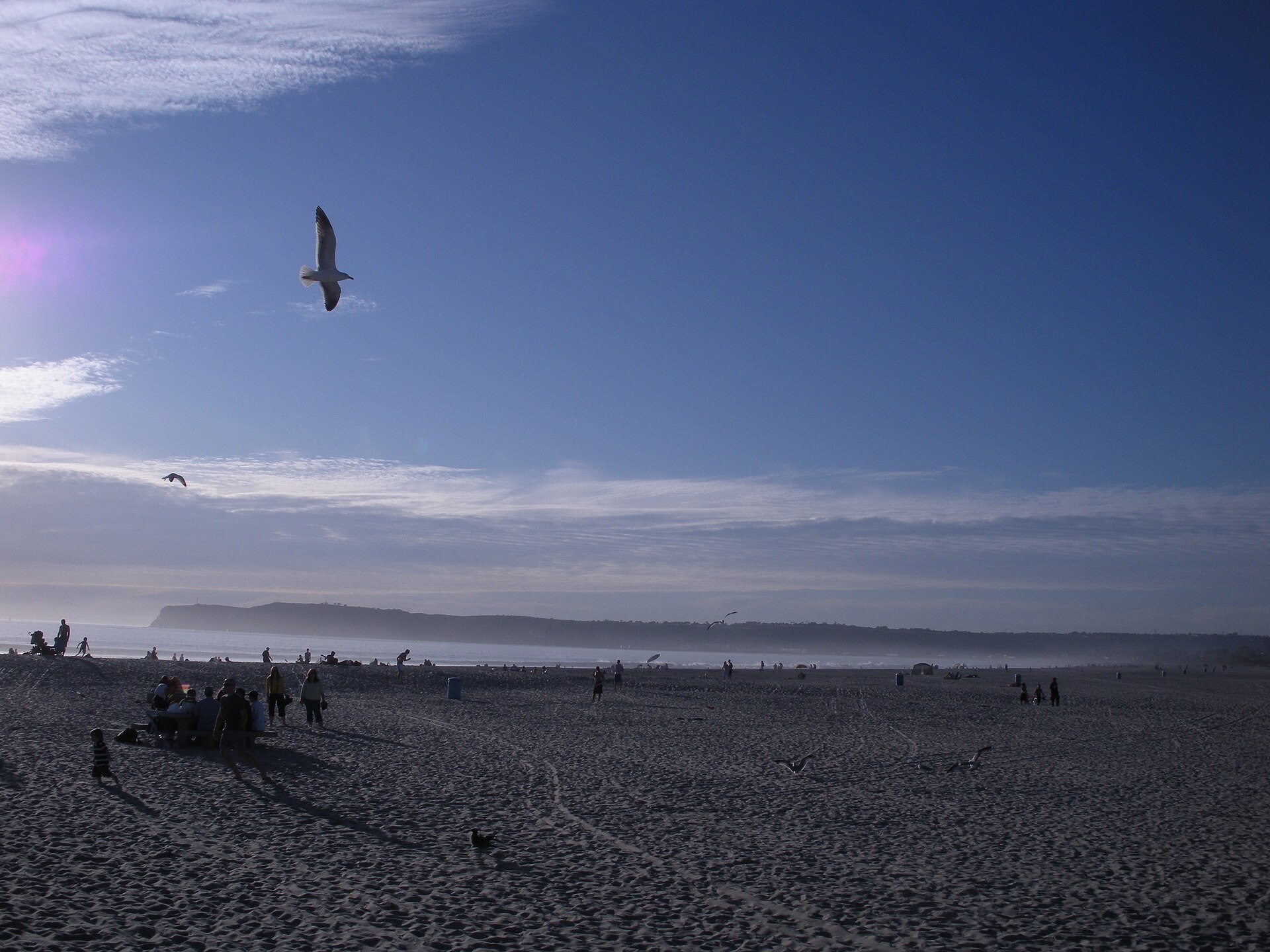
- Ferry Landing — Bay side, northeast of the centre
The Coronado Ferry Landing is where the passenger and bicycle ferry from downtown San Diego arrives, beside a small cluster of waterfront shops and cafés. The best moment is after dusk, looking back across the water as the downtown towers light up. Check the operator's current timetable and fares before planning.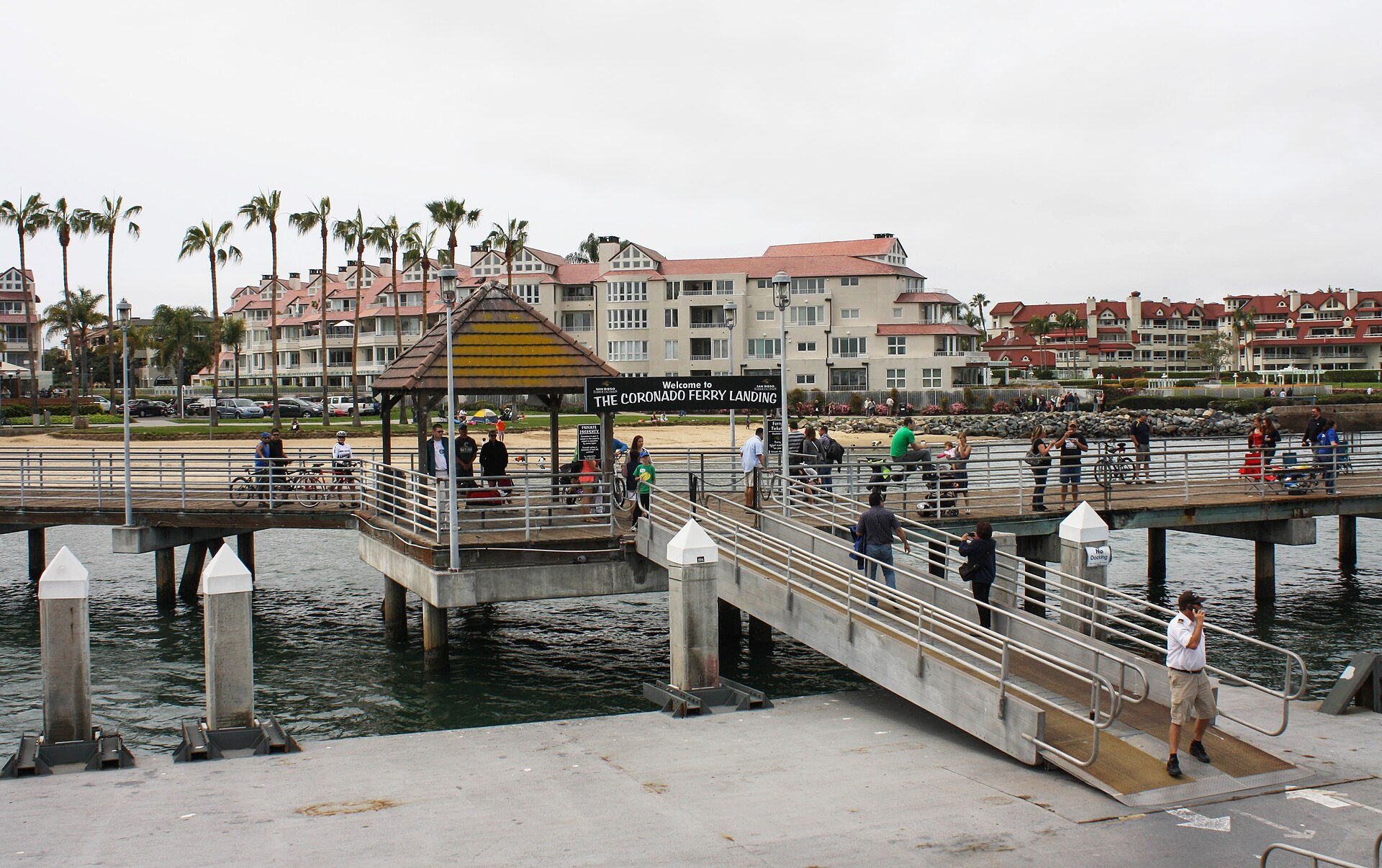
- Orange Avenue and the Coronado Museum of History & Art — Town centre
Orange Avenue is the town's main street, lined with cafés, shops and small theatres. Close by, the Coronado Museum of History & Art is run by the local historical association and covers the town's art, architecture and past. It is small, so half an hour is enough to add useful context before the hotel.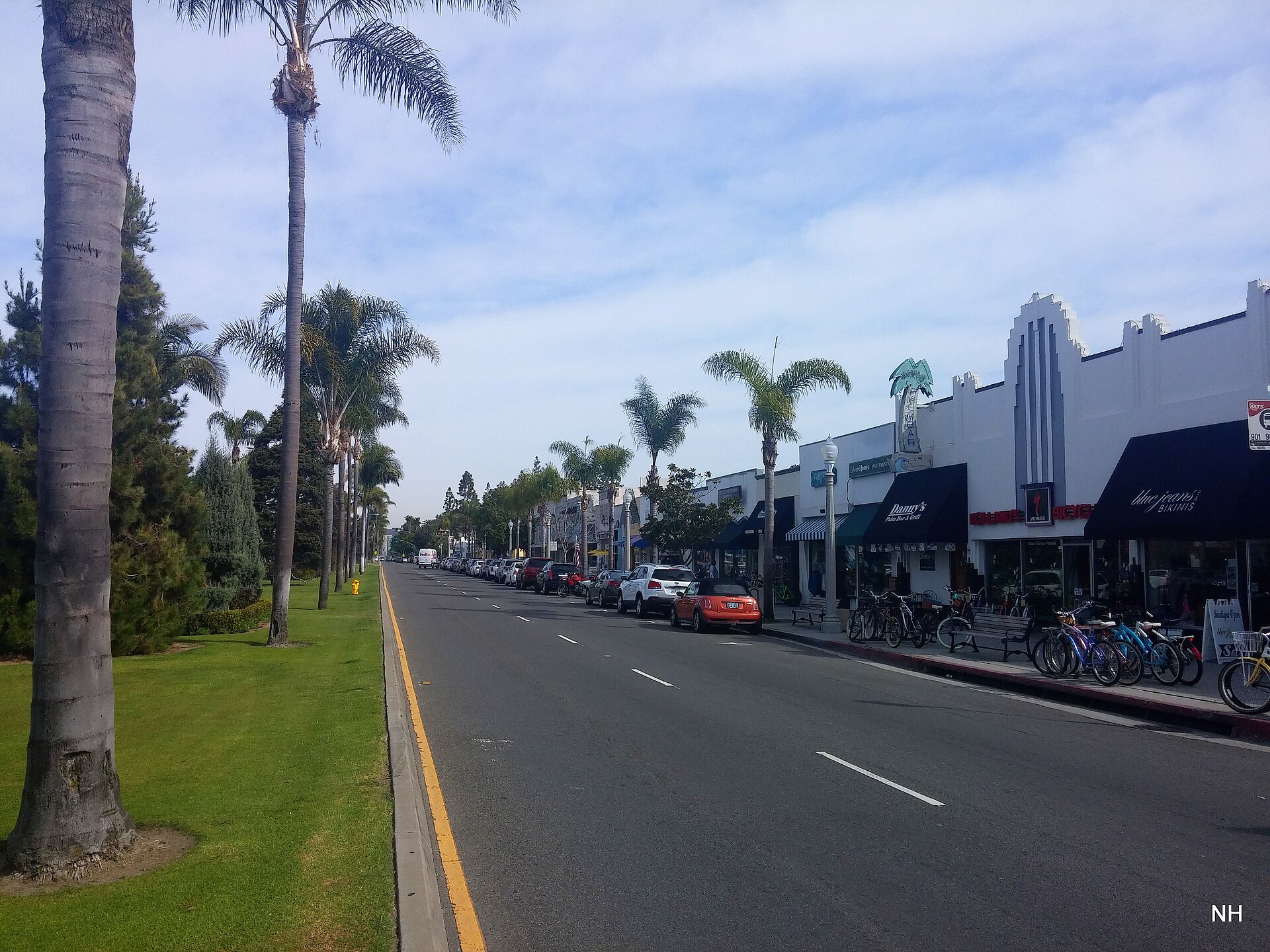
- Silver Strand Bikeway — South from Coronado towards Imperial Beach
The Silver Strand Bikeway is a cycle path running south along the sandbar towards Imperial Beach, with the ocean on one side and the bay on the other. It stays clear of car traffic, which makes it one of the area's easier rides. Bring or hire a bike, and start early on windy afternoons. - Glorietta Bay — Bay side, south of the centre
Glorietta Bay is the sheltered small-boat harbour on the bay side, with a launching ramp and a modest anchorage where visiting boats may stay only for a limited time. A public golf course follows the water nearby. It is a calm place for a quiet evening walk and a view of masts.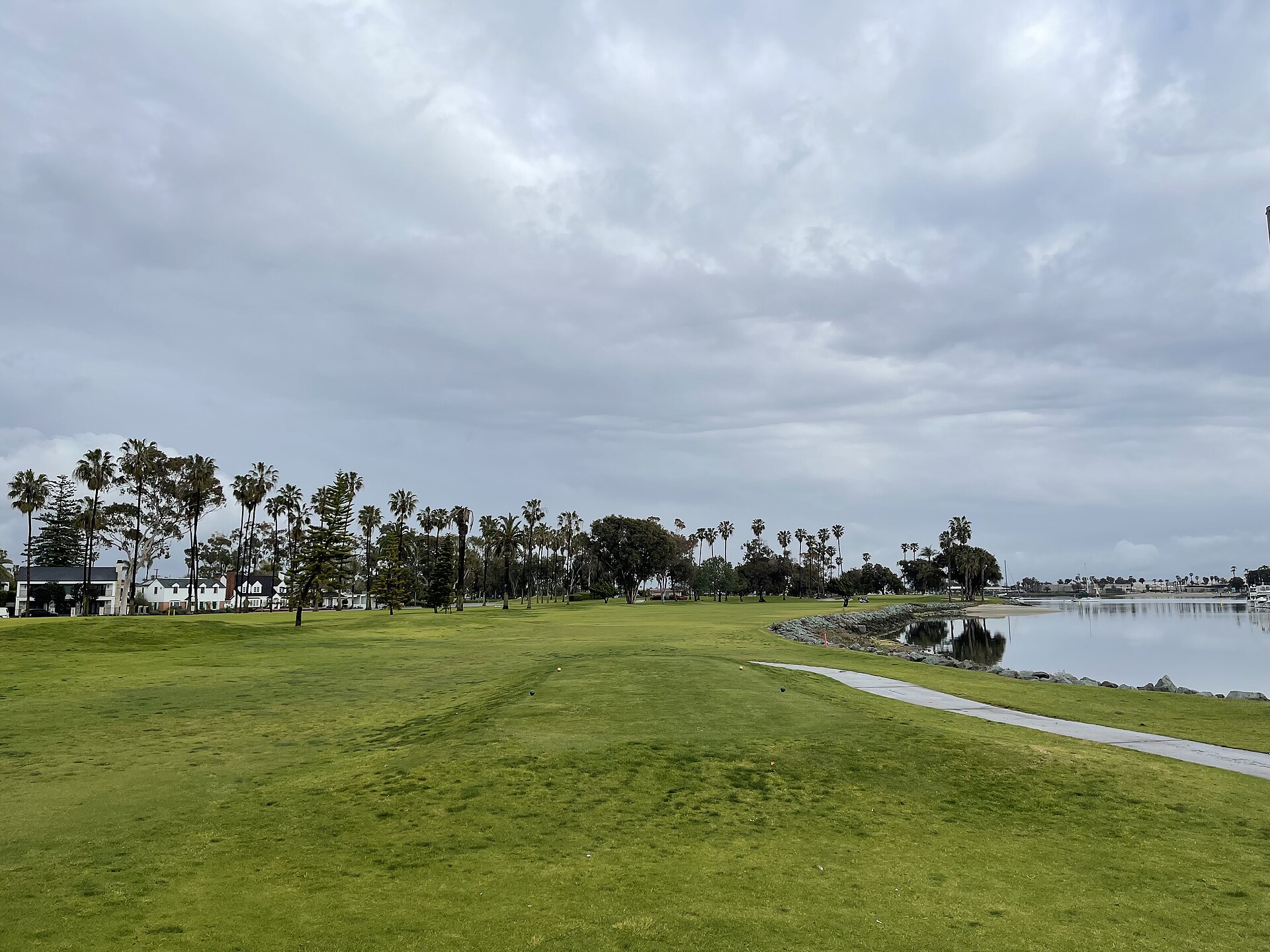
Culture
Coronado is a navy town as much as a resort, and the two cultures sit side by side. Aircraft from North Island pass overhead, uniforms are common in cafés, and civic pride leans towards service families and long residence. Beyond that, daily life is organised around the outdoors: families on Central Beach, cyclists on the flat streets and the bay path, golfers beside the water and boaters in Glorietta Bay. Indoors, the town keeps its own arts scene, with a community theatre company at the Coronado Playhouse and a professional ensemble, Lamb's Players Theatre, working in the historic Spreckels Building. The Coronado Historical Association's museum looks after the town's records of art, architecture and local life. Older layers are harder to see. The Kumeyaay lived here long before the resort, and little in the streetscape marks it, so the 1902 removal is worth knowing about before a visit. The overall tone is tidy, family-minded and a little old-fashioned, and residents like it that way. Weekday mornings feel like a small town; summer weekends feel like a holiday resort. Naval Air Station North Island is an active military base, so keep to public roads and beaches, respect gates and signs, and do not photograph its fences, aircraft or personnel.
What to wear
Coronado has no formal local costume, and its clothing history starts with the Kumeyaay. Their traditional dress used regional materials: skirts of plant fibre such as willow bark, and cloaks or blankets sewn from animal skins. Such garments now appear mostly in museums and cultural events, not in daily life. The resort era added a late-Victorian seaside look of light cottons, straw hats and white flannels, which survives mainly in old photographs and hotel nostalgia.
What people actually wear now is relaxed and neat. Shorts, linen shirts, sundresses and sandals are normal by day, golf polos appear near the course, and cyclists wear helmets on the bay path. Service uniforms are common because of the naval presence. Evenings are smart-casual, and the larger hotel restaurants for brunch or dinner usually suit a tidy shirt or dress rather than beachwear.
For visitors, layers matter more than formality. Mornings can be cool and grey, afternoons bright and sun-baked, and evenings breezy by the water, so bring a light jacket or cardigan along with a sun hat, sunglasses and sunscreen. Sandals suit the sand, but comfortable closed shoes are better for walking or cycling. Swimwear belongs on the beach, so carry a cover-up for the town. There are no religious dress rules to plan for.
What to eat
- Fish taco — Mexican restaurants on and around Orange Avenue, some with heated open-air patios
Fish tacos are the local order, with battered or grilled white fish in a corn tortilla, cabbage and a sharp sauce. Coronado's Mexican restaurants also serve enchiladas and chimichangas. Patios with heaters keep outdoor tables usable on cool evenings. - Diner breakfast — Old-style coffee shops along Orange Avenue
A classic American breakfast of eggs, hash browns, toast and strong coffee suits the town's small-town side. The old coffee shops mainly serve breakfast and lunch, are known for good-value plates and fill up at weekends. - Resort Sunday brunch — The large resort hotels on the beachfront and the Silver Strand
Sunday brunch is a spread of hot dishes, seafood, pastries and drinks at the big resort hotels. It is pricey, so pick it for the setting or the food rather than for value. Reserve ahead, and check each hotel's site for current details. - European pastries and house-made ice cream — European-style cafés in the northern part of town
A few cafés serve breakfast, lunch and dinner with a long run of European desserts and ice cream made in house. They suit a slow afternoon stop after a ride along the bay, and tables fill at weekends. - Waterfront seafood — Bay-side restaurants, including converted boathouses
Grilled fish, shellfish and chowder are served by restaurants looking over the southern bay, some in old boathouses. The view of boats and the downtown skyline is half the appeal, so ask for a window or deck table at sunset.
Plan it
Best time. April–May and September–October. Spring and early autumn usually bring mild, bright weather, while early summer often starts grey with sea fog and July–August weekends are the most crowded on the beach and bridge.
How long. 1–2
Getting there. Fly to San Diego International Airport on the mainland, then take a taxi or ride-hail across the Coronado Bay Bridge, or go to downtown and take the passenger and bicycle ferry from Broadway Pier or the Convention Center to the Ferry Landing. MTS bus route 901 links downtown with Coronado. Check the ferry timetable and fares with the operator, and the city website, http://www.coronado.ca.us, for local information.
Budget. mid
Tips
- Book rooms well ahead for summer and holiday weekends, when the beachfront resorts fill early
- Arrive by ferry and hire a bike, because the town is flat and parking near the beach can be difficult at weekends
- Carry a light jacket, since mornings can be grey and cool and evenings breezy
- Visit the hotel and beach early on weekdays to avoid the heaviest crowds
- Use the ferry or bus on busy days to avoid slow traffic on the bridge
Etiquette
- Keep to public roads and beaches near the naval base and follow all signs
- Keep noise down in the quiet residential streets, especially in the evening
- Follow posted beach rules on alcohol, fires and dogs
Nearby
Sources
- Wikidata Q828753 (CC0)
- Wikipedia: Coronado, California (rev 1383556866) (CC BY-SA 4.0)
- Wikivoyage: Coronado (California) (rev 5424907) (CC BY-SA 4.0)
- Photo: Hotel del Coronado in San Diego, California as seen from Cabrillo National Monument (Djh57) (CC BY 3.0)
- Photo: View of downtown San Diego from Coronado's ferry landing area (Greg Bulla / GB11111) (CC BY-SA 4.0)
- Photo: Coronado, San Diego, MLK Day 2009 (Jeffreybaron) (CC BY 3.0)
- Photo: The Coronado Ferry Landing (Bernard Gagnon) (CC BY 3.0)
- Photo: Par 4 16th hole along the bay at Coronado Golf Course (Baybay1901) (CC BY-SA 4.0)
- Photo: Orange Avenue, Coronado (nick hoke) (CC BY 3.0)
- Photo: Hotel del Coronado, Coronado Island, California (Bernard Gagnon) (CC BY-SA 2.5)
- Photo: Hotel 'Del Corona', Coronado Beach, San Diego, California (Vandyke 1885, unknown author) (Public domain)


