Chimney Rock State Park
Chimney Rock State Park, United States
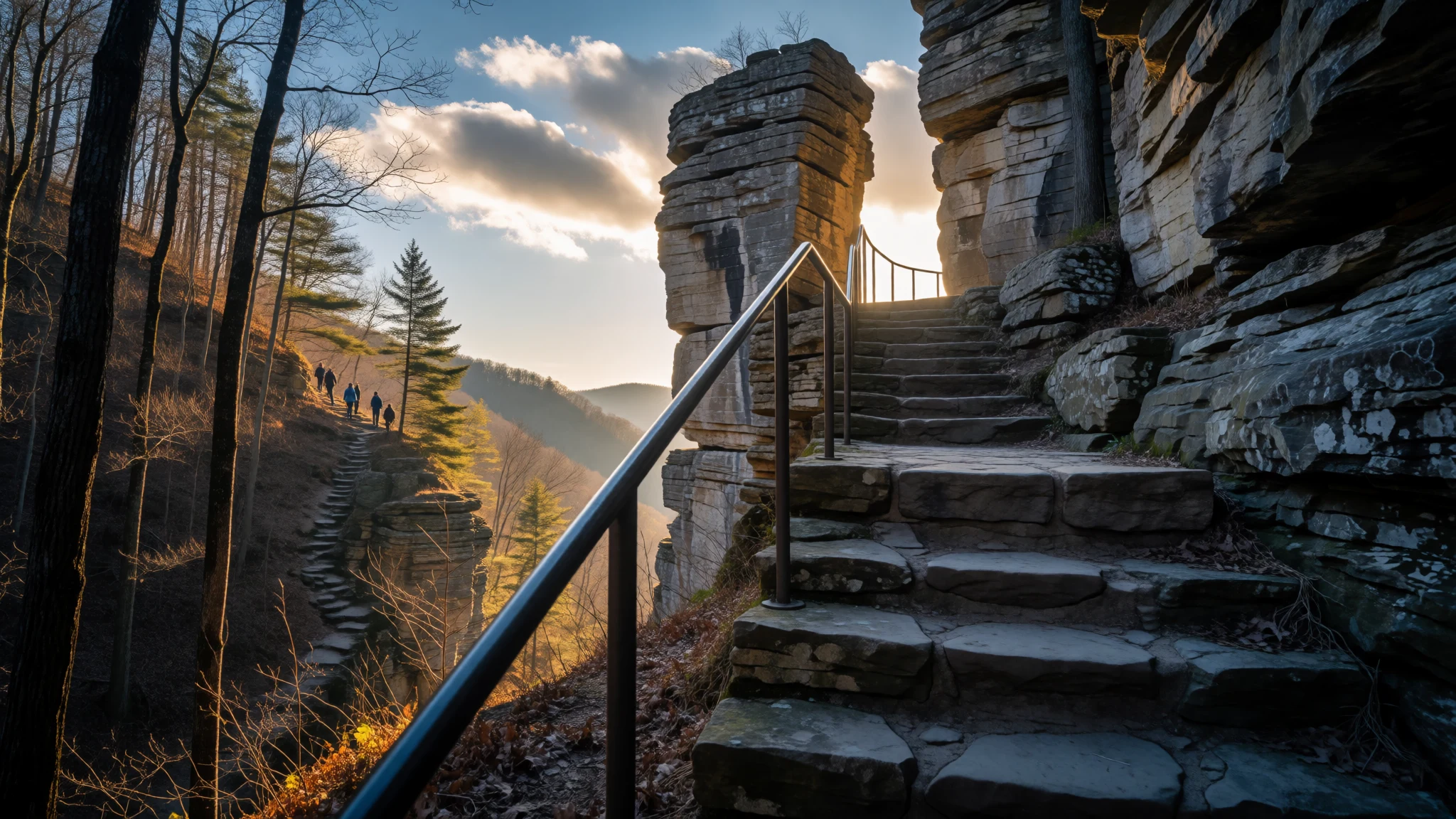
Chimney Rock State Park offers a 96 m rock pillar, a tall waterfall and long Blue Ridge views, all within reach of Asheville.
The place
Chimney Rock State Park sits in Rutherford County, North Carolina, about 40 km southeast of Asheville, inside the steep-sided Hickory Nut Gorge. The state owns and manages the park, which covers 32.43 km² of forested slopes, cliffs and ridgelines. Its best-known feature is a 96 m monolith of gneiss that juts out from the gorge wall and can be reached by elevator as well as on foot. Elsewhere in the park, Hickory Nut Falls drops 123 m, and a balancing rock known as Devil's Head perches on the cliffs. Trails range from short, gentle strolls to steeper climbs, so a family with small children and a keen hill-walker can each fill a day here. From the viewpoints the land rolls away towards Lake Lure, green through summer and turning orange and red in autumn. The waterfall is at its fullest after rain and thins to a ribbon in dry spells. Summer afternoons are warm and humid, and storms can build quickly over the ridges. Good-weather weekends and the autumn colour season bring queues for parking and for the elevator, so weekday mornings are noticeably calmer. The cliffs and drops are real, and the viewing platforms and railings are there for a reason. Even a visitor who never leaves the main paths will see why the gorge has drawn people for so long.
Its story
Chimney Rock State Park owes its character to rock that is far older than the mountains' present outline. The stone here is Henderson Gneiss, a banded metamorphic rock dating from the Ordovician period. Geologists who mapped Hickory Nut Gorge found that on certain ridges a different, older layer, the Poor Mountain Formation, rests on top of the gneiss. The boundary between the two is a thrust fault called the Sugarloaf thrust, along which one slab of crust was pushed westward over another. The fault surface slopes steeply down towards the east, so what looks like one solid mountain is really a stack of layers. Over a very long time, rain, frost and running water cut the gorge and left hard pillars such as Chimney Rock standing proud of the wall. The same slow forces are still working on the cliffs today, which is part of why the park keeps people behind its barriers. Politically the story is much shorter. The area became a North Carolina state park in 2005, which placed its cliffs, falls and ridges in public hands under the state's park system. Nobody needs to know any of this geology to enjoy a walk here. Still, the layered rock, the sheer faces and the steep slope of the land all make more sense once the thrust fault is part of the picture.
What to see
- Chimney Rock — Main gorge wall
The 96 m gneiss pillar that gives the park its name is the obvious first stop. An elevator carries visitors to the top for those who would rather not climb, and a stairway offers the alternative. The summit viewing area looks over the gorge and the surrounding countryside, and gets busiest around midday.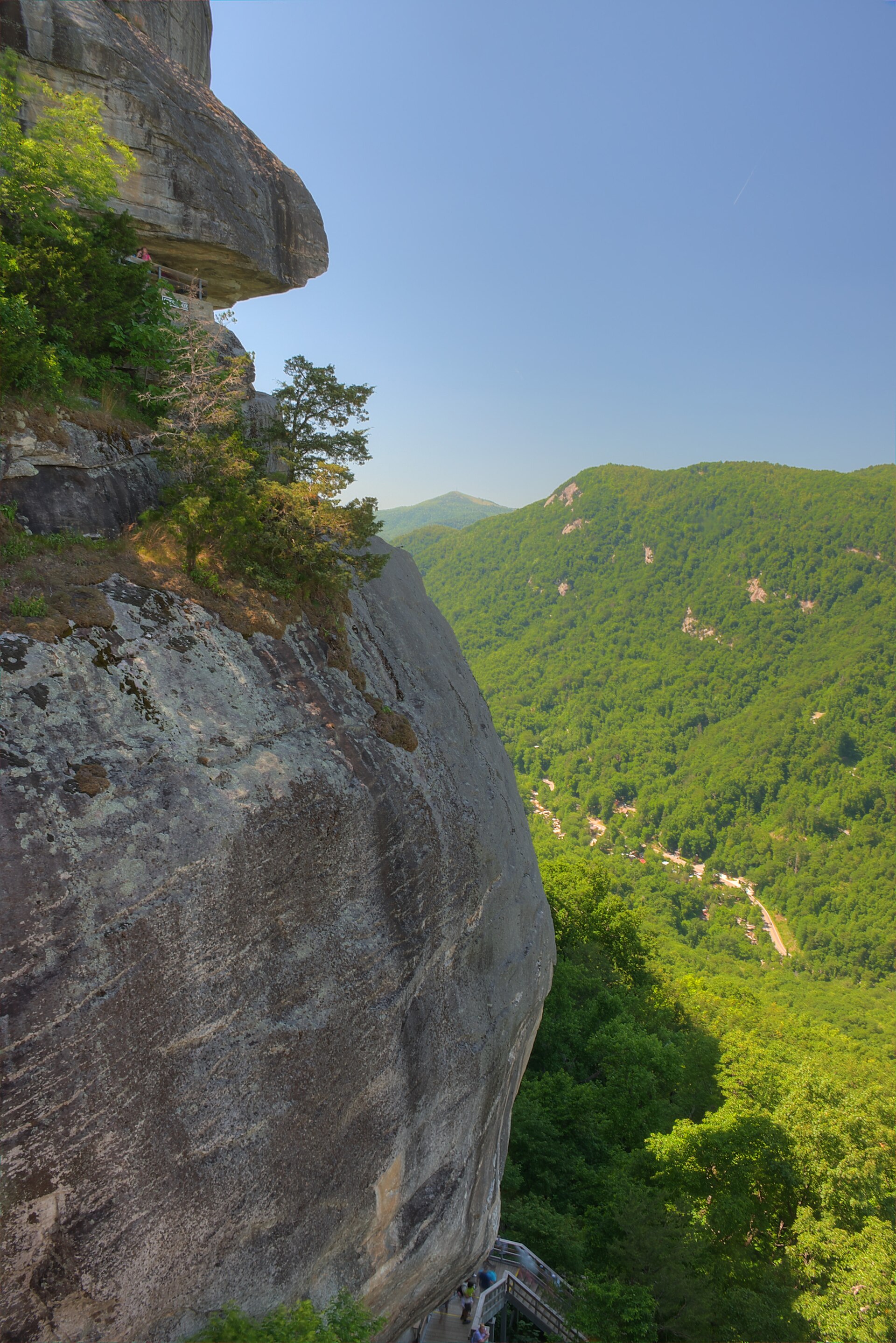
- Hickory Nut Falls — Eastern end of the gorge
This waterfall drops 123 m and is the park's main watery draw. It runs strongest after rain and shrinks to a thin stream in dry weeks, so check recent weather before planning a visit around it. Rock near the water can be slick and spray makes it cooler, so walk slowly and wear shoes with grip. - Devil's Head — Cliff trail above the gorge
Devil's Head is a balancing rock on the cliff edge, named for a profile some people see in its outline. It is the kind of spot where photographs matter more than walking distance, because the sight of the stone set against empty air does most of the work. Keep behind the barriers.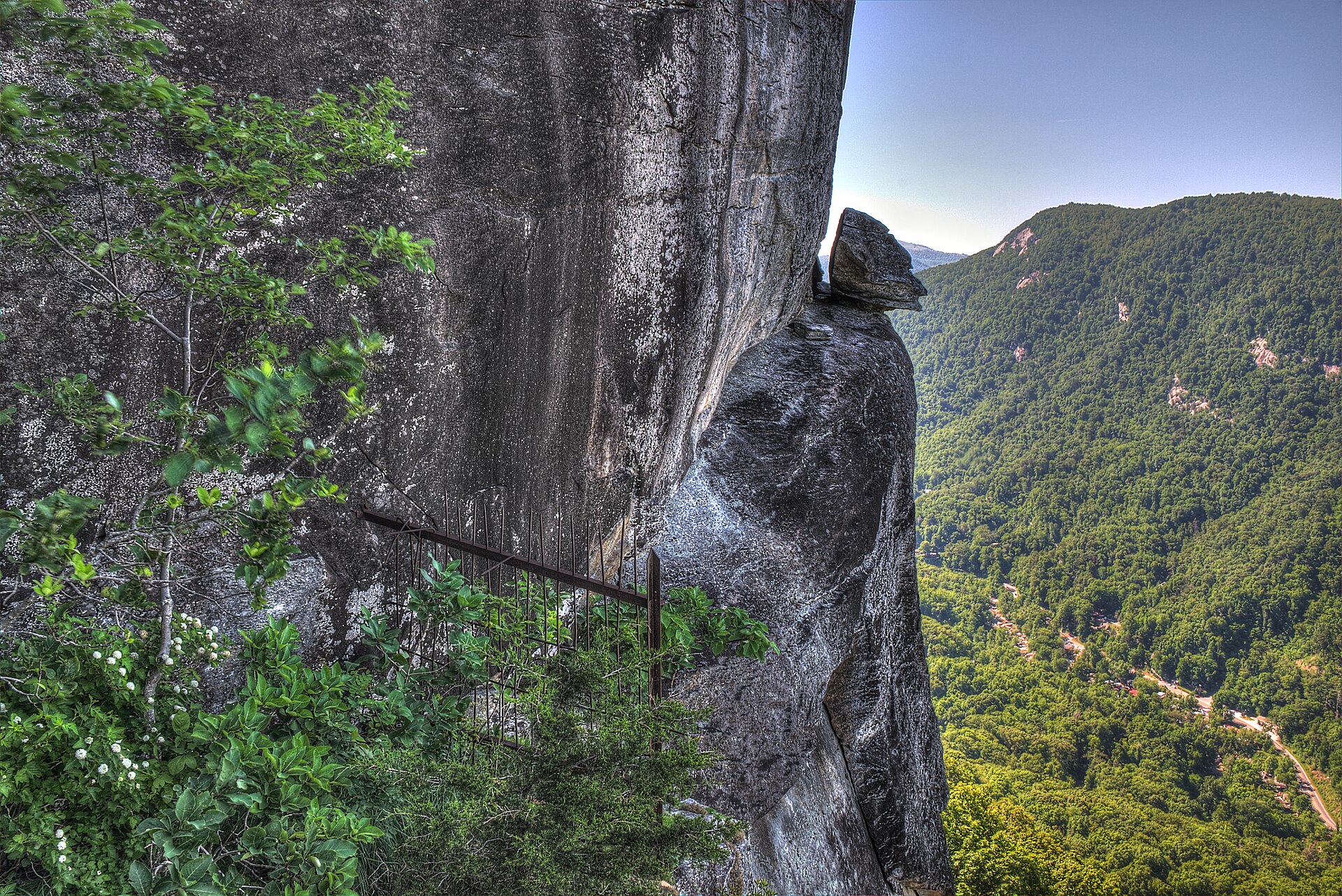
- Opera Box and the view to Lake Lure — Cliff viewpoints
The Opera Box is a viewpoint on the cliffs that looks east across the gorge towards Lake Lure. The lake shows as a pale patch among the wooded hills, and the vantage gives the clearest sense of how deep and narrow the gorge is. Late afternoon light is gentler for photographs.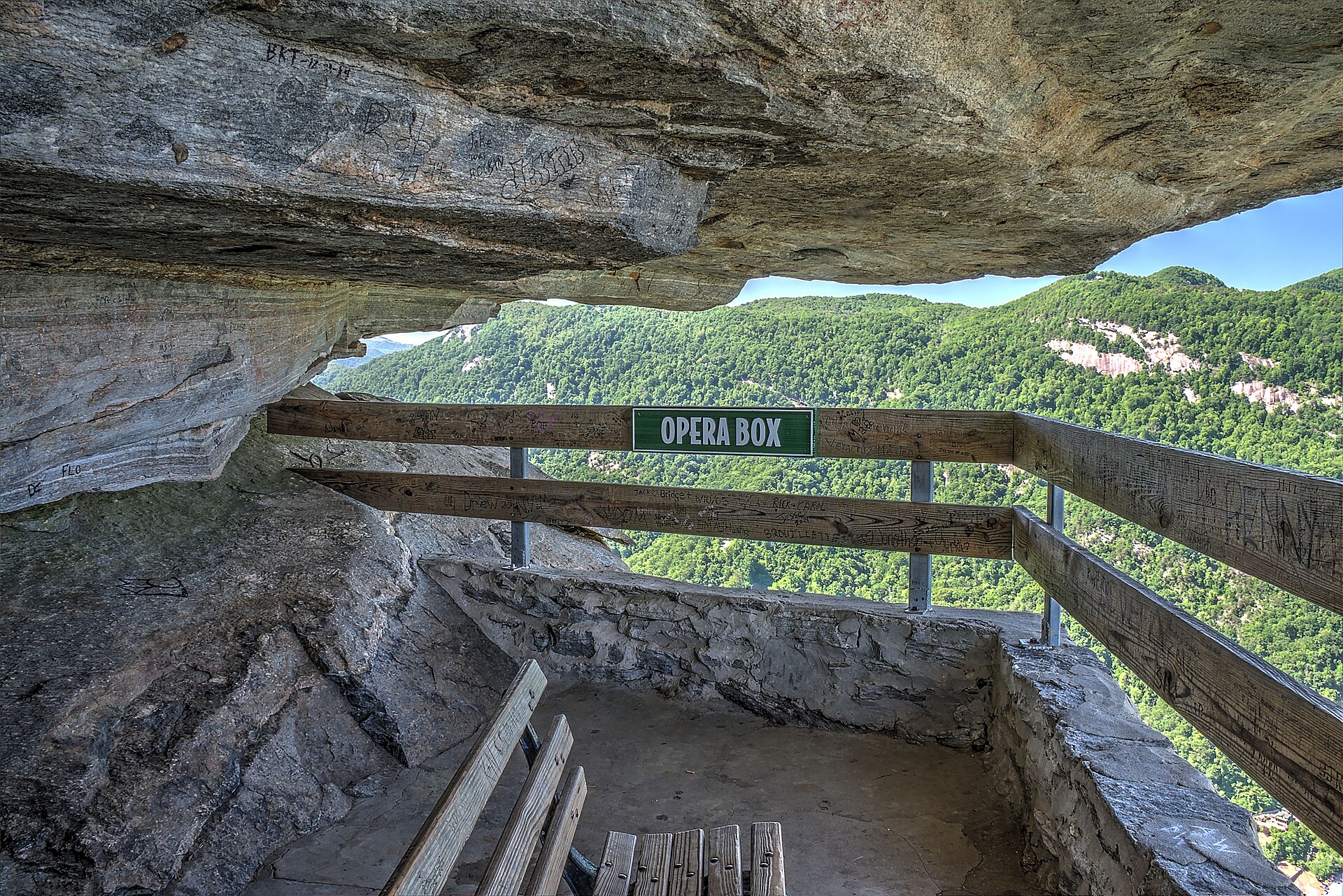
- Gneiss Cave and the stairways — Trails between the viewpoints
A feature named Gneiss Cave lets walkers see the park's banded bedrock at close range, with the layers visible in the rock face. Stairways connect several viewpoints and trails, and they are steep in places, so allow time and rest on the way back up, especially in summer humidity.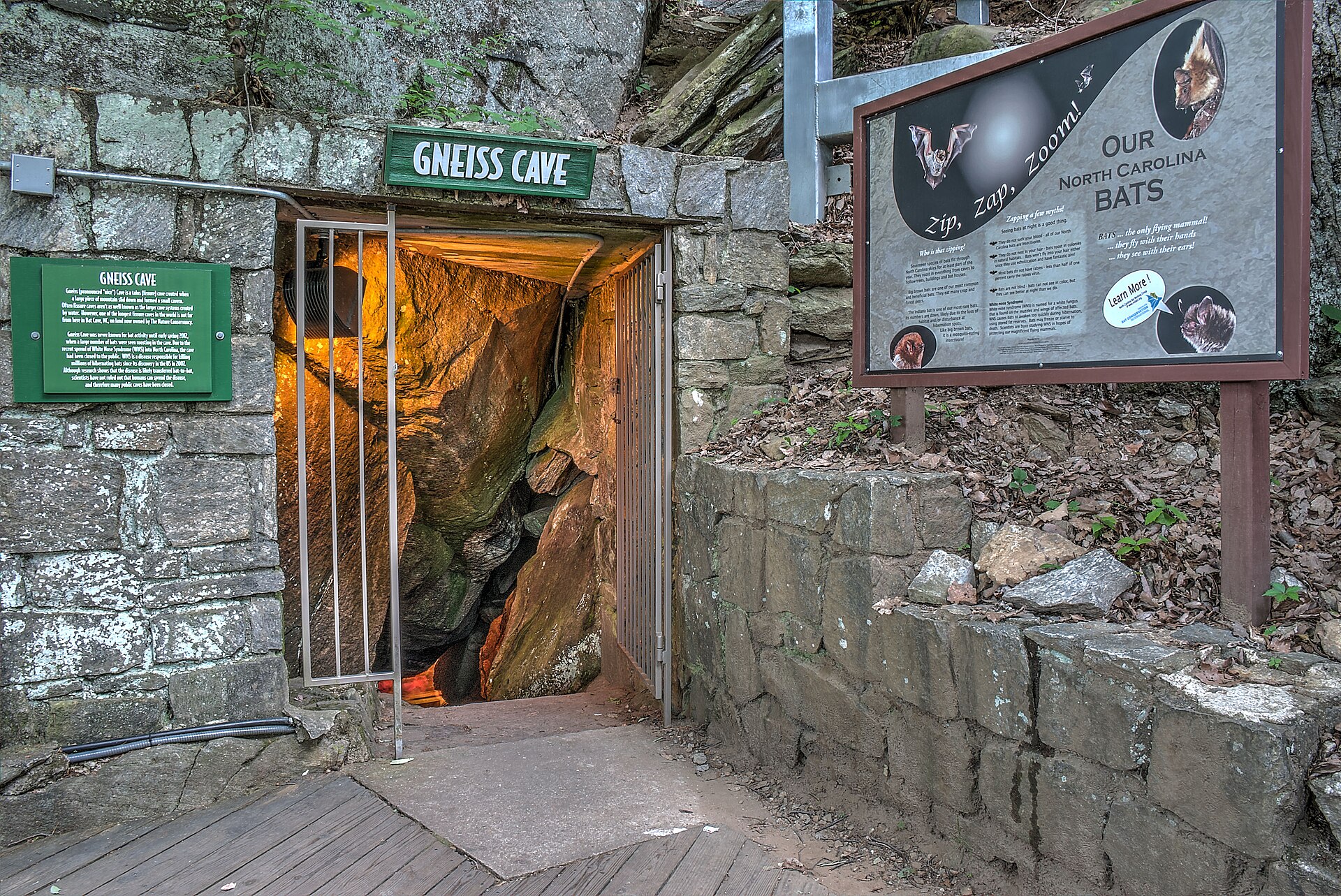
Culture
Chimney Rock State Park lies in the Blue Ridge foothills of North Carolina, where everyday manners lean towards the unhurried and polite. Visitors will hear a soft Southern drawl, and plenty of 'ma'am' and 'sir' in reply to questions; nobody finds it odd when a guest answers in the same way. Hospitality is a point of local pride and shows up in small habits, such as holding a door for a stranger, using a car horn only when necessary and keeping voices low in a crowded room. People queue patiently for car parks and the elevator, and pushing in is noticed. North Carolina has a long and painful history of slavery and racial discrimination, and its effects are still discussed, so conversation with strangers goes best when it is curious and not full of assumptions. Calling locals 'hicks' or 'rednecks' is offensive, however lightly it is meant. The mountains also have a strong outdoor culture, so people at the park are used to sharing narrow trails: step aside to let faster walkers pass and greet people you meet on the path. A friendly nod or a 'good morning' is the usual way to do it. Keep to the marked trails and behind the railings, because the cliff edges are steep, and keep voices low at the viewpoints so that everyone can enjoy the quiet.
What to wear
Chimney Rock State Park is in a part of the United States with no single regional costume worn today. Historically, mountain settlers made clothes from homespun wool, cotton and linen cloth woven at home, and quilting remains a respected craft in the Appalachian region. Overalls, flannel shirts and work boots still carry rural associations, but they are everyday practical clothing, not ceremonial dress. What people actually wear at the park now is outdoor casual: T-shirts or light long sleeves, shorts or hiking trousers, fleece layers, ball caps and trainers or trail shoes. Nobody dresses up, and there are no religious dress rules at this site. Visitors should dress for weather and terrain. Summers are warm and humid, with thunderstorms possible, so quick-drying fabrics, a hat, sun protection and a light rain jacket make sense. Mornings and autumn days can be cool, and a fleece or jumper is welcome on exposed viewpoints. Winter may call for warm layers and care on icy ground. Shoes matter most: choose closed footwear with a good grip, because stairways and rocky paths can be steep and slippery after rain. Sandals and smooth-soled shoes are poor choices for the longer trails. Carry a small bag for water and a layer, and keep your hands free on the stairs.
What to eat
- Pork barbecue — Roadside barbecue eateries in the towns around the gorge
Slow-cooked pork is central to North Carolina cooking, usually served chopped or pulled with a tangy sauce and a side such as coleslaw. Pork is the main meat, so vegetarians and those who avoid pork should ask carefully. - Pig pickin' — Church suppers and family reunions
A pig pickin' is a communal meal where a whole roast pig is pulled apart and shared. It is a long-standing North Carolina tradition, usually found at big gatherings, so visitors are most likely to meet it through a local invitation or community event. - Livermush — Local breakfast counters and grocery shops
Livermush is a sliced loaf of pig liver, parts of the head and cornmeal, usually fried and eaten at breakfast. It is a regional favourite with its own annual festival in Shelby, and an acquired taste for newcomers. - Country ham and biscuits — Small-town diners and bakeries
Salt-cured ham tucked into a warm, soft biscuit is a staple Southern breakfast. Ham and other pork products are widely used to add flavour in the region's cooking, so even vegetable sides may contain them. - Souse and liver pudding — Local grocery shops and farm stores
Small local firms make souse, also called headcheese, plus liver pudding and pickled pigs' feet. These are traditional pork products rather than restaurant dishes, and suit adventurous eaters who want a sense of the old farm kitchen.
Plan it
Best time. April–May for fresh green growth and cooler walking, and October–early November for autumn colour. Summer is warm and humid with storms likely in the afternoons, and winter can bring cold or icy conditions that may affect trails, so check conditions before travelling.
How long. 1–2
Getting there. Asheville Regional Airport (AVL) is the nearest airport, and Charlotte Douglas International Airport (CLT) has wider connections. The park is about 40 km southeast of Asheville and is reached by road, so plan on a hire car or arranged transport for the last leg.
Budget. mid
Tips
- Check the official site (http://www.ncparks.gov/chimney-rock-state-park) for opening times, tickets, elevator status and trail closures before you set out
- Arrive early on weekends and during the autumn colour season, when parking and the elevator queue fill up
- Carry water and an extra layer, as exposed viewpoints and stairways can be hot or windy
- Wear shoes with a firm grip, since stairs and rock can be slippery after rain
- Pork features widely in local food, so vegetarians should ask about ham and lard in side dishes
Etiquette
- Stay on marked trails and behind barriers at cliff edges
- Keep voices low at viewpoints and step aside to let others pass on narrow paths
- Take your litter with you and leave plants and rocks as you find them
Nearby
Sources
- Wikidata Q3364034 (CC0)
- Wikipedia: Chimney Rock State Park (rev 1378830763) (CC BY-SA 4.0)
- Wikivoyage: North Carolina (rev 5331965) (CC BY-SA 4.0)
- Photo: Chimney Rock State Park looking east towards Lake Lure (Jmturner) (Public domain)
- Photo: Physical location map of North Carolina (Alexrk2) (CC BY 3.0)
- Photo: Relief location map of the USA (Uwe Dedering) (CC BY 3.0)
- Photo: Opera Box at Chimney Rock State Park (Dsdugan) (CC BY-SA 4.0)
- Photo: Devil's Head at Chimney Rock Park (Dsdugan) (CC BY-SA 4.0)
- Photo: Stairway at Chimney Rock State Park (Dsdugan) (CC BY-SA 4.0)
- Photo: Gneiss Cave at Chimney Rock State Park (Dsdugan) (CC BY-SA 4.0)
- Photo: 15-18-056 chimney rock (David Dugan) (CC BY 3.0)


