Chattanooga
Chattanooga, United States
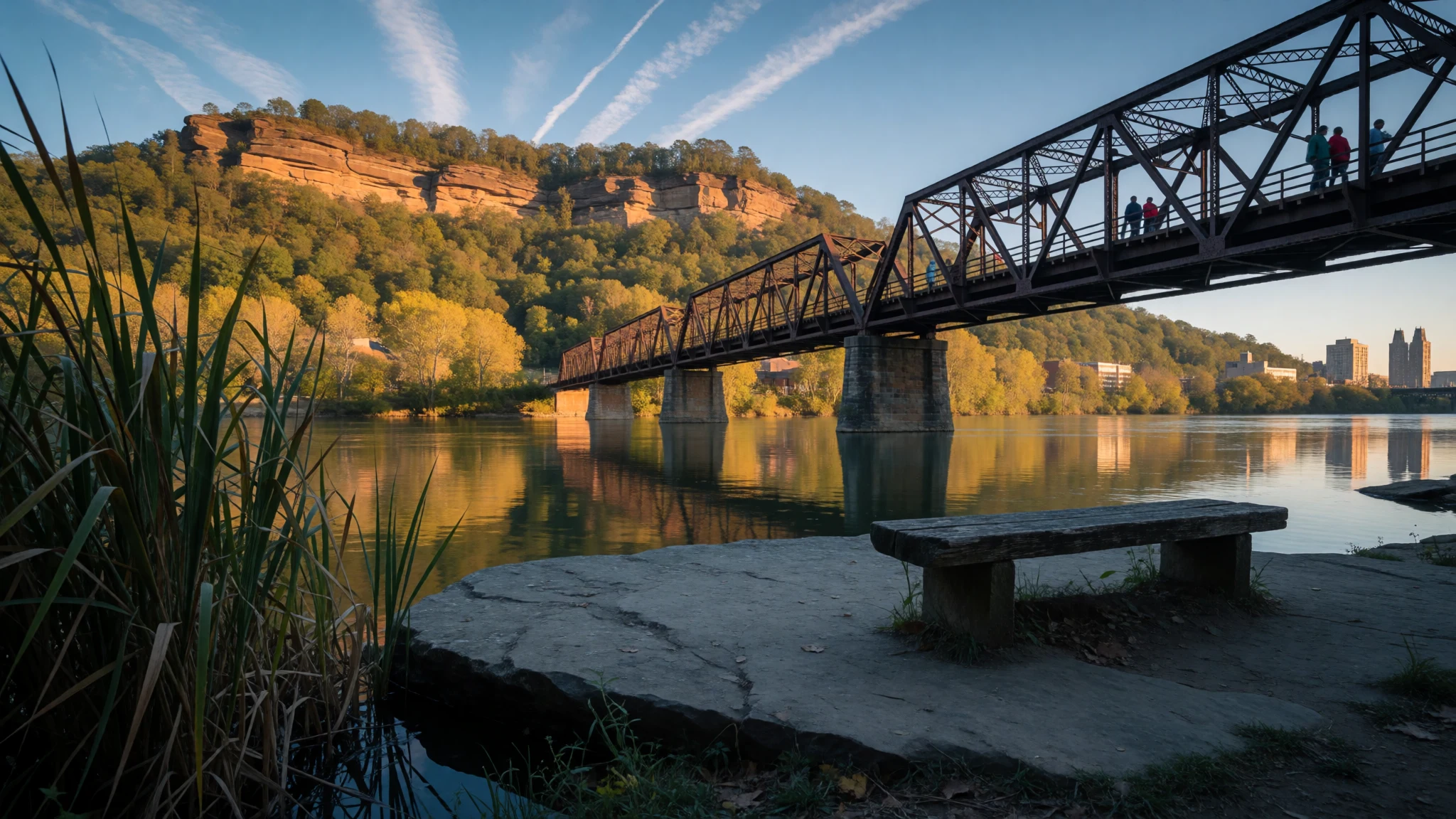
Chattanooga packs a river, a mountain, railway heritage and an easy-going Southern table into a compact Tennessee city that rewards a few unhurried days.
The place
Chattanooga sits on the Tennessee River in the south-east of Tennessee, close enough to the Georgia line that the state border is a short drive from the centre. It is the county seat of Hamilton County and home to about 181,000 people, which makes it a mid-sized city rather than a metropolis. The river loops around downtown, and ridges close in on every side. Lookout Mountain rises to the south-west and gives the city its best-known backdrop, while Stringer's Ridge to the north is where many skyline photographs are taken. The centre stands at 206 metres above sea level, so the surrounding climbs are about views rather than thin air.
The city's character comes from two things: railways and water. Several lines converge here, and for generations the town lived on heavy industry and freight. Today the economy is more mixed, with car manufacturing, healthcare, insurance, food and drink production and tourism all in the picture. Old rail and riverside districts have been given new lives, and the waterfront is where residents and visitors spend their evenings.
Downtown is walkable in sections, with an aquarium on the riverbank, art and children's museums, and a long riverside trail. Across the water, the North Shore district has cafés, shops and streets where an afternoon disappears. The mountain attractions lie a few kilometres out and need a car, taxi or ride-share. Distances are American in scale, so a car helps, though a few days can be built around the centre alone.
Its story
Chattanooga's story begins long before the city had a name on a map. People have lived along this stretch of the Tennessee River for many thousands of years, and mounds and village sites from several early cultures are still traced around the creek mouths and river bends. The name is generally traced to a Muskogean word for rock, and one popular explanation links it to the shape of Lookout Mountain, though that is a guess rather than settled fact.
The Cherokee became the dominant presence in the late eighteenth century. In 1776 a leader named Dragging Canoe broke away from the main Cherokee body to resist settler expansion, and this country became a base for that resistance. In 1816 John Ross, later Principal Chief, set up a landing on the river near what is now Broad Street. Ross's Landing became a focus of Cherokee life that reached into Georgia and Alabama. Within a generation the Cherokee were forced out under American removal policy, and the city's formal founding date of 1839 sits uncomfortably close to that event.
Railways then defined the place. Because several lines met here, the town mattered enormously during the American Civil War, when armies fought to control the junction. Afterwards the same tracks fed a boom in foundries and factories, and Chattanooga became an industrial hub of the south-eastern states. Heavy industry has since faded, replaced by a more varied economy, but the station buildings, the river landing and the mountain battlefield sites keep the layers visible.
What to see
- Rock City, Lookout Mountain — Lookout Mountain
Rock City is a garden of narrow rock passages, ledges and viewpoints on top of Lookout Mountain, turned into a full visitor attraction by Garnet Carter and his wife in the early twentieth century. It is busy at weekends and in school holidays, so earlier in the day is calmer. Check the official site for hours and tickets. - Ruby Falls — Lookout Mountain
Ruby Falls is a waterfall deep inside Lookout Mountain, reached on a guided walk through a cave. It was discovered when a team looking for another cave entrance broke into the passage, and it carries the name of the founder's wife. The cave is cool and damp all year, so a light layer helps. Check the official site for tickets. - Incline Railway — Foot of Lookout Mountain
The Incline Railway climbs Lookout Mountain on a very steep track and has run in its present form since the nineteenth century. It spares visitors the winding mountain road and the hunt for parking, and the city view opens out gradually behind the carriage. Queues can be long on warm weekends; check the official site for times. - Tennessee Aquarium and the riverfront — Downtown riverfront
The Tennessee Aquarium sits on the downtown riverbank and anchors a waterfront that also holds the Creative Discovery Museum, a hands-on place for children built around science, art and music. The Hunter Museum of American Art, on a bluff above the river, is a calmer stop. The Tennessee Riverwalk links these and crosses to the North Shore.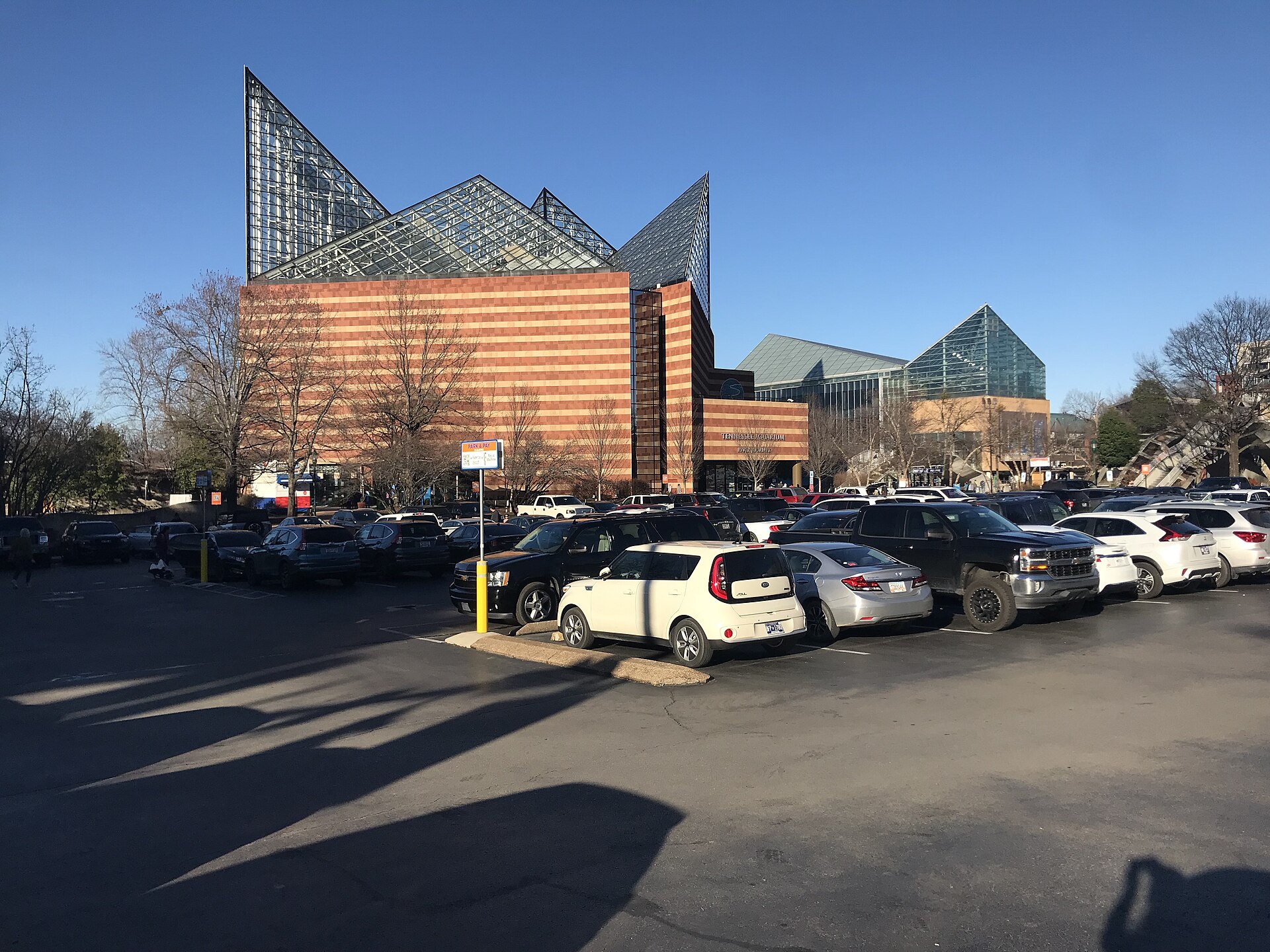
- Chattanooga Choo Choo — Southside, near downtown
The Chattanooga Choo Choo is the former Terminal Station, a rail terminal whose cast-iron dome once sheltered arriving passengers and which now serves as a lodging and leisure complex. Trains stopped calling decades ago, but the building's confident ironwork is worth a look even without a stay. Check the official site for tours and opening times.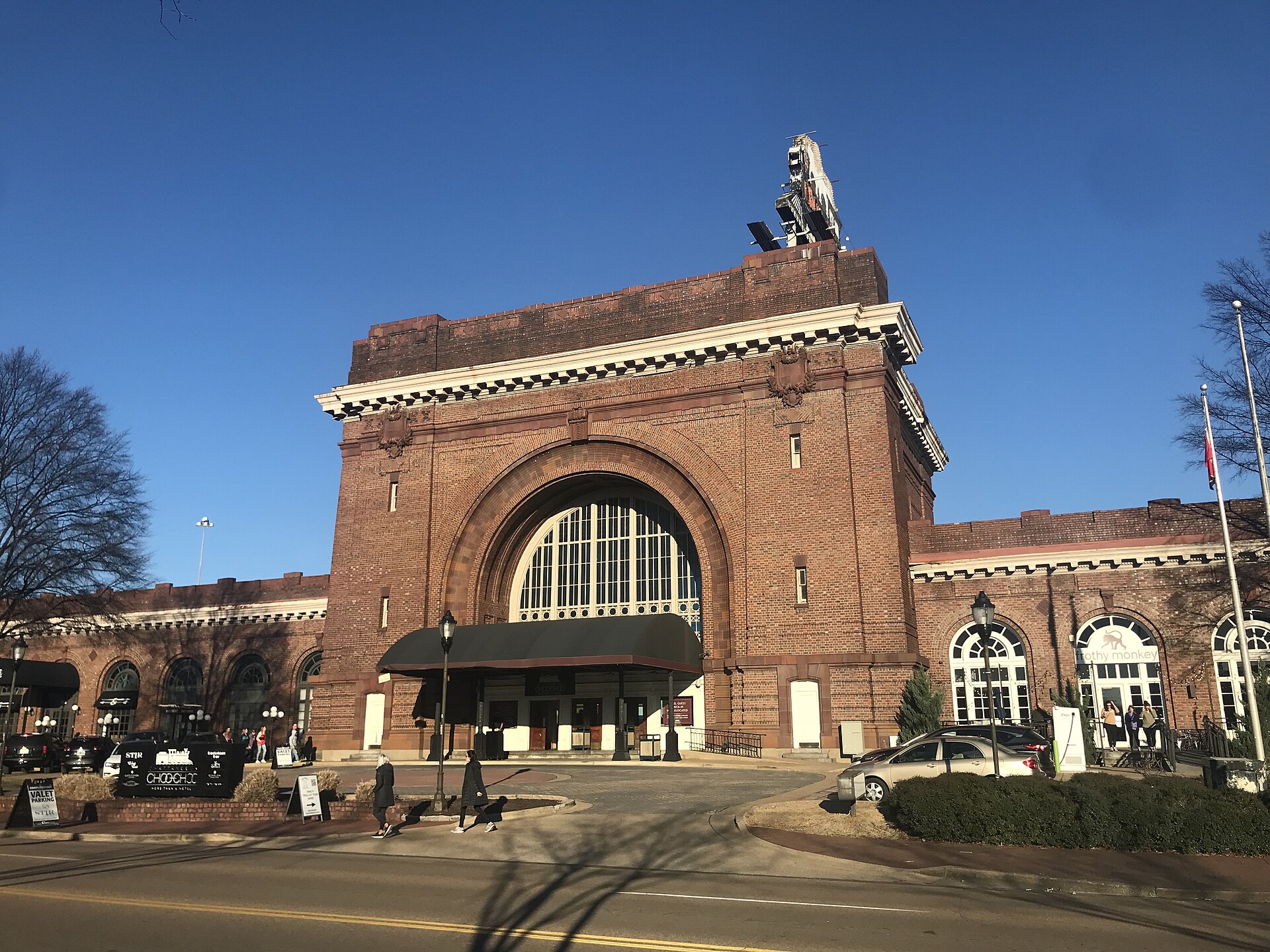
Culture
Chattanooga's culture is Southern in manner and outdoorsy in habit. Strangers get a friendly word at counters and bus stops, and 'how are you?' is usually a greeting rather than a request for a health report. Faith carries weight in this part of Tennessee, and Sunday is quieter than other days, with some shops and eateries opening later or closing early. The city's sense of itself rests on its river, its railways and its mountains, and residents talk about all three with real attachment. Walking, climbing, cycling and paddling are everyday pastimes rather than special trips, and the riverfront fills up on warm evenings. Live music is easy to find, with bluegrass, country, blues and gospel all part of the regional mix. The Cherokee past is acknowledged in museums, interpretive signs and place names, and a little reading beforehand makes the riverside landing more meaningful. Meals are relaxed and generous, service is chatty, and some home-cooking places run on a help-yourself spirit. Tip restaurant servers, since tipping is expected and rarely included in the bill, and ask before photographing people in churches or at work.
What to wear
Chattanooga has no single regional costume, but the Cherokee, whose homeland included this river valley, have a well-known set of garments. The tear dress, a long, full dress trimmed with ribbon, and the ribbon shirt worn by men are made from cotton calico and decorated with bands of coloured ribbon. They appear at powwows, heritage festivals and ceremonies rather than in daily life. Appalachian patchwork quilting, in cotton scraps, is another textile tradition of the region. Everyday dress now is casual and practical: jeans, shorts, T-shirts, trainers and boots, with fleeces and waterproof jackets for the outdoors. Local sports-team shirts are common, and people dress up a little for church and for dinners out, though rarely beyond smart casual. For a visitor, summer calls for light cotton or linen, a hat and sunscreen, since days are hot and humid. Spring and autumn suit layers, and winter can bring a cold, wet spell, so a warm coat and rain jacket are worth packing. Sturdy closed shoes are better for Lookout Mountain's trails and the damp floors of its caves; sandals are fine in town. There are no strict modesty rules for sightseeing, but cover shoulders and knees for church services and funerals.
What to eat
- Meat-and-three plate — Family-run home-cooking dining rooms, often outside the tourist centre
The city's signature everyday meal: one main such as meatloaf or fried chicken, with three vegetable sides picked from a daily list. Portions are generous and prices modest. Weekday lunchtime is the busy hour, so arrive a little early. - Turnip greens — As a side on the daily menu at home-cooking cafés
Greens simmered slowly with smoked pork until soft and savoury, served with their own tangy broth. They are a staple side in Southern kitchens and sit comfortably beside cornbread. Even those who dislike greens often enjoy this version. - Fried okra — Home-cooking restaurants and casual diners across the city
Slices of okra coated in seasoned cornmeal and fried until crisp, with none of the sliminess the vegetable can have when boiled. It is a common side next to meatloaf or chicken and works as a snack with a cold drink. - Neighbourhood burger — Independent burger joints in the suburbs and side streets
A thick, freshly griddled burger from a small family-run joint, usually with chips and a paper-wrapped bun. Order to eat in or take away, and expect a friendly queue at lunchtime rather than anything fancy. - Ice cream on the North Shore — Frazier Avenue, North Shore
A scoop or two after a stroll across the river is a local habit, especially in warm months. Small independent parlours serve classic flavours alongside seasonal specials, and Frazier Avenue is the easiest street to find them.
Plan it
Best time. April–May and October–November, when the days are mild and clear for walking, riverside strolls and mountain views. Summer is hot and humid, and winter is cool and often grey, with the occasional cold snap.
How long. 2–3
Getting there. Chattanooga has its own airport with non-stop flights from several US cities, including Atlanta, Charlotte, Chicago, Dallas, Detroit, New York, Philadelphia, Orlando, Tampa Bay and Washington; from the airport, take a taxi or ride-share into downtown. By road, two major interstate highways cross in the city, giving easy links to Atlanta and Knoxville, to Nashville and to Birmingham.
Budget. mid
Tips
- Hire a car if the mountain attractions are on the list; the incline and riverfront are the car-free exceptions
- Reach Lookout Mountain sights early on weekends and school holidays to avoid the longest queues
- Check each attraction's official site for hours and tickets before travelling, and for city information see https://www.chattanooga.gov
- Carry a bank card, since cards are widely accepted, but keep a little cash for small cafés
- Drink plenty of water in summer, when heat and humidity make even short walks tiring
Etiquette
- Tip restaurant servers, as service is rarely included in the bill
- Ask before photographing people, especially in churches or at work
- Stay on marked paths in caves and on trails, and follow staff instructions
Nearby
Sources
- Wikidata Q186702 (CC0)
- Wikipedia: Chattanooga, Tennessee (rev 1385667764) (CC BY-SA 4.0)
- Wikivoyage: Chattanooga (rev 5397388) (CC BY-SA 4.0)
- Photo: Chattanooga, Tennessee viewed from Stringer's Ridge (Imilious) (CC BY 3.0)
- Photo: Chattanooga, Tennessee downtown (WeaponizingArchitecture) (CC BY-SA 4.0)
- Photo: Hunter Museum entrance (Ɱ) (CC BY-SA 4.0)
- Photo: Creative Discovery Museum (Acdixon) (CC0 1.0)
- Photo: Tennessee Aquarium (WeaponizingArchitecture) (CC BY-SA 4.0)
- Photo: Chattanooga Choo Choo Hotel (WeaponizingArchitecture) (CC BY-SA 4.0)
- Photo: TVA offices in Chattanooga (TVA Web Team) (CC BY 2.5)
- Photo: Relief location map of the USA (Uwe Dedering) (CC BY 3.0)


