Chatham
Chatham, United States
Chatham is a shingled fishing town on Cape Cod's elbow, where seals, a working lighthouse, galleries and fresh seafood fit into slow days.
The place
Chatham sits at the south-eastern corner of Cape Cod in Massachusetts, the bend locals call the elbow, with the Atlantic to the east and Nantucket Sound to the south. It is a small town of 6,594 residents, a figure that rises sharply every summer when holidaymakers fill the cottages and guesthouses. The town was founded in 1665 and spent most of its life as a fishing community, and boats still land their catch at the pier. Chatham is made up of several villages: Chatham itself, plus North, South and West Chatham, each with its own quiet roads and ponds. The land is low and sandy, about 14 metres above sea level, threaded with creeks, brooks, inlets and harbours. Offshore lies Monomoy Island, a wildlife refuge with a decommissioned lighthouse. On the mainland, Chatham Light is still operated by the United States Coast Guard. Main Street is the visitor heart of town, with small shops, galleries, an old street clock and benches for people-watching. The mood is genteel and weathered rather than flashy, and the evenings are quiet. Nobody comes here for nightlife or theme-park crowds; they come for beaches, seals, boat trips and a lobster roll. In July and August, expect traffic and full car parks. May, June and September are calmer, though the sea stays cold well into summer.
Its story
Before English settlers arrived, the land around Chatham belonged to the Monomyick people, who lived by farming, fishing and hunting. The French explorer Samuel de Champlain met a sizeable community here in the early seventeenth century. English settlers followed, and land purchases from the Monomyick led to disputes, partly because the colonial government had not approved them. The settlement was long known by a version of the Indigenous name Monomoy, and it became an officially recognised town in the early eighteenth century, with the name Chatham. In that century the economy rested on fishing, farming and sea trade. The American Revolution disrupted shipping and made voyages dangerous, but afterwards the maritime trades picked up again. Shipbuilding, salt-making and fishing kept families employed, and the shoreline filled with rope walks and racks for drying fish. The Old Village grew up beside Chatham Harbour and Mill Pond, where access to the water suited boatbuilders and crews. Through the nineteenth century, houses and workshops stood close together there, all tied to the sea. That sea-facing history still shapes the town today. Its lighthouse, windmill and museum all come from the age of sail and salt, and the harbour is still a working one. The summer-resort economy that now dominates grew later, as visitors discovered the beaches and the pace of life that earlier generations had earned by hard work on the water.
What to see
- Chatham Light and the beach below — Main Street, east of the village centre
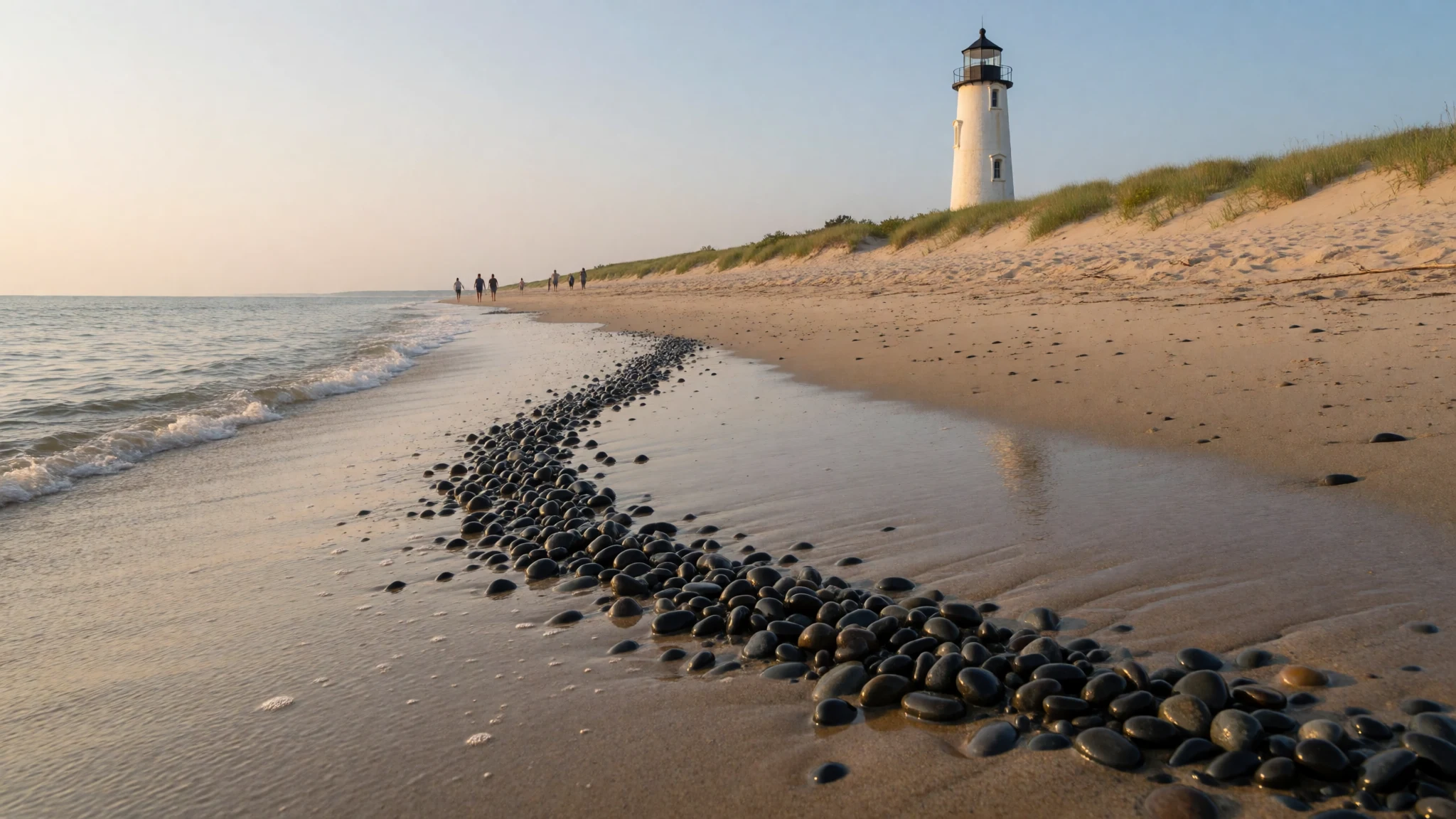
Chatham Light stands above a long sandy beach on the Atlantic side, and it is still a working lighthouse run by the Coast Guard. The view takes in open water and the shifting sandbars offshore. Seals are often visible from the shore, and the water is calm enough for swimming on warm days.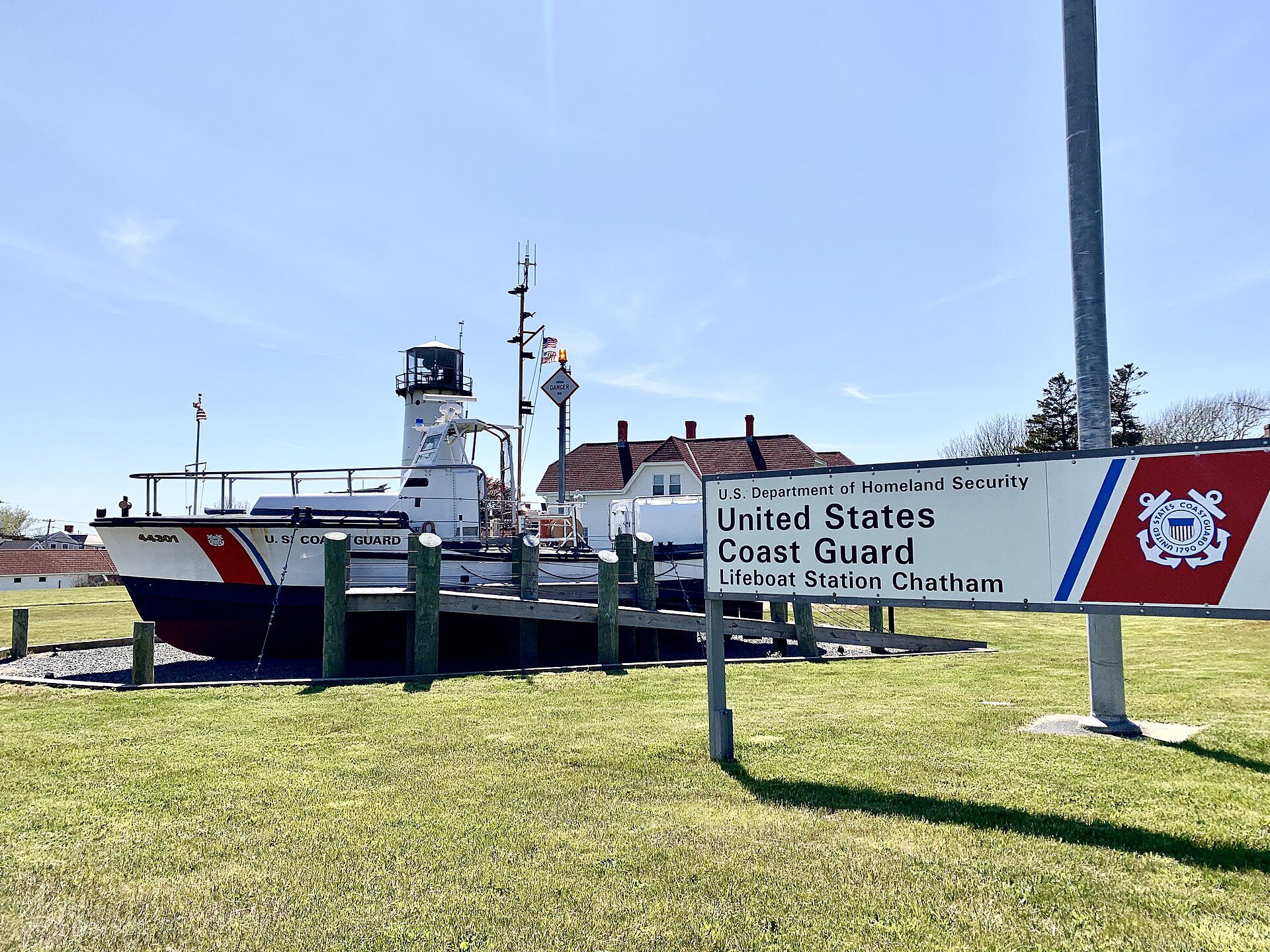
- Seal cruise to Monomoy — Chatham Harbour and Monomoy Island
Boat trips from Chatham run out to Monomoy Island and the waters around it, where hundreds of seals haul out on the sand. The tour is about an hour and a half, and the animals are watched from a respectful distance. Wear layers, because the wind off the water is cool even in July.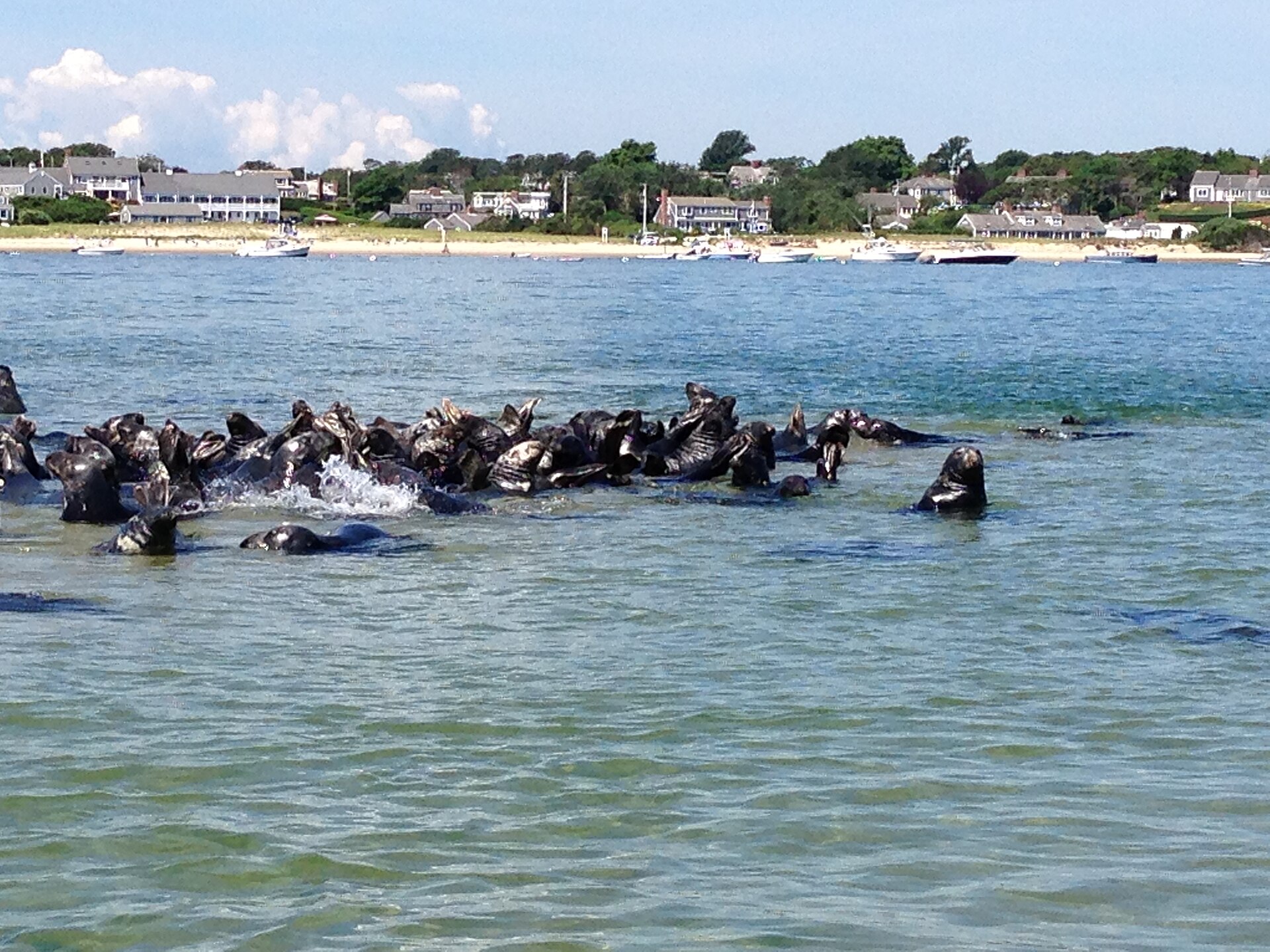
- Godfrey Windmill — Near the village centre
The Godfrey Windmill dates from the late eighteenth century and was carefully restored in recent years, so it can grind grain again as it once did. It is a small, shingled landmark near the village centre and a good reminder of how much of old Chatham ran on wind and water. - Atwood House Museum — Stage Harbour Road area, Chatham
The Atwood House Museum collects the history of Chatham, from its fishing and seafaring life to the families who shaped the town. It is a gentle indoor stop for a grey or showery day. Check the official town site or the museum's own pages for opening times before you go. - Main Street galleries and shops — Main Street, Chatham village
Several small galleries sit within a short walk of the street clock on Main Street, including Hearle, Munson, Odell Studio and Struna. They show work by regional artists and are free to browse. The street is easy to walk in an hour or two, with ice-cream stops in between.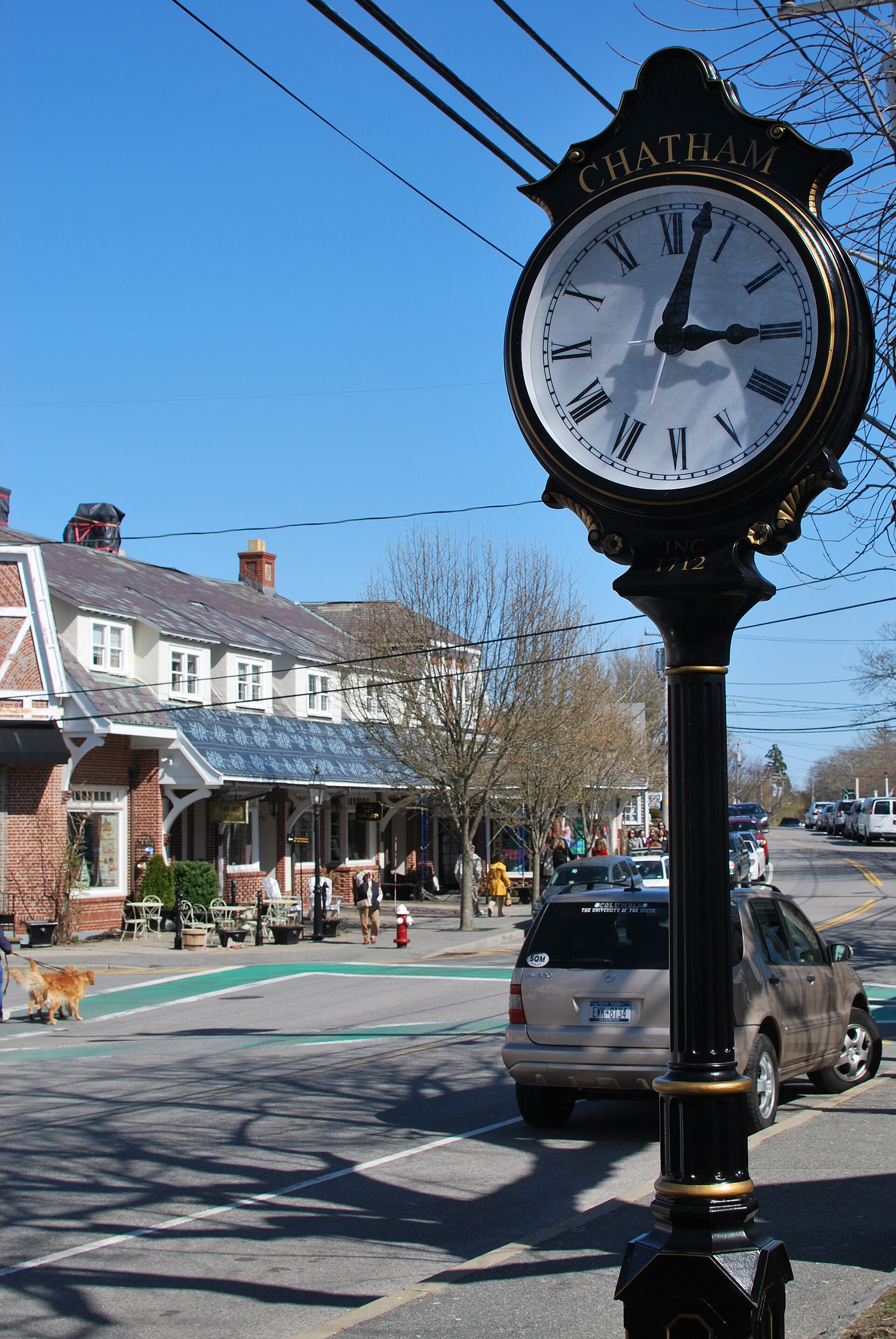
- Cape Cod Baseball League at Veterans' Field — Veterans' Field, Chatham
The Chatham Anglers play summer collegiate baseball at Veterans' Field. Fans sit close to the action, and many of the players go on to the professional game. It is a very local evening out, with a relaxed crowd. Check the league's official schedule before planning around a game.
Culture
Chatham is a New England fishing town that became a summer resort, and both identities still show. The older culture is maritime: lighthouses, a Coast Guard presence, boats unloading at the pier, and Sunday-quiet streets in the off-season. The land itself was home to the Monomyick people long before the English arrived, and that heritage is part of the story the local museums try to tell. Summer brings a lighter layer of community life. There are band concerts, small theatre productions at the Monomoy Theatre and the Chatham Drama Guild, art openings in the galleries, and baseball nights at Veterans' Field. Residents tend to be polite, understated and proud of how little the town has changed. Many shops and eateries are family-run, and conversation with staff is part of the transaction, so a short chat is normal rather than intrusive. Conservation matters here as well. The shoreline, seal colonies and nesting birds are protected, and locals take rule-breaking on the beach seriously. Weather shapes plans too, and storm warnings are taken calmly but seriously when hurricanes or nor'easters approach. Outside peak season, the town is peaceful and many places close early, so it pays to check ahead. When you see seals on the beach or sandbars, keep well back, never approach or touch them, and keep dogs away.
What to wear
Chatham has no formal local costume, but its working past left a distinct look: oilskin jackets, sou'westers, rubber boots and heavy wool jumpers made for cold, wet days on fishing boats. The Indigenous Monomyick, part of the wider Wampanoag world, have their own traditional dress, which belongs to their community and is not a thing for visitors to copy. Today the town dresses in classic New England summer style: cotton shirts, linen trousers, striped tops, deck shoes, canvas shorts and light waterproofs. Navy, white and faded reds are common, and the mood is tidy but unfussy, with few suits even in good restaurants. Evenings can turn cool and breezy, so locals keep a fleece or sweatshirt close at hand. A visitor should pack for changeable coastal weather. Bring a windproof layer even in July, a light jumper for evenings on the water, and a sun hat and sunscreen for the exposed beaches. Comfortable sandals work for Main Street, but closed shoes with grip are better for boat decks and wet jetties. Swimwear is fine on the beach, though a cover-up is expected in shops and eateries. There are no strict modesty rules, since the town has no dress-coded religious sites that visitors normally enter. In spring and autumn, add a warmer coat and waterproof boots.
What to eat
- Lobster roll — Seafood shops and casual counters near Chatham harbour
Chunks of lobster meat in a soft, buttered roll, served hot or cold with mayonnaise. The simplest versions come from seafood shops and casual counters near the harbour, often eaten at outdoor tables. - Fried seafood — Casual seafood eateries in the village and near the pier
Clams, scallops, cod or shrimp in a light batter, fried and served in baskets with chips and tartare sauce. It is a Cape Cod staple, best eaten at a casual eatery close to where the boats land. - Fresh oysters — Seafood restaurants close to the shopping village
Local oysters are served raw on ice with lemon and a sharp vinegar sauce. They taste of the cold, salty water they grow in. Ask the staff which bay they came from, and enjoy them with a glass of something cold. - Clam chowder — Almost any seafood restaurant or pub in town
A thick, creamy soup of clams and potato, often with a little salt pork. It is a cold-day comfort here and appears on most seafood menus in the village, usually served with crackers on the side. - Just-landed fish — Chatham Pier Fish Market, by the harbour
At the pier fish market, you can watch fishermen unload the catch, then buy it to cook yourself or have it prepared nearby. Striped bass and bluefish are among the local catches. Availability changes with the season and the weather.
Plan it
Best time. June to September for beach weather and boat trips, with September quieter and still pleasant. Summers are warm rather than hot, and winters are cold with snow and nor'easters, so many places run reduced hours from late autumn to spring.
How long. 2–3
Getting there. Fly into Boston Logan, hire a car and drive south-east over the Sagamore Bridge onto Cape Cod, then follow the main road east to Chatham's Main Street. Regional flights are available to the Cape itself. Summer weekends bring heavy traffic, so allow extra time. Check the official town site, http://www.chatham-ma.gov/, for visitor information.
Budget. high
Tips
- Book rooms and boat trips well ahead for July and August
- Arrive at the beach early for parking and calmer water
- Carry a windproof layer, since sea breezes cool evenings fast
- Cards are widely accepted, but keep a little cash for small stalls
- Check tides and weather before planning seal or Monomoy trips
Etiquette
- Keep a respectful distance from seals and nesting birds
- Take litter away from beaches and dunes
- Greet shop and restaurant staff politely before ordering
Nearby
Sources
- Wikidata Q1774812 (CC0)
- Wikipedia: Chatham, Massachusetts (rev 1386688032) (CC BY-SA 4.0)
- Wikivoyage: Chatham (Massachusetts) (rev 5434465) (CC BY-SA 4.0)
- Photo: Street clock on Main Street, Ahodges7 (CC BY 3.0)
- Photo: Chatham Light House, Main St., Bob Linsdell (CC BY 3.0)
- Photo: Hurricane Warning flags for Hurricane Earl, Ericci8996 (CC BY 3.0)
- Photo: Sunset in Chatham, MA, Hqfrancis (CC BY-SA 4.0)
- Photo: Chatham Lighthouse and Coast Guard Station, JiggyJames12 (CC BY-SA 4.0)
- Photo: Kris Bryant works out before NLCS Game 6, Arturo Pardavila III (CC BY 2.5)
- Photo: Old Linden tree, Chatham, MA, Marty Aligata (CC BY 3.0)
- Photo: Seals on a sand bar in Chatham Harbor, Jehochman (CC BY 3.0)


Wildlife
- Seal (animal)
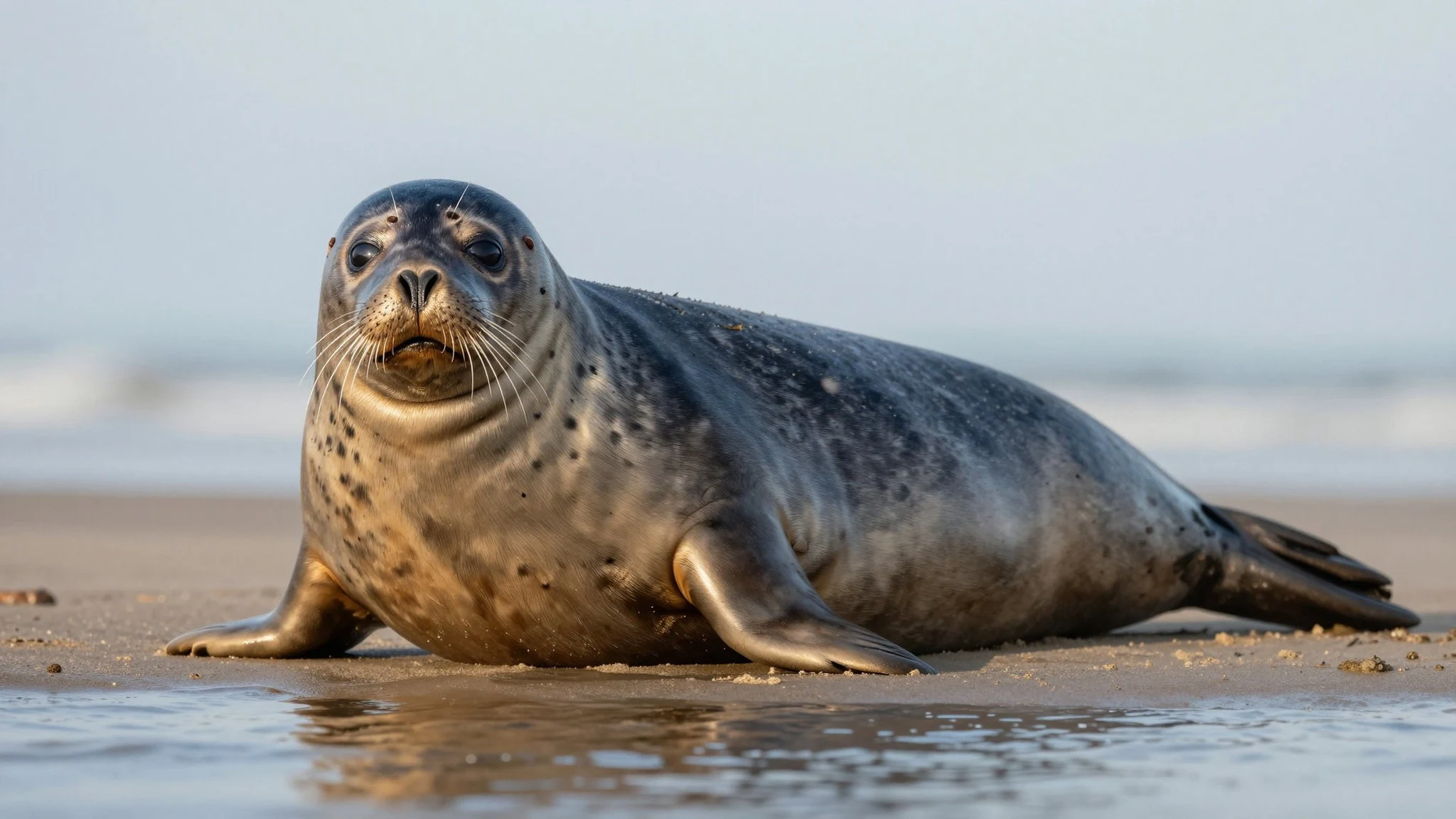
The harbor seal, also called the common seal, is a true seal: a sleek, whiskered swimmer that looks rather like a puppy in a wet suit. In Chatham it is often seen from the shore, so a patient look across the water may be all you need. Keep a respectful distance, stay quiet and still, and let the seal decide whether to come closer. A local guide can help you watch well, and you should never feed it.