Central Park
Central Park, United States
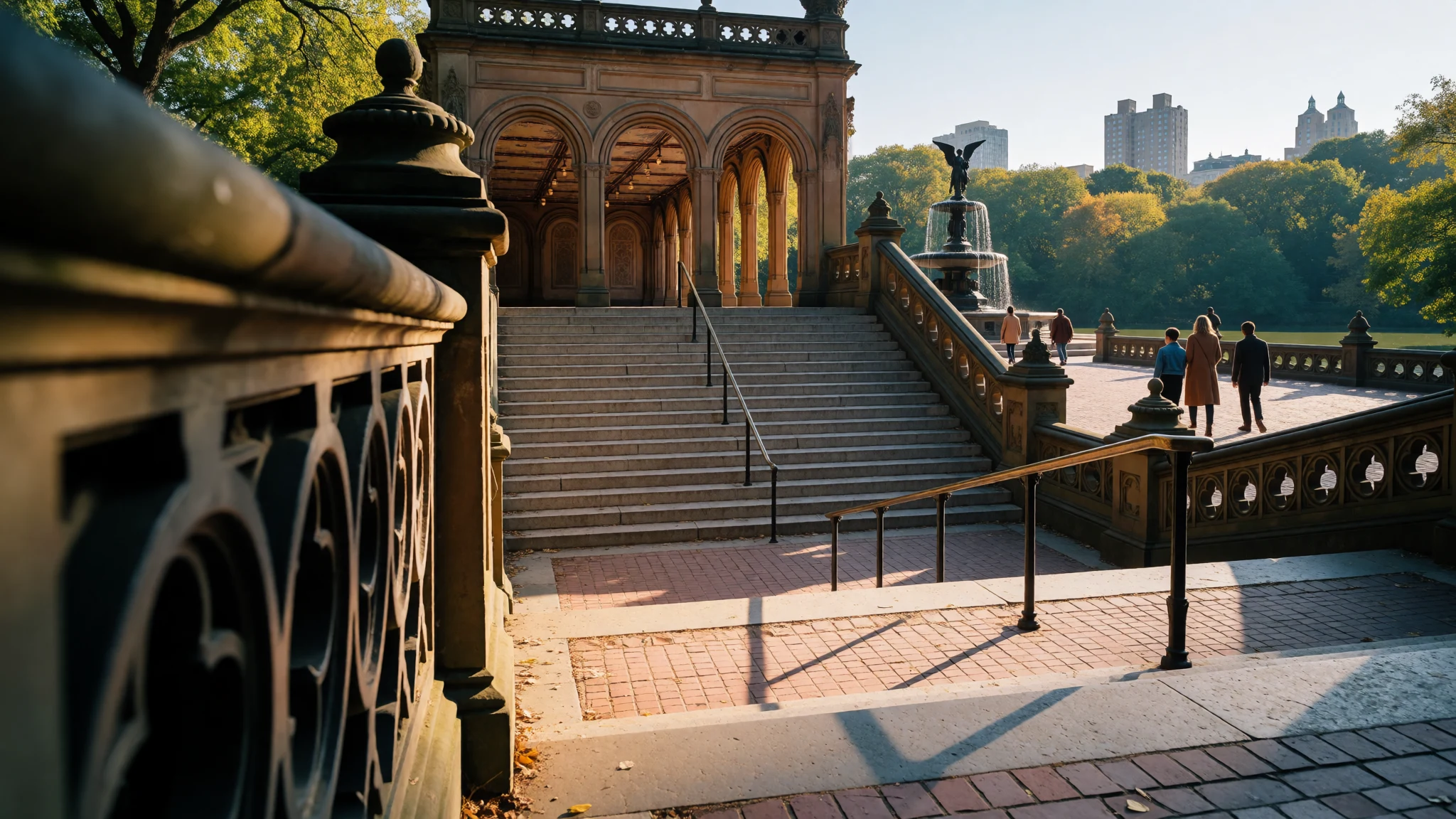
Central Park is a made landscape of rock, water and meadow that gives Manhattan a place to walk, rest and watch the city at leisure.
The place
Central Park is a long rectangle of managed countryside set into the middle of Manhattan, with the Upper West Side on one flank and the Upper East Side on the other. Its look is deliberate: rock outcrops left bare, meadows opened out for lying about, a winding lake, and shaded walks that bend so the surrounding towers keep slipping behind the trees. The roads that cross the park run in sunken cuts, so a walker can get from one side of the island to the other without seeing a car.
The land belongs to the city's parks department, but day-to-day care has long been in the hands of the Central Park Conservancy, a non-profit body working under contract. It pays for planting, path repair and much of the upkeep, and its website is the best place to check events, closures and maps: http://www.centralparknyc.org/.
A few honest notes on what to expect. In fine weather the southern end, Bethesda Terrace and the zoo area fill up fast, especially at weekends, while the northern end is calmer and feels more like a wood. Inside the park there are no street addresses, so cafés and landmarks are found by the nearest entrance or path, and a map on the phone helps. Summers are hot and humid, winters are cold and sometimes snowy, and the park is at its busiest in spring blossom and autumn colour. Subway stops and bus routes ring the edges. Sleeping overnight in the park is illegal.
Its story
Central Park exists because Manhattan grew faster than its supply of open ground. As the city pushed north from the southern tip of the island, ordinary New Yorkers had almost nowhere to stroll except cemeteries, and wealthy voices began arguing for a proper public park. The street grid drawn up early in the nineteenth century had set aside nothing of the kind. The surveyor John Randel Jr. did walk this ground while marking out future intersections, and one of his iron survey bolts is still set in a rock near the Dairy, a small relic of a street plan the park displaced.
Once the site was chosen, a design competition followed. Frederick Law Olmsted and Calvert Vaux won it with their Greensward Plan, which turned rough, rocky terrain into a crafted landscape of meadows, woodland, water and hidden roads. The park's founding is dated to 1856 in the records, though building went on for years, parts opened while work continued, and extra land was added at the northern end.
The ground was not empty. Seneca Village, a settlement whose residents were mostly Black, stood on part of it, along with other homes and farms. All were taken under eminent domain and demolished. Surveyors' maps of the village survive, and the loss is now part of how the park's story is told.
In the early twentieth century the park slid into neglect, until the parks commissioner Robert Moses launched a clean-up. Later, management passed to the Conservancy, whose planting and repair work shapes what visitors see today.
What to see
- Bethesda Terrace and Fountain — Mid-park, at the Lake
Bethesda Terrace is a stone-paved meeting place stepping down toward the Lake, with the Angel of the Waters fountain at its centre. Central Park uses it as a stage for buskers, wedding photos and people-watching. Arrive early on a weekday for space; by midday in fine weather it is crowded. - The Lake — Mid-park, west of the Boathouse
The Lake is an irregular sheet of water with rocky edges, wooded points and small bridges. Rowing boats are hired from the boathouse on its eastern shore in the warmer months. Paths around it are good for slow walking, and the views back toward the city skyline change with every bend.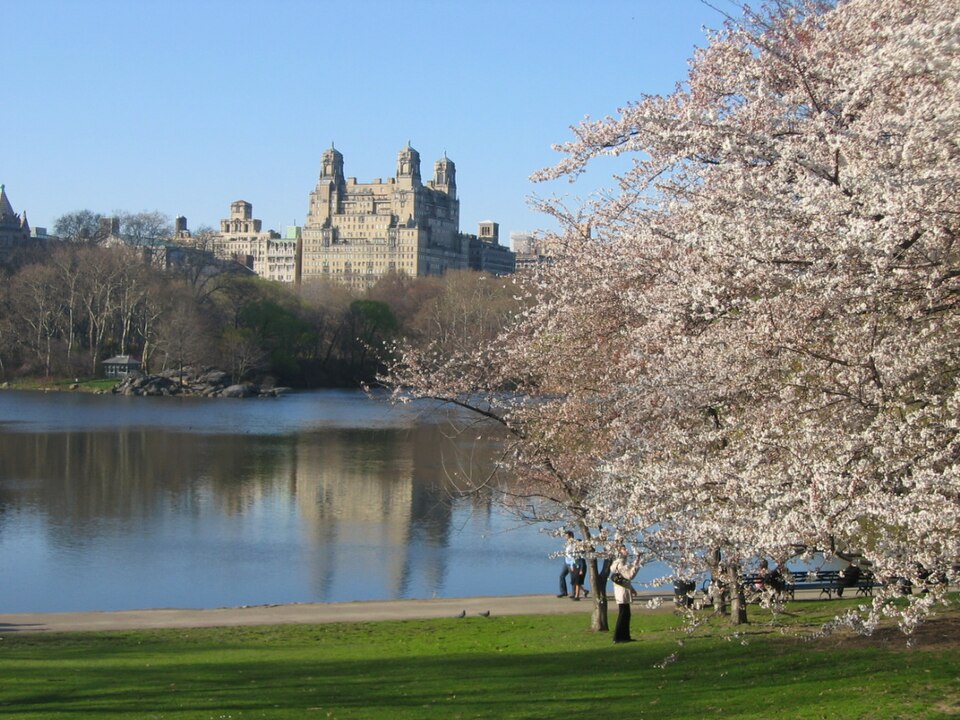
- The Arsenal — Southeast, near Fifth Avenue
This brick building is older than the park itself. It was put up as a munitions store for the state's National Guard and styled to resemble a medieval fortress, with towers and battlements. Now it sits quietly beside the zoo, a useful reminder that parts of the site had a life before the landscape was made. - Balto Statue — East side, north of the zoo
A bronze sled dog stands on a rock outcrop here, honouring Balto, who led a team through a blizzard to bring medicine to Nome in Alaska. Children climb on the rock and sit on the dog's back, so it is rarely quiet. It makes an easy, cheerful stop on the walk between the zoo and the Mall. - Central Park Zoo — Southeast, near the Arsenal
The zoo is small, compact and easy to cover in an hour or so. Animals have lived on this spot in various forms for well over a century, and the present layout is much more recent. It suits families with young children. Check the official Conservancy site for opening times and ticketing before going. - The Dairy — South-central, near the Carousel
The Dairy was built as a place to serve milk and snacks to visitors, in a style meant to recall a country church. It now works as a visitor information point and gift shop. Nearby, a survey bolt from the earliest street plan remains set in a rock, for the curious.
Culture
Central Park works as the shared garden of a city where most people have none. On a fine afternoon the lawns hold picnics, football games, readers and sleepers, while paths carry runners, cyclists, dog walkers and strollers. Music is part of the scene, from buskers at Bethesda Terrace to large organised concerts and charity festivals on the open lawns. Winter brings skaters, sledgers and walkers in heavy coats, and the first warm weekend of spring brings almost everyone outdoors at once.
The park also carries New York's civic habits. Public space is treated as something to be defended, so volunteers, the Conservancy and the city's parks department share the work of keeping it going, and people are quick to point out when rules are being ignored. Its history is not entirely comfortable, either: the clearance of Seneca Village for the park is now openly discussed, and a visit is richer for knowing it.
Socially, New Yorkers tend to be brisk but helpful. Asking a stranger for directions inside the park is normal, and people will usually answer quickly and kindly. Conversation between strangers stays light and short. Expect the pace to vary sharply between the busy southern paths and the quiet woodland in the north.
On shared loops and paths, keep to the right, walk no more than two abreast, and move aside promptly for runners and cyclists rather than stopping in the middle of the track.
What to wear
Central Park has no traditional costume of its own, and it would be misleading to invent one. The clothing story here is that of New York generally: a city built on garment-making, where wool coats, cotton shirts and hard-wearing denim work clothes shaped what ordinary people wore, and where tailoring and ready-made fashion grew up side by side. Those textiles still show up, in overcoats, jeans and knitwear.
What people actually wear in the park is practical and varied. Runners and cyclists wear technical kit. Office workers on a lunch break may be in suits with trainers. Weekend walkers favour jeans, light jackets and sturdy sneakers, and in winter everyone wears layers, hats and scarves. Nobody will look twice at what you have on, whether it is smart or scruffy.
Visitors should dress for the weather and for walking. Summer is hot and humid, so light, breathable cotton or linen, a hat and sunscreen help. Spring and autumn can swing from mild to cool within a day, so carry a light jacket or shawl. Winter needs a warm coat, gloves and shoes with grip, because paths can be icy. Comfortable closed shoes matter most, since the park is large and distances add up. No special modesty rules apply, and a small day bag for water and a rain layer is worth having.
What to eat
- Hot dog from a cart — Vendor carts near entrances and busy paths
The classic quick bite is a hot dog from one of the vendor carts dotted around the park, usually with mustard and sauerkraut or onions. Look near the main entrances, the zoo and busy crossroads, especially on warm days. - Soft pretzel — Street vendors across the park
Large, salted soft pretzels are sold from the same carts and make an easy snack for a long walk. They are best eaten warm, with a little mustard on the side if the cart offers it. - Ice cream — Carts and kiosks in the warmer months
Ice cream and ice lollies are sold from vendors in warm weather, and they are a pleasant way to cool off on a hot, humid afternoon. Look for carts near playgrounds, the Mall and the southern end. - Café burger or sandwich — Seasonal park cafés, spring to autumn
Several seasonal cafés in the park serve burgers, including vegetarian ones, as well as sandwiches, coffee, tea and cold drinks. Many close in the colder months, so check before planning a meal around one. - Lakeside restaurant meal — The Boathouse, eastern shore of the Lake
A sit-down restaurant at the boathouse looks over the Lake, with outdoor tables and a bar in warm weather. It suits a leisurely lunch after a rowing-boat trip, though tables fill quickly on sunny weekends, so booking ahead is sensible. - Picnic box — A bakery-café on the west side of the park
For a meal on the grass, pre-packed picnic boxes with organic bread, salads and vegan ice cream can be bought from a bakery-café chain on the west side. It is a handy option when the lawns are at their best.
Plan it
Best time. April–May for blossom and fresh greens, and September–October for mild days and autumn colour. July and August are hot and humid, and winter is cold, with snow some years.
How long. 1–2
Getting there. The nearest major airports are JFK, LaGuardia and Newark, each linked to Manhattan by train, bus or taxi. The subway stops at Columbus Circle on the southwest corner, and the B and C lines run along Central Park West; on the east side, walk a few blocks west from the Lexington Avenue lines. Several bus routes cross the park on the transverse roads.
Budget. low
Tips
- Go early on weekdays for quiet paths and good light at Bethesda Terrace
- Wear comfortable walking shoes, as the park is large and distances add up
- Carry water and sun protection in summer, since shade is patchy on open lawns
- Park cafés and vendors are mostly seasonal, so bring snacks in colder months
- Check the Conservancy website, http://www.centralparknyc.org/, for events, closures and maps
Etiquette
- Keep to the right on shared paths and give runners and cyclists room
- Do not sleep in the park overnight, as it is illegal
- Take litter with you or use the bins provided
Nearby
Sources
- Wikidata Q160409 (CC0)
- Wikipedia: Central Park (CC BY-SA 4.0)
- Wikivoyage: Manhattan/Central Park (CC BY-SA 4.0)
- Ed Yourdon, Southwest corner of Central Park, looking east, NYC (CC BY-SA 2.0)
- Anthony Quintano, Global Citizen Festival Central Park New York City from NYonAir (CC BY 2.5)
- S23678, Panorama of the north of Manhattan, from the Rockefeller Center (CC BY 3.0)
- Fritz Geller-Grimm, Central Park, Manhattan (CC BY 2.5)
- z22, Central Park Bolt (CC BY 3.0)
- Egbert Ludovicus Viele, Map of Seneca Village (Public domain)
- Vaux & Olmsted Map of Central Park (Geographicus) (Public domain)
- The Lake Central Park (CC BY 3.0)


