Cathedral Gorge
Cathedral Gorge, United States
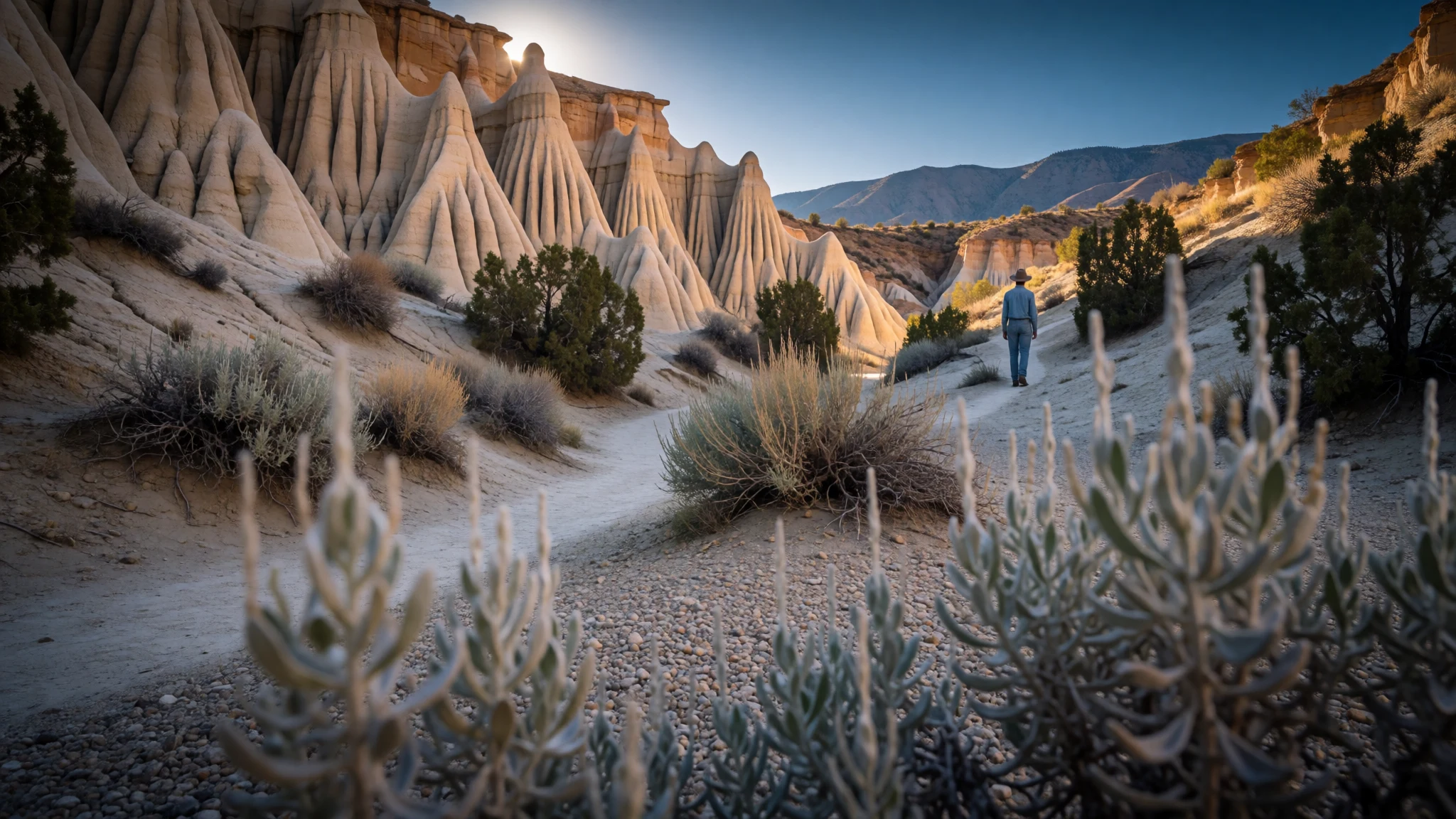
Cathedral Gorge in eastern Nevada is a pale clay desert carved into spires and slot canyons, quiet, compact and easy to walk.
The place
Cathedral Gorge State Park sits in Lincoln County, in the high desert of eastern Nevada, just outside the small town of Panaca. It is both a state park and a geological preserve, and what it protects is mud. Fine bentonite clay, laid down in an ancient lake, has been cut by rain, wind and flash floods into fluted walls, spires and narrow slots. The clay is cream to buff, and in low sun it glows gold and pink. Seen from the rim, the gorge resembles a roofless Gothic nave, which explains the name.
The layout is compact. A picnic ground and campground sit at the foot of the formations, and most of what is worth seeing can be reached on foot from them by short trails. Children tend to love the slot canyons because they can walk straight into the cliffs. This is not a vast park like the great canyon parks of Utah and Arizona. It suits a half day or a night, and is often slotted into a longer loop through the Great Basin.
Crowds are thin compared with the headline parks of the American West, and the soundtrack is mostly wind and ravens. The climate is dry and continental. Summer middays are hot with almost no shade, winters are cold, and an occasional dusting of snow makes the clay look sugared. When wet, the clay turns slick and sticky, so rain changes what is walkable. Panaca has only basic services, so bigger supplies are better bought in advance.
Its story
Cathedral Gorge began as lake-bed sediment, and its story is mostly one of slow erosion. After the water drained, the soft clay was left exposed to the desert's occasional violent storms, which carved the cliffs into the columns and canyons seen today. The area lies in the homeland of Paiute peoples, who knew this country long before it appeared on any road map.
By the nineteenth century, local families were using the gorge for picnics, and it was known as Cathedral Gulch. In the 1920s the dramatic backdrop was borrowed for open-air plays and for Easter ceremonies, a natural stage that needed no building. Governor James Scrugham began bringing the land under state protection in 1924, and by 1935, it was designated as one of Nevada's first four state parks.
The Civilian Conservation Corps, the Depression-era work programme, left a mark here. Its crews built picnic facilities that are still used, along with a stone water tower and a stone restroom, both now out of service. The tower in particular has become a favourite subject for photographers, standing against the pale clay like a small fortress.
The park's history is therefore a modest one: a place loved locally first, then protected before it had a wider reputation. That helps explain why Cathedral Gorge still feels like a neighbourhood park set in extraordinary scenery, rather than a grand national attraction with a visitor industry around it.
What to see
- The main gorge floor — Cathedral Gorge State Park
The main gorge floor at Cathedral Gorge State Park is where the clay walls rise in fluted columns and buttresses, pale in shade and tawny in raking light. A short walk from the picnic ground puts a visitor among them. Late afternoon gives the best colour and shadows, and weekdays outside school holidays are noticeably quieter.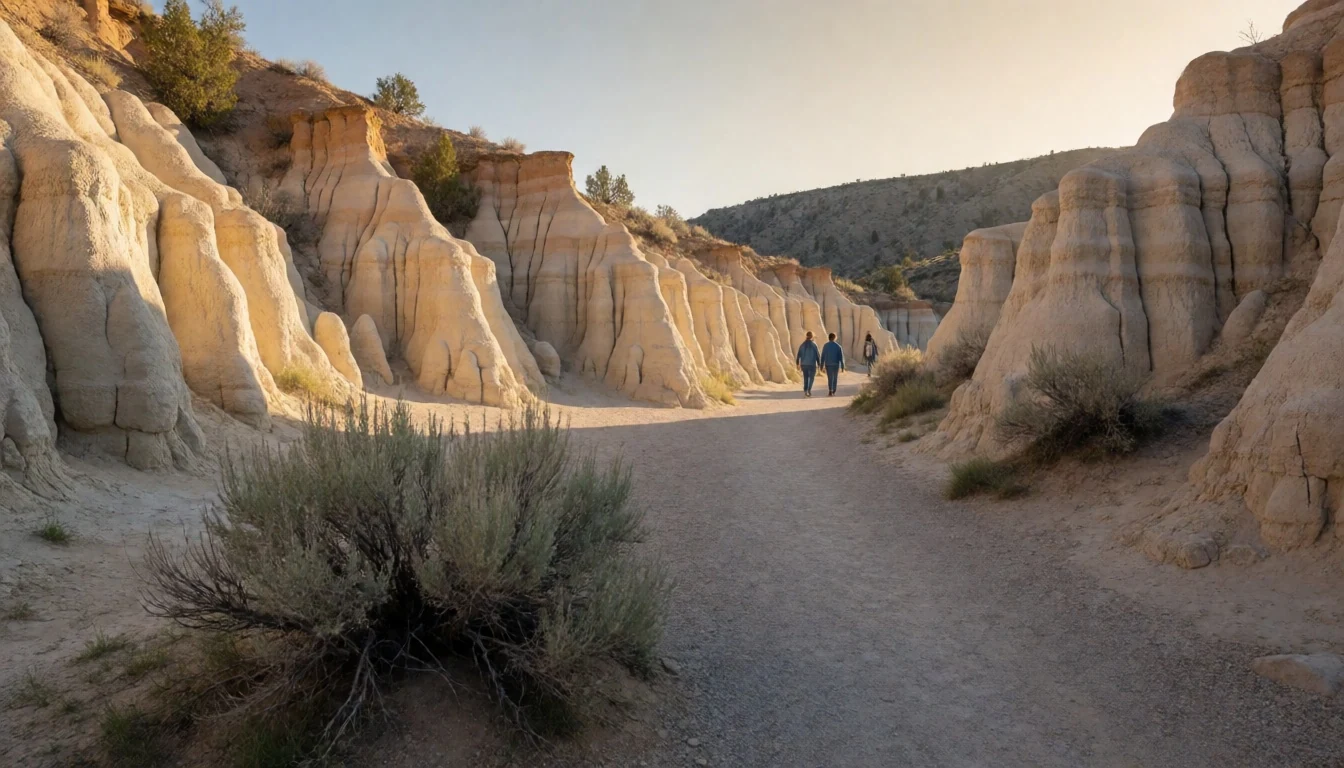
- The slot canyons — Cathedral Gorge State Park
The narrow slot canyons at Cathedral Gorge cut straight into the clay cliffs, and several can be entered on foot from the main trail. Walls close in overhead, the light turns amber and sound drops away. Walk them only under a clear sky, since rain makes the clay slippery and flash floods are possible.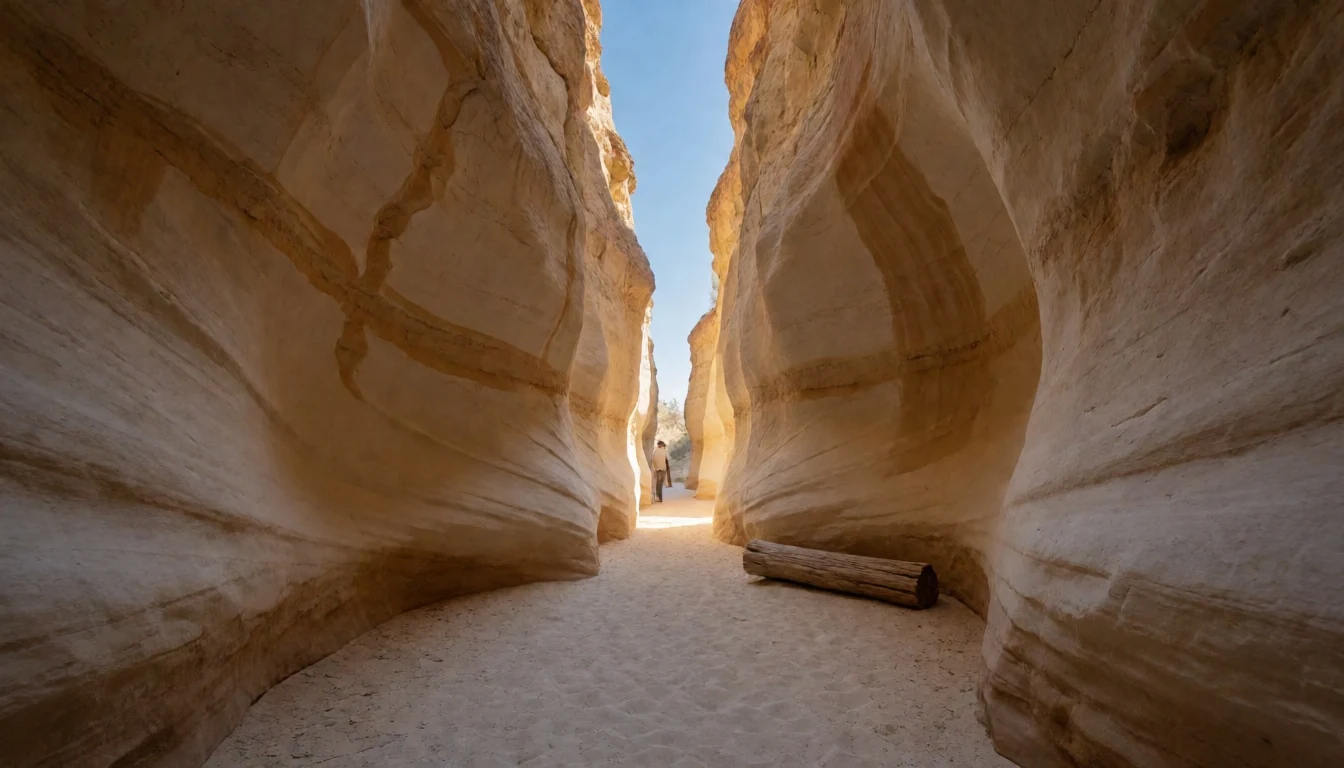
- The old water tower — Cathedral Gorge State Park
The old stone water tower at Cathedral Gorge was built by the Civilian Conservation Corps in the years after the park was created, and no longer works. It makes a good photograph against the clay and a small reminder that the picnic ground and paths owe much to Depression-era labour. Please do not climb on it.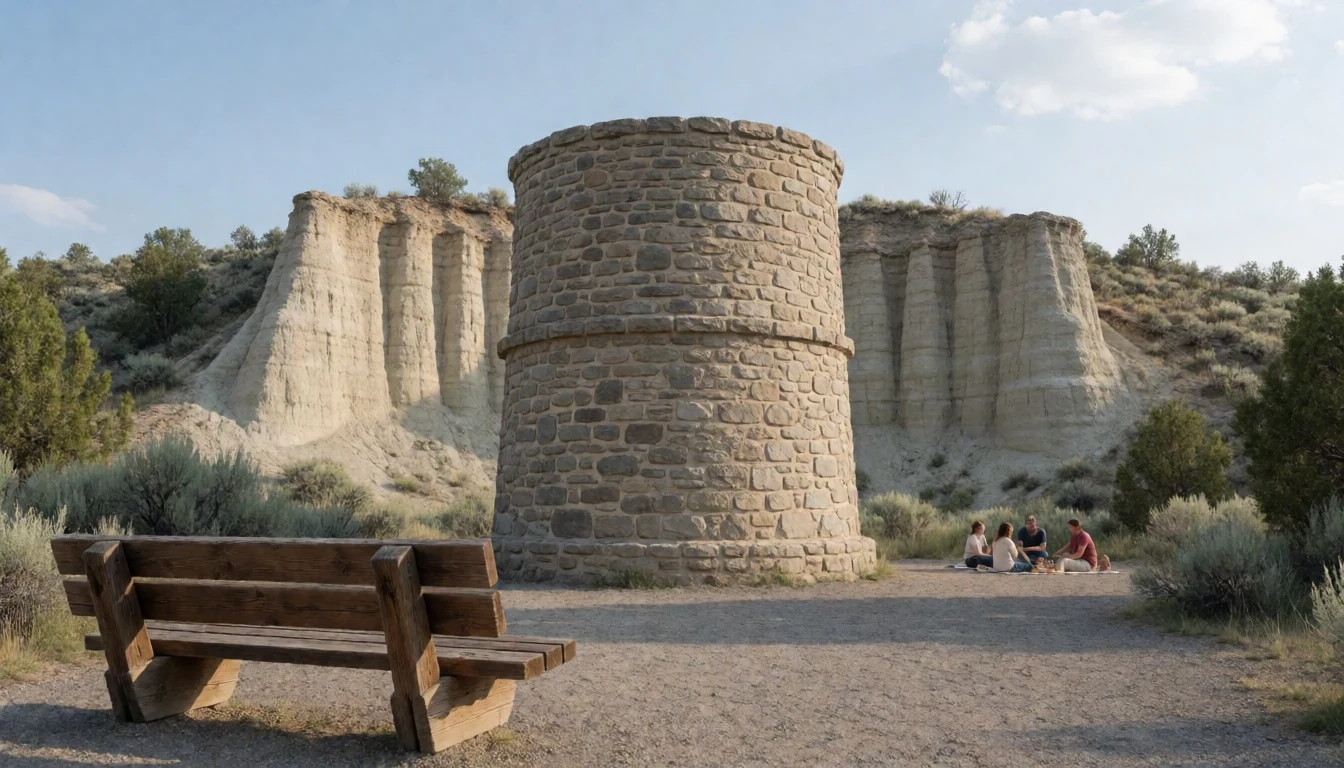
- Great Basin National Park — Eastern Nevada, north of the gorge
Great Basin National Park lies north of Cathedral Gorge, and the two pair well as a loop through eastern Nevada. It is quieter than the better-known national parks, with campgrounds and hiking trails. The upper campground sits high enough for altitude to be felt, and autumn aspens turn the slopes yellow.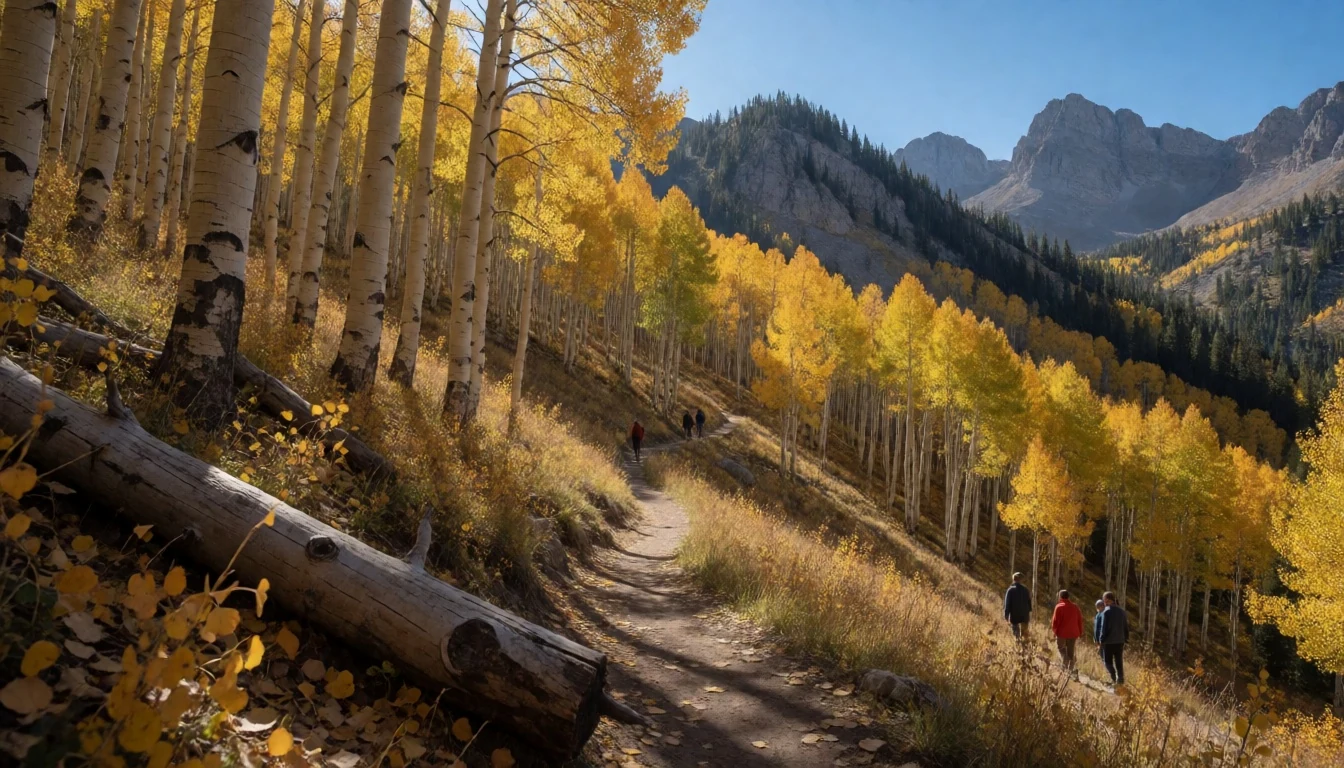
- Berlin-Ichthyosaur State Park — Central Nevada
Berlin-Ichthyosaur State Park, further west across central Nevada, protects fossils of the marine reptile Shonisaurus popularis along with a ghost town from the early twentieth century. It is a long drive from Cathedral Gorge, so it suits a longer road trip rather than a day out, and rewards anyone curious about Nevada's mining past.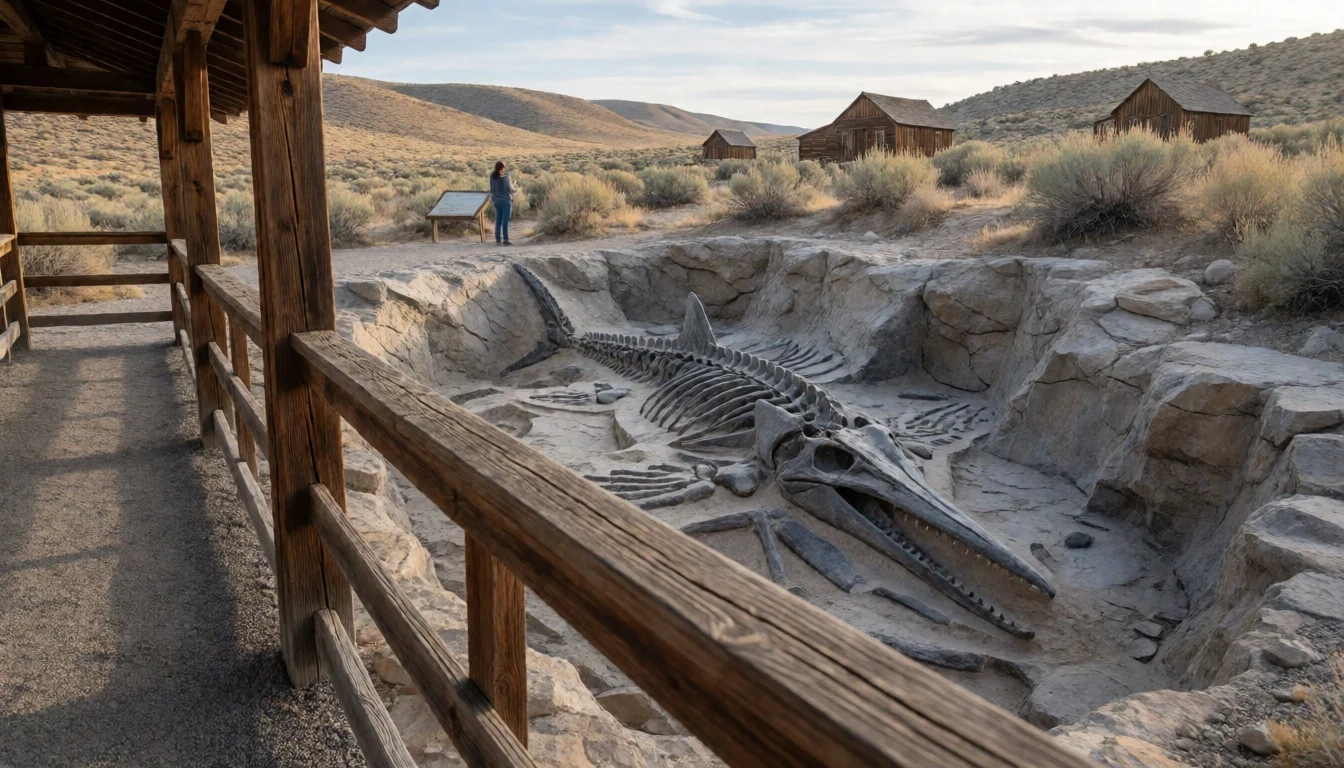
Culture
Cathedral Gorge sits in rural Lincoln County, and the culture around it is that of small-town Nevada: ranching, mining history, long drives and a strong sense of neighbourliness. Most of Nevada's land remains in federal hands, so open country is part of everyday life here, and locals tend to treat the desert as a shared backyard rather than a scenic backdrop.
The neighbouring town of Panaca has deep roots in the settlement pattern of the Church of Jesus Christ of Latter-day Saints, whose members spread out from Utah into Nevada in the nineteenth century. Church life still shapes the rhythm of the week in many nearby communities, and some shops and cafés keep quieter hours on Sundays.
The gorge has its own cultural footprint. In the 1920s it hosted open-air plays and Easter gatherings, and its picnic ground is still where local families come for reunions and birthdays. That mix of everyday use and striking scenery gives the park a relaxed feel; visitors are as likely to share the trail with a local on an evening stroll as with another traveller.
Visitors from outside the American West sometimes notice how little commentary there is. Signs are plain, tours are rare, and the landscape is left to speak for itself. Conversation with rangers and with people in Panaca is easy and friendly, and tends to start with the weather or the road.
Stay on the marked paths and never climb or scrape the clay walls, because the soft formations crumble easily and footprints on them last for years.
What to wear
Cathedral Gorge is in a part of the American West where there is no single national costume, and the traditional look of the region is working clothes: denim, cotton shirts, leather boots, felt or straw hats and wool blankets, a style shaped by ranching and mining. The Paiute peoples of the area have their own dress traditions, including buckskin, beadwork and woven basketry, which are now mostly worn or displayed at ceremonies, powwows and cultural events rather than every day.
What people wear now in Lincoln County is practical and casual. Jeans, T-shirts, work shirts, fleece, baseball caps and sturdy boots or trainers are the norm, with a cowboy hat or boots still common among ranching families. Church on Sundays brings out neater, more modest clothes in nearby towns, though nobody expects visitors to match them.
For the gorge itself, a visitor should dress for sun, wind and loose ground. A wide-brimmed hat, sunglasses and sunscreen matter in the open, shadeless desert. Light, long-sleeved layers protect against both heat and chill, since evenings and winter days turn cold quickly. Closed shoes with good grip suit the trails far better than sandals, and the clay sticks to soles when wet, so avoid wearing anything precious. There is no modesty code at the park, but a light scarf or buff is useful against blown dust. Carry a warm layer even in warm months.
What to eat
- Biscuits and gravy — Small-town cafés and diners in Panaca and nearby towns
Biscuits and gravy is a western breakfast of soft savoury scones under a peppery white sausage gravy. It is filling, salty and made for long days outdoors, and many small-town cafés near Cathedral Gorge serve it among their morning plates.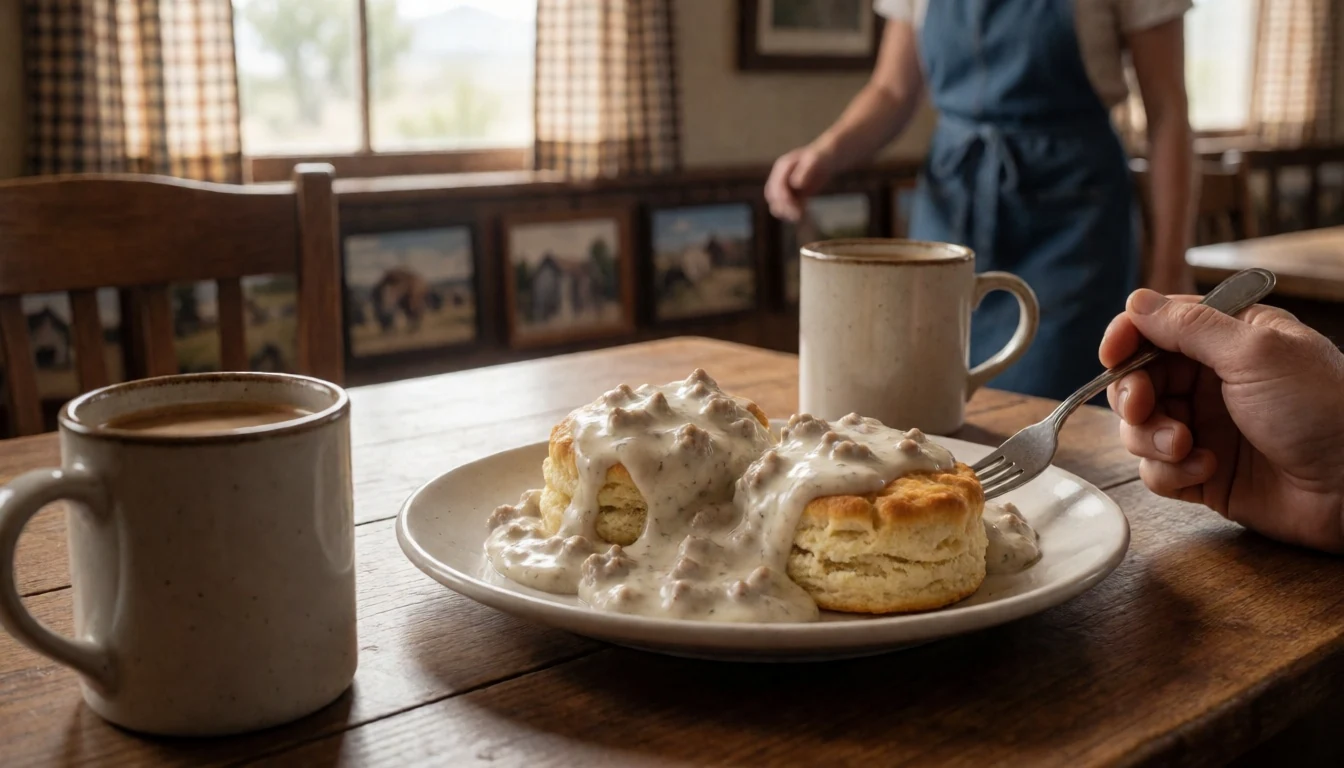
- Chicken-fried steak — Roadside diners and local cafés along the main highway
Chicken-fried steak is a thin cut of beef coated in seasoned flour, fried until crisp and served with cream gravy, mashed potato and vegetables. It is the sort of hearty plate that ranch country does well, and it suits hungry hikers after a day in the gorge.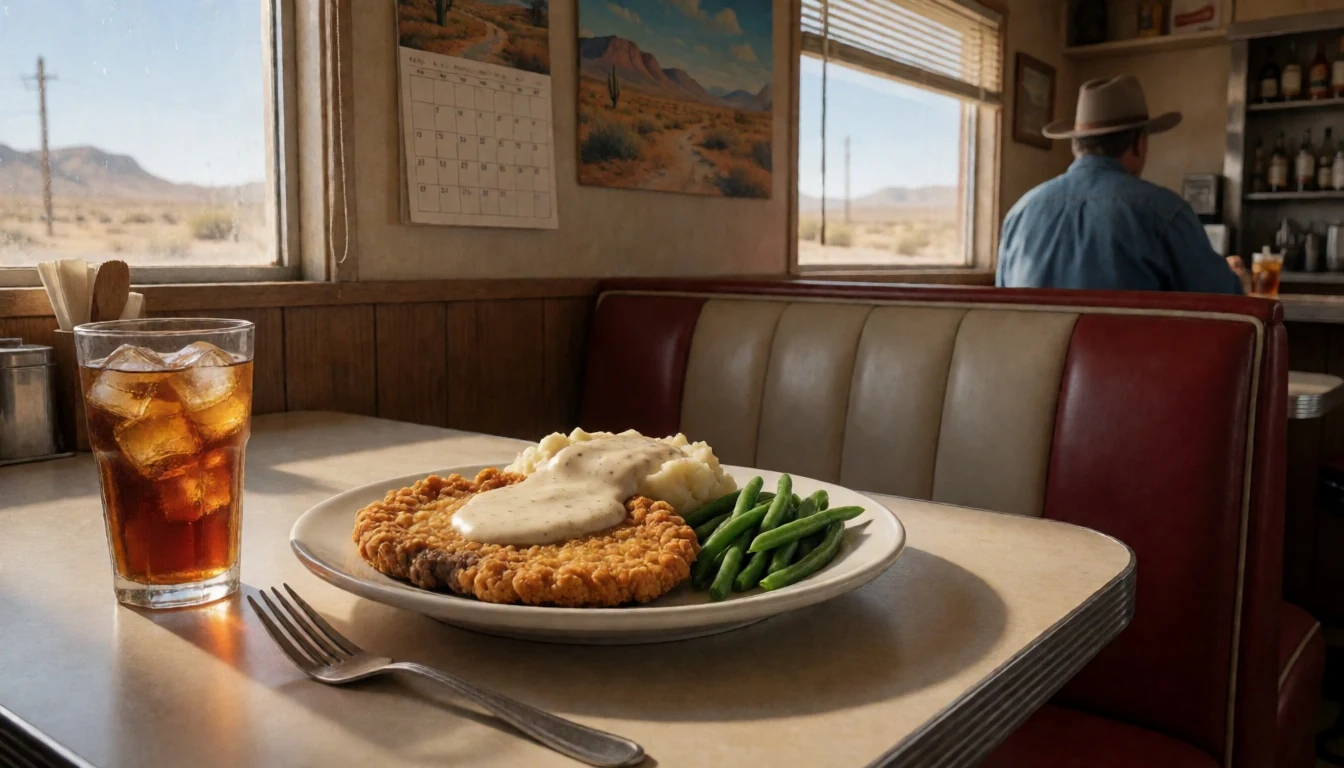
- Steak or prime rib — Roadhouses and steak restaurants in the larger towns of eastern Nevada
Beef is the backbone of eating in rural Nevada, and a thick steak or a slow-roasted prime rib with a baked potato is a common dinner. Portions are generous, and the style is plain western cooking rather than anything fancy. - Cheeseburger and fries — Local diners, drive-ins and gas-station grills
A cheeseburger with fries is the dependable standby of small-town America, and in this region it often arrives with a pile of fried onions and a slice of local melted cheese. It makes a simple meal before or after a walk. - Home-baked pie — Small-town cafés, bakeries and community fundraiser tables
Home-baked fruit pie, often apple, cherry or berry, turns up in rural cafés, church sales and community events across the region. A slice with coffee is a gentle end to a day, and one worth asking about when you sit down.
Plan it
Best time. April–May and September–October, when days are mild and the clay glows in clear light; summer middays are very hot with no shade, and winter nights are cold, with occasional snow or rain that makes the clay slick.
How long. 1
Getting there. Fly to Harry Reid International Airport (LAS) in Las Vegas, hire a car and drive north on the main highway through Lincoln County to Panaca; the park entrance is a few minutes beyond the town. There is no scheduled train service to the area, so a car is essential.
Budget. low
Tips
- Check the official site (http://parks.nv.gov/parks/cathedral-gorge) for current fees, hours and campground booking before you set off
- Arrive early or stay for late afternoon, when the light is soft and the heat has eased
- Carry plenty of water and snacks, as services in Panaca are limited and there is almost no shade on the trails
- Fill the fuel tank before leaving larger towns, since petrol stations are far apart in eastern Nevada
- Skip the slot canyons if rain is forecast or has just fallen, as flash floods and slick clay are real risks
Etiquette
- Stay on marked paths and do not climb or carve into the clay walls
- Pack out all litter and keep noise low, especially in the campground at night
- Keep dogs on a lead and clear up after them
Nearby
Sources
- Wikidata Q1050870 (CC0)
- Wikipedia, Cathedral Gorge State Park (rev 1370499188) (CC BY-SA 4.0)
- Wikivoyage, Nevada (rev 5412471) (CC BY-SA 4.0)
- Photo: Eroded columns in Cathedral Gorge State Park, Frank Kovalchek (CC BY 2.5)
- Photo: Relief map of U.S., Nevada, Nzeemin (CC BY 3.0)
- Photo: Old water tower in Cathedral Gorge State Park, Famartin (CC BY-SA 4.0)
- Photo: Cathedral Gorge by Phil Konstantin, Philkon (Public domain)
- Photo: Trail winding through Cathedral Gorge, DylanMoz49 (CC BY-SA 4.0)
- Photo: Sign at the entrance to Cathedral Gorge State Park, Famartin (CC BY-SA 4.0)
- Photo: Eroded bluffs in Cathedral Gorge State Park (11:35:32), Famartin (CC BY-SA 4.0)
- Photo: Eroded bluffs in Cathedral Gorge State Park (11:35:45), Famartin (CC BY-SA 4.0)


Wildlife
- Raven (animal)
The common raven is a large black bird that lives for many years and pairs up for life, like a loyal neighbour who never leaves. Within Cathedral Gorge its voice drifts through the quiet alongside the wind, so listen as well as look. Nothing is recorded here about season or time of day. Keep a good distance, speak softly, ask a guide where to look, and never offer it food, however bold it seems.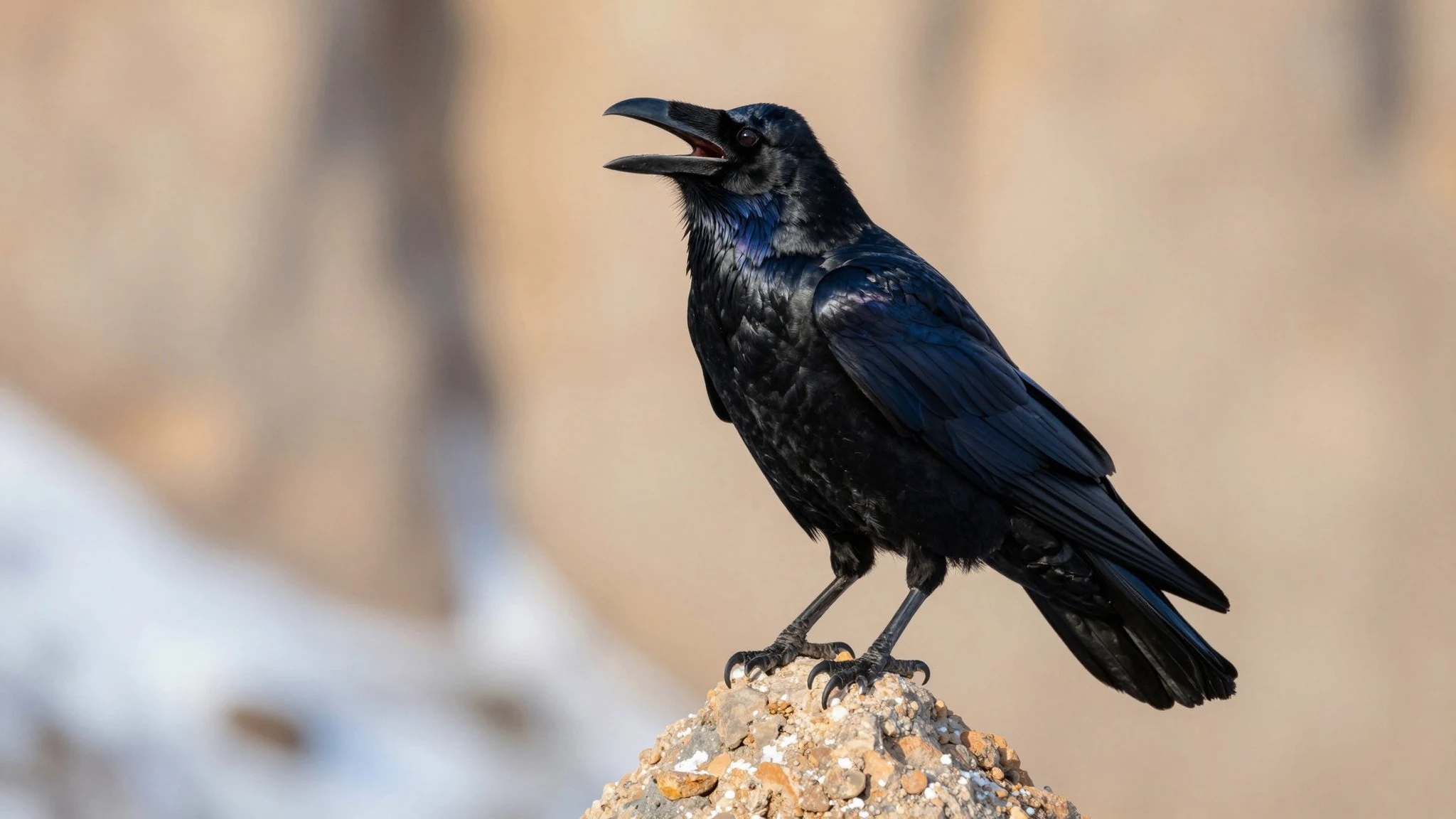
- Common raven (bird)
The common raven is a large black bird that lives for many years and pairs up for life, like a loyal neighbour who never leaves. Within Cathedral Gorge its voice drifts through the quiet alongside the wind, so listen as well as look. Nothing is recorded here about season or time of day. Keep a good distance, speak softly, ask a guide where to look, and never offer it food, however bold it seems.