Carlsbad Caverns
Carlsbad Caverns, United States
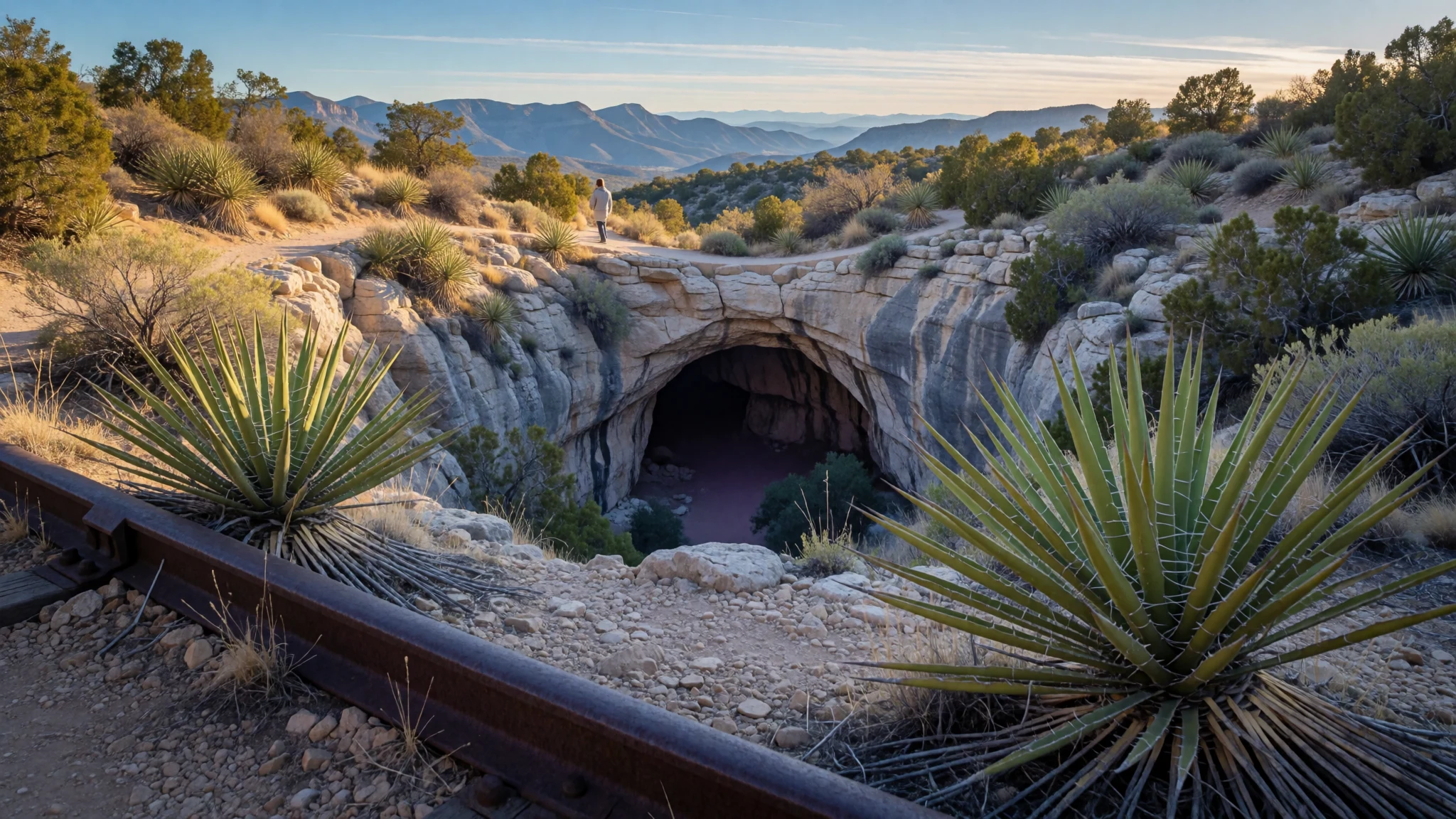
Carlsbad Caverns is a New Mexico limestone cave where an ancient sea reef became a huge underground hall of strange formations.
The place
Carlsbad Caverns National Park sits in the Guadalupe Mountains of southeastern New Mexico, in dry desert country where the surface gives little hint of what lies beneath. The centrepiece is Carlsbad Cavern, a show cave, meaning one prepared for ordinary visitors with paved paths and lighting. Its best-known chamber is the Big Room, more than a kilometre long, so the loop around it takes real time to walk. The park was established in 1930 and is a UNESCO World Heritage property. About two-thirds of its land is set aside as wilderness, which keeps most of the park free of roads and buildings. Getting in is simple. The entrance lies on the highway southwest of the town of Carlsbad, and from the visitor centre there are two ways down: a lift that drops several hundred metres in moments, or the steeper walk through the natural entrance, where daylight fades behind and the air cools. Both routes meet the Big Room trail. The park also holds two historic districts on the US national register, the Caverns Historic District and Rattlesnake Springs. The landscape was once a coastline. About 250 million years ago an inland sea lapped here, and its reef is the rock that was later hollowed into caves. The climate at the visitor centre is cool semi-arid, so the desert above can be hot in summer and chilly on winter mornings, while the cave below stays a dim, steady world of its own.
Its story
Carlsbad Caverns began as a reef. About 250 million years ago a shallow inland sea covered this corner of New Mexico, and sponges, brachiopods and nautiloids left their remains along its edge, building a long reef. The sea withdrew and the reef was buried; much later, water moving through the limestone dissolved the chambers that people walk through today, and fossils from that reef can still be seen inside the cave. The human story is far shorter. In 1898 a teenager named Jim White climbed down using a homemade wire ladder and began naming what he found: the Big Room, the Kings Palace, the Queens Chamber, the Papoose Room, and formations such as the Totem Pole, the Witch's Finger and the Rock of Ages. Official protection came in stages. President Calvin Coolidge proclaimed Carlsbad Cave National Monument in 1923, describing a cavern of exceptional size and decoration, and the site became a national park in 1930. Early visitors had to take a switchback ramp down, with a tiring climb back. In 1932 a large visitor building opened with two lifts, a cafeteria, a museum and a first-aid area, and the cave became open to almost anyone. The nearby town takes its name from a Czech spa, Karlovy Vary, once called Karlsbad, meaning Charles' Baths. UNESCO recognised the park in 1995.
What to see
- The Big Room — Inside Carlsbad Cavern, main level
The Big Room is the main event at Carlsbad Caverns: a single chamber more than a kilometre long, with columns, curtains and pale domes on every side. A paved trail loops through it, and leaving the path is forbidden unless guided. Allow plenty of time, because the loop invites slow walking and frequent stops.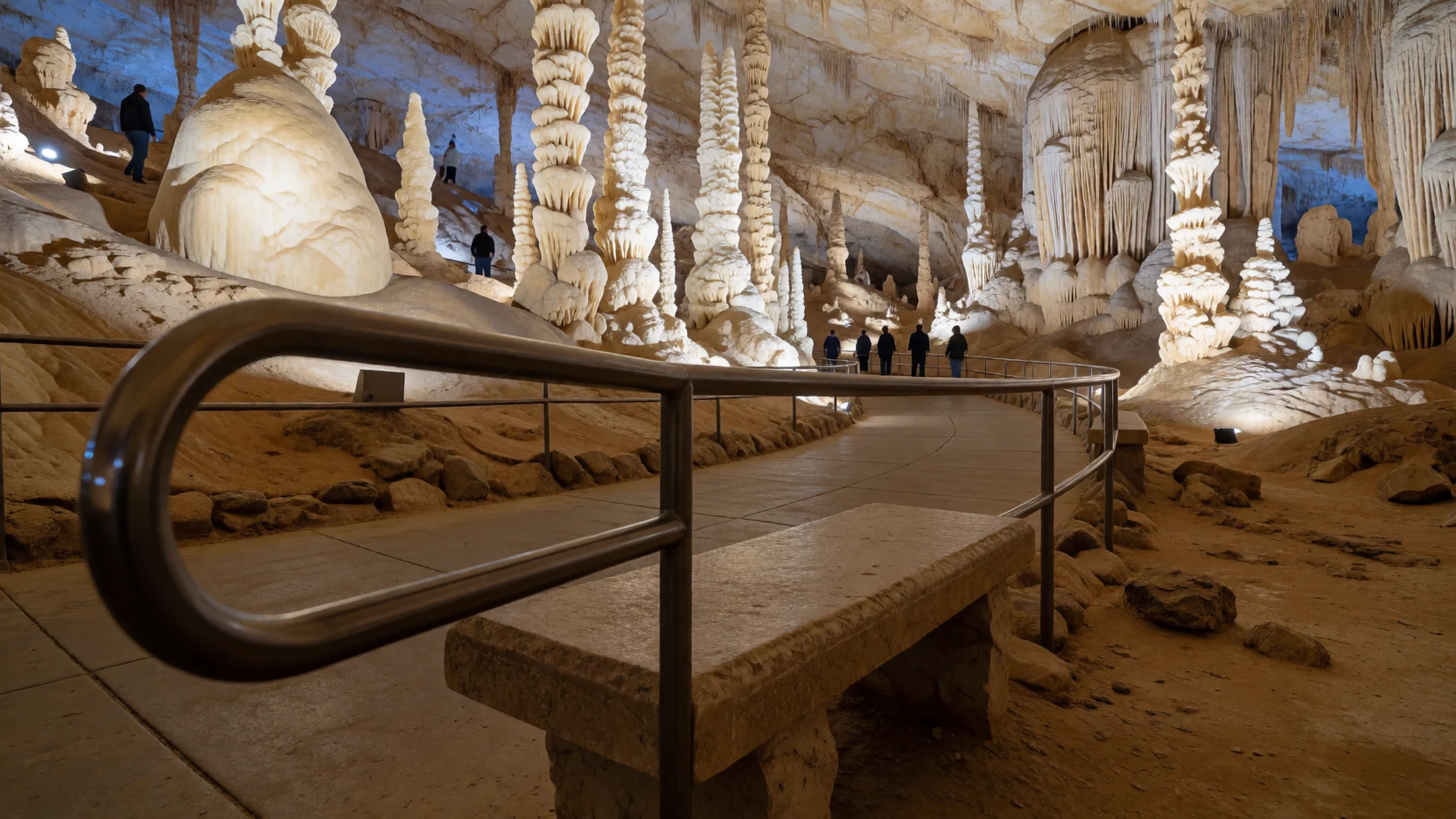
- The Natural Entrance trail — Visitor centre, walking route into the cave
The natural entrance at Carlsbad Caverns is the walking way in, a long descent from daylight into darkness that also explains the cave's natural history. The trail is steep in places and can be wet from dripping water, so grip matters. It joins the Big Room route, and most walkers take the lift back up.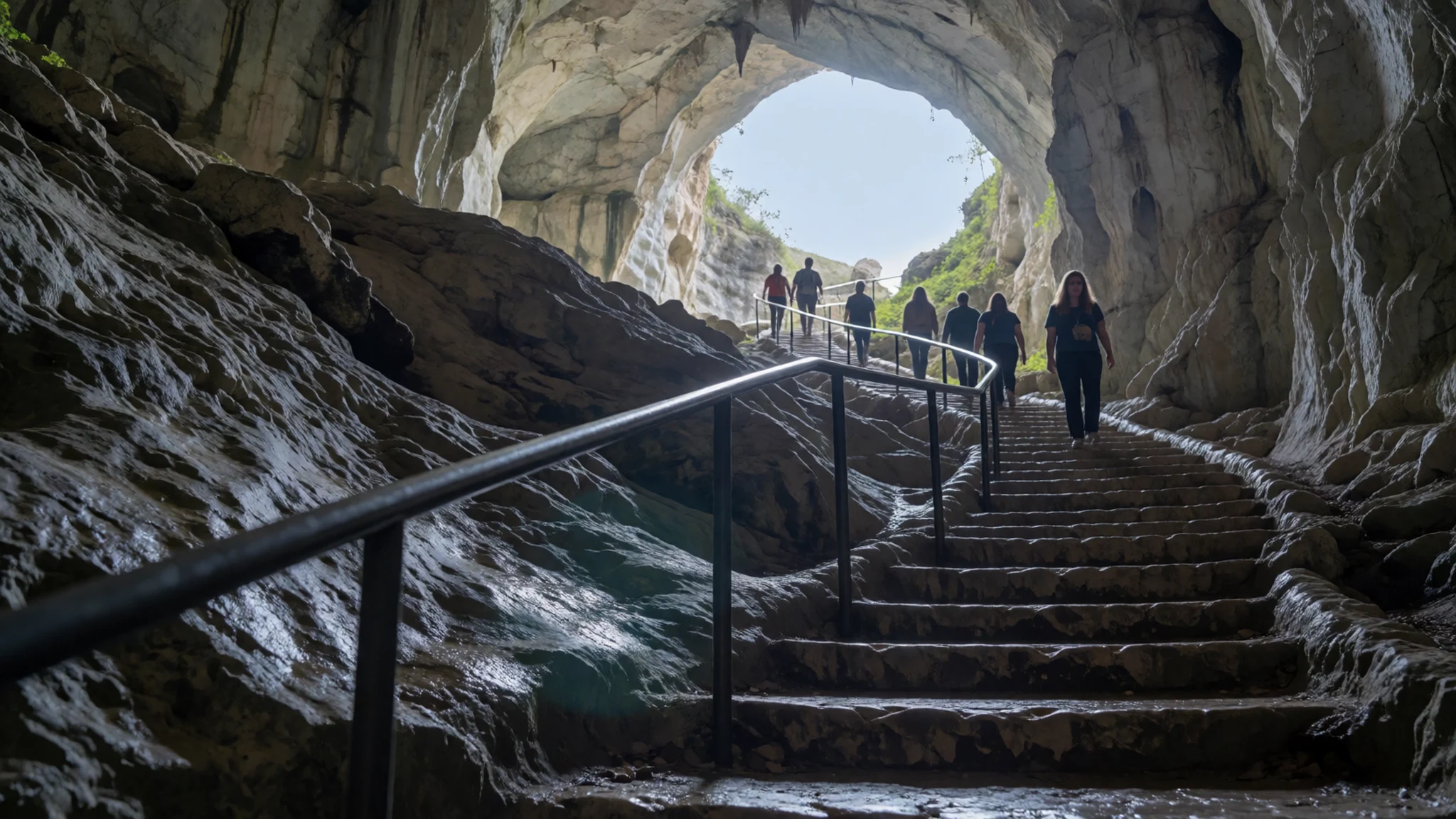
- The lift and visitor centre — Visitor centre building
The lift at the Carlsbad Caverns visitor centre drops over 183 m in a short, fast ride and lands near the main level, close to the Big Room. Lifts have served the cave since 1932. Some people with ear trouble find the rapid pressure change uncomfortable and prefer to walk down instead.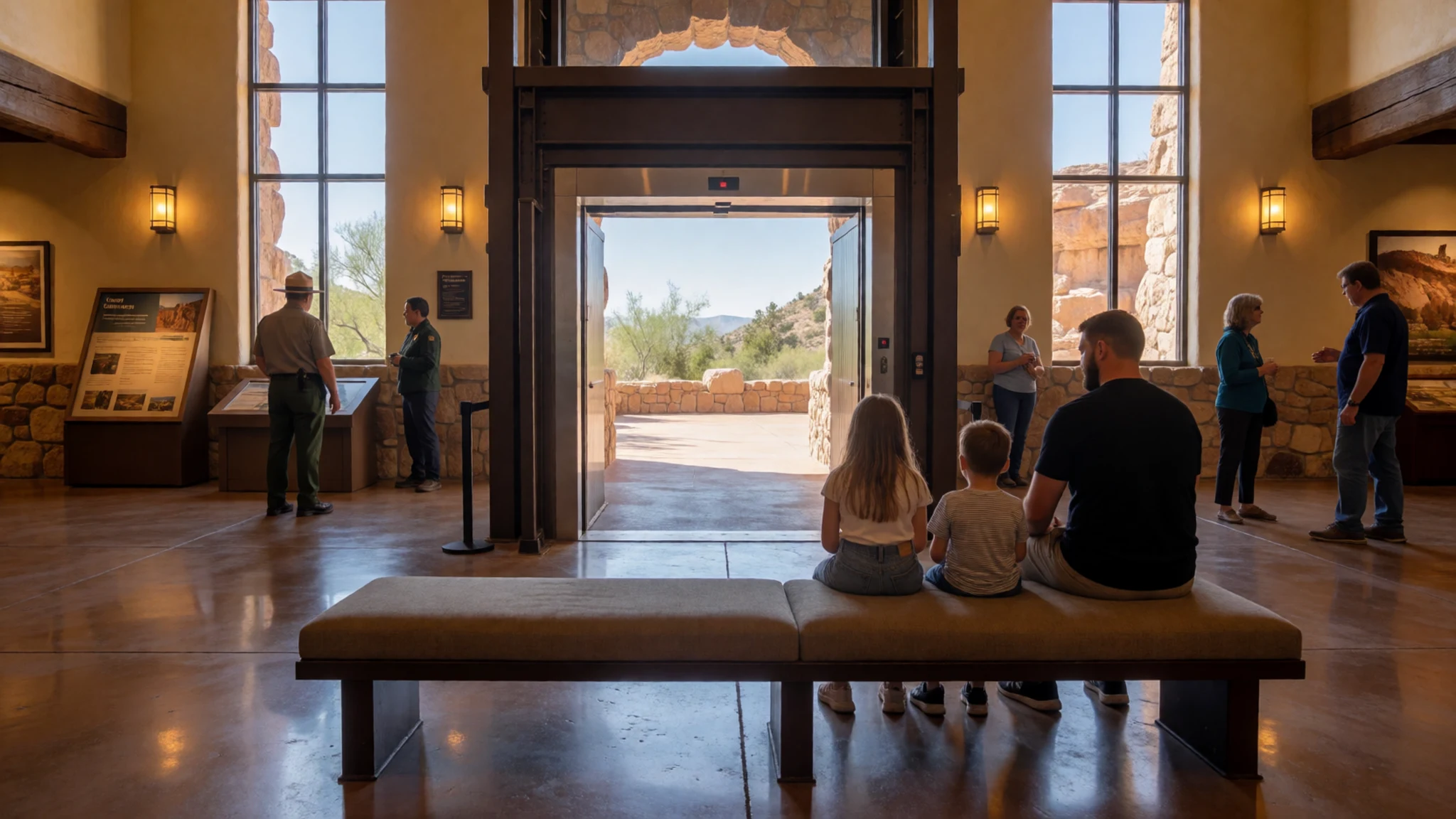
- The reef diorama and fossils — Visitor centre and Big Room route
Inside the visitor centre, a diorama at Carlsbad Caverns shows the Permian reef from which the cave was carved, with sponges, brachiopods and nautiloids. Fossil nautiloid and brachiopod specimens also sit on display near a seating area on the Big Room route, giving the rock a tangible past before the formations draw the eye upward.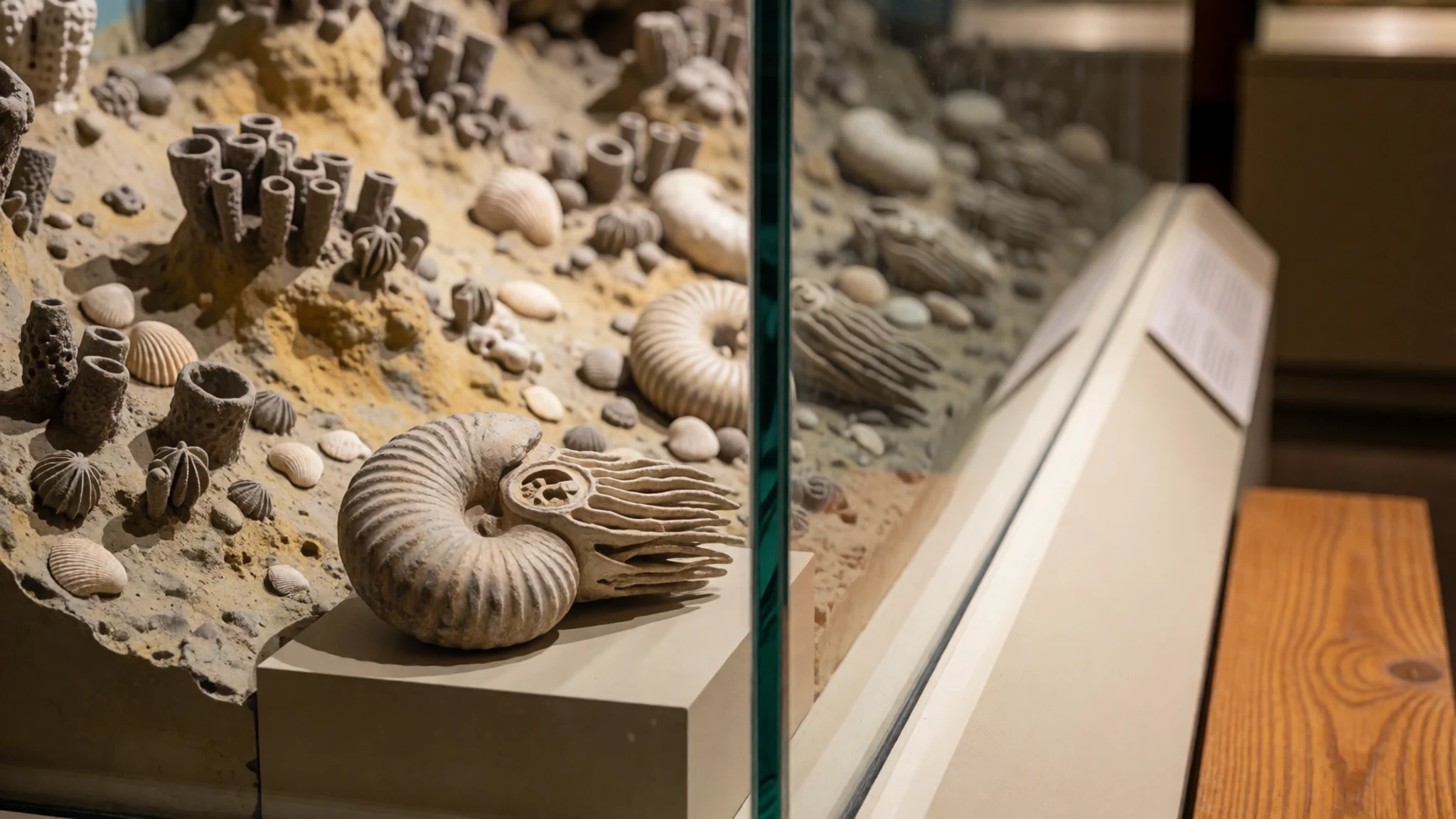
- Slaughter Canyon Cave — Slaughter Canyon, detached part of the park
Slaughter Canyon Cave is a separate, undeveloped cave in a detached part of the park, reached only on a ranger-led tour. The approach is a short but demanding hike above ground before the cave itself. It suits visitors who want rough, unpaved darkness instead of lit trails; check the official site for booking.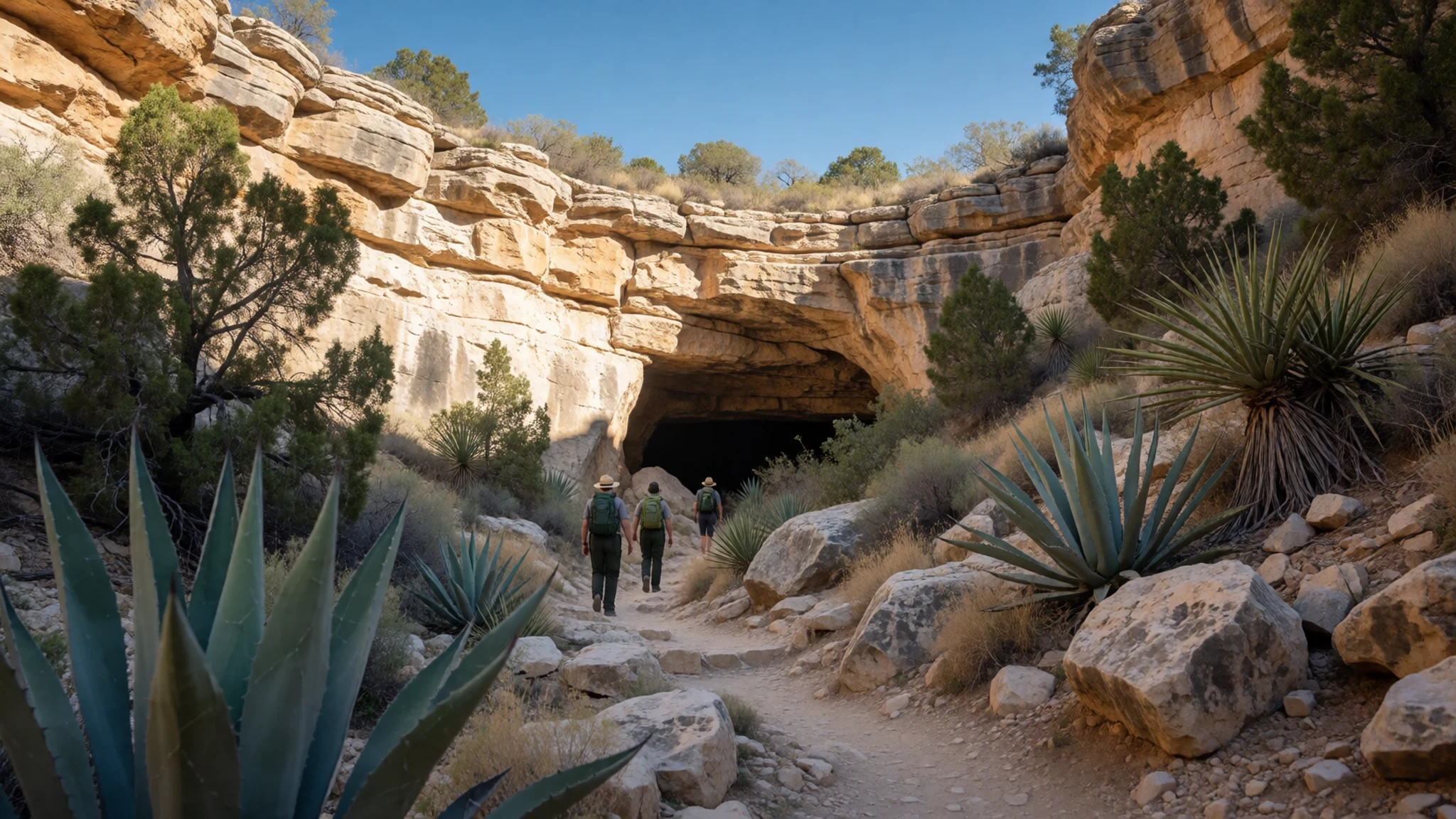
- Spider Cave — Backcountry of the park
Spider Cave is another wild cave, and a tougher one, with considerable crawling through tight passages. It is not for anyone uneasy in enclosed spaces. Those who pay the fee and endure the entrance crawl are rewarded with close views of delicate formations. Check the official site for tour details.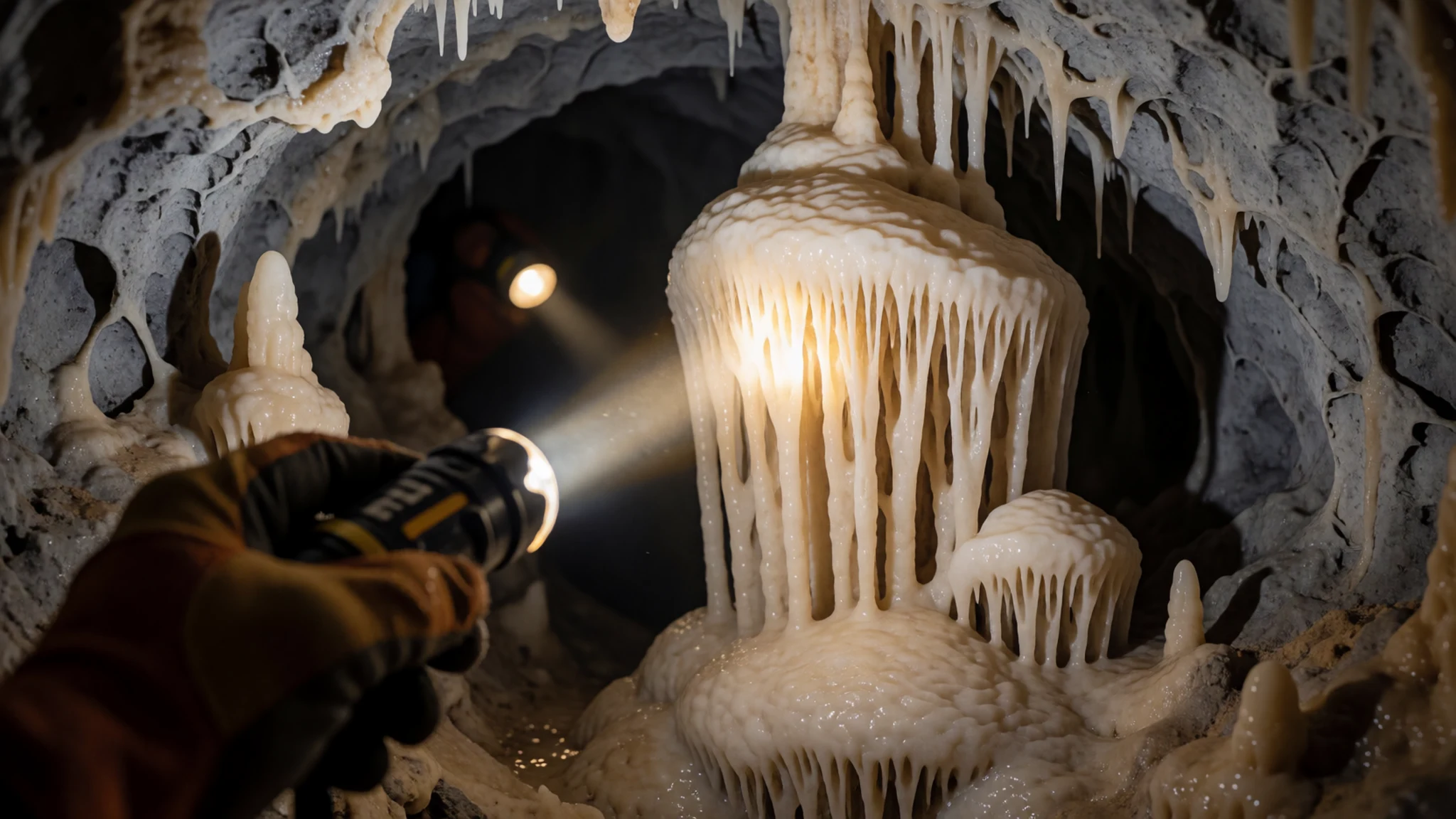
Culture
Carlsbad Caverns is run as a United States national park, and its culture is about looking after a fragile place for everyone. Rangers lead the wild-cave tours, and the rules are plain: stay on the paved trail, never touch the formations, and keep food in the places meant for it. The lunchroom at the bottom of the lift is a curious exception, a cafeteria set deep underground, yet its snacks are meant to stay there and not travel on into the rest of the cave. The place also carries a frontier flavour. Jim White's wire ladder and the names he gave the rooms read like a teenager's map of a private kingdom, and a wooden ladder from the first explorers' days is displayed as a keepsake. The nearby town borrowed its name from a Czech spa, a small reminder of how European names were carried into the desert. Visitors are mostly families, school groups and road-trippers, often arriving in summer, so voices bounce around the chambers. The mood in the cave is hushed and slightly awed. Staff are used to questions about distances, lifts and wheelchair access, and are friendly about them. The surface is a world of highways, motels and small-town diners, and the cave is its quiet contrast. Keep to the paved trail, keep your voice low, and carry no food or drink past the underground lunchroom, because a touched formation or a dropped crumb can harm the cave.
What to wear
Carlsbad Caverns has no costume of its own, so clothing in the area blends regional traditions. The Apache peoples of the Southwest have traditional dress made from buckskin and cloth, decorated with beadwork and fringes, worn today mainly at ceremonies and celebrations. Ranch culture adds Western wear: denim, cotton shirts, felt or straw hats and leather boots, still common in the small towns of southeastern New Mexico. At the park itself, most people wear what suits a day outdoors: shorts or light trousers in summer, a fleece in cooler months, trainers or walking shoes, and a sun hat for the desert above. Visitors should dress for two climates. On the surface the semi-arid desert can be hot and dry, so light, breathable clothes, a hat, sunglasses and sunscreen help. Below ground the air feels cooler and the trail is damp, so a light jacket or jumper is worth carrying. Wear shoes with grip and ankle stability, especially for the steep natural entrance, since dripping water can leave surfaces slick; sandals and smooth soles are poor choices. There are no religious dress codes, but long trousers and old clothes are wise for wild-cave tours, because the crawling scrapes elbows and knees. A small bag is easier to manage than a large pack.
What to eat
- Underground lunchroom snacks — The lunchroom at the bottom of the lift, inside the cave
Carlsbad Caverns has a lunchroom deep inside the cave, at the base of the visitor-centre lift, where simple cafeteria-style snacks and drinks are sold. It is a novelty rather than a feast, and the food must be eaten there, not carried into the rest of the cave.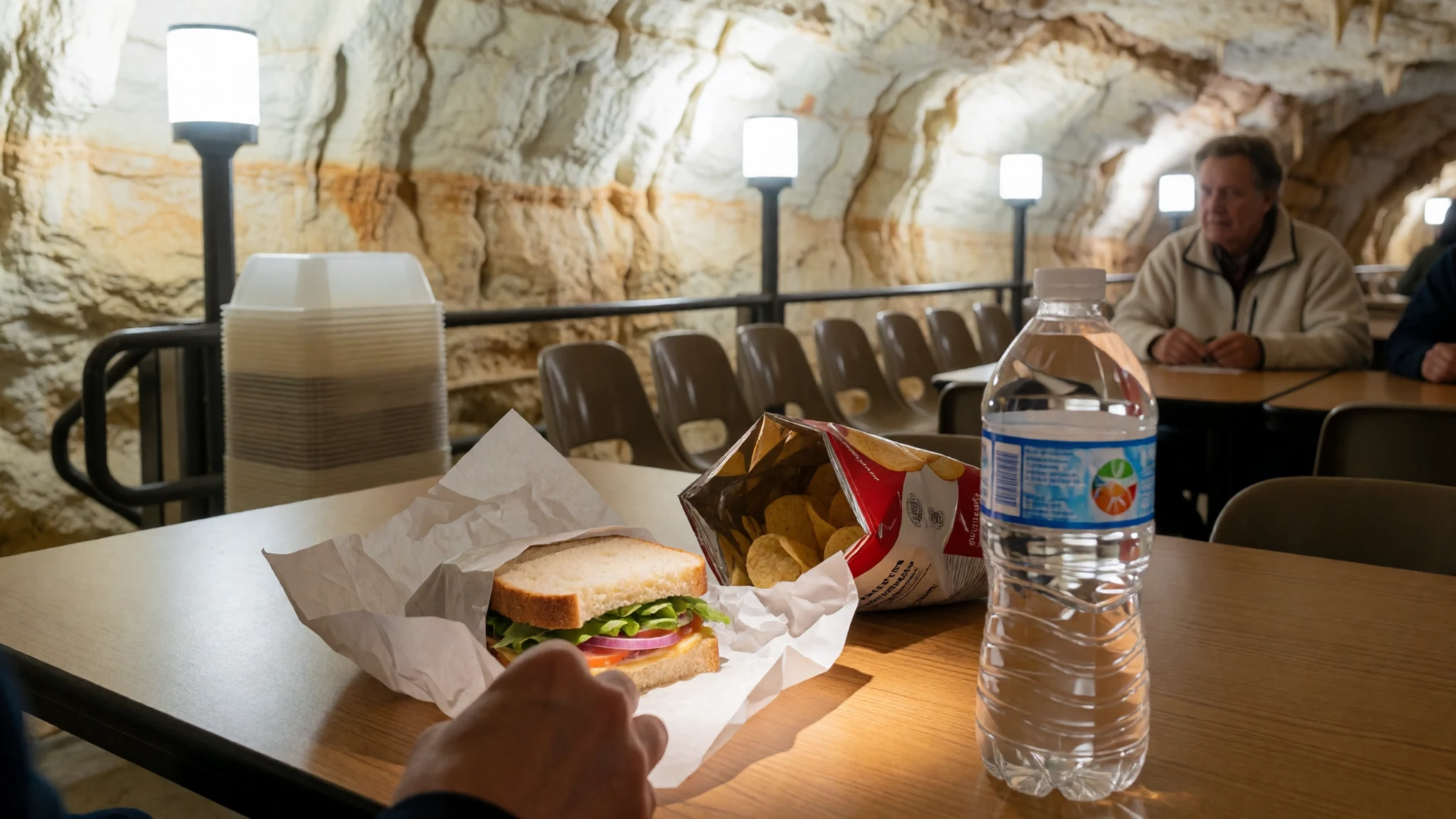
- Cafeteria meals — The snack bar or cafeteria in the visitor centre
The visitor-centre cafeteria serves the usual national-park fare: sandwiches, burgers and hot plates that suit a hungry family after a long walk. It is practical and convenient rather than memorable, and a fair stop before or after the cave.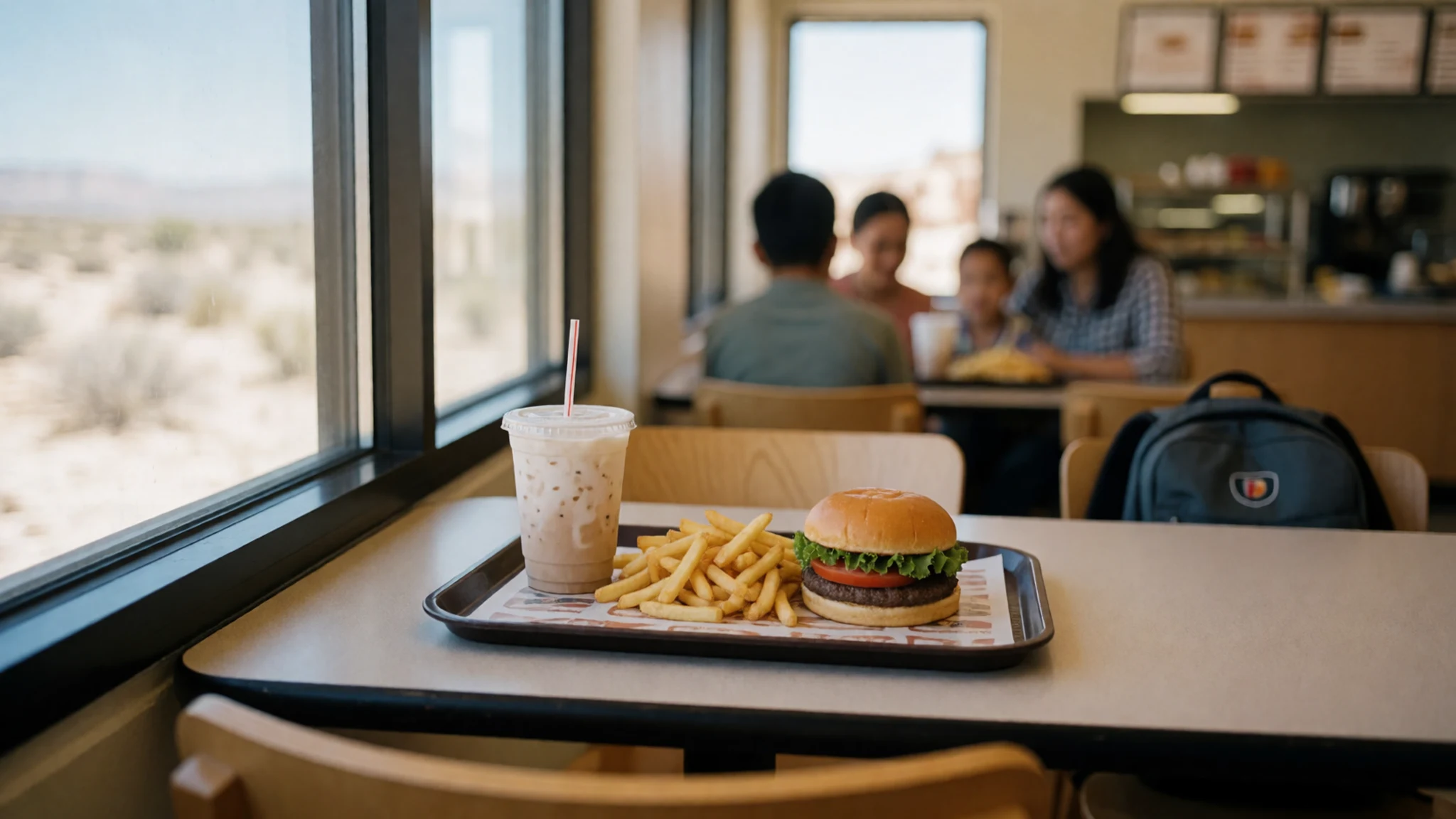
- Green chile cheeseburger — Diners and cafes in the town of Carlsbad
A New Mexican favourite, a beef burger topped with melted cheese and roasted green chile, which adds a smoky heat. Diners and cafes in the town of Carlsbad make it, and it is a hearty lunch after the dusty drive from the desert. - Breakfast burrito — Local cafes in Carlsbad town, early morning
A flour tortilla wrapped around egg, potato, cheese and often chile, sold at local cafes in the town of Carlsbad. It travels well and makes a solid start before an early descent into the cave, especially on a cool morning. - Enchiladas with red or green chile — New Mexican restaurants in the town of Carlsbad
Corn tortillas layered or rolled with cheese or meat and smothered in red or green chile sauce, the signature of New Mexican cooking. Many restaurants will offer both sauces on one plate if asked, which is a good way to compare them. - Sopaipillas — New Mexican restaurants and family-run eateries in Carlsbad
Puffed, hollow pillows of fried dough, often served warm with honey on the side to soften chile heat or to finish a meal. Family-run eateries in the town of Carlsbad usually bring them to the table with the main course.
Plan it
Best time. March–April and October–November, when the desert above the cave is mild; summer is hot, dry and busier with families, while winter can be cold, with rare, brief blizzards. The cave itself is a steady shelter in every season.
How long. 1
Getting there. The closest major airport is El Paso in Texas, from where the park is reached by road via Guadalupe Mountains National Park. Carlsbad has a small commuter airport with connections via Albuquerque, plus a bus terminal. The last leg is a drive southwest from the town of Carlsbad on a good year-round highway.
Budget. mid
Tips
- Check the official site, https://nps.gov/cave, for cave tours, timings and booking before travelling, especially for wild-cave tours.
- Wear shoes with grip, as the natural entrance trail is steep and often wet.
- If your ears struggle with pressure changes, walk down the natural entrance instead of taking the fast lift.
- Bring water and sun protection for the desert, and a light layer for the cooler cave.
- Eating options near the park entrance are limited, so plan meals at the visitor centre or in the town of Carlsbad.
Etiquette
- Stay on the paved trail unless on a guided tour.
- Do not touch the formations; skin oils damage them.
- Eat only in the lunchroom or visitor centre, never in the cave itself.
Nearby
Sources
- Wikidata Q273195 (CC0)
- Wikipedia: Carlsbad Caverns National Park (rev 1383001914) (CC BY-SA 4.0)
- Wikivoyage: Carlsbad Caverns National Park (rev 5370444) (CC BY-SA 4.0)
- Photo: Carlsbad Interior Formations, Eric Guinther (Marshman) (CC BY 3.0)
- Photo: Diorama at the Carlsbad Cavern Visitor's Center, Kenneth Carpenter (CC BY-SA 4.0)
- Photo: Fossils in Carlsbad Cavern, Kenneth Carpenter (CC BY-SA 4.0)
- Photo: Carlsbad Caverns Entrance, Urban Versis 32 (CC BY-SA 4.0)
- Photo: Carlsbad Caverns Sign, Urban Versis 32 (CC BY-SA 4.0)
- Photo: Close up view of 'Elevator House', Carlsbad Caverns National Park (NARA) (Public domain)
- Photo: Carlsbad Caverns Ladder, Urban Versis 32 (CC BY-SA 4.0)
- Photo: Carlsbad Cave map, Robert Hynes / US National Park Service (Public domain)


