Cape Disappointment
Cape Disappointment, United States
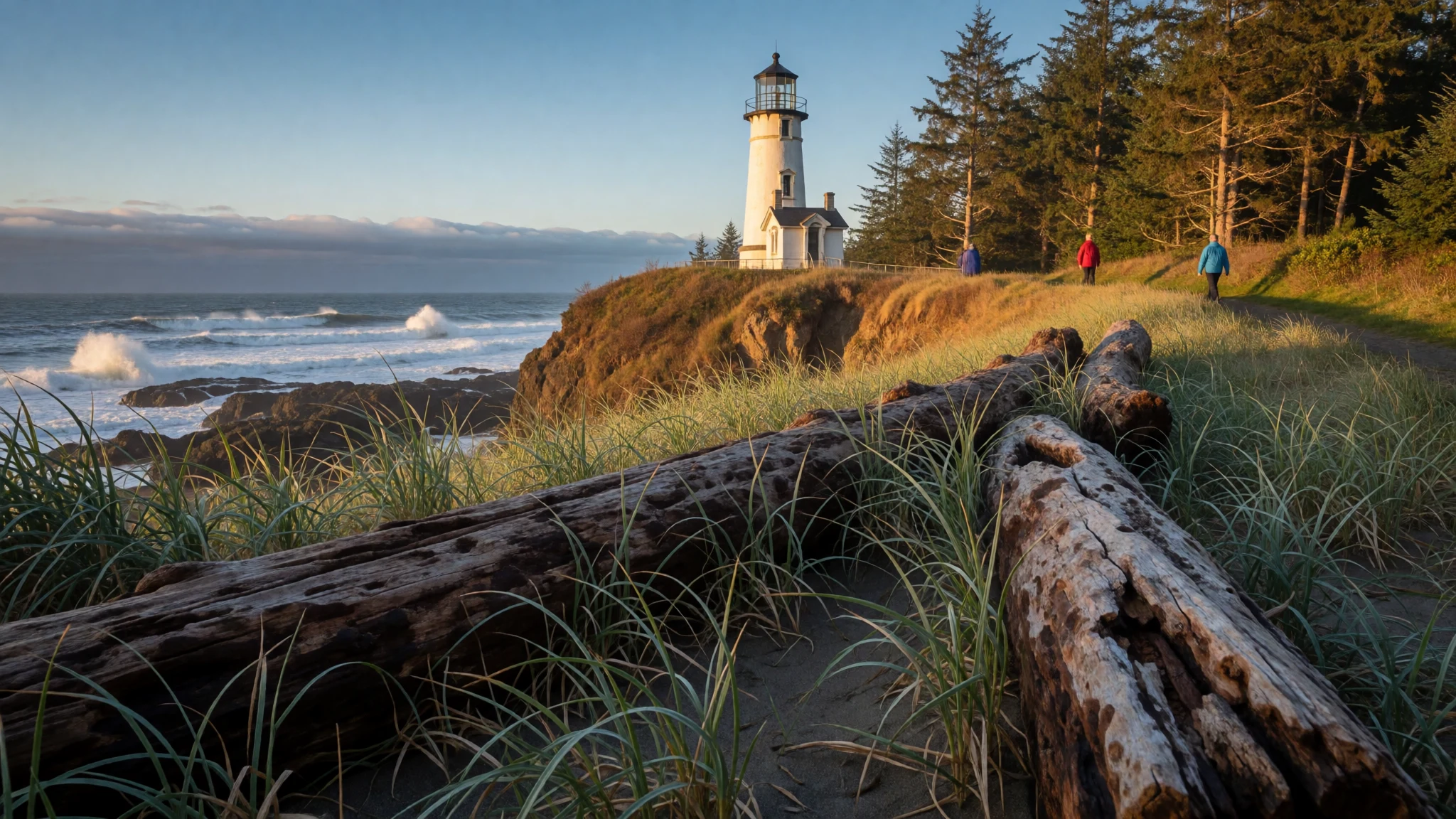
Cape Disappointment is where a great river meets the open Pacific, with lighthouses, wartime batteries and wild forest on one windy headland.
The place
Cape Disappointment lies at the south-western corner of Washington State, where the Columbia River pours out into the Pacific Ocean. The headland sits southwest of the town of Ilwaco, at the foot of the Long Beach Peninsula, and today it is a state park. It was once called Fort Canby State Park, after the military post that occupied the land for generations. The park's website, parks.wa.gov/486/Cape-Disappointment, is the place for current details.
The ground here rises only about 20 metres above the sea, so the drama comes from the water rather than from height. Within a short distance there is old-growth forest, freshwater lakes, marshes of both fresh and salt water, and tidelands facing the ocean. The mix means a single day can include a woodland walk, a bird-watching stop at a marsh and a long look at surf breaking on the river bar.
Two lighthouses stand within the park, North Head and Cape Disappointment, along with the remains of Fort Canby and an interpretive centre devoted to the Lewis and Clark expedition. The headland is also counted among the Washington and Oregon sites that make up Lewis and Clark National Historical Park.
The weather deserves honesty. This is a exposed Pacific coast, so wind, drizzle and fog are ordinary, and sunny summer days bring the crowds. Even so, the place rewards patience: when the cloud lifts, the river mouth, the open sea and the dark green headlands all come into view together.
Its story
Cape Disappointment owes its name to frustration. In 1788 Captain John Meares tried to sail across the bar at the river mouth, failed, and gave the cape its gloomy label. In 1792 an American captain managed the crossing that Meares could not, and in 1805 the Lewis and Clark expedition reached the cape after its long journey west. Before any of them arrived, Native peoples had lived along this coast for a very long time, fishing for salmon and trading widely, and the headland sits within their old homelands.
Don Bruno de Heceta was the first European to land here in 1775, arriving a few years ahead of Meares.
The military chapter began in 1862, during the American Civil War, when a camp called Post at Cape Disappointment was set up to guard the northern approach to the river mouth against possible Confederate raiders or foreign fleets. A sister fort, Fort Stevens, followed on the southern bank in 1863. The post was renamed Fort Cape Disappointment in 1864, then enlarged and renamed Fort Canby in 1875.
By 1906 new defences had been completed, and Fort Canby formed part of a three-fort system, the Harbor Defenses of the Columbia River, alongside Fort Stevens and Fort Columbia. The fort grew again during the Second World War. Some of the older earthworks survive, including the Tower or Right Battery, the Left Battery and the Center Battery, and they can still be explored among the trees.
What to see
- North Head Lighthouse — North side of the park
North Head Lighthouse stands on the exposed northern side of the park, facing straight into the Pacific. It is a fine place for sunset, when the light turns the surf gold, and for watching weather roll in. Expect strong wind, so bring a windproof layer, and check the park website for tour arrangements.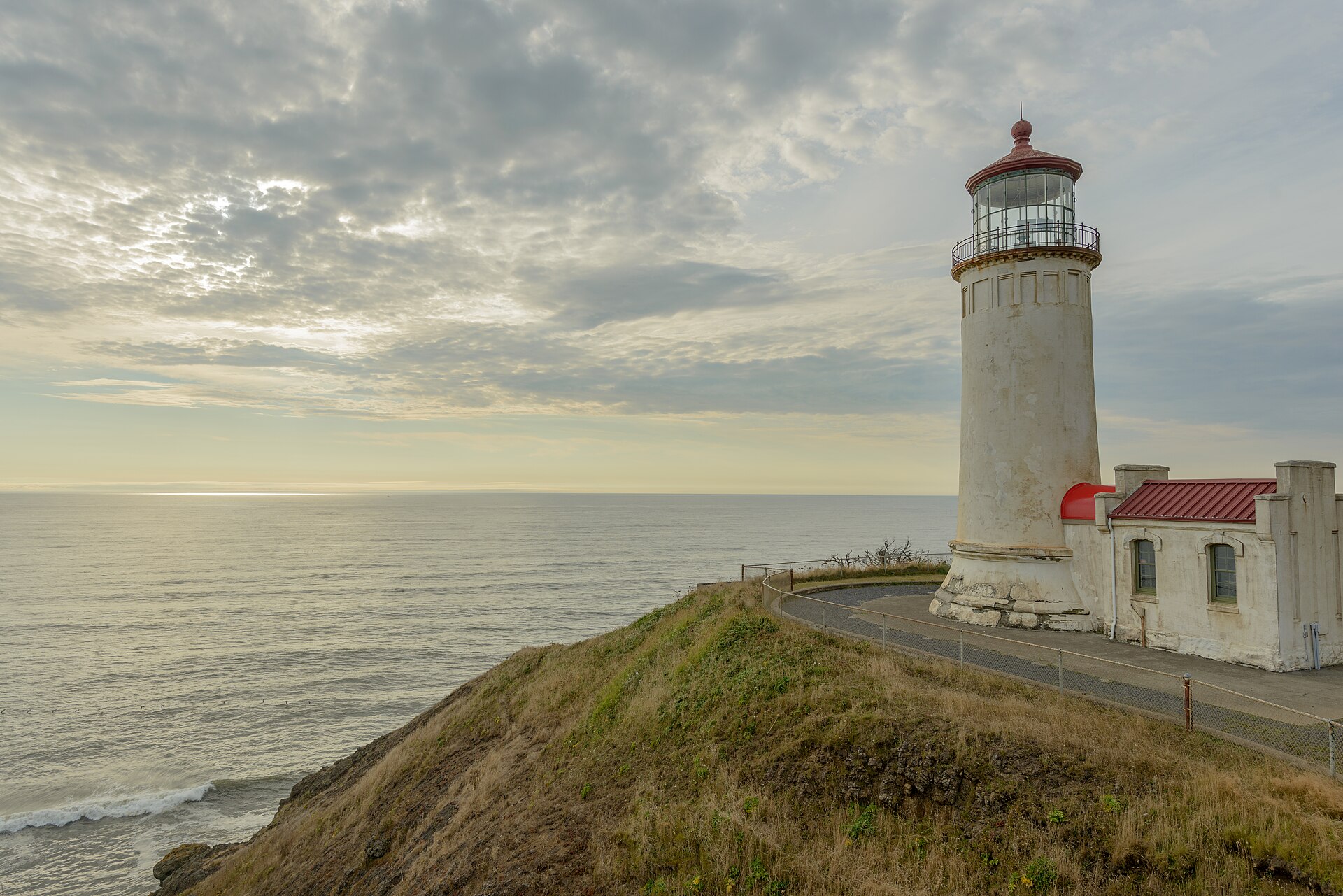
- Cape Disappointment Lighthouse — Southern headland
Cape Disappointment Lighthouse marks the river mouth itself, set on the cliff above where the Columbia meets the sea. A trail through the forest leads towards it, and the walk gives glimpses of the bar, the water that defeated early sailors. Allow time, since the route can be muddy after rain.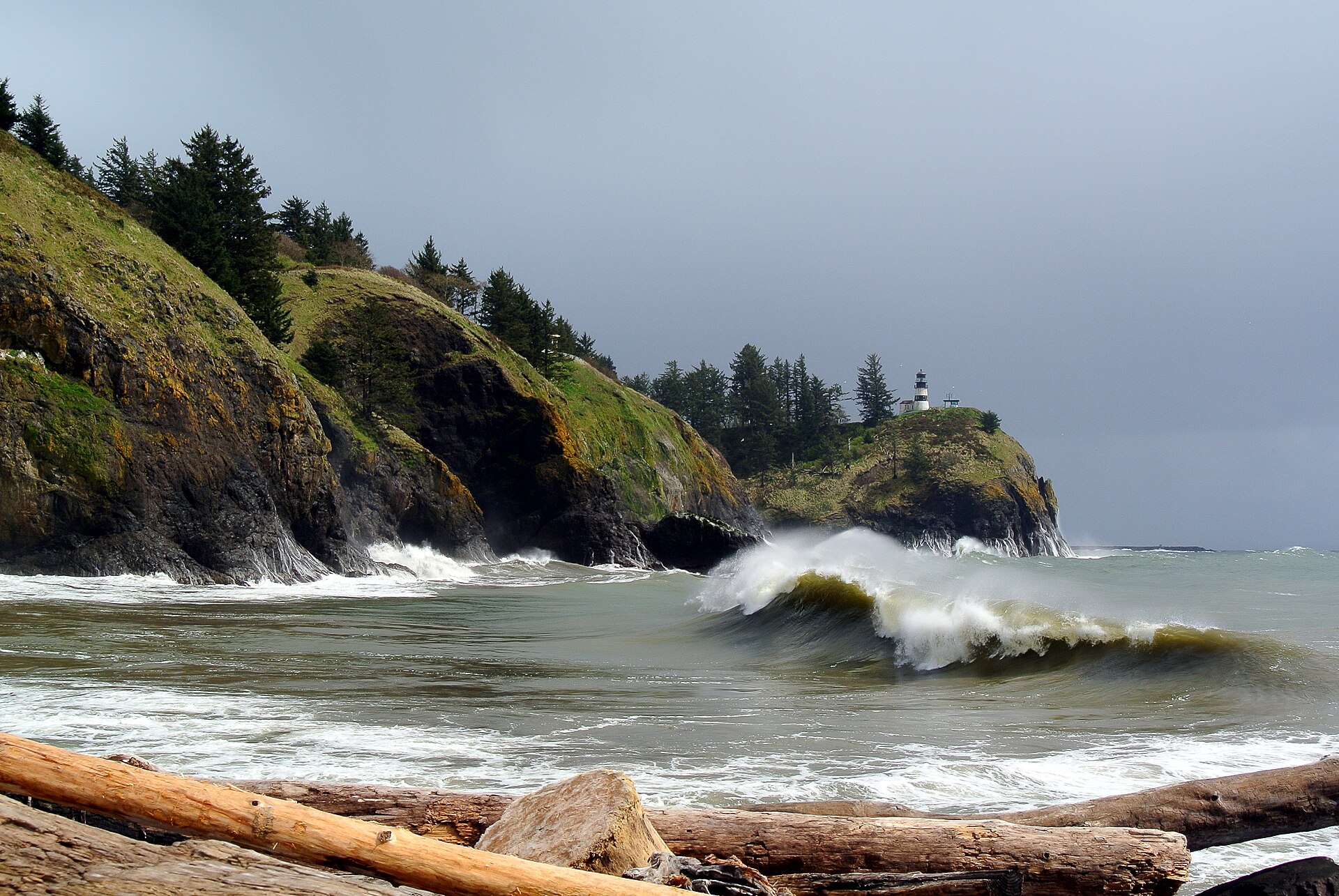
- Lewis and Clark Interpretive Centre — Fort Canby area
The Lewis and Clark Interpretive Centre sits high on the cape and tells the story of the expedition's arrival at the Pacific in 1805. Displays cover the journey, the people they met and the river's history. It also has wide windows over the ocean, useful on a wet or foggy day. Check opening arrangements online.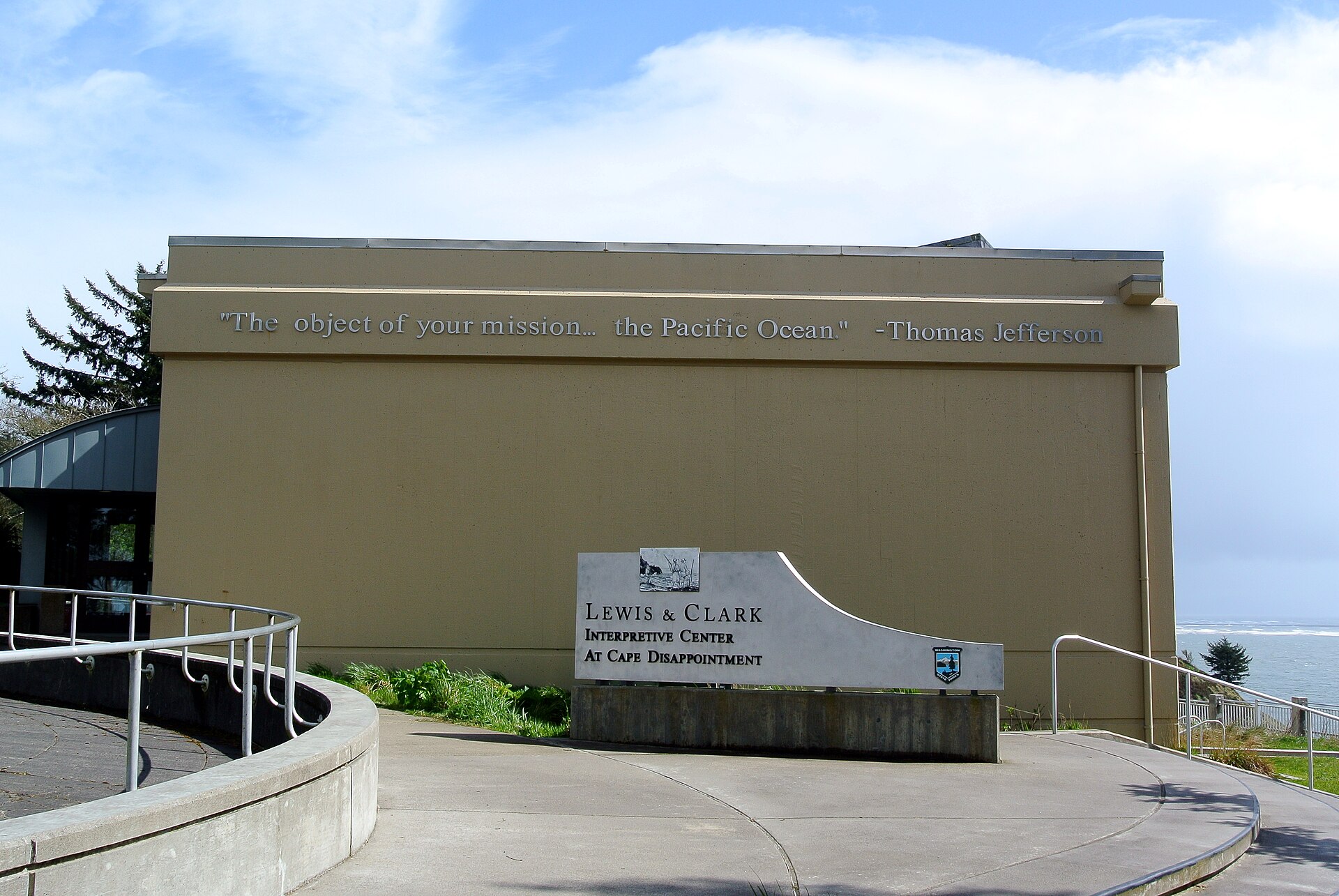
- Fort Canby batteries — Fort Canby area
The old gun batteries of Fort Canby lie scattered through the woods, their concrete and earth mounds now softened by moss and ferns. Some date from the Civil War, others from the later coastal defence system. Walking between them gives a sense of how seriously the river mouth was guarded. Use care on damp, uneven surfaces. - Columbia River bar viewpoints — Clifftops near the river mouth
Several clifftop spots look over the bar, where river current and ocean swell collide in rough water. Coast Guard crews train here, and watching their boats work the surf shows why the crossing has frightened sailors for centuries. Keep well back from cliff edges and stay on marked paths.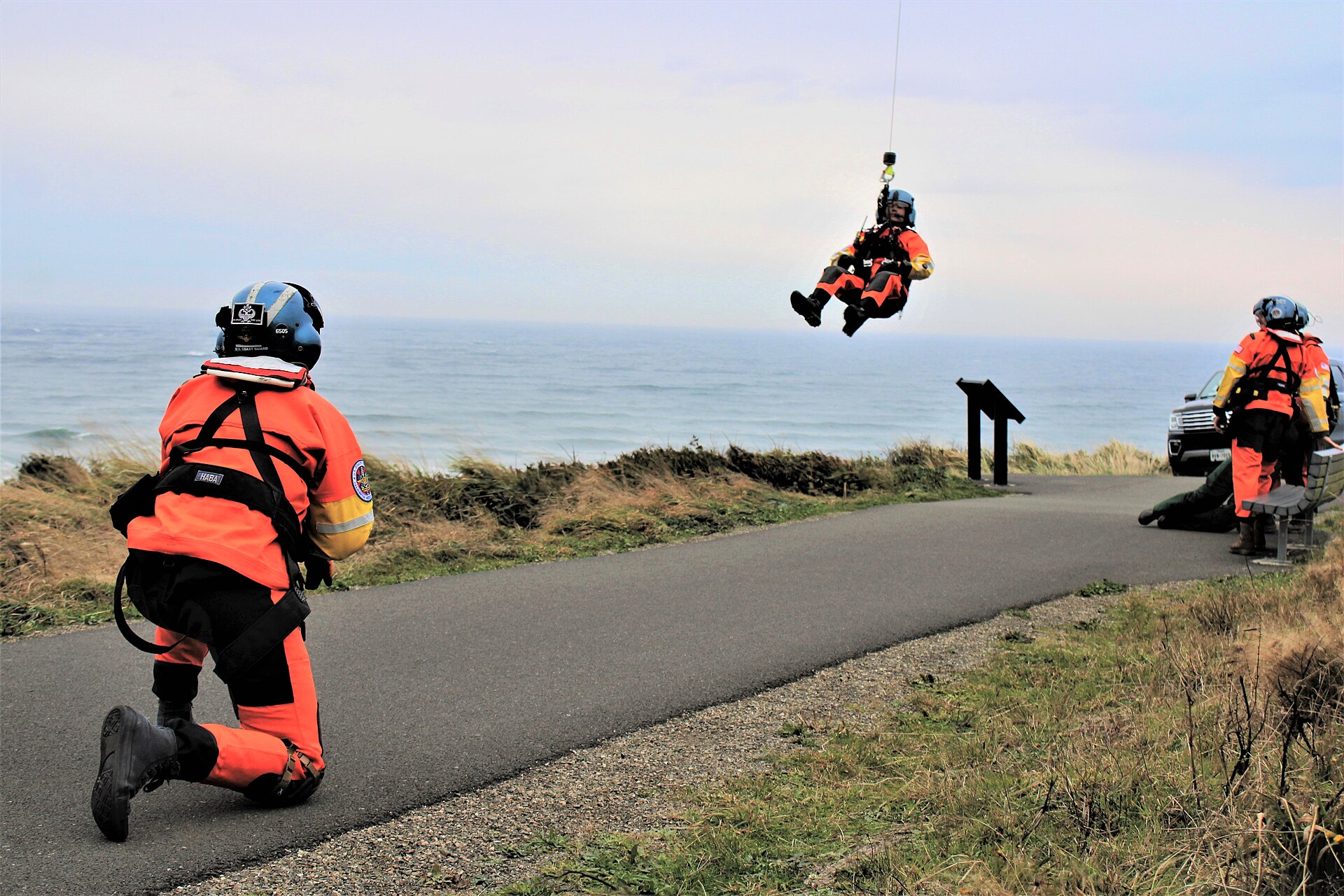
Culture
Cape Disappointment sits on land with layered histories, and the local culture reflects all of them: Native coastal peoples, explorers, soldiers, fishing families and the Coast Guard crews who still work the river bar. Salmon has long mattered as food and as identity along this coast, and many local communities treat the river and the sea with something close to reverence, as they depend on both.
The lighthouses and gun batteries are reminders of how dangerous the bar has been to shipping, and the Interpretive Centre presents the Lewis and Clark story alongside the wider history of the region. Treat the military remains as heritage rather than playground equipment, and respect any signs that mark fragile or restricted areas.
Park behaviour in Washington is orderly and practical. Popular trails and car parks fill early on good summer days, sometimes by about 9 am, and parking outside marked areas can bring a ticket or a tow. Some well-known trails across the state need reservations for crowd control, so check ahead. Littering is taken seriously, with fines that can run into hundreds or thousands of dollars, and the "Keep Washington Beautiful" message is one locals genuinely follow. Queueing is expected wherever there is a line, including for ferries.
Park only in marked bays and carry every scrap of litter out with you.
What to wear
Cape Disappointment is Native homeland, and the coastal peoples of the Pacific Northwest traditionally made clothing from cedar bark and woven plant fibres, shaped into soft capes, skirts and conical rain hats suited to a wet climate. Such garments are now mostly seen at cultural events, in museums and in the work of weavers who keep the craft alive, rather than as daily dress.
What people actually wear here is practical outdoor clothing. Locals favour fleece, waterproof shells, beanies, jeans and sturdy boots, and rubber boots are common near the water. Nobody dresses up for a day at the lighthouse, and style tends to mean being warm and dry. Coast Guard personnel are often seen in their working uniforms around the river mouth.
Visitors should dress for changeable weather, whatever the forecast says. Layers work best: a base layer, a warm mid-layer and a windproof, waterproof jacket, with a hat that stays on in gusts. Even in summer the exposed headlands can feel cold when the wind is off the ocean. Footwear matters more than anything else, because forest paths are often muddy and the old fortifications have slippery surfaces. Waterproof walking shoes or light boots are ideal. Sunglasses help on bright days with glare from the water. There are no dress rules for the lighthouses or the Interpretive Centre, so comfort is the only guide.
What to eat
- Smoked salmon — Fish counters and small shops in Ilwaco and on the peninsula
Salmon is the signature food of the Pacific Northwest, and smoked fillets are sold all year as a local delicacy. It is usually eaten flaked on crackers or bread. Look for it at fish counters and small shops around Ilwaco and along the Long Beach Peninsula. - Dungeness crab — Harbourside seafood eateries around Ilwaco
Dungeness crab is prized for its sweet, tender meat and the generous amount in each shell. It is typically served simply, boiled or steamed and cracked at the table, sometimes in crab cakes. Seafood eateries by the harbour are the natural place to try it. - Local oysters — Shellfish farms and shucking stands on the Long Beach Peninsula
The cool, clean waters of this coast support a thriving shellfish industry, and oysters are the clearest example. They are served raw on the half shell, grilled or fried. Roadside shucking stands and shellfish farms on the peninsula are the most direct source. - Clam chowder — Casual cafés and seafood eateries along the peninsula
Clam chowder is a warming bowl of cream, potato and chopped clams, and exactly what a damp, windy day at the cape calls for. It is on most menus along the coast, and each cook has a slightly different version. - Geoduck — Specialist seafood counters in coastal towns
Geoduck is a giant burrowing clam, sometimes available for adventurous eaters. It is sliced thin and eaten raw or lightly cooked, with a clean, sweet taste. Availability varies, so ask at seafood counters and specialist shellfish sellers.
Plan it
Best time. June to September for the driest, mildest weather, with July and August the busiest; spring and autumn are quieter, though wind, rain and fog can arrive at any time on this Pacific coast.
How long. 1–2
Getting there. Fly to Portland International Airport (PDX), the nearest major airport for Southwest Washington, or to Seattle-Tacoma (SEA) for wider connections, then drive to Ilwaco and on to the park. A car is the practical choice, as public transport is limited; check the official site for access details.
Budget. mid
Tips
- Arrive early on summer days, as car parks can fill by about 9 am
- Carry a waterproof jacket and warm layer even in July
- Bring snacks and water, since services near the headlands are limited
- Check the official website for current opening arrangements and any booking needs
- Stay behind barriers at the cliffs, where wind and surf can be dangerous
Etiquette
- Park only in designated areas
- Take all litter home with you
- Respect signs around the fortifications and lighthouses
Nearby
Sources
- Wikidata Q1034391 (CC0)
- Wikipedia, Cape Disappointment State Park (rev 1378713964) (CC BY-SA 4.0)
- Wikivoyage, Washington (state) (rev 5400128) (CC BY-SA 4.0)
- Photo: Cape Disappointment and Cape Disappointment Light (Adbar) (CC BY 3.0)
- Photo: Physical location map of Washington (Carport) (CC BY 3.0)
- Photo: Relief location map of the USA (Uwe Dedering) (CC BY 3.0)
- Photo: Lewis and Clark Interpretive Centre (Adbar) (CC BY 3.0)
- Photo: North Head Lighthouse, Pacific Ocean (Pbjamesphoto) (CC BY 3.0)
- Photo: North Head Lighthouse at Cape Disappointment (Mattsjc) (CC BY-SA 4.0)
- Photo: Coast Guard training near North Head Lighthouse (Richardmouser) (CC BY-SA 4.0)
- Photo: Cape Disappointment banner (Adbar) (CC BY 3.0)


