Butchart Gardens
Butchart Gardens, Canada
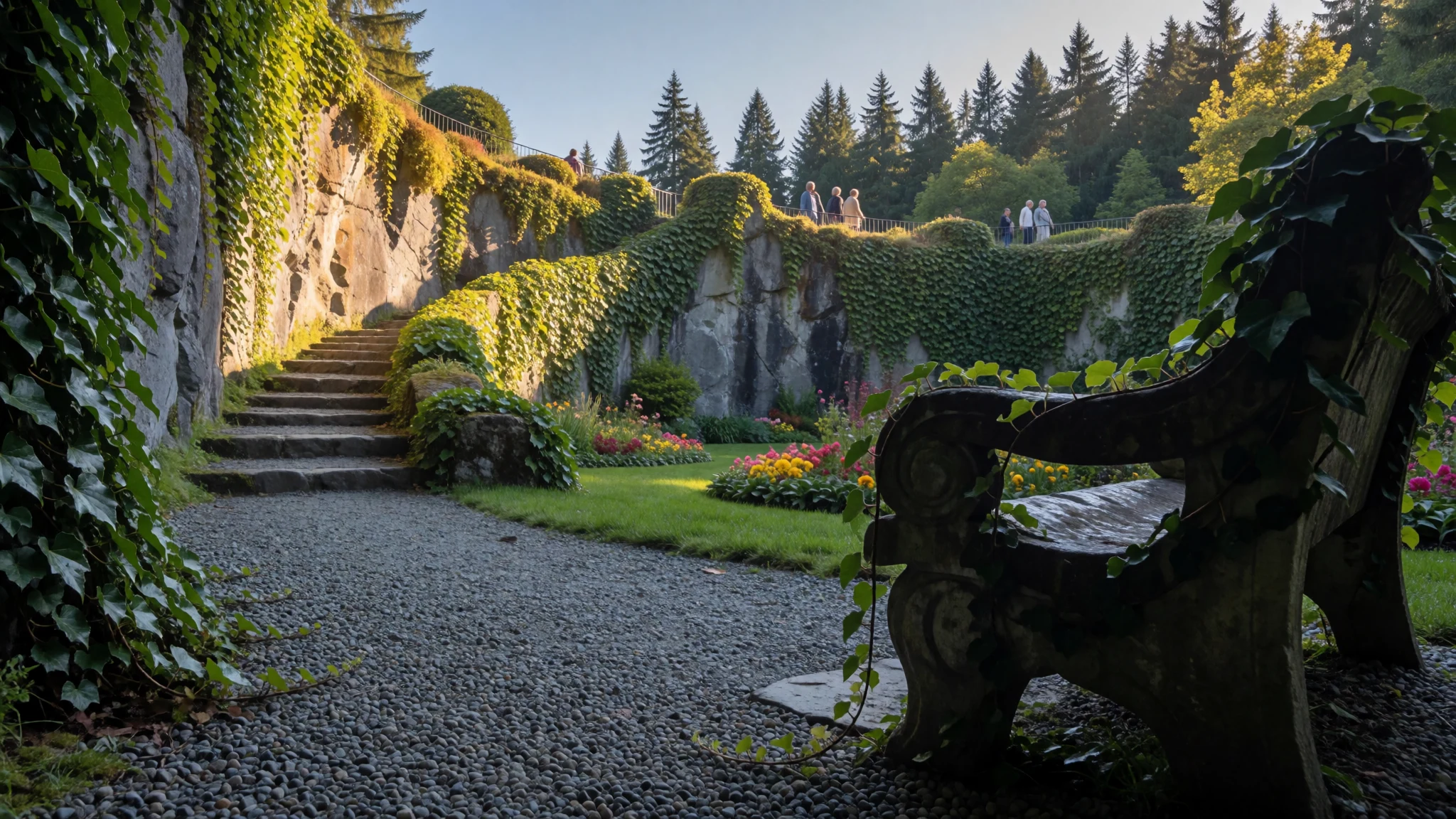
Butchart Gardens is a quarry on Vancouver Island turned into a sequence of planted rooms, fountains and lawns.
The place
Butchart Gardens occupies a coastal estate at Brentwood Bay on the Saanich Peninsula of Vancouver Island, within easy reach of Victoria, British Columbia. The property is not a single vista. It is a set of gardens fitted to what the land already was: a worked limestone quarry, a house lawn, and ground shaped for formal beds and a Japanese stroll. From the entrance the route drops and rises, so the quarry floor, the parterres and the water features appear one after another rather than all at once.
The climate is the mild marine weather of southern Vancouver Island. Winters are wet and rarely harsh, spring arrives as bulbs and blossom, and summer stays kind to roses, annuals and trimmed hedges. The same path changes from spring blossom to high-summer colour. Fog and rain are ordinary; so is bright afternoon light off the inlet.
Crowds are part of the character. Coaches arrive, the main photographs fill, and the Sunken Garden in particular can feel busy by the middle of the day. The bones of the place stay readable underneath the traffic: pale quarry walls, dark conifers, sheets of bedding colour, and the sound of fountains. Benches and side paths give the lawns a slower rhythm than the overlooks.
Butchart Gardens is a designed landscape with an industrial past still in view. Nothing about it pretends to be backcountry. It is gravel walks, irrigation, glass and clipped box, kept so that flowers, stone and water do the talking. Visitors come for that craft, and for the odd pleasure of standing in a garden that used to be a pit.
Its story
Butchart Gardens began as the grounds of a family whose business was cement. Robert Butchart's works drew limestone from a quarry beside the house at Brentwood Bay. When that pit was worked out, Jennie Butchart, his wife, refused to leave it as a hole. She had soil brought in, tucked plants into the rock, and trailed greenery over the quarry walls until the floor became the Sunken Garden. The story the place still tells is that one: an industrial scar replanted by hand, then opened so other people could walk it.
The garden grew by adding rooms, each with its own idea. A Japanese garden brought a quieter path, water and maples. An Italian garden set clipped geometry and a cross of paths against the looser quarry planting. Roses took a garden of their own. Fountains, including the Ross Fountain and the Fountain of the Three Sturgeons, gave the lawns a vertical accent the flower beds could not. None of this was a public park plan drawn up in advance.
What changed the meaning of Butchart Gardens was the decision to let visitors in. A family pleasure ground became a destination for Victoria, for Vancouver Island, and for people who cross from the mainland or fly in for the gardens alone. The quarry walls remained the proof of the earlier life. Designation as a National Historic Site of Canada recognised that double history — industry and horticulture on the same piece of ground — without turning the place into a museum. It is still a garden first: weeded, watered, replanted, and busy.
What to see
- Sunken Garden — quarry floor
The Sunken Garden at Butchart Gardens is the old limestone quarry, seen from the rim and then from the floor. Quarry walls rise around beds that were soil brought onto bare rock. Ivy, annuals and shrubs soften the cut stone, and the path winds so the depth of the pit shows in stages. It is the garden that explains the rest of the estate.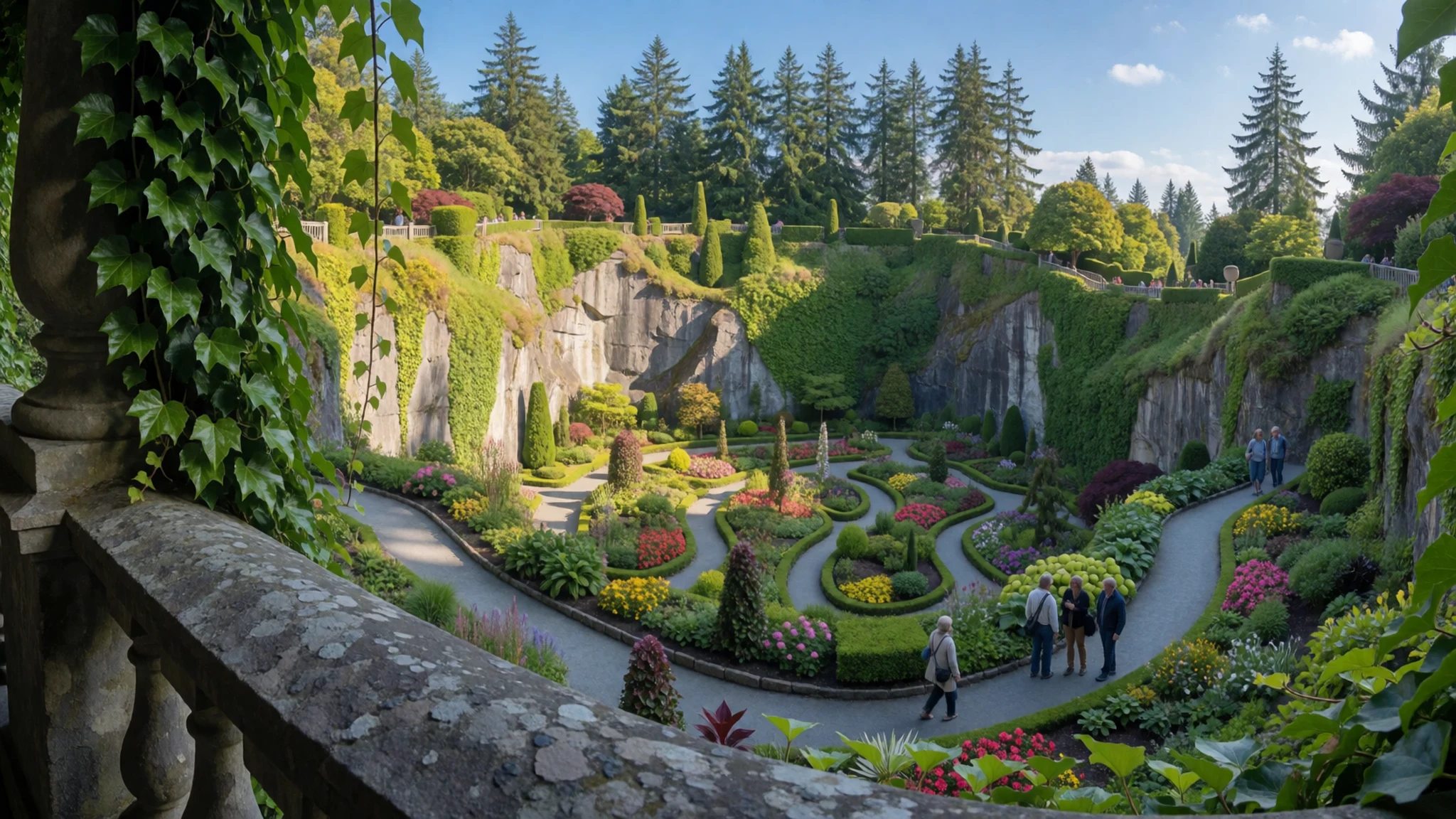
- Italian Garden — formal parterre
The Italian Garden at Butchart Gardens is the formal room: low clipped hedges, symmetrical flower beds and paths that cross on a clean axis. Colour is packed into the geometry, changed with the season, and kept low enough that the lines stay visible. It sits apart in mood from the quarry planting, more architecture than wilderness. From the edge, green structure and bloom read as one design.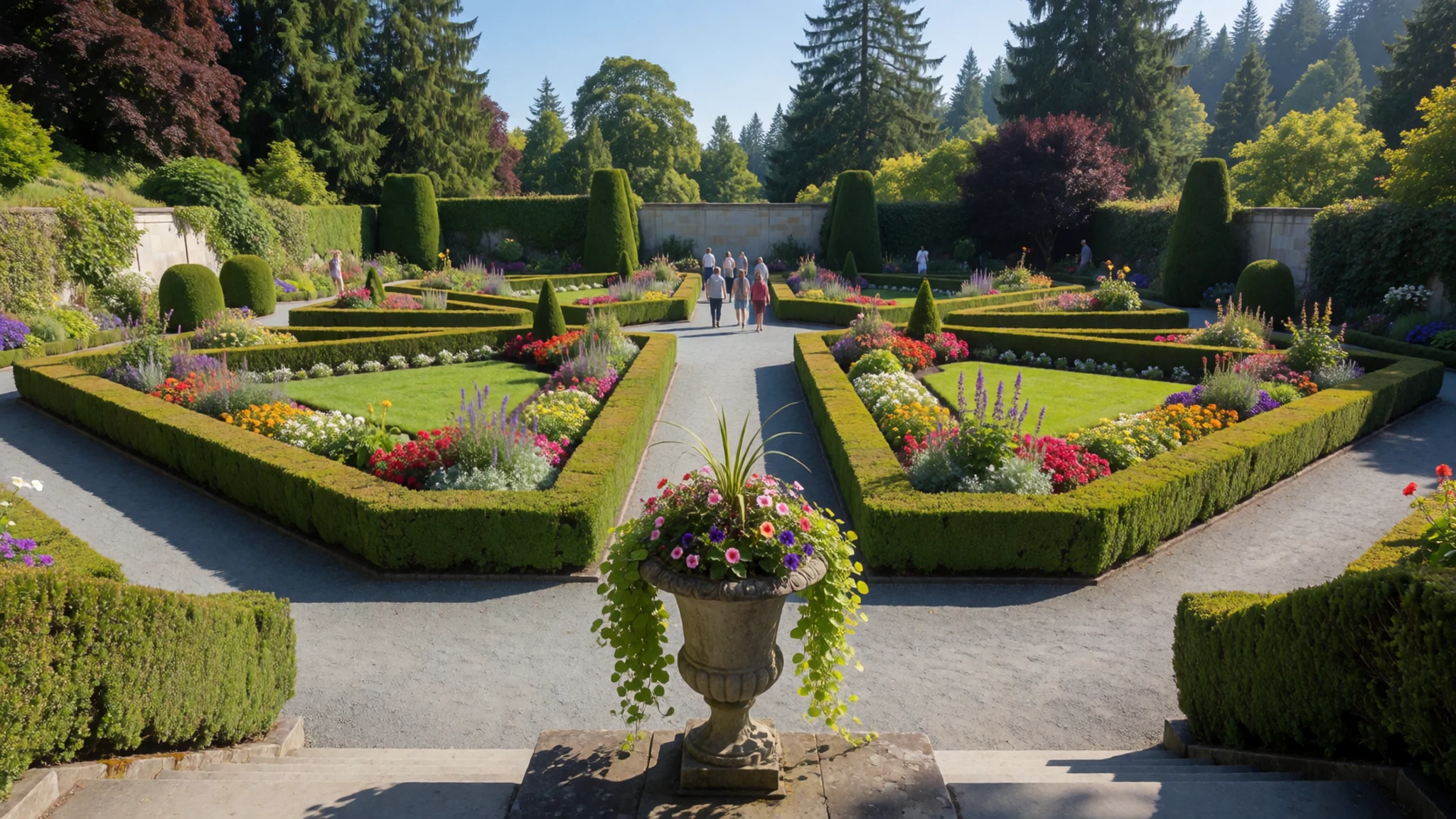
- Japanese Garden — stroll garden
The Japanese Garden at Butchart Gardens offers a slower walk of maples, moss, still water and carefully placed stones. Bridges and a small sense of borrowed landscape make the path feel narrower than the lawns elsewhere on the estate. The mood is shade and reflection rather than bedding colour. It rewards a quiet pace: the point is the sequence of views along the water, not a single overlook.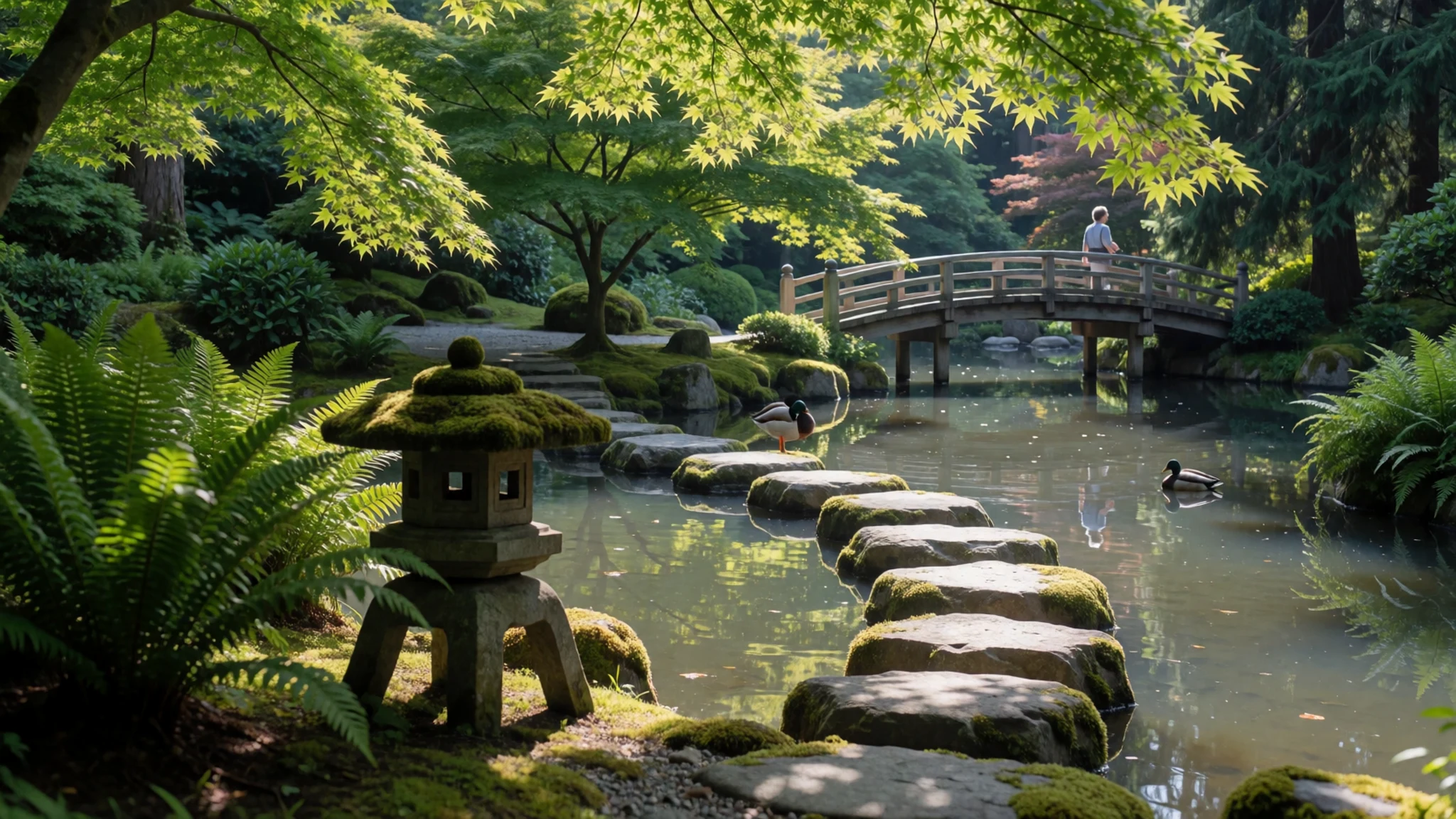
- Rose Garden — rose walks
The Rose Garden at Butchart Gardens is devoted to roses in beds and on arbours, with scent doing as much work as colour. In the warmer months the paths become a corridor of bloom, and the structures give the flowers a height the parterres do not. It is an easier garden to read than the quarry: one plant, many forms, arranged so that a stroll covers the collection.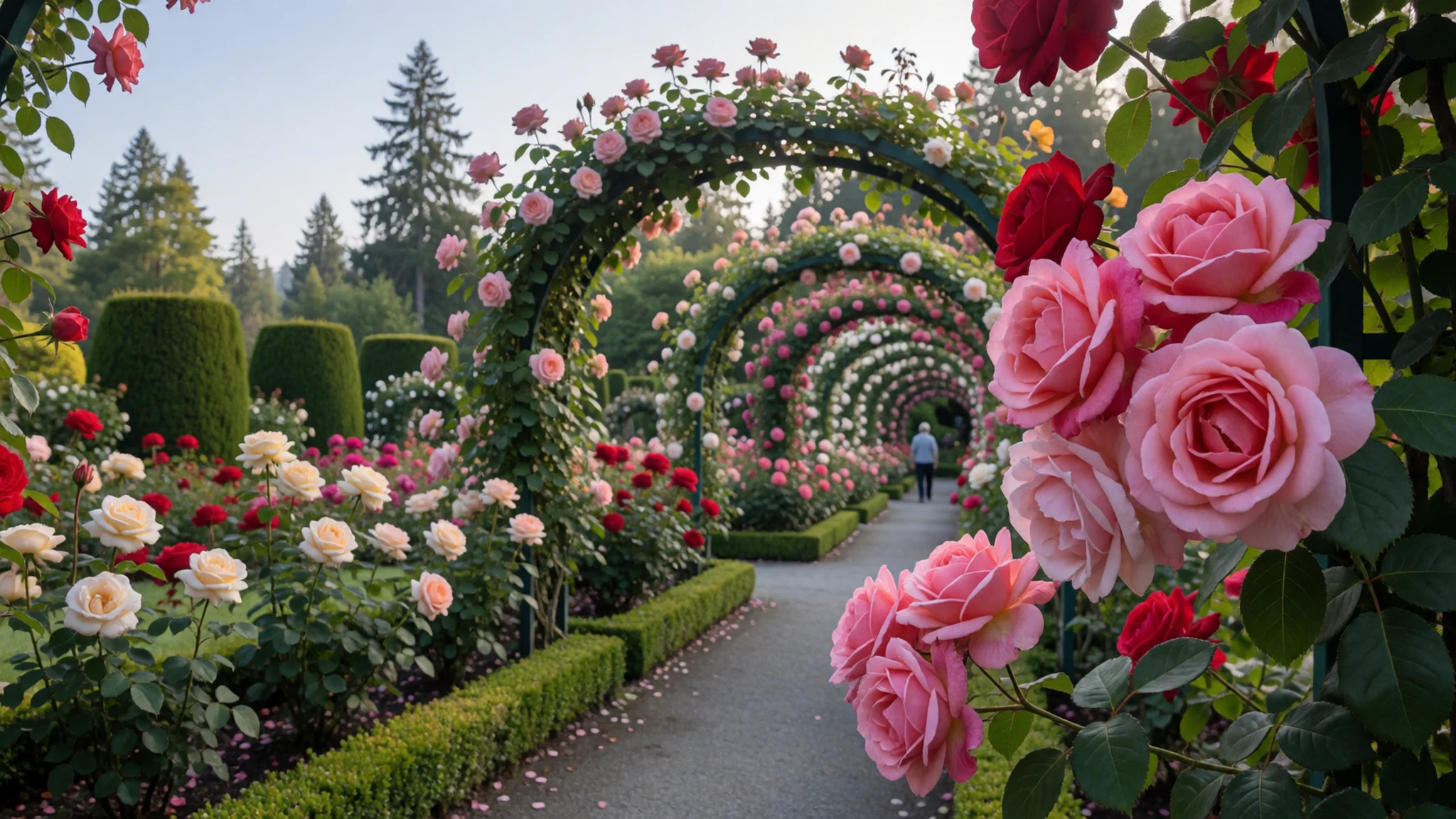
- Ross Fountain — main lawn
The Ross Fountain at Butchart Gardens is the tall water feature on the main lawn, a jet that organises an otherwise open stretch of grass. Seen from the paths around the lawn, it is the vertical mark in a horizontal garden, and it sits cleanly against trees and sky. On a windy day the spray drifts, which is part of the show.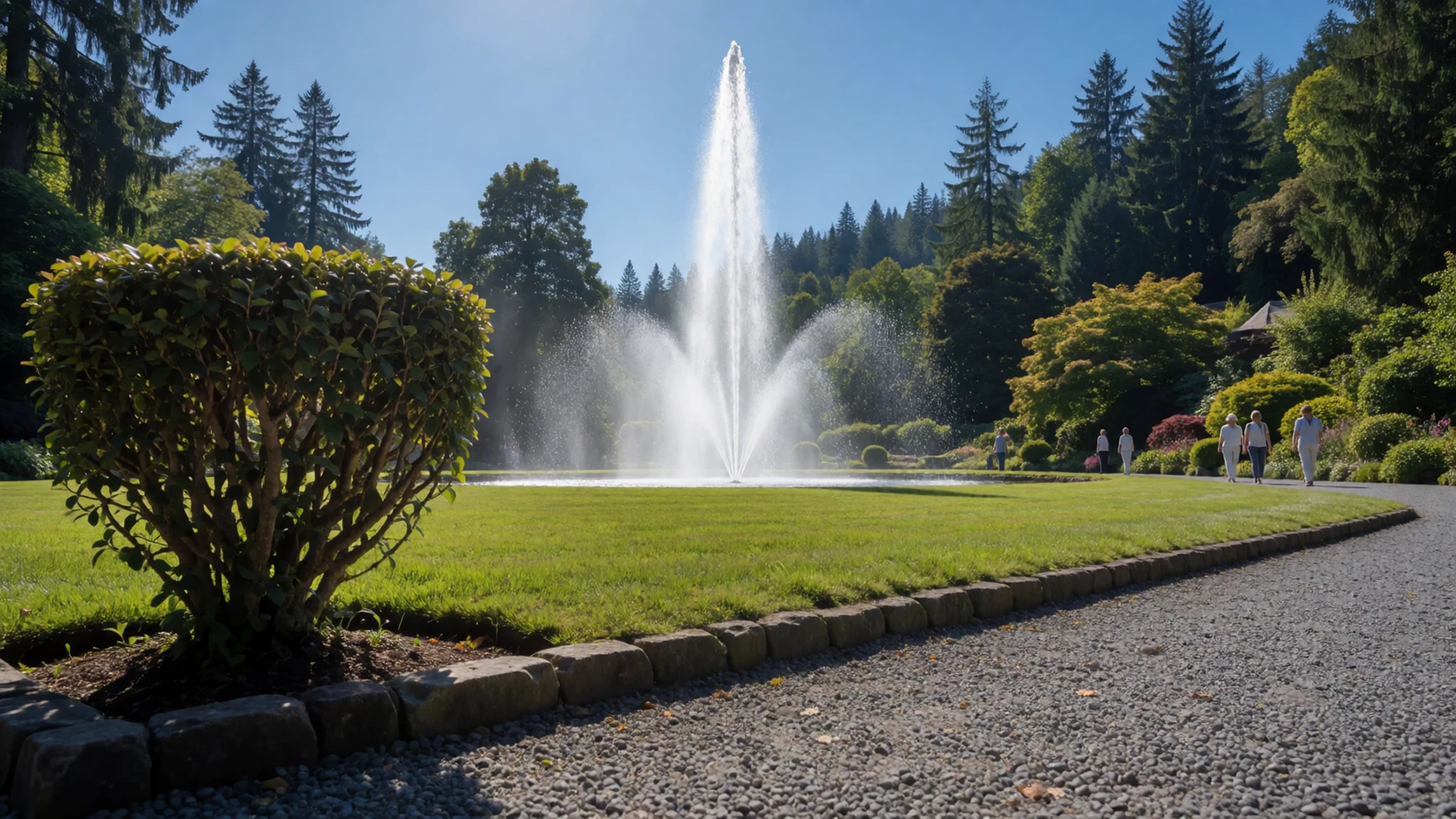
Culture
Butchart Gardens sits on Vancouver Island in the territory of the W̱SÁNEĆ (Saanich) peoples, whose long presence on the Saanich Peninsula is older than any ornamental border. The garden visitors walk is a settler estate: a cement family's home ground, later a public pleasure garden in the British tradition of carpet bedding, rose walks and a Japanese garden collected as a style. That mix is the culture of the place. People come dressed for an outing, speak quietly on the Japanese paths, and treat the beds as display rather than as picnic ground or playground.
The daytime culture is horticultural, with occasional evening events in season. Visitors compare notes on roses, wait their turn at the quarry lookout, and use the garden as a gentle destination for several generations at once. Children, grandparents and travelling groups share the same narrow paths, which is why the pace is slow and the patience is part of the visit. The historic-site title marks industry turned into flowers, while the living culture is the crowd on the paths.
Stay on the paths, leave every flower and cutting where it grows, and keep voices low on the narrower walks.
What to wear
Butchart Gardens does not have a costume of its own, so the dress around it comes from Vancouver Island. Coast Salish weaving on the south island uses wool and, in older work, cedar bark, in robes, blankets and ceremonial regalia that appear at public events and in museum collections in Victoria rather than on the garden paths. Settler Victoria kept a British habit of smart daytime clothes for an outing, which still echoes in the way some visitors dress up for the Italian garden and for tea.
What people wear now is Pacific Northwest practical clothing. Locals on the Saanich Peninsula dress in layers: a light waterproof shell, a knit or fleece, trousers that can take gravel, and shoes that cope with wet paths. Summer brings sundresses, hats and short sleeves; the rest of the year stays covered. Nobody expects formal garden whites.
A visitor to Butchart Gardens should dress for walking, not for a hike and not for a dinner. Comfortable closed shoes beat thin sandals on damp gravel and steps. A compact raincoat belongs in the bag even in July, because the island's showers ignore the forecast. In the warmer months a hat and a layer to remove are enough; in the cooler months add a warm mid-layer. The beds are the display, so bright clothing is welcome and muddy boots are not.
What to eat
- Pacific salmon — waterfront eateries and harbour counters in Victoria
Butchart Gardens is a short ride from Victoria, where Pacific salmon turns up grilled, baked or hot-smoked. It is served at a waterfront eatery or a harbour counter, with potatoes or greens rather than a heavy sauce. Lemon is enough.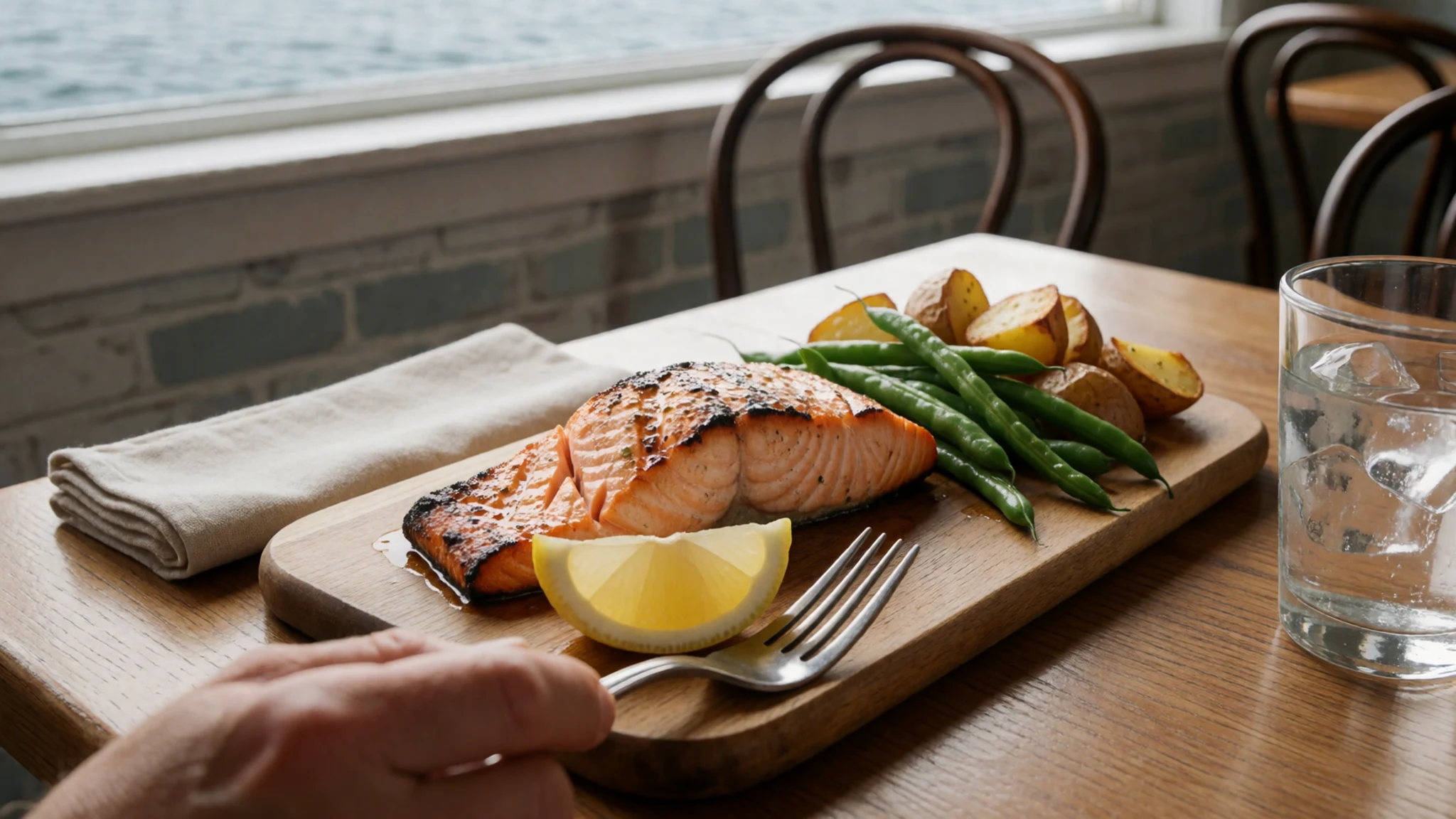
- Spot prawns — Victoria fishmongers, harbour stalls and seafood eateries
Spot prawns are the short, sweet shellfish of the British Columbia coast, in season around late spring. Near Butchart Gardens they turn up at a Victoria fishmonger, a harbour stall or a seafood eatery, boiled or in a light garlic butter.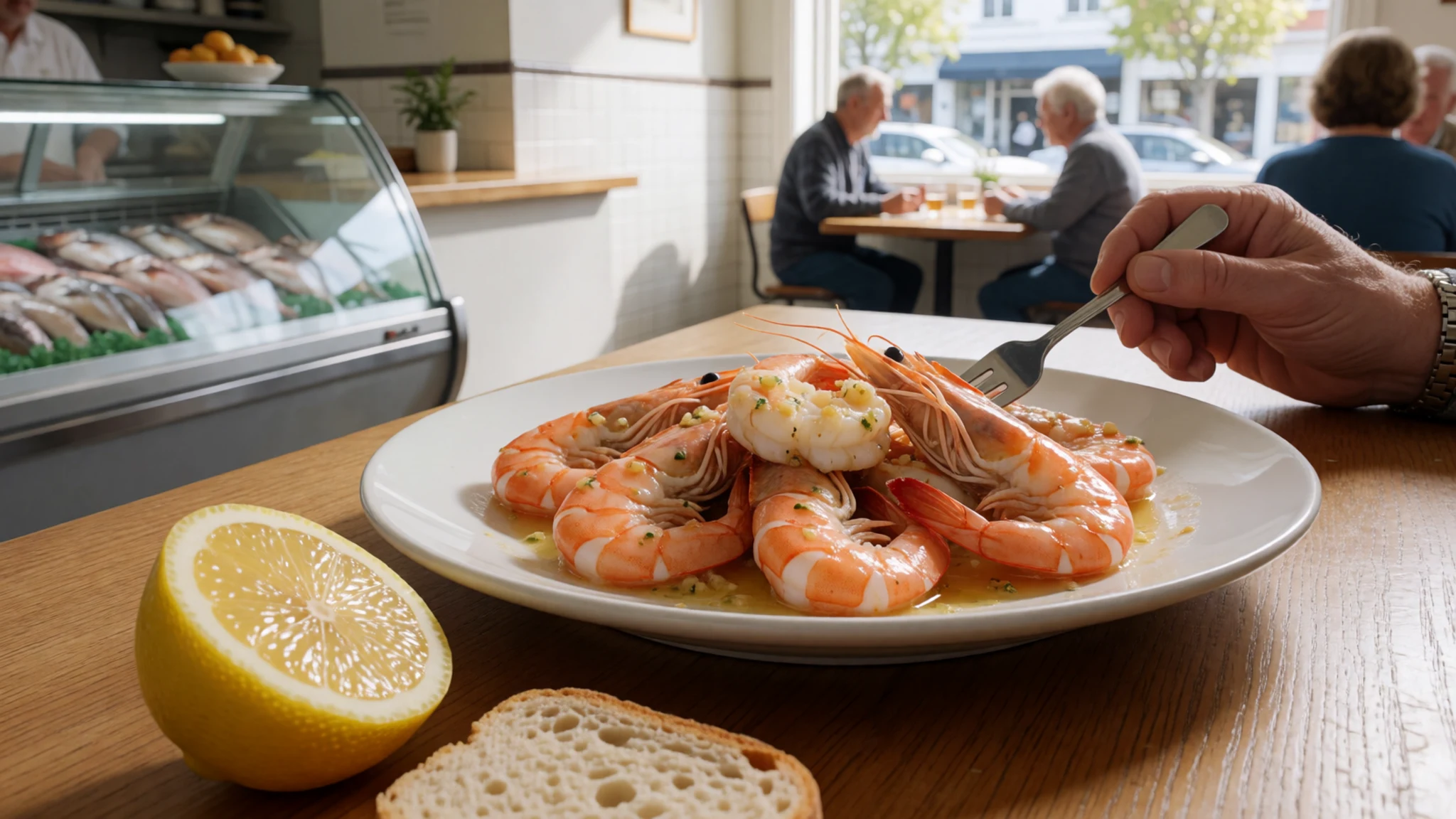
- Fish and chips — harbour chippies and casual eateries in Victoria and towards Brentwood Bay
Fish and chips is the unfussy British Columbia plate: battered local fish, chips, and malt vinegar, eaten with a fork or from paper. In Victoria, and in the towns between the city and Butchart Gardens, it shows up at harbour chippies and casual eateries rather than in formal dining rooms. - Afternoon tea — tea rooms in Victoria and garden cafés on the Saanich Peninsula
Afternoon tea is Victoria's settler ritual, and it fits a day at Butchart Gardens: scones, jam, cream and a pot of tea, sometimes with small sandwiches. Tea rooms in the city and garden cafés on the Saanich Peninsula serve it as a sit-down pause. - Pacific oysters — oyster bars and seafood counters in Victoria
Pacific oysters from British Columbia waters are cool, briny and small enough to eat in a sitting. Around Butchart Gardens they appear at oyster bars and seafood counters in Victoria, raw on ice or grilled. A squeeze of lemon is the usual company, and they taste of the inlet. - Saanich berries — farm stands and markets on the Saanich Peninsula, and bakeries in Victoria
Berries from the Saanich Peninsula — strawberries, raspberries and blueberries through the warmer months — are the local sweet ending. Near Butchart Gardens, farm stands and markets sell them by the basket, and bakeries in Victoria turn them into tarts and crisps.
Plan it
Best time. Butchart Gardens flowers strongly in April and May for bulbs and blossom, from June to September for roses and full bedding, and on into a mild October. November to March is wetter and quieter, which suits anyone who would rather see the bones of the quarry than the peak colour.
How long. 1–2
Getting there. Fly into Victoria International Airport at Sidney, then drive or take a coach south to Brentwood Bay. From Vancouver, cross to Swartz Bay by ferry, or fly to Victoria's harbour, and continue by road. The last leg is a signed approach to the Butchart Gardens entrance; coaches and cars both end at the gate.
Budget. high
Tips
- Buy entry ahead for summer and holiday weekends, and check the official site for the current rules.
- Arrive near opening if you want the Sunken Garden overlook before the coaches.
- Wear shoes for gravel and steps; the rooms of the garden are not all on one level.
- Pack a light raincoat in every season; showers on Vancouver Island do not wait for winter.
- Use cards in Victoria, and keep a little cash for farm stands on the Saanich Peninsula.
Etiquette
- Stay on the paths and do not pick or cut flowers.
- Lower your voice on the Japanese Garden paths.
- Wait your turn at the busy overlooks instead of leaning over other visitors.
- Follow posted rules on tripods and drones, and check the official site if you are unsure.
Nearby
Sources
- Wikidata (CC0)
- Wikipedia (CC BY-SA 4.0)
- Wikivoyage (CC BY-SA 4.0)