Bodie
Bodie, United States
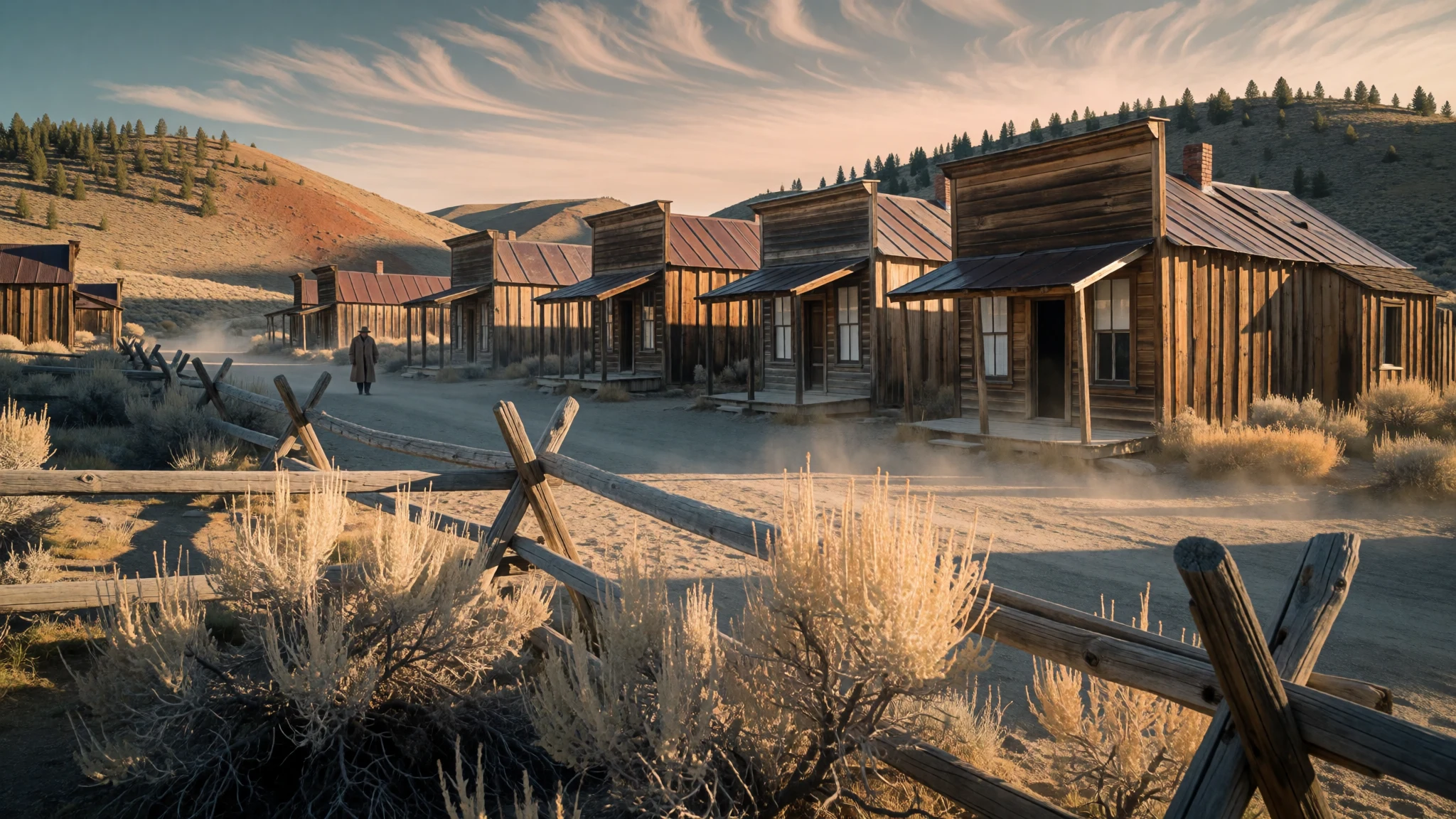
Bodie is a Gold Rush mining town held in a state of preserved ruin, high in the windswept Bodie Hills.
The place
Bodie is a ghost town in the Bodie Hills, on the dry eastern side of the Sierra Nevada in Mono County, California. It stands at 2,554 m, on open high ground where trees are scarce and the horizon is wide. The nearest town of any size is Bridgeport, about 19 km away, and Lake Tahoe lies a long drive to the north-west. The settlement dates from 1876, when a rich gold find turned a scatter of claims into a boom town. By 1879 it had around 2,000 structures and roughly 8,000 residents. Decline followed, and by 1915 people were already calling it a ghost town. Today it is Bodie State Historic Park, established in 1962, and it is also a National Historic Landmark and a California Historical Landmark. About 200,000 people visit in a year, and the site is large and open enough to spread them out. What visitors find is not a reconstruction. Wooden houses lean, interiors still hold furniture and goods, and the stamp mill rises over the slope, all maintained so that the town stays as it is rather than being restored. The climate shapes the whole experience. Summers are short and variable, nights stay cold in every month, and winters are long and snowy, with wind that can reach about 160 km/h. Around the park, Mono County holds national forests, wilderness areas, Mono Lake with its tufa towers, and hot springs, so Bodie is usually one stop in a wider Eastern Sierra trip rather than the whole plan.
Its story
Bodie's story starts with a modest gold find in 1859, made by a group of prospectors that included W. S. Bodey. Bodey died in a blizzard that November on a supply run, long before anything worth calling a town existed. His name survived in several spellings until a sign painter in nearby Aurora lettered "Bodie Stables", which fixed the form used today. For years the camp stayed small. Neighbouring strikes at Aurora and the Comstock Lode drew the money and the crowds, and by 1868 the two stamp mills built at Bodie had both failed. The turn came in 1876, when the Standard Company struck a profitable body of gold-bearing ore. A further rich find in the adjacent Bodie Mine in 1878 pulled in more hopefuls, and the camp became a Wild West boom town. A newspaper began printing in October 1877, first weekly and soon three times a week. A popular legend ranks Bodie as California's second or third biggest city in 1880, but the census of that year does not support it. The real peak was brief, running from late 1877 to around 1880. The mines went on producing gold and silver until 1941, and the district's output has been estimated at about US$34 million in 1986 values. By 1915 the place was being called a ghost town, and in time it became a state park.
What to see
- Main Street and the houses — Bodie State Historic Park
Bodie's streets are worth taking in as a whole before any single building. Weathered timber houses stand at angles, with the Bodie Hills behind them. The park keeps the town stabilised rather than restored, so peeling paint, bent frames and furnished rooms glimpsed through glass are the attraction. Allow time to wander slowly.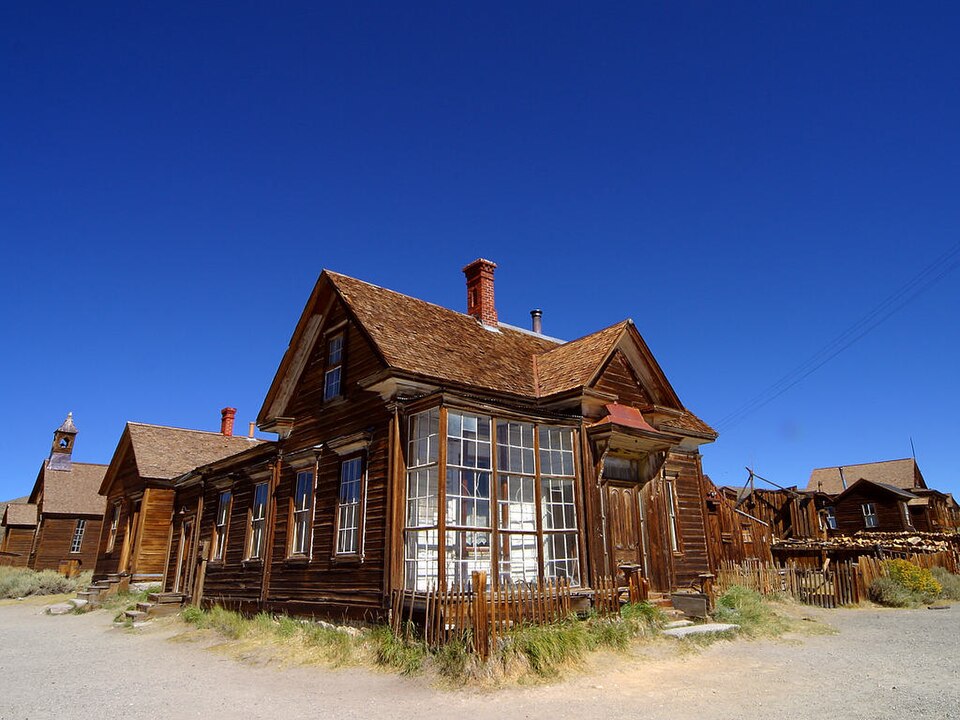
- Standard Mill — Bodie State Historic Park
The Standard Mill is the tall wooden shell on the hillside where gold-bearing ore was crushed. It explains the town's whole purpose, and it photographs well in low light, when the timber turns amber. Check the official site before visiting to see whether any tours or interior access are running.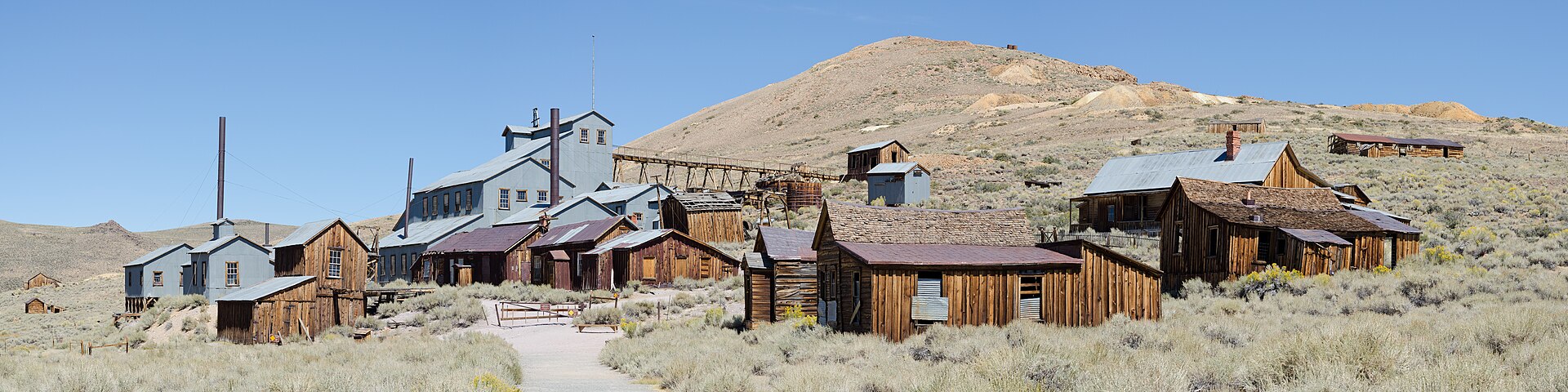
- The Methodist Church — Bodie State Historic Park
The Methodist Church was built in 1882, just after the boom had peaked. It is a small, plain wooden building and a reminder that Bodie had congregations and families as well as saloons and miners. Its outline against the empty hills is a view that many visitors photograph.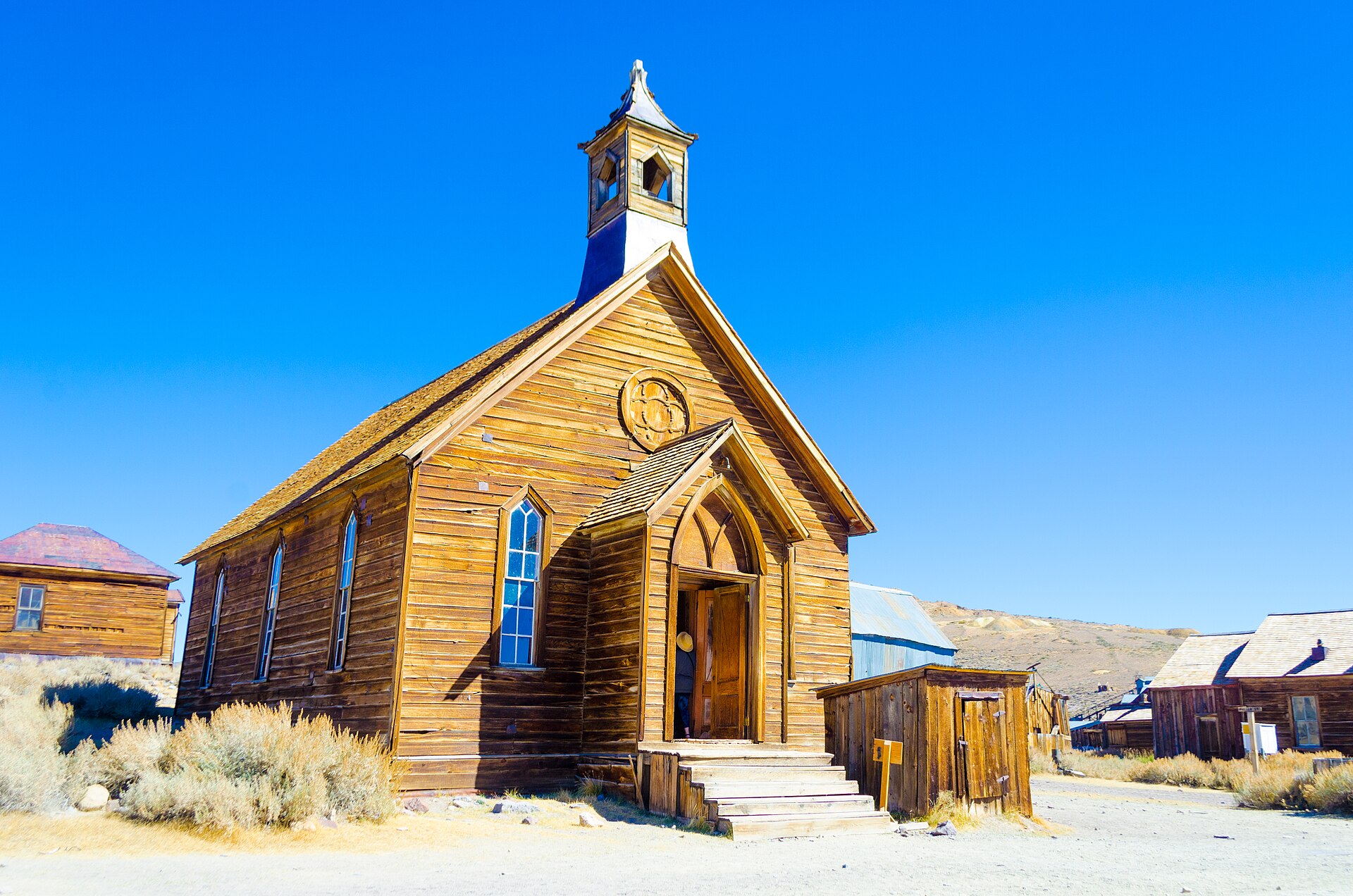
- Saloon interiors — Bodie State Historic Park
A saloon interior at Bodie shows the other side of boom-town life. Bar fittings, bottles and card-room clutter are the details that stay in the memory, and the park keeps such rooms much as they were left. Windows are the usual way in, so look patiently and keep hands off glass and sills.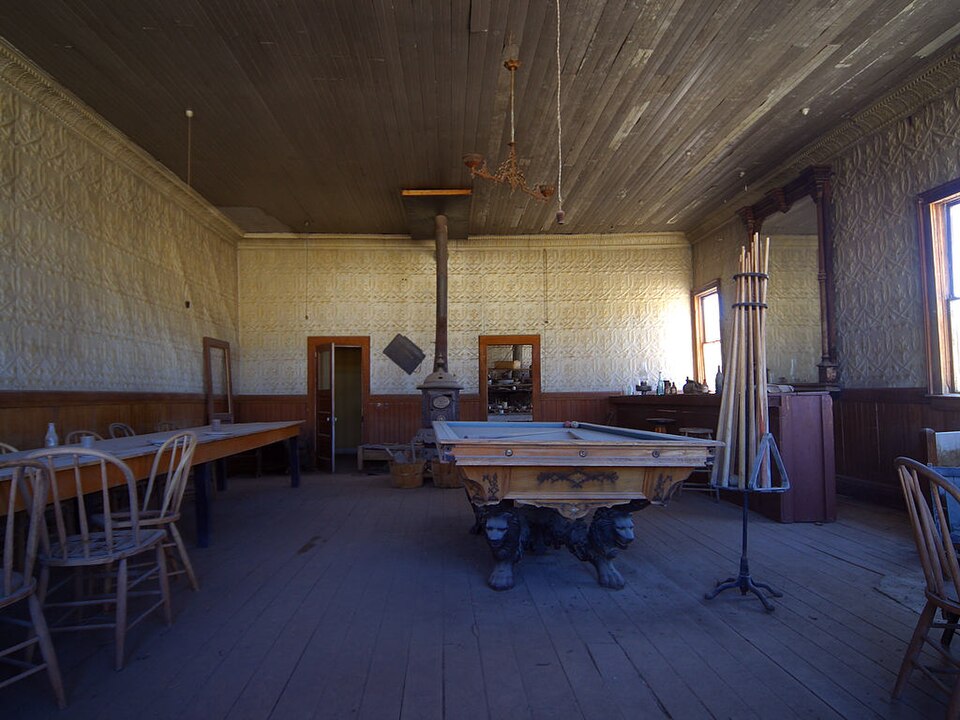
- Mono Lake — Mono County, south of Bodie
Mono Lake is a natural companion stop on an Eastern Sierra day out. Tufa columns rise at the water's edge, and the lake draws large numbers of migratory birds, including California gulls that nest there. Its chemistry is odd enough to have attracted space-science researchers. Check road and visitor-centre conditions before heading out.
Culture
Bodie's culture is that of a mining camp, and it survives as atmosphere and objects rather than as a living tradition. It is a ghost town, not a working community, and the park treats it as an outdoor museum. The boom-time character is well documented: saloons, churches, stables, a newspaper that soon went to three issues a week, and a large shifting population chasing ore. The Wild West label is partly legend, and the town's supposed rank among California's cities is one of the myths the census undoes. The park's guiding idea is stabilisation rather than restoration, so the buildings are meant to look as if people have only just left. That shapes how visitors behave: slowly, quietly, and with cameras out more than voices raised. Interpretation comes through signs and the buildings themselves, and arrangements for tours change, so the official site at https://www.bodie.com/ is the place to check. Beyond the park, the Eastern Sierra is ranching and tourism country, with cattle and sheep on private land and outdoor travel as a main industry. Many visitors treat Bodie as a half-day or full-day stop within a longer drive between Lake Tahoe, Mono Lake and the Sierra passes. Leave every object, nail and bottle exactly where it lies and keep off the structures, because the whole value of Bodie is that the town has been left intact.
What to wear
Bodie has no folk costume in the textile sense; its dress history is that of a working mining camp. In the boom years men wore heavy wool trousers, flannel or cotton shirts, canvas and leather work gear, hats against sun and cold, and sturdy boots. Women who lived in the town wore long skirts and fitted bodices in cotton, wool or silk, depending on means and occasion, and Sunday church dress was a step smarter, in darker cloth. Nothing is worn as ceremonial dress today. What people wear now is outdoor clothing: jeans, fleece, boots, caps and padded jackets, with park staff in uniform. The climate matters more than any dress code. Nights are cold in every month, the sun at 2,554 m is strong and the wind can be severe, so visitors do best in layers: a base layer, a warm mid-layer and a windproof shell, even in summer. A wide-brimmed hat and sunscreen help by day. Footwear should be closed, with a firm sole, because the ground is dusty, uneven and sometimes icy. In winter, add insulated boots, gloves and a warm hat. There is no modesty requirement, though quiet, ordinary clothes suit the church and other preserved interiors.
What to eat
- Ranch beef steak — Steakhouses and grills in Bridgeport and the other small towns along the main Eastern Sierra highway
Cattle country around Mono County makes steak a natural order in the Eastern Sierra. Expect a thick cut with potatoes or beans, plainly cooked on a grill. It is the obvious reward after a cold, windy day on the Bodie plateau. - Miners' breakfast — Cafés and diners in Bridgeport and other small Eastern Sierra towns
A miners' breakfast is the old working-camp meal: eggs, bacon or sausage, fried potatoes and toast, built to last through a shift. Diners in the Eastern Sierra still serve versions, and it suits an early start before the drive up to Bodie. - Chilli and bread — Small-town cafés and general stores along the Eastern Sierra route
A bowl of beef or bean chilli with bread or cornbread is cold-weather food at altitude, filling and quick. Small town cafés in the area often keep a pot on the go, which works well for a warming lunch between sights. - Fresh trout — Restaurants and lodges near Bridgeport and the Twin Lakes
Trout from the lakes and streams around Bridgeport, grilled or pan-fried with lemon and butter. Fishing at Twin Lakes is popular, so the fish sometimes appears on local menus in season. Ask what is local, as supplies vary. - Sourdough bread — Bakeries and grocery shops in Bridgeport or Mammoth Lakes
Sourdough bread, tied to Gold Rush California, is a practical picnic base: a crusty loaf with cheese and fruit. Food options at Bodie itself may be limited, so check the official site and stock up in town before the drive.
Plan it
Best time. June to September, when days are mildest and access is most reliable. Nights stay cold even in summer, and winters are long and snowy, so check the official site for conditions and access before going.
How long. 1–2
Getting there. Fly to Mammoth Yosemite Airport (MMH), which has year-round United Express flights to Los Angeles, then drive north along the main Eastern Sierra highway towards Bridgeport and turn off for Bodie. A car is needed for the last leg.
Budget. mid
Tips
- Check the official site, https://www.bodie.com/, for opening hours, fees, tours and road conditions before setting out
- Carry water, food and a full fuel tank, as Bodie is remote and services are limited
- Pack layers and a windproof jacket: gusts can be fierce and nights are cold in every month
- At 2,554 m, go slowly if arriving from sea level and drink plenty of water
- Go early or late in the day for softer light and thinner crowds
Etiquette
- Take nothing from the site, however small, and leave objects where they lie
- Keep off the buildings and stay on the marked paths
- Speak quietly inside and near the preserved interiors
Nearby
Sources
- Wikidata Q832945 (CC0)
- Wikipedia: Bodie, California (rev 1383036734) (CC BY-SA 4.0)
- Wikivoyage: Mono County (rev 4623584) (CC BY-SA 4.0)
- Bodie ghost town — PDPhoto.org (Public domain)
- Bodie (CA, USA) — Roland Arhelger (CC BY-SA 4.0)
- Relief location map of the USA — Uwe Dedering (CC BY 3.0)
- 1890 Sanborn fire insurance map of Bodie — Sanborn-Perris Map Co., Limited (Public domain)
- Bodie, California, c. 1890 — William Thompson (Public domain)
- Bodie Saloon — Jon Sullivan (Public domain)
- The Methodist Church — Saxena ashes (CC BY-SA 4.0)
- Bodie September 2016 panorama — King of Hearts (CC BY-SA 4.0)


